
Woman's personalized manuscript in white leather
Woman's personalized manuscript in white leather
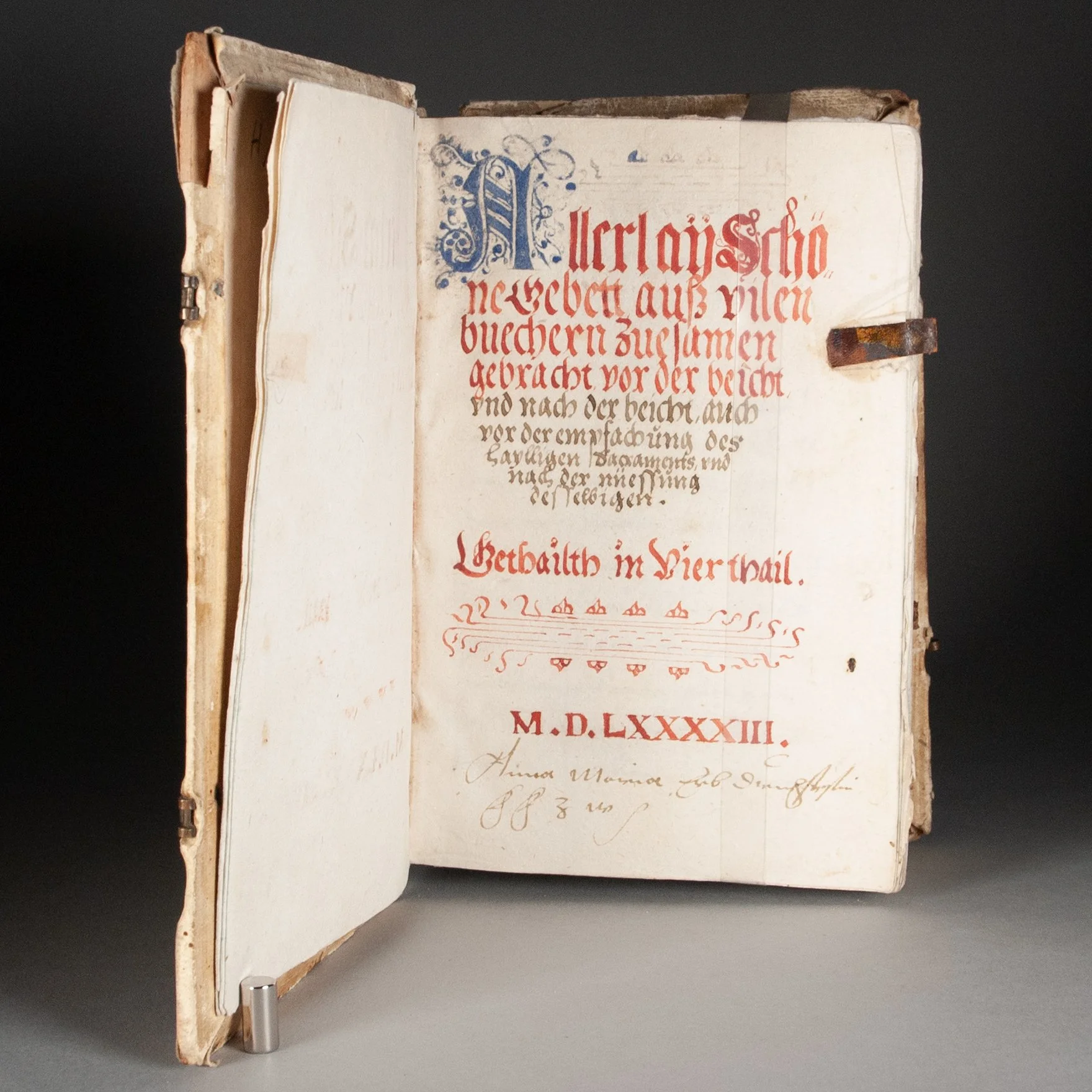
Allerlaij schöne Gebett auss vilen buechern zuesamen gebracht vor der beicht und nach der beicht auch vor der empfachüng des haylligen Sacraments und nach der nüessung desselbiger; bethailth in vier Thail
[Germany?] 1593
[317] leaves | 8vo | 175 x 109 mm
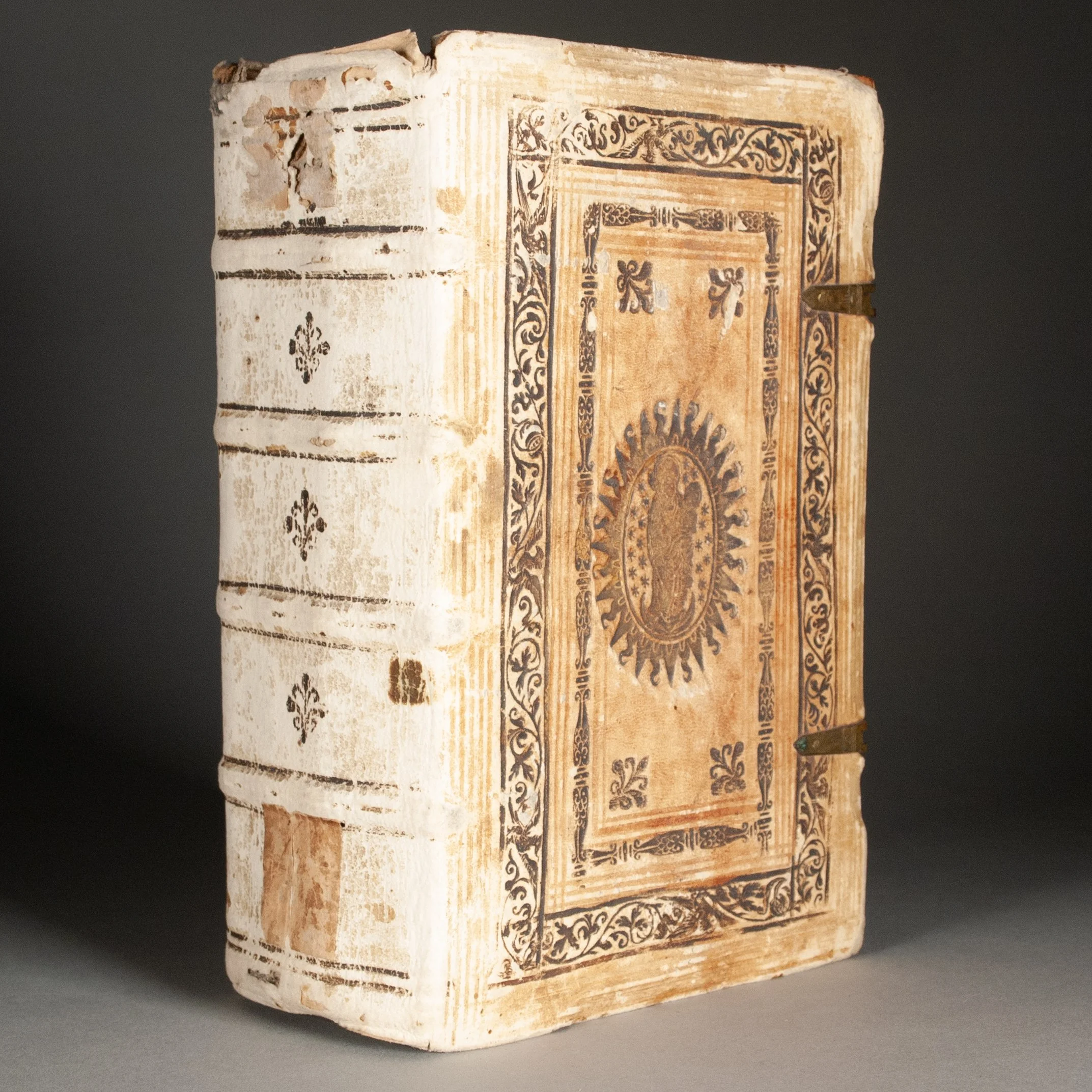
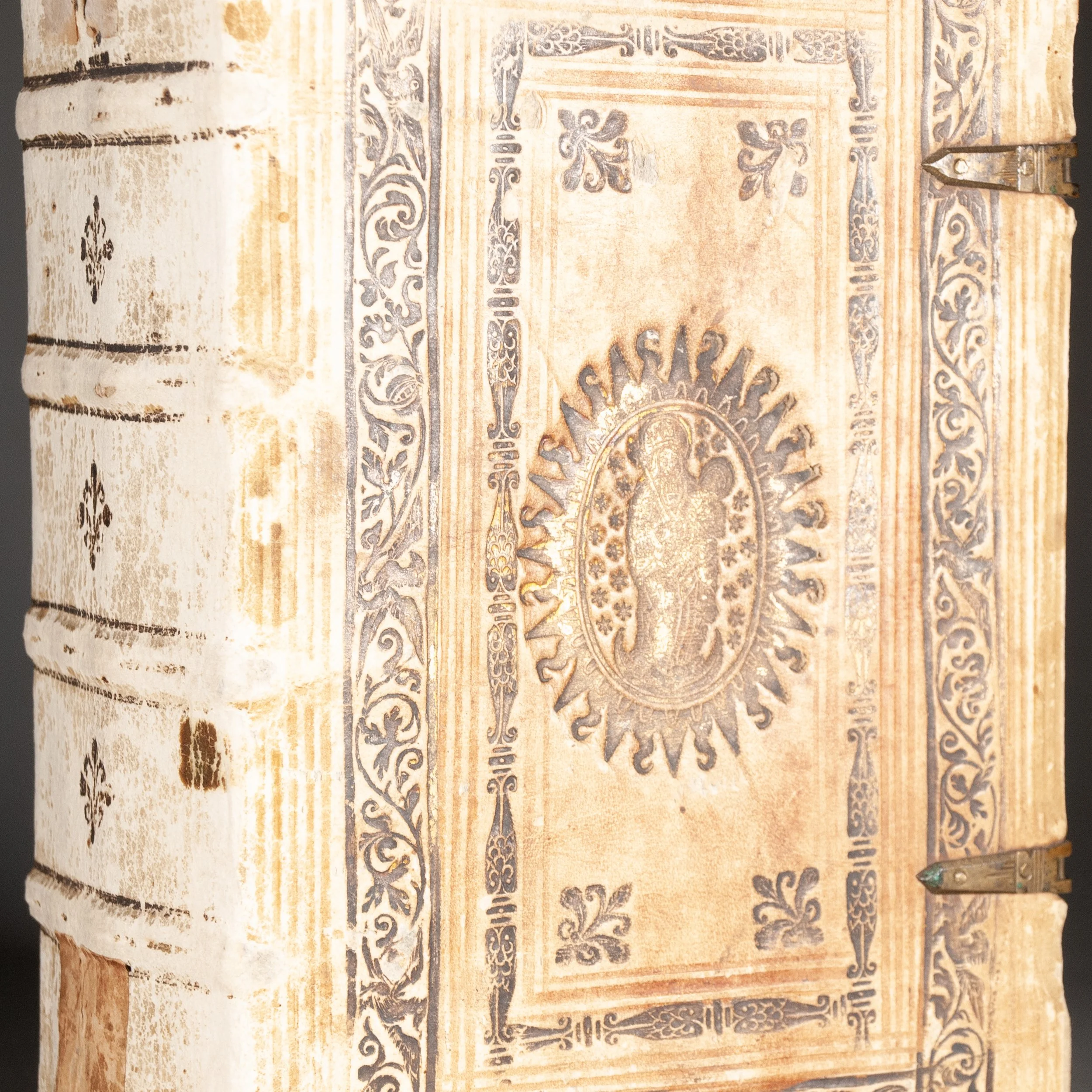
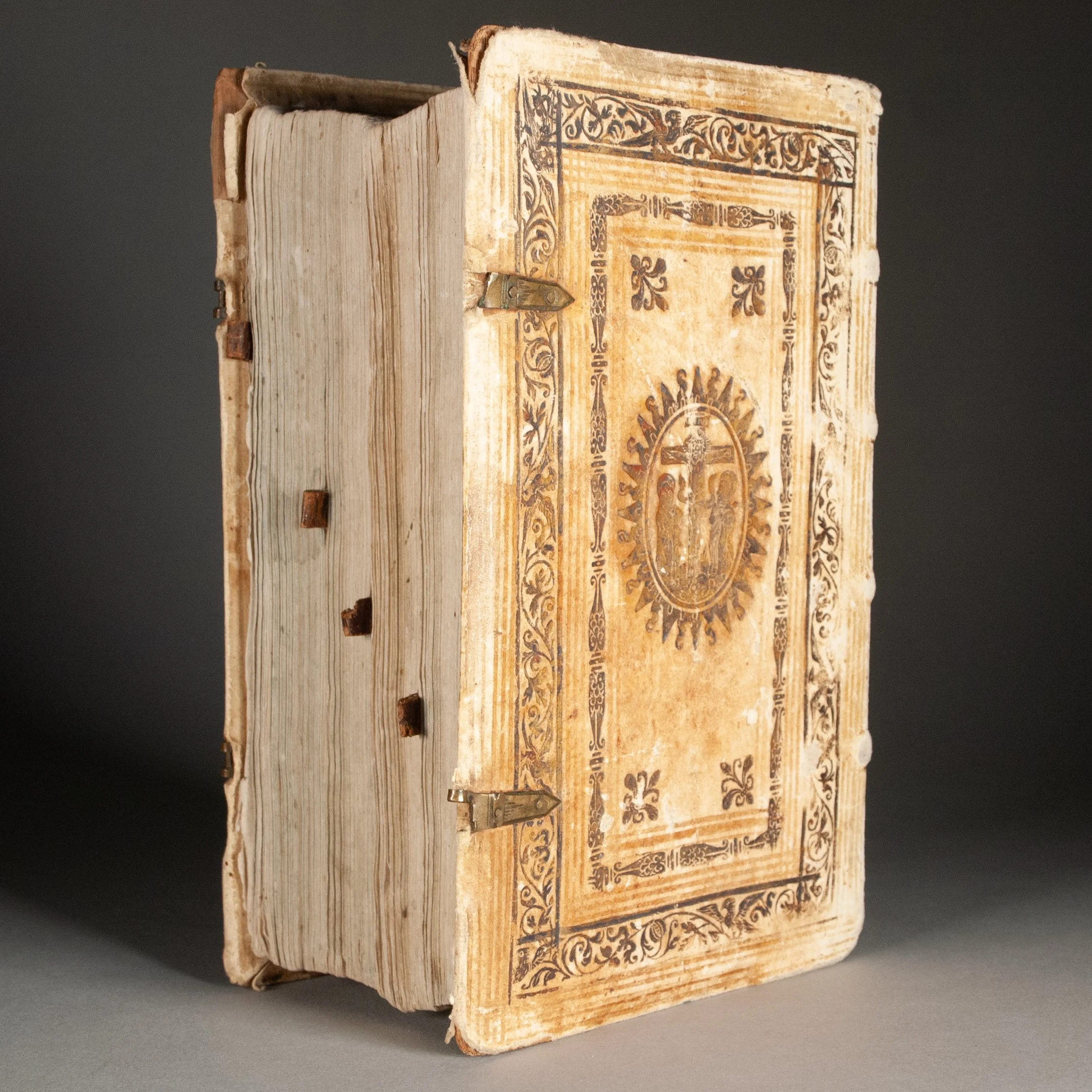
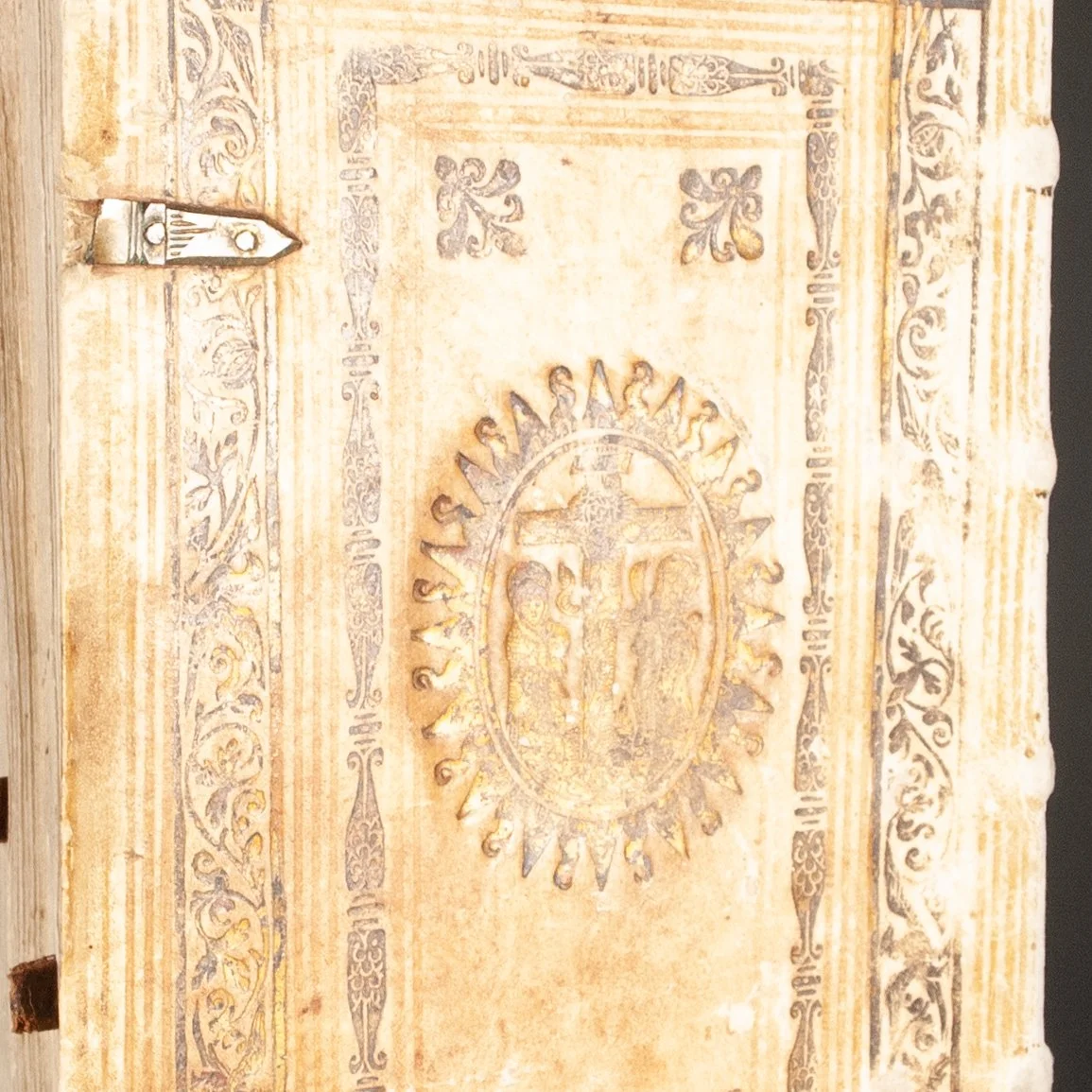
A German-speaking Catholic woman's personalized devotional manuscript, "compiled from many books," here gathered prayers (and some instructions) to facilitate the sacraments of Confession and Holy Communion. The volume is divided into four parts, as the title indicates: instructions for Confession ("How and in what manner one should confess to God from the heart," [149] p.); prayers to accompany Confession ([50] p.); prayers to prepare oneself before Communion, "the holiest sacrament" ([151] p.); and prayers for after Communion. With prayers for the two regular sacraments, the book would have functioned well as a private vade mecum for everyday devotion. Regular readers will know we're generally fond of manuscripts produced well into the age of print, as they so often partake of both worlds. This one is no exception. The handwritten collection taken auss vilen Buechern zuesamen might theoretically have been compiled from other manuscript sources. But doubtless it was the abundance of print that afforded the opportunity. ¶ We're particularly taken by the white leather binding, here tooled in eminently German Zwischgold. The grain is similar to calf, but softer and more pliable, and we wonder if it might not be deerskin. Both boards have concentric rolled frames in blind and gold, surrounding a central Virgin and Child device on the front board, and a Crucifixion device on the rear. Zwischgold was prepared by laminating gold leaf over a layer of silver leaf, sometimes even a base metal. It was an economical choice, but the gold was no match for silver’s oxidation, so surviving examples are invariably tarnished and dark. Some brilliance yet remains in this particular example.
PROVENANCE: Old ownership inscription of one Anna Maria Erb Druchsessin at foot of title page. The Druchsessin component of her surname derives from an old administration office, and came to be appended to the names of noble families throughout Germany, more commonly as Truchseß. ¶ To us from a fellow ABAA bookseller.
CONDITION: Contemporary white leather over wooden boards, as described above; remnants of brass clasps; with four leather tabs at the fore-edge, providing easy access to the four principal divisions. Written mostly in brown ink on laid paper with no discernible watermark. The general title, as well as the three subsequent divisional caption titles, have been attractively calligraphed in blue and red ink. With a number of blank leaves between each division, sometimes a substantial number. ¶ Blue ink on the opening title a bit worn, and its leather tab mostly torn away; scattered light foxing; 2" closed tear in fol. 210, just barely affecting the text. Binding rubbed, the spine quite heavily, and the extremities worn and torn, exposing some wooden board at the corners; spine a trifle cocked, and a few millimeters of loss at the head; several gatherings at the middle sitting a bit proud, but nothing loose; Zwischgold dulled, as usual, and the white leather mostly now darkened to a cream. Quite bright internally, and still quite satisfying externally.
REFERENCES: Mirjam Foot, The History of Bookbinding as a Mirror of Society (British Library, 1998), p. 15 (German and Eastern European binders tooled “with low-quality gold (a mixture of gold and base metal, now badly tarnished) during the second half of the sixteenth century”); Mirjam M. Foot, The Decorated Bindings in Marsh’s Library, Dublin (Ashgate, 2004), p. 115 (“’Zwischgold’, a metal foil, popular in German-speaking areas of Europe, made by beating a very thin layer of gold over a supporting layer of silver foil, an economy measure that time has shown up”); “Zwischgold,” Language of Bindings Thesaurus <http://w3id.org/lob/concept/1715>; Mirjam M. Foot, The Henry Davis Gift, v. 2, p. 397, #337 (for a "white calf" binding tooled in Zwischgold on a 1562 Frankfurt imprint)
Item #959