Calendarium Tyrnaviense ad annum Jesu Christi MDCCXXXI...
Trnava: University of Trnava (Friedrich Gall), 1731
[66] p. | 4to | pi1 A-D^4 a-d^4 | 200 x 152 mm
The 1731 edition of a Latin almanac likely intended for the political, civil, and commercial elite of the Kingdom of Hungary. It was printed at Tyrnau—present-day Trnava, Slovakia—a major crossroads that became an important market town. We find editions of this particular almanac as early as 1689, and through 1776, all of them published by the Jesuit Trnava University, then the kingdom's only university. The university's printer at the time was Friedrich Gall. Our imprint has been torn away, but we can reasonably presume it was printed under the same circumstances. ¶ The content is fairly typical of the almanac: tables of standard annual chronological markers; legends for the symbols used in the calendar; twelve monthly calendars, each providing dates, important feast days, lunar and solar details, and occasional weather forecasts. A discourse on canon law rather unexpectedly runs alongside the calendar. Then comes a bloodletting table, indicating the best, worst, and middling times to let blood (as well as bathe, take medicine, and more); a table indicating how the zodiac affects the weather; and finally an additional page of bloodletting guidance. The volume closes with a lengthy astrological prognostication, which opens with the year's eclipses, but otherwise focuses on armed conflicts. ¶ It's in an unusual binding, a single piece of parchment printed with one plate on the front, another on the back. The front bears the arms of Charles VI, Holy Roman Emperor, and the rear his motto (Constantia et fortidudine [sic]). We suspect almanacs thus bound were gifts of the Habsburg court. The plate used for the front cover had a large open space, presumably intended for personalization, as was the case here. Our copy bears on its front cover a handwritten inscription to Genoese diplomat Clemente Doria, member of one of the republic's most powerful families. The timing of this gift may not have been a coincidence. Genoa and the Habsburgs had longstanding ties. They occasionally shared borders, and Genoa's bankers helped finance the Austrian family during its 16th-century heyday. But Genoa struggled to reverse a decline that began in the 17th century, and the oppressively taxed citizens of Corsica revolted in 1729. Things deteriorated further in 1730, as the revolt snowballed into a full-blown fight for independence. Genoa finally turned to Charles VI for assistance. In 1731, he sent several thousand troops to Bastia to help Genoa suppress the islanders. Between 1716 and 1731, Doria was frequently at the Habsburg court in Vienna representing Genoese interests, including on 25 November 1730. Since almanacs were typically printed late in the year prior to that for which they were intended, it's very likely Doria was given this almanac during that particular visit. ¶ We've never seen a binding quite like this, nor have we found anything comparable in our references at hand. Certainly we've seen black panel stamps on parchment bindings, produced from relief blocks of wood or metal. And of course printed paper covers became increasingly common in the 18th century. But parchment bindings printed from such finely detailed intaglio plates—intentionally designed as a binding, not simply a repurposed print—are plainly rare. Printing anything on parchment had become unusual at this point, reserved for the likes of diplomas and other slight pieces celebrating august occasions. It certainly feels like a flex of the Habsburg court.
PROVENANCE: Presented to Clemente Doria, as explained above. Old calculations in pen and pencil on the front paste-down and front fly-leaf.
CONDITION: Contemporary parchment over boards, both covers printed with engravings, as described above; edges silver, now very tarnished. The calendar interleaved. ¶ The catchword on D4r (Con-) suggests something missing, but many almanacs were comprised of discrete sections that often seem to have been available à la carte. The catchword likely referred to something like the 56-page Continuatio narrationum ex historia sacra veteris testamenti selectarum we find in a copy of the 1738 edition. Such Old Testament history was hardly critical to the almanac's regular function, and our copy was certainly bound without it. ¶ More than half the title page torn away, imprint included; the printed text with occasional light foxing, the blank interleaving much more heavily foxed; trimmed close, but never quite touching any content. Front hinge completely split (revealing the book's structure, sewn on three vellum tapes, and some printed waste); rear hinge splitting at the top, but still holding; extremities bumped, and the parchment soiled and rubbed; a few pinholes at the top of the front board.
REFERENCES: Archivio storico di Corsica 17 (1941), p. 61 (placing Doria in Vienna late in 1730); Istruzioni e relazioni degli ambasciatori genovesi 6 (1951), p. 16 (noting Doria as ambassador in Vienna, 1716-1731); Matthew Shaw, "Keeping Time in the Age of Franklin: Almanacs and the Atlantic World," Printing History New Series 2 (July 2007), p. 21 (“Because almanacs give center stage to prognostication and astrological thought, almanacs have been seen to be a vital window into popular belief, charting the shifting patterns of supernatural reasoning"), 27 (“Almanacs had various roles: offered as Christmas or New Year gifts, used as decoration, deployed as journals to record debts and loans, a primer for amateur astronomy or astrology, a guide to horticulture, or simply, and perhaps most importantly, a means to keep track for the passing of the days in a society with few or no newspapers and among communities with limited contact to the wider world"); Horst Meyer, "Almanacks and Poltergeists: Gottfried Kisling's interleaved 'Oßnabrückscher Stiffts-Calender' (1713-1739)," The German Book 1450-1750 (1995), p. 340 (in early 18c Osnabruck, one printer aimed to have 16mo and quarto almanacs ready by mid-September, his Schreibkalender production began in August, and broadside calendars became available in early December)
Item #966
Calendarium Tyrnaviense ad annum Jesu Christi MDCCXXXI...
Trnava: University of Trnava (Friedrich Gall), 1731
[66] p. | 4to | pi1 A-D^4 a-d^4 | 200 x 152 mm
The 1731 edition of a Latin almanac likely intended for the political, civil, and commercial elite of the Kingdom of Hungary. It was printed at Tyrnau—present-day Trnava, Slovakia—a major crossroads that became an important market town. We find editions of this particular almanac as early as 1689, and through 1776, all of them published by the Jesuit Trnava University, then the kingdom's only university. The university's printer at the time was Friedrich Gall. Our imprint has been torn away, but we can reasonably presume it was printed under the same circumstances. ¶ The content is fairly typical of the almanac: tables of standard annual chronological markers; legends for the symbols used in the calendar; twelve monthly calendars, each providing dates, important feast days, lunar and solar details, and occasional weather forecasts. A discourse on canon law rather unexpectedly runs alongside the calendar. Then comes a bloodletting table, indicating the best, worst, and middling times to let blood (as well as bathe, take medicine, and more); a table indicating how the zodiac affects the weather; and finally an additional page of bloodletting guidance. The volume closes with a lengthy astrological prognostication, which opens with the year's eclipses, but otherwise focuses on armed conflicts. ¶ It's in an unusual binding, a single piece of parchment printed with one plate on the front, another on the back. The front bears the arms of Charles VI, Holy Roman Emperor, and the rear his motto (Constantia et fortidudine [sic]). We suspect almanacs thus bound were gifts of the Habsburg court. The plate used for the front cover had a large open space, presumably intended for personalization, as was the case here. Our copy bears on its front cover a handwritten inscription to Genoese diplomat Clemente Doria, member of one of the republic's most powerful families. The timing of this gift may not have been a coincidence. Genoa and the Habsburgs had longstanding ties. They occasionally shared borders, and Genoa's bankers helped finance the Austrian family during its 16th-century heyday. But Genoa struggled to reverse a decline that began in the 17th century, and the oppressively taxed citizens of Corsica revolted in 1729. Things deteriorated further in 1730, as the revolt snowballed into a full-blown fight for independence. Genoa finally turned to Charles VI for assistance. In 1731, he sent several thousand troops to Bastia to help Genoa suppress the islanders. Between 1716 and 1731, Doria was frequently at the Habsburg court in Vienna representing Genoese interests, including on 25 November 1730. Since almanacs were typically printed late in the year prior to that for which they were intended, it's very likely Doria was given this almanac during that particular visit. ¶ We've never seen a binding quite like this, nor have we found anything comparable in our references at hand. Certainly we've seen black panel stamps on parchment bindings, produced from relief blocks of wood or metal. And of course printed paper covers became increasingly common in the 18th century. But parchment bindings printed from such finely detailed intaglio plates—intentionally designed as a binding, not simply a repurposed print—are plainly rare. Printing anything on parchment had become unusual at this point, reserved for the likes of diplomas and other slight pieces celebrating august occasions. It certainly feels like a flex of the Habsburg court.
PROVENANCE: Presented to Clemente Doria, as explained above. Old calculations in pen and pencil on the front paste-down and front fly-leaf.
CONDITION: Contemporary parchment over boards, both covers printed with engravings, as described above; edges silver, now very tarnished. The calendar interleaved. ¶ The catchword on D4r (Con-) suggests something missing, but many almanacs were comprised of discrete sections that often seem to have been available à la carte. The catchword likely referred to something like the 56-page Continuatio narrationum ex historia sacra veteris testamenti selectarum we find in a copy of the 1738 edition. Such Old Testament history was hardly critical to the almanac's regular function, and our copy was certainly bound without it. ¶ More than half the title page torn away, imprint included; the printed text with occasional light foxing, the blank interleaving much more heavily foxed; trimmed close, but never quite touching any content. Front hinge completely split (revealing the book's structure, sewn on three vellum tapes, and some printed waste); rear hinge splitting at the top, but still holding; extremities bumped, and the parchment soiled and rubbed; a few pinholes at the top of the front board.
REFERENCES: Archivio storico di Corsica 17 (1941), p. 61 (placing Doria in Vienna late in 1730); Istruzioni e relazioni degli ambasciatori genovesi 6 (1951), p. 16 (noting Doria as ambassador in Vienna, 1716-1731); Matthew Shaw, "Keeping Time in the Age of Franklin: Almanacs and the Atlantic World," Printing History New Series 2 (July 2007), p. 21 (“Because almanacs give center stage to prognostication and astrological thought, almanacs have been seen to be a vital window into popular belief, charting the shifting patterns of supernatural reasoning"), 27 (“Almanacs had various roles: offered as Christmas or New Year gifts, used as decoration, deployed as journals to record debts and loans, a primer for amateur astronomy or astrology, a guide to horticulture, or simply, and perhaps most importantly, a means to keep track for the passing of the days in a society with few or no newspapers and among communities with limited contact to the wider world"); Horst Meyer, "Almanacks and Poltergeists: Gottfried Kisling's interleaved 'Oßnabrückscher Stiffts-Calender' (1713-1739)," The German Book 1450-1750 (1995), p. 340 (in early 18c Osnabruck, one printer aimed to have 16mo and quarto almanacs ready by mid-September, his Schreibkalender production began in August, and broadside calendars became available in early December)
Item #966

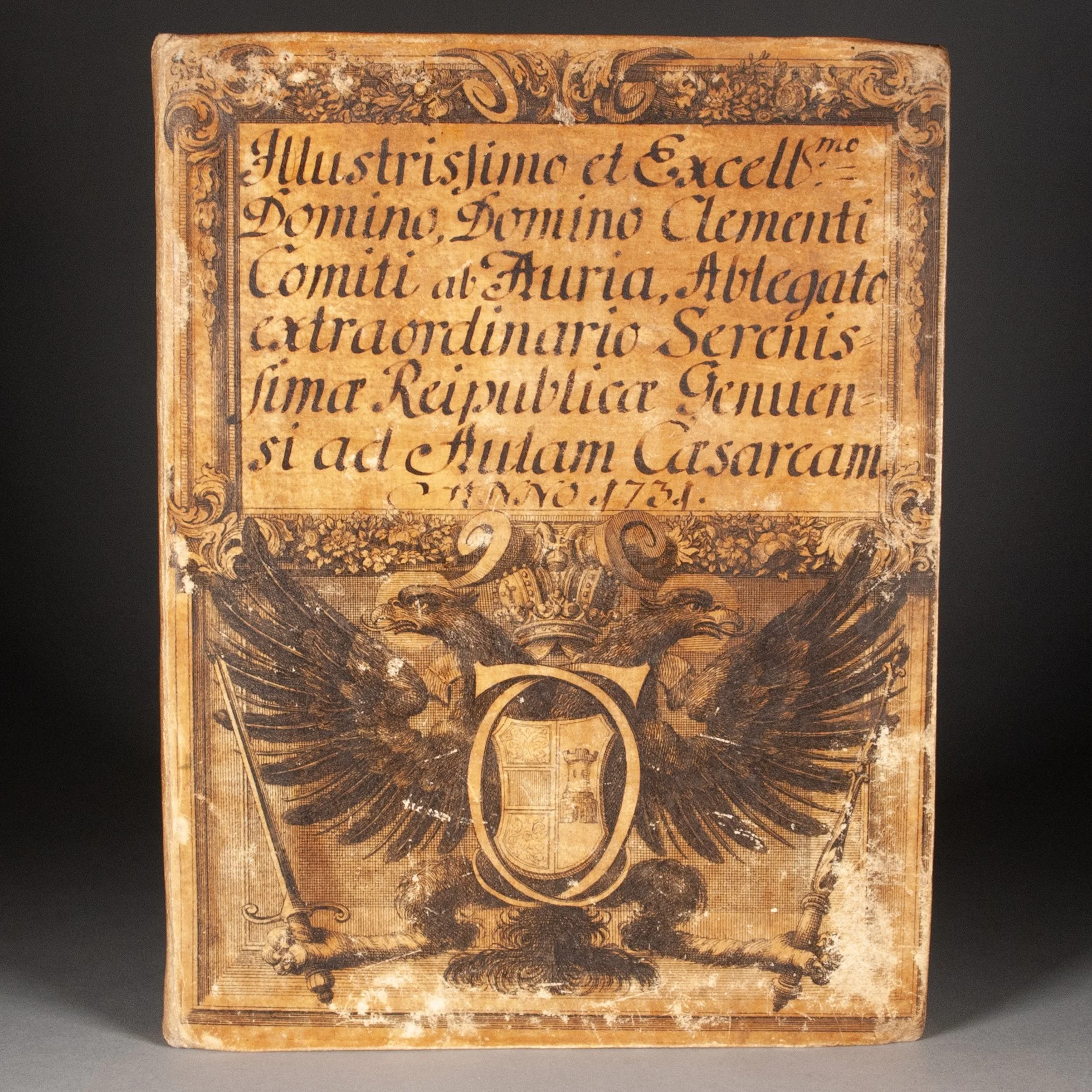 Image 1 of 8
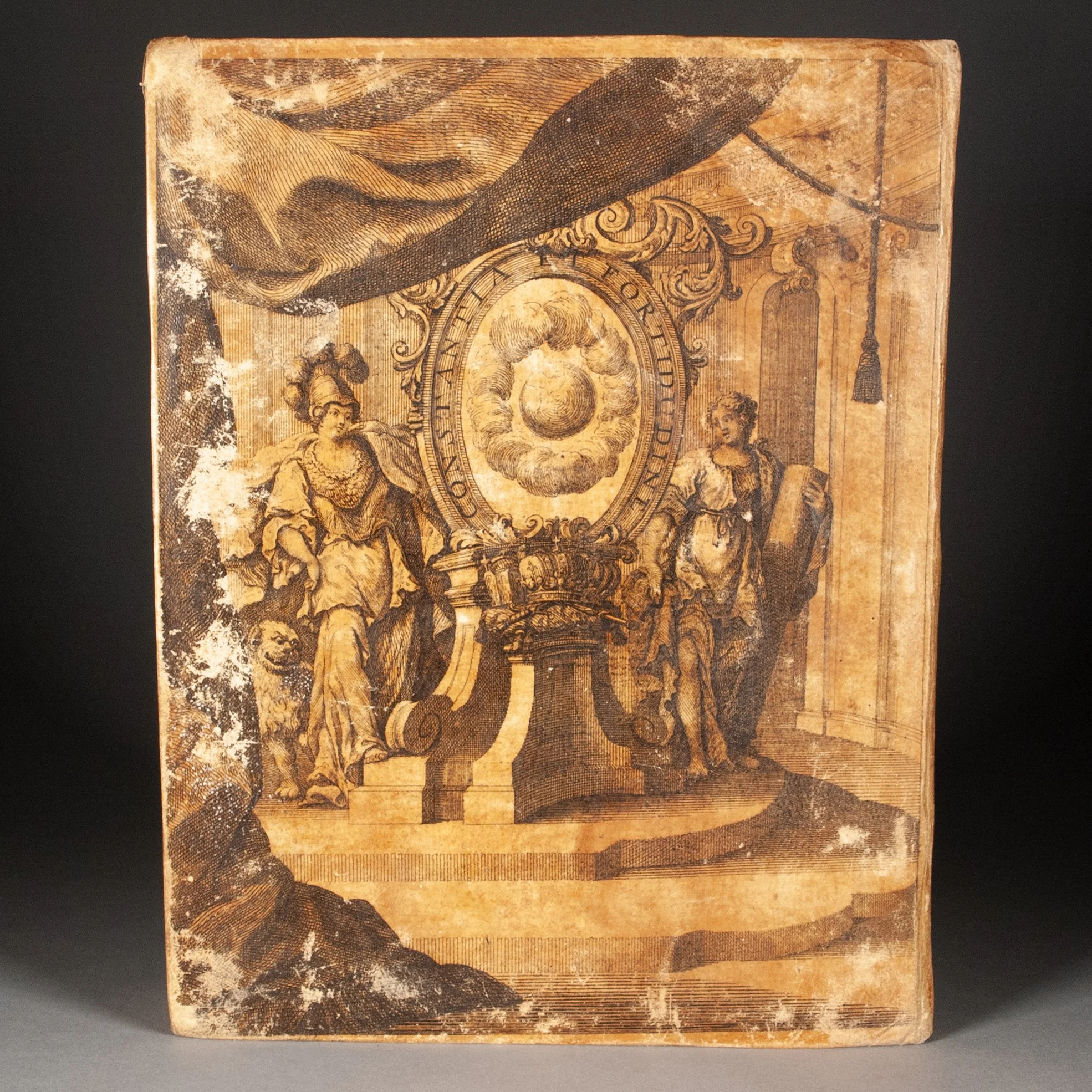 Image 2 of 8
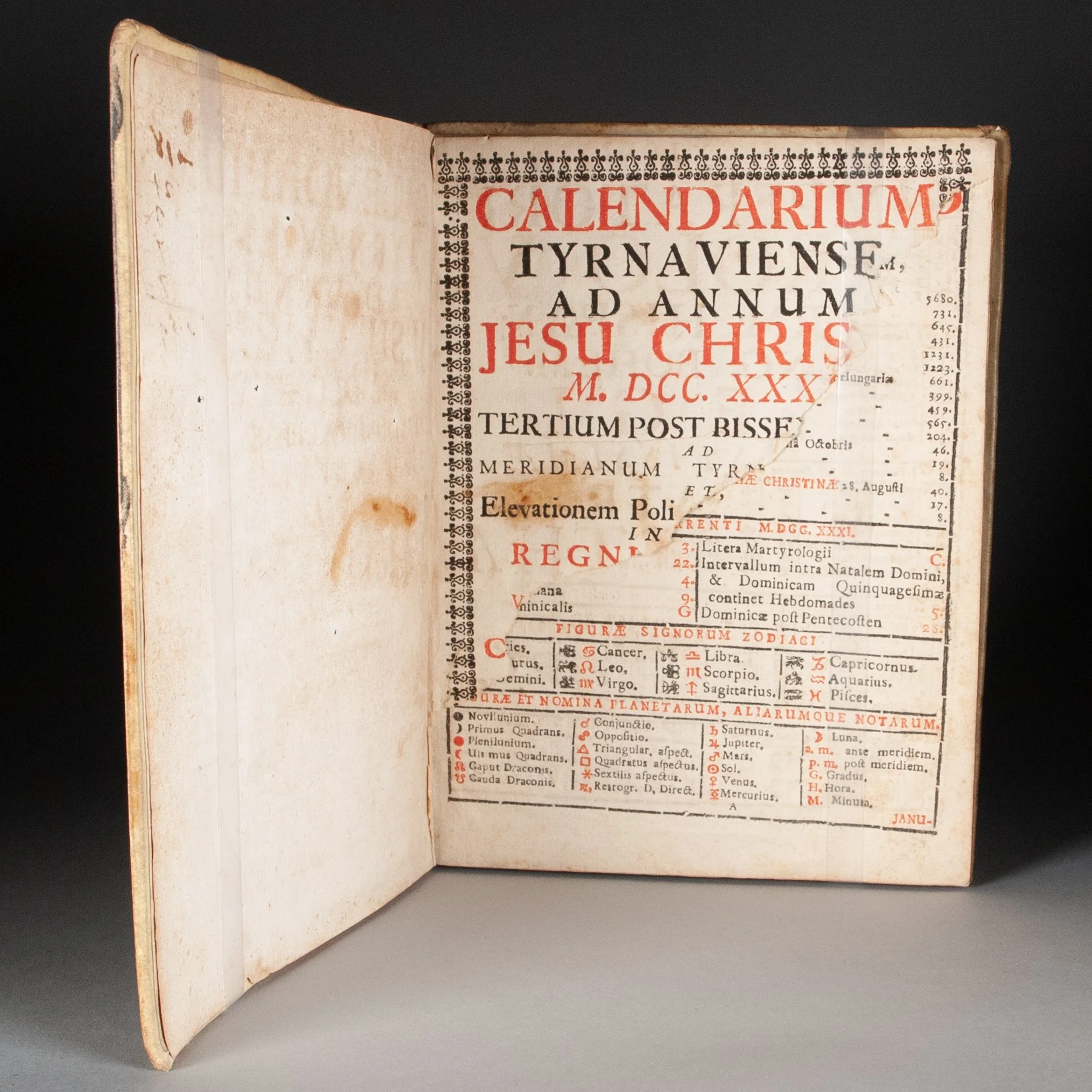 Image 3 of 8
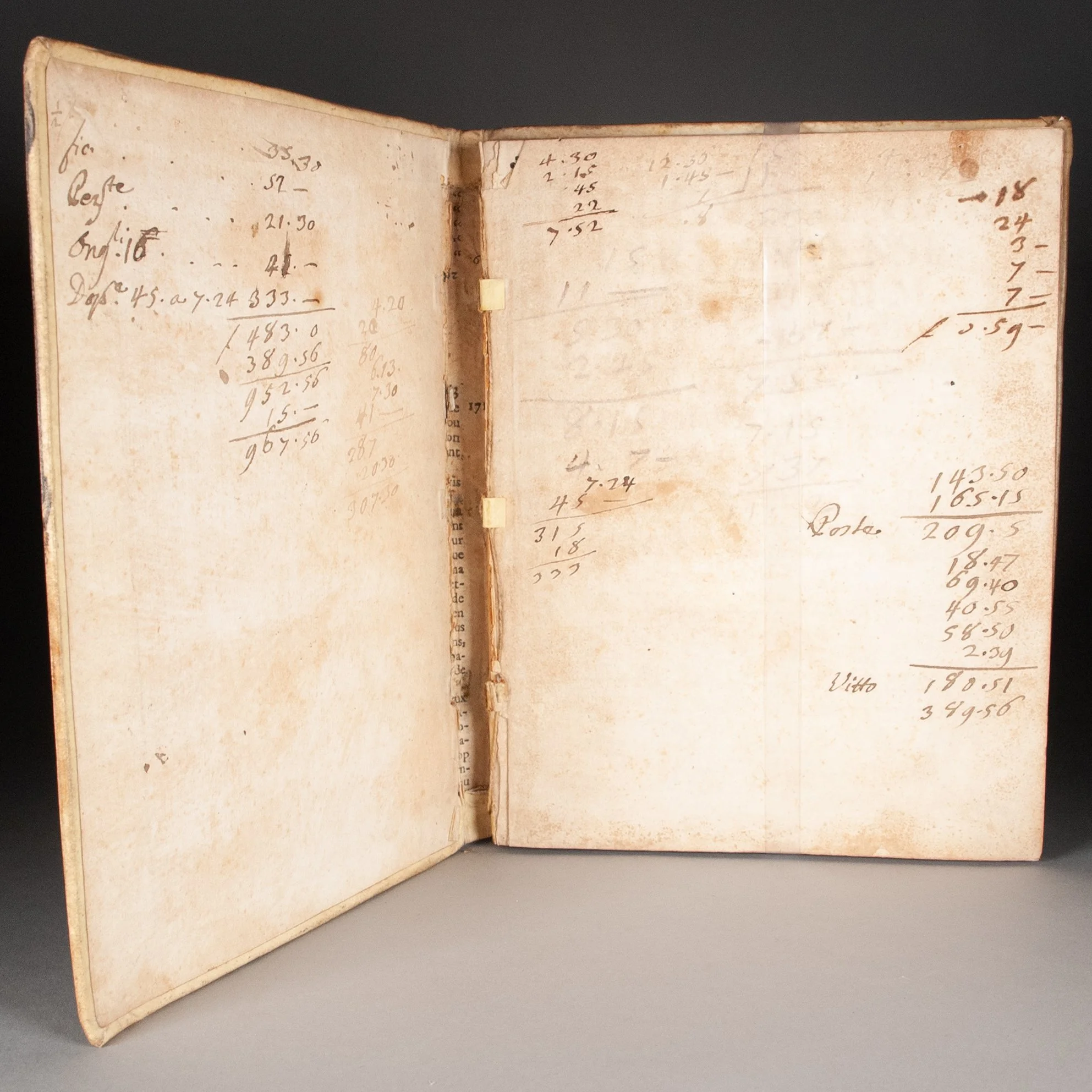 Image 4 of 8
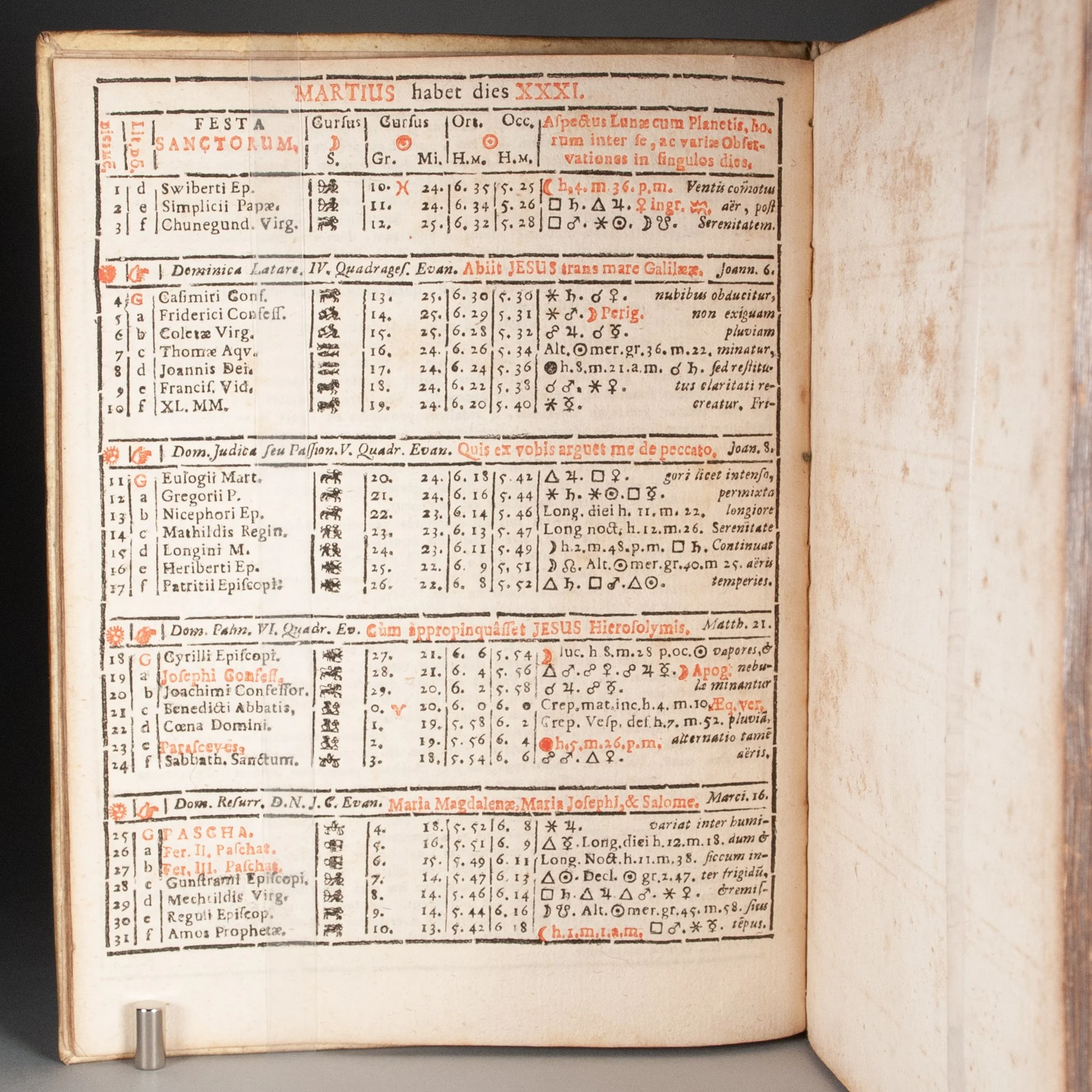 Image 5 of 8
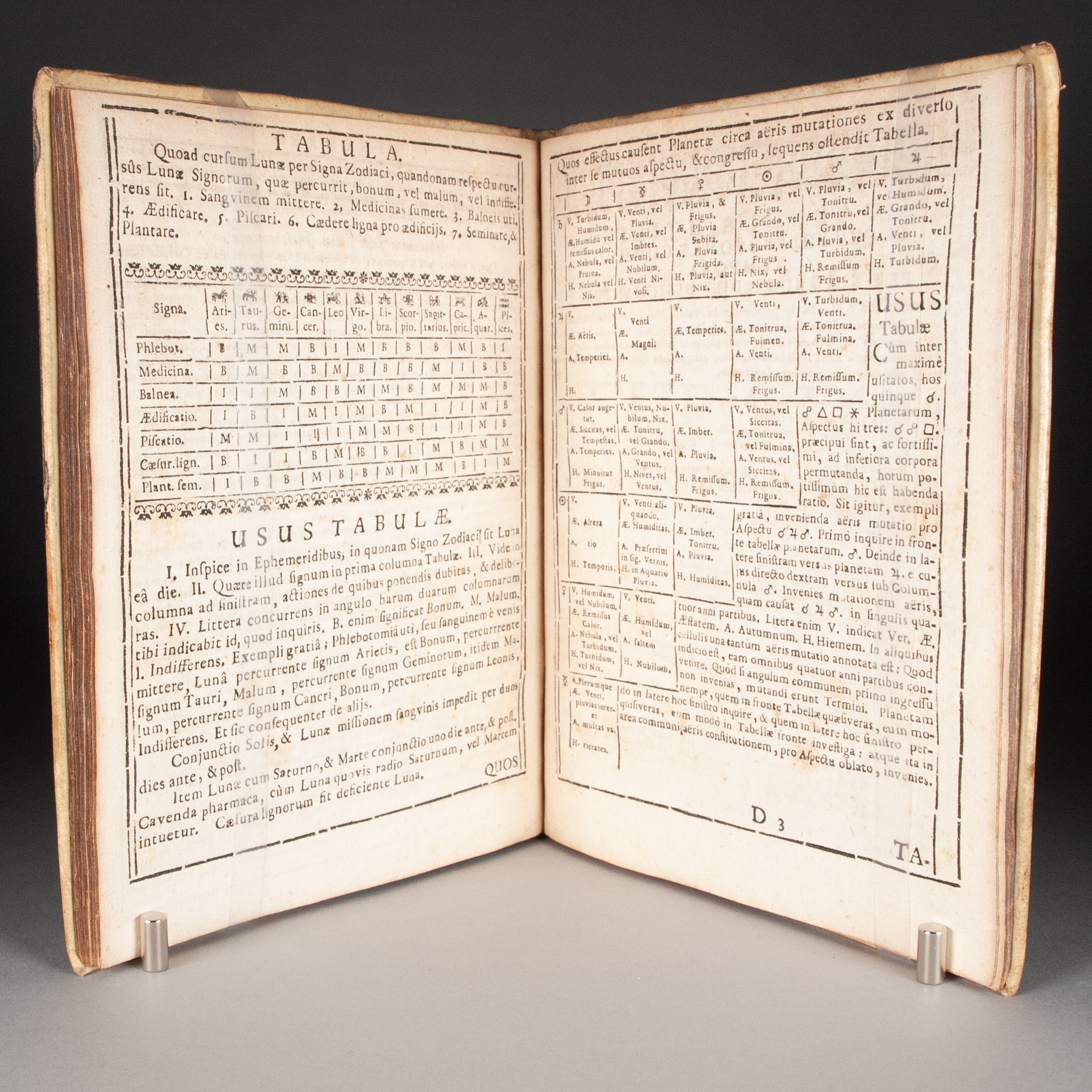 Image 6 of 8
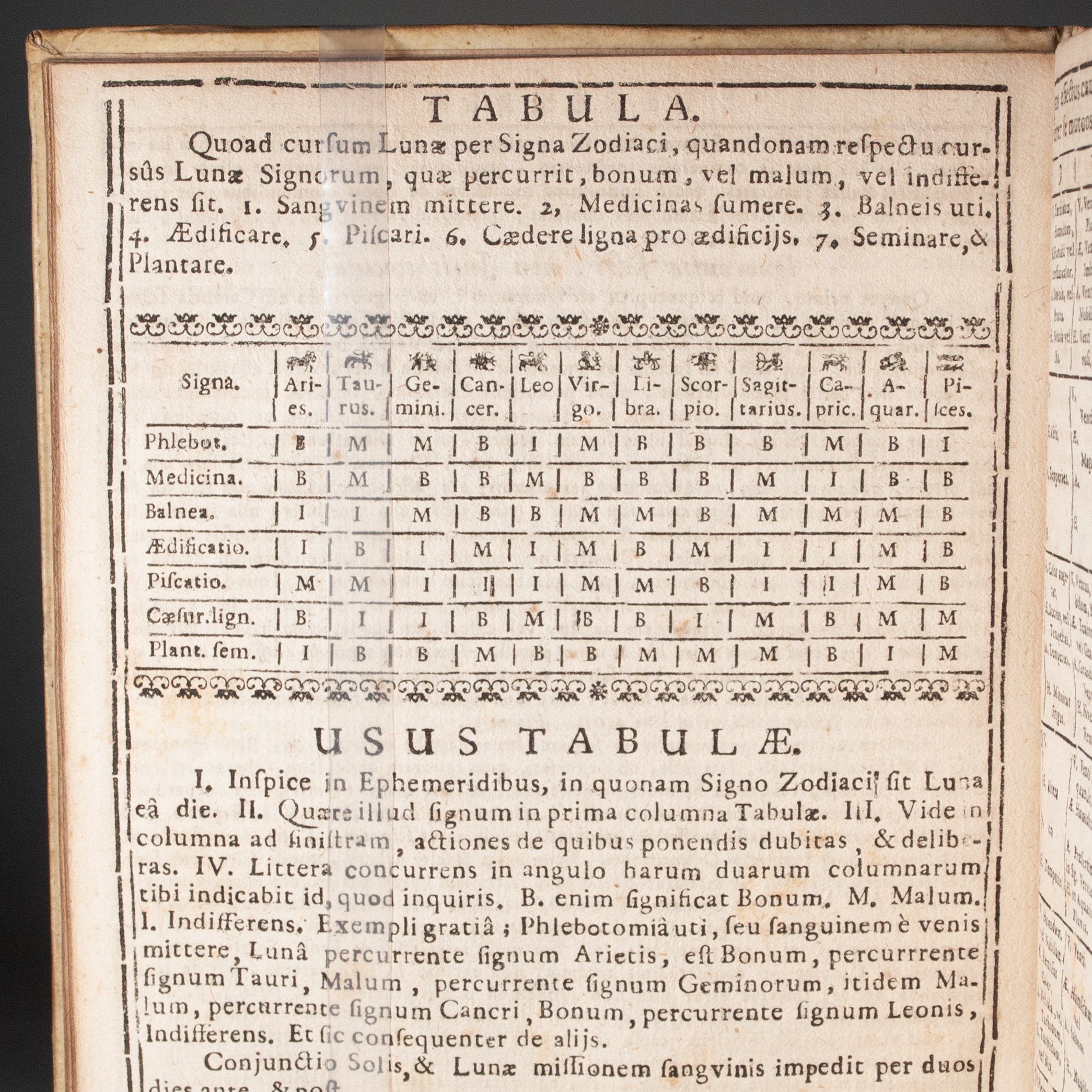 Image 7 of 8
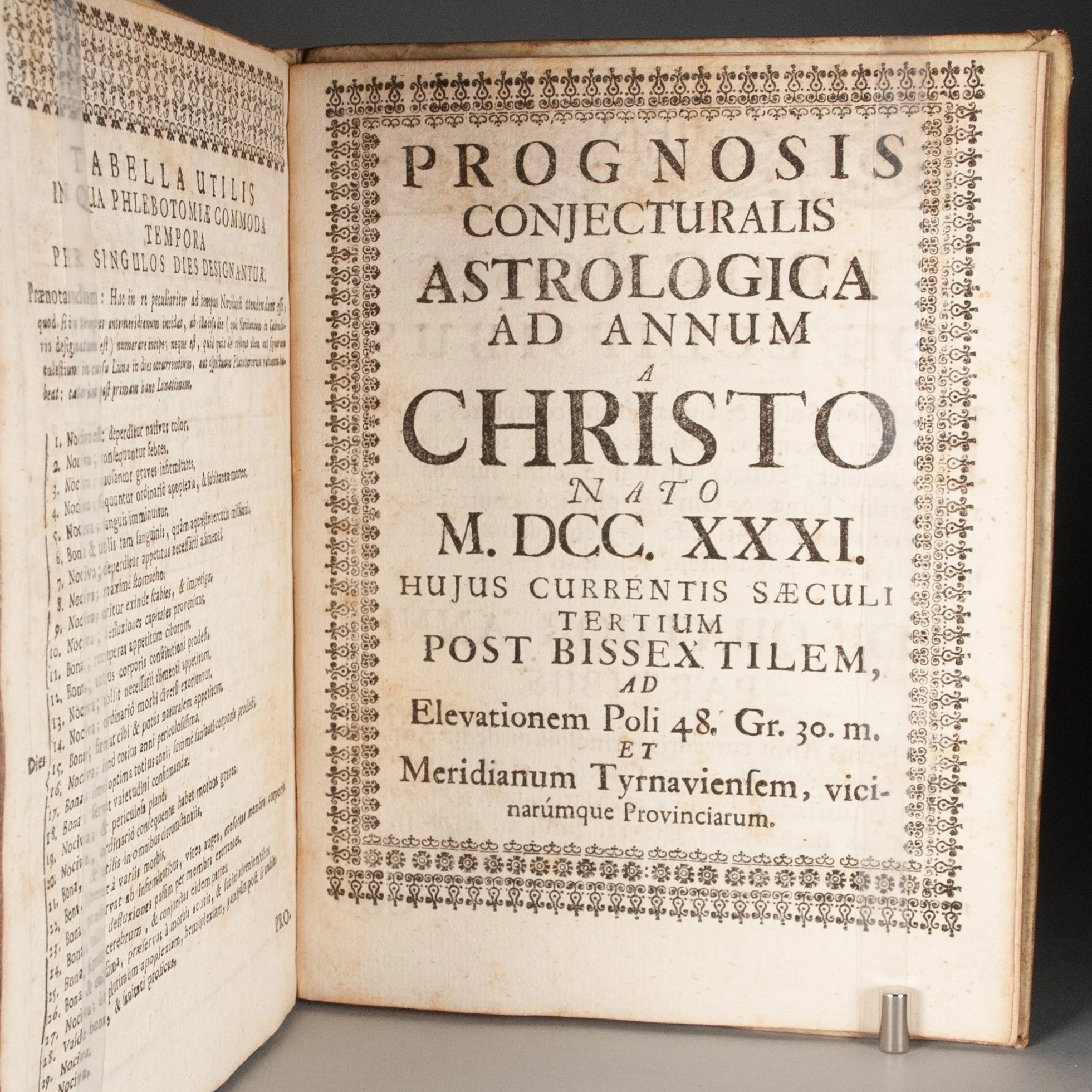 Image 8 of 8