
Luxury book for the illiterate
Luxury book for the illiterate
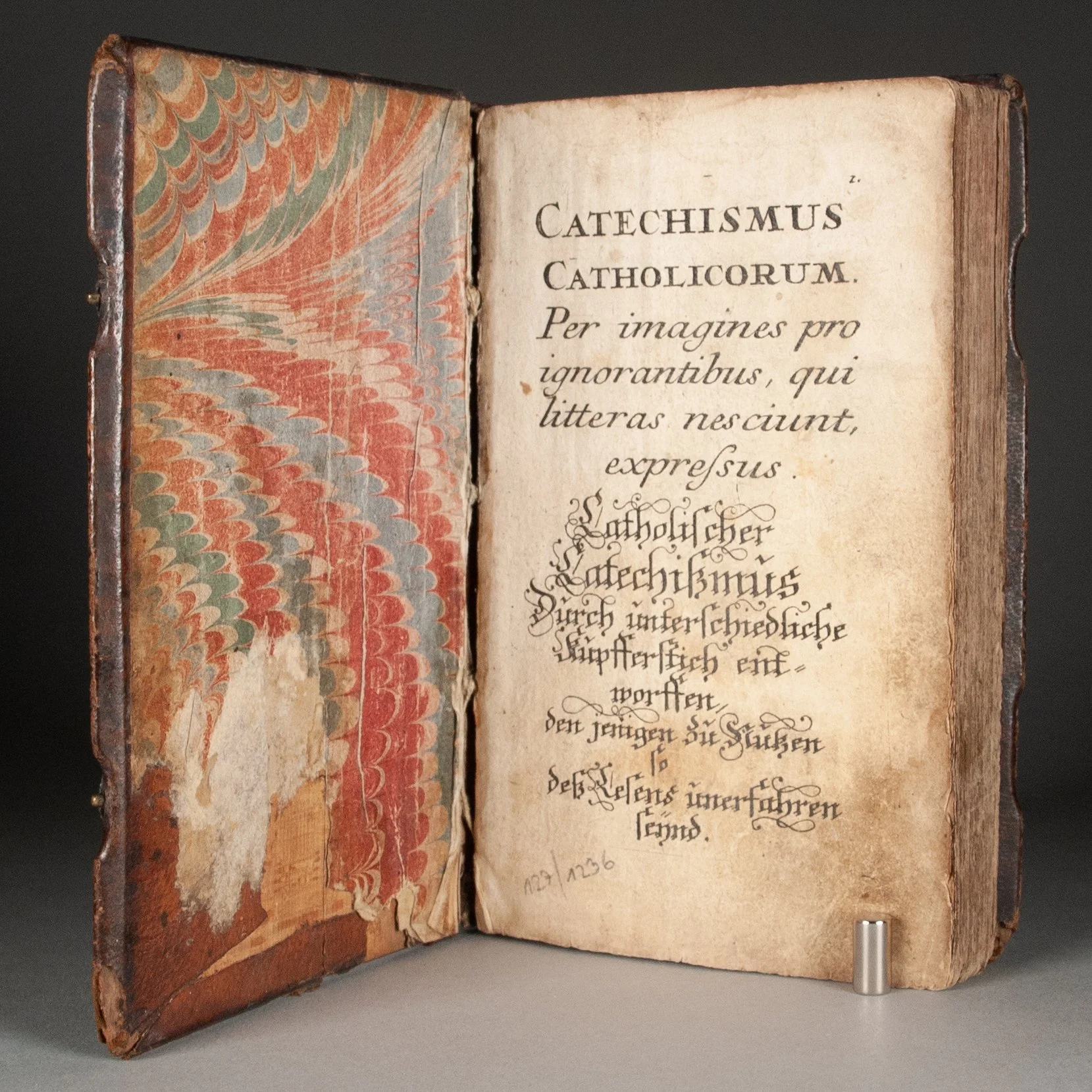
Catechismus Catholicorum, per imagines pro ignorantibus, qui litteras nesciunt expressus; Catholischer Catechismus, durch unterschiedliche Kupfferstich entworffen, den jenigen zu nutzen so dess Lesens unerfahren seynd
by Johann Christoph Hafner (Haffner)
[Augsburg: Johann Christoph Hafner, 1709]
76, 78-110 leaves | 147 x 87 mm
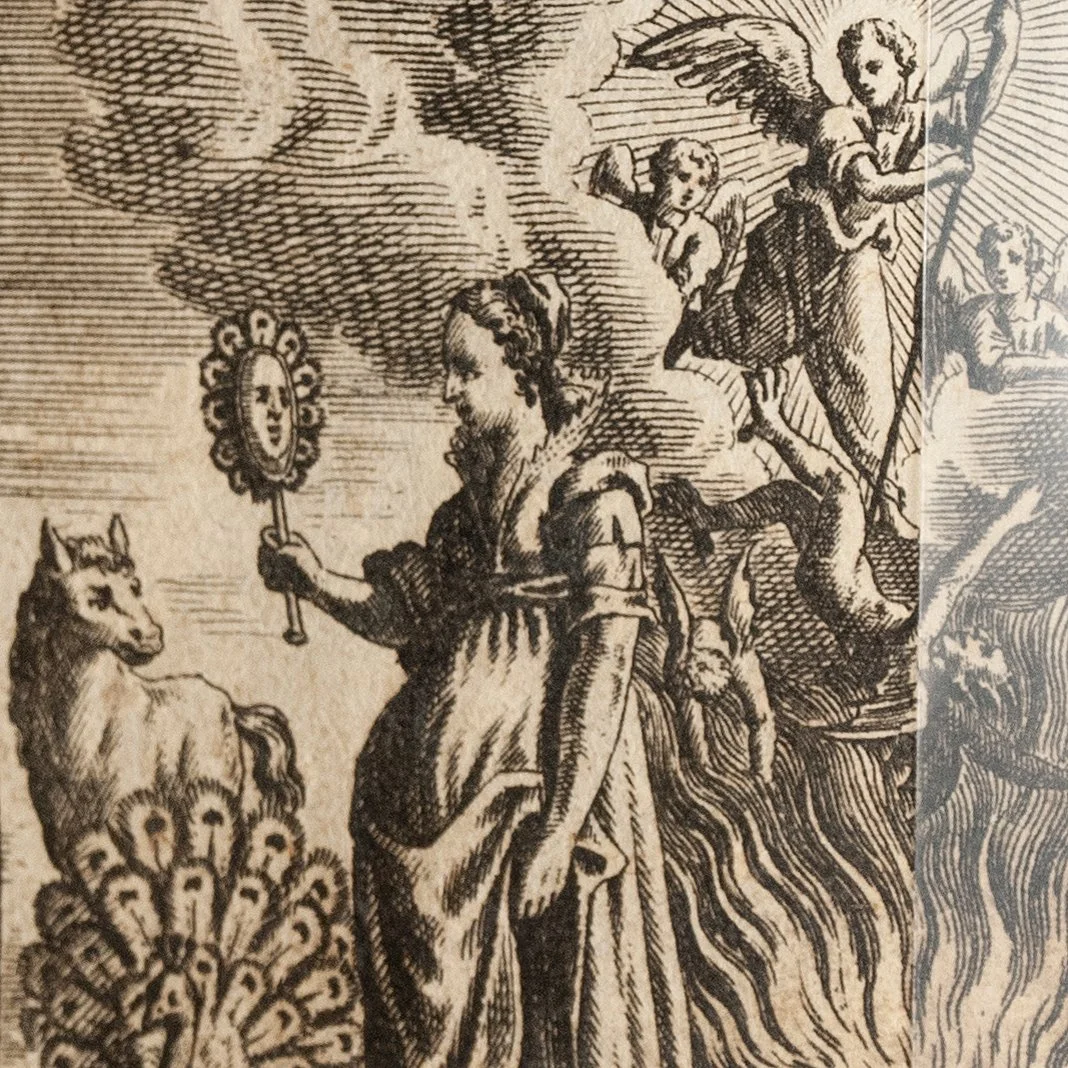
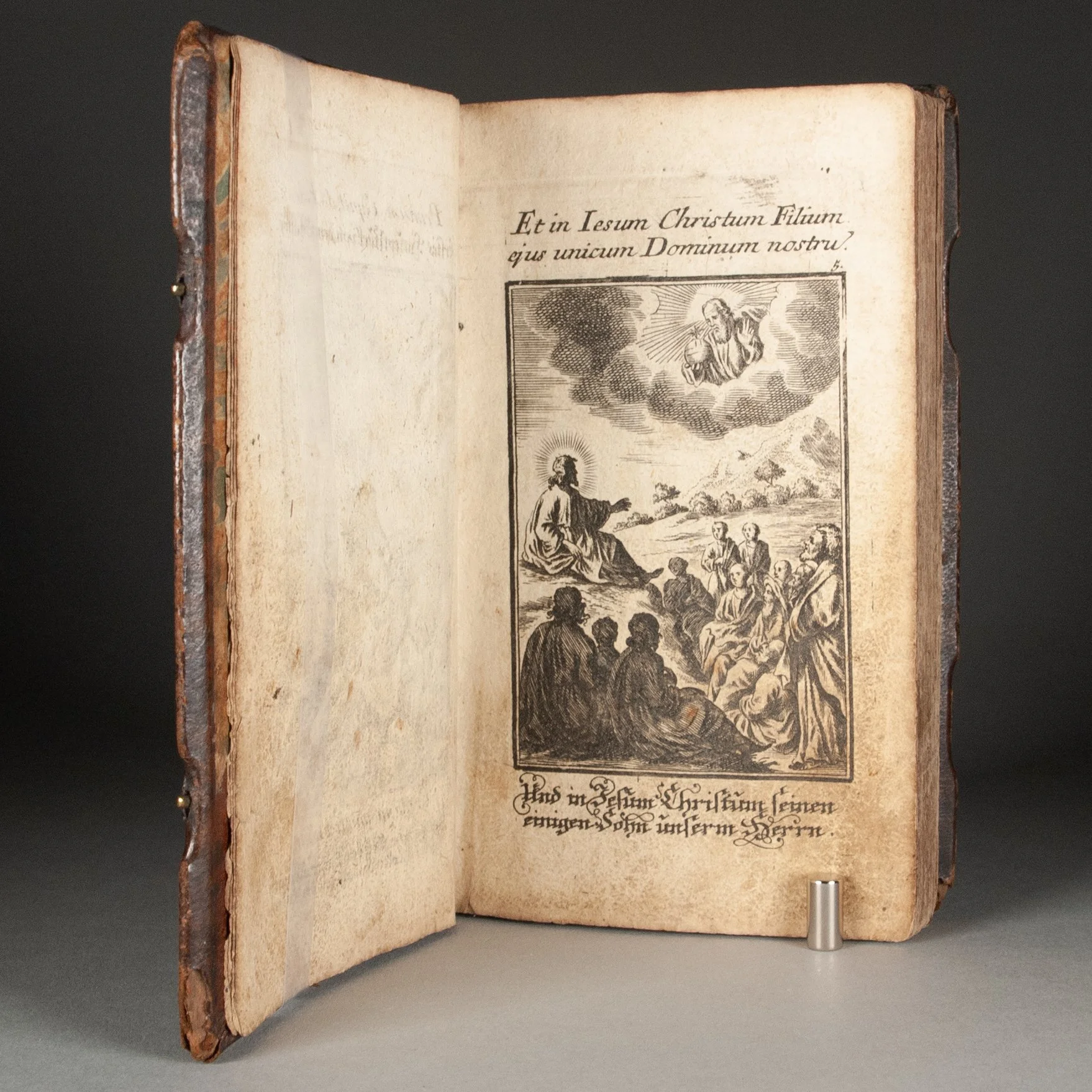
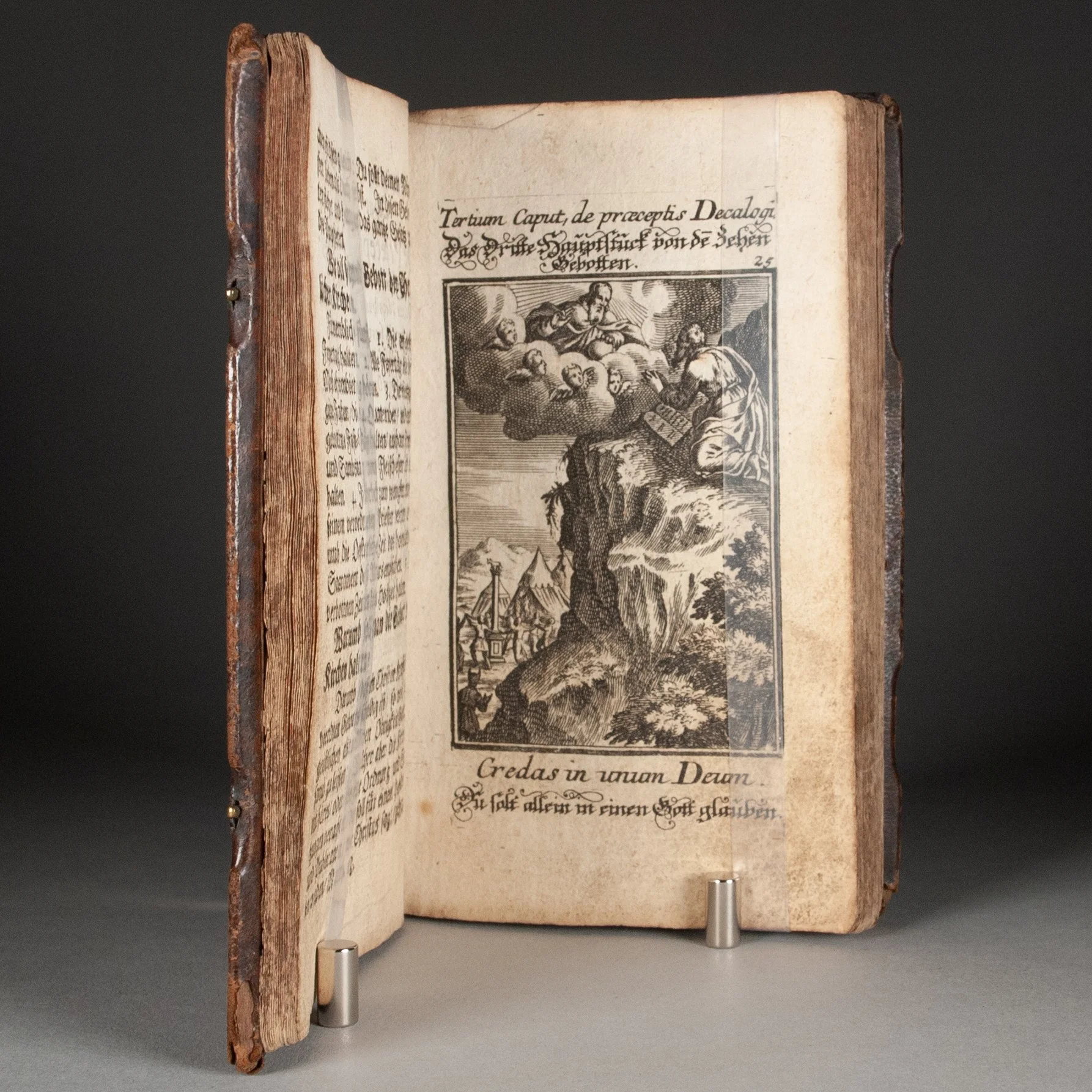
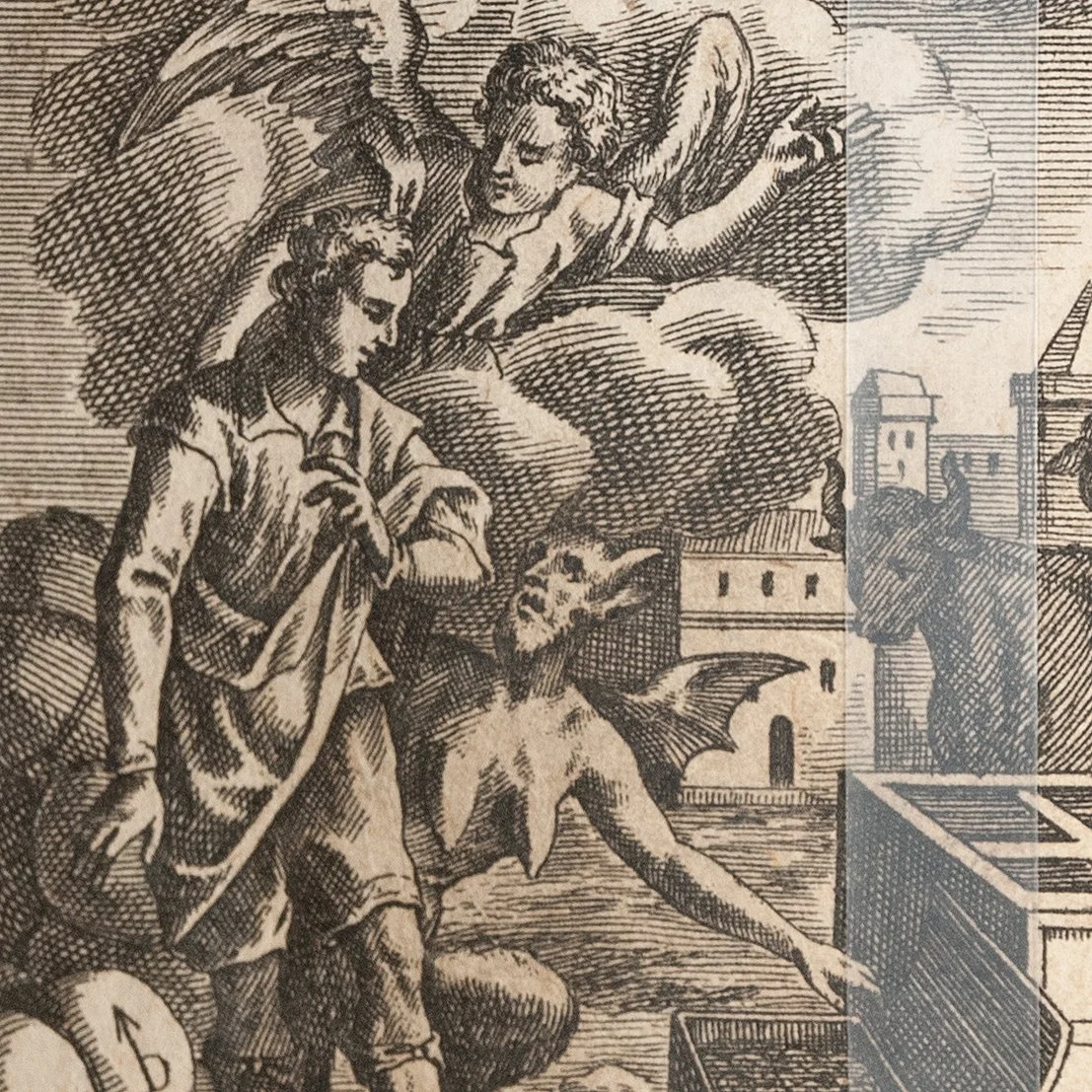
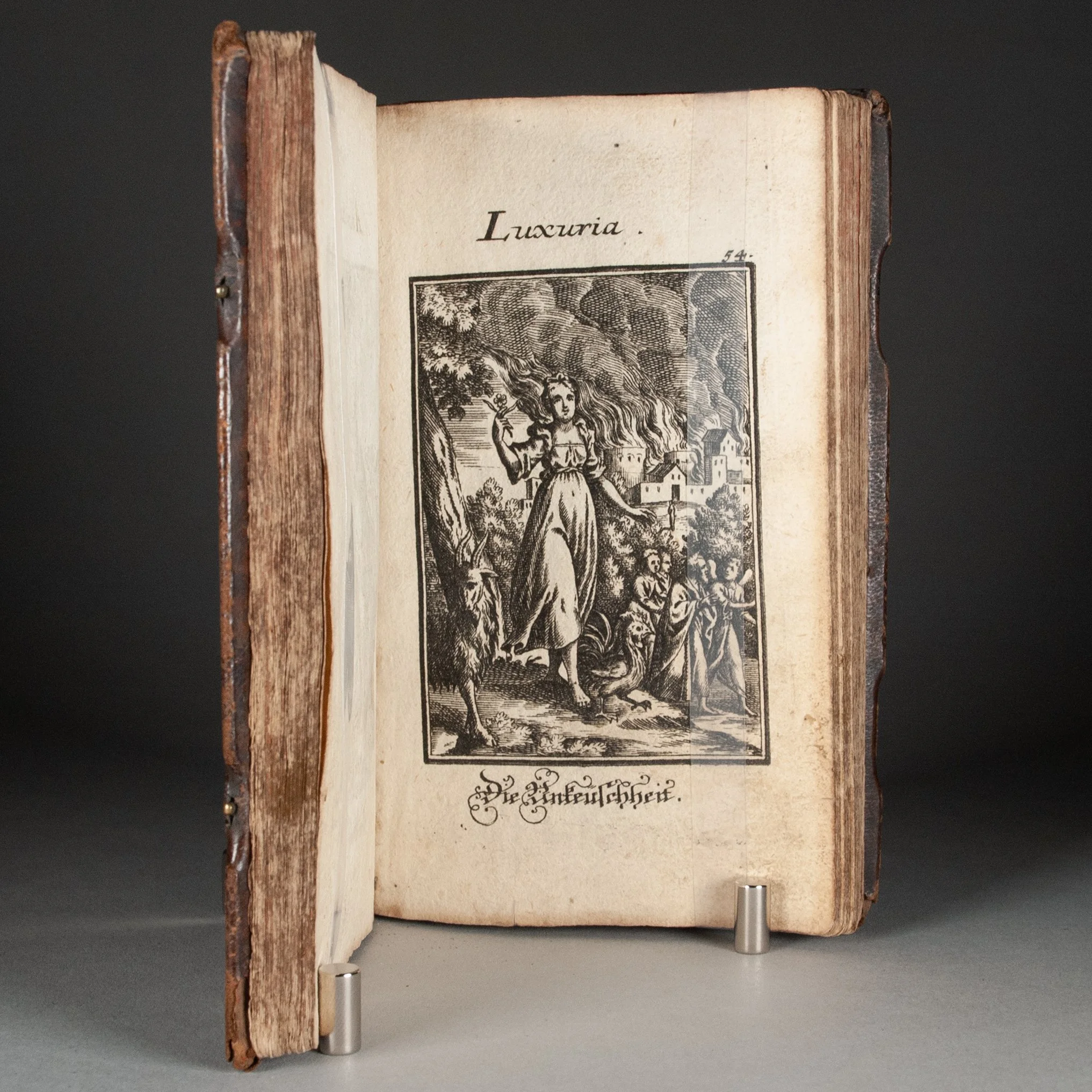
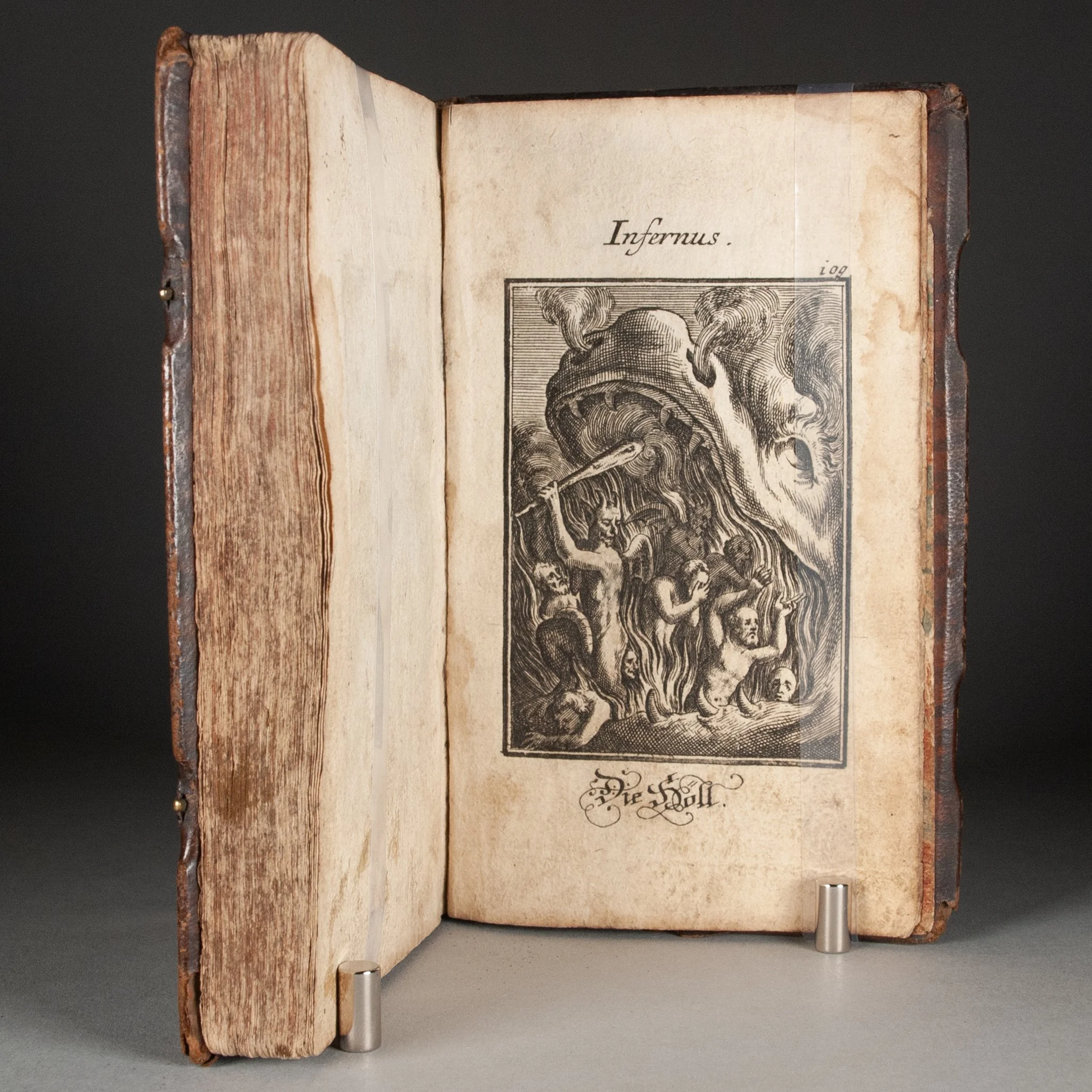
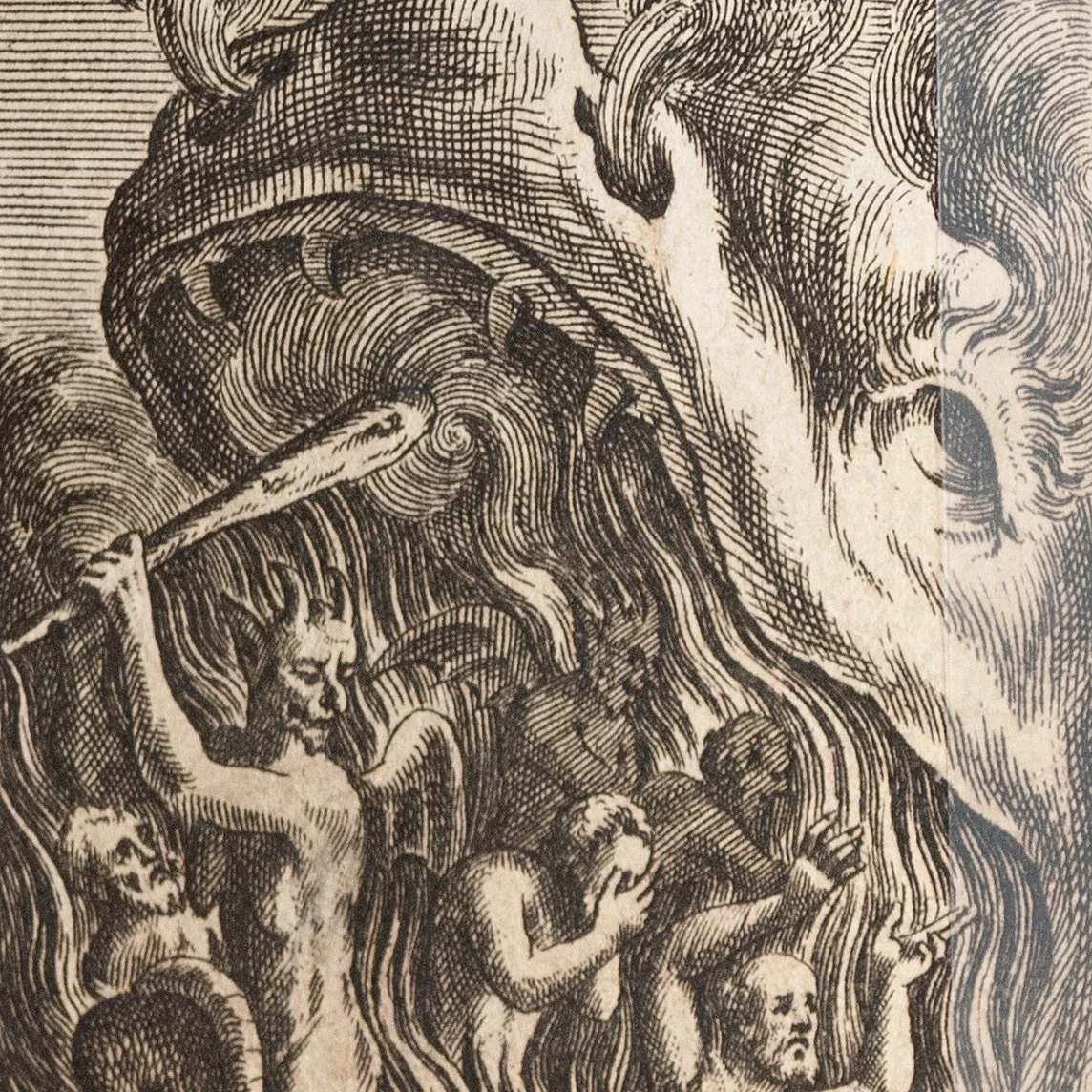
First and only edition (one of two issues) of this German Catholic pictorial catechism, conveyed “through images for the ignorant,” as the title makes plain, its 102 engravings meant for those “who don’t know letters”—a curious claim for a book that must have been nowhere near affordable for the illiterate laborer. But leave such innovation to Hafner, something of a force in the Augsburg art publishing world, big enough to employ multiple engravers and disruptive enough that the city’s illuminators sought to cancel one of his privileges (while suggesting he was experimenting with color printing techniques). He appears to have operated on a fairly large scale, doing reproductive work himself while producing his own model designs. ¶ As a genre, catechisms delivered the fundamentals of Christian doctrine in a simple question-and-answer format. The handful of letterpress pages here maintain that configuration, with text in both Latin and German. Each image has captions in both languages, too. Lutherans were the true masters of early catechisms, though eventually the Catholic Church prepared its own to answer the Protestant deluge. “The catechism was such fertile territory for authors and publishers alike because of its enormous versatility as a devotional and pedagogic tool,” Pettegree and Weduwen write of those used by Dutch Protestants, though much of this should be true for any confession. “Ministers used catechisms as a means to arm themselves for the struggle against dissidence in their congregations; private citizens read them for pleasure, or to still a troubled soul or conscience. In this diversity of purpose lay the root of multiplicity. All catechisms taught the essentials of faith in a series of questions and answers. But from thereon the scope for elaboration was enormous.” ¶ As elaboration goes, it’s easy to imagine the appeal of this image-forward bilingual edition. Clergy and the learned could use the Latin, laypeople with even a smattering of the vernacular might benefit from the German, and the images would reinforce the lessons for everyone. Then, of course, there were the affluent devout, clerical and lay alike, who must have been the only ones actually able to afford such a decadently illustrated volume. We can’t imagine they were the ignorant Hafner had in mind, but they could well have used the book to educate children in their household, or the less literate in their congregation. ¶ Plenty of early Catholic catechisms contained illustrations, but this intense focus on image at the expense of most text, to the point of specifically addressing the book to the unlettered ignorant, is unusual. This is not to say the genre lacked precedent. The medieval Biblia Pauperum could be taken as an early analog, if not strictly a catechism, and so too the countless illustrated Bibles published over the years. Missionaries certainly used pictorial catechisms (frequently in manuscript) to instruct natives in overseas territories, a use that perhaps culminated in the Catholic ladders of the 19th century. Many have even pointed to stained glass windows, and other decoration in churches, as tools that must have played a similar role for the illiterate faithful. Perhaps the best forerunners for the present are the illustrated editions of Petrus Canisius’s Parvus Catechismus Catholicorum, Plantin’s 1589 edition illustrated by Pieter van der Borcht best known among them (its illustrations actually based on a 1587 Roman production). To be sure, van der Borcht and Hafner drew on much of the same established Christian imagery—the Hellmouth to represent Infernus (fol. 109), for example, and people falling through holes in the ground on Judgment Day (fol. 108). The sacraments are illustrated, scenes from the New Testament, the Ten Commandments, plus much more on sins and good works. ¶ A potent example of Catholic print, and a rather unusual example of luxury bookmaking aimed expressly at the illiterate. WorldCat reports just two copies in North America (Bridwell at SMU and Michigan State University).
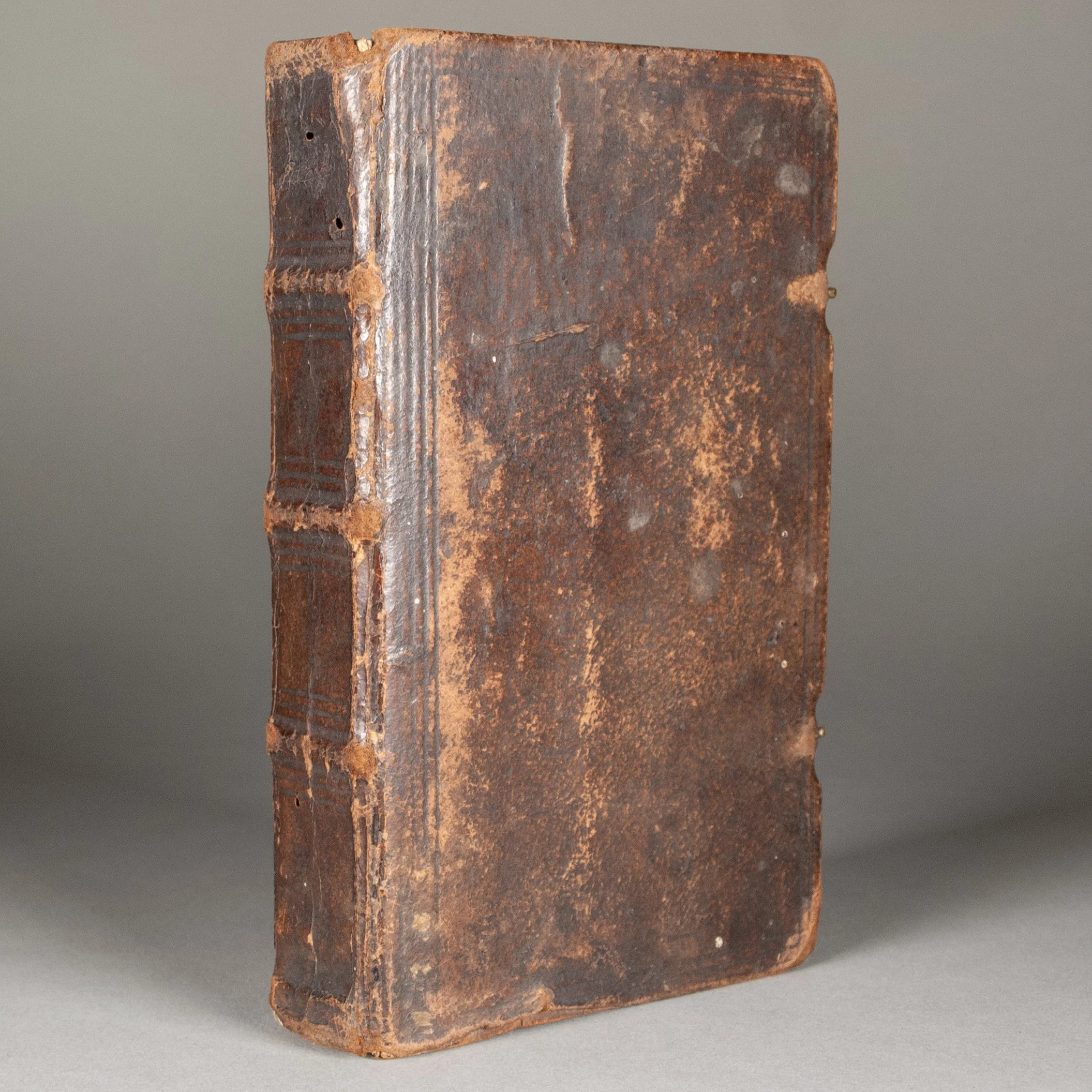
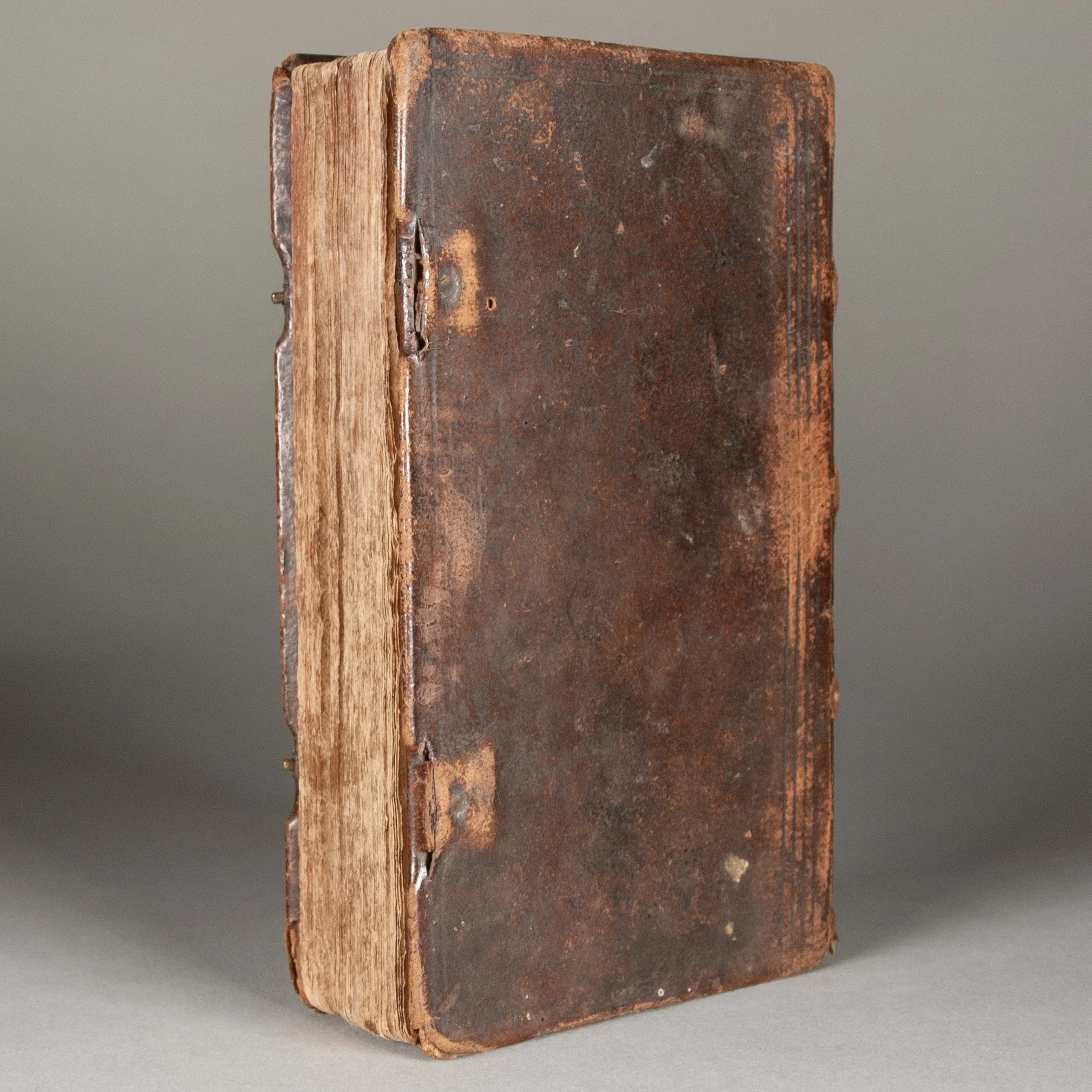
CONDITION: Contemporary brown leather over thin wooden boards, simply tooled in blind; marbled paste-downs. Pins for clasps, the straps lost. Almost entirely engraved, only fol. 3, 16, 24, 40, and 51 set in type. Without fol. 77, as it appears to have been issued; the digitized copies in Oxford and Munich lack the same plate, as did another copy we handled ourselves. ¶ The leaves quite soiled, having apparently been well used, with occasional marginal tears (mostly clear of content, but with a 3.5 cm closed tear in fol. 8 affecting the image); corner torn way from fol. 65 and 86, not affecting image; dampstain in the fore-margin of the last half of the text block, just barely touching the edges of some images. Binding rubbed, worn at the extremities—exposing board especially along the bottom edges—and with a few wormholes; hinges shaky, but all cords still intact; some loss to the marbled paste-downs; pencil scribbles on the rear fly-leaf.
REFERENCES: VD18 90263790 (apparently without its own record, but see also 15302296, the other issue, lacking a date and with the text of fol. 3 in a slightly different setting) ¶ Veronika Hofmann, Frommes Feinbild Frau (2010), p. 85 (calling Hafner a “larger art publisher” who probably had multiple engravers working for him); Franz Reitinger, Die blaue Epoche: Reduktive Farbigkeit im Rokoko (2016), p. 32 (on the illuminators’ petition, mentioning printing work with oil colors); G.K. Nagler, Die Monogrammisten…Künstler aller Schulen (1919), v. 3, p. 860, #2120 (on Hafner: “Copperplate engraver from Augsburg, left portraits and various other leaves, which are of little artistic value. Among them are various emblems and patterns [Embleme und Muster] for the art industry.”); Andrew Pettegree and Arthur der Weduwen, The Bookshop of the World: Making and Trading Books in the Dutch Golden Age (Yale, 2019), p. 140 (cited above); Christopher Vecsey, “The Good News in Print and Image: Catholic Evangeliteracy in Native America,” U.S. Catholic Historian 27.1 (Winter 2009), p. 10 (“If we emphasize the place of writing in codifying Christian doctrine for the colonial edification of America’s Natives, we should not neglect the pictorial catechisms used everywhere from the Quechuas to the Micmacs, and beyond”); Maurice de Wulf, “Western Philosophy in the Thirteenth Century,” Harvard Theological Review 11.4 (Oct 1918), p. 422 (on medieval cathedrals: “Each stone had its language. Covered with sculptures, it presents a complete religious programme. It is for the people the great book of sacred history, the catechism in images.”); Leon Voet, The Plantin Press (1555-1589), v. 2, #884 (the illustrated Plantin Canisius); Alberto Manguel, A History of Reading (Penguin, 1996), p. 103 (on the Biblia Pauperum, but perhaps applicable here: "Preachers and priests would no doubt gloss upon these images, and retell the events portrayed, linking them in an edifying manner, embroidering on the sacred narration...It has been suggested that the main purpose of the Biblia Pauperum was not to provide reading for the unlettered flock but to lend the priest a sort of prompter or thematic guide, a starting-point for sermons or addresses.")
Item #986