Before there was Piranesi
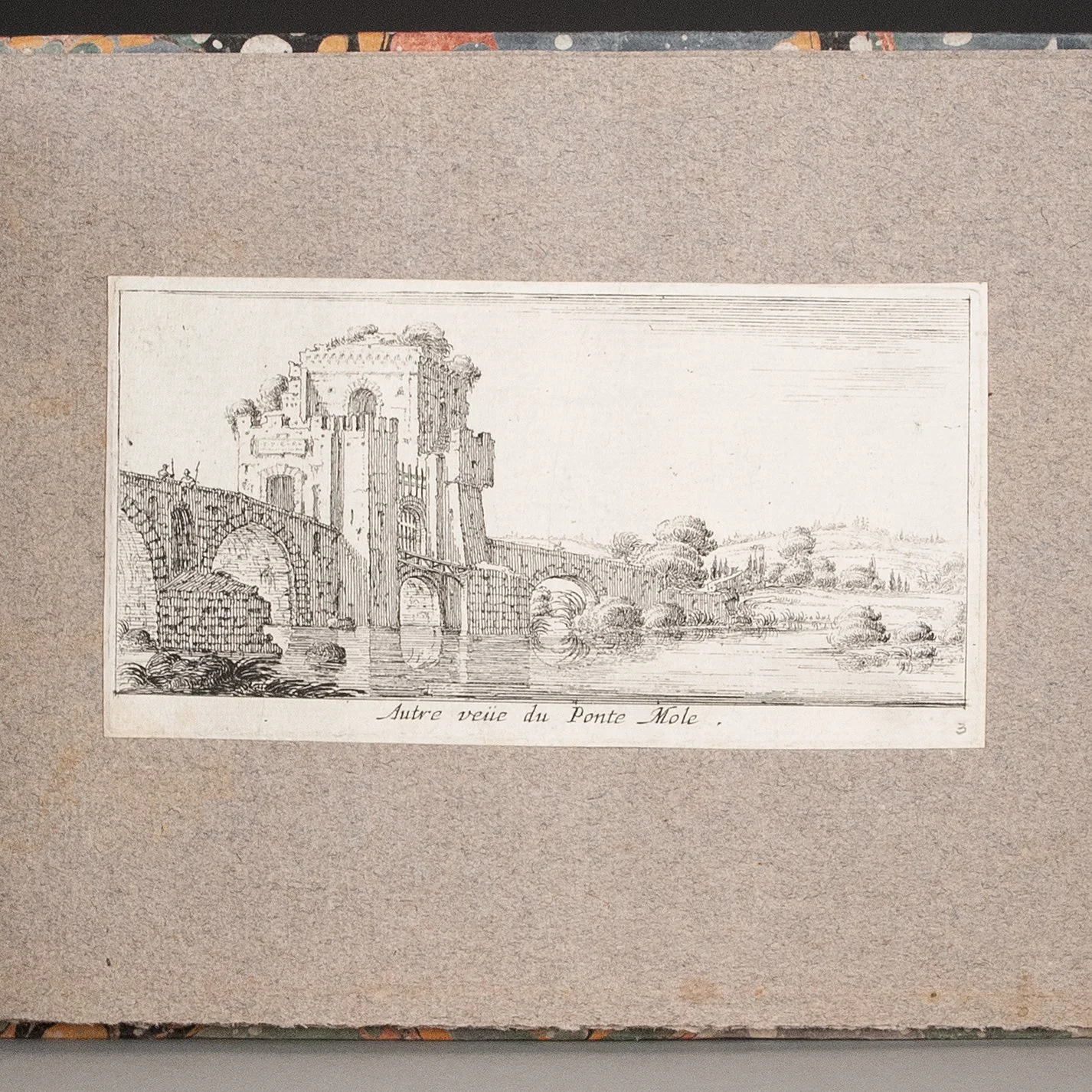
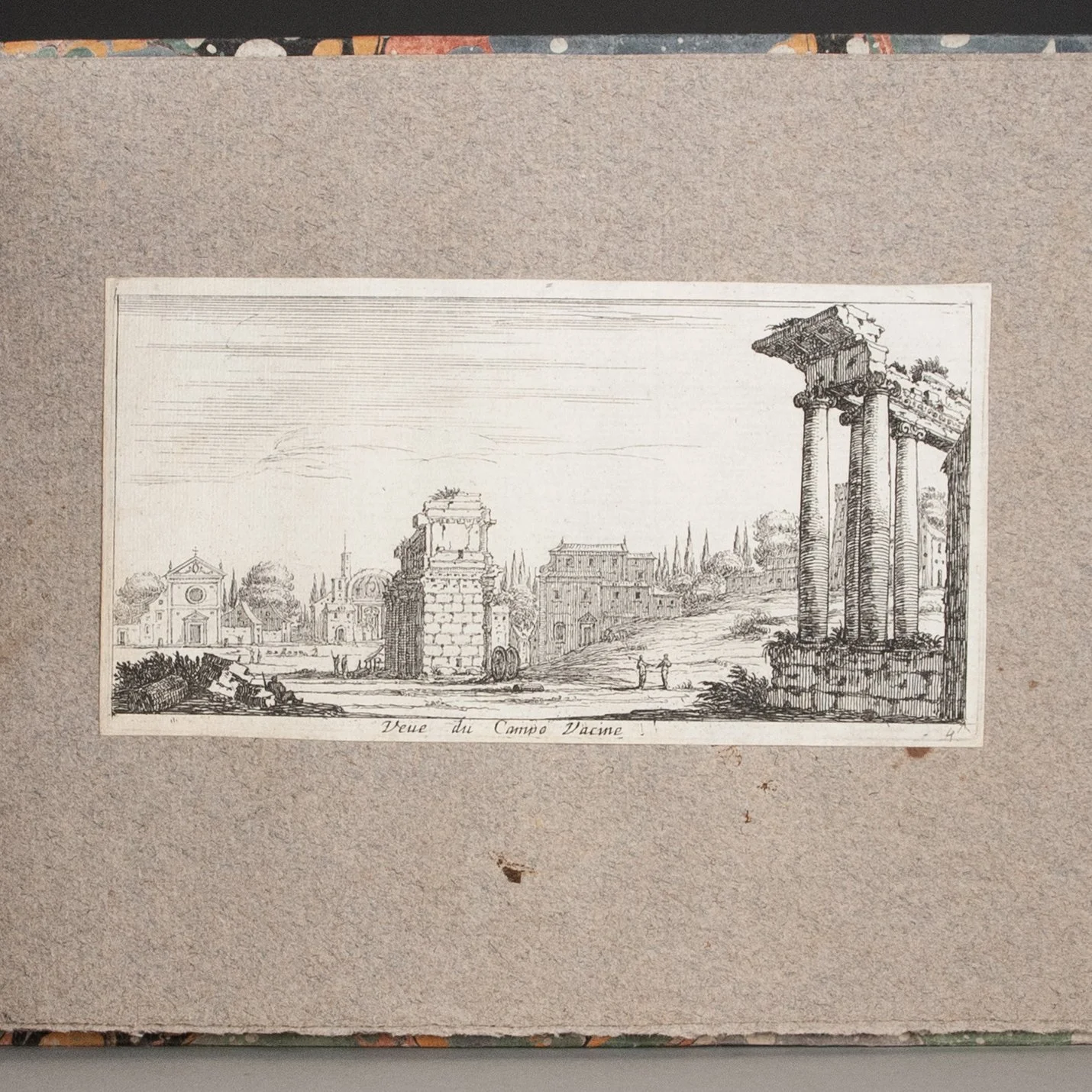
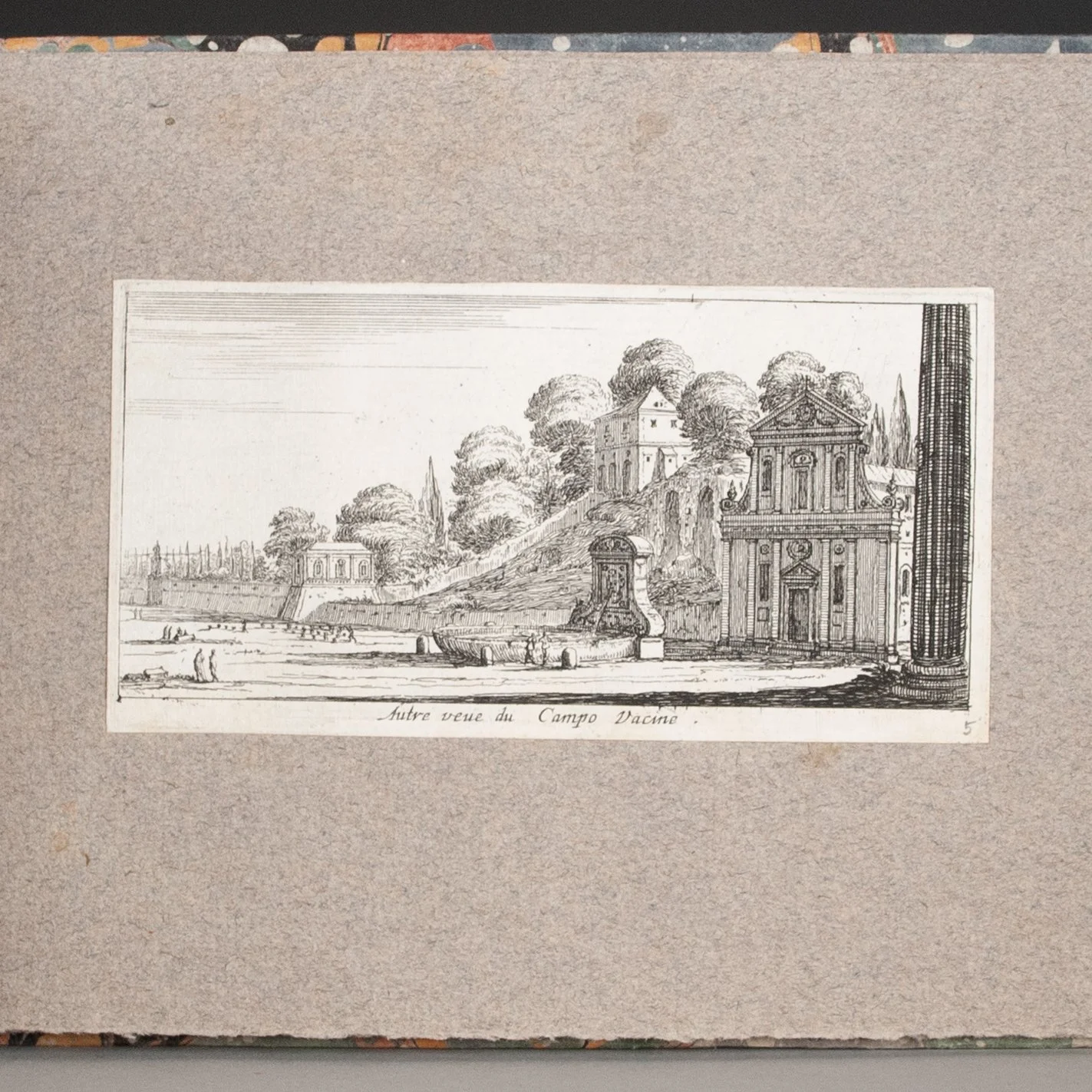
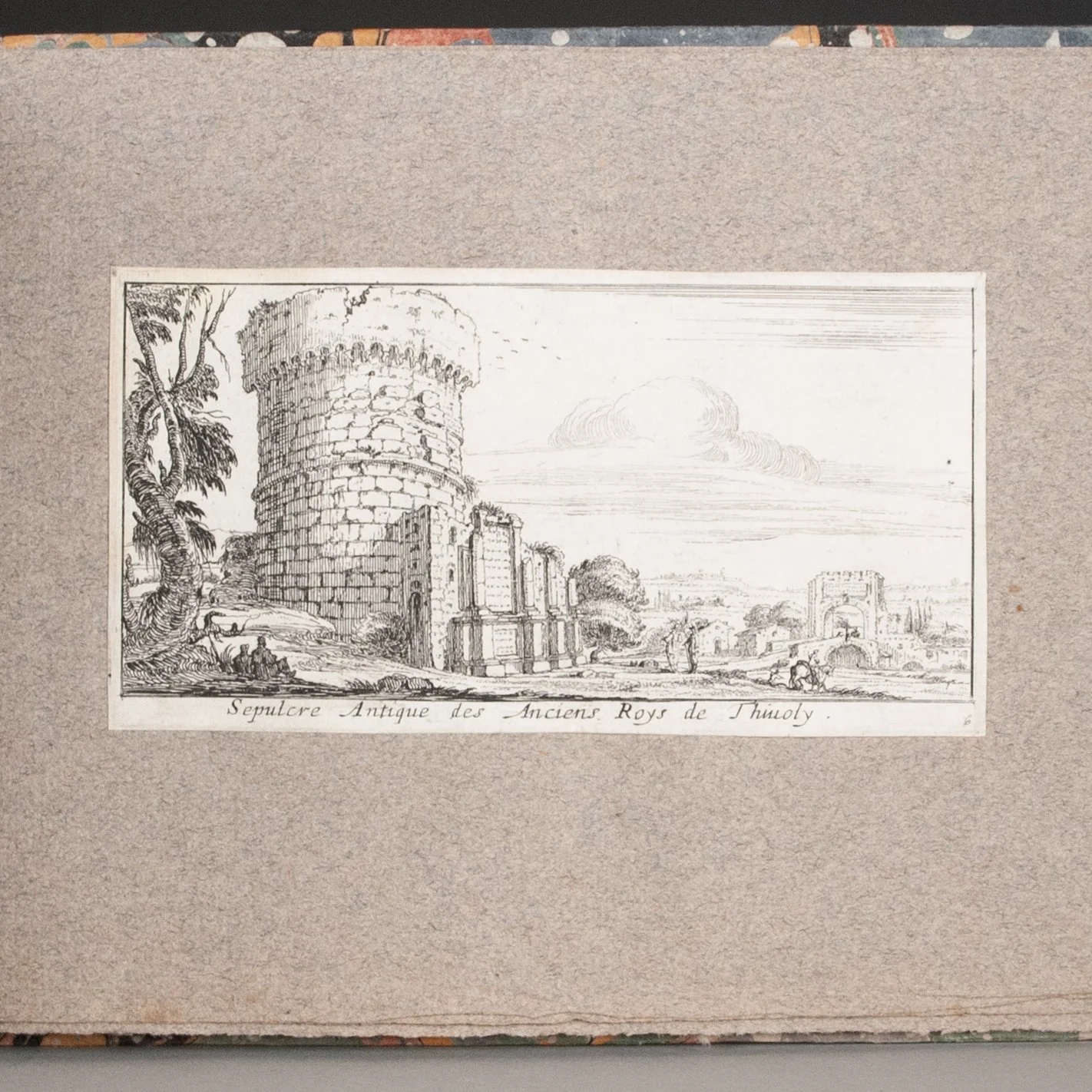
Before there was Piranesi
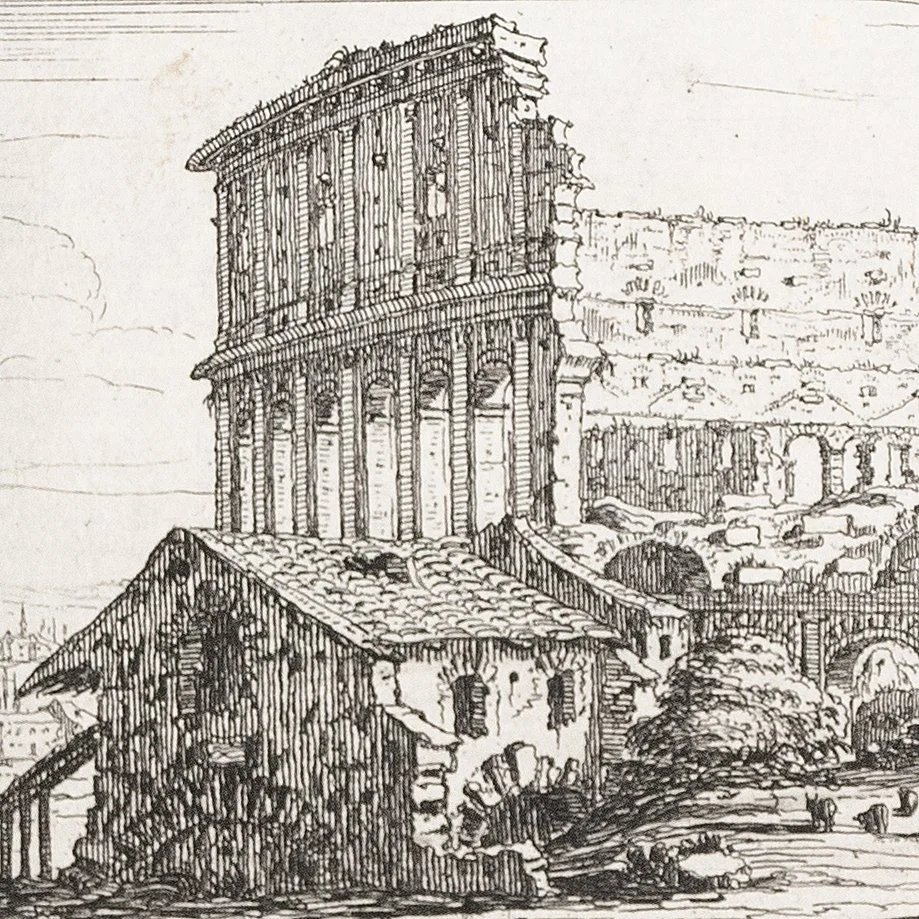
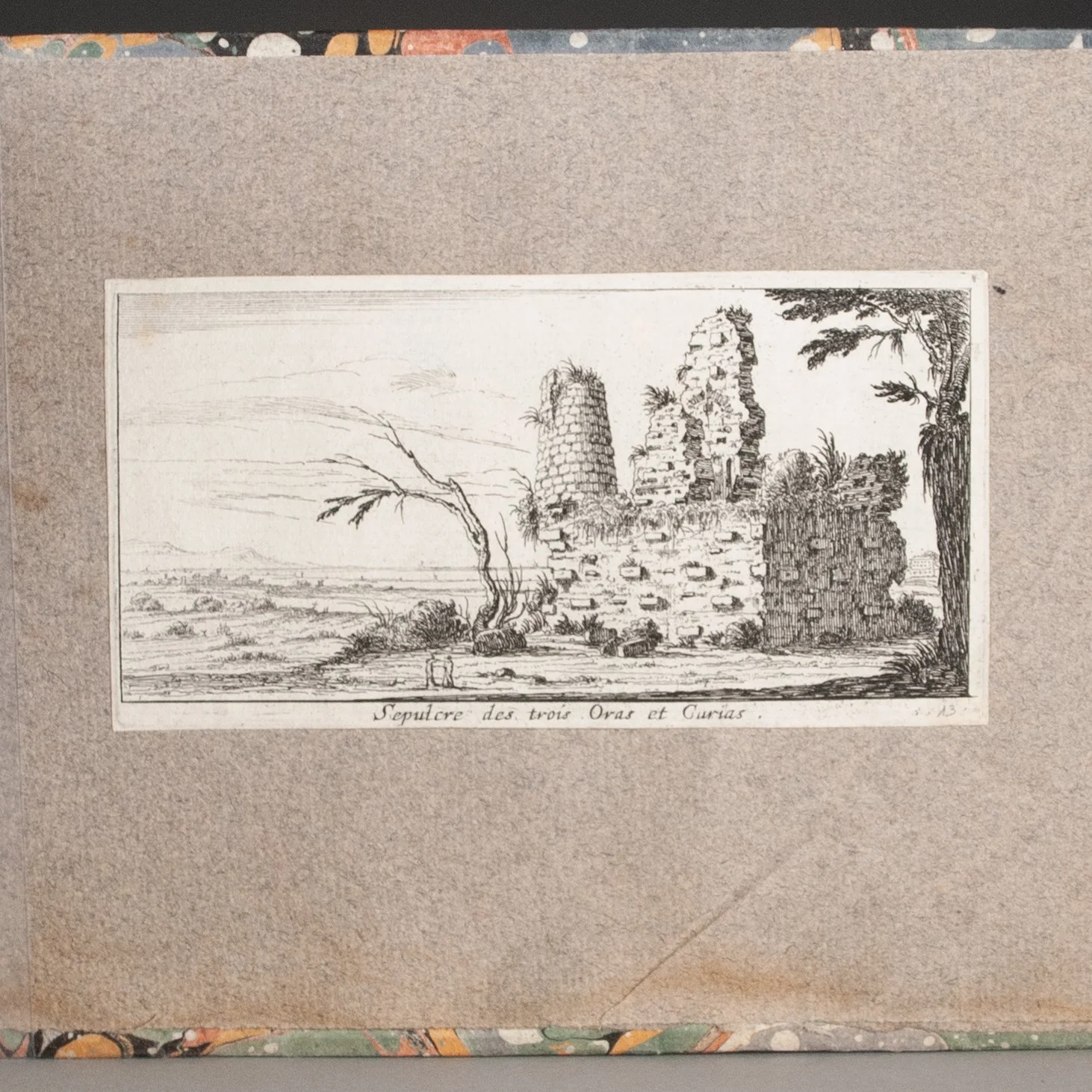
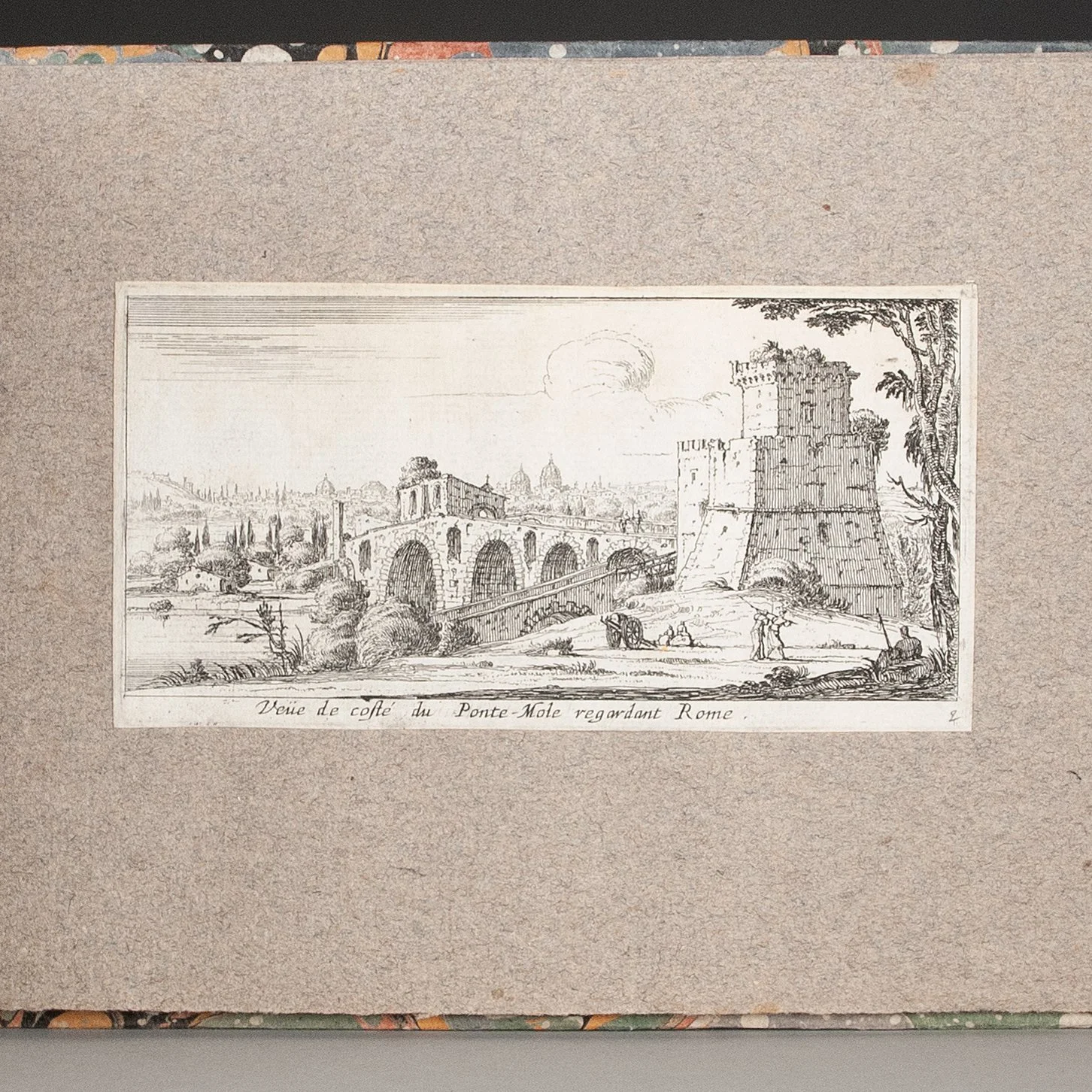
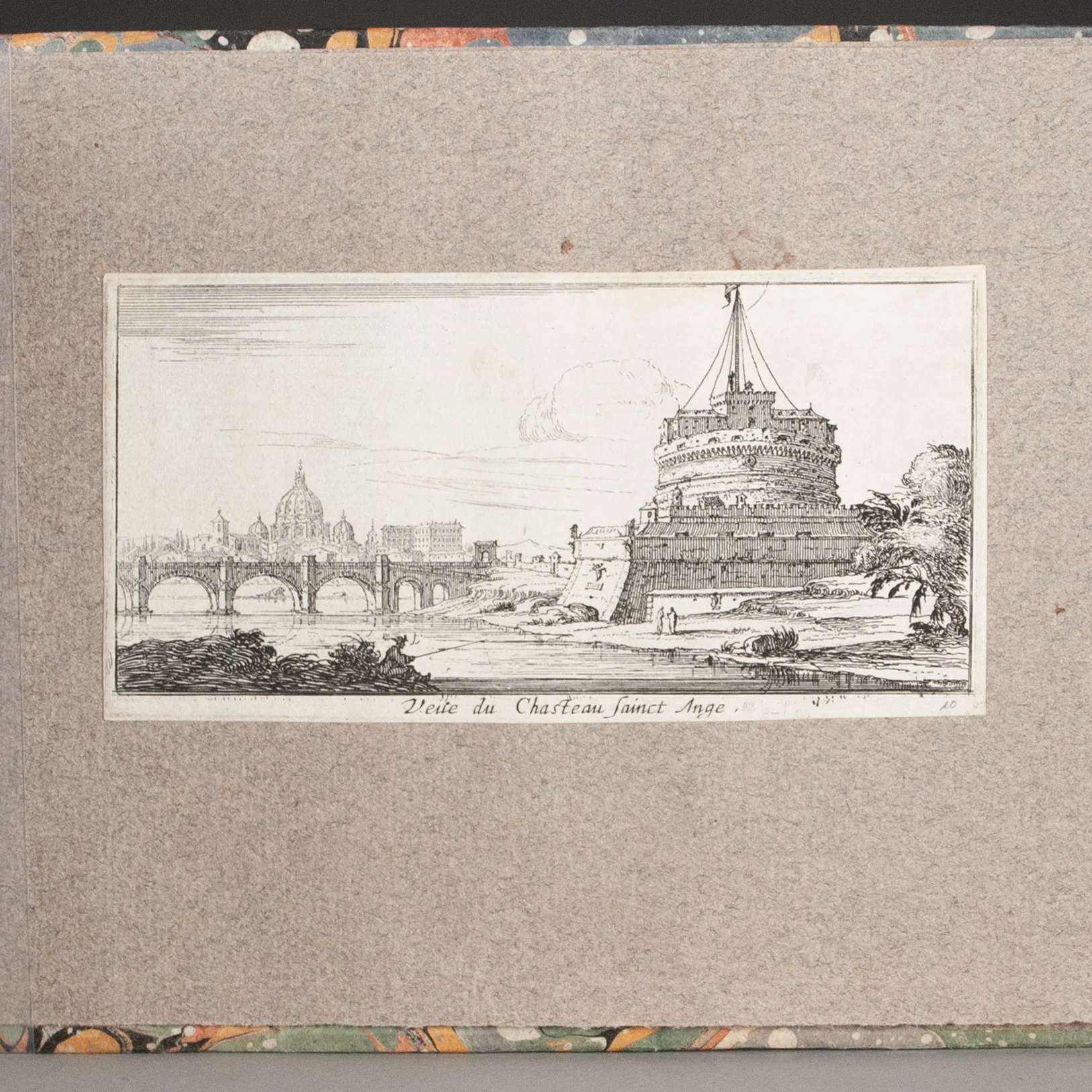
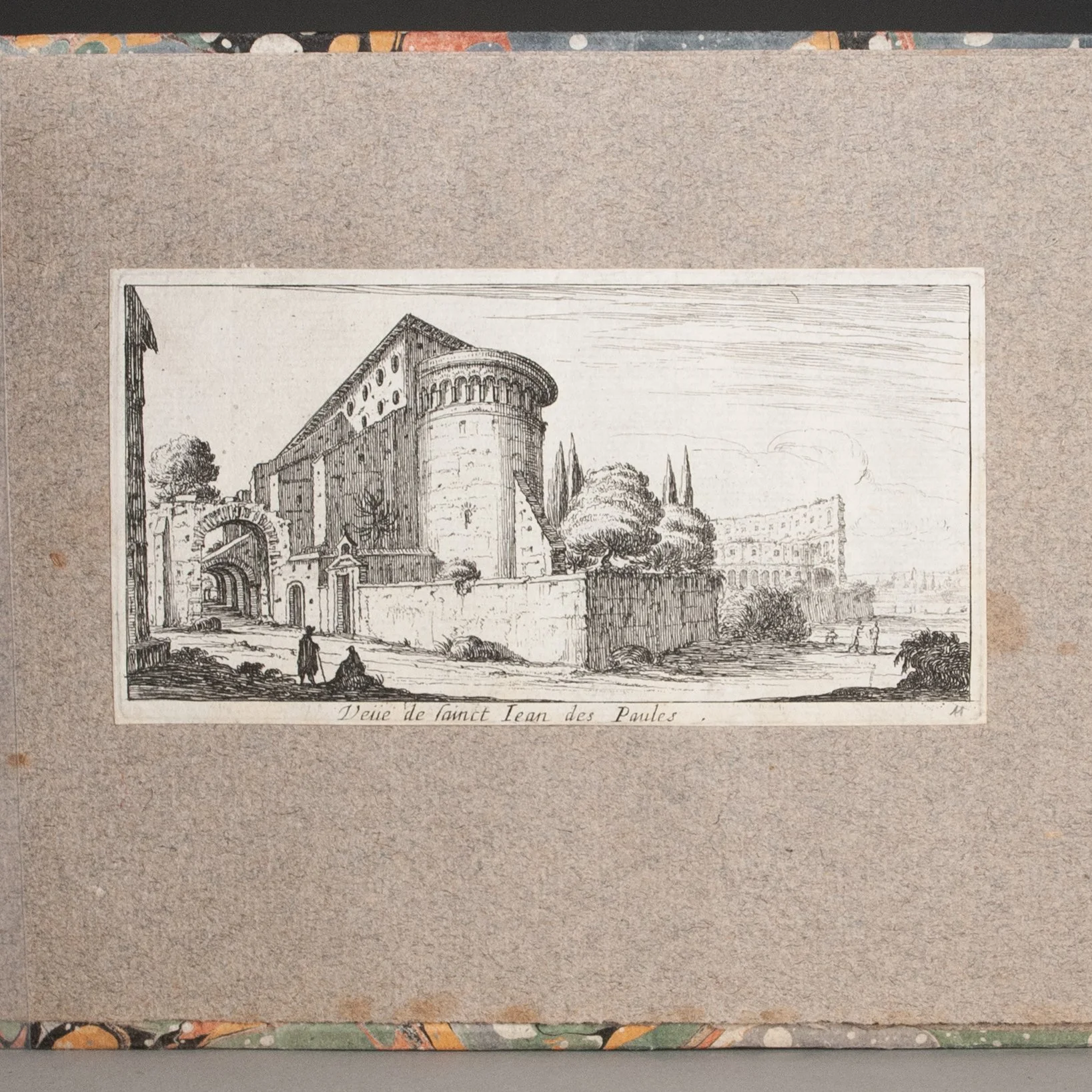
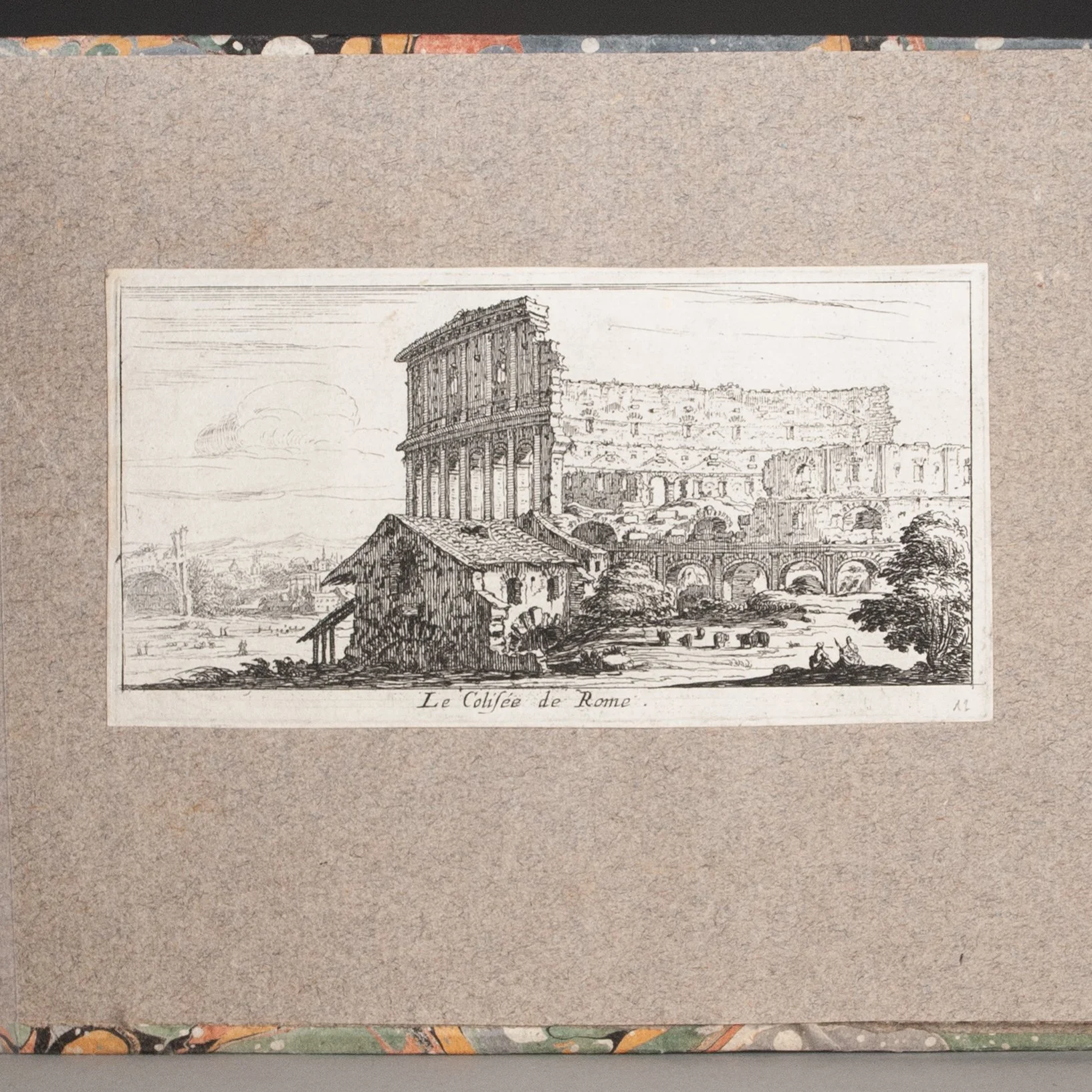
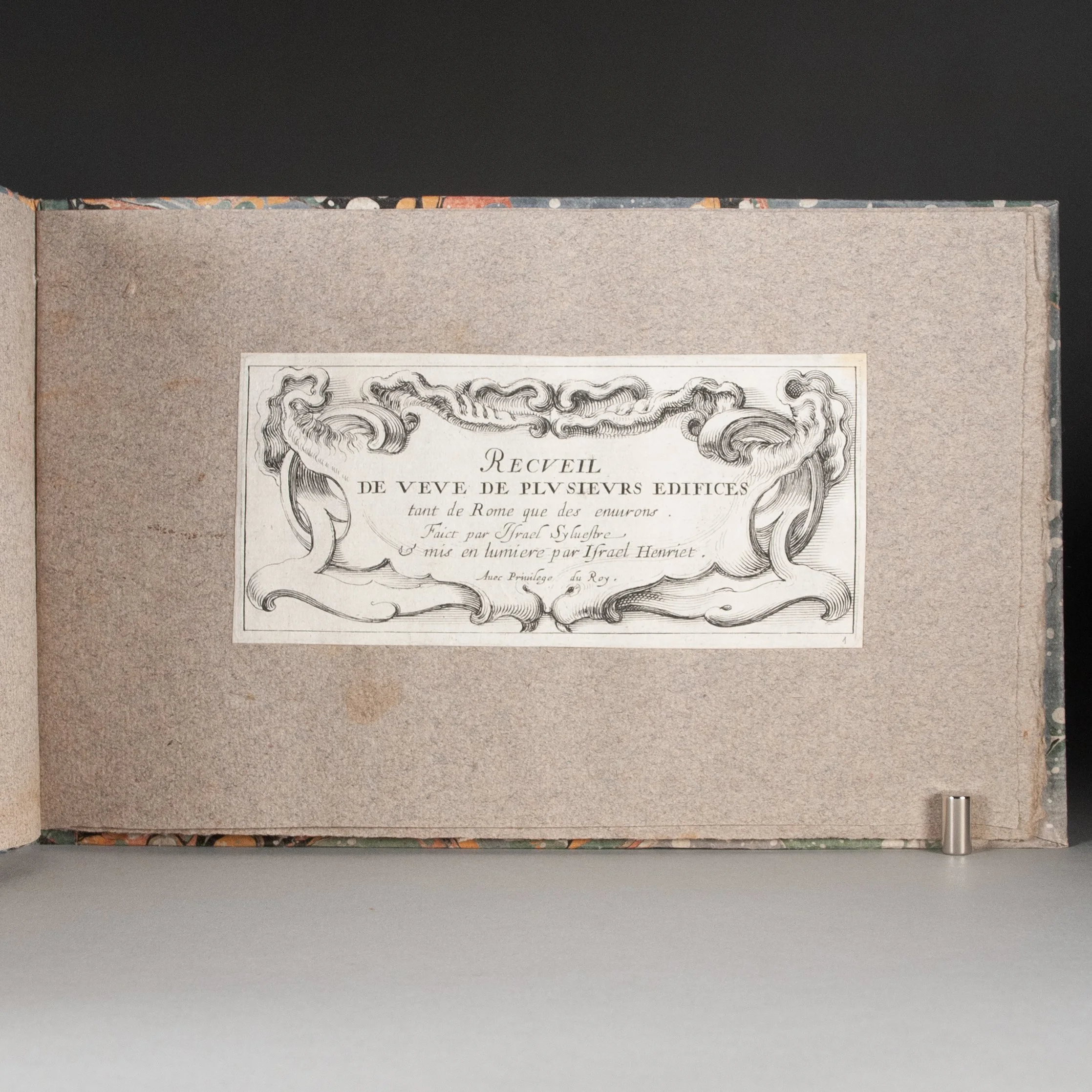
Recueil de veue de plusieurs edifices tant de Rome que des environs; faict par Israel Sylvestre & mis en lumiere par Israel Henriet
by Israël Silvestre (Sylvestre)
[Paris]: Israël Henriet, [ca. 1650]
[13] leaves | Bound suite of prints | 135 x 216 mm
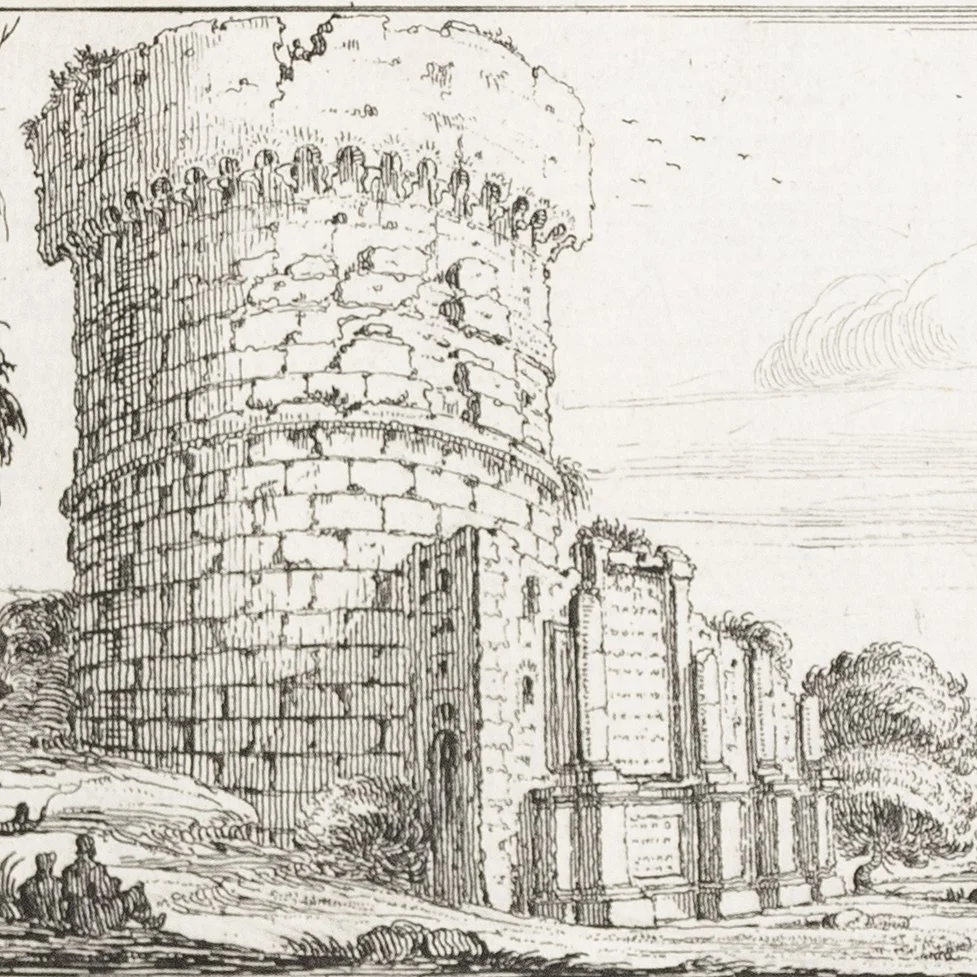
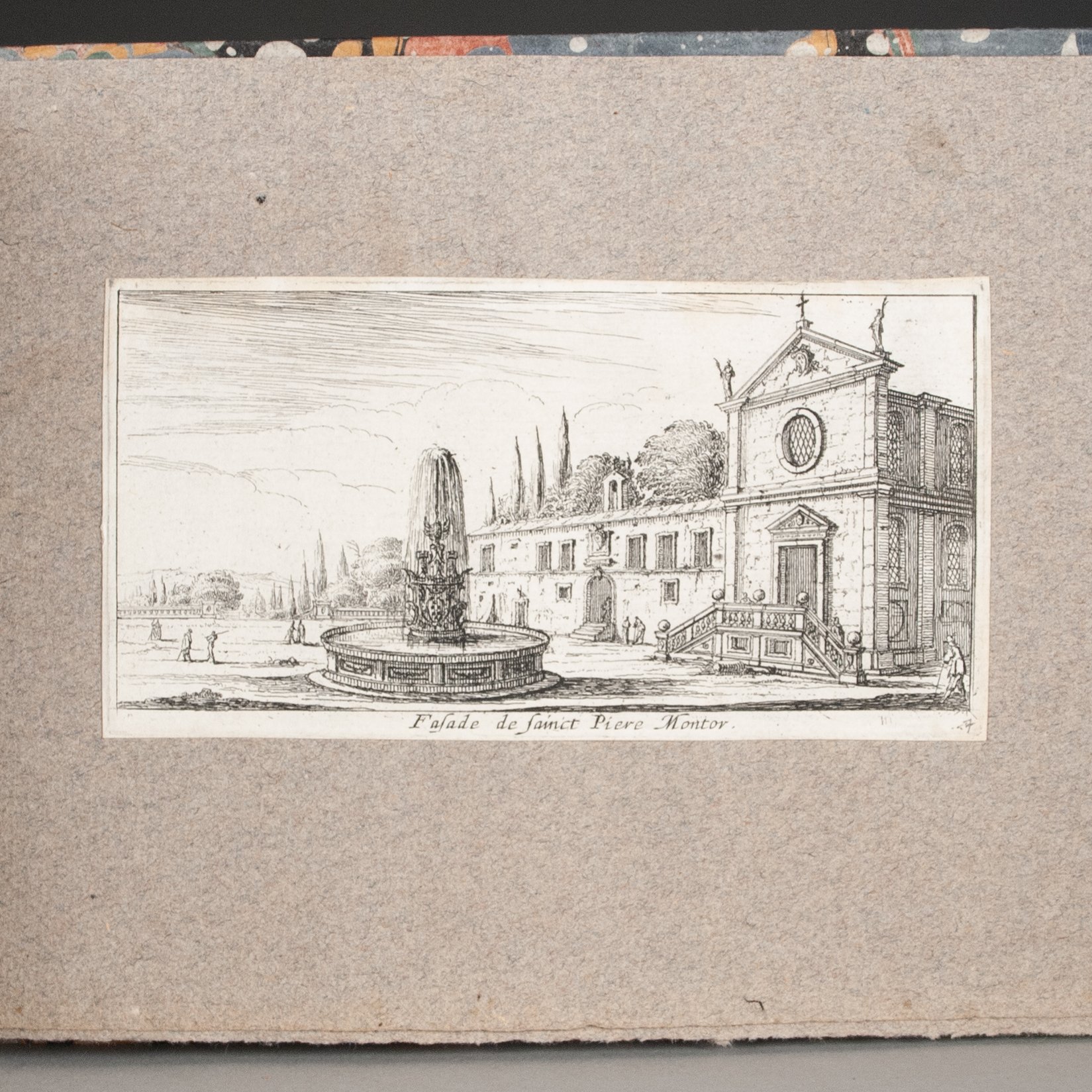
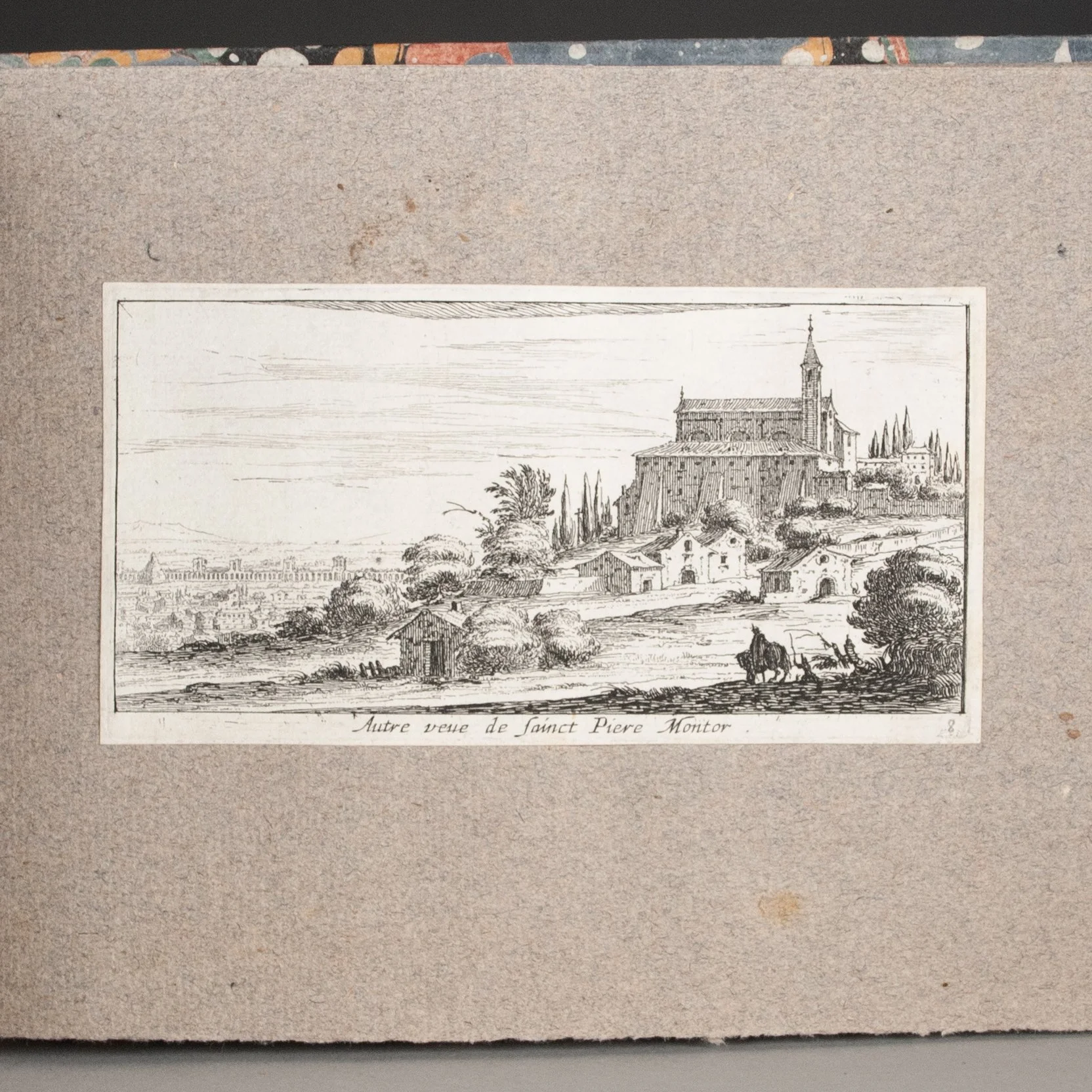
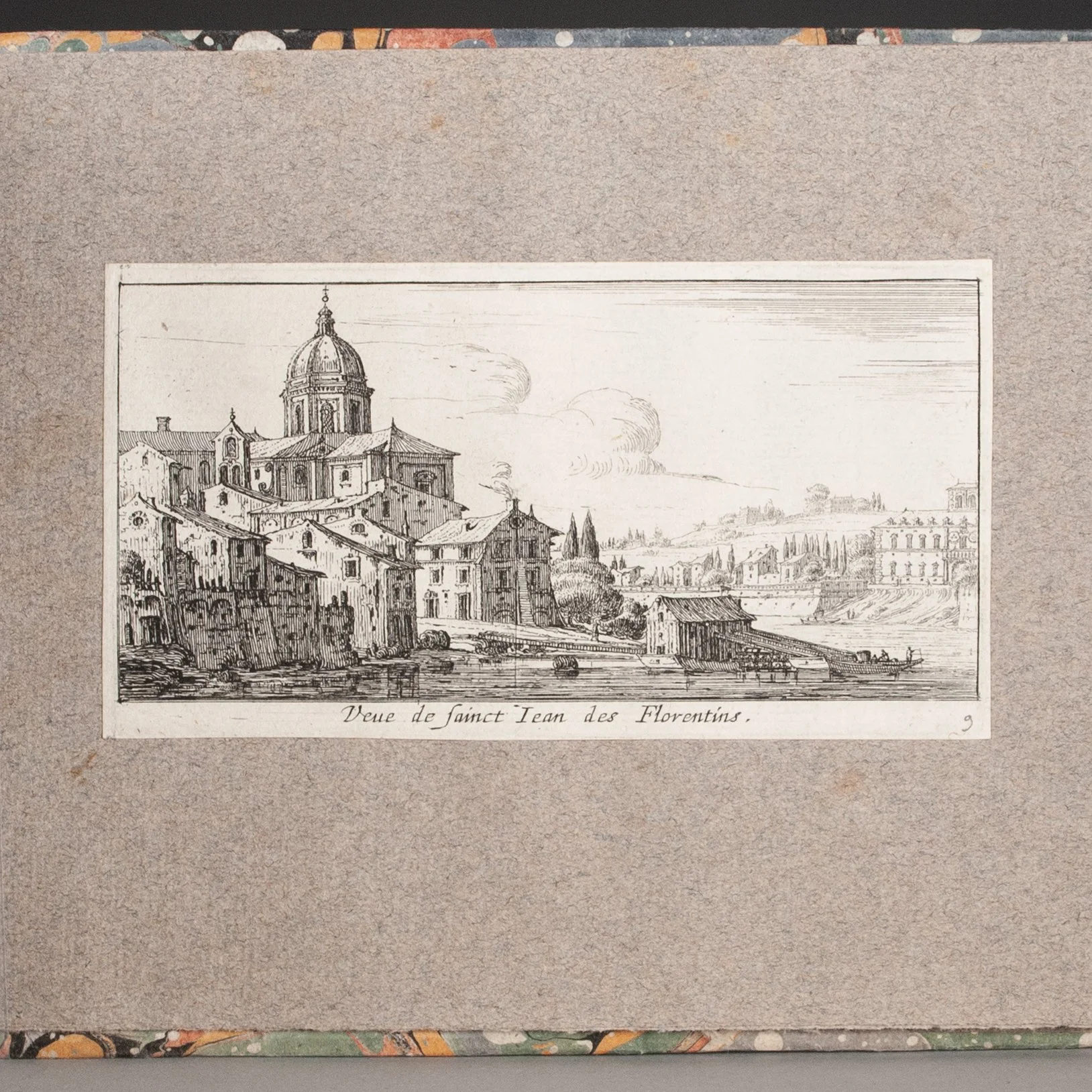
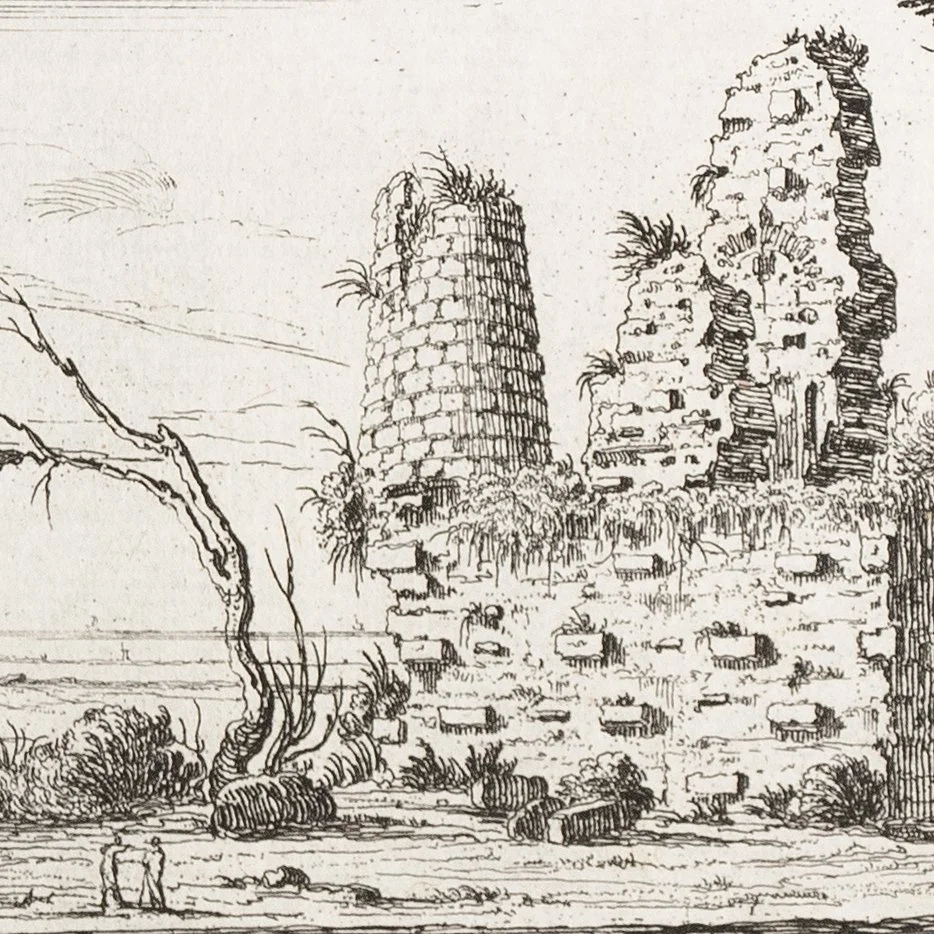
An enchanting suite of Roman views, capturing with a pastoral eye the city's signature buildings and ruins. Diminutive figures reflect the grandeur of ancient structures, big skies and expansive landscapes build on that sense of awe, and Silvestre's detailed rendering of decay lends the ruins an enthralling proto-Romantic quality. These are early impressions, if not proofs, pulled before numbers were added to the lower right. The etchings are typically dated ca. 1650. Silvestre made multiple trips to Rome, and returned from his first in 1642, providing a reliable terminus post quem. ¶ It's a relatively early contribution to the classical ruins genre, issued a full century before Giovanni Battista Piranesi's similar work captured the collective European imagination, setting the scene for a Romantic obsession with ruins that endured into the 19th century. (Piranesi in fact based at least two of his plates on other etchings by Silvestre.) The taste for ruins can be traced at least to Petrarch in the 1330s, and in art to the 15th century, when Christ's Nativity was depicted among classical ruins in a variety of Adoration paintings. Roman ruins found their way into 16th-century writing on architecture, including that of Andrea Palladio, who closely studied them to inform his own prescriptions for classical architecture. And Silvestre was hardly alone in tapping classical pathos in his own time. Architectural painting remained popular and classicism was the order of the day in France. Nicolas Poussin, one of Europe's most successful painters, was himself around the same time producing Roman landscapes adorned with ruins. ¶ In his father's studio, our publisher, Israël Henriet, befriended a young Jacques Callot, who would go on to become arguably the most sought-after engraver of 17th-century France. "Everything suggests that the two friends spent the most beautiful and best years of their adolescence together" (Meaume). Callot certainly eclipsed Henriet, though the latter did prove a capable drawer and etcher, and even taught drawing to Louis XIII. He eventually settled on a more lucrative career as a print publisher, a role his childhood friend Callot gladly enabled, and "it was Israël who contributed the most to developing the taste for collecting in France," one that "has since been pushed to the point of obsession" (Meaume). Starting around 1640, Henriet worked with his nephew Israël Silvestre—"the glory of this family," according to Meaume—whom Henriet trusted enough to finish a plate that Callot himself had started. ¶ Meaume declared Silvestre "at least equal" to Callot's capacity as an artist. Louis XIV himself, absolutist patron of the arts par excellence, commissioned Silvestre to engrave similar views of royal castles and other locales connected to his reign. He was eventually appointed dessinateur du roi and took up residence in the Louvre, where he instructed the Sun King's son in art. "Although he is generally criticized for having imitated his masters [Callot and La Belle] too slavishly, his works certainly secure him a distinguished place in the great school of engravers of the grand siècle, whose leaders have not been surpassed" (Meaume). And among all this, Silvestre even maintained his late uncle's business, which he inherited in 1661. ¶ A complete copy of a scarce work.
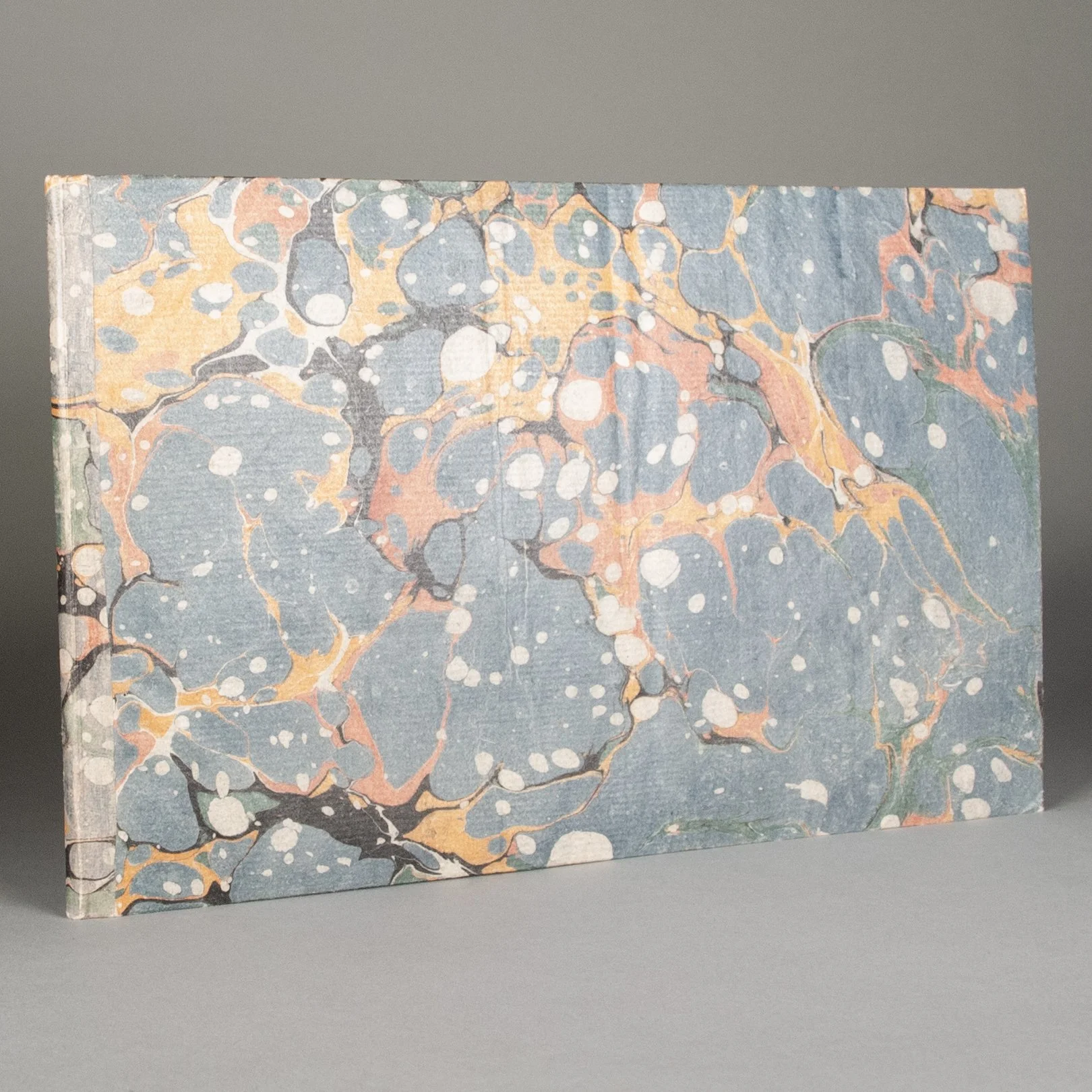
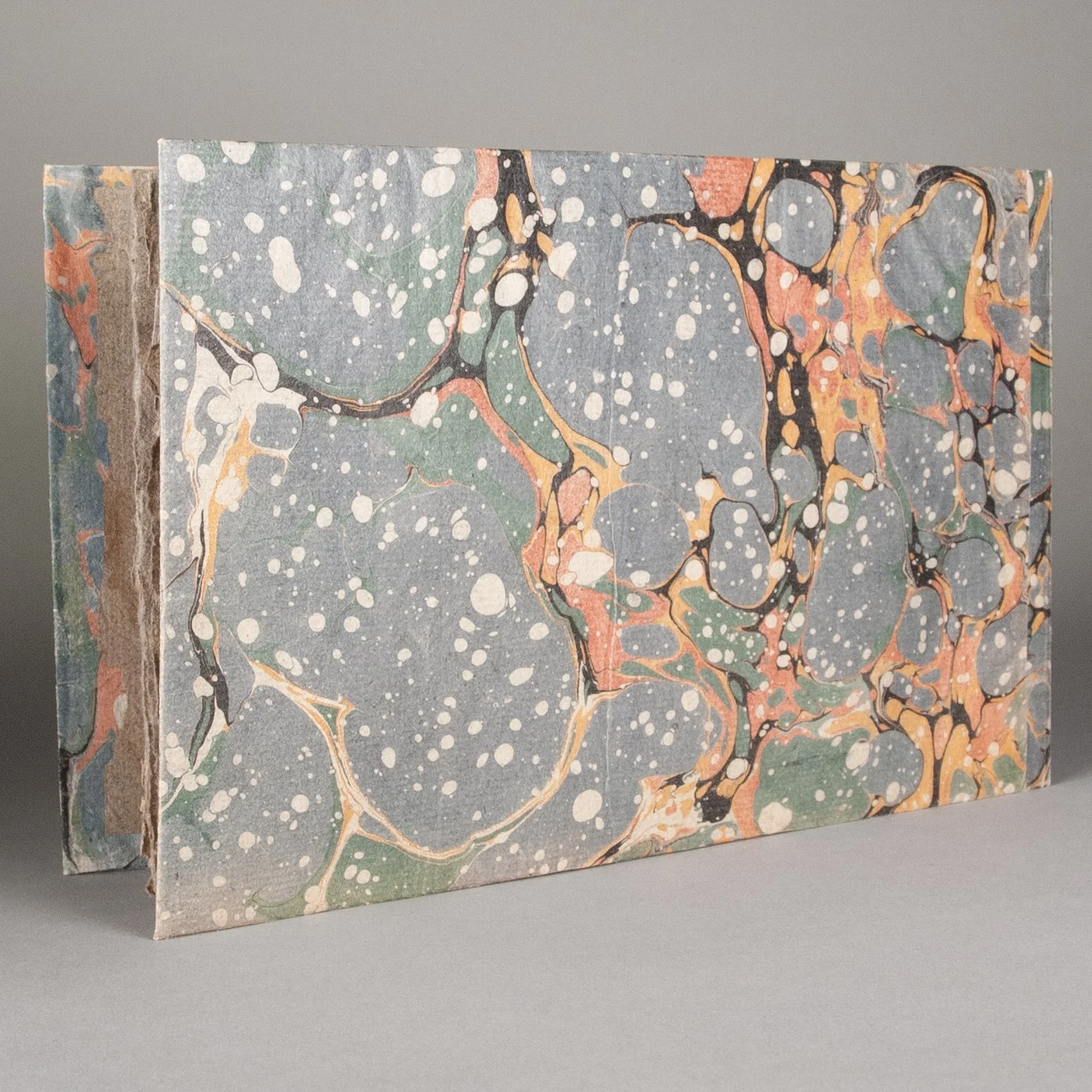
CONDITION: The etchings roughly 60 x 115 mm and mounted on blue laid paper, in an old album of limp marbled covers. ¶ The blue paper lightly foxed and dampstained, but the etchings in excellent shape. Binding extremities just gently worn.
REFERENCES: Edouard Meaume, Recherches sur quelques artistes lorrains (1852), p. 49, #3 ("the first proofs are before the addresses and numbers") ¶ Meaume, p. 12 (cited above), 15-16 (cited above), 19 (cited above), 21 ("When he had drawn a very large number of views representing the surroundings of Paris and several monuments of that capitol, he went to Rome where he made a multitude of drawings...The young Lorrainer visited this classical land of the arts several times. On his return from one of these trips, he stopped in Lyon, where he engraved several monuments of the city and its surroundings."), 22 ("The facility of our artist [Silvestre] was prodigious and at least equal to that of Callot"), 23-24 (cited above); Early Printed Books, 1478-1840: Catalogue of the British Architectural Library Early Imprints Collection (1994), v. 4, p. 1861 ("Piranesi also copied at least two of Silvestre's plates of Rome, almost certainly as student pieces when he was learning his trade"); Andrew Hui, "The Birth of Ruins in Quattrocento Adoration Paintings," I Tatti Studies in the Italian Renaissance 18.2 (Sept 2015), throughout (for ruins in 15c paintings), p. 328 (tracing a taste for ruins to Petrarch in the 1330s), 340 ("The ruin embodied a complex matrix of attitudes to the past: the new sense of historical distance made artists aware that, on the one hand, antiquity was irrecoverable, and on the other, these ruins served as valuable lessons in building technique and styles")
Item #945