Rare Flemish Passion series
Rare Flemish Passion series
[Passion of the Christ]
[Antwerp?]: Michael Snyders (Michel Snijders), [ca. 1640?]
[28] leaves | Bound suite of prints | 135 x 88 mm
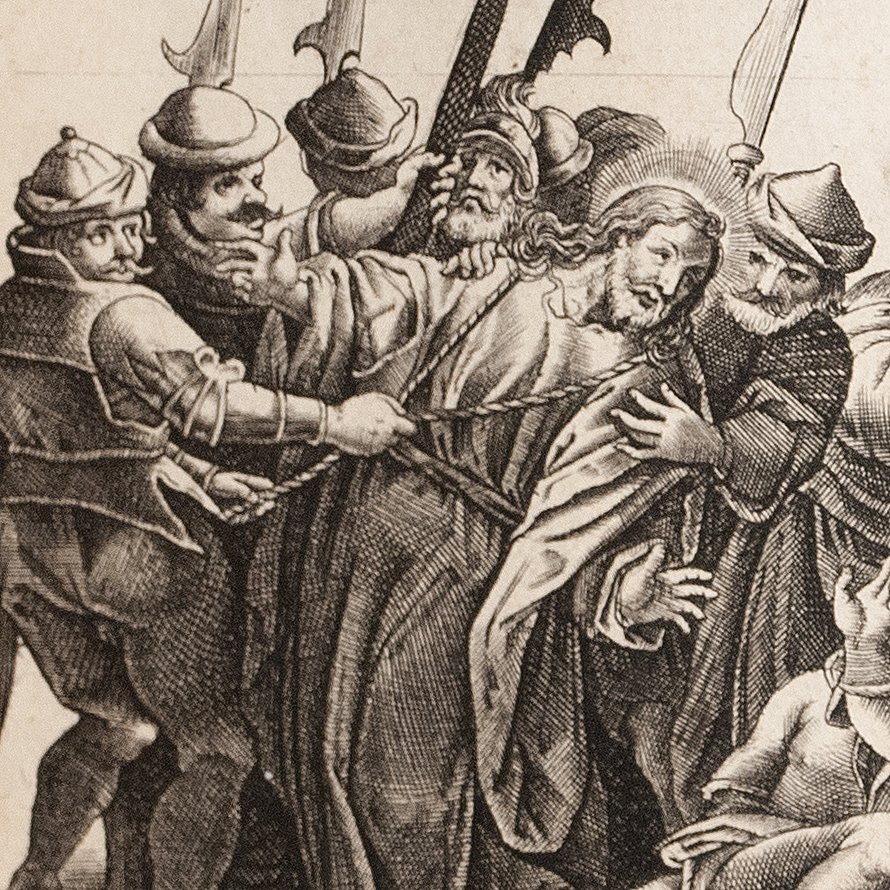
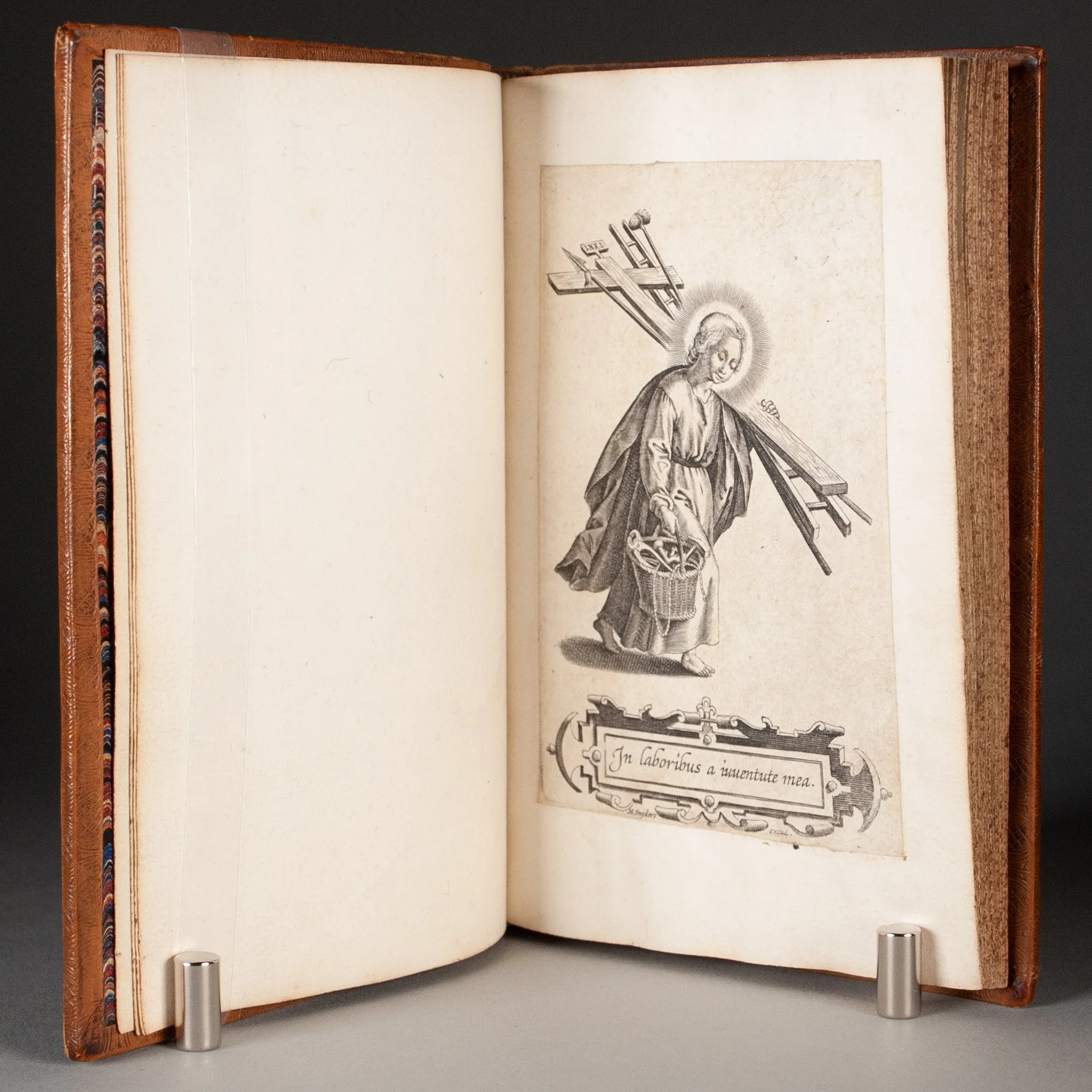
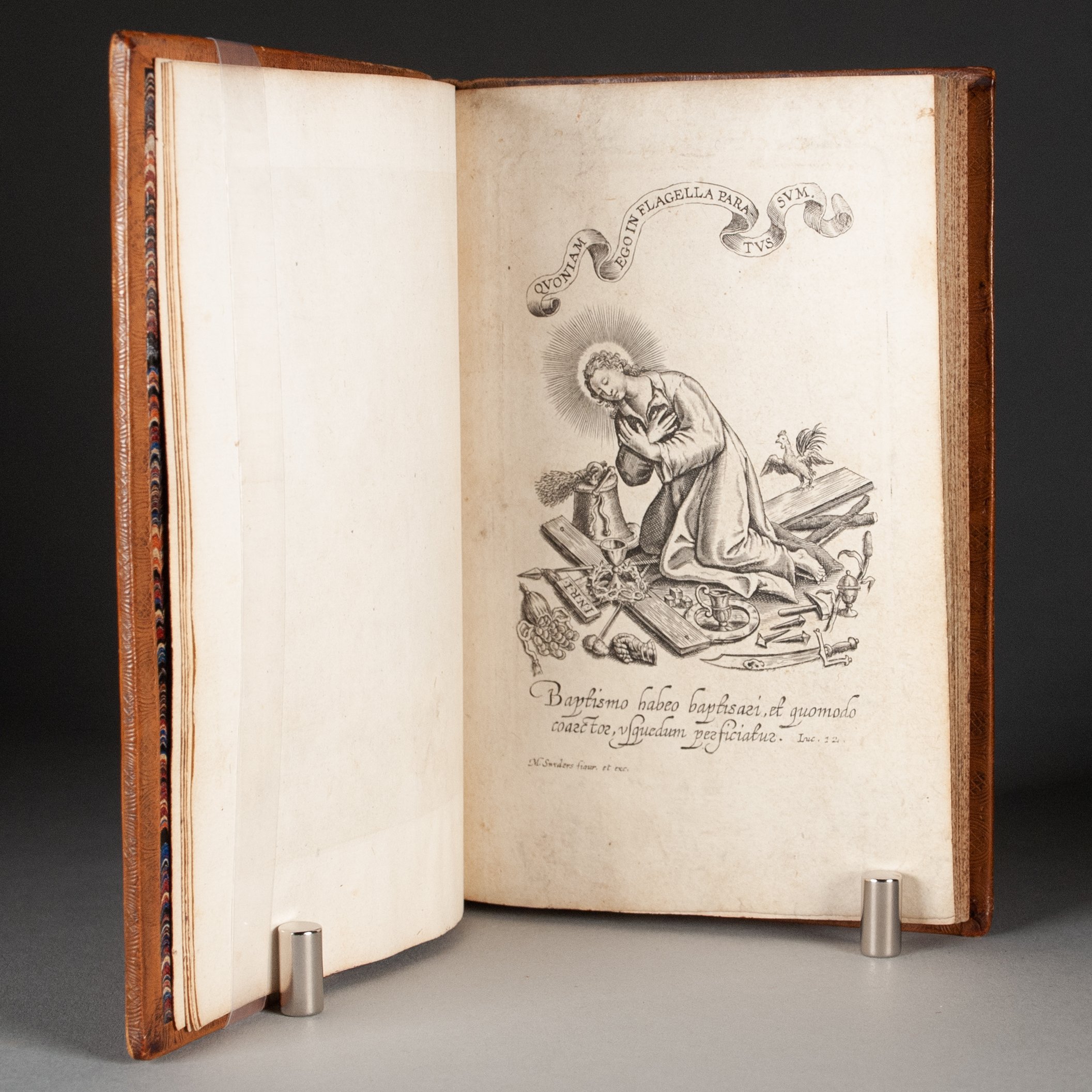
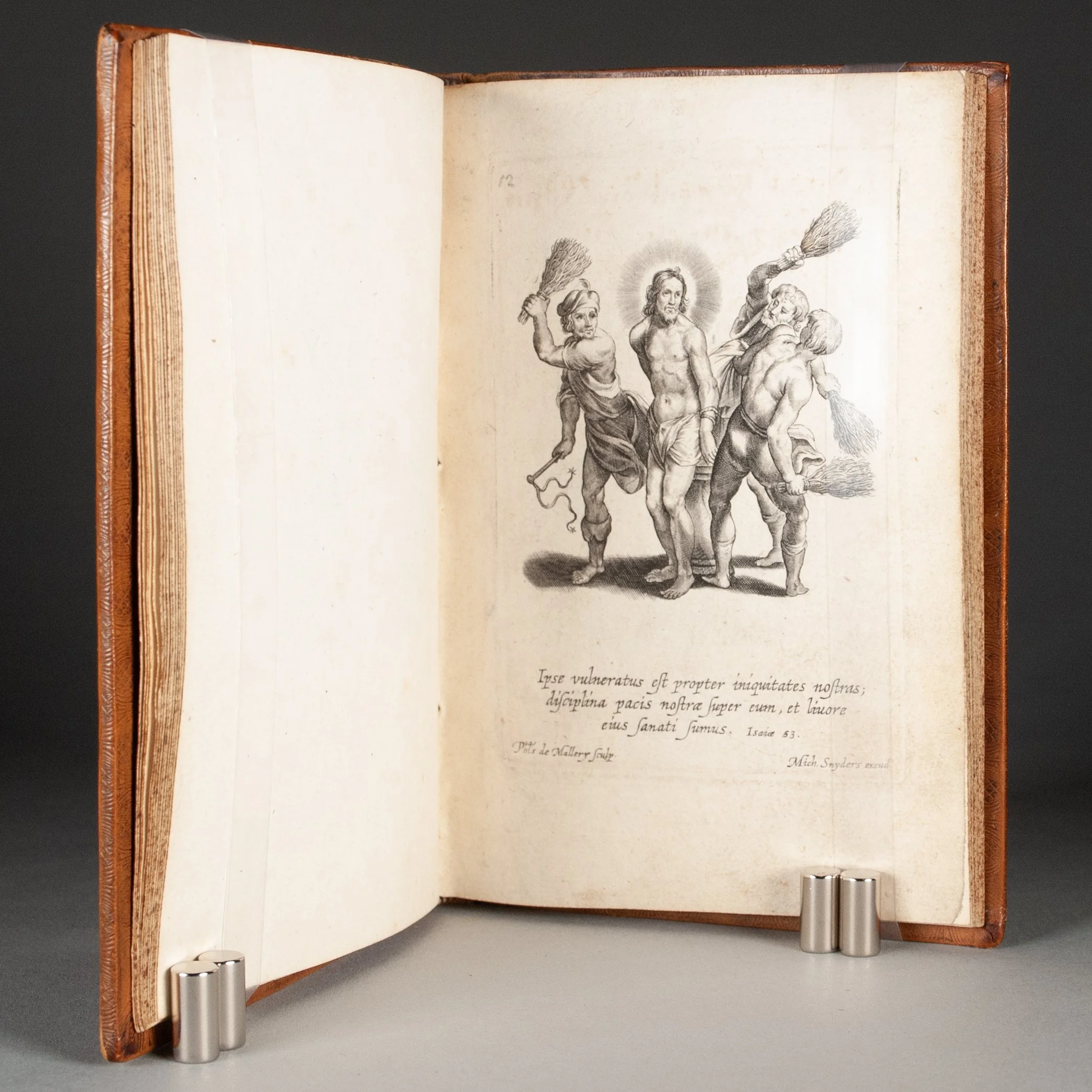
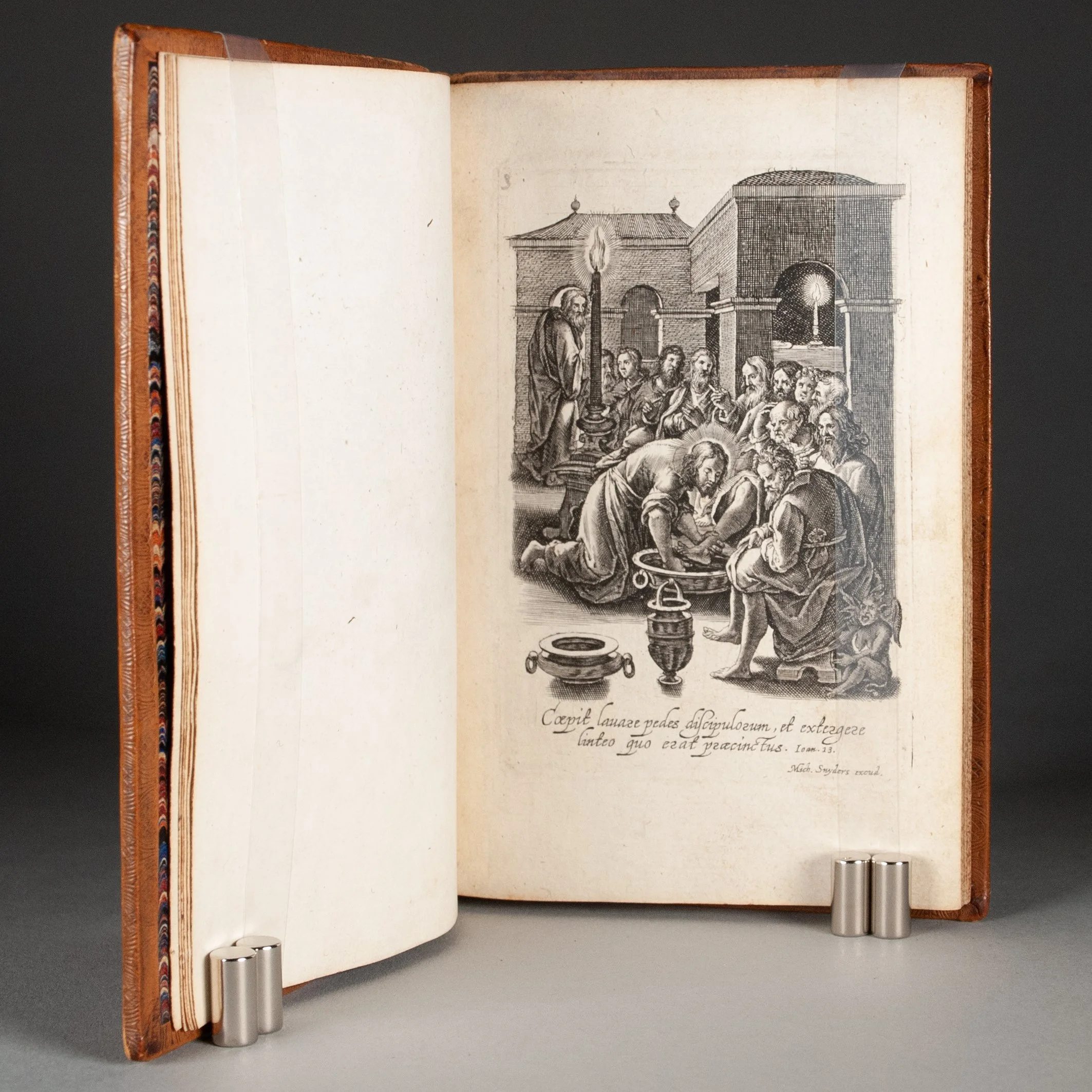
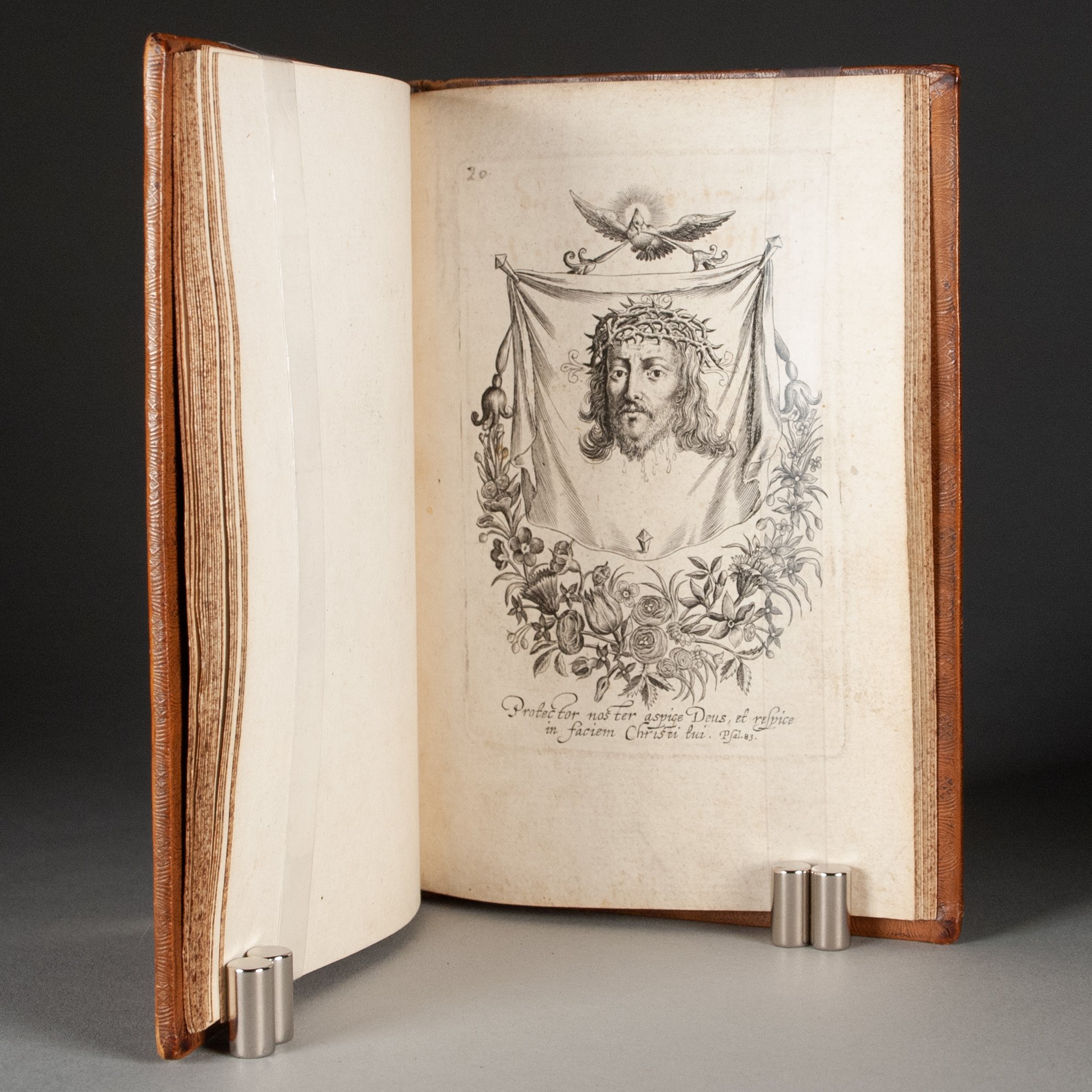
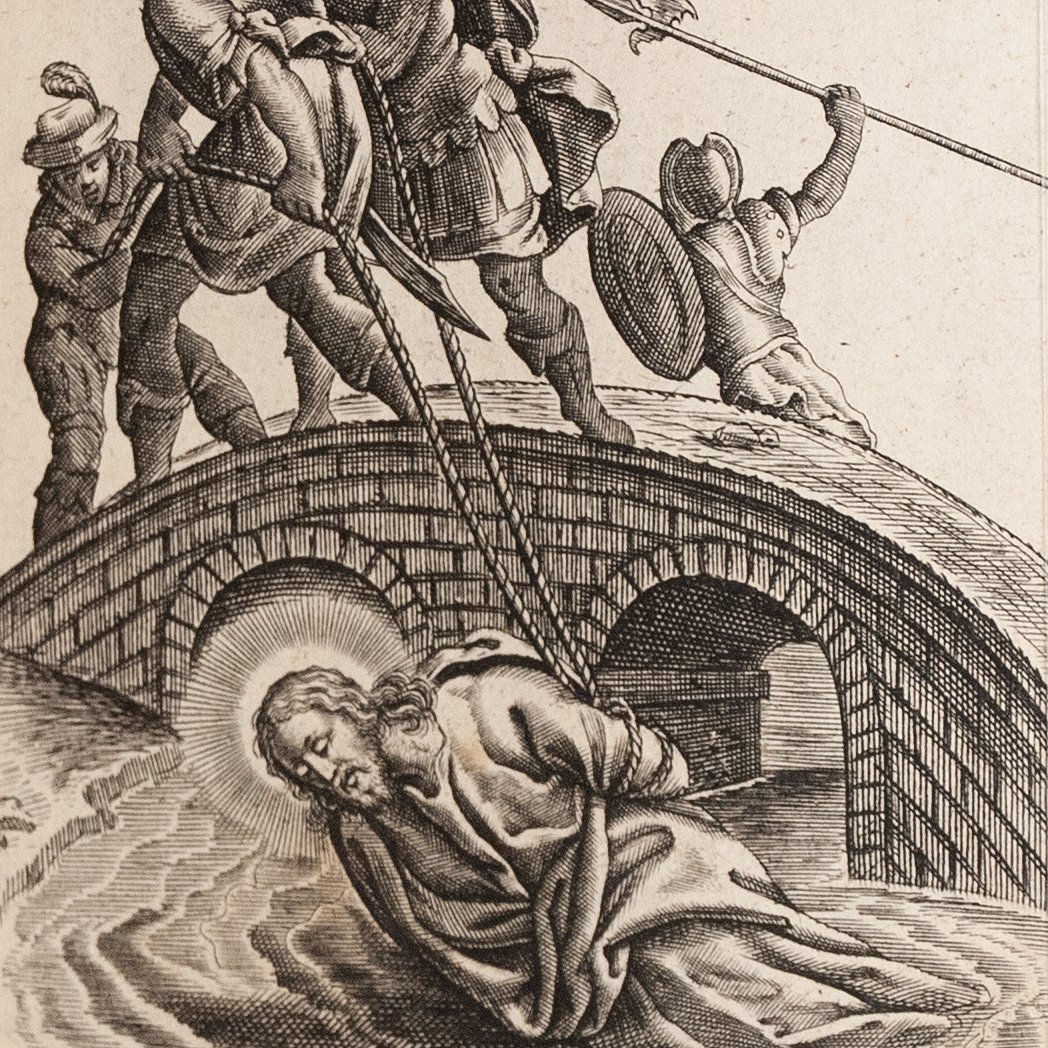
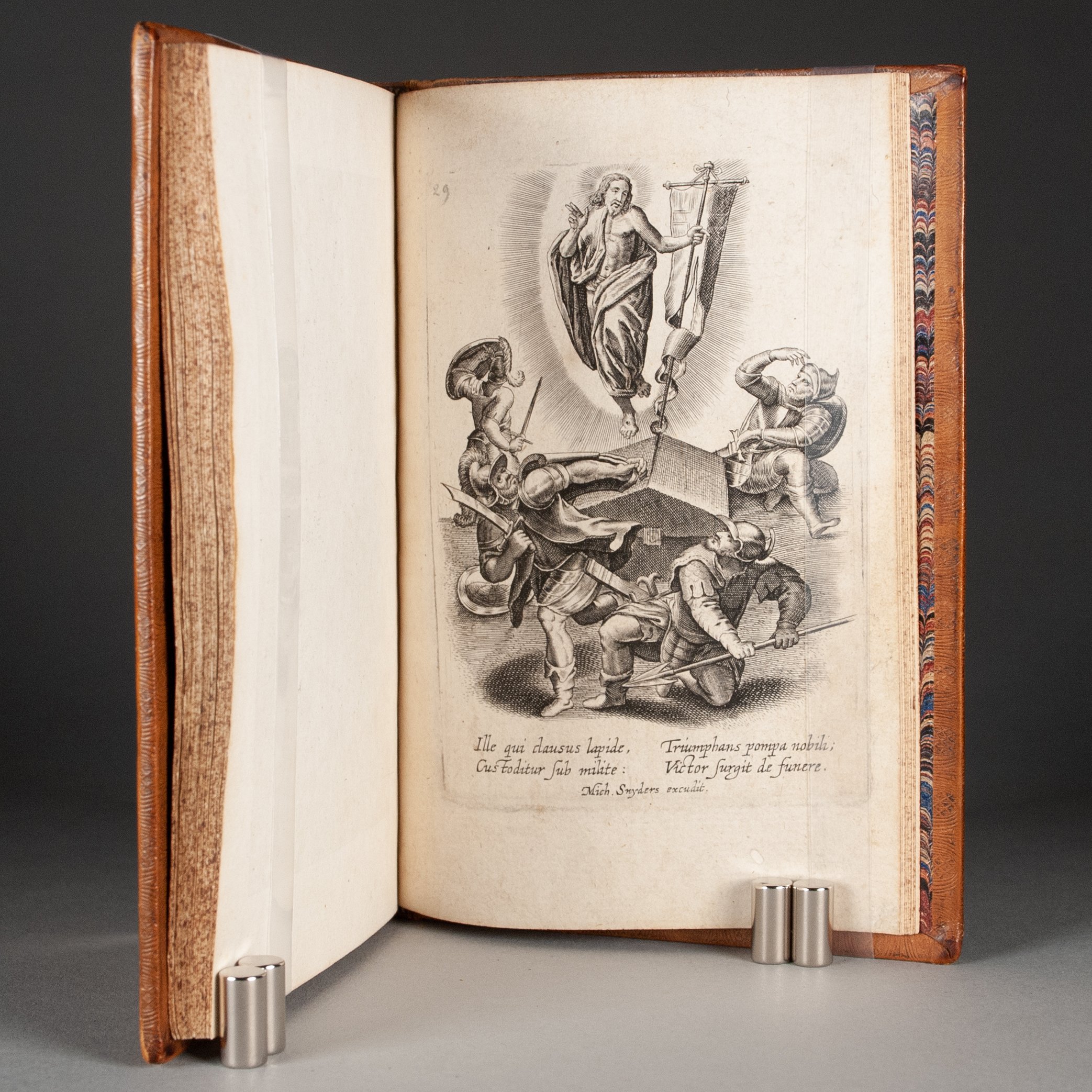
A rare Passion sequence from prolific Antwerp printmaker and publisher Michael Snyders, a series of 28 excellent engravings we've been unable to locate in any library or museum. We find plenty of individual prints on the subject by Snyders, but only a single reference to something that might possibly represent this coherent series: more than a century ago, René van Bastelaer recorded an Horloge de la Passion (Cycle of the Passion) in the Prints Department at the Royal Library of Belgium, in vertical rectangular format (as opposed to another round series). We've been unable to trace this in the online catalogs of both Belgium's Royal Library and Royal Museums. Our images certainly weren't pulled from Snyders's Amoris Divini et Humani Antipathia, easily his best known work, nor did they come from De gheestelycke vryagie,a devotional to which he contributed a number of engravings. While his output of single prints was prolific, Snyders also "created series that he sometimes compiled into books" (Bastelaer). We suspect such was the case here, given the unity of theme, style, and size. ¶ If he has one at all, Snyders has developed a reputation as an abundant copier of others' work (though he was hardly alone in that respect). Like many printmakers, he freely adapted suitable paintings, or even other engravings, to his own printmaking and publishing program. His Lamentation of Christseems fairly typical in this respect: he published the print engraved by Joan Berwinckel, who based his engraving on another by Hieronymus Wierix, who in turn based his design on a painting by Hugo van der Goes. No doubt buoyed by a rich local corpus of imagery, "Snijders was one of Antwerp's many makers of devotienprenten—small, printed images of saints given out on feast days, awarded at school festivals, and exported across the wider Catholic world. This was his bread and butter. A normative art historical narrative would have us believe that this industry of printers was parasitic at best, taking the inventions of the city’s masters and slowly degrading them through ever more paltry acts of copying" (Hyman). While such copies seldom matched the quality of the originals, they introduced this visual work to a much broader audience—especially in this small format, which could easily be carried on one's person. ¶ Most of these prints are signed with some variation of M. Snyders excud., this abbreviation typically used for the publisher's role. It's certainly possible that Snyders designed these images himself. His larger prints did often note when others were responsible for particular roles, and plate 19, the Veil of Veronica, is accompanied by the kind of elaborate floral garland that Snijders was rather fond of (found in a number of his prints, not least this Virgin and Child and St. Augustine). All the same, absent clear evidence, we'll claim him only as publisher. Whatever their authorship, these are accomplished engravings, certainly a cut above your run-of-the-mill devotional prints. There's ample detail, showcased here in sharp impressions; the engraver has captured rich tonal value, deftly combining crosshatching and parallel lines to achieve variety of depth; and the images are frequently expressive in character, with figures more lively drawn than those found in more prosaic devotional imagery. ¶ The volume's opening plate, while signed by Snyders, doesn't quite fit the series. The subject is right—Christ carrying the Instruments of the Passion—but it's lettered in a different style, with a cartouche that instead matches a small print of Jesus and Mary using the cross as a plough. The second plate is the only one with text in a ribbon above the image (Quoniam ego in flagella paratus sum), and might reasonably serve the function of a title page, at least in so far as it conveys the subject of the series. Incidentally, he has also signed this one figur[avit], indicating Snyders drafted this image, too. ¶ Plate 12 is signed by Philip de Mallery (b. 1598) as engraver, whom Joseph Strutt—hardly recent scholarship—says flourished in 1650. CERL reports Snyders active years as 1601-1648, while Hollstein (perhaps following Wurzbach) has him active in Antwerp until 1630. These prints strike us as a bit too masterly for early career work, so we humbly suggest ca. 1640 as an approximate date of publication.
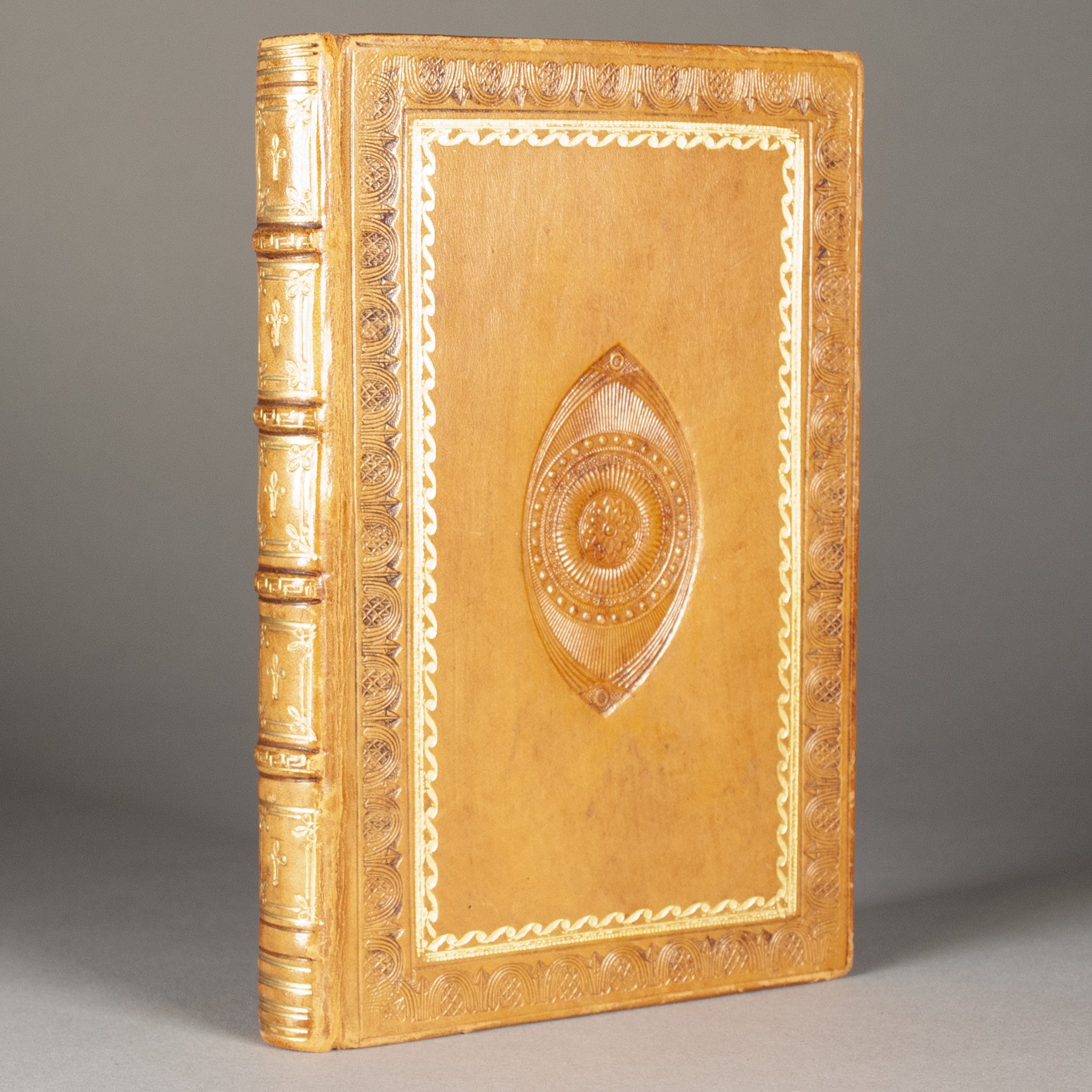
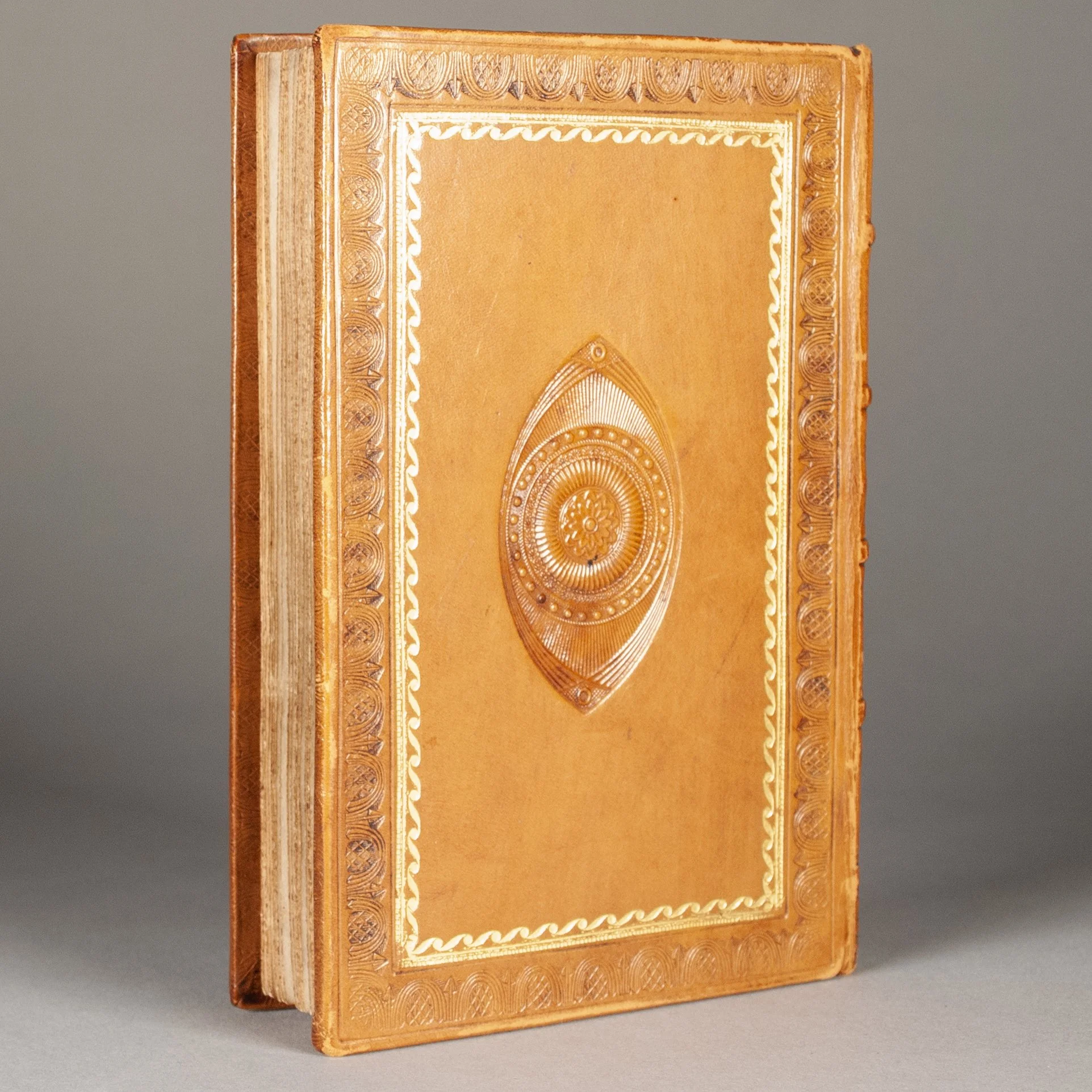
CONDITION: Tan polished calf of the late 19th or early 20th century, attractively tooled in blind and gold. Relatively recent pencil numbering jumps from plate 15 to 17. There's no sign of excision, so we rather suspect the annotator accidentally skipped a number. ¶ Two prints (1 and 27) have been trimmed and mounted; scattered light soiling. Binding extremities very gently worn; booksellers' notes penciled on a front fly-leaf. A wonderful little series of prints.
REFERENCES: Aaron M. Hyman, "Michael Snijders's Copious Copies and the Mechanisms of Print," 21: Inquiries into Art, History, and the Visual (2024), accessed online (cited above; "In the rare instances that one encounters his name, it is in long lists of copyists and their copies, primarily of a devotional variety."); René van Bastelaer, "Snyders, (Michel)," Biographie Nationale...de Belgique, v. 23, col. 81 ("His engraving technique, in his small-format works, is strikingly similar to that of the Wierix brothers. In the plates where he can develop his skills further, we see a technique quite similar to that of Vorsterman, but lacking his power."), col. 82 ("Michel Snyders was above all an engraver and publisher of religions prints; he seems to have rarely signed his regular productions. As a publisher, he did not limit himself to publishing individual images; he created series that he sometimes compiled into books."), col. 84 (listing some of his works, including an Horloge de la Passion); Joseph Strutt, A Biographical Dictionary...Engravers (1786), v. 2, p. 117 (for Mallery's flourished date); p. 99 ("The art of engraving greatly expanded in the 17th century thanks to the flourishing school of painting in Antwerp. It is, however, not yet possible to define what role Michael Snyders played in this."), 101 ("During his life, however, he printed or had printed thousands of images on paper, parchment, canvas, or satin, depicting religious or emblematic subjects"); Alfred von Wurzbach, Niederländisches Künstler-Lexikon (1910), v. 2, p. 635 (very brief bio of Snyders); Hollstein, Dutch and Flemish Etchings, Engravings, and Woodcuts, v. 27, p. 91 (for Snyders's dates)
Item #956