
A truly original emblem book | Among the genre's crown jewels
A truly original emblem book | Among the genre's crown jewels
Piscatio philosophica
by Giuseppe Riccio (Ricci)
Venice, 1662
[48] p. | 141 x 100 mm
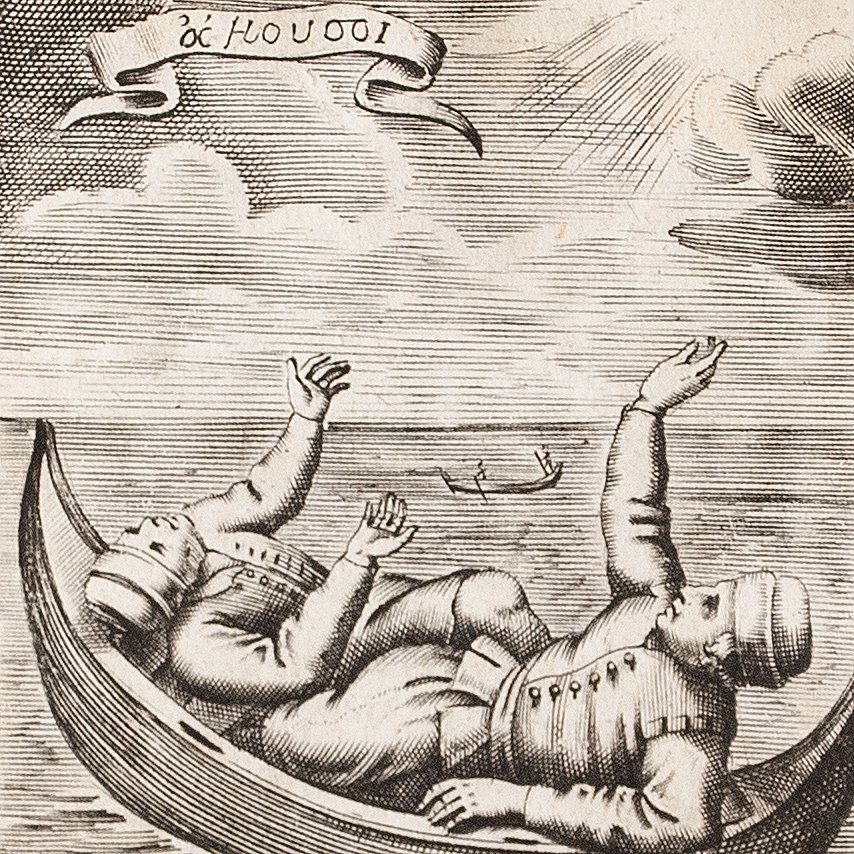
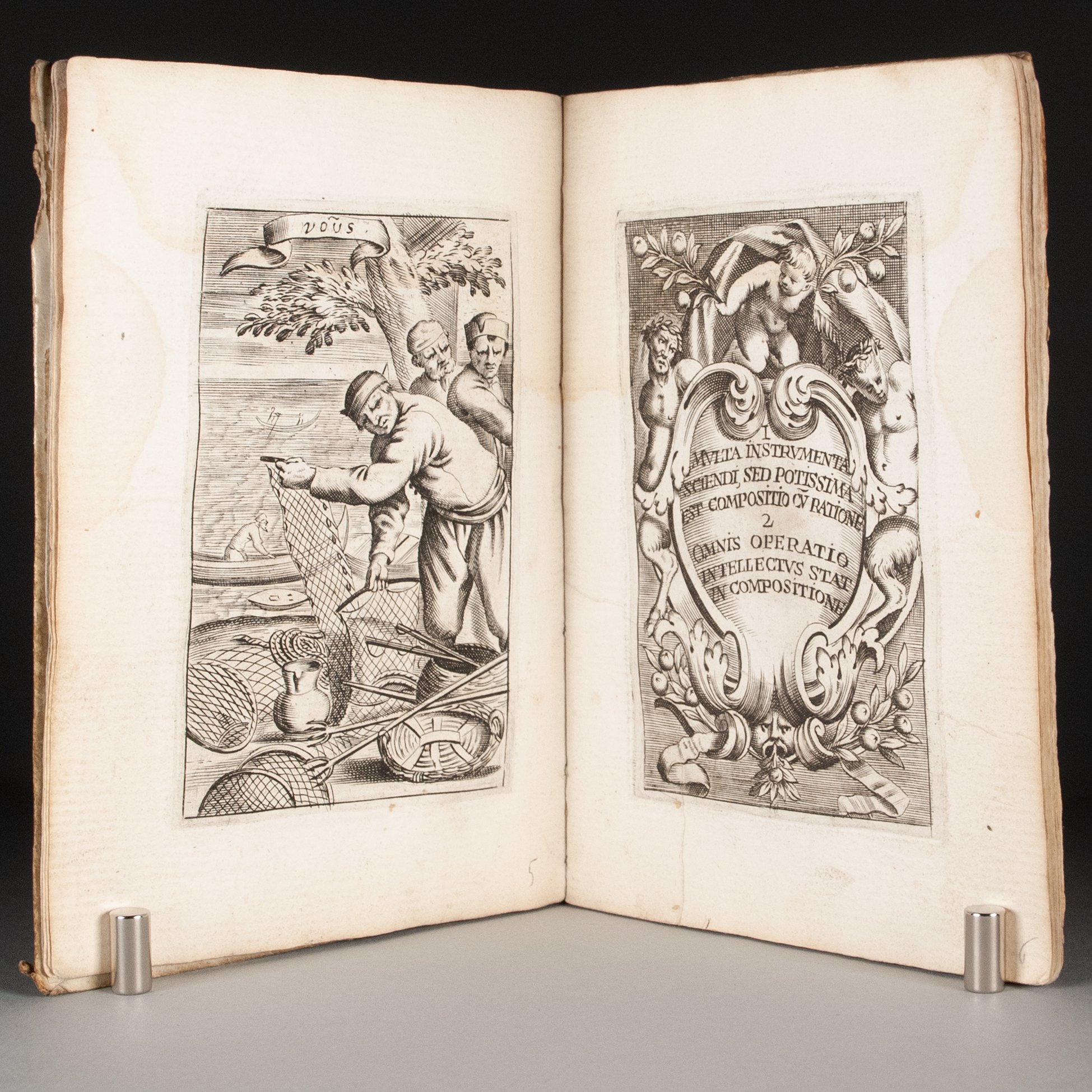
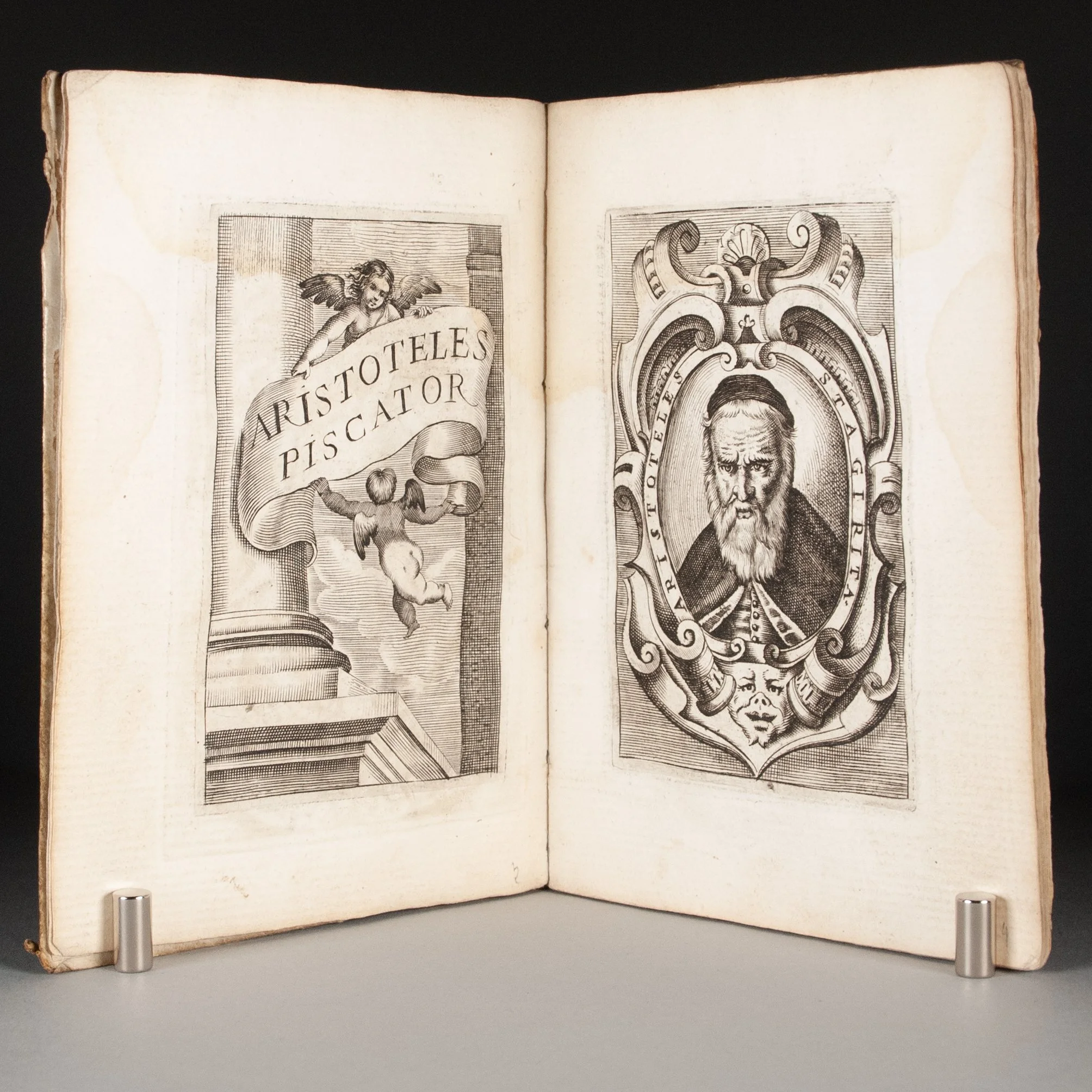
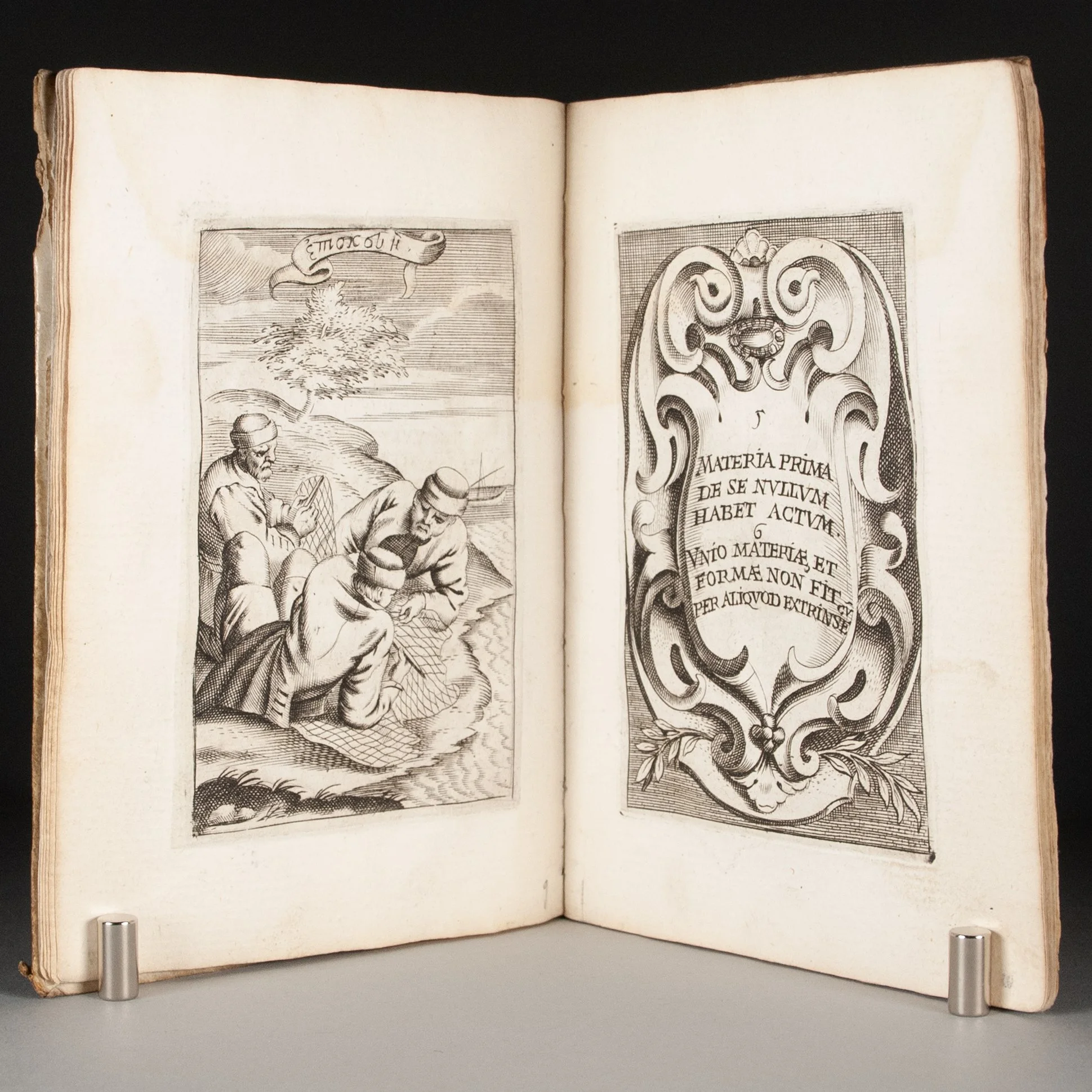
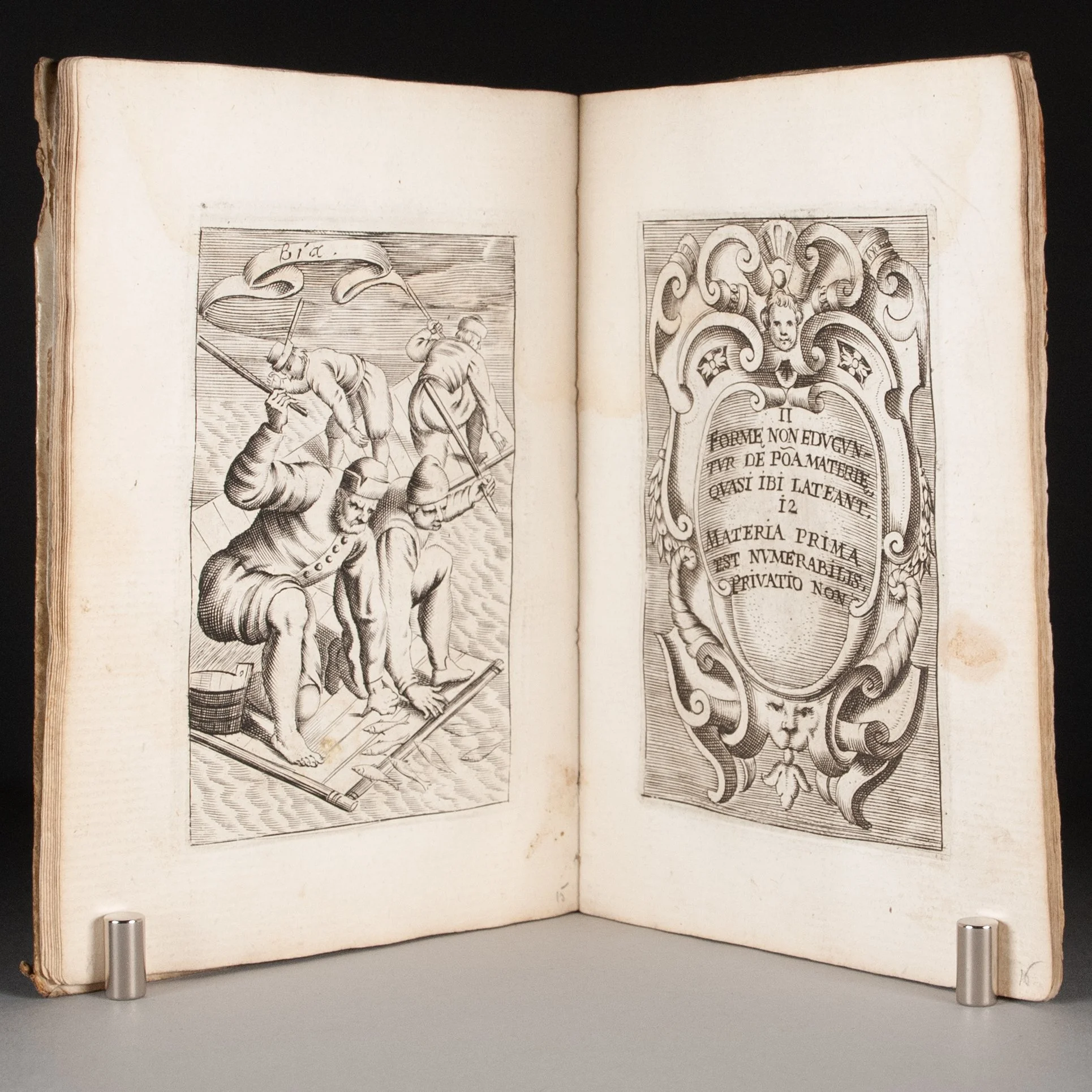
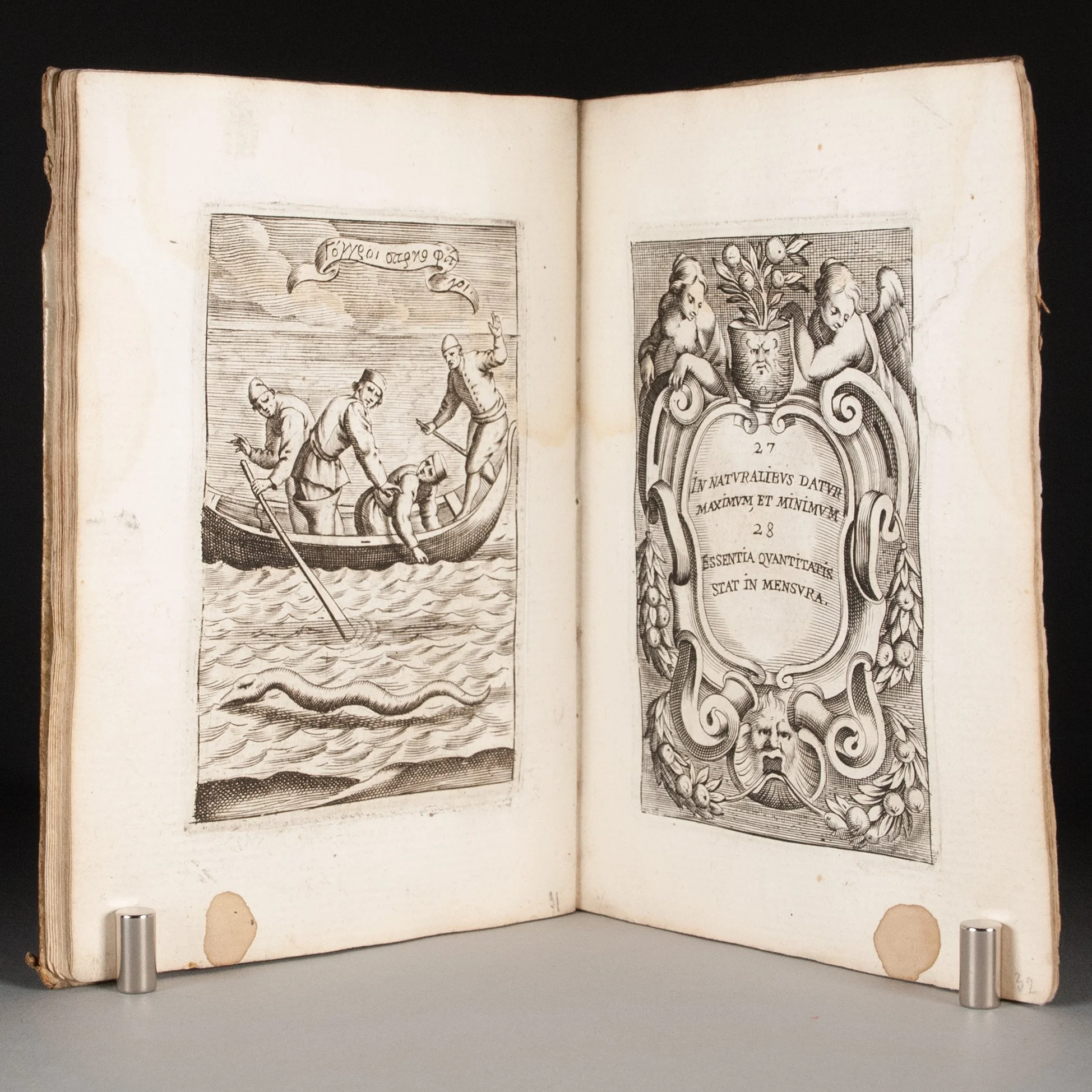
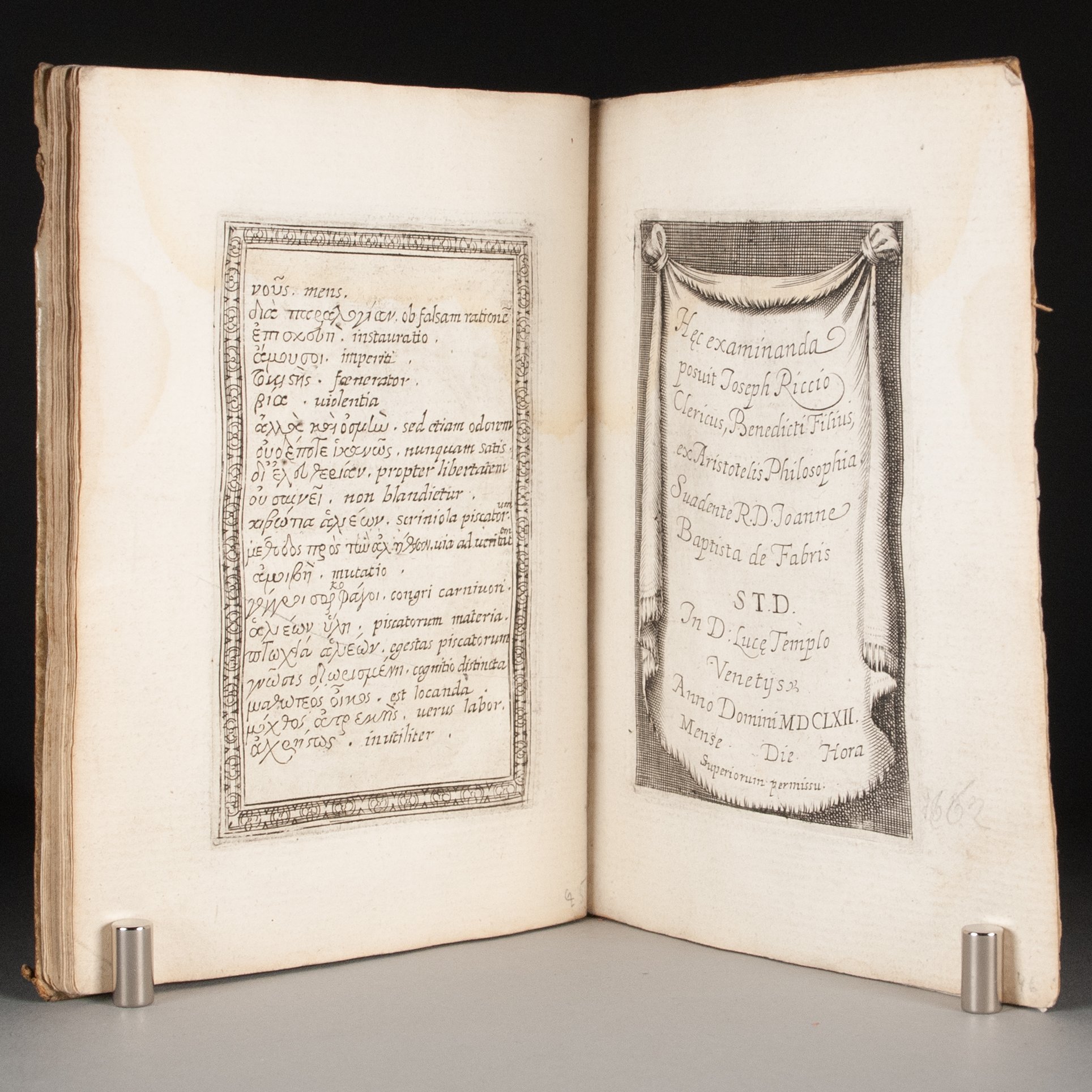
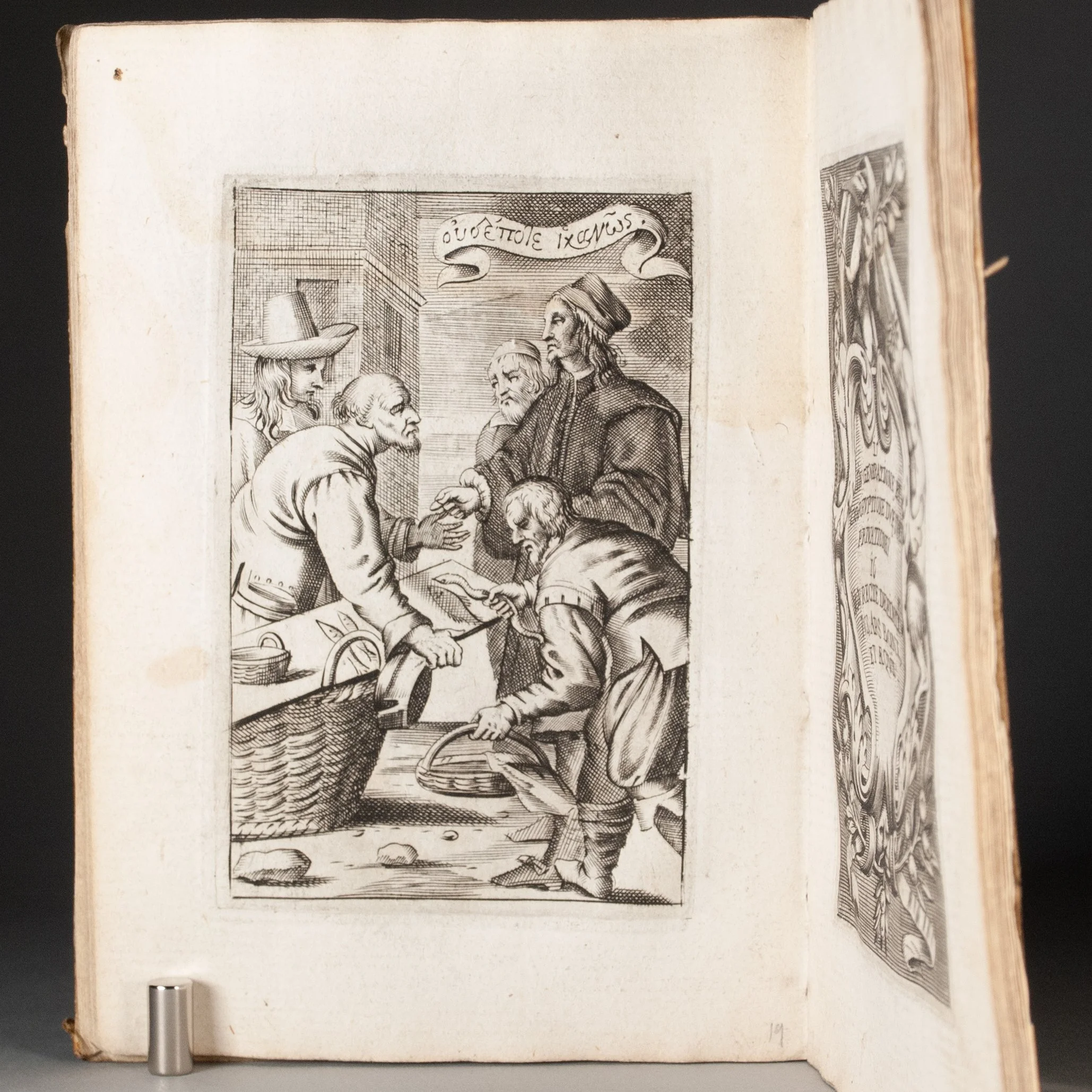
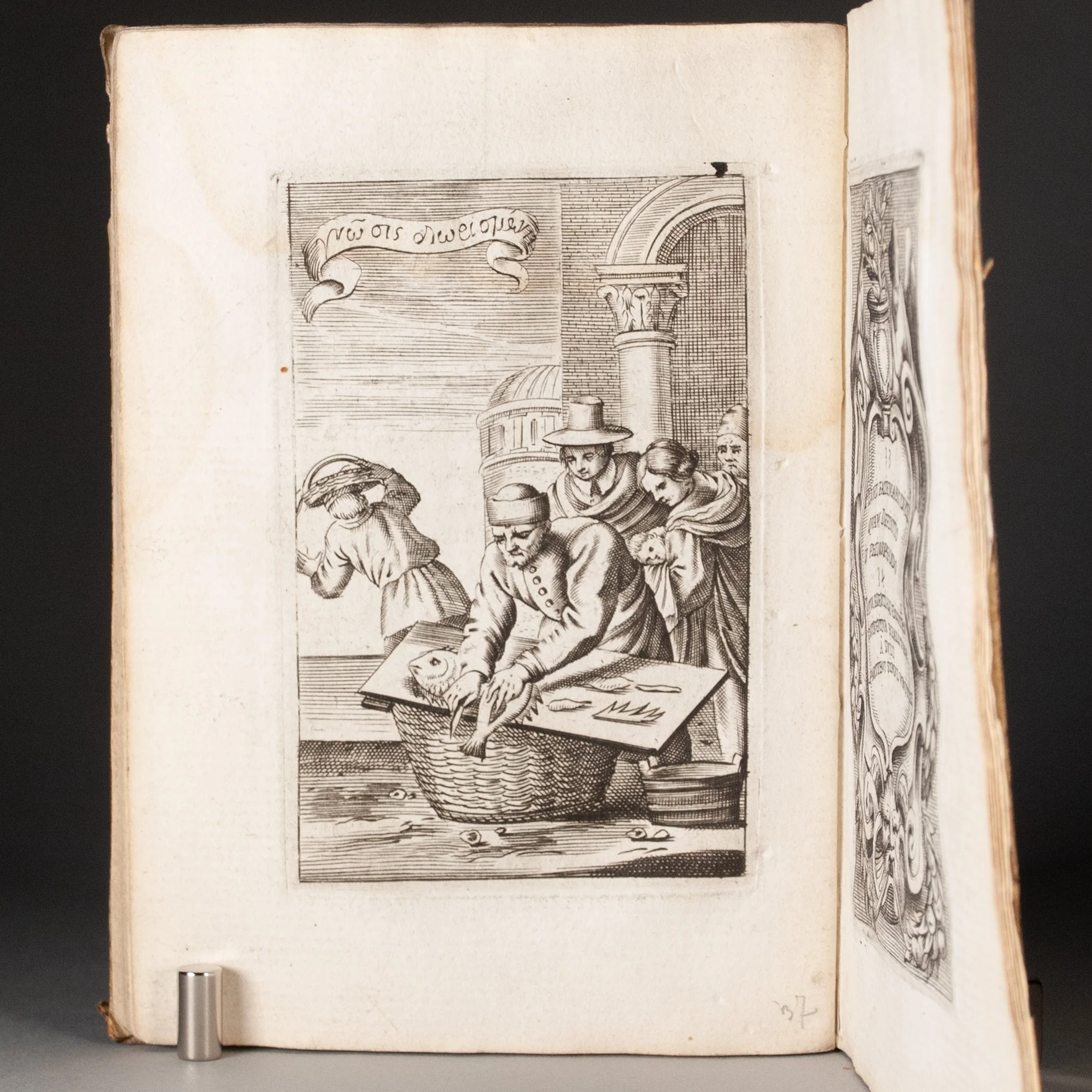
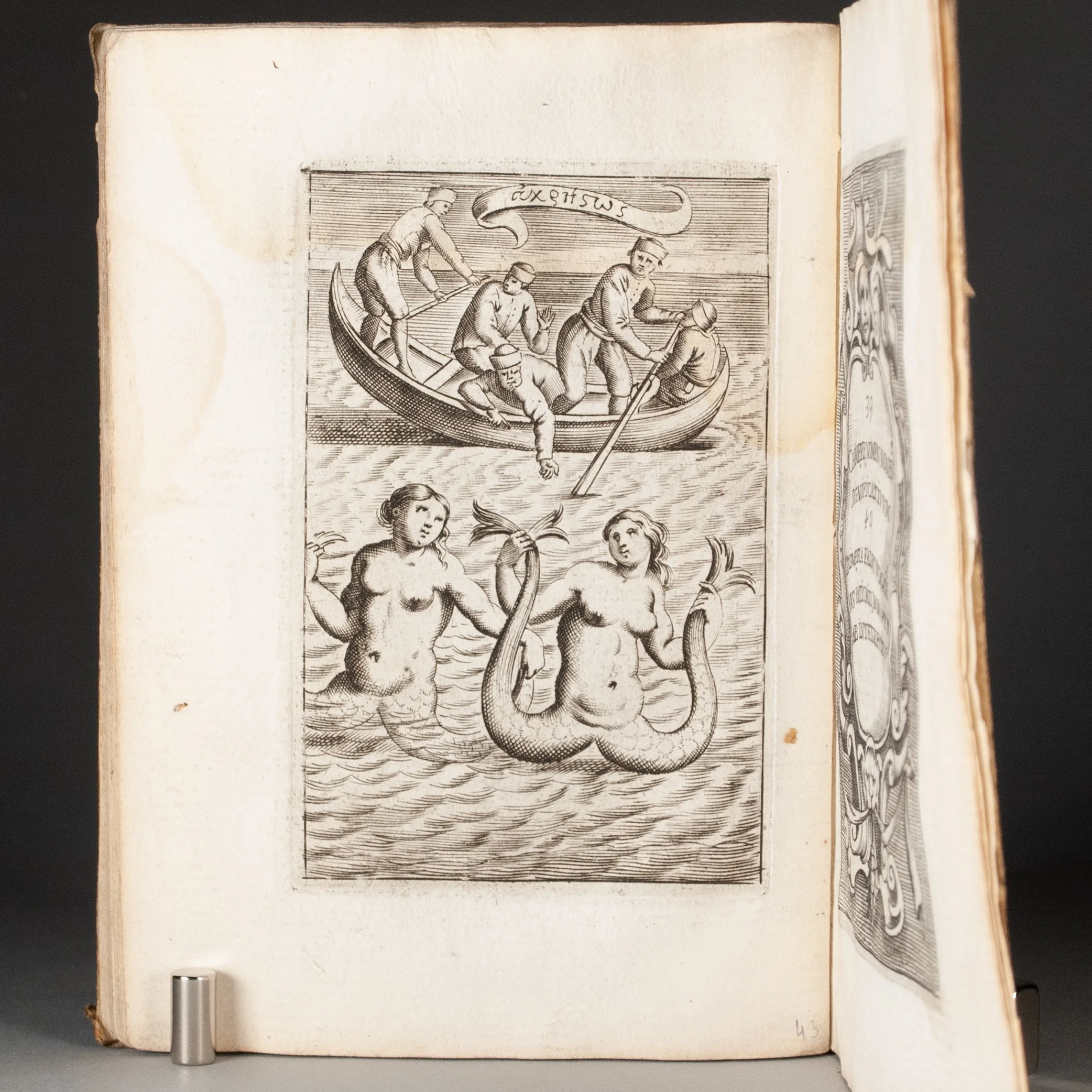
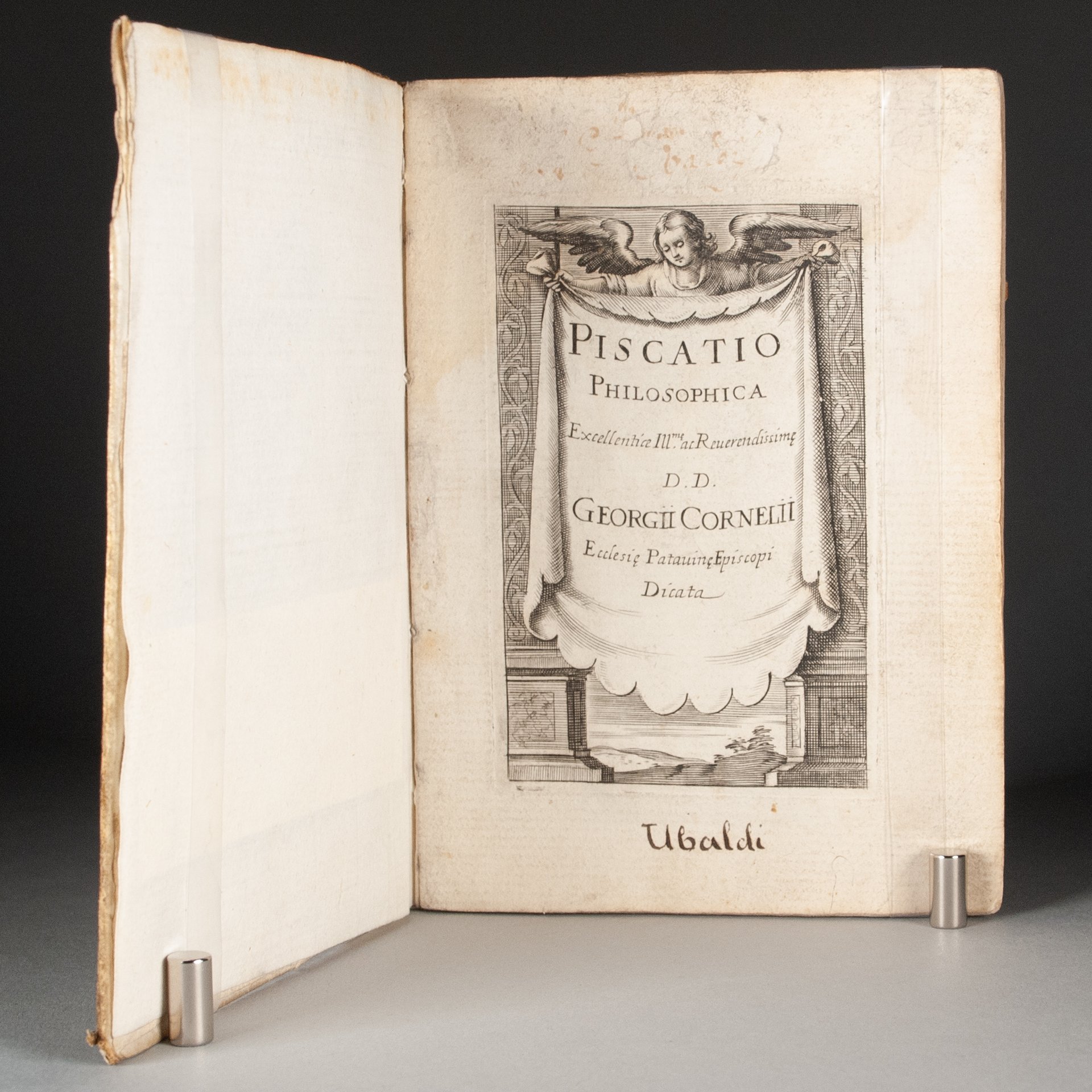
First and only edition of this fully engraved emblem book that rather unexpectedly blends angling with Aristotelian wisdom. The title appears repeatedly in The Book Collector's "News and Comment" section over the last half century: "the most desirable emblem book in the world" (2000), "one of the most charming (and, alas, rarest) books ever published" (1970), and "the only emblem book of Aristotelian texts illustrated by fishing" (2007), to pull a few quotes. Combining as it does two traditionally strong collecting areas—emblems and angling—we understand the irresistible appeal of a genuinely scarce book that presents such an unlikely union. ¶ The twenty illustrations depict a variety of methods for catching fish, plus a number of related activities: gathering equipment, preparing nets, drinking at sea, and two sirens who seem to have caught the attention of some nearby fishermen. (You might recognize these sirens in the Starbucks logo, wherein she also holds one of her tails in each hand.) A brief Latin inscription on the opposite page accompanies each illustration, a choice bit of Aristotelian wisdom to help elucidate the scene. The first engraving, for example, depicts fisherman gathering their equipment, while the text reads, "There are many tools for knowing, but the most powerful is combining them sensibly" (Multa instrumenta sciendi, sed potissima est compositio cum ratione). Beyond the engraved images and accompanying text, additional engravings include the title; a kind of alternate engraved title, Aristoteles Piscator in a ribbon supported by two putti; the likeness of a rather defiant-looking Aristotle; coat of arms of Giorgio Cornaro, Bishop of Padua at the time, and the book's dedicatee; and at end a page of engraved Greek, plus a final colophon, which mentions one Giovanni Battista de Fabris as the one who exhorted Riccio to produce the book. Landwehr suggests the book was "printed for private circulation," in which case we'd rather suspect de Fabris as patron. ¶ For those unfamiliar with the emblem book, it was a tremendously popular genre among European intellectual circles (and those aspiring to them). An emblem traditionally conveyed its meaning through the combination of three elements: an image, a motto (here in Greek), and a brief text. The emblem's meaning preferably would be fully grasped only by understanding each element, which made the genre something of a plaything for Europe's most erudite readers. Andrea Alciato laid the foundation with his 1531 Emblemata, after which versions secular and religious alike proliferated, with explosive growth through the 17th century and a legacy that endured far beyond. With examples numbering not just in the hundreds, but the thousands, one can imagine how emblem content might have grown repetitive. "As the emblem-writers were making capital of commonplaces, and the stock-in-trade of literary culture, they can hardly claim the honour of being the originators of anything. The emblem literature is the most spectacular example of the vulgarization and liquidation of a mode of thinking which had had its heyday in the Middle Ages: the emblematists made common counters out of many a thesaurus of learning, mostly for the sake of interior decoration and of the entertainment of polite society, providing elegant devices for plasterers and embroiderers and fashionable topics of conversation and posies for courtiers and ladies, until, after the XVIIth century, their further debased counters became a plaything for the nursery" (Praz). In this context, Riccio's work is exceptional. For a genre that often relied so heavily on imitation and recurring iconography, these emblems are clear standouts for their originality. ¶ We find some half a dozen copies in US libraries, and not a terribly frequent flyer at auction, last seen at Christie's London in 2014.
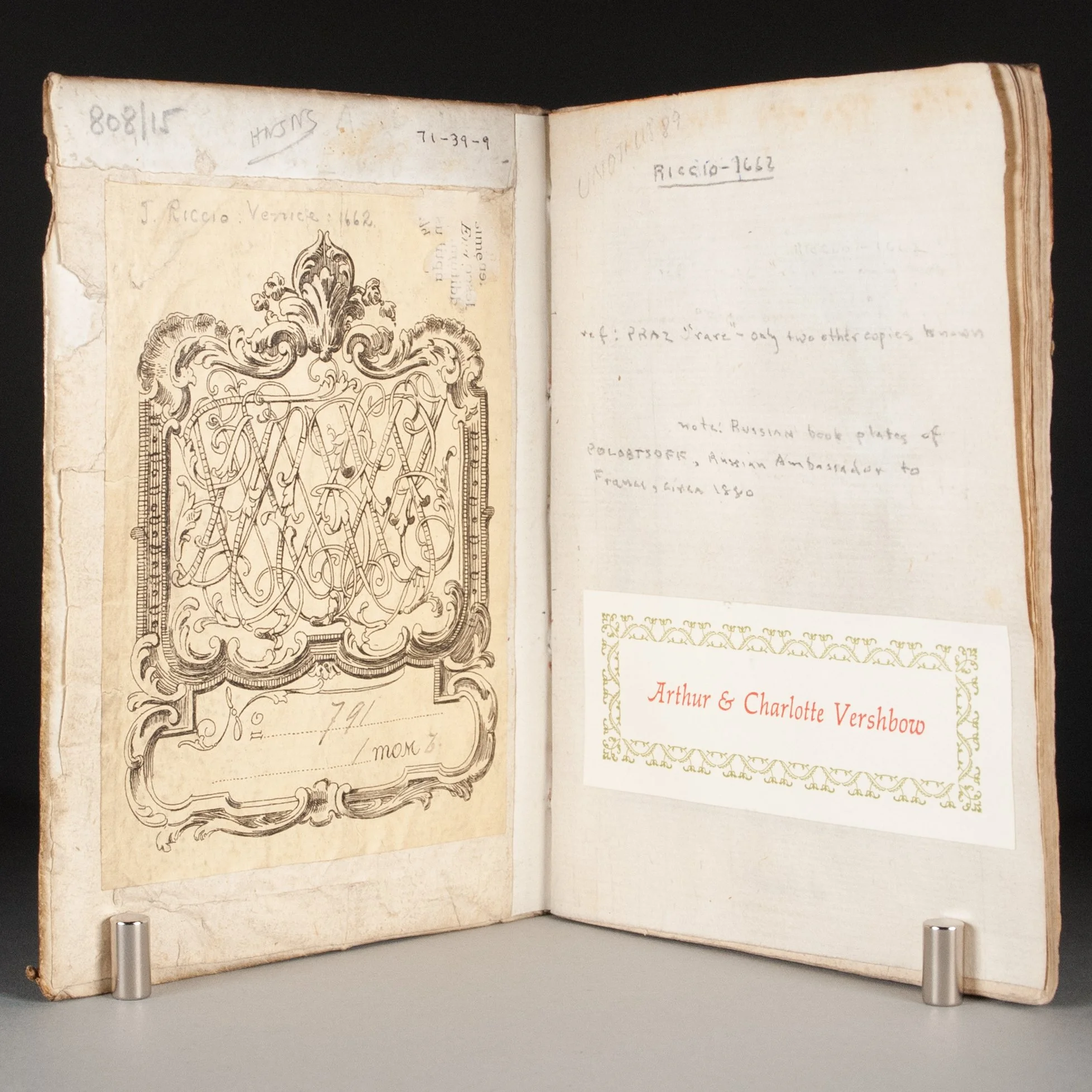
PROVENANCE: Ubaldi in old ink at the foot of the title, and an old inscription obliterated from the head of the title. Bookplate of Russian statesman Alexander Alexandrovich Polovtsov on front paste-down. Most recently from the collection of Arthur and Charlotte Vershbow, sold at Christie's New York on 20 June 2013.
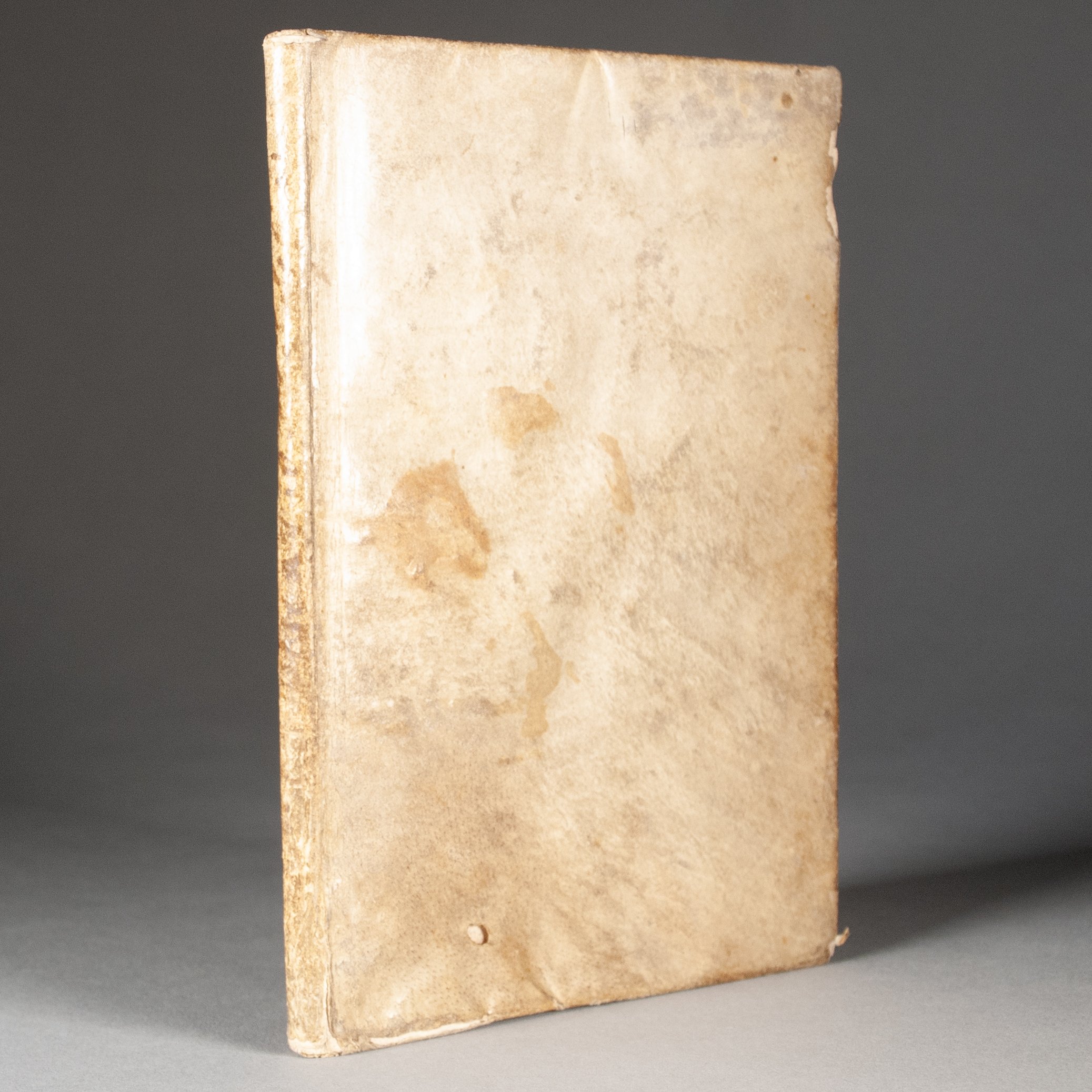
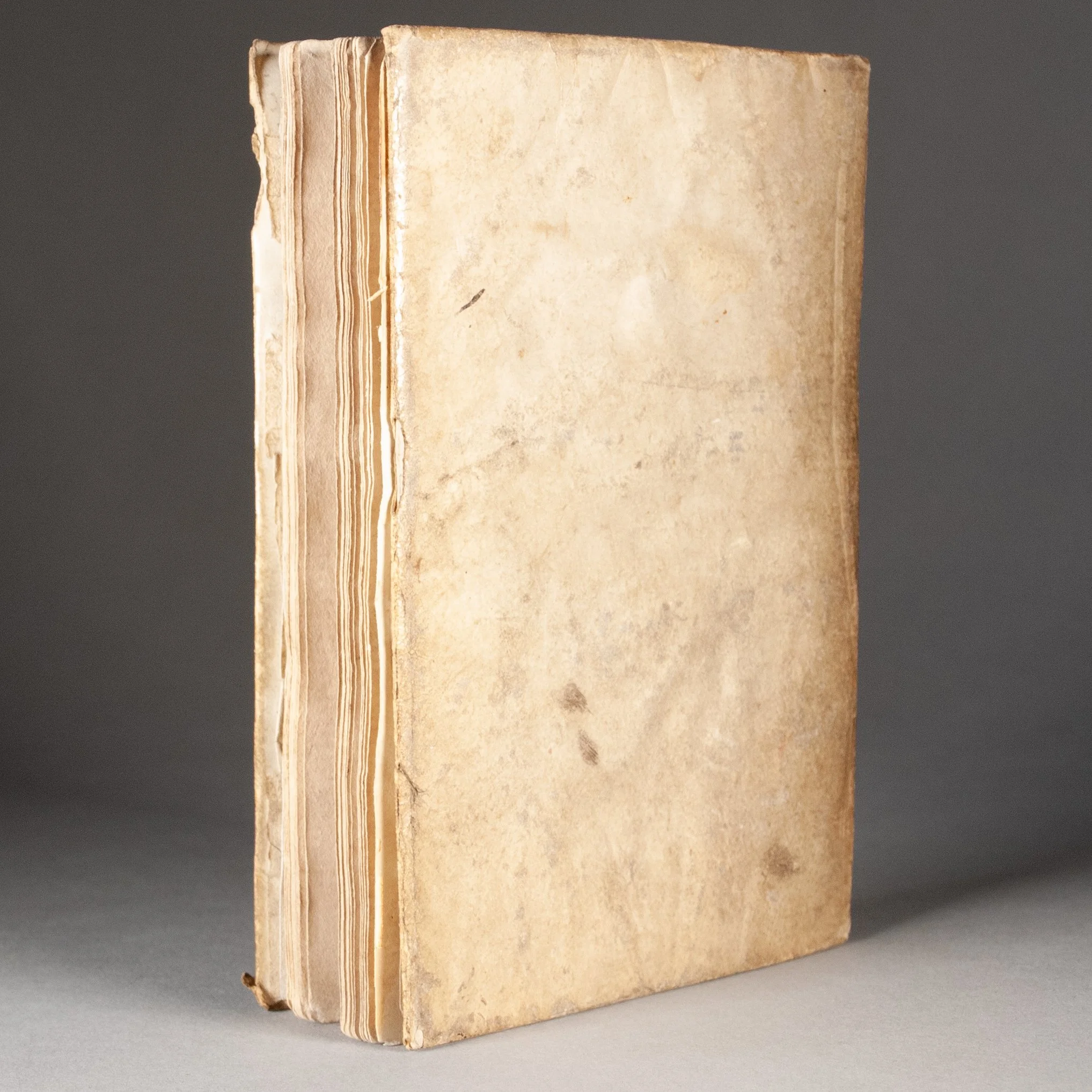
CONDITION: Early plain parchment, in a recent chemise and somewhat older custom box of red leather. Sewn as a single gathering. ¶ Fol. 17 torn, just affecting the image; small hole in head of title from aforementioned obliterated inscription (not affecting any text or image); scattered dampstaining, quite faint, and some scattered soiling, the worst a dime-sized in the lower margin of two leaves, not affecting any content; title page generally dusty and a bit soiled. Parchment soiled, and a bit of loss at the fore-edge. Altogether a nice copy of this landmark of emblem literature.
REFERENCES: USTC 1733954; Mario Praz, Studies in Seventeenth-Century Imagery (1975), p. 471; John Landwehr, French, Italian, Spanish, and Portuguese Books of Devices and Emblems (1976), p. 160, #620 (Rarissime) ¶ On the present work: The Book Collector 49.4 Winter 2000, p. 560 (cited above); 19.3 Autumn 1970, p. 379 (cited above); 56.4 Winter 2007, p. 566 (cited above); Annual Report of the Librarian of Congress for the Fiscal Year Ending September 30, 1999, p. 215 ("illustrated with twenty engraved plates of seventeenth-century methods of catching fish—a very unusual subject for an emblem book of this period. Small vignettes illustrate all aspects of fishing, from the casting of nets to scenes at the fishmonger. This beautifully engraved book is quite rare and is the only complete copy owned by an American library."); "Selected Recent Acquisitions Briefly Noted," The Yale University Library Gazette 76.3/4 (April 2002), p. 191 ("First edition of this emblem book showing twenty images of angling and fishing illustrating short verse expositions of Aristotelian wisdom," reproducing the final image) ¶ On emblems broadly: The Oxford Companion to the Book (2010), v. 2, p. 696 ("The popularity of the genre was at least partly caused by the illustrations, the conventional iconography of which made it easy to copy...Humanists used emblems to create intellectually satisfying riddles for their learned friends...Although the emblem book lost its widespread appeal in the 18th century, the books were published regularly until the end of the 19th century, and they occasionally appear even today"); Alain Boureau, "Books of Emblems on the Public Stage: Côté jardin and côté cour," The Culture of Print (1989), p. 261 (“a fashion that had spread everywhere in Europe, and in two centuries had produced from 2,000 to 3,000 collections applicable to all purposes and used and printed in all formats and bindings from the humblest to the most luxurious"); Praz, Studies, p. 50 ("Usually the emblem-writers copy unblushingly from their predecessors, sometimes using old engravings with a new text, or at the most introducing into the pictures as much alteration as was necessary to differentiate them (e.g., by reversing them)")
Item #955