Milestone of European portraiture
Milestone of European portraiture
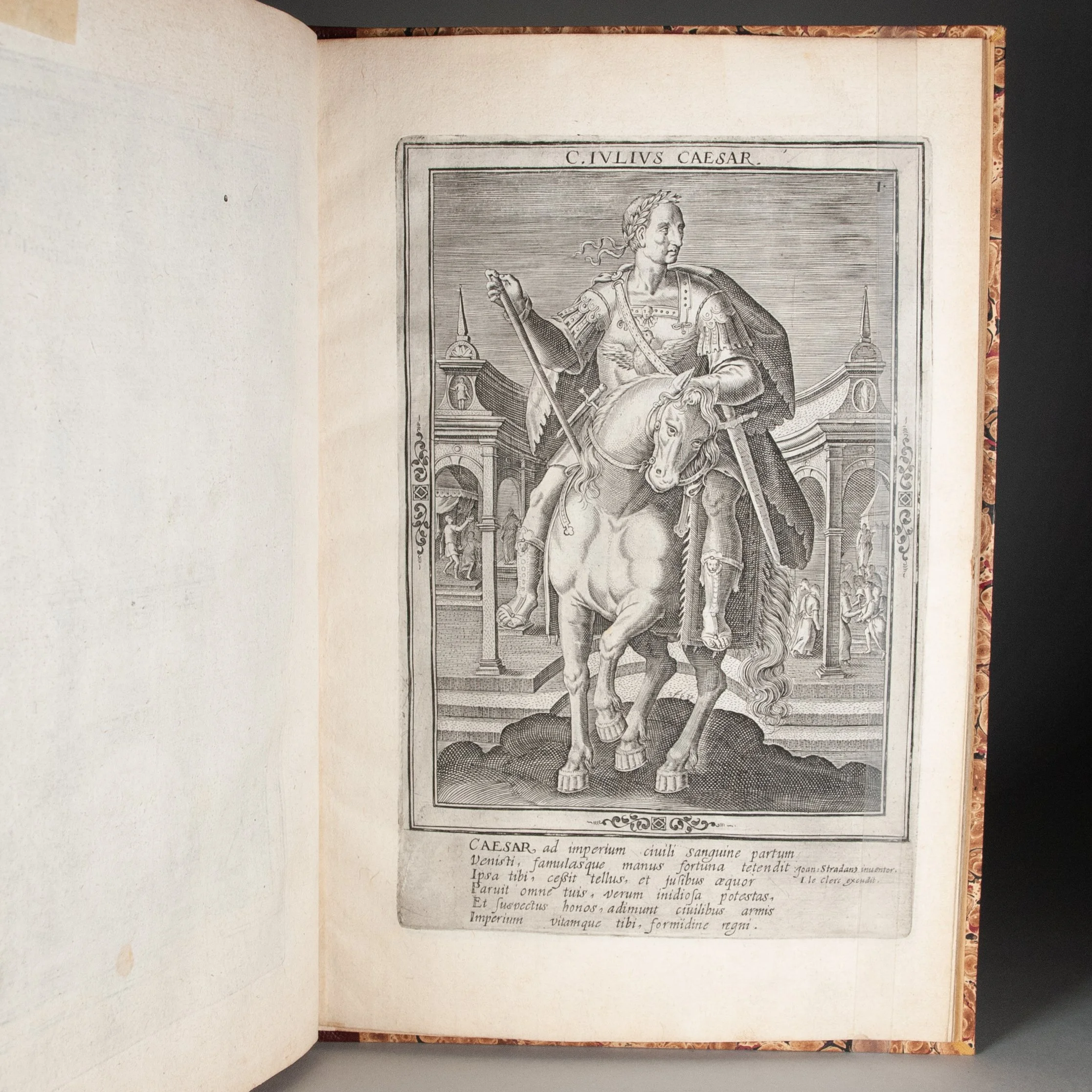
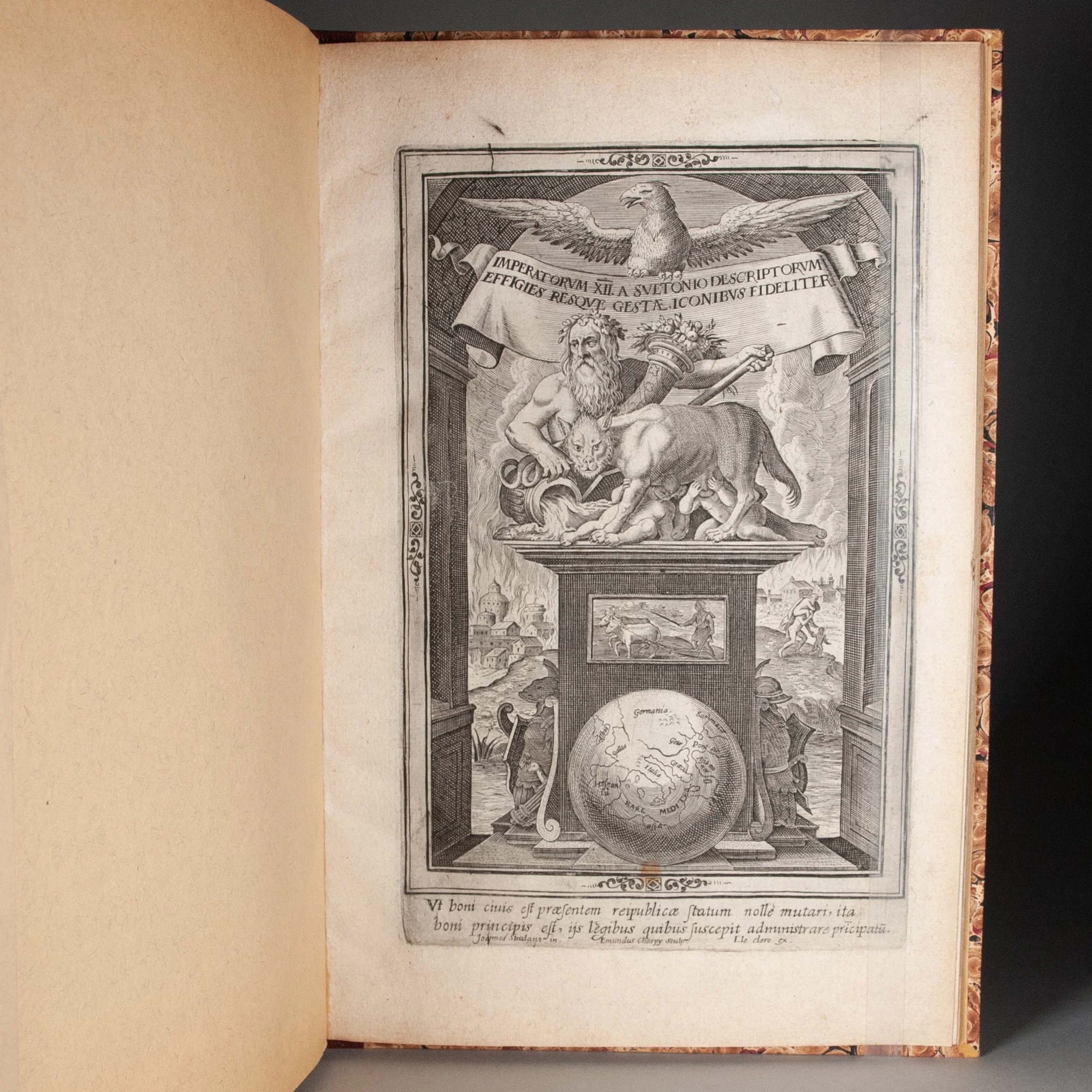
Imperatorum XII a Suetonio descriptorum effigies resque gestae, iconibus fideliter
designed by Jan van der Straet (Joannes Stradanus) | engraved by Edme (Edmond) Charpy
[Paris]: Jean IV Le Clerc, [ca. 1610?]
[1], 12 leaves | Bound suite of prints | 253 x 170 mm
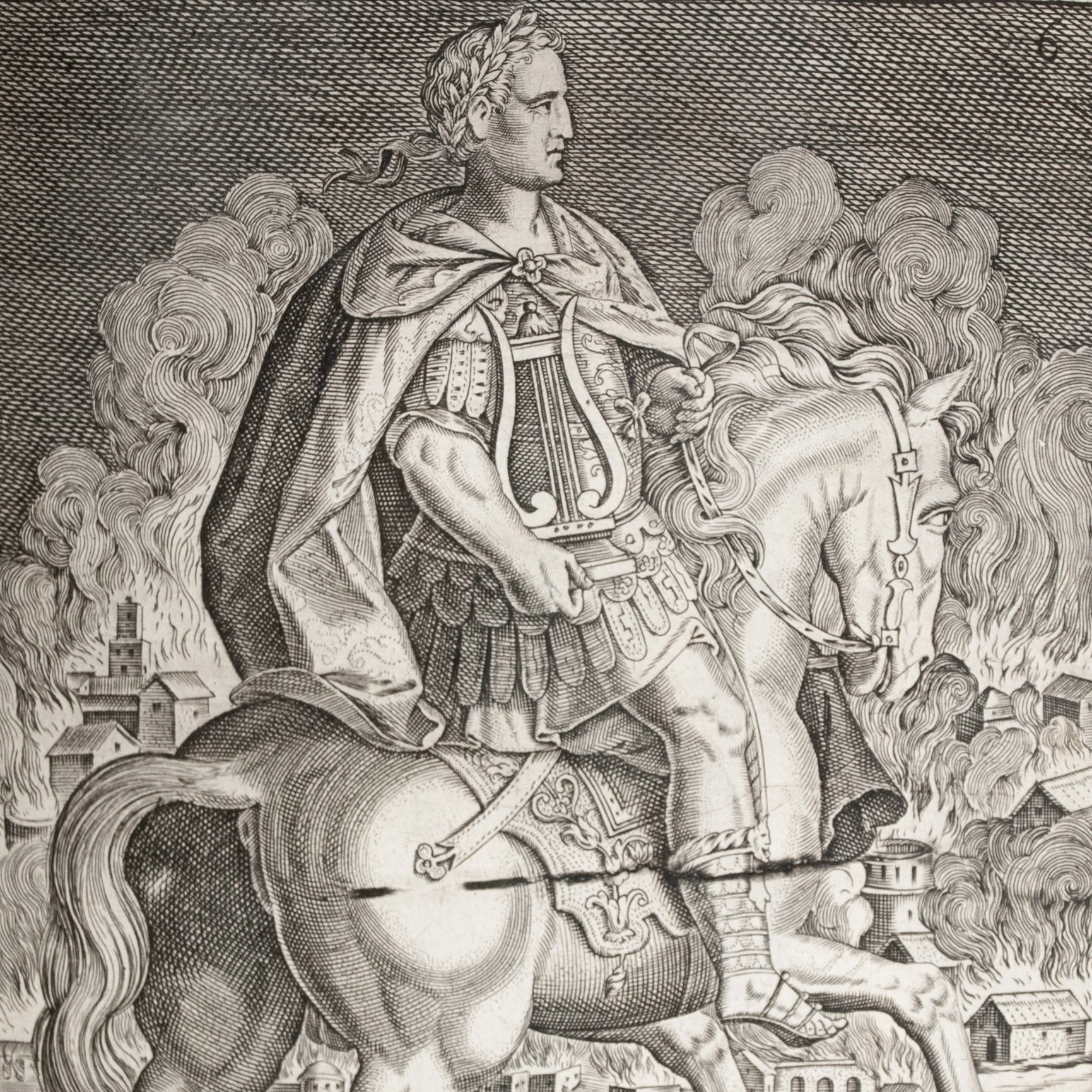
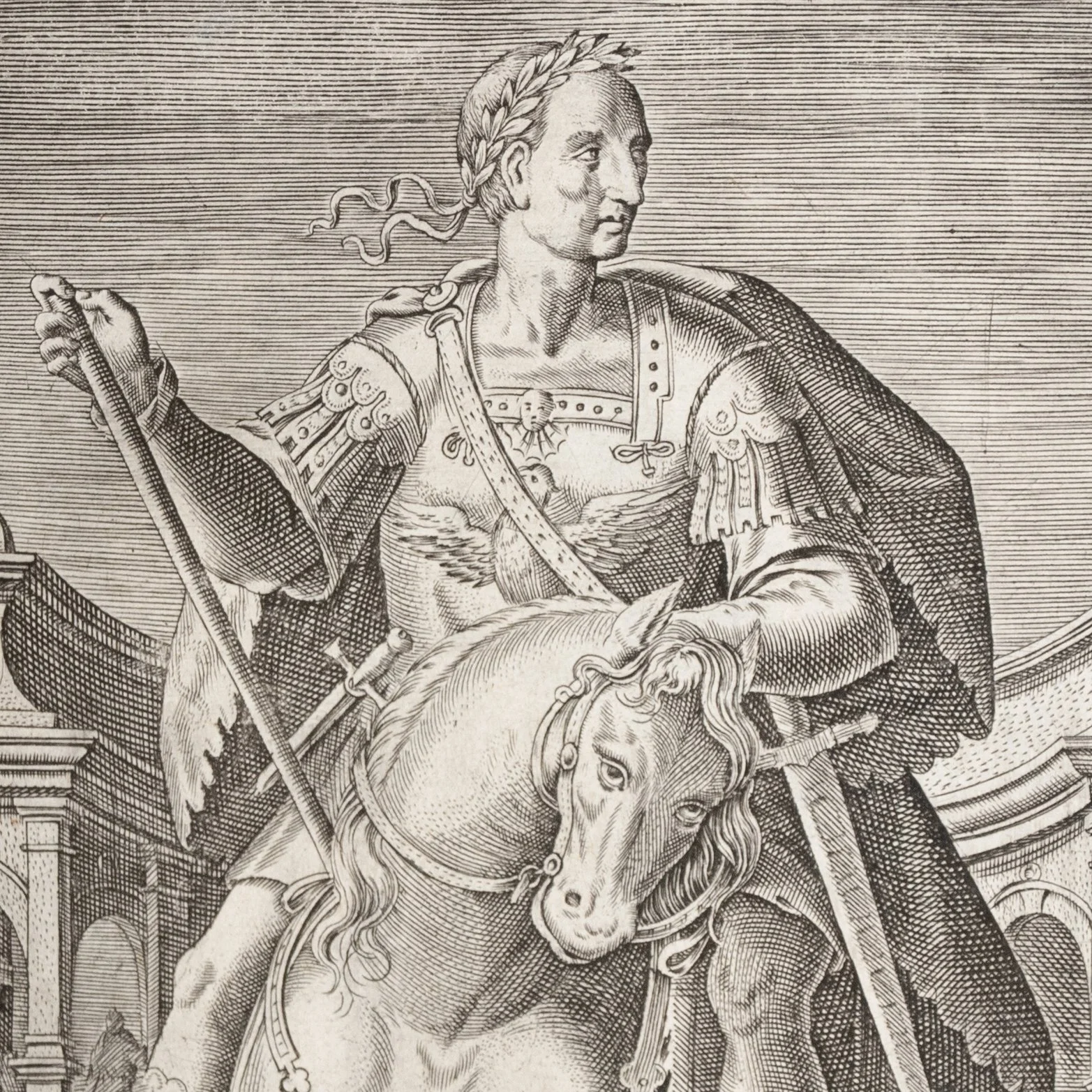
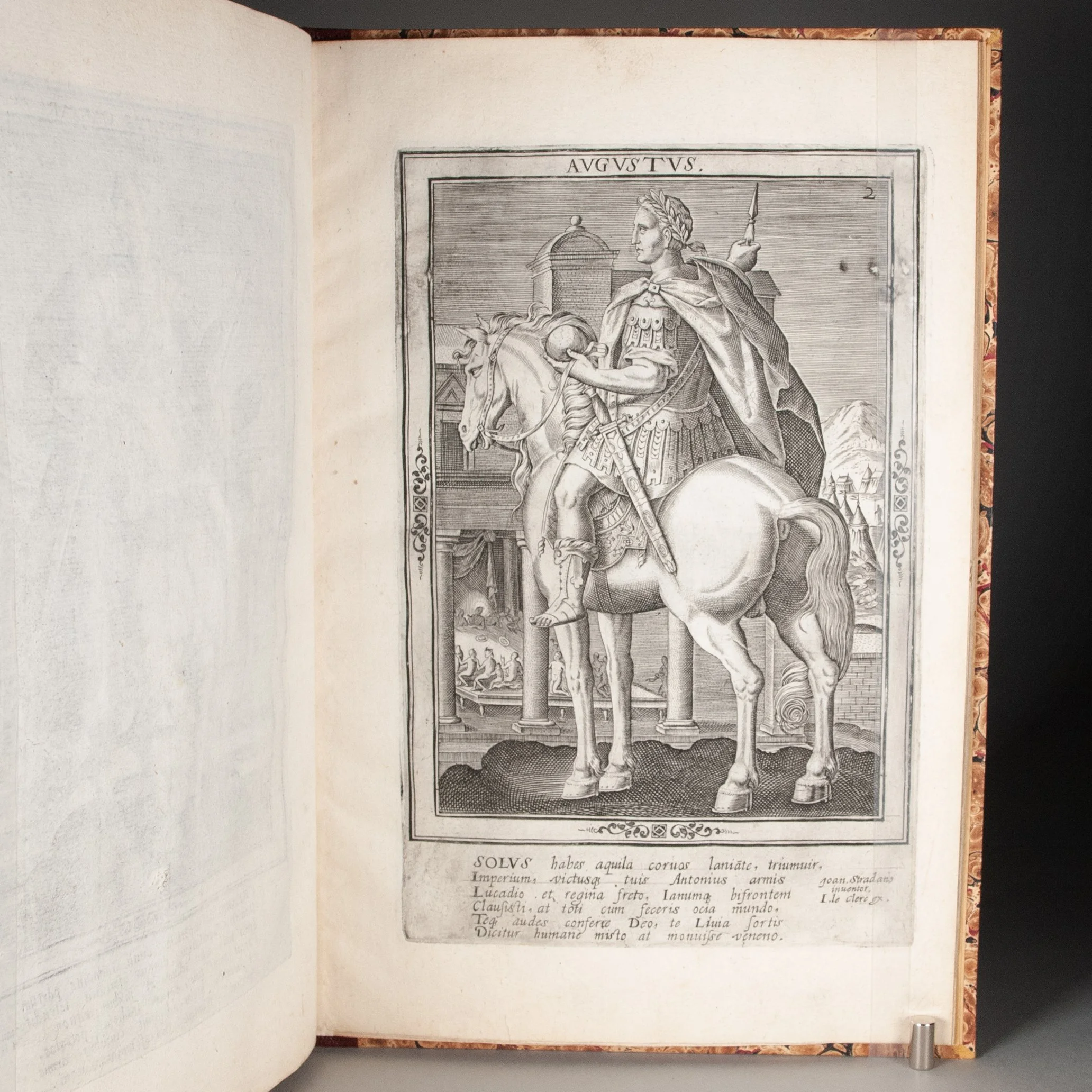
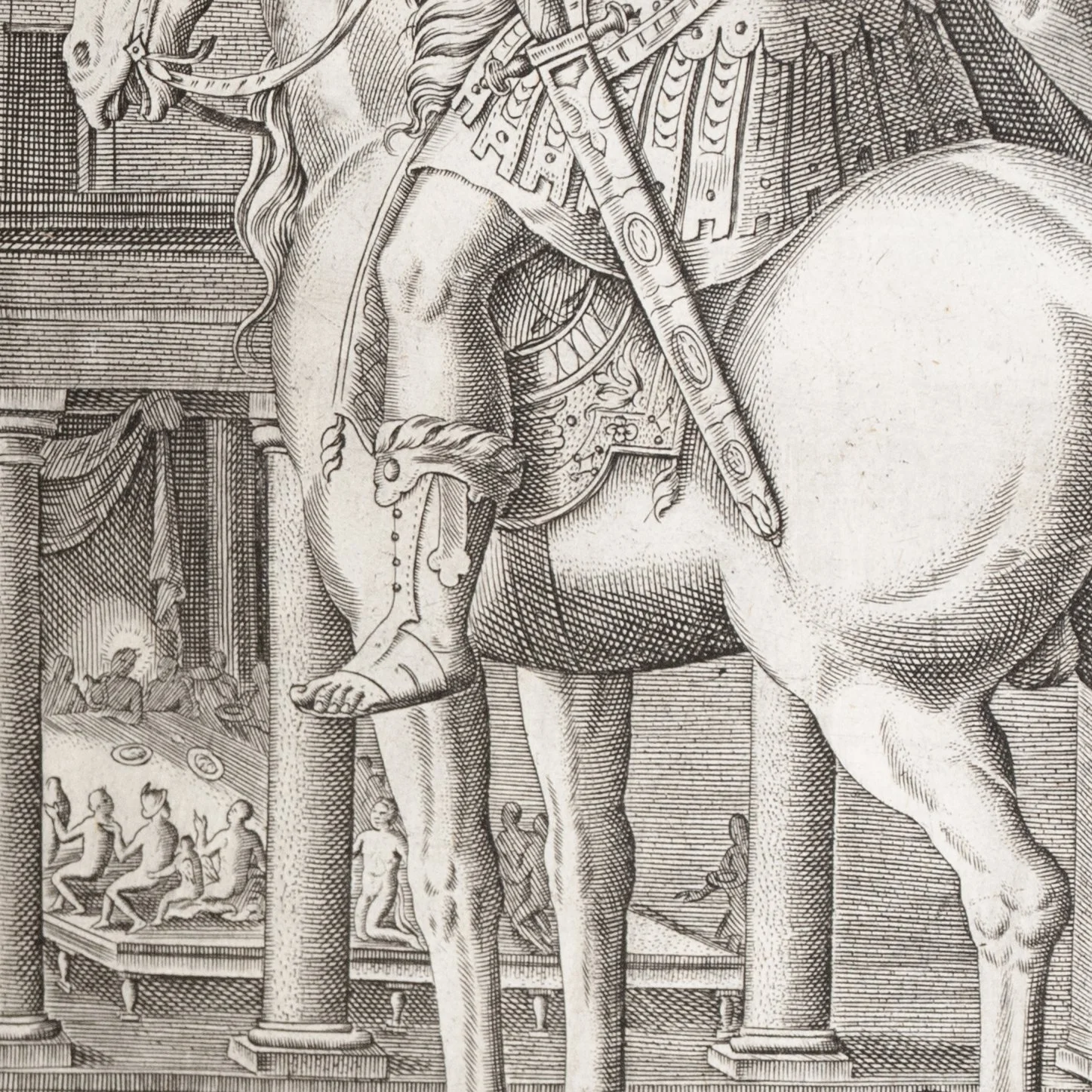
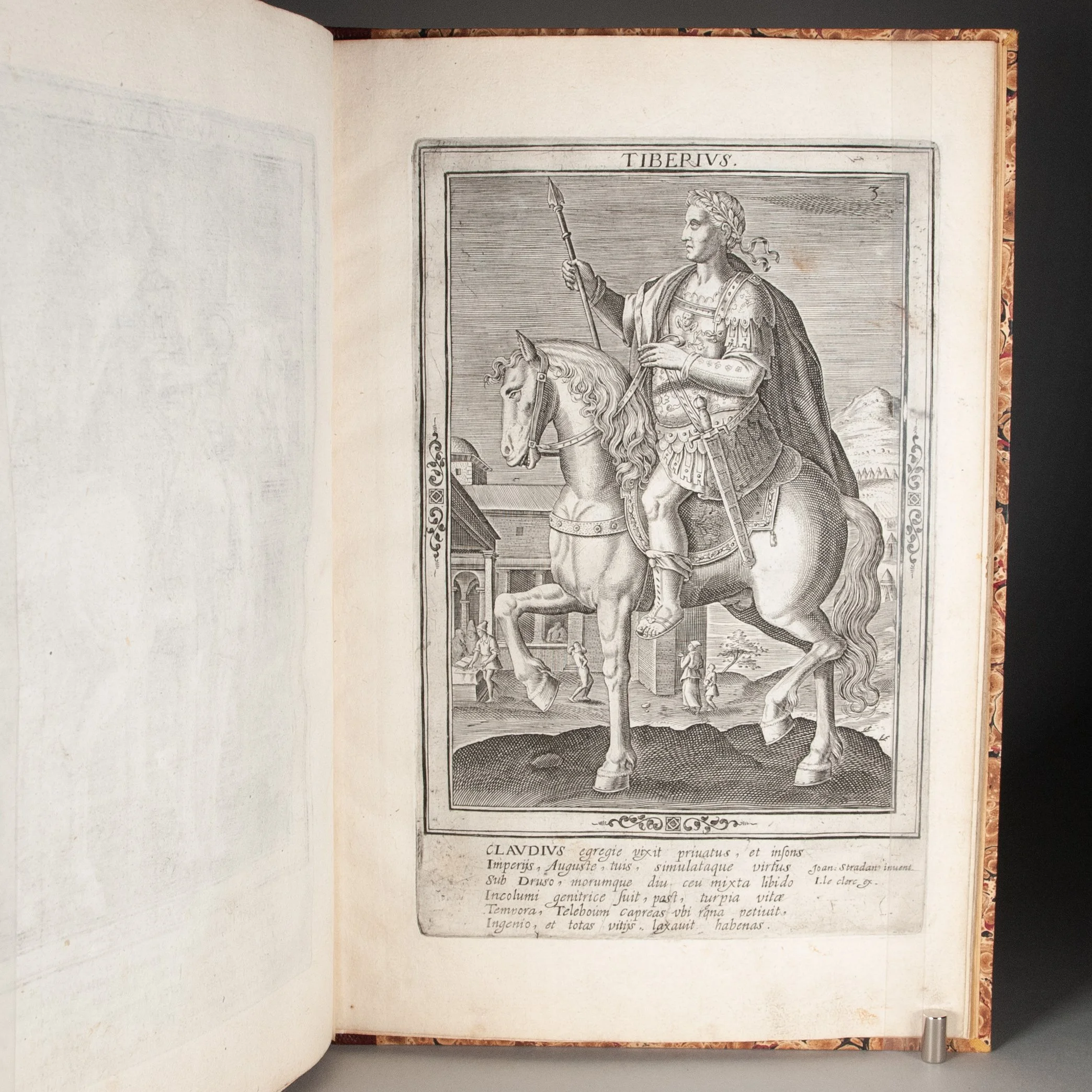
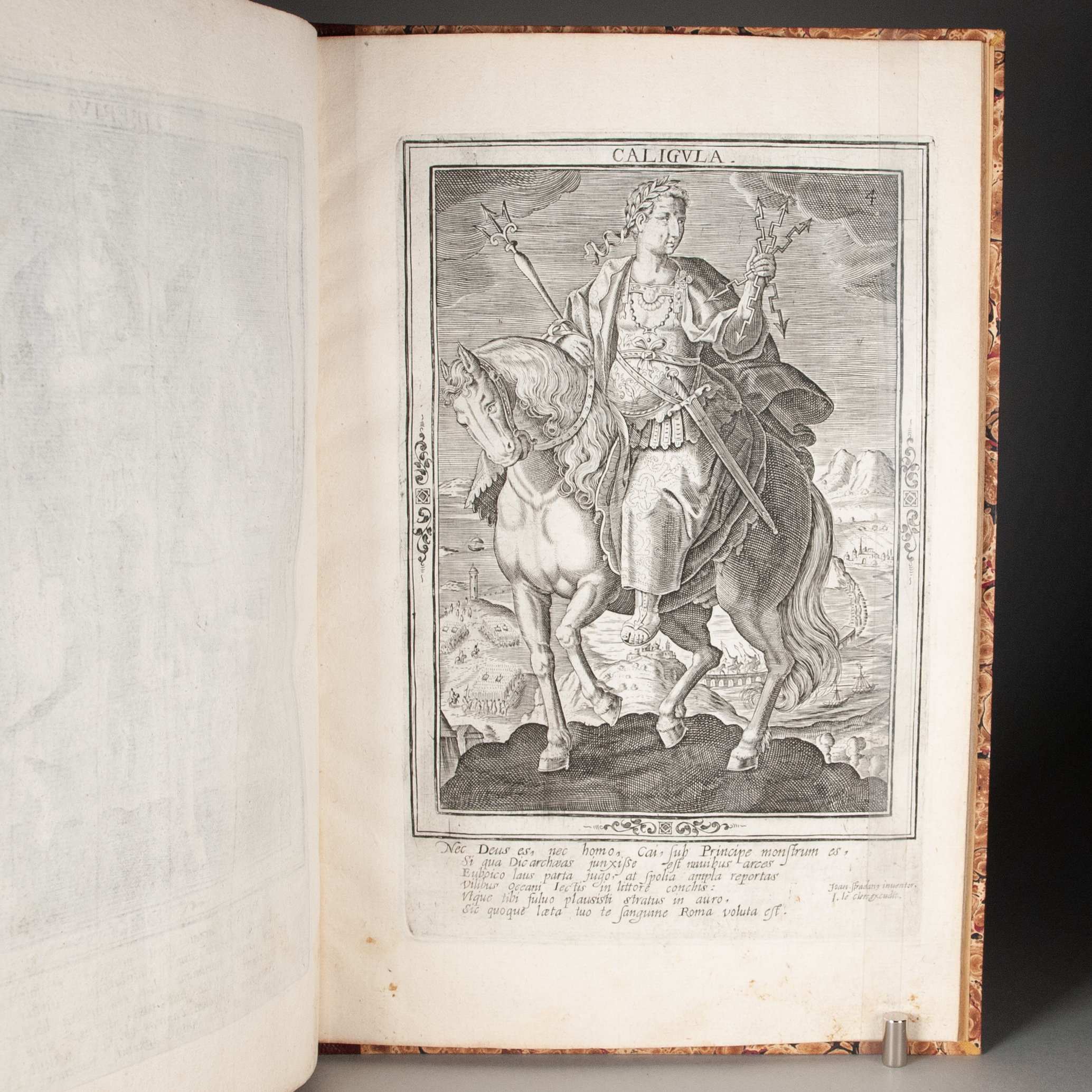
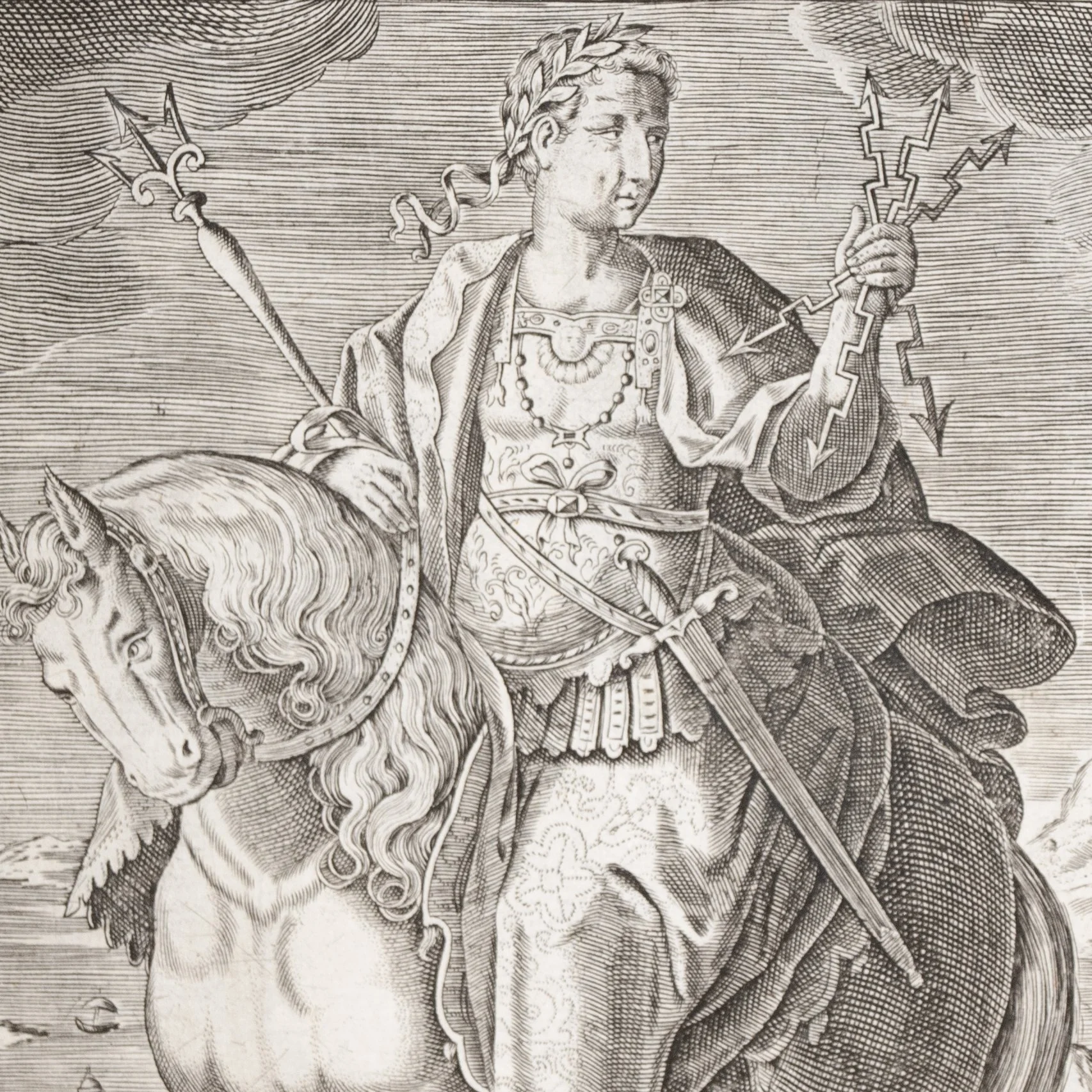
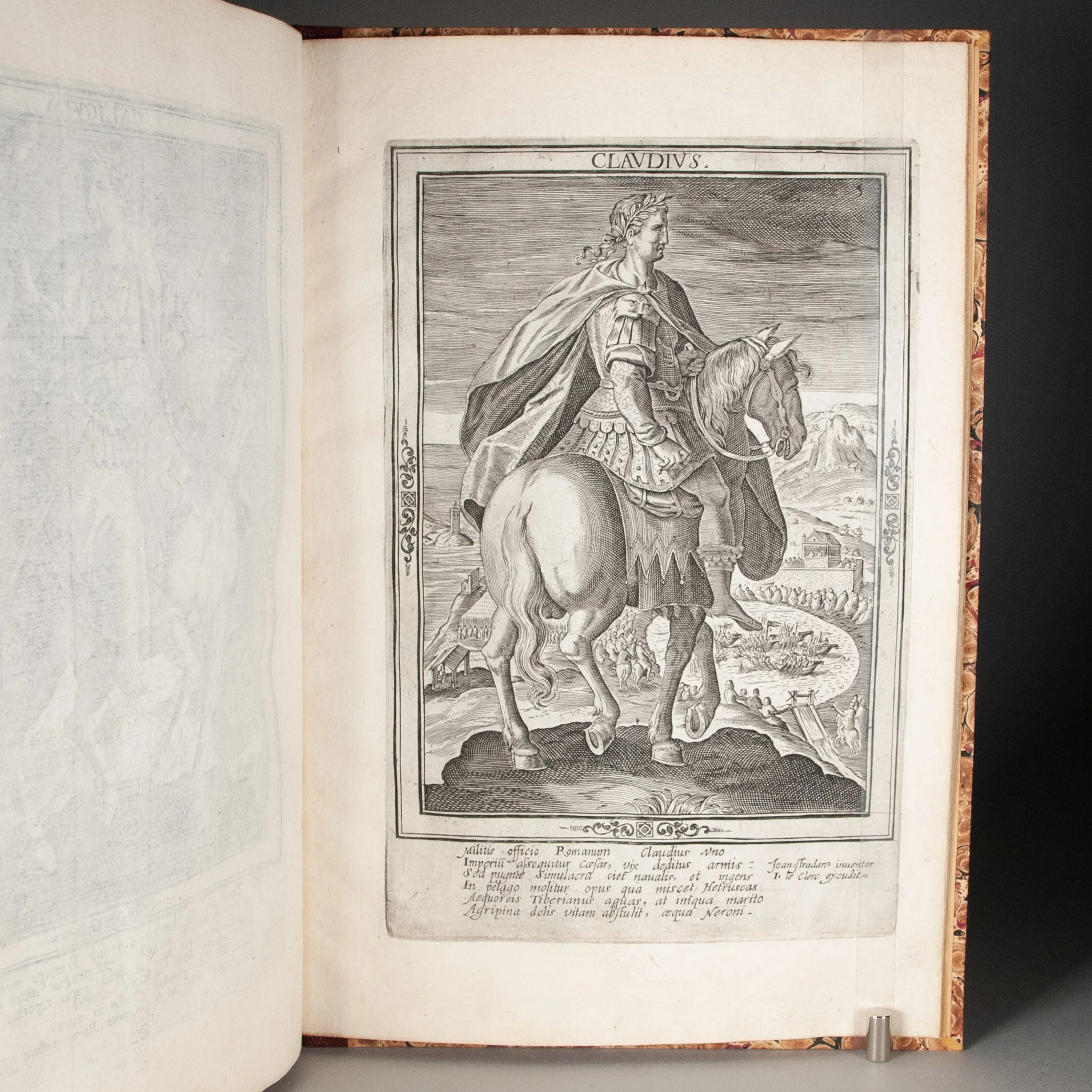
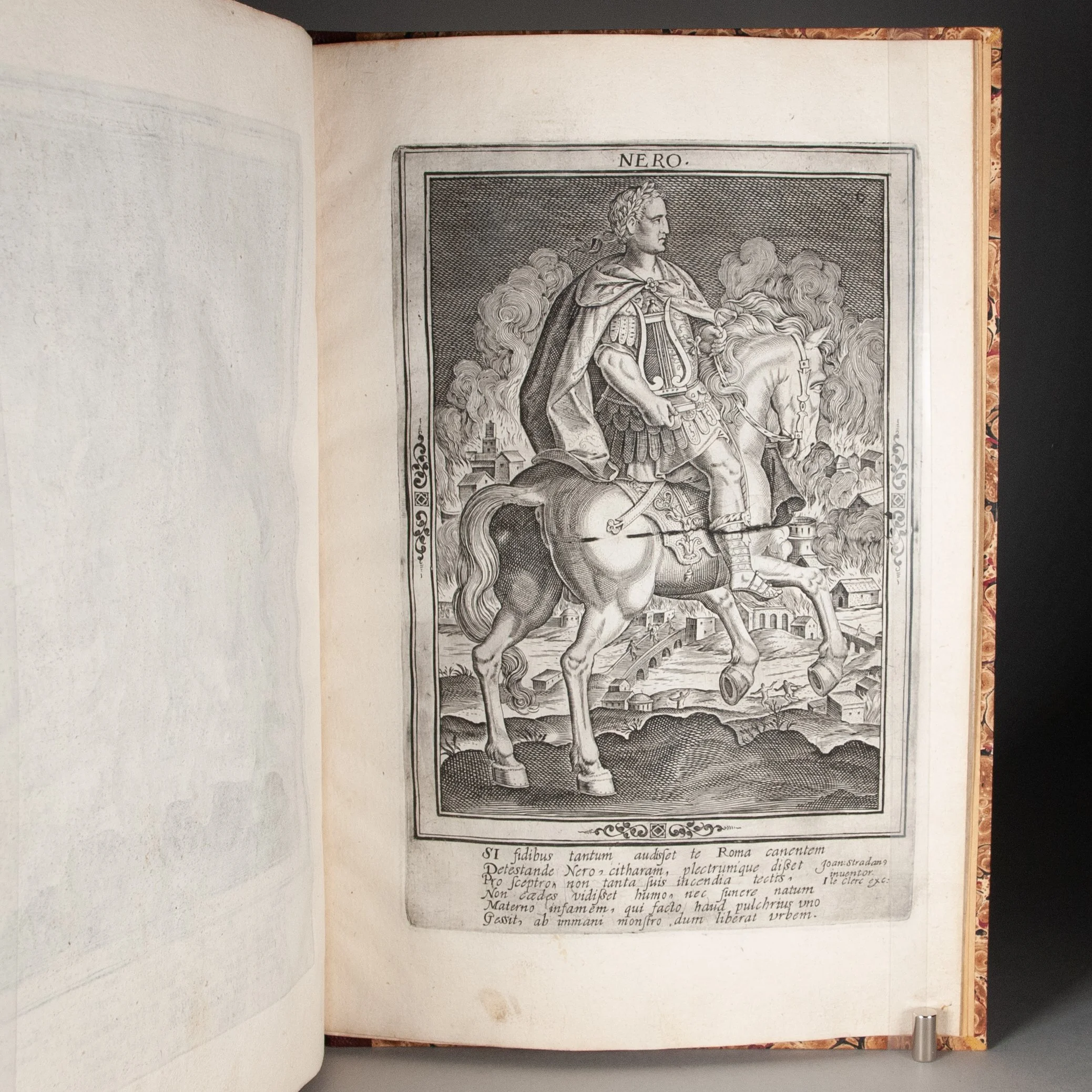
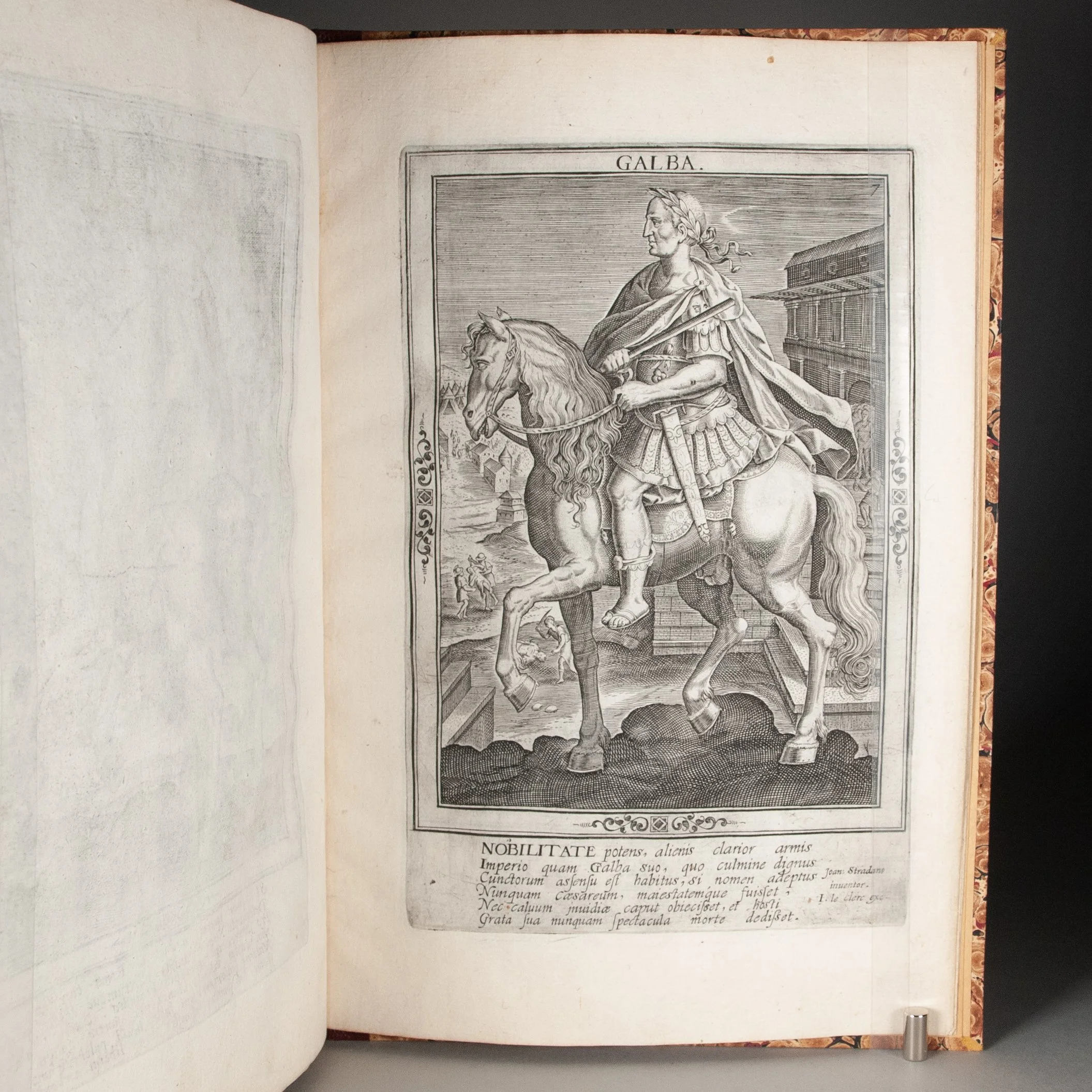
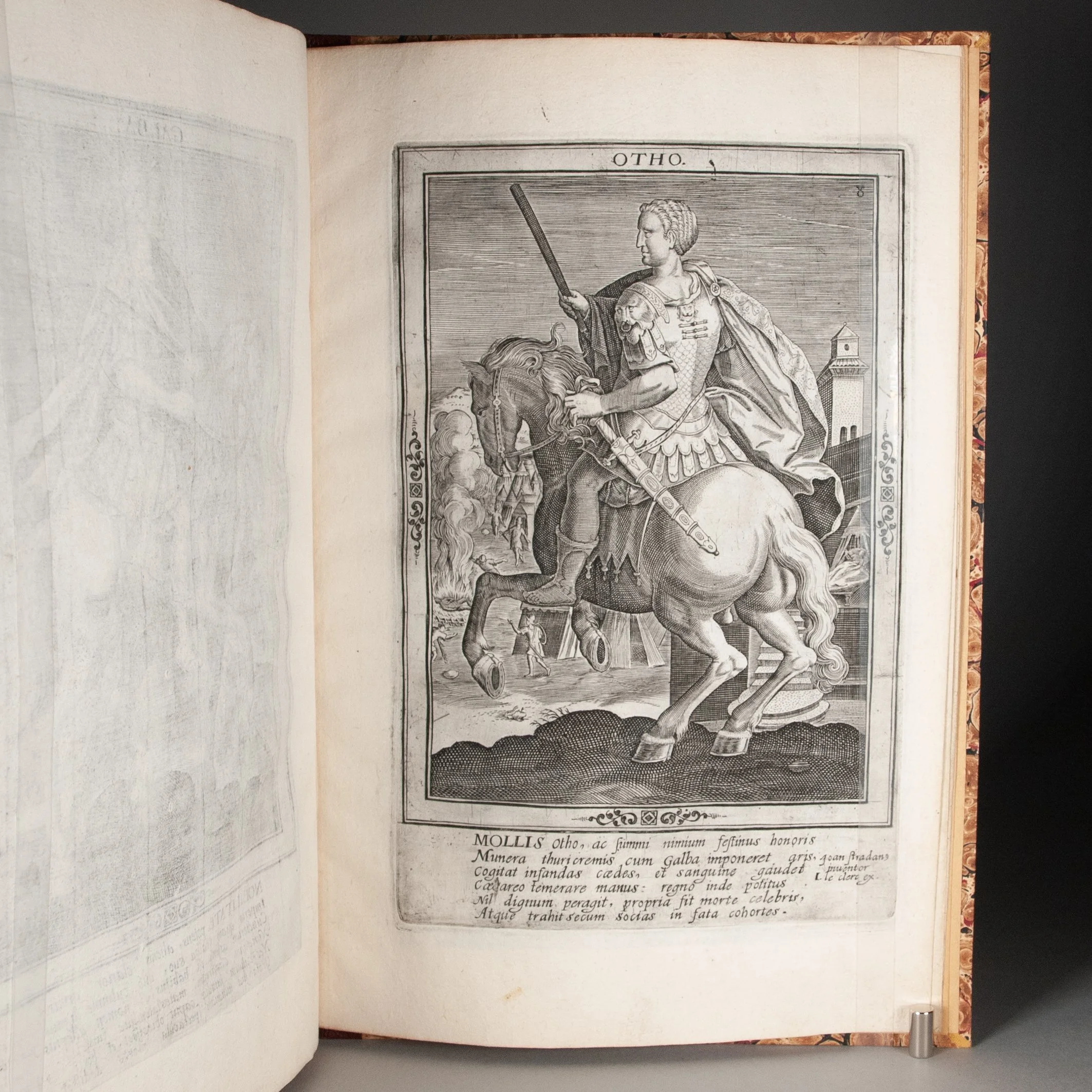
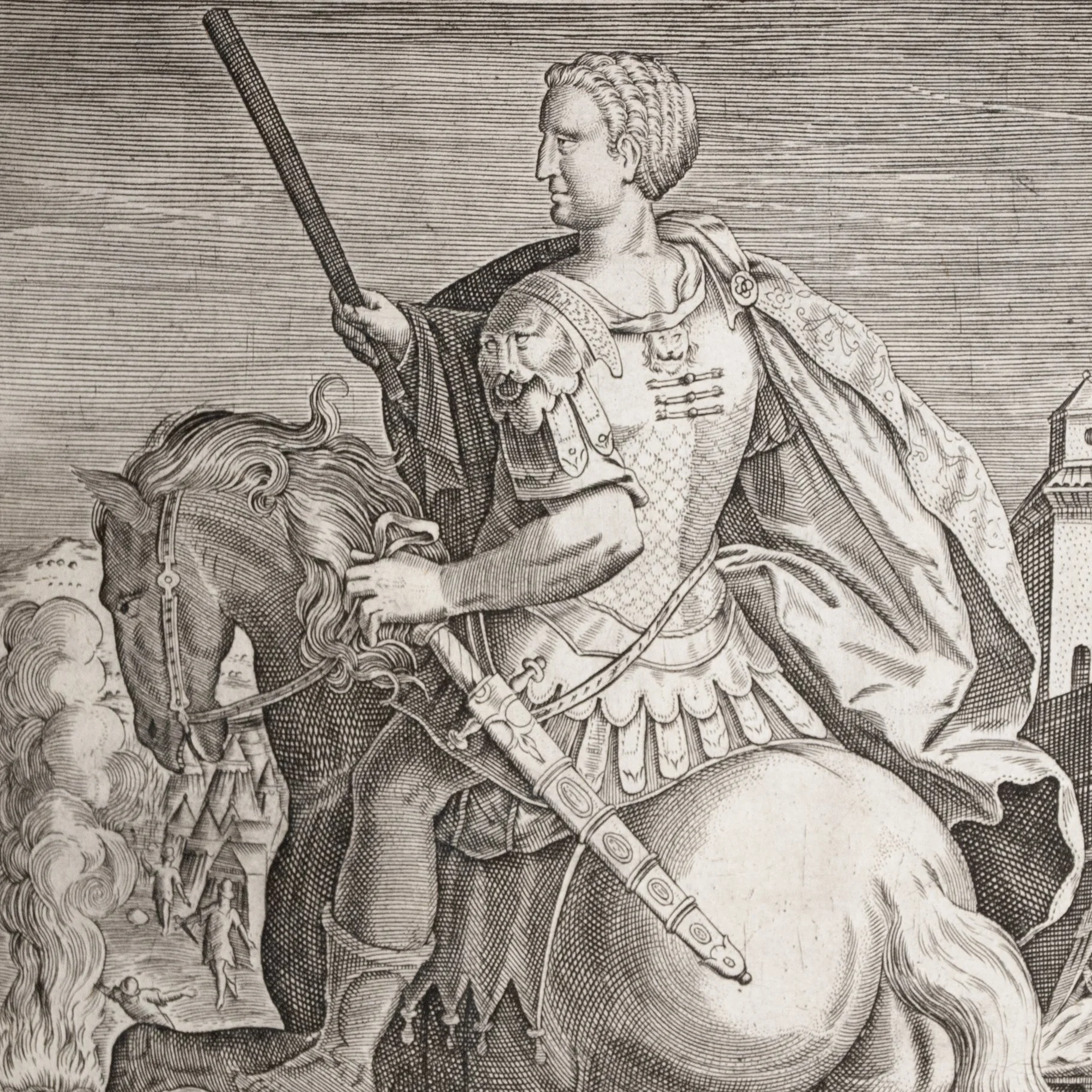
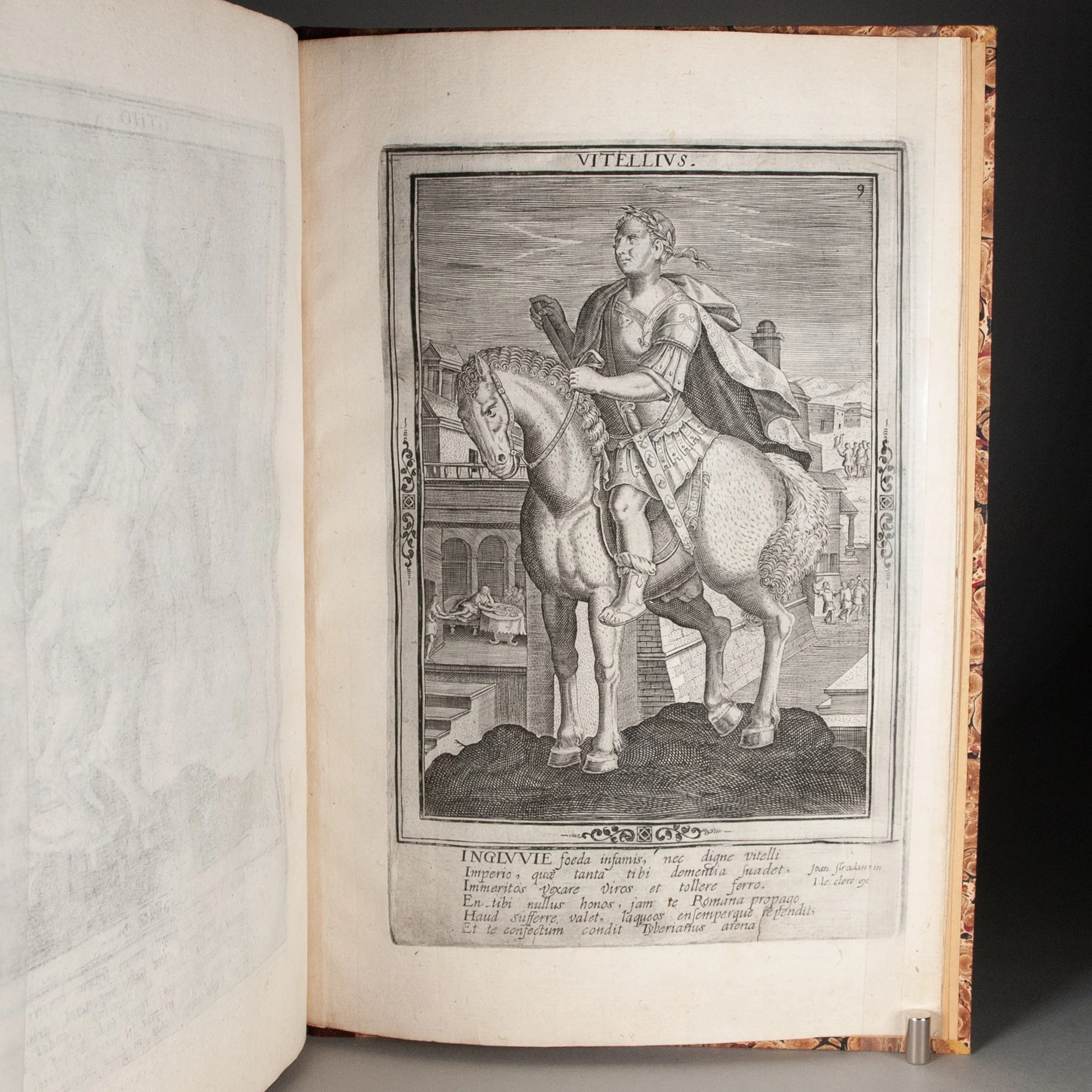
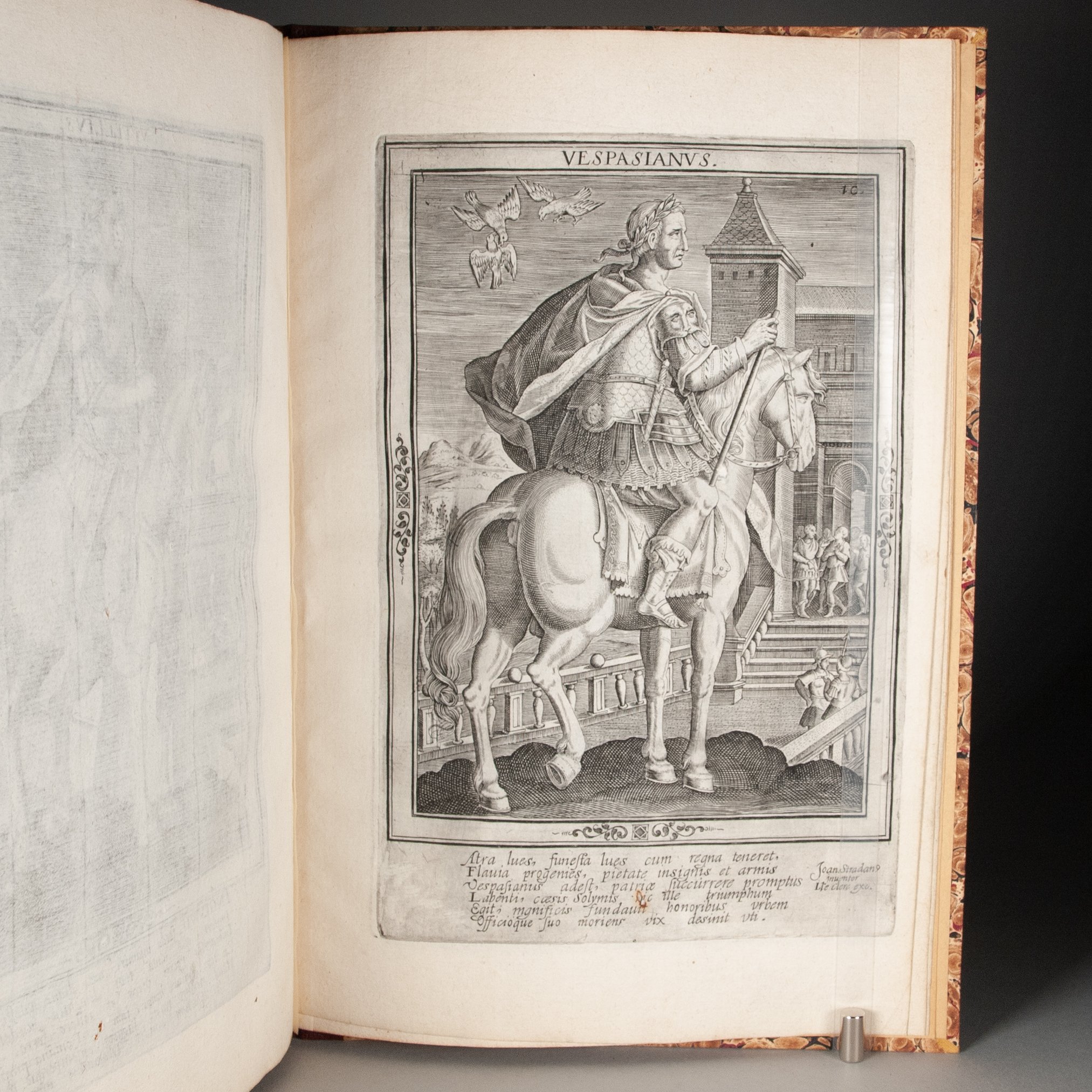
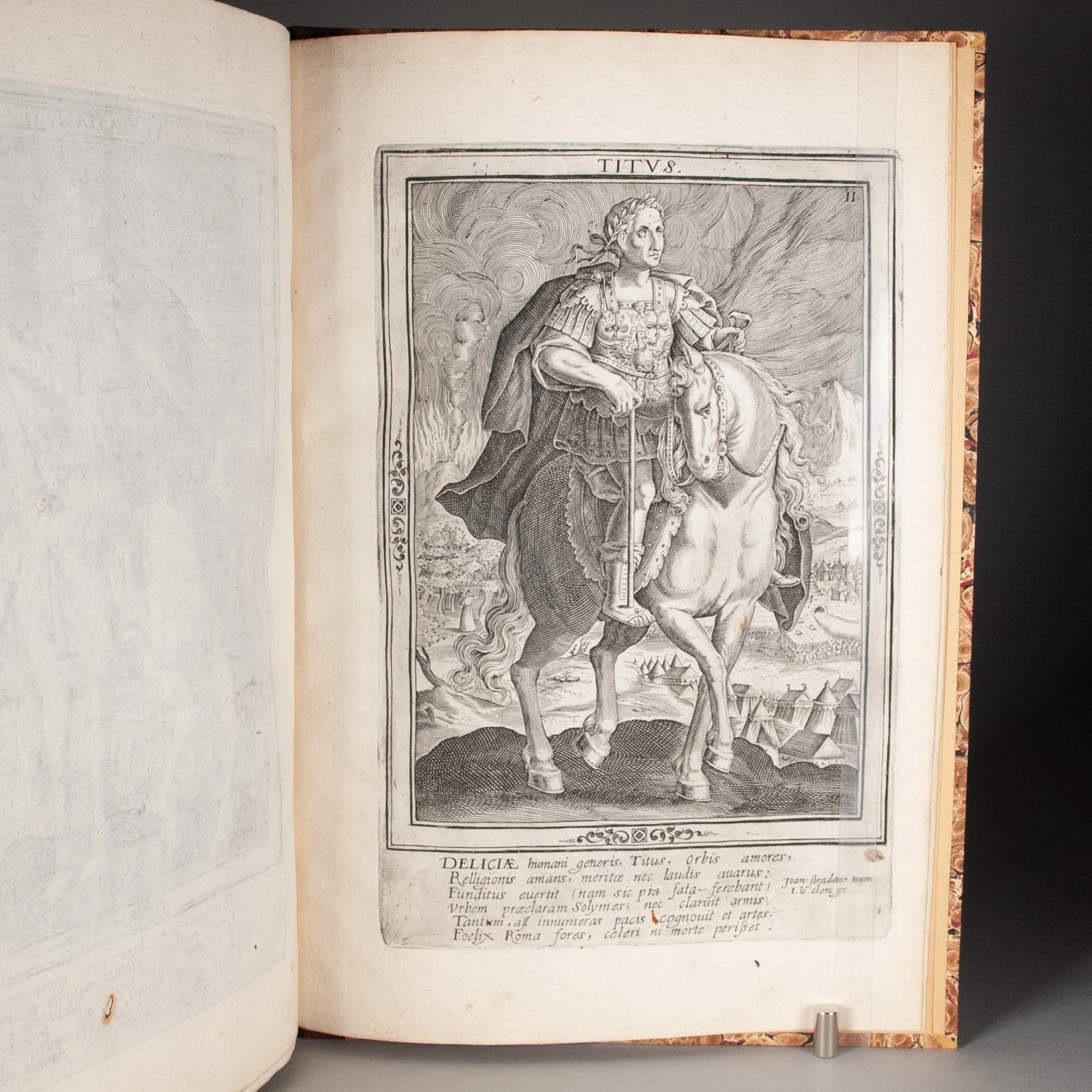
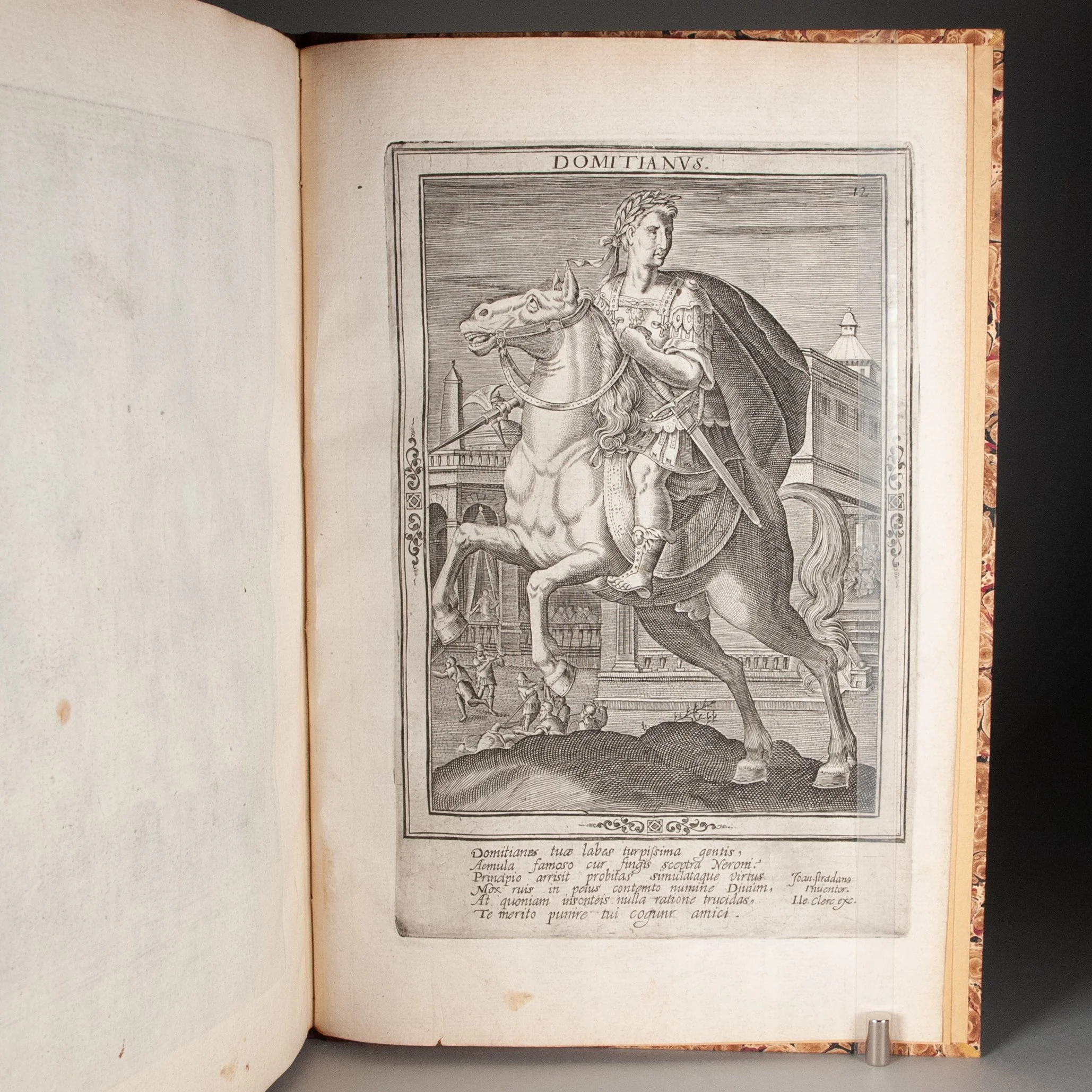
A complete suite of engravings of the twelve Roman emperors, after designs Jan van der Straet produced in the 1580s, his scenes based on events and likenesses mined from Suetonius's Twelve Caesars. At least one other series exists under the very same title, also with engravings after van der Straet, but engraved by Adrian Collaert (1560-1618) and published by Philippe Galle (1537-1612). Those engravings are much larger and the series includes an additional print at end. Absolute certainty as to which edition came first seems elusive, but the edge should go to Galle's edition. He and van der Straet were Flemish contemporaries, and at a time when Flanders was rich in prints engraved after local artists. To be sure, the Galle edition is commonly dated ca. 1600, while the Bibliothèque nationale calls ours ca. 1610. Whatever the case, the Galle is much better attested and far more widely held, our Charpy/Le Clerc edition undeniably rarer. ¶ "By the late 15th century the Italian fascination for the Caesars had spread to other parts of Europe. In France, England, and the Holy Roman Empire, galleries of imperial portraits created a sense of unbroken continuity between ancient emperors and modern-day kings" (Grafton, et al.). Marcantonio Raimondi issued the first such series of prints in 1520, though "in a rather modest medallion format, whereas later portrait books by Antonio Tempesta (Rome 1596) and Stradanus (Antwerp 1600) reflect new trends by showing them dressed in full armor and on horseback" (Grafton, et al.). These images exerted a substantial influence on 17th-century equestrian portraiture. The Rubens portrait of Archduke Albert of Austria on horseback, for example, was plainly based on Stradanus's Julius Caesar or Tempesta's Otho. The same can be said of Velázquez's Equestrian Portrait of the Count-Duke Olivares, but with the sources reversed, namely Stradanus's Otho or Tempesta's Julius Caesar. The similarities between the Stradanus and Tempesta portraits are striking, though perhaps ultimately unsurprising, as the latter was the former's student in Florence. If the Galle edition spread the iconography in the Low Countries and Spain, and Tempesta's version in Italy, surely this Paris edition helped spread the designs in France. ¶ Beyond their influence and fearless show of force, these are compelling representations of a "hostile vision" of the emperors, paired with captions that "saw the worst in almost every emperor concerned, and not only the usual villains" (Beard). At a glance, mounted on horseback and in full armor, the impression is one of unmitigated strength. But look more closely and a more critical portrait emerges. "The emphasis in these is overwhelmingly on death, destruction, imperial sadism and excess." Of course there's Nero, set before a burning Rome. Caligula holds Jupiter's thunderbolts and Neptune's trident, underscoring his megalomaniacal belief in his own divinity. But even Augustus, to whom any number of notable accomplishments could be assigned, is set among his sacrilegious Feast of the Twelve Gods. Stradanus in part is simply following Suetonius's lead, who seems to have held few punches when writing of Rome's emperors. ¶ WorldCat reports this edition only at the national libraries of France and Spain. We find no copies of this Paris edition at auction, and the last complete copy at auction in 1948 (the Galle edition at Swann).
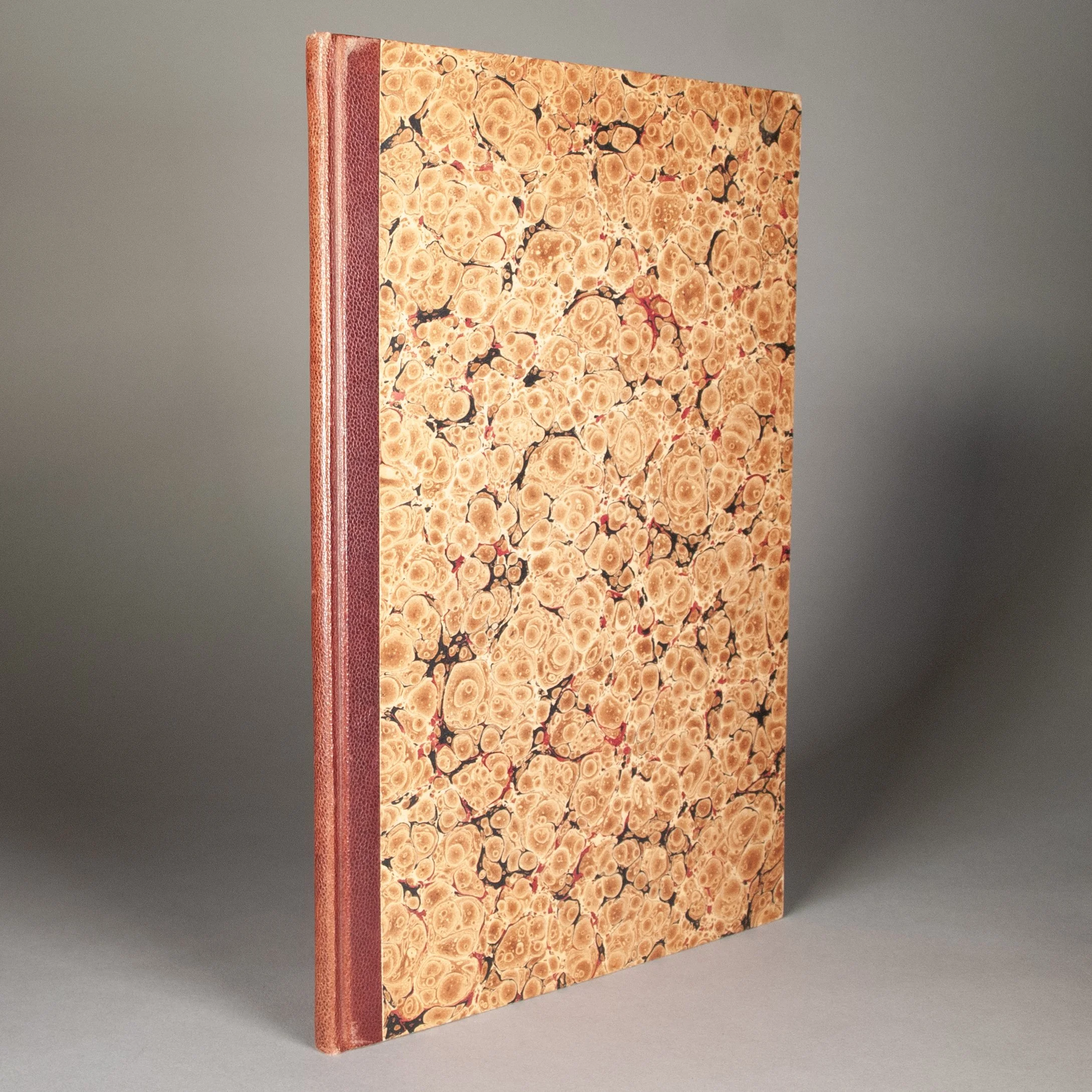
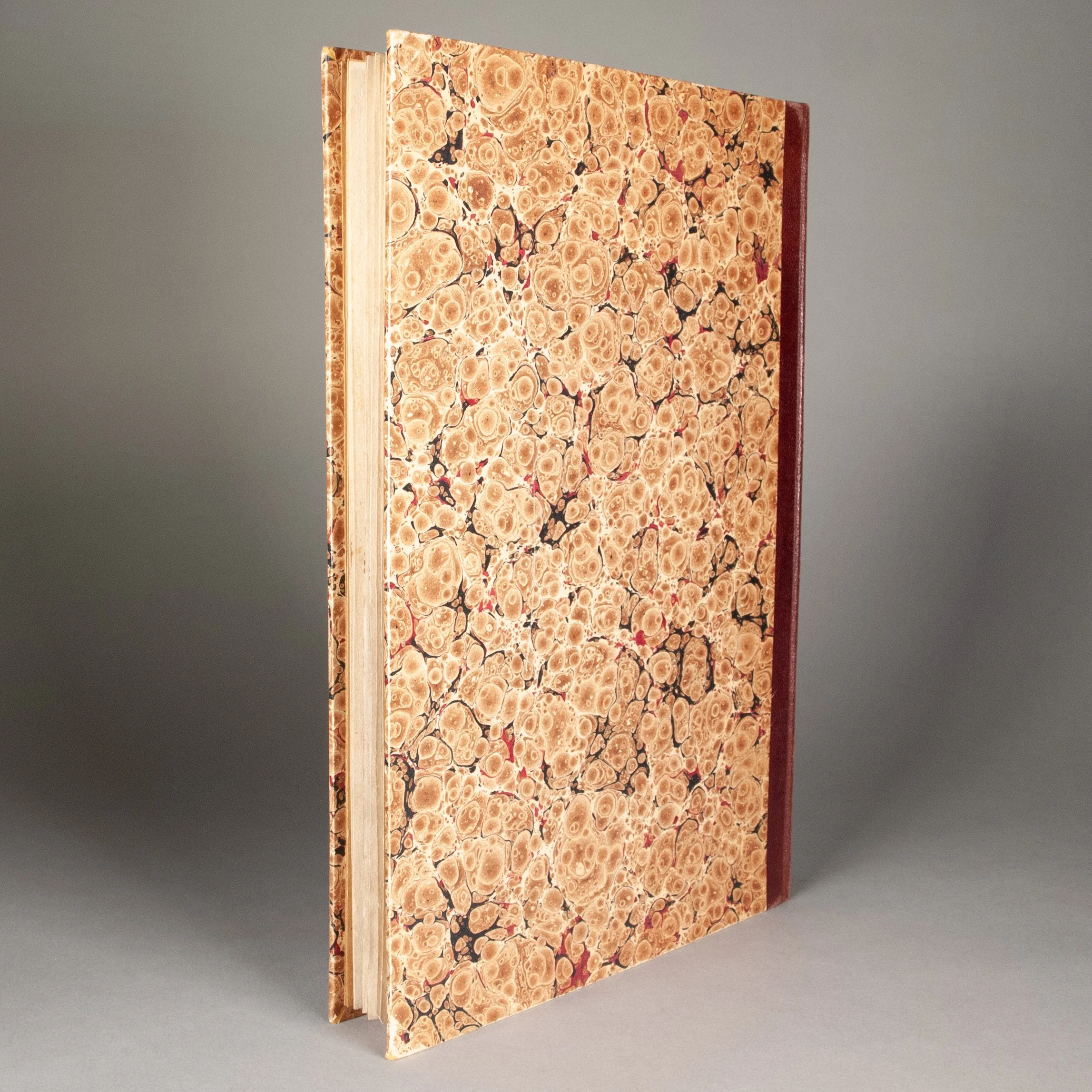
CONDITION: Bound ca. 1900 in quarter brown leather and marbled boards. Sharp impressions, with fine details still crisp. ¶ Two-centimeter closed tear in the upper edge of the title, repaired with tape on the verso, not affecting the image; tiny burn hole in the Vespasian print, affecting only the caption; crease in the lower corner of the Domitian print, affecting only the caption; title a bit darkened at the edges, and just scattered light soiling throughout; black streak across the Nero portrait. Binding extremities just gently rubbed.
REFERENCES: Corrard de Breban, Les graveurs Troyens (1868), p. 24, #10-21 (noting Charpy, who lived and worked in Troyes, flourished in the first years of the 17th century); p. 282-283, #15-26 (citing Breban, adding that Le Clerc published much of his work) ¶ Mary Beard, Twelve Ceasars (2021), p. 210 (cited above; Stradanus's designs were "reproduced in large numbers by more than one engraver in the late sixteenth and early seventeenth centuries"); Mary Beard, "Suetonius, the Silver Caesars, and Mistaken Identities," The Silver Caesars (2017), p. 39 (dating Straet's designs to the 1580s); Anthony Grafton, et al., "Caesars, Twelve," The Classical Tradition (2010), p. 164 (cited above); Mieczysław Morka, Polski nowożytny portret konny i jego europejska geneza (1986), v. 3, p. 235 ("The greatest influence on equestrian portraits and battle iconography from the 17th century was exerted by two cooperating artists: Jan van der Straet, called Stradanus, painter and draftsman, and Antonio Tempesta"); Frances Huemer, Portraits (1987), v. 2, p. 36 (asserting the Stradanus influence on Rubens); Walter A. Liedtke and John F. Moffitt, "Velázquez, Olivares, and the baroque equestrian portrait," The Burlington Magazine 123.942 (Sept 1981), p. 531-532 (Stradanus's influence on the Velázquez portraits), figs. 34-37 (reproducing both Velázquez portraits, the Tempesta Julius Caesar, and the Stradanus Otho)
Item #948