Topographia variarum regionum
designed by Matthijs Bril (Matthaeus Brill) | engraved by Simon Frisius
[The Hague]: Hendrik Hondius, 1614
[30] leaves | Bound suite of prints | 192 x 271 mm
First edition of the Flemish painter's celebrated suite of imaginary landscape etchings, all plates in the first state, and these invariably crisp prints with strong contrast, and very wide margins. This series should not be confused with his 1611 series of the same name, which presented different views altogether; "a greater stylistic range is apparent in this series of landscapes than in the series from 1611" (Orenstein). Five of these landscapes are frequently cited as a discrete series, though often found alongside the Topographia. We'll defer to Orenstein and Hollstein, who both consider the 28 Bril designs (title included) a cohesive series. We have here an added plate by Josse van Liere (also in the first state) and one of Bril's in duplicate. Claes Jansz. Visscher later issued a second edition, replacing Hondius's name on the title with his own, and removing the Bril/Hondius attributions from the plates themselves. ¶ Matthijs, along with brother Paul, received early training from their father Matthijs the Elder, himself a painter in Antwerp. So similar is the work of these two brothers that scholars at times have struggled to distinguish their oeuvre. They developed similar renown, too, after moving to Rome. "There, specializing in landscapes in various media, they became the most important northern landscape artists in Italy. Their art contributed to the rapid growth of landscape painting, both imaginary and topographical, in the 17th century" (Courtright). A number of Matthijs's frescoes remain in situ in the Vatican today. ¶ Scholars find in Bril's work the influence of Pieter Bruegel the Elder, an influence readily apparent when comparing prints after Bruegel's designs and these after Bril's. Consider, for example, Bruegel's St. Jerome in the Wildernessor Soldiers at Rest. Naturally such influence went in both directions, as these prints in particular served as models for views by Raphael Sadeler and Hercules Seghers (and doubtless others). Taken together, these two landscape series comprise "the only two works from which we can discern Matthijs's drawing style with some certainty" (Mayer). Some of Nicola Courtright's observations on Bril's paintings should apply equally to some of these etchings. Here he frequently employs "a viewpoint from below and dynamic recession into the distance," for example, with "dramatic contrasts of light and dark." Meanwhile, some find these etchings an improvement upon his painting. "Matthijs Bril at least presents himself to us in these designs as considerably more pleasant than in his frescoes; although he does not reach the level of the aforementioned Dutch masters, the designs are for the most part quite atmospheric and show an artist who, while bringing no innovations, nevertheless skillfully employs the old" (Mayer). ¶ The imaginary landscape genre, by the hand of Flemish artists especially, played an important role in European art more broadly. "The emergence of landscape in its own right in the sixteenth-century Southern Netherlands and the survival of imaginary landscapes into the seventeenth century have been emphasized as integrating Dutch painting more closely within international European styles (first mannerist, then classical)" (Schama). To be sure, we find echoes of Bril's compositional style later in the 17th century—sweeping landscapes that easily dominate the small figures occupying them, for example. "All over Europe, painters turned away from depicting harvesting and the mundane realities of rural life. They preferred imaginary landscapes, rocky seclusions, and broad vistas that made the countryside into a patchwork of colors without people. Seventeenth-century poetry suggests the reasons for this turning away. Literary historians have stressed the role of aristocratic complacency. Country-house poems in the seventeenth century celebrated the landed estate while leaving out the workers who produced its riches" (Vardi). There's a kind of proto-Romantic view of nature here, and it's not difficult to imagine Bril's landscapes appealing to any audience unaccustomed to toiling outdoors day after day. ¶ We find no other auction records for the complete series since 1913 (Anderson Galleries). The only complete 1611 series we find sold in 2017 (Bassenge, €11,685).
PROVENANCE: From the collection of Arthur and Charlotte Vershbow, sold at Christie's on 15 June 2013.
CONDITION: Old parchment over boards, tooled in blind, likely from the Low Countries. Twenty-nine views altogether (one repeated), plus the engraved title, the impressions roughly 95 x 155 mm on laid paper watermarked with a jug. The five views sometimes said to comprise an additional discrete landscape series are those with penciled numbers 6, 8, 9, 24, and 25. Our penciled plate 7 is the one designed by Josse van Liere. Our duplicated print is New Hollstein #150, the last of the series. The prints are not bound in Hollstein order, but all are accounted for. ¶ Mild to moderate foxing throughout, most concentrated at the edges, but occasionally affecting the images; scattered marginal tears, nothing deeper than 1 cm and nothing remotely near the impressions; the recto of one print, and blank verso of that facing, are toned a bit darker than the rest; 7 mm neatly excised from the upper margin of one plate (but full height at the inner margin). Parchment moderately soiled, but really in nice shape.
REFERENCES: Nadine Orenstein, New Hollstein...Simon Frisius, Part I (2008), p. 123-142 (cited above; "Hondius' View of a Town at a River after Joos van Lier...was incorporated into this series; it is often included in bound versions"); Nadine Orenstein, New Holllstein...Hendrick Hondius (1994), p. 66 #53 (the van Liere plate); Hollstein, Dutch and Flemish Etchings, Engravings, and Woodcuts, v. 7, p. 27; First Proofs of the Universal Catalogue of Books on Art Compiled for the Use of the National Art Library (1870), v. 1 (for the place of publication) ¶ Alfred von Wurzbach, Niederländisches Künstler-Lexikon (1906), v. 1, p. 183 (distinguishing the 1611 and 1614 series); Anton Mayer, Des Leben und die Werke der Brüder Matthäus und Paul Brill (1910), p. 15 (cited above), 15-16 (detailed description of each plate from both series, 5 and 23 views respectively), 1 (cited above; "the prints fit completely into the Dutch style. They are mostly fantastic landscapes, such as we know from Patinir, Bruegel, and Valkenburg."), plates 4 and 5 (reproducing some of the views); Henri Hymans, Oeuvres...près de 700 biographies d'artistes belges (1920), v. 2, p. 108-109 (attesting the influence on Sadeler); John Rowlands, Hercules Segers (1979), p. 17 (attesting the influence on Seghers, but attributing the Topographia to Mathijs's brother Paul); Nadine Orenstein, Hendrick Hondius and the Business of Prints in Seventeenth-Century Holland (1996), p. 53 (noting that Hondius made the drawings from which Frisius worked, after Bril's designs; "Frisius was at this time one of Hondius's most prolific artists and produced about two hundred etchings for the publisher"); Nicola Courtright, "Bril family," Grove Art Online (2003), accessed online (cited above); Nicola Courtright, "Bril, Matthijs [Mattheus], the younger," Grove Art Online (2003), accessed online (cited above); Simon Schama, "Dutch Landscapes: Culture as Foreground," Masters of 17th-Century Dutch Landscape Painting (1988), p. 64 (cited above); Liana Vardi, "Imagining the Harvest in Early Modern Europe," The American Historical Review 101.5 (Dec 1996), p. 1379-1380 (cited above); p. 197n18 ("A full set of the Topographia variarum regionum, consisting of 29 engravings")
Item #950
Topographia variarum regionum
designed by Matthijs Bril (Matthaeus Brill) | engraved by Simon Frisius
[The Hague]: Hendrik Hondius, 1614
[30] leaves | Bound suite of prints | 192 x 271 mm
First edition of the Flemish painter's celebrated suite of imaginary landscape etchings, all plates in the first state, and these invariably crisp prints with strong contrast, and very wide margins. This series should not be confused with his 1611 series of the same name, which presented different views altogether; "a greater stylistic range is apparent in this series of landscapes than in the series from 1611" (Orenstein). Five of these landscapes are frequently cited as a discrete series, though often found alongside the Topographia. We'll defer to Orenstein and Hollstein, who both consider the 28 Bril designs (title included) a cohesive series. We have here an added plate by Josse van Liere (also in the first state) and one of Bril's in duplicate. Claes Jansz. Visscher later issued a second edition, replacing Hondius's name on the title with his own, and removing the Bril/Hondius attributions from the plates themselves. ¶ Matthijs, along with brother Paul, received early training from their father Matthijs the Elder, himself a painter in Antwerp. So similar is the work of these two brothers that scholars at times have struggled to distinguish their oeuvre. They developed similar renown, too, after moving to Rome. "There, specializing in landscapes in various media, they became the most important northern landscape artists in Italy. Their art contributed to the rapid growth of landscape painting, both imaginary and topographical, in the 17th century" (Courtright). A number of Matthijs's frescoes remain in situ in the Vatican today. ¶ Scholars find in Bril's work the influence of Pieter Bruegel the Elder, an influence readily apparent when comparing prints after Bruegel's designs and these after Bril's. Consider, for example, Bruegel's St. Jerome in the Wildernessor Soldiers at Rest. Naturally such influence went in both directions, as these prints in particular served as models for views by Raphael Sadeler and Hercules Seghers (and doubtless others). Taken together, these two landscape series comprise "the only two works from which we can discern Matthijs's drawing style with some certainty" (Mayer). Some of Nicola Courtright's observations on Bril's paintings should apply equally to some of these etchings. Here he frequently employs "a viewpoint from below and dynamic recession into the distance," for example, with "dramatic contrasts of light and dark." Meanwhile, some find these etchings an improvement upon his painting. "Matthijs Bril at least presents himself to us in these designs as considerably more pleasant than in his frescoes; although he does not reach the level of the aforementioned Dutch masters, the designs are for the most part quite atmospheric and show an artist who, while bringing no innovations, nevertheless skillfully employs the old" (Mayer). ¶ The imaginary landscape genre, by the hand of Flemish artists especially, played an important role in European art more broadly. "The emergence of landscape in its own right in the sixteenth-century Southern Netherlands and the survival of imaginary landscapes into the seventeenth century have been emphasized as integrating Dutch painting more closely within international European styles (first mannerist, then classical)" (Schama). To be sure, we find echoes of Bril's compositional style later in the 17th century—sweeping landscapes that easily dominate the small figures occupying them, for example. "All over Europe, painters turned away from depicting harvesting and the mundane realities of rural life. They preferred imaginary landscapes, rocky seclusions, and broad vistas that made the countryside into a patchwork of colors without people. Seventeenth-century poetry suggests the reasons for this turning away. Literary historians have stressed the role of aristocratic complacency. Country-house poems in the seventeenth century celebrated the landed estate while leaving out the workers who produced its riches" (Vardi). There's a kind of proto-Romantic view of nature here, and it's not difficult to imagine Bril's landscapes appealing to any audience unaccustomed to toiling outdoors day after day. ¶ We find no other auction records for the complete series since 1913 (Anderson Galleries). The only complete 1611 series we find sold in 2017 (Bassenge, €11,685).
PROVENANCE: From the collection of Arthur and Charlotte Vershbow, sold at Christie's on 15 June 2013.
CONDITION: Old parchment over boards, tooled in blind, likely from the Low Countries. Twenty-nine views altogether (one repeated), plus the engraved title, the impressions roughly 95 x 155 mm on laid paper watermarked with a jug. The five views sometimes said to comprise an additional discrete landscape series are those with penciled numbers 6, 8, 9, 24, and 25. Our penciled plate 7 is the one designed by Josse van Liere. Our duplicated print is New Hollstein #150, the last of the series. The prints are not bound in Hollstein order, but all are accounted for. ¶ Mild to moderate foxing throughout, most concentrated at the edges, but occasionally affecting the images; scattered marginal tears, nothing deeper than 1 cm and nothing remotely near the impressions; the recto of one print, and blank verso of that facing, are toned a bit darker than the rest; 7 mm neatly excised from the upper margin of one plate (but full height at the inner margin). Parchment moderately soiled, but really in nice shape.
REFERENCES: Nadine Orenstein, New Hollstein...Simon Frisius, Part I (2008), p. 123-142 (cited above; "Hondius' View of a Town at a River after Joos van Lier...was incorporated into this series; it is often included in bound versions"); Nadine Orenstein, New Holllstein...Hendrick Hondius (1994), p. 66 #53 (the van Liere plate); Hollstein, Dutch and Flemish Etchings, Engravings, and Woodcuts, v. 7, p. 27; First Proofs of the Universal Catalogue of Books on Art Compiled for the Use of the National Art Library (1870), v. 1 (for the place of publication) ¶ Alfred von Wurzbach, Niederländisches Künstler-Lexikon (1906), v. 1, p. 183 (distinguishing the 1611 and 1614 series); Anton Mayer, Des Leben und die Werke der Brüder Matthäus und Paul Brill (1910), p. 15 (cited above), 15-16 (detailed description of each plate from both series, 5 and 23 views respectively), 1 (cited above; "the prints fit completely into the Dutch style. They are mostly fantastic landscapes, such as we know from Patinir, Bruegel, and Valkenburg."), plates 4 and 5 (reproducing some of the views); Henri Hymans, Oeuvres...près de 700 biographies d'artistes belges (1920), v. 2, p. 108-109 (attesting the influence on Sadeler); John Rowlands, Hercules Segers (1979), p. 17 (attesting the influence on Seghers, but attributing the Topographia to Mathijs's brother Paul); Nadine Orenstein, Hendrick Hondius and the Business of Prints in Seventeenth-Century Holland (1996), p. 53 (noting that Hondius made the drawings from which Frisius worked, after Bril's designs; "Frisius was at this time one of Hondius's most prolific artists and produced about two hundred etchings for the publisher"); Nicola Courtright, "Bril family," Grove Art Online (2003), accessed online (cited above); Nicola Courtright, "Bril, Matthijs [Mattheus], the younger," Grove Art Online (2003), accessed online (cited above); Simon Schama, "Dutch Landscapes: Culture as Foreground," Masters of 17th-Century Dutch Landscape Painting (1988), p. 64 (cited above); Liana Vardi, "Imagining the Harvest in Early Modern Europe," The American Historical Review 101.5 (Dec 1996), p. 1379-1380 (cited above); p. 197n18 ("A full set of the Topographia variarum regionum, consisting of 29 engravings")
Item #950
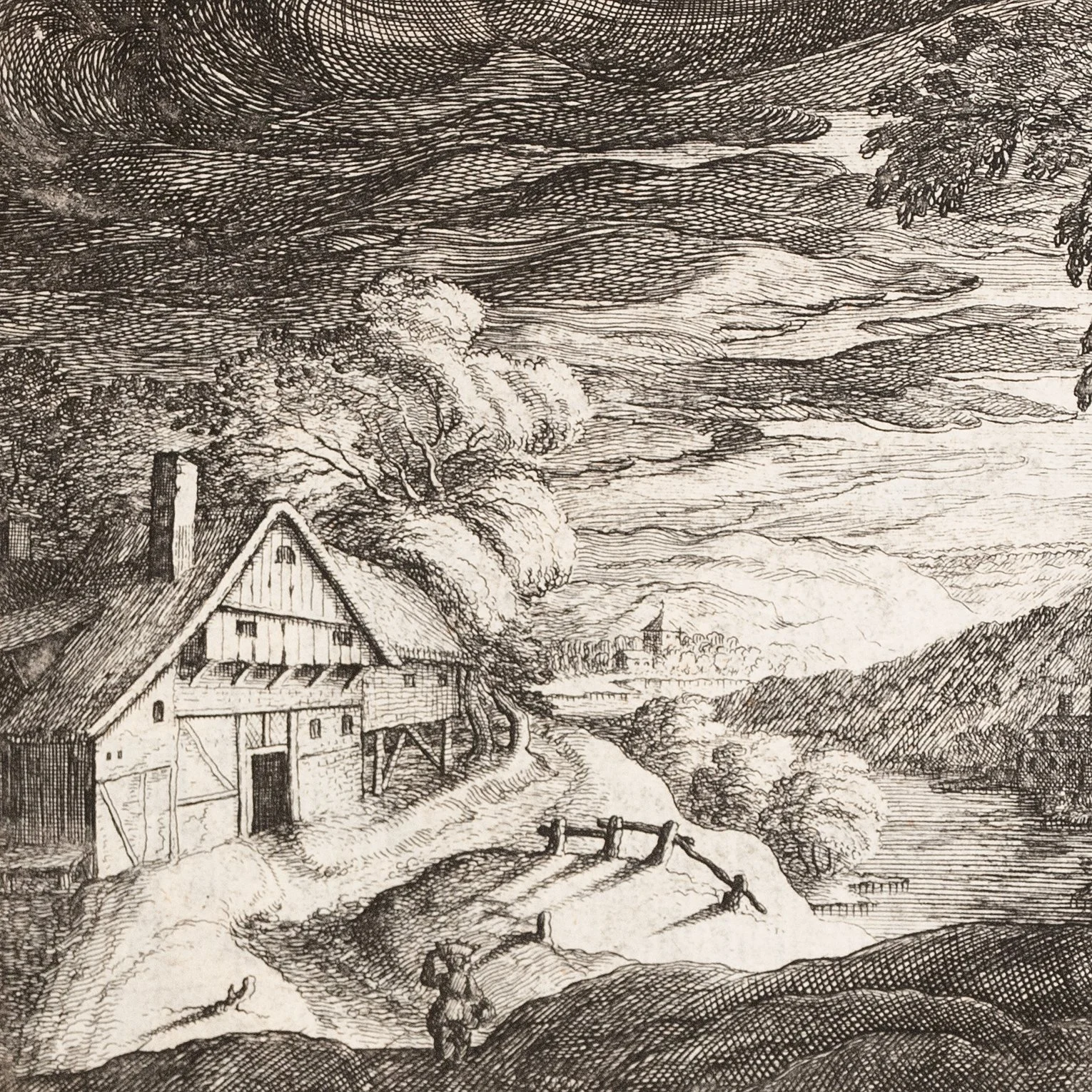 Image 1 of 18
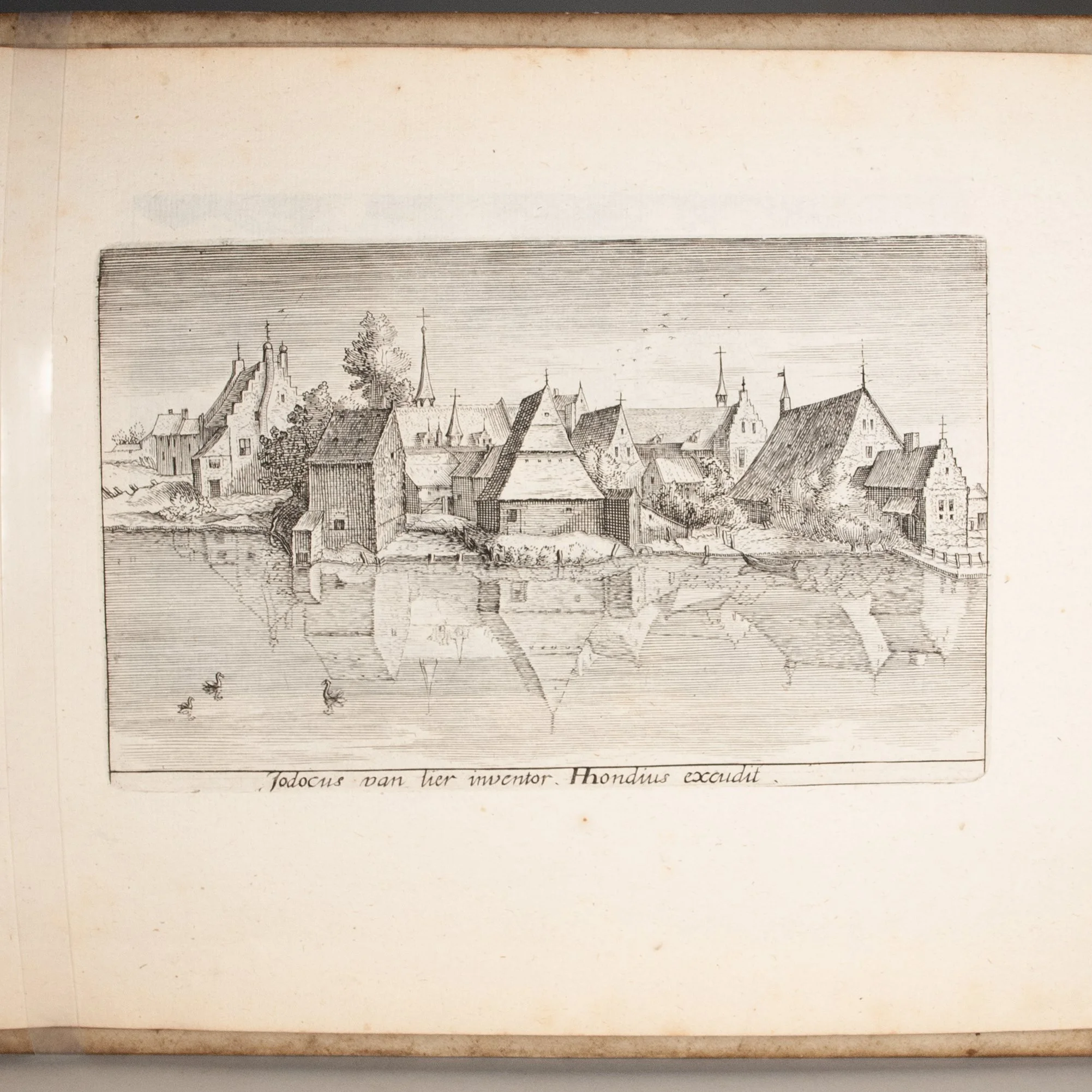 Image 2 of 18
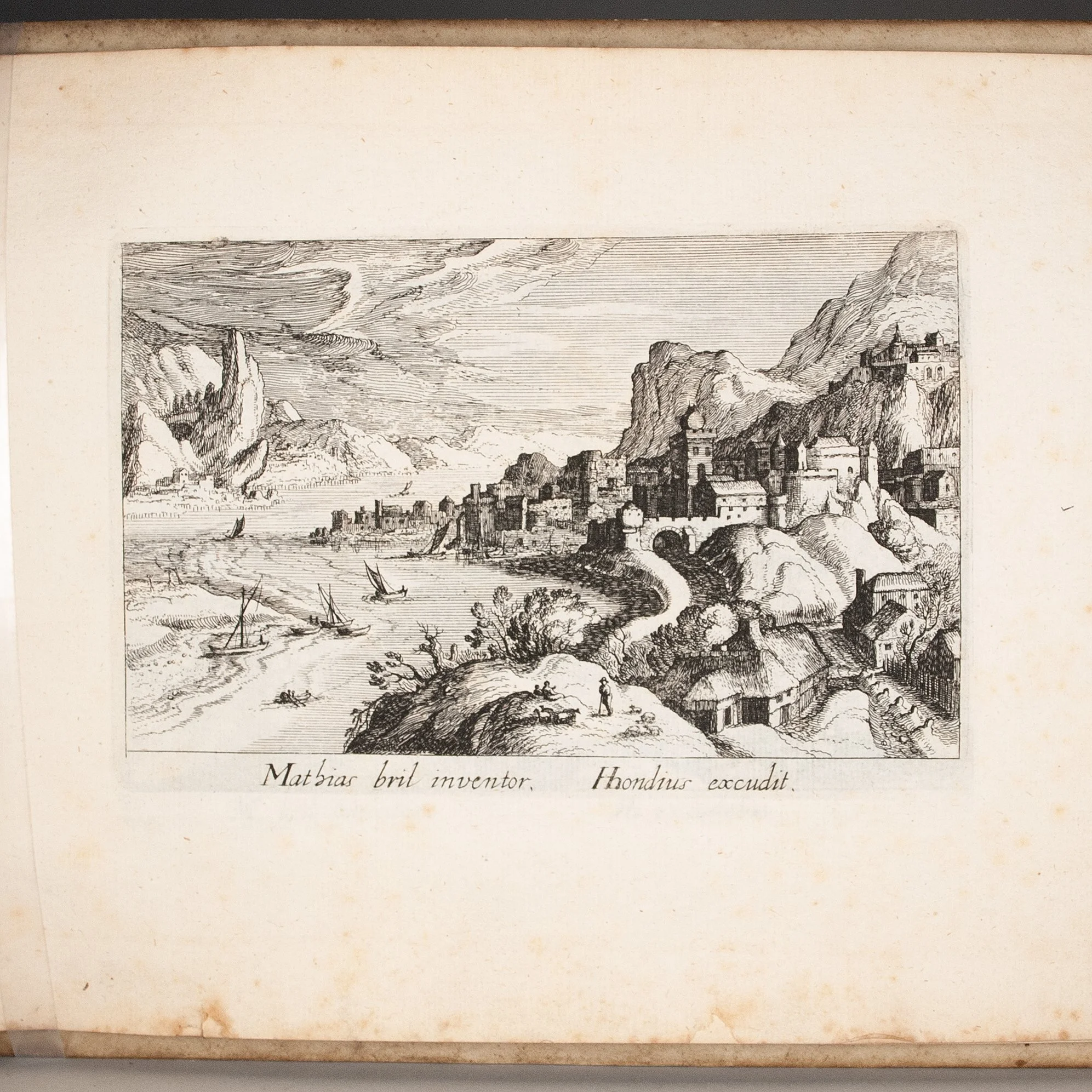 Image 3 of 18
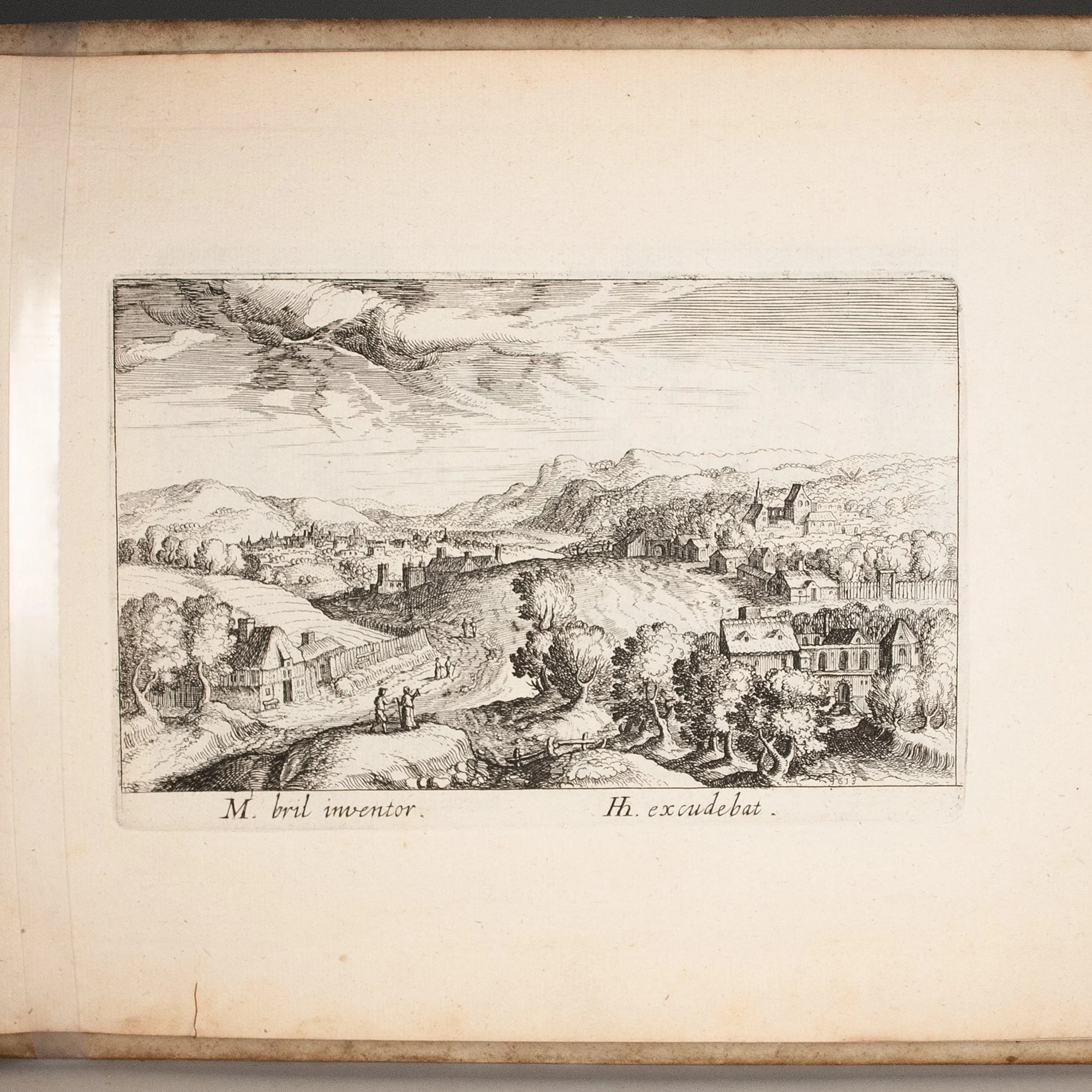 Image 4 of 18
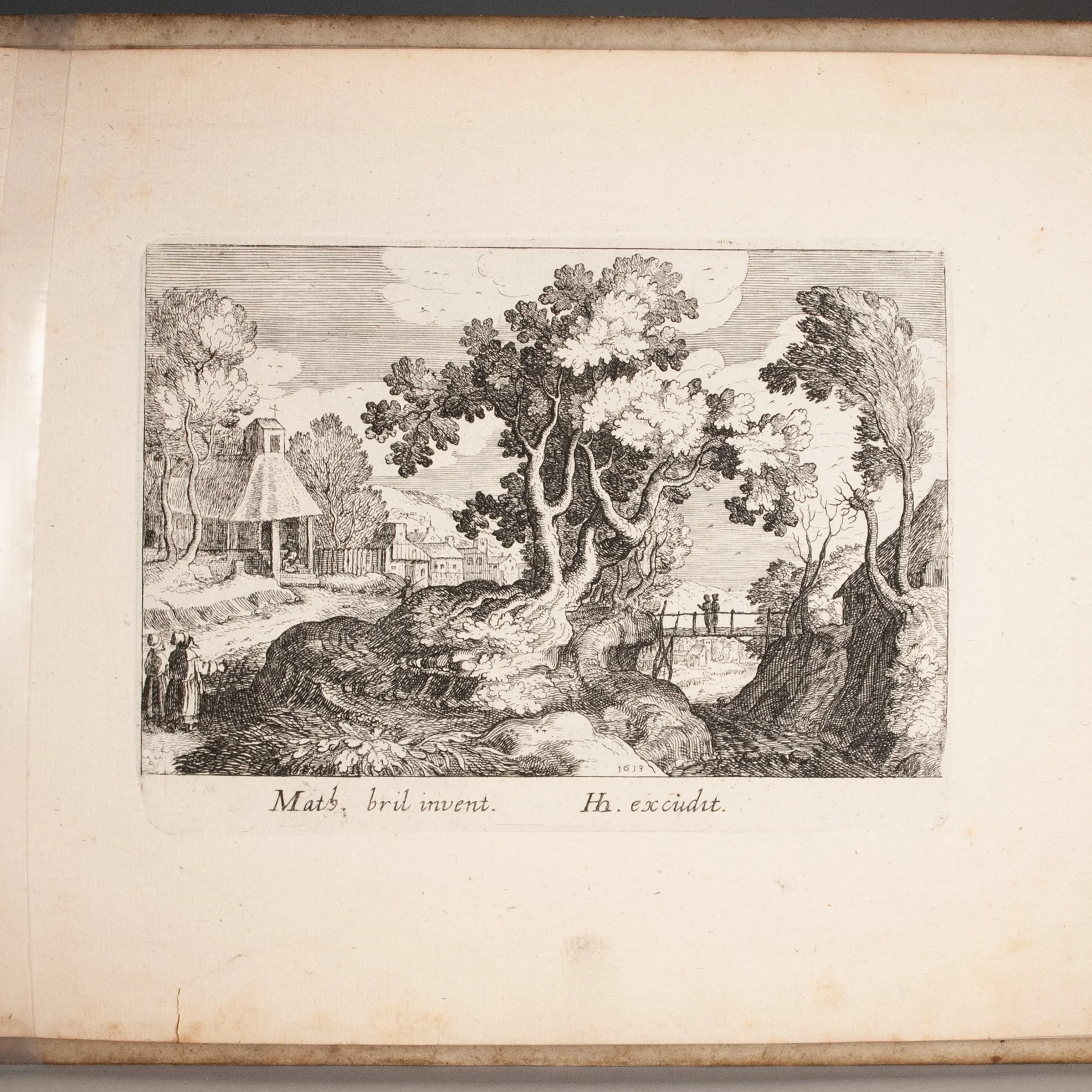 Image 5 of 18
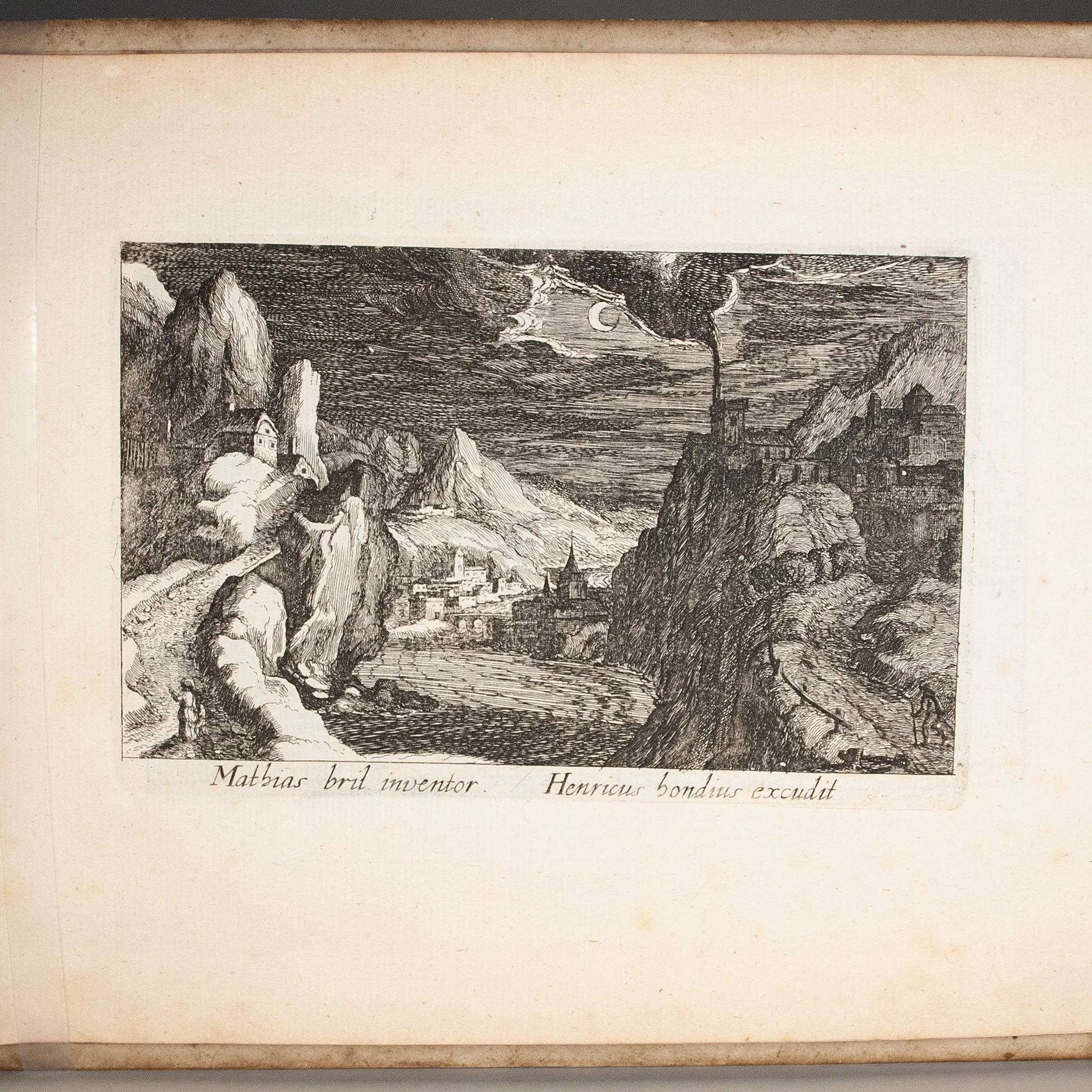 Image 6 of 18
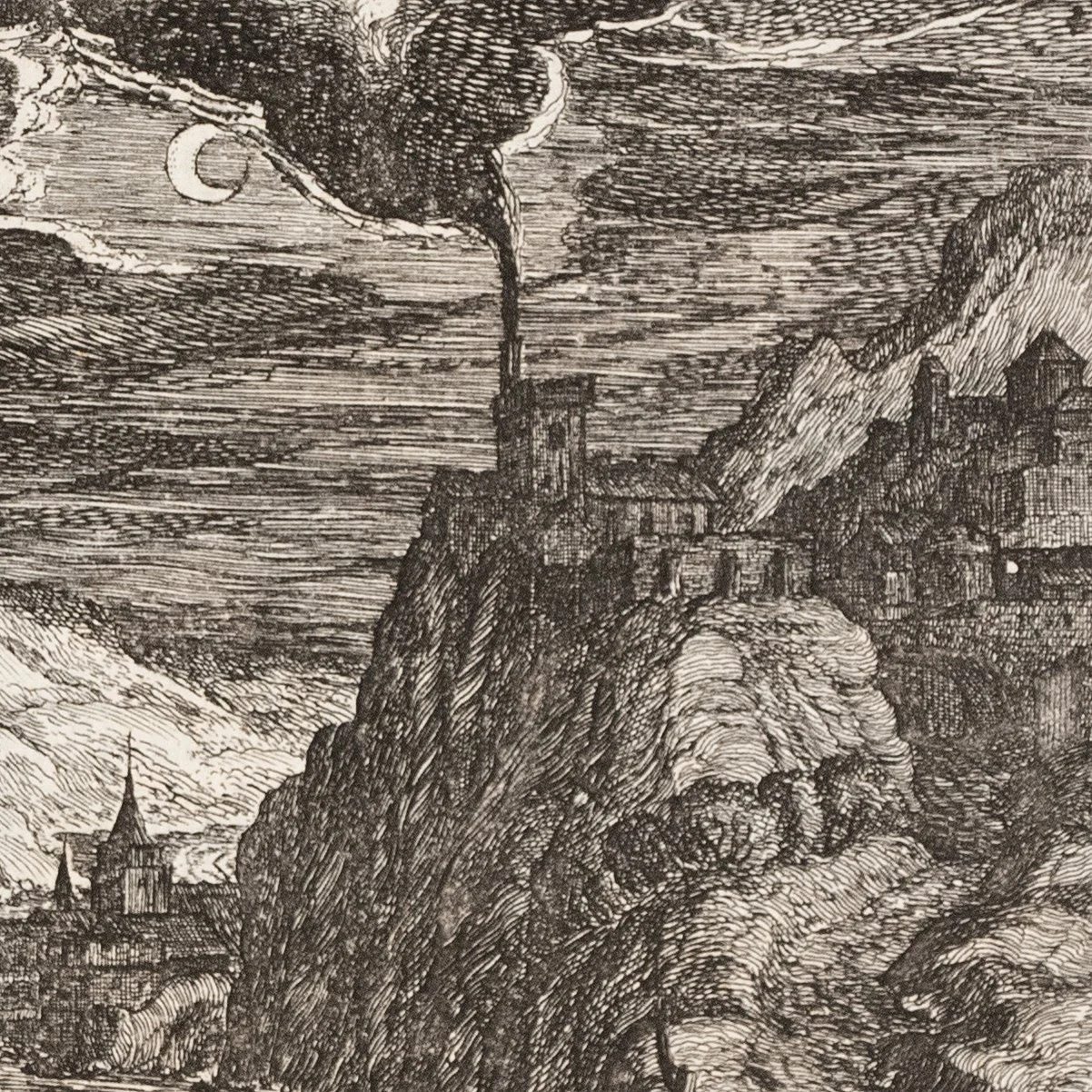 Image 7 of 18
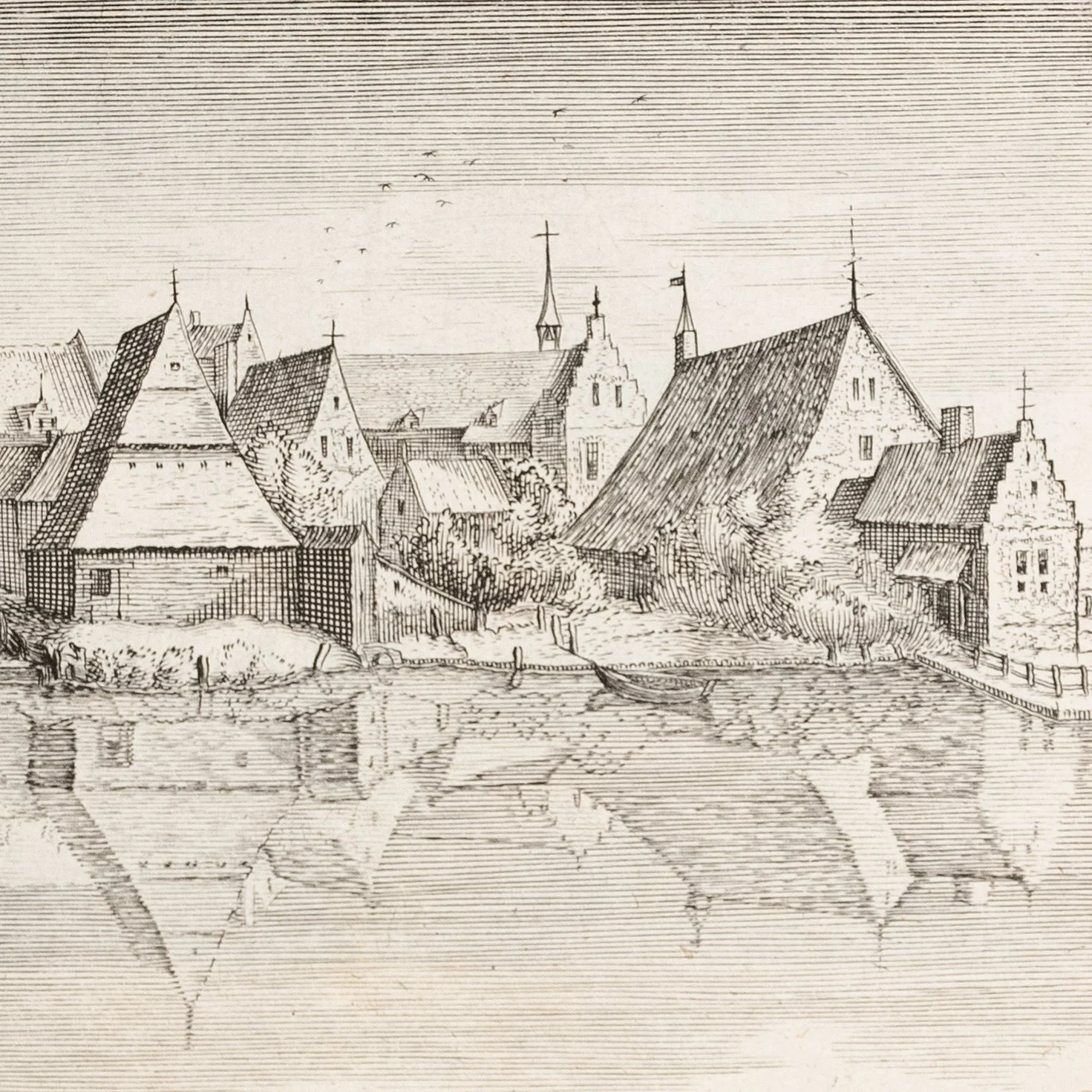 Image 8 of 18
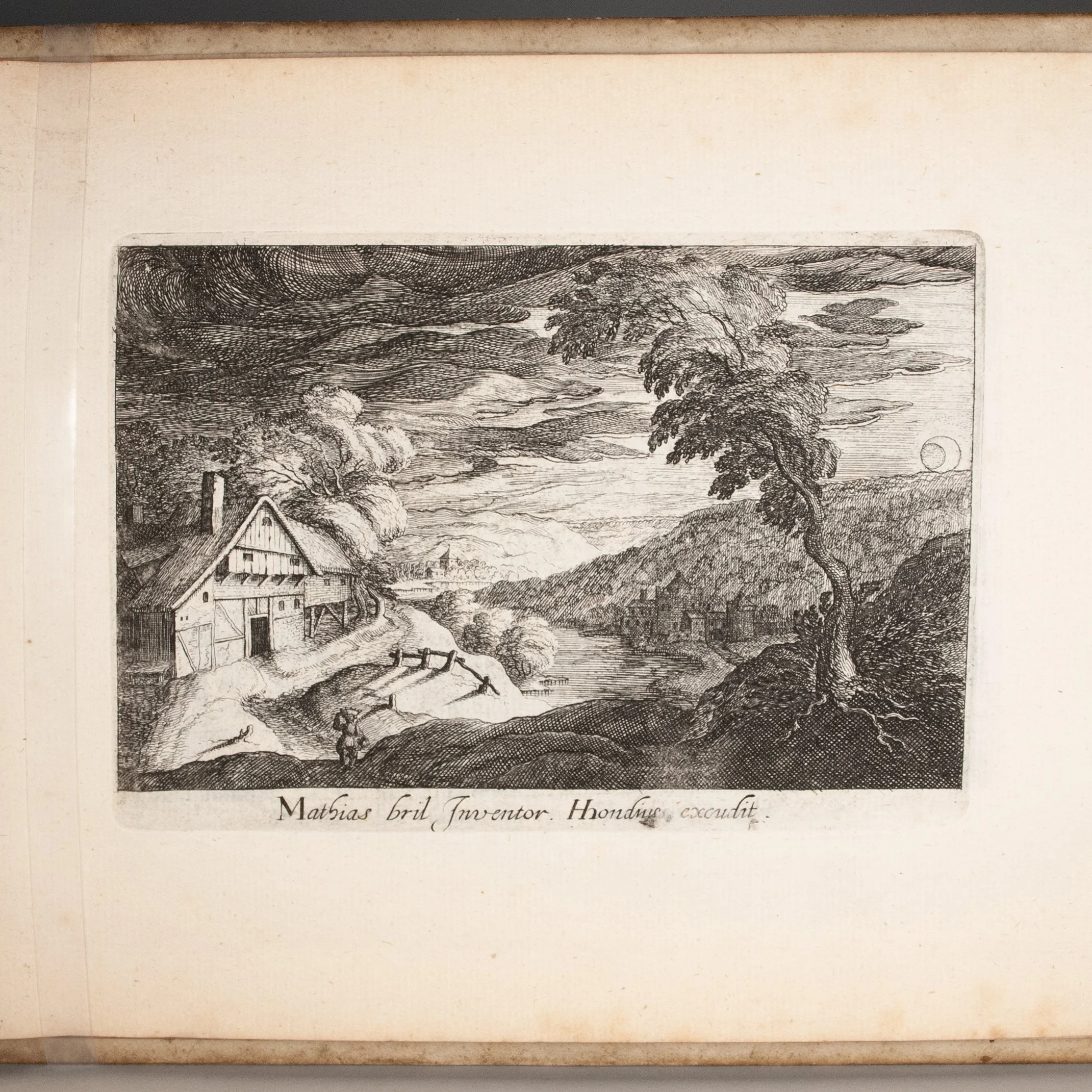 Image 9 of 18
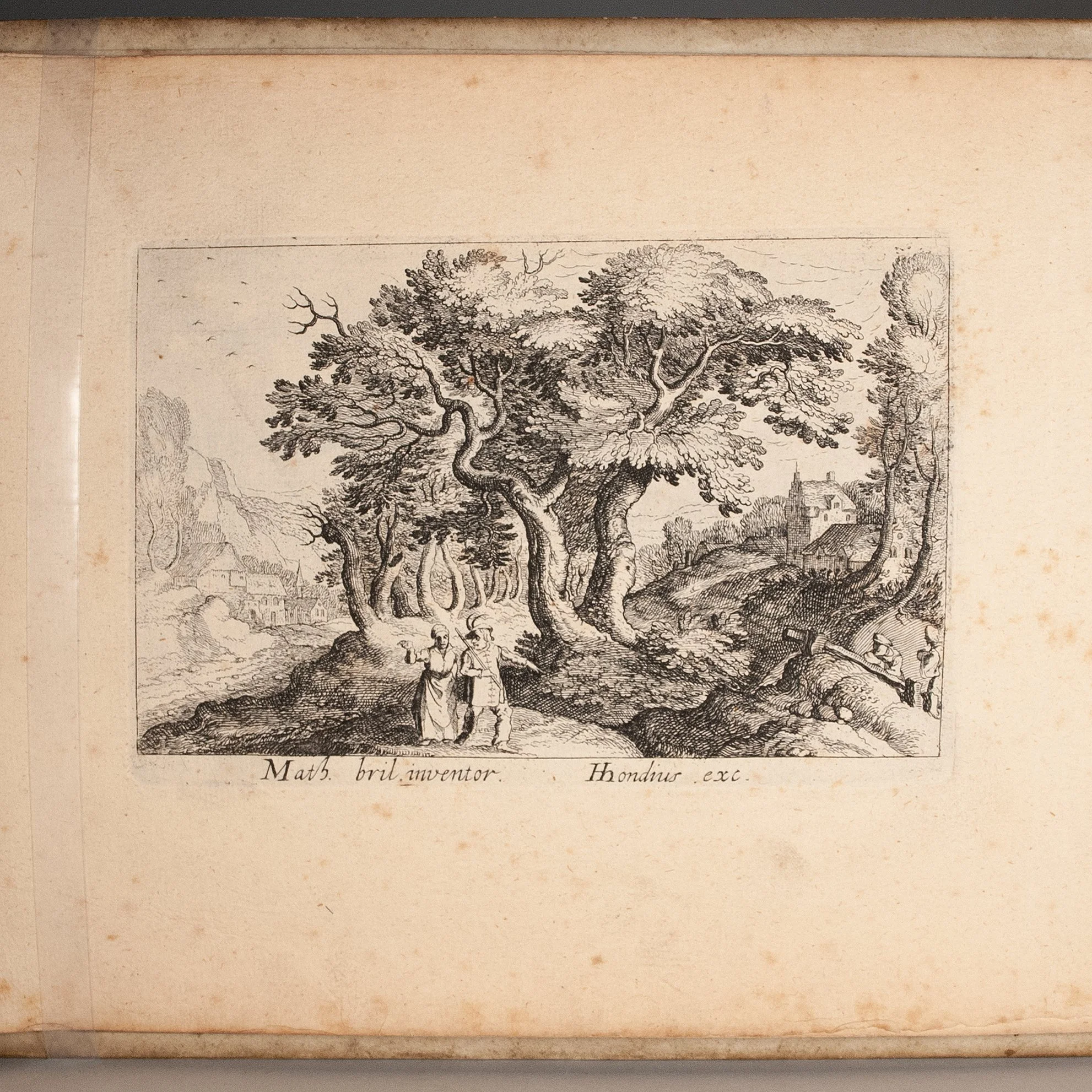 Image 10 of 18
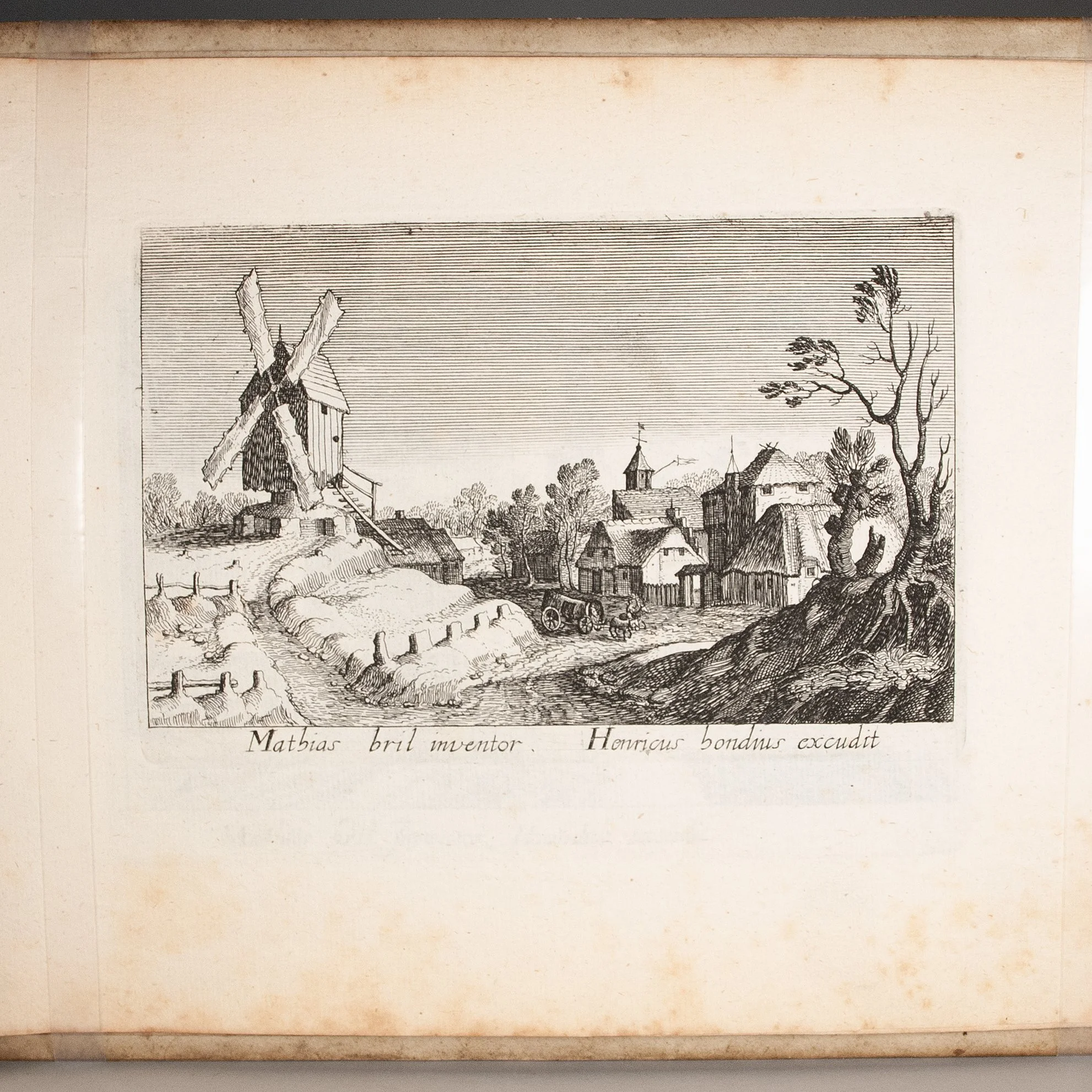 Image 11 of 18
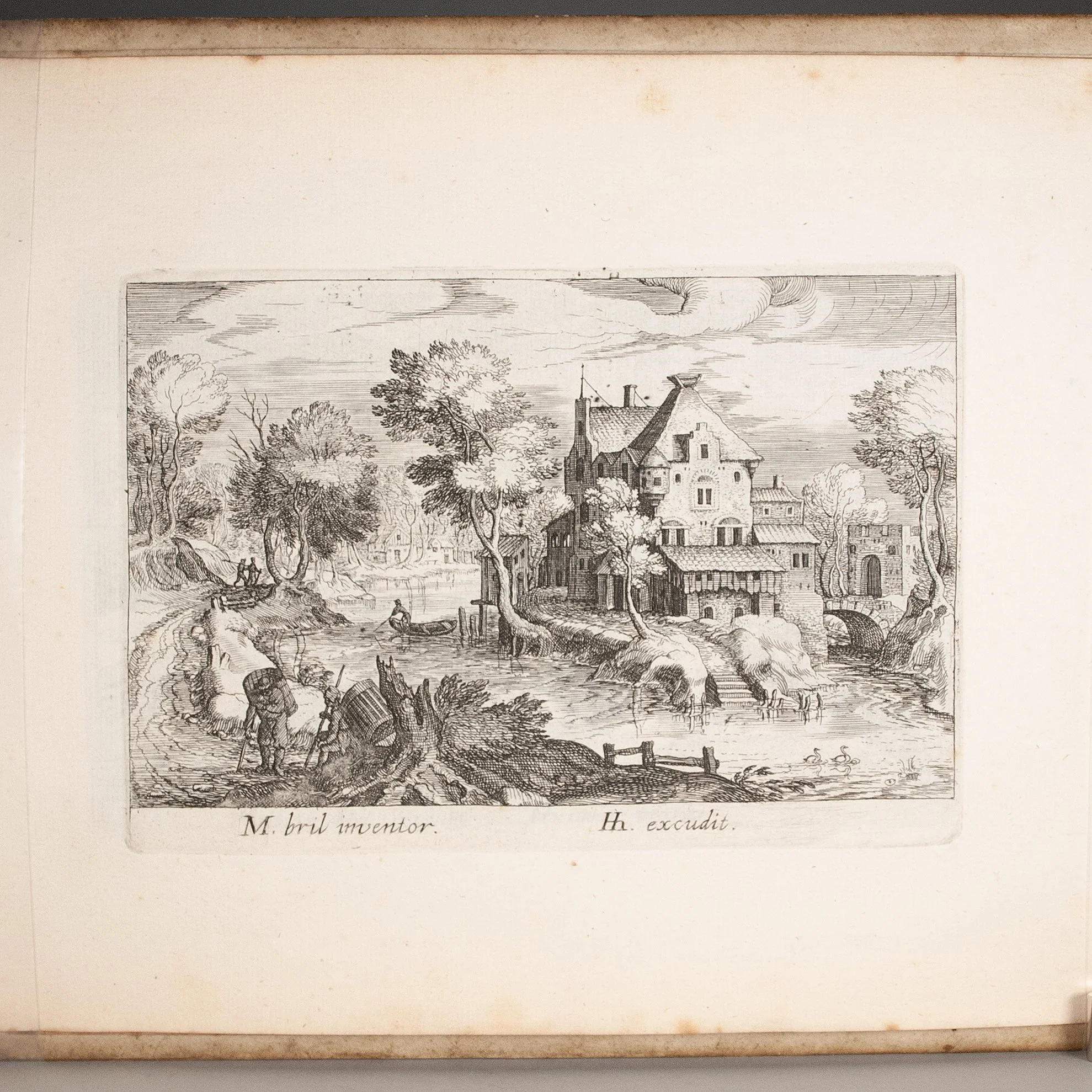 Image 12 of 18
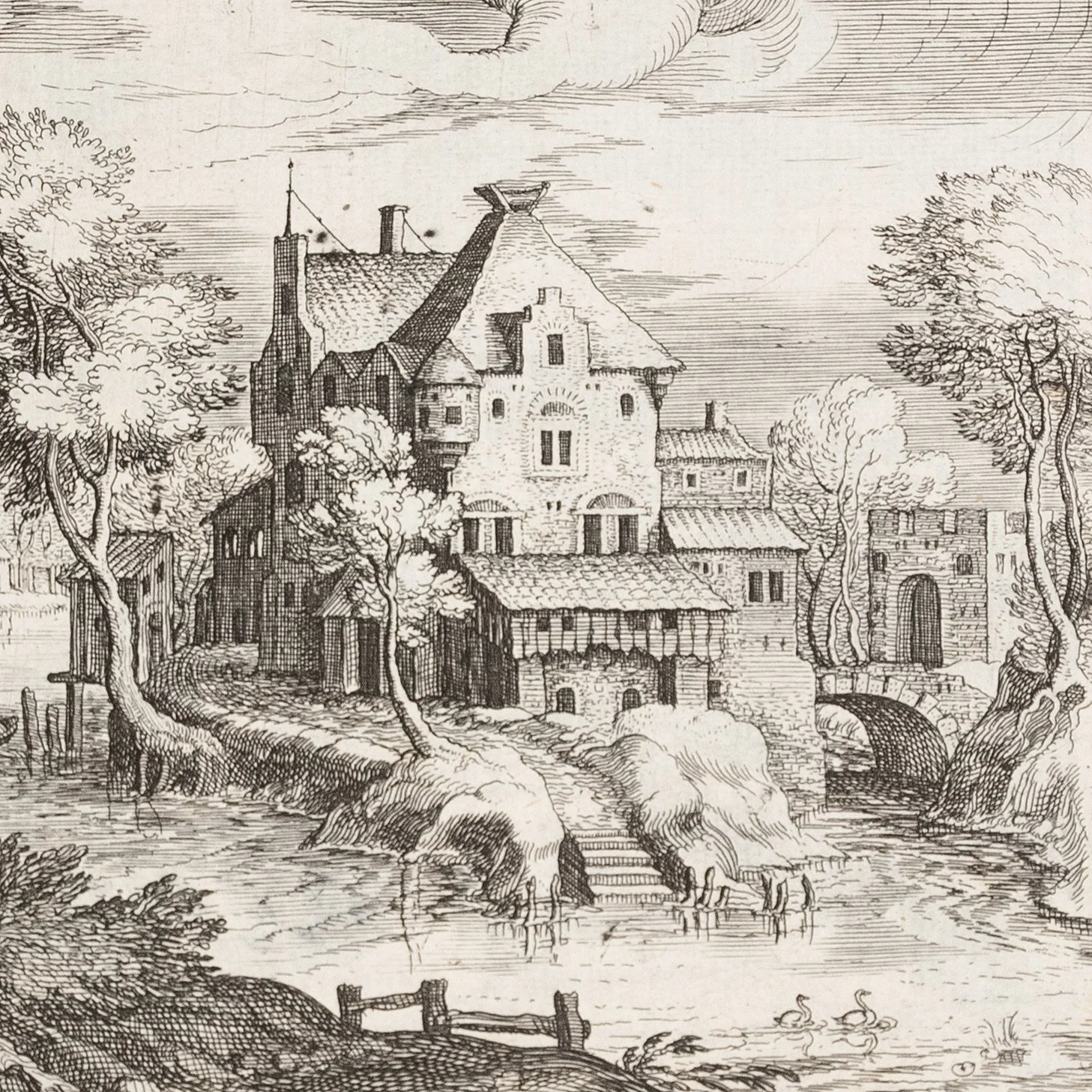 Image 13 of 18
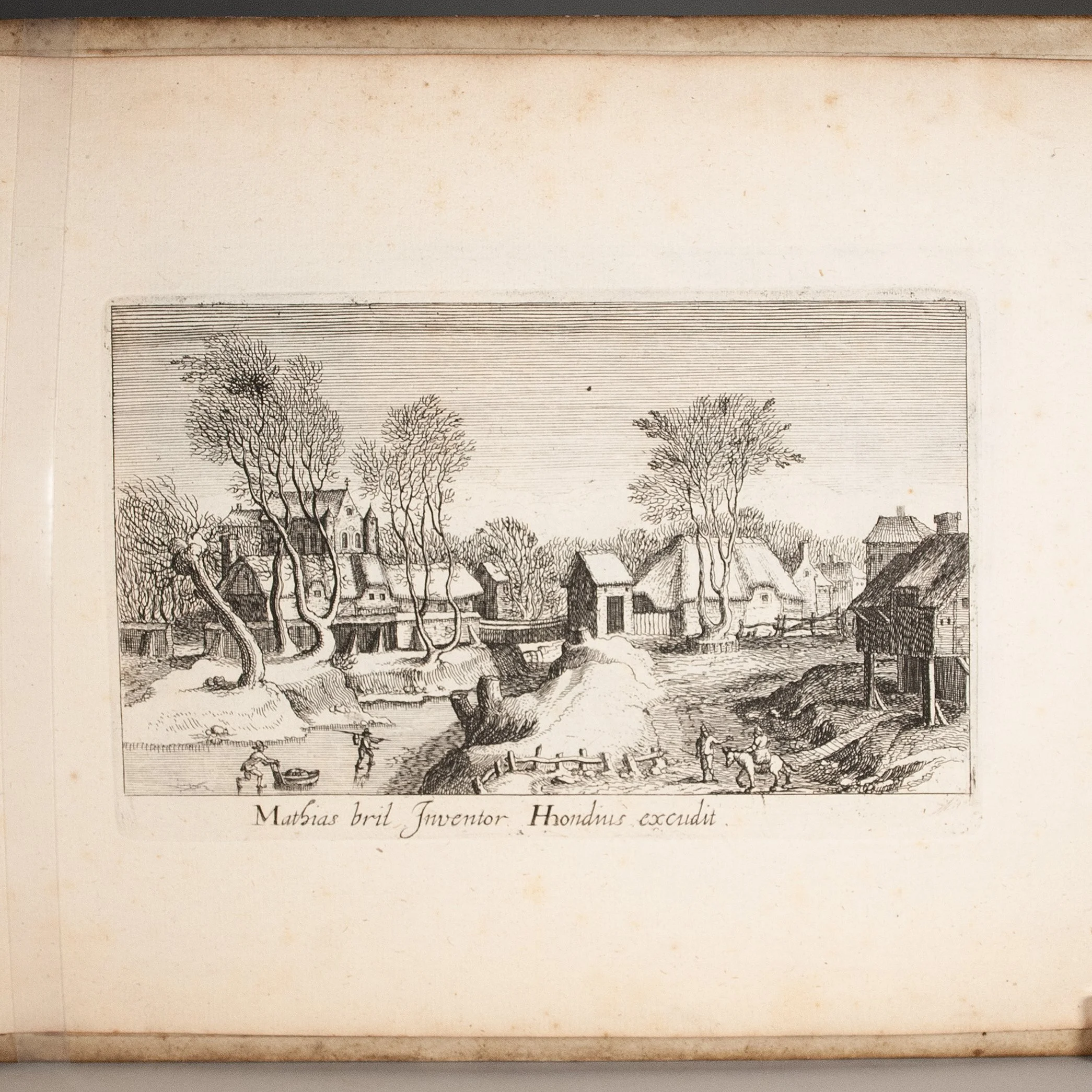 Image 14 of 18
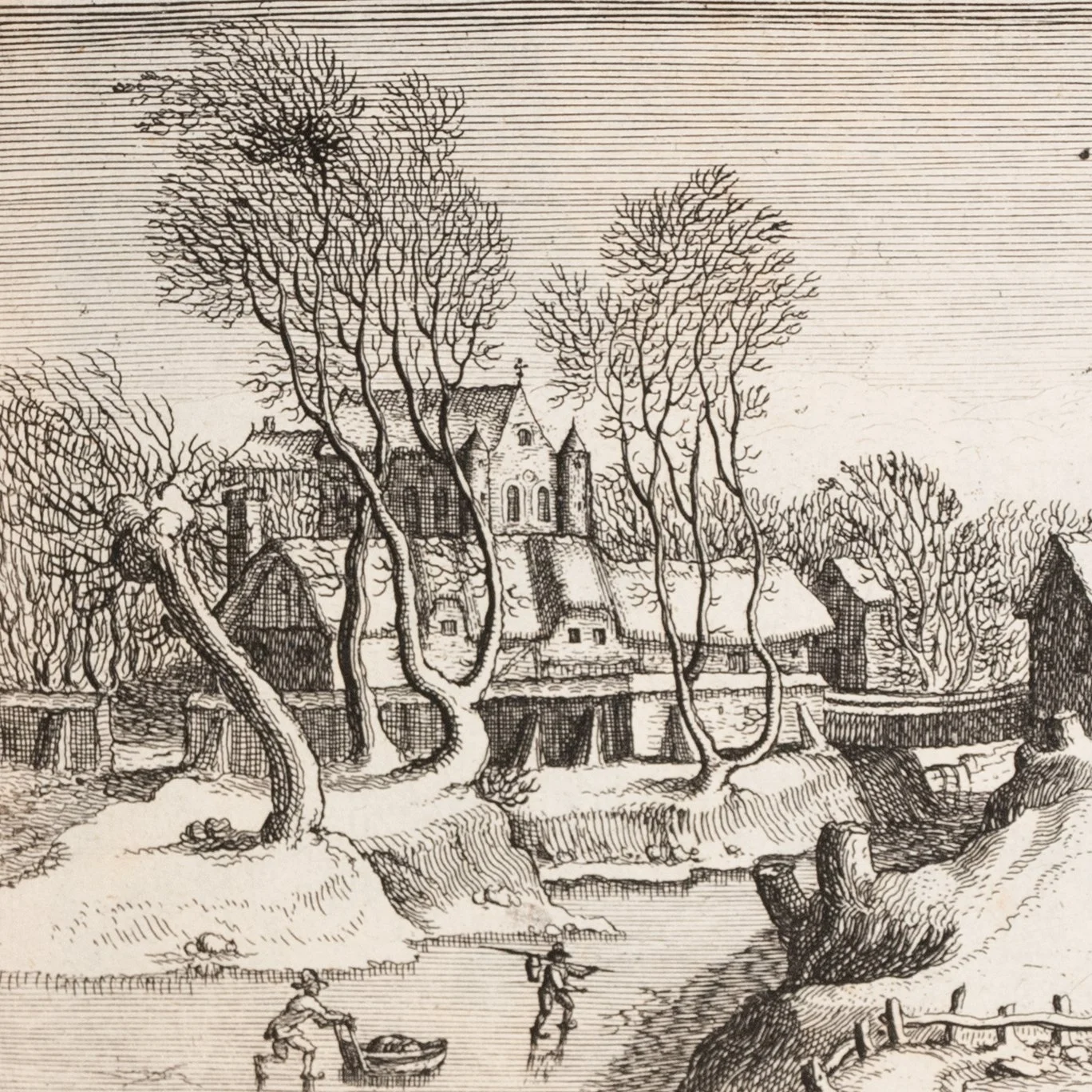 Image 15 of 18
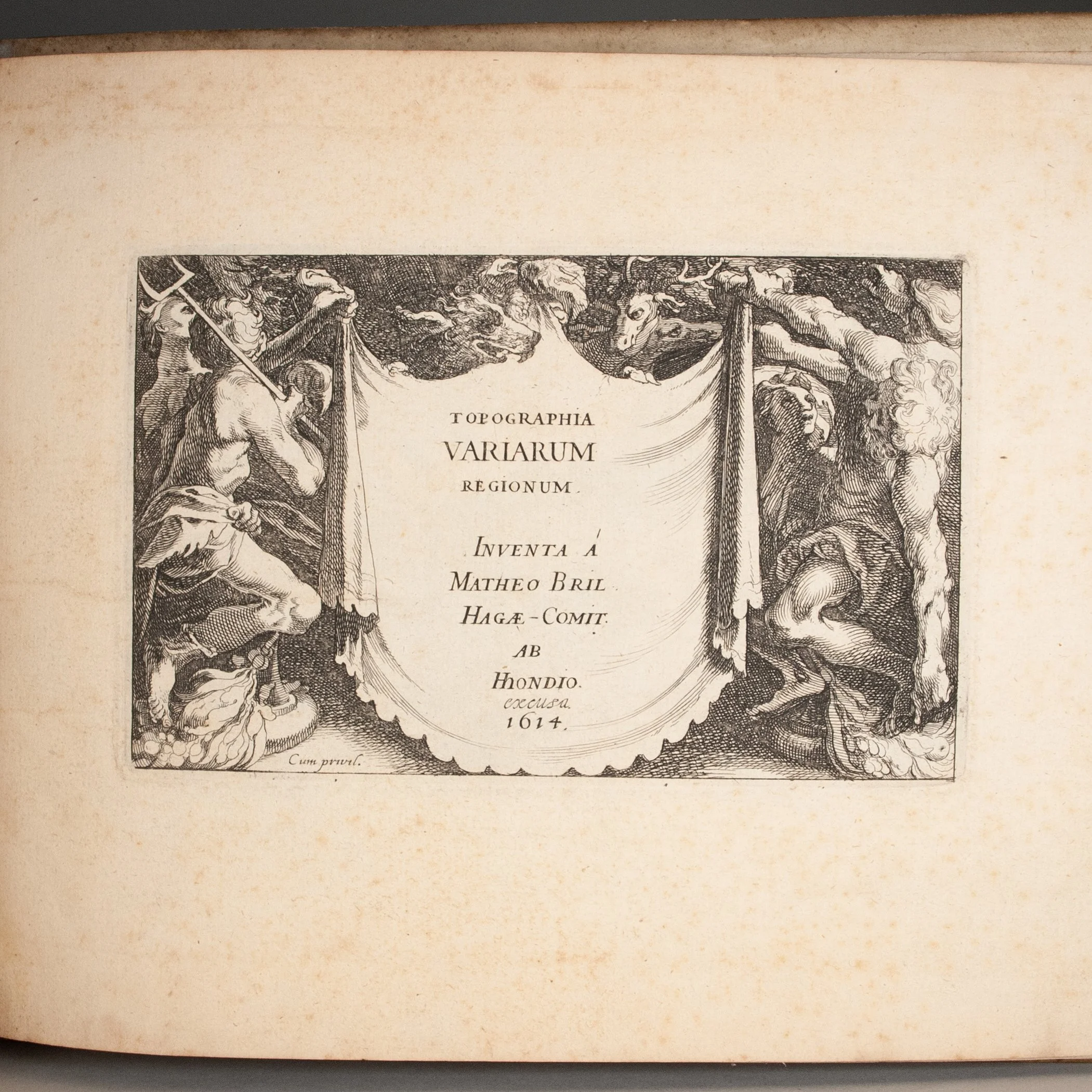 Image 16 of 18
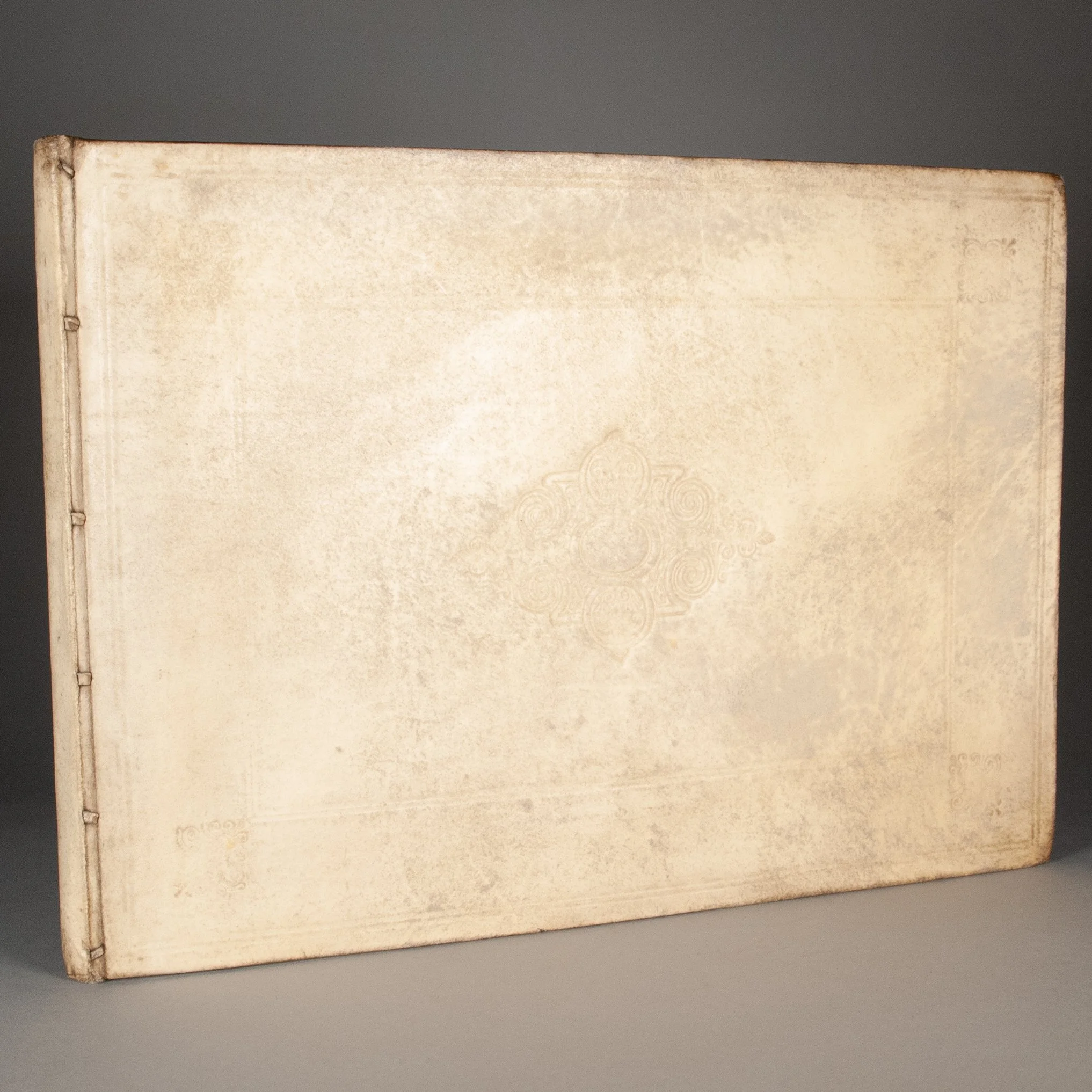 Image 17 of 18
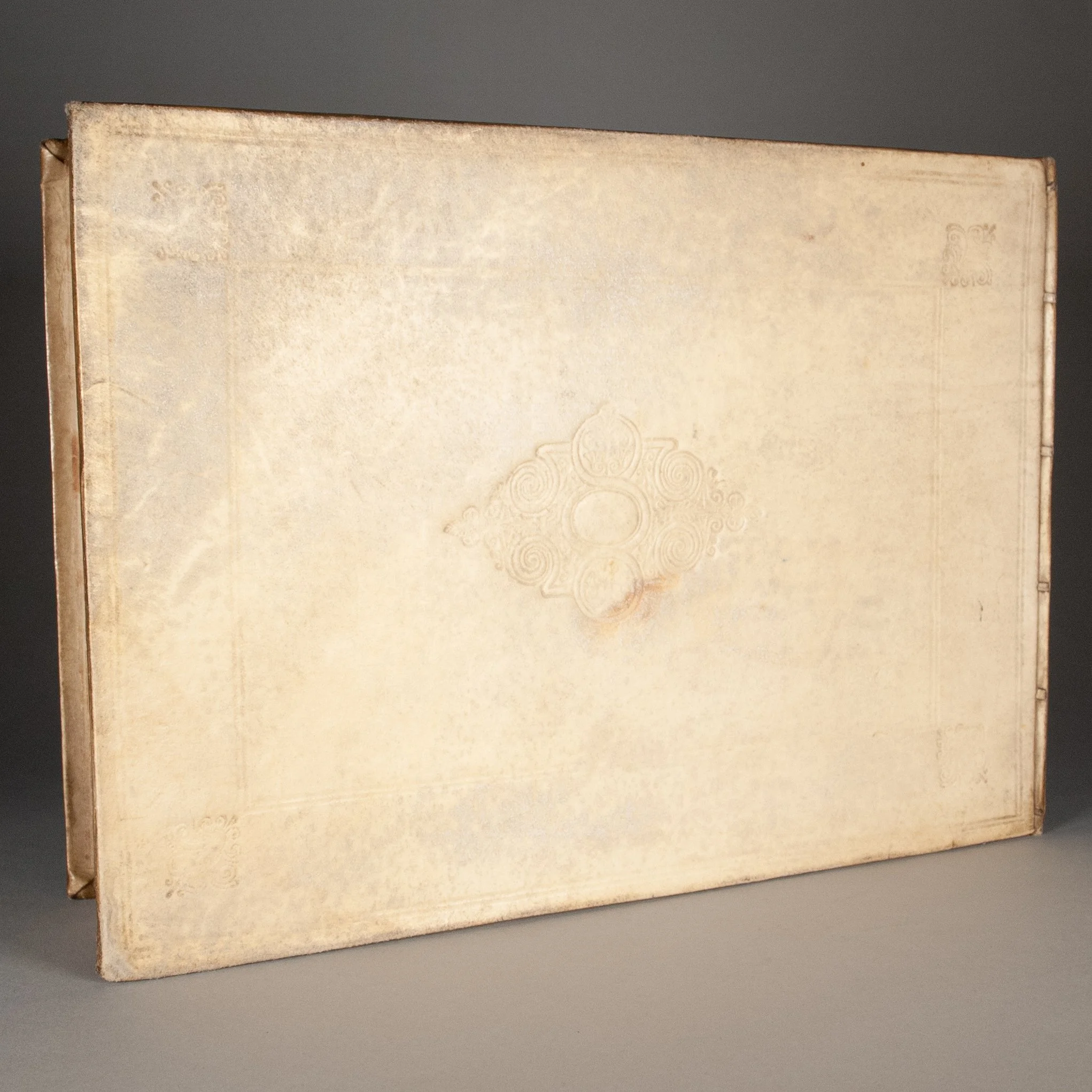 Image 18 of 18