Romani imperatores, Domo Austria; editi X hoc tempore postremi; perinde ut antea 12 p[r]imi, sua quisque vera imagine picti, et iusto ordine exhibiti
engraved by Crispijn (Crispin) van de Passe the Elder | text by Gaspar Ens
Cologne: Crispijn van de Passe, 1604
[2], 10, [1] leaves | Bound suite of prints | 204 x 165 mm
First and only edition of this Mannerist triumph of early European political propaganda, a suite of engravings glorifying the House of Habsburg, that storied dynasty that so long ruled much of Europe, including three centuries of the Holy Roman Empire. The engravings here depict ten Habsburg rulers, from Rudolphus I (ca. 1282-1307) through Rudolf II (1552-1612), Holy Roman Emperor at time of publication. An allegorical engraving on death and fame precedes the gallery of Habsburg rulers, as does the fully engraved title, on its own a beautiful display of Mannerist figures with delicately elongated bodies. The suite finishes with the arms of Rudolf II as Holy Roman Emperor, featuring four of the most jacked putti we've ever seen, for a complete set of thirteen engravings altogether. A quatrain of engraved text by Gaspar Ens heaps praise on each ruler. ¶ If not best known for his Hortus Floridus, "one of the most important early examples of botanical illustration" (Gerard), then Crispijn might be best known for fathering four children who themselves went on to work as engravers—including his daughter Magdalena van De Passe, who taught engraving to Anna Maria van Schurman. He was the patriarch of a prodigious print dynasty, which produced all told some 14,000 prints, and worked as far afield as Paris and London. While De Passe has signed these plates excudit, typically denoting a publisher's role, curators Julie Aronson and Marjorie E. Wieseman remarked that he "was an accomplished draftsman who made most of his prints after his own designs," with a focus on portraits especially after 1618. Ilja Veldman, who ranks De Passe "among the foremost portraitists of his age," suggests these were done after Cologne artist Augustin Braun, though only the Matthias portrait, a later addition, is so signed. Veldman, too, remarks that De Passe designed most of his prints himself. Whatever the case, the suite is a De Passe publication, and "all the prints that De Passe published were engraved by him or his studio" (Veldman). ¶ The present work combines two of De Passe's specialties: portraits of eminent Europeans and the publication of books of prints. It's a masterful example of the classicized portrait deployed as contemporary political propaganda—among the family's "classicizing apotheoses," according to art historian Milan Pelc. "It seems as if de Passe wanted to combine in these portraits the mounted knights of the late gothic Nine Worthies series with the impressively animated portraits of the Roman emperors by Titian, which Aegidius Sadeler reproduced as prints. For the recipients, who at that time could find similar portrait series of Roman emperors on horseback or in triumphal chariots...the symbolic and propagandistic allusions of such Habsburg portraits were probably immediately understandable." ¶ Like so many things during the Renaissance, the taste among the elite for producing their own likenesses was heavily influenced by the discoveries of ancient Roman models. The portrait, however, got off to a relatively slow start in print. Paintings were certainly a popular medium for portraiture, and original drawings circulated among Europe's courts to help satisfy the demand. And in the 16th century, no portrait medium held quite as much sway as the medal, the "currency of fame," as Lisa Jardine put it. "In an era where portraits were still rare and the image had yet to lose any of tis magic, the power of such likenesses is hard to overstate," Konraad Jonckheere remarks. "The portrait has plainly lost none of its potency even today," he continues, "with visual culture such as television, film and social media continuing to promote a form of idolatry." ¶ By the early 1600s, the portrait print had become a potent medium, second only to religious subjects in the pantheon of printed imagery (in France, at least). "To a certain extent this can be explained by the development of book illustration and its increased use of engraving instead of woodcut, since some of these portraits were used as book frontispieces. But the real impetus must have come from the urgency of current events, the consequent propagandistic use of images, and the curiosity of the urban middle-class about the protagonists of public life" (Zerner). ¶ These are hardly the first Habsburg portrait prints—Rudolf II had commissioned others, and he was among Europe's most voracious collectors and patrons of art. Even still, these engravings stand out for the sense of power they convey, not least for their imperial pedigree. Pelc suggested De Passe might have blended Titian's portraits with the Nine Worthies on horseback, but we'd be shocked if these prints rather weren't influenced by the series of Roman emperors designed by Jan van der Straet or Antonio Tempesta. To be sure, De Passe himself produced a series of Roman emperors based on Van der Straet's designs. De Passe's portrait of Frederick III, for example, was almost certainly based on either van der Straet's Otho or Tempesta's Julius Caesar. Those two artists together exerted a profound influence on the 17th-century equestrian portrait in Europe—influence that is here on full display. De Passe has even added background battle scenes reminiscent of the backgrounds in Van der Straet and Tempesta's work. ¶ Rare. We find no copies at auction since 1923.
CONDITION: Bound ca. 1900 in half burgundy goatskin and marbled boards, the spine tooled in gold; marbled endpapers and gilt edges. Each engraving—surely trimmed, but all plate marks preserved—is tipped to a separate leaf. ¶ Hollstein omits the final plate (arms of Rudolf II) but adds an unnumbered portrait of Matthias, who succeeded Rudolf II as Holy Roman Emperor in 1612. Hollstein's copy must have been updated sometime after Matthias's accession, and Veldman suggests the Matthias plate may have become a standard addition. ¶ The occasional spot of light soiling, or small stain from the adhesive used to tip them, but really a nice set. Binding extremities gently rubbed.
REFERENCES: Hollstein, Dutch and Flemish Etchings, Engravings, and Woodcuts, v. 15, p. 217-218, #655-665 ¶ On De Passe: Milan Pelc, Illustrium Imagines: Das Porträtbuch der Renaissance (2021), p. 105 (cited above); Robert A. Gerard, "Woutneel, de Passe and the Anglo-Netherlandish Print Trade," Print Quarterly 13.4 (Dec 1996), p. 363 (cited above); Jef Schaeps, "Passe family, van de," The Oxford Companion to the Book (2010), accessed online ("Dutch engravers and print publishers. Crispijn van de Passe the elder (1564–1637), with his children Simon, Crispijn the younger, Willem, and Magdalena, ran one of the largest print-publishing firms in the Dutch Republic, first in Utrecht and, from 1639, in Amsterdam. Their output comprises some 14,000 prints, ranging from biblical and mythological series to portraits, allegorical scenes, and illustrations to emblem books and other elegant publications aimed at an elite clientele all over Europe."); Amy Namowitz Worthen, "Engraving," Grove Art Online (2003), accessed online ("Crispijn van de Passe founded a dynasty that was active well into the next century in Utrecht, Cologne, London and Paris"); Ilja M. Veldman, "Passe, Crispijn [Crispiaen] (van) de (Arnemuiden), Grove Art Online (2003), accessed online ("Crispijn's engravings were popular throughout Europe and cover a remarkably wide range of subjects...He engraved portraits of the most prominent royal and aristocratic families in Europe...In many cases Crispijn signed his prints as 'inventor', indicating that he must have made preliminary drawings; but there are only a few dozen that can be ascribed to him with certainty"); Julie Aronson and Marjorie E. Wieseman, Perfect Likenesses: European and American Portrait Miniatures from the Cincinnati Art Museum (2006), p. 37 (cited above); Ilja M. Veldman, "Crispijn de Passe: his books and prints for the English market," The Bookshop of the World: The role of the Low Countries in the book-trade 1473-1941 (1999), p. 159 ("De Passe settled in Cologne in 1589, and set up a productive and distinguished print business, producing portraits of the European nobility, and religious, mythological and allegorical prints for which he found a ready market in Europe. He was a gifted draughtsman, who designed more than half of the prints he produced....His collaboration with book printers resulted in books of prints becoming one of his specialties."); Ilja M. Veldman (Michael Hoyle, tr.), Crispijn de Passe and His Progeny (1564-1670) (2001), p. 45 ("it was in Cologne that he rose to become a prominent and prolific print publisher"), 46 ("All the prints that De Passe published were engraved by him or his studio, and he designed most of them as well"), 85 (on his portraits: "De Passe drew most of the designs himself. The few drawn portraits of his that have come down to us display great vivacity and spontaneity, which confirms that portraiture was his great speciality and ranks him among the foremost portraitists of his age."), 99 (the Maurits portrait reproduced), 100 (confirming 10 portraits in the series, "after August Braun," and commenting that "a portrait of the new emperor, Matthias, was added to the suite after 1611"; and on his own series of Roman emperors after the Stradanus designs, which informed the present series) ¶ On portraits broadly: Mieczysław Morka, Polski nowożytny portret konny i jego europejska geneza (1986), v. 3, p. 235 ("The greatest influence on equestrian portraits and battle iconography from the 17th century was exerted by two cooperating artists: Jan van der Straet, called Stradanus, painter and draftsman, and Antonio Tempesta"); Henri Zerner, "Introduction," The French Renaissance in Prints (1994), p. 27 (cited above); Cynthia Burlingham, "Portraiture as Propaganda: Printmaking during the Reign of Henri IV," French Renaissance in Prints, p. 139 ("The reign of Henri IV (1589-1610) witnessed an enormous increase in the popularity of the printed portrait. Demand for engraved portraits during this period was second only to that for prints with religious subjects...During this period [16c] it was limited to drawings distributed within close-knit European court circles. By the end of the century, however, more than forty years of civil war and religious strife were making new demands upon the emerging Bourbon dynasty. What started out as an elite genre began to appeal to a broader audience, with the introduction of printed portrait albums and, finally, widely circulated single-sheet prints."); Lisa Jardine, Worldly Goods (1996), p. 416 (cited above; on portraits, medals especially); Penelope J.E. Davies, et al., Janson's Basic History of Western Art (2014), p. 327 ("The idea of recording specific likenesses was inspired by the fifteenth century's increasing awareness of the individual, but also by the study of Roman art, where portraits abound...Florentine families who commissioned works of art often included portraits of their political allies as well as themselves to make their political and social networks clear to their neighbors"), 353 ("Mannerism became a style of utmost refinement, which emphasized grace, variety, and virtuoso display instead of clarity and unity. Mannerist artists self-consciously explored definitions of beauty: Rather than repeat ancient forms, they experimented with proportions, ideal figure types, and unusual compositions."); Koenraad Jonckheere, A New History of Western Art (2022), p. 296 (cited above); Walter A. Liedtke and John F. Moffitt, "Velázquez, Olivares, and the baroque equestrian portrait," The Burlington Magazine 123.942 (Sept 1981), p. 529 ("For a monarch to be mounted on a horse seems as natural to the modern eye, and evidently to the seventeenth-century viewer as well, as the image of a king on a throne or of a conqueror armed with a sword")
Item #946
Romani imperatores, Domo Austria; editi X hoc tempore postremi; perinde ut antea 12 p[r]imi, sua quisque vera imagine picti, et iusto ordine exhibiti
engraved by Crispijn (Crispin) van de Passe the Elder | text by Gaspar Ens
Cologne: Crispijn van de Passe, 1604
[2], 10, [1] leaves | Bound suite of prints | 204 x 165 mm
First and only edition of this Mannerist triumph of early European political propaganda, a suite of engravings glorifying the House of Habsburg, that storied dynasty that so long ruled much of Europe, including three centuries of the Holy Roman Empire. The engravings here depict ten Habsburg rulers, from Rudolphus I (ca. 1282-1307) through Rudolf II (1552-1612), Holy Roman Emperor at time of publication. An allegorical engraving on death and fame precedes the gallery of Habsburg rulers, as does the fully engraved title, on its own a beautiful display of Mannerist figures with delicately elongated bodies. The suite finishes with the arms of Rudolf II as Holy Roman Emperor, featuring four of the most jacked putti we've ever seen, for a complete set of thirteen engravings altogether. A quatrain of engraved text by Gaspar Ens heaps praise on each ruler. ¶ If not best known for his Hortus Floridus, "one of the most important early examples of botanical illustration" (Gerard), then Crispijn might be best known for fathering four children who themselves went on to work as engravers—including his daughter Magdalena van De Passe, who taught engraving to Anna Maria van Schurman. He was the patriarch of a prodigious print dynasty, which produced all told some 14,000 prints, and worked as far afield as Paris and London. While De Passe has signed these plates excudit, typically denoting a publisher's role, curators Julie Aronson and Marjorie E. Wieseman remarked that he "was an accomplished draftsman who made most of his prints after his own designs," with a focus on portraits especially after 1618. Ilja Veldman, who ranks De Passe "among the foremost portraitists of his age," suggests these were done after Cologne artist Augustin Braun, though only the Matthias portrait, a later addition, is so signed. Veldman, too, remarks that De Passe designed most of his prints himself. Whatever the case, the suite is a De Passe publication, and "all the prints that De Passe published were engraved by him or his studio" (Veldman). ¶ The present work combines two of De Passe's specialties: portraits of eminent Europeans and the publication of books of prints. It's a masterful example of the classicized portrait deployed as contemporary political propaganda—among the family's "classicizing apotheoses," according to art historian Milan Pelc. "It seems as if de Passe wanted to combine in these portraits the mounted knights of the late gothic Nine Worthies series with the impressively animated portraits of the Roman emperors by Titian, which Aegidius Sadeler reproduced as prints. For the recipients, who at that time could find similar portrait series of Roman emperors on horseback or in triumphal chariots...the symbolic and propagandistic allusions of such Habsburg portraits were probably immediately understandable." ¶ Like so many things during the Renaissance, the taste among the elite for producing their own likenesses was heavily influenced by the discoveries of ancient Roman models. The portrait, however, got off to a relatively slow start in print. Paintings were certainly a popular medium for portraiture, and original drawings circulated among Europe's courts to help satisfy the demand. And in the 16th century, no portrait medium held quite as much sway as the medal, the "currency of fame," as Lisa Jardine put it. "In an era where portraits were still rare and the image had yet to lose any of tis magic, the power of such likenesses is hard to overstate," Konraad Jonckheere remarks. "The portrait has plainly lost none of its potency even today," he continues, "with visual culture such as television, film and social media continuing to promote a form of idolatry." ¶ By the early 1600s, the portrait print had become a potent medium, second only to religious subjects in the pantheon of printed imagery (in France, at least). "To a certain extent this can be explained by the development of book illustration and its increased use of engraving instead of woodcut, since some of these portraits were used as book frontispieces. But the real impetus must have come from the urgency of current events, the consequent propagandistic use of images, and the curiosity of the urban middle-class about the protagonists of public life" (Zerner). ¶ These are hardly the first Habsburg portrait prints—Rudolf II had commissioned others, and he was among Europe's most voracious collectors and patrons of art. Even still, these engravings stand out for the sense of power they convey, not least for their imperial pedigree. Pelc suggested De Passe might have blended Titian's portraits with the Nine Worthies on horseback, but we'd be shocked if these prints rather weren't influenced by the series of Roman emperors designed by Jan van der Straet or Antonio Tempesta. To be sure, De Passe himself produced a series of Roman emperors based on Van der Straet's designs. De Passe's portrait of Frederick III, for example, was almost certainly based on either van der Straet's Otho or Tempesta's Julius Caesar. Those two artists together exerted a profound influence on the 17th-century equestrian portrait in Europe—influence that is here on full display. De Passe has even added background battle scenes reminiscent of the backgrounds in Van der Straet and Tempesta's work. ¶ Rare. We find no copies at auction since 1923.
CONDITION: Bound ca. 1900 in half burgundy goatskin and marbled boards, the spine tooled in gold; marbled endpapers and gilt edges. Each engraving—surely trimmed, but all plate marks preserved—is tipped to a separate leaf. ¶ Hollstein omits the final plate (arms of Rudolf II) but adds an unnumbered portrait of Matthias, who succeeded Rudolf II as Holy Roman Emperor in 1612. Hollstein's copy must have been updated sometime after Matthias's accession, and Veldman suggests the Matthias plate may have become a standard addition. ¶ The occasional spot of light soiling, or small stain from the adhesive used to tip them, but really a nice set. Binding extremities gently rubbed.
REFERENCES: Hollstein, Dutch and Flemish Etchings, Engravings, and Woodcuts, v. 15, p. 217-218, #655-665 ¶ On De Passe: Milan Pelc, Illustrium Imagines: Das Porträtbuch der Renaissance (2021), p. 105 (cited above); Robert A. Gerard, "Woutneel, de Passe and the Anglo-Netherlandish Print Trade," Print Quarterly 13.4 (Dec 1996), p. 363 (cited above); Jef Schaeps, "Passe family, van de," The Oxford Companion to the Book (2010), accessed online ("Dutch engravers and print publishers. Crispijn van de Passe the elder (1564–1637), with his children Simon, Crispijn the younger, Willem, and Magdalena, ran one of the largest print-publishing firms in the Dutch Republic, first in Utrecht and, from 1639, in Amsterdam. Their output comprises some 14,000 prints, ranging from biblical and mythological series to portraits, allegorical scenes, and illustrations to emblem books and other elegant publications aimed at an elite clientele all over Europe."); Amy Namowitz Worthen, "Engraving," Grove Art Online (2003), accessed online ("Crispijn van de Passe founded a dynasty that was active well into the next century in Utrecht, Cologne, London and Paris"); Ilja M. Veldman, "Passe, Crispijn [Crispiaen] (van) de (Arnemuiden), Grove Art Online (2003), accessed online ("Crispijn's engravings were popular throughout Europe and cover a remarkably wide range of subjects...He engraved portraits of the most prominent royal and aristocratic families in Europe...In many cases Crispijn signed his prints as 'inventor', indicating that he must have made preliminary drawings; but there are only a few dozen that can be ascribed to him with certainty"); Julie Aronson and Marjorie E. Wieseman, Perfect Likenesses: European and American Portrait Miniatures from the Cincinnati Art Museum (2006), p. 37 (cited above); Ilja M. Veldman, "Crispijn de Passe: his books and prints for the English market," The Bookshop of the World: The role of the Low Countries in the book-trade 1473-1941 (1999), p. 159 ("De Passe settled in Cologne in 1589, and set up a productive and distinguished print business, producing portraits of the European nobility, and religious, mythological and allegorical prints for which he found a ready market in Europe. He was a gifted draughtsman, who designed more than half of the prints he produced....His collaboration with book printers resulted in books of prints becoming one of his specialties."); Ilja M. Veldman (Michael Hoyle, tr.), Crispijn de Passe and His Progeny (1564-1670) (2001), p. 45 ("it was in Cologne that he rose to become a prominent and prolific print publisher"), 46 ("All the prints that De Passe published were engraved by him or his studio, and he designed most of them as well"), 85 (on his portraits: "De Passe drew most of the designs himself. The few drawn portraits of his that have come down to us display great vivacity and spontaneity, which confirms that portraiture was his great speciality and ranks him among the foremost portraitists of his age."), 99 (the Maurits portrait reproduced), 100 (confirming 10 portraits in the series, "after August Braun," and commenting that "a portrait of the new emperor, Matthias, was added to the suite after 1611"; and on his own series of Roman emperors after the Stradanus designs, which informed the present series) ¶ On portraits broadly: Mieczysław Morka, Polski nowożytny portret konny i jego europejska geneza (1986), v. 3, p. 235 ("The greatest influence on equestrian portraits and battle iconography from the 17th century was exerted by two cooperating artists: Jan van der Straet, called Stradanus, painter and draftsman, and Antonio Tempesta"); Henri Zerner, "Introduction," The French Renaissance in Prints (1994), p. 27 (cited above); Cynthia Burlingham, "Portraiture as Propaganda: Printmaking during the Reign of Henri IV," French Renaissance in Prints, p. 139 ("The reign of Henri IV (1589-1610) witnessed an enormous increase in the popularity of the printed portrait. Demand for engraved portraits during this period was second only to that for prints with religious subjects...During this period [16c] it was limited to drawings distributed within close-knit European court circles. By the end of the century, however, more than forty years of civil war and religious strife were making new demands upon the emerging Bourbon dynasty. What started out as an elite genre began to appeal to a broader audience, with the introduction of printed portrait albums and, finally, widely circulated single-sheet prints."); Lisa Jardine, Worldly Goods (1996), p. 416 (cited above; on portraits, medals especially); Penelope J.E. Davies, et al., Janson's Basic History of Western Art (2014), p. 327 ("The idea of recording specific likenesses was inspired by the fifteenth century's increasing awareness of the individual, but also by the study of Roman art, where portraits abound...Florentine families who commissioned works of art often included portraits of their political allies as well as themselves to make their political and social networks clear to their neighbors"), 353 ("Mannerism became a style of utmost refinement, which emphasized grace, variety, and virtuoso display instead of clarity and unity. Mannerist artists self-consciously explored definitions of beauty: Rather than repeat ancient forms, they experimented with proportions, ideal figure types, and unusual compositions."); Koenraad Jonckheere, A New History of Western Art (2022), p. 296 (cited above); Walter A. Liedtke and John F. Moffitt, "Velázquez, Olivares, and the baroque equestrian portrait," The Burlington Magazine 123.942 (Sept 1981), p. 529 ("For a monarch to be mounted on a horse seems as natural to the modern eye, and evidently to the seventeenth-century viewer as well, as the image of a king on a throne or of a conqueror armed with a sword")
Item #946
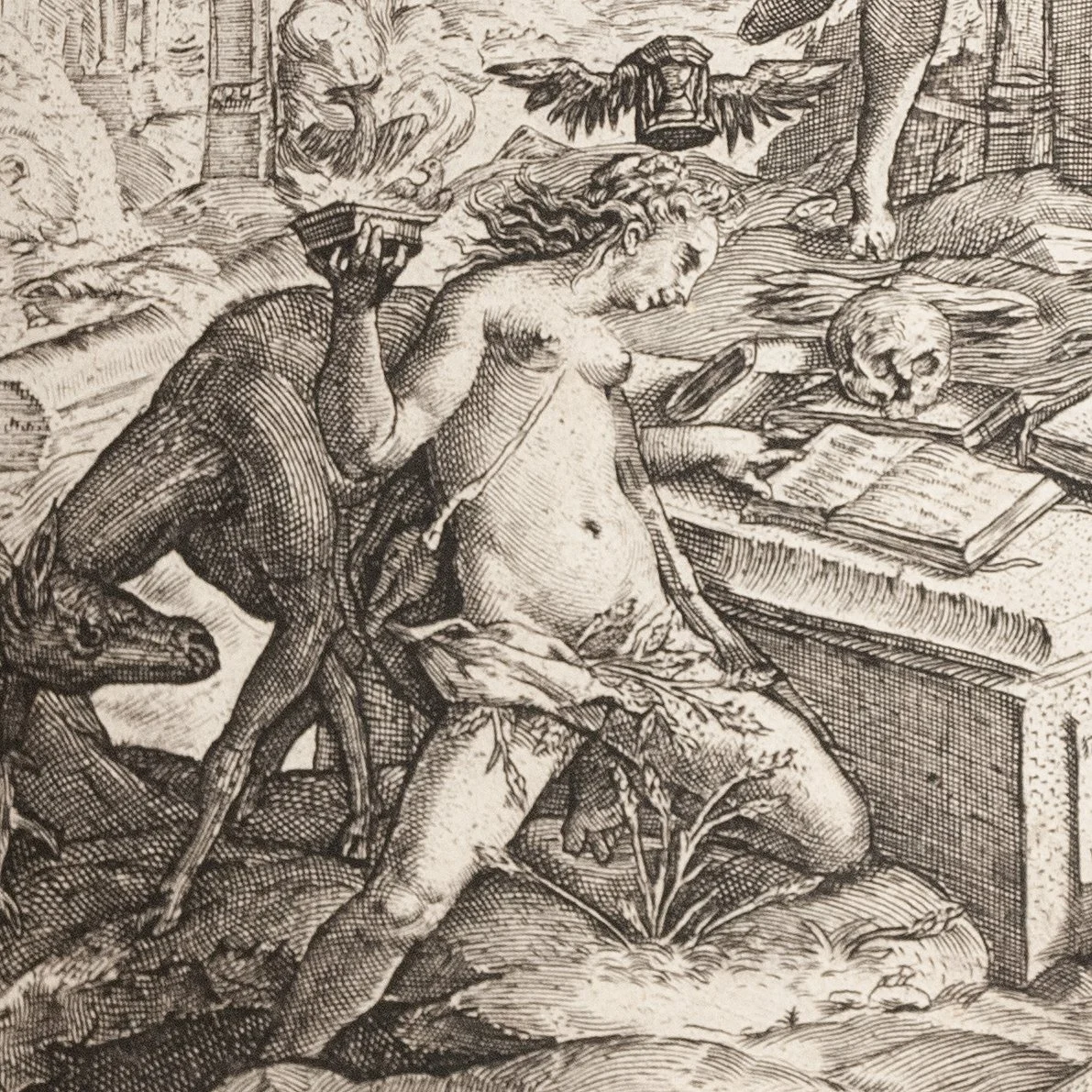 Image 1 of 17
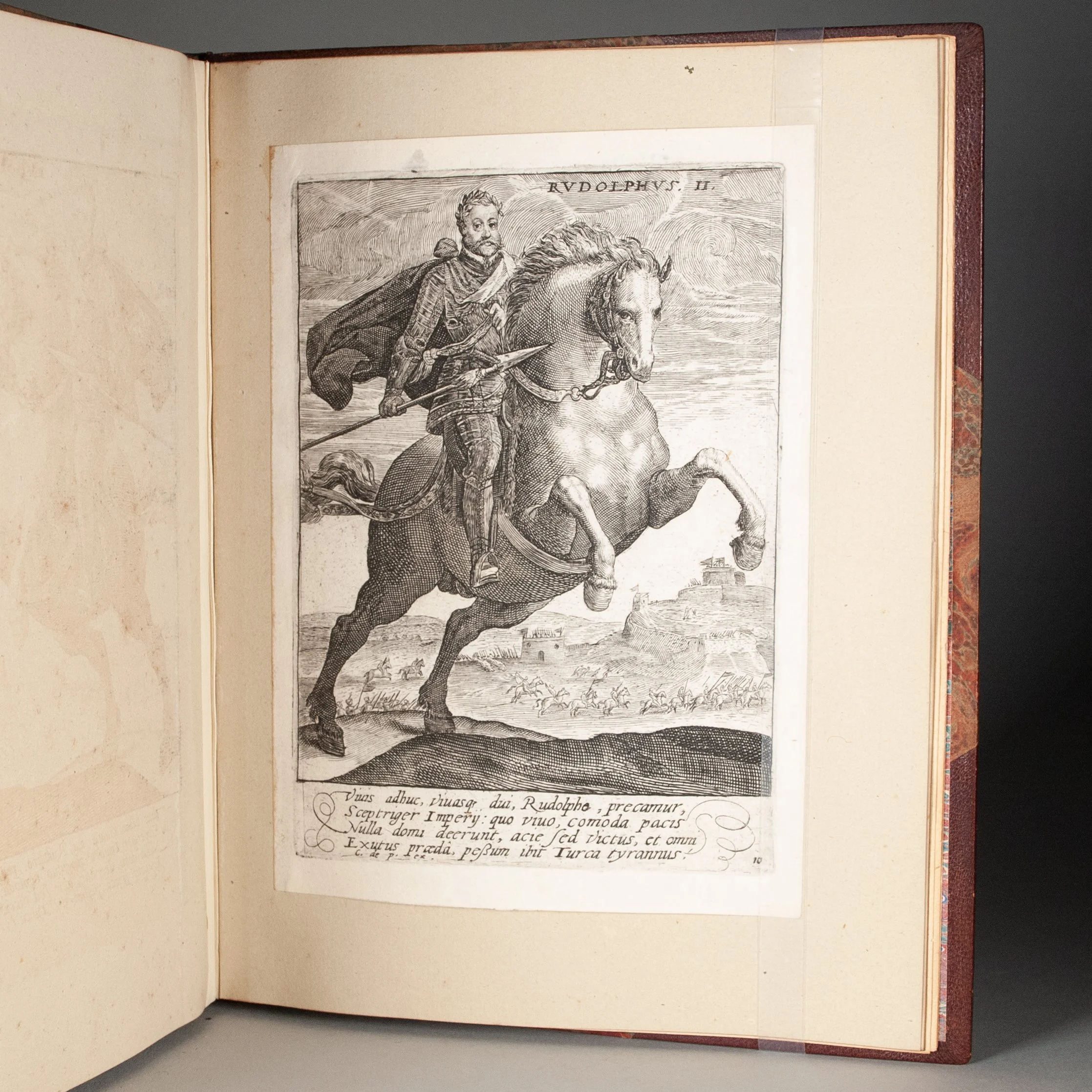 Image 2 of 17
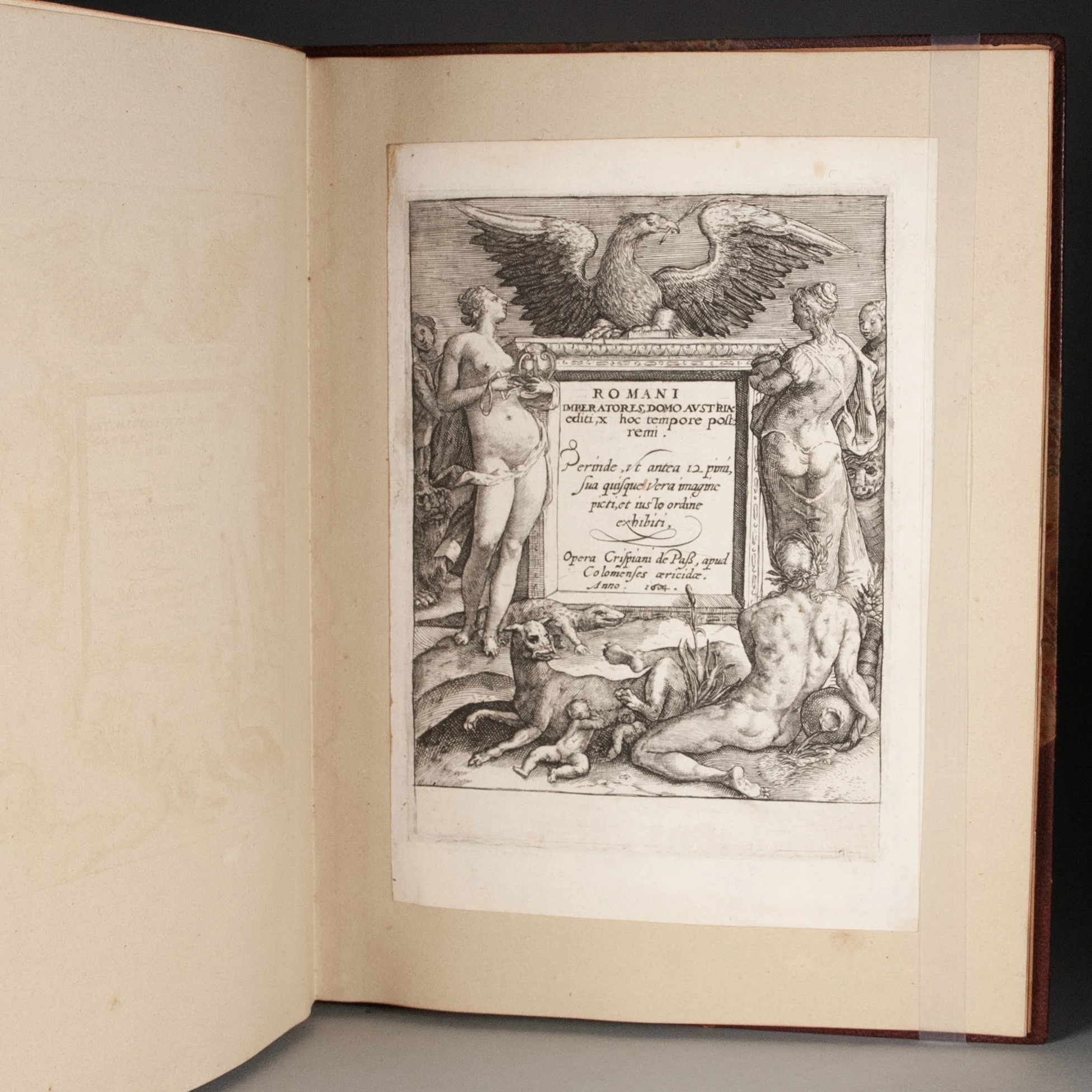 Image 3 of 17
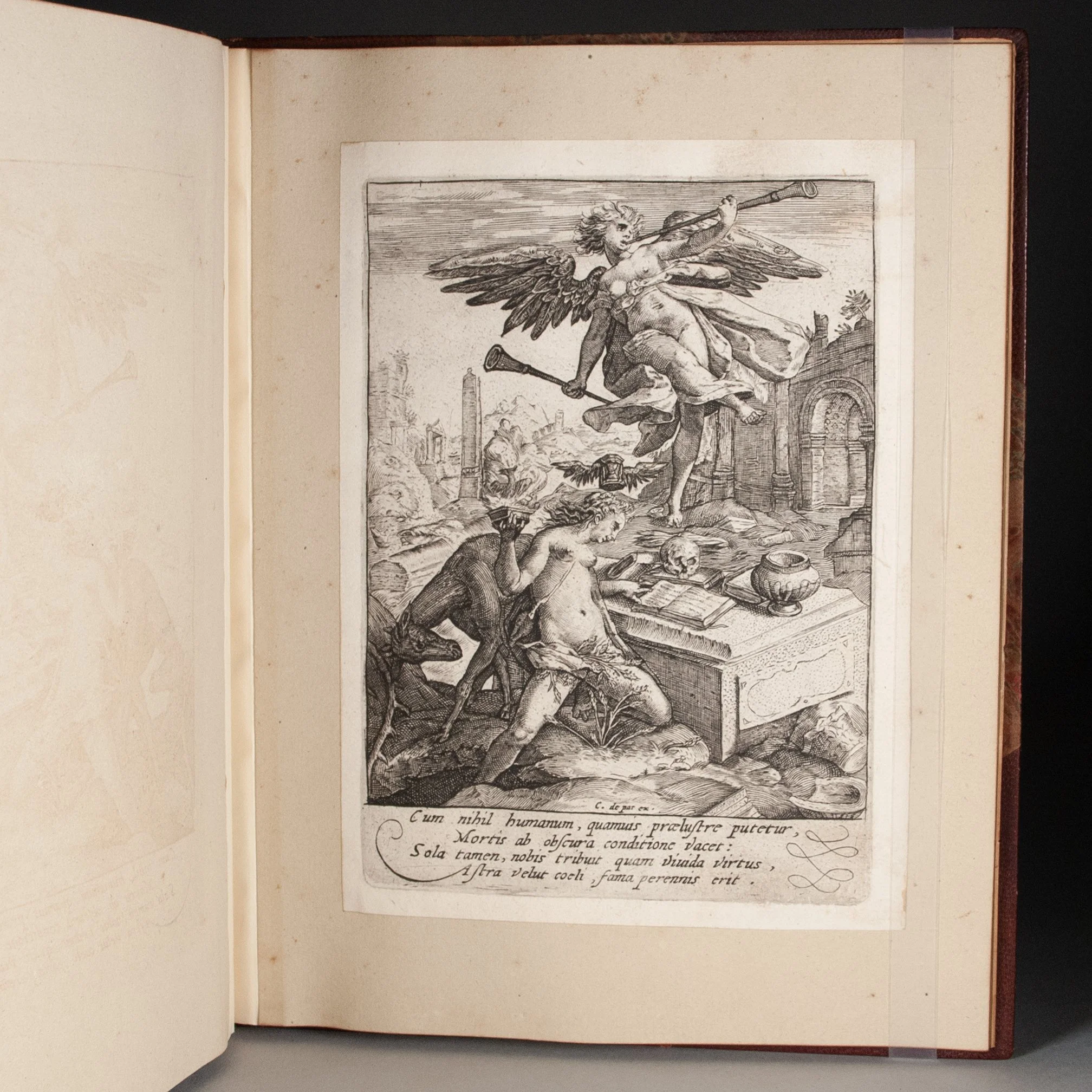 Image 4 of 17
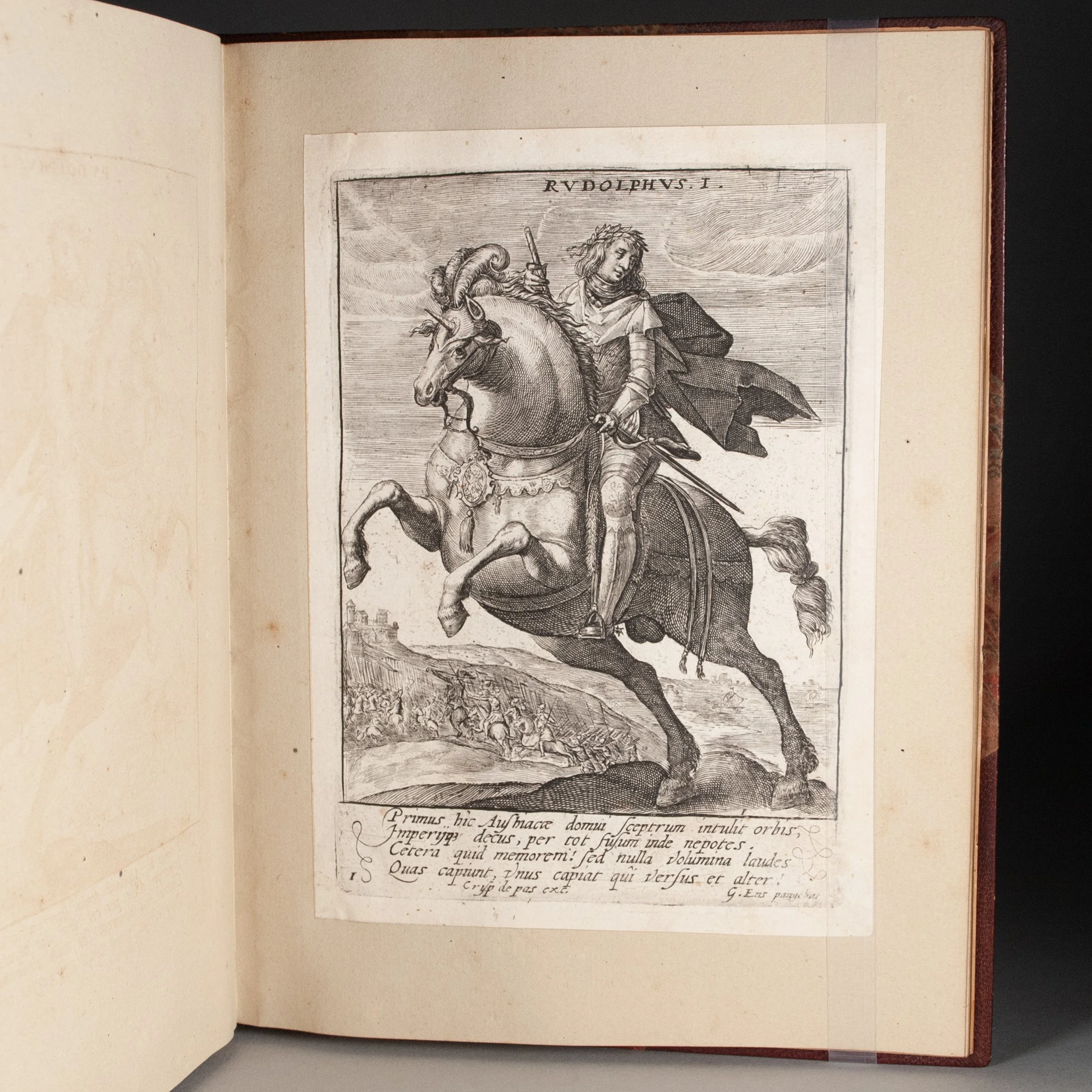 Image 5 of 17
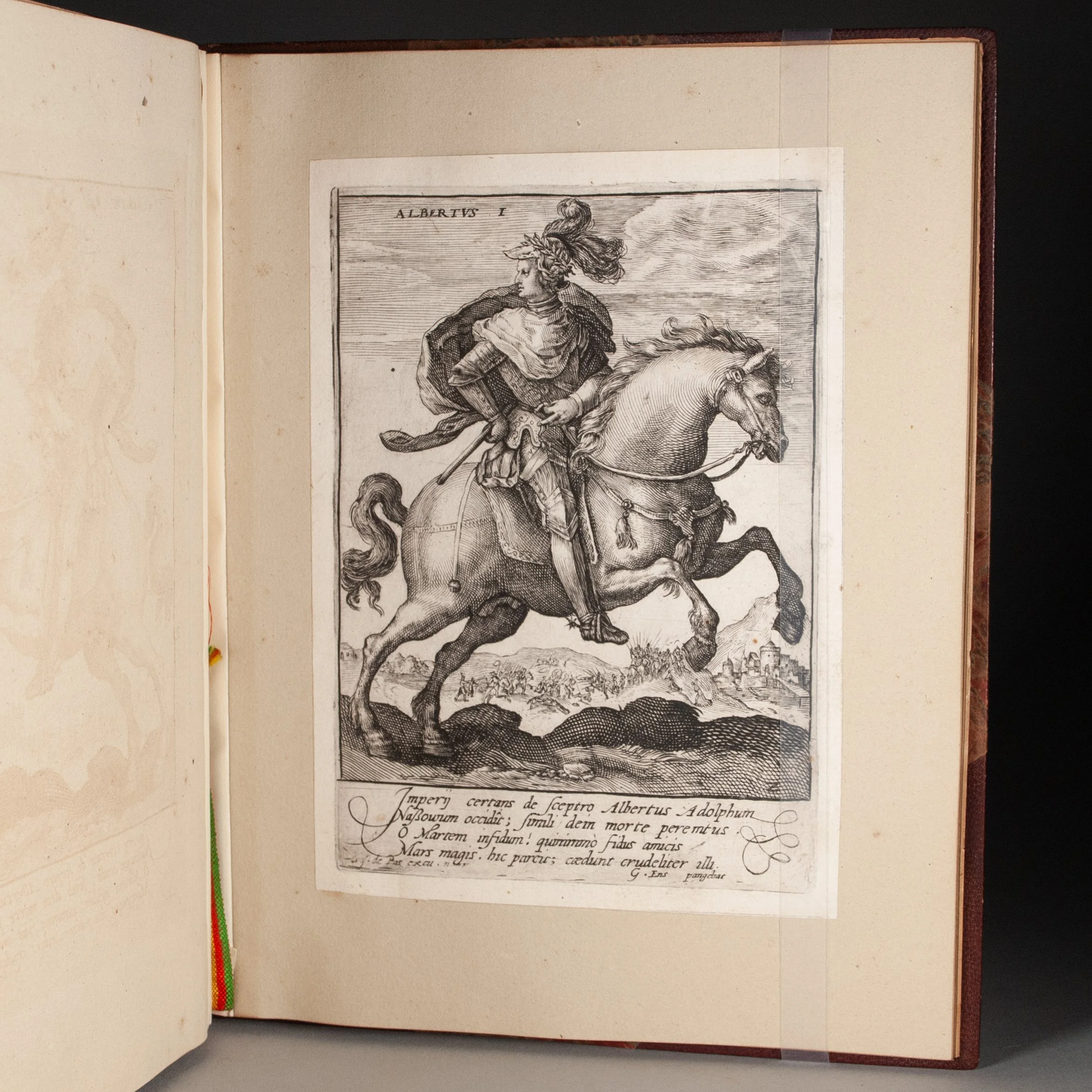 Image 6 of 17
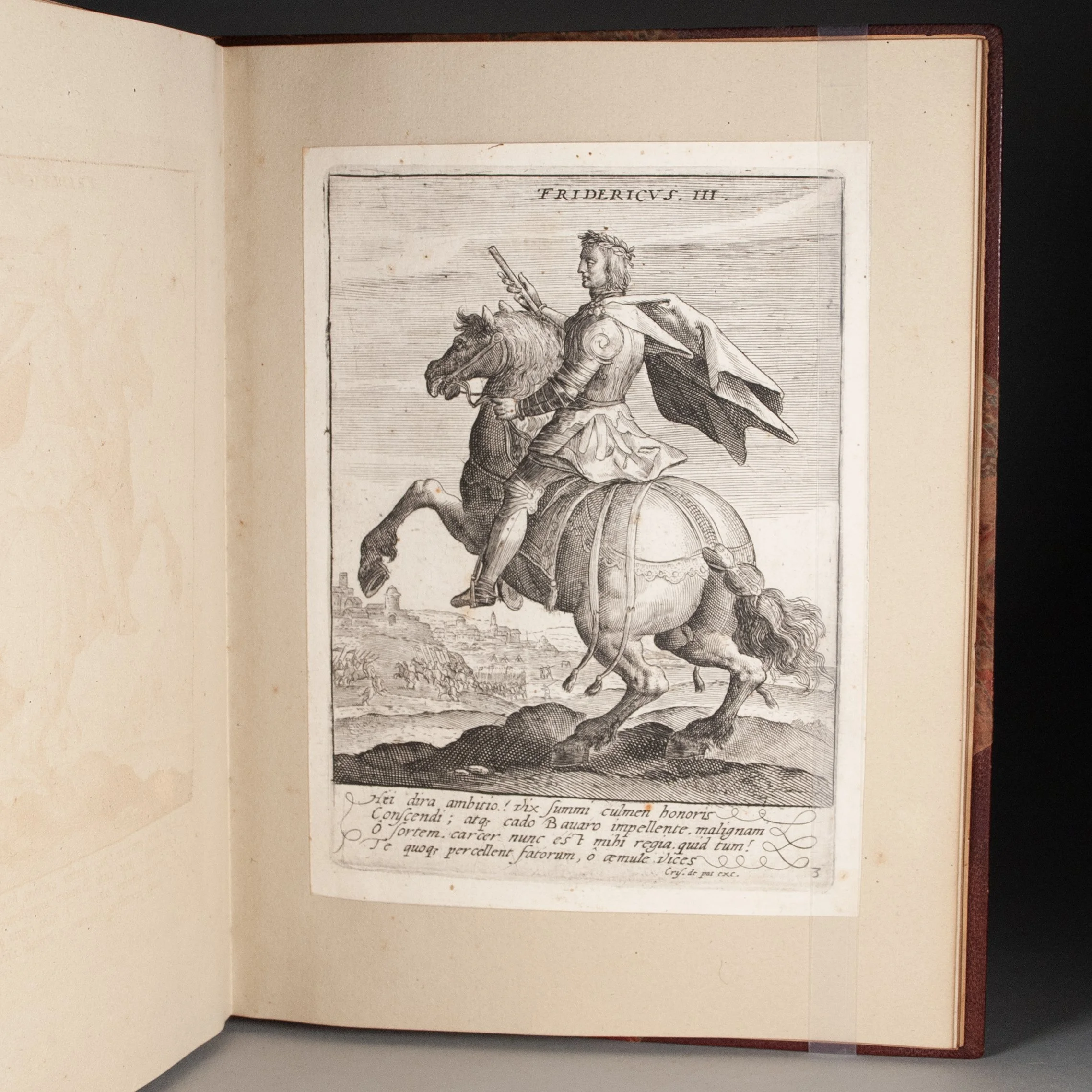 Image 7 of 17
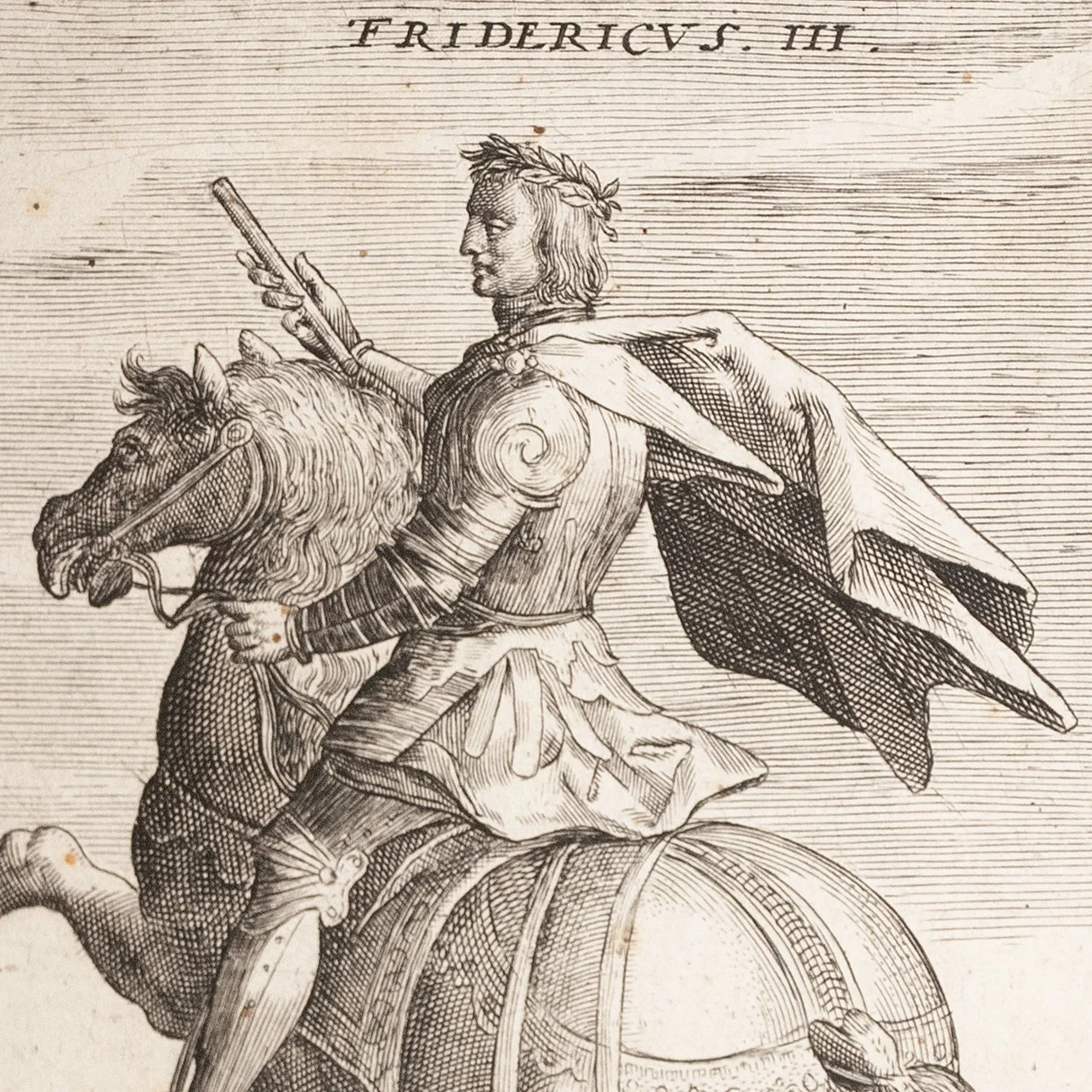 Image 8 of 17
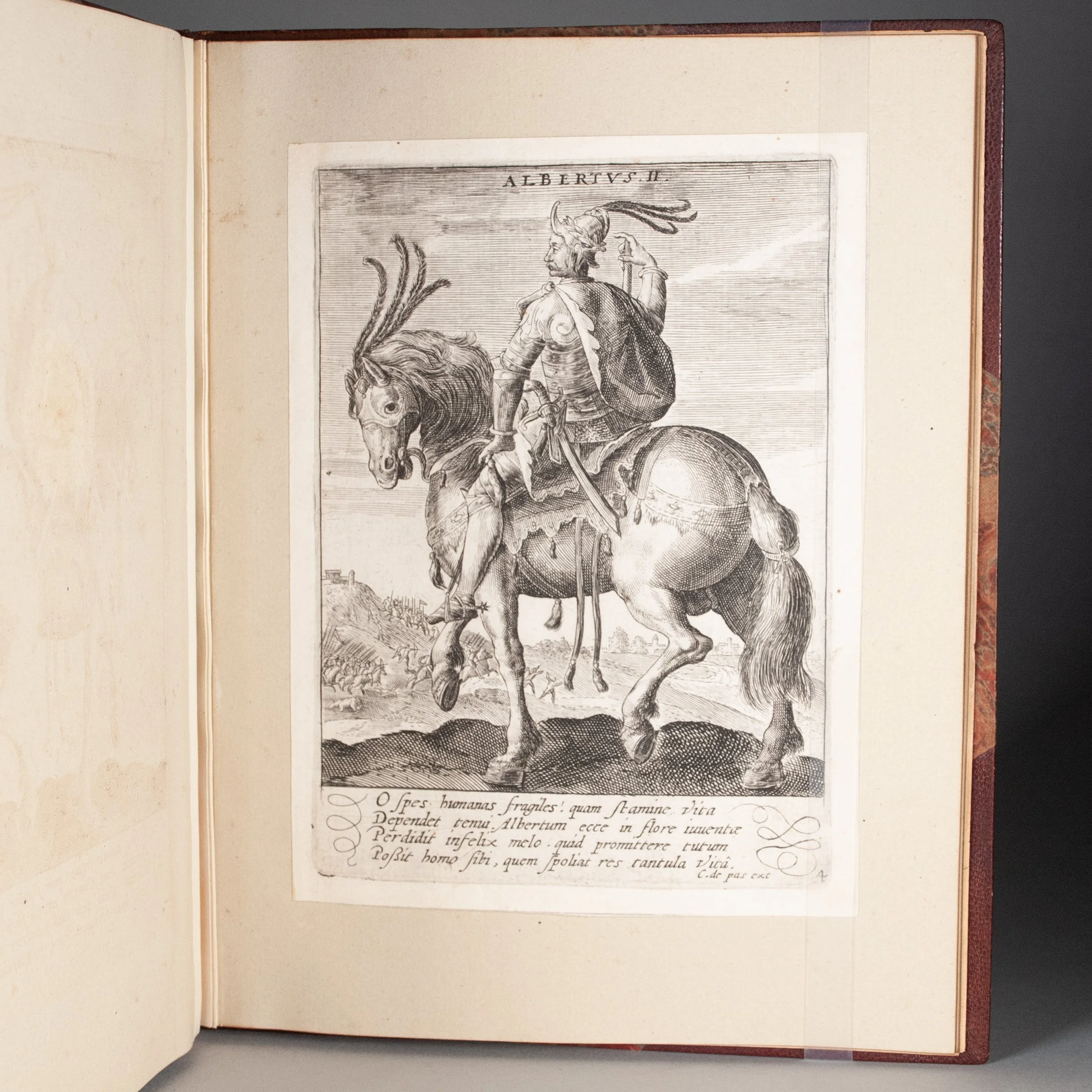 Image 9 of 17
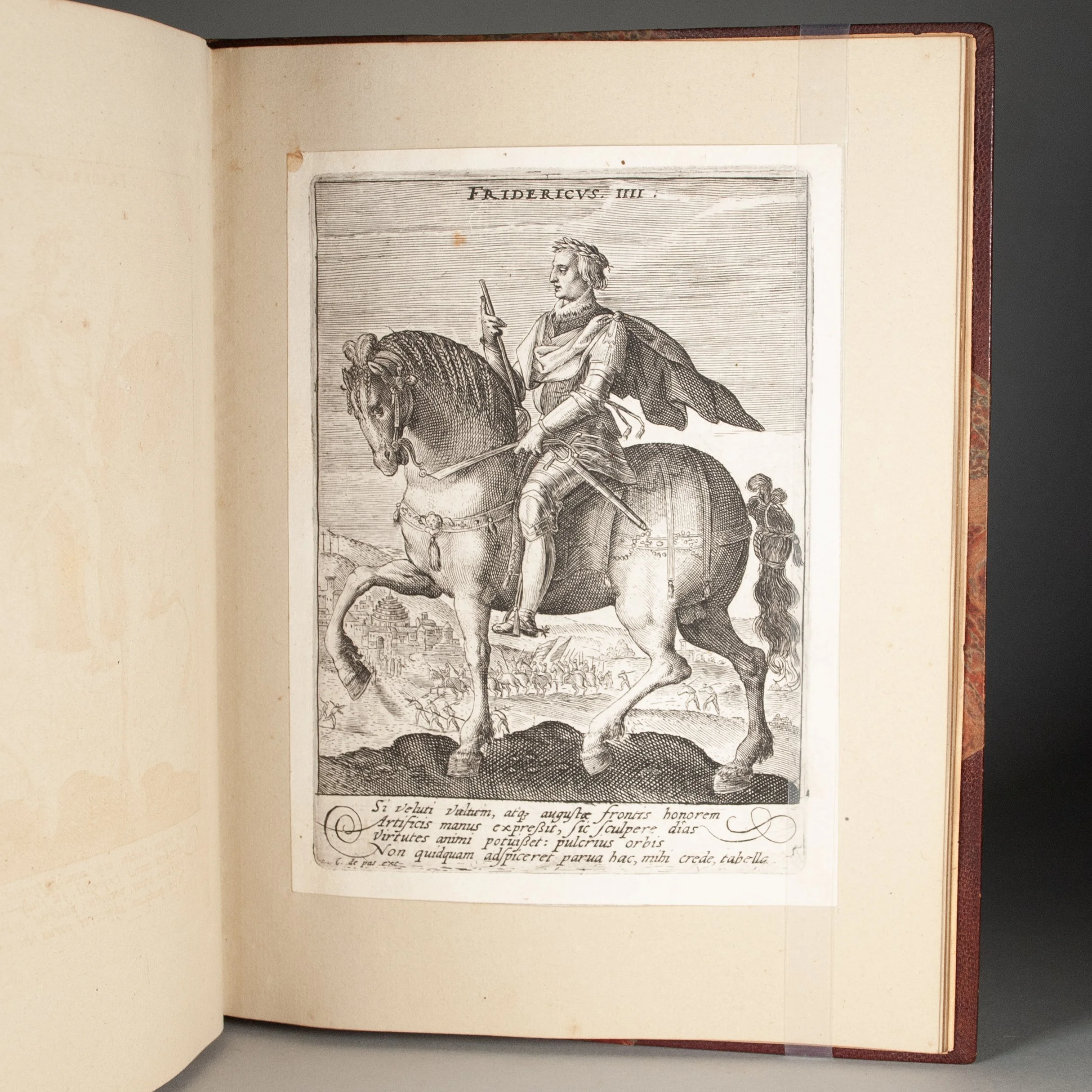 Image 10 of 17
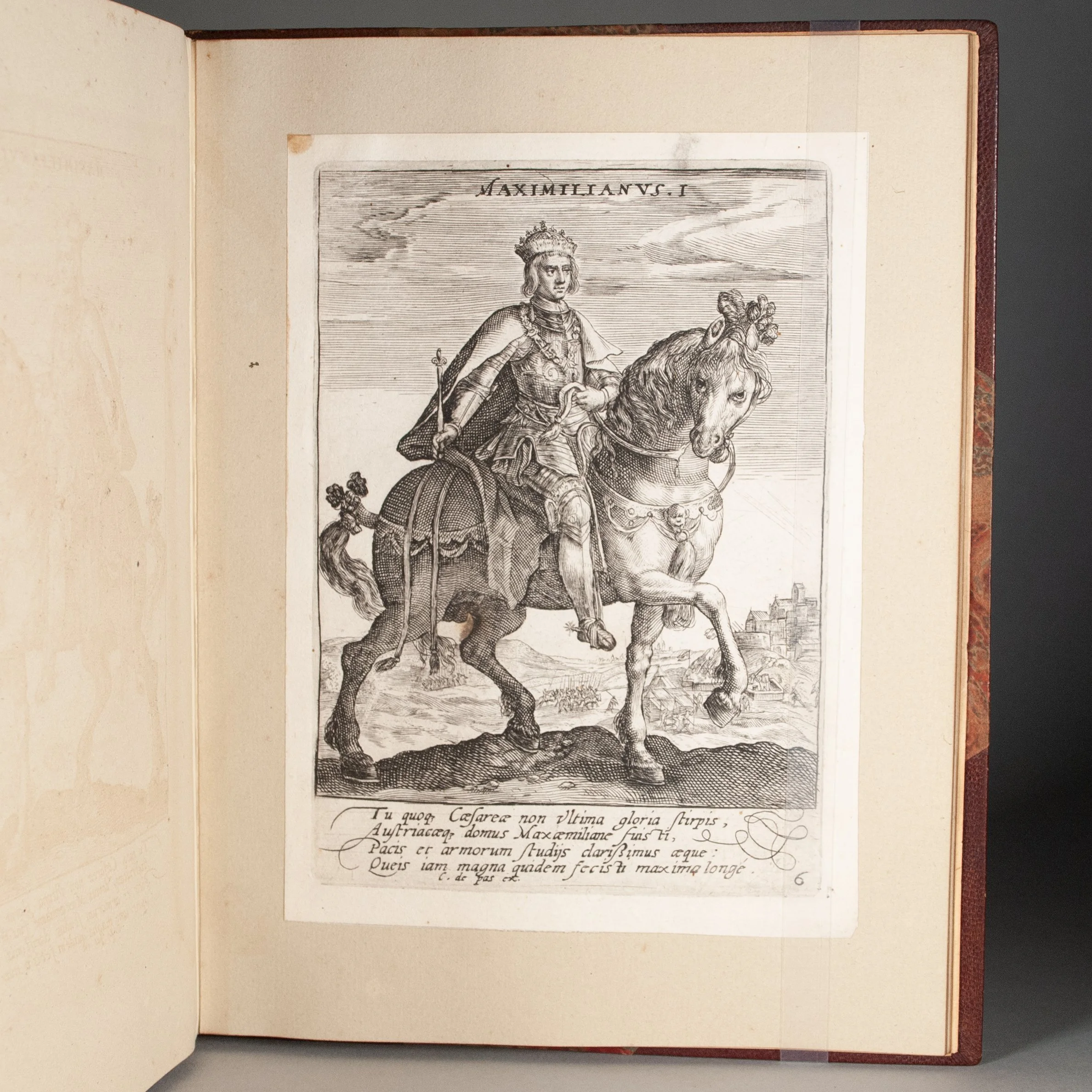 Image 11 of 17
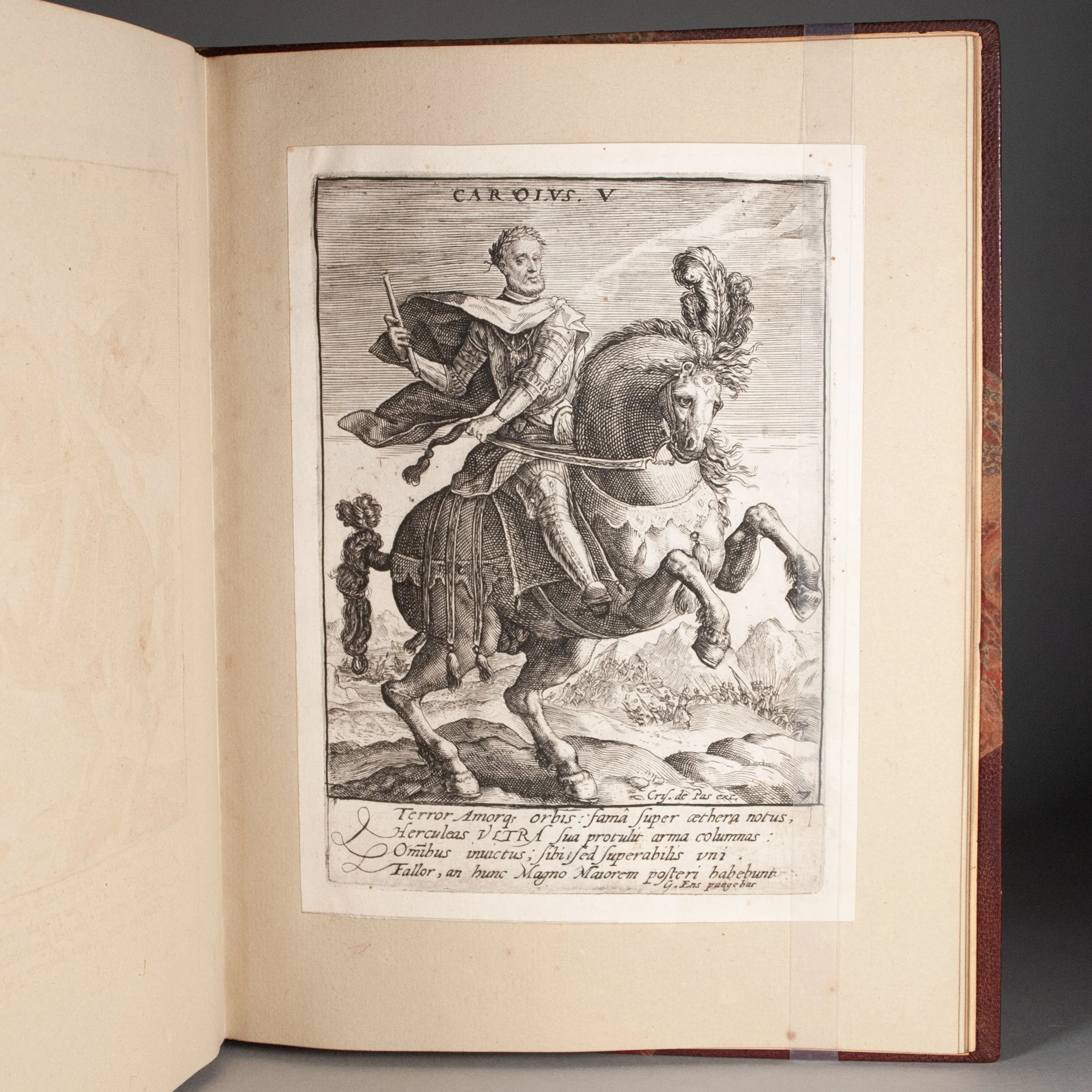 Image 12 of 17
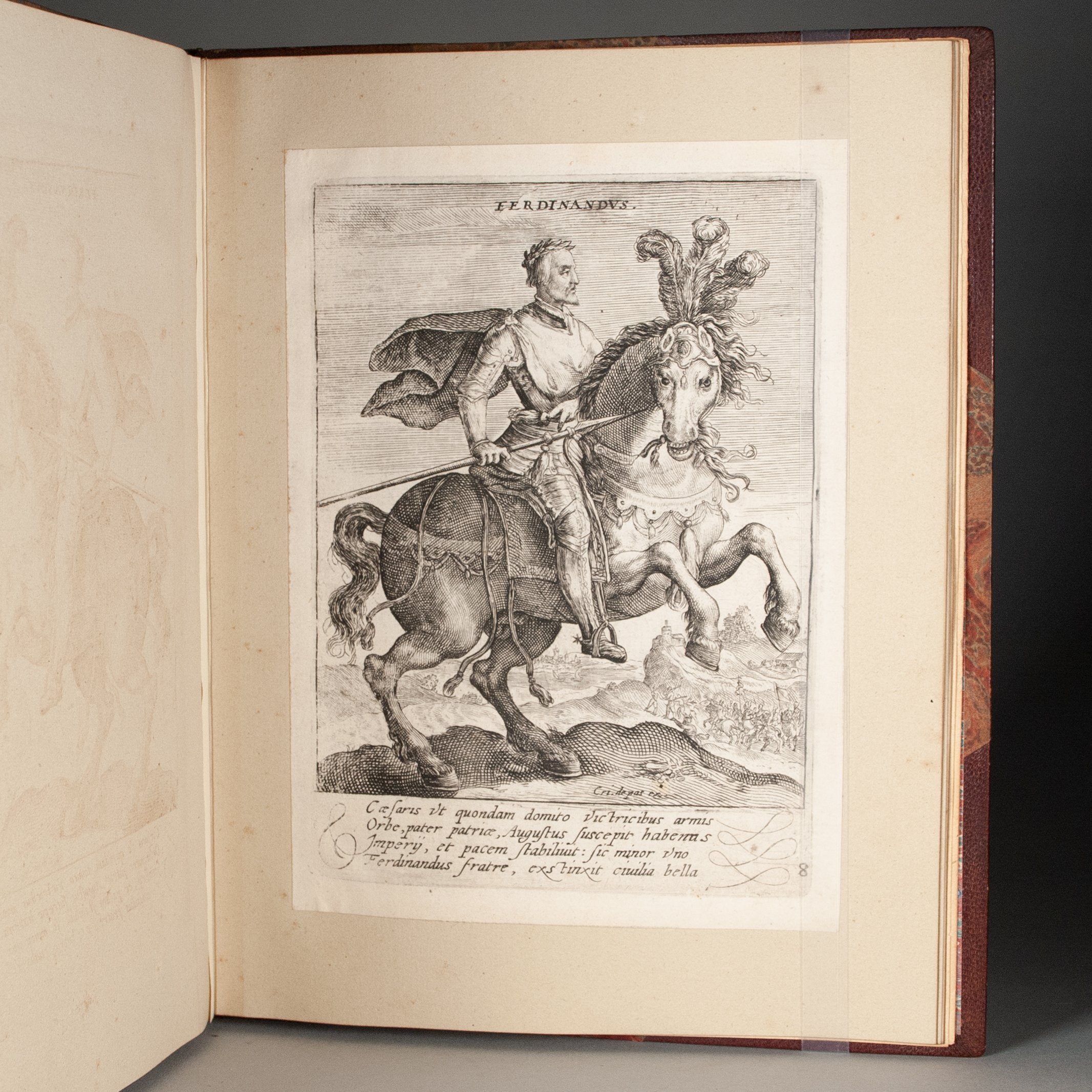 Image 13 of 17
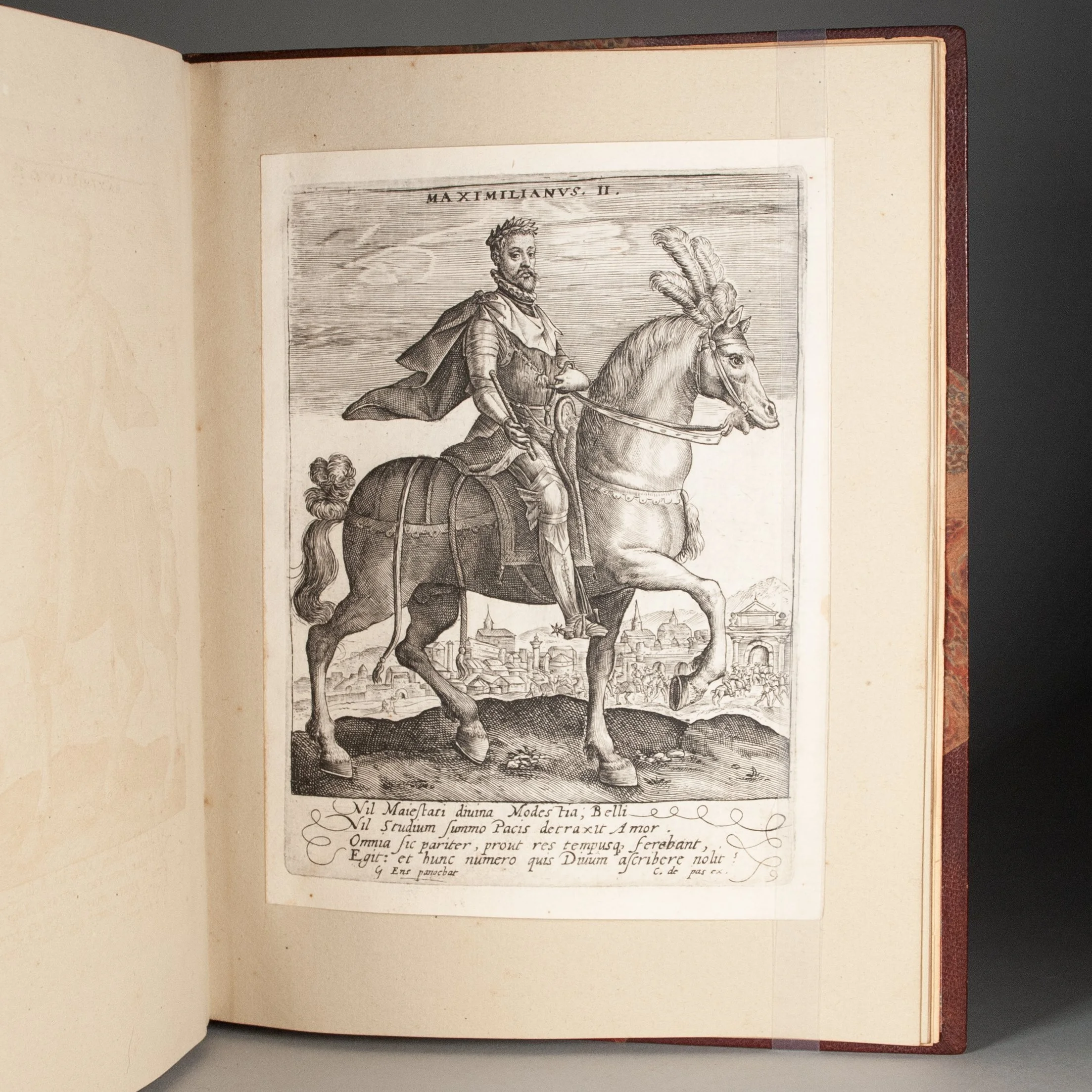 Image 14 of 17
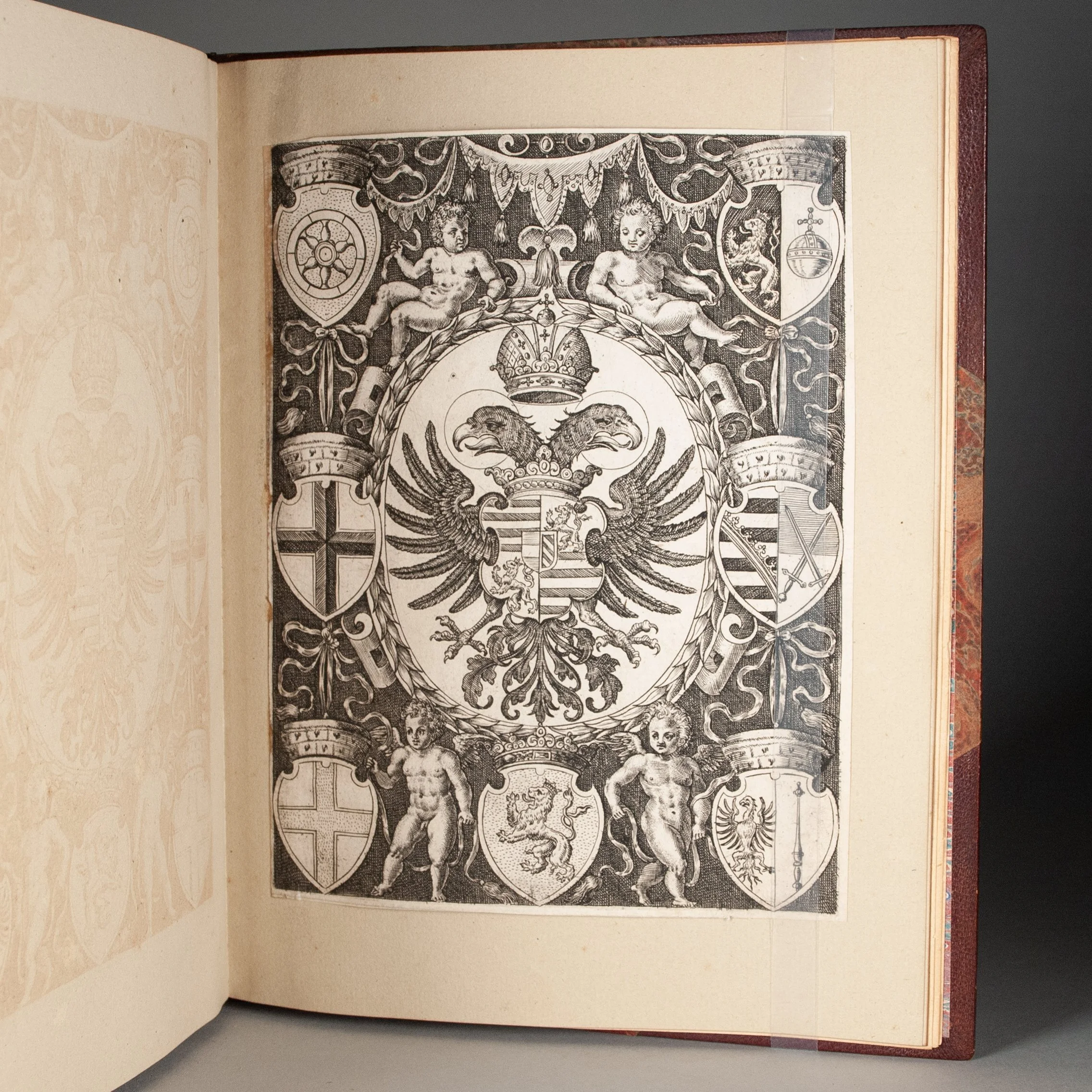 Image 15 of 17
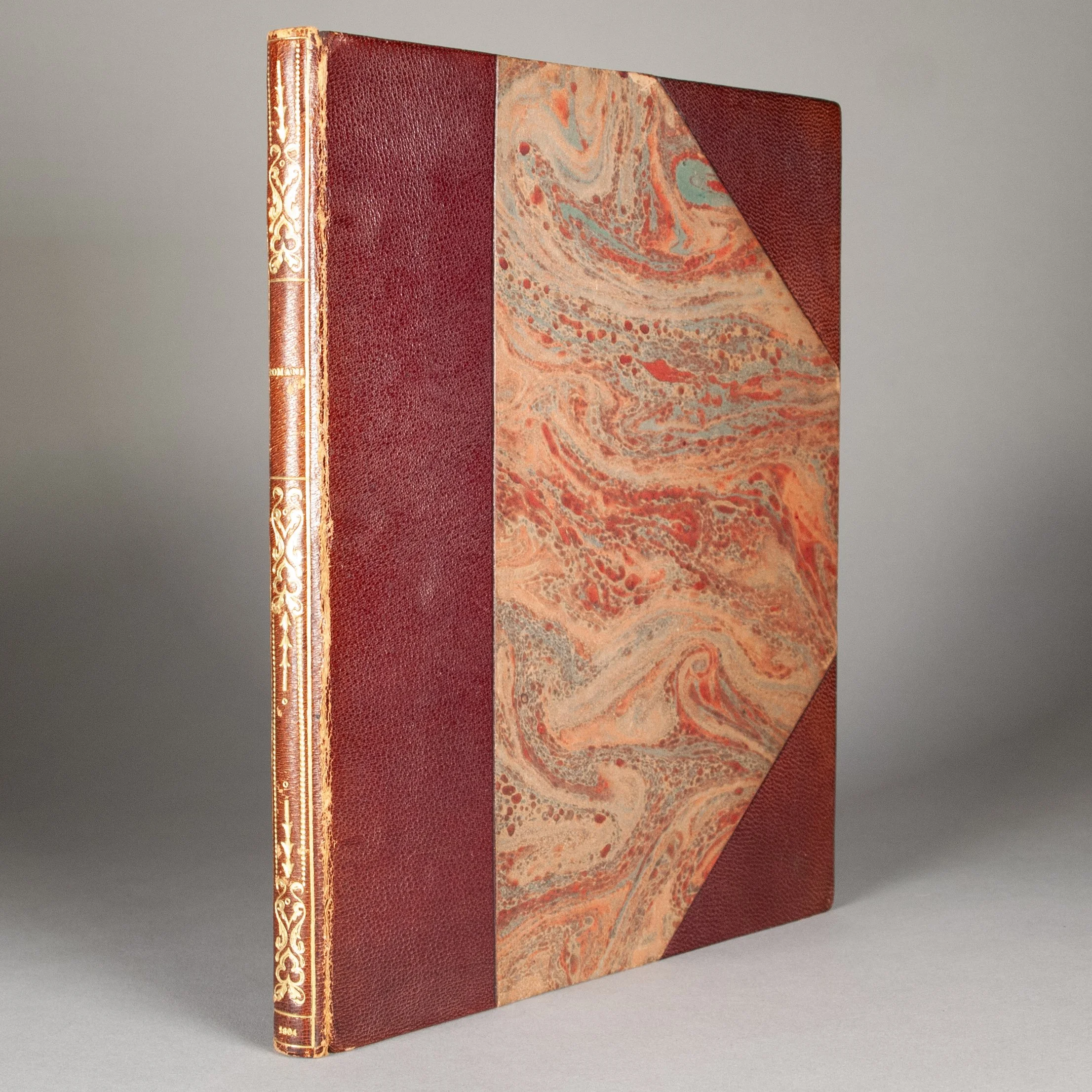 Image 16 of 17
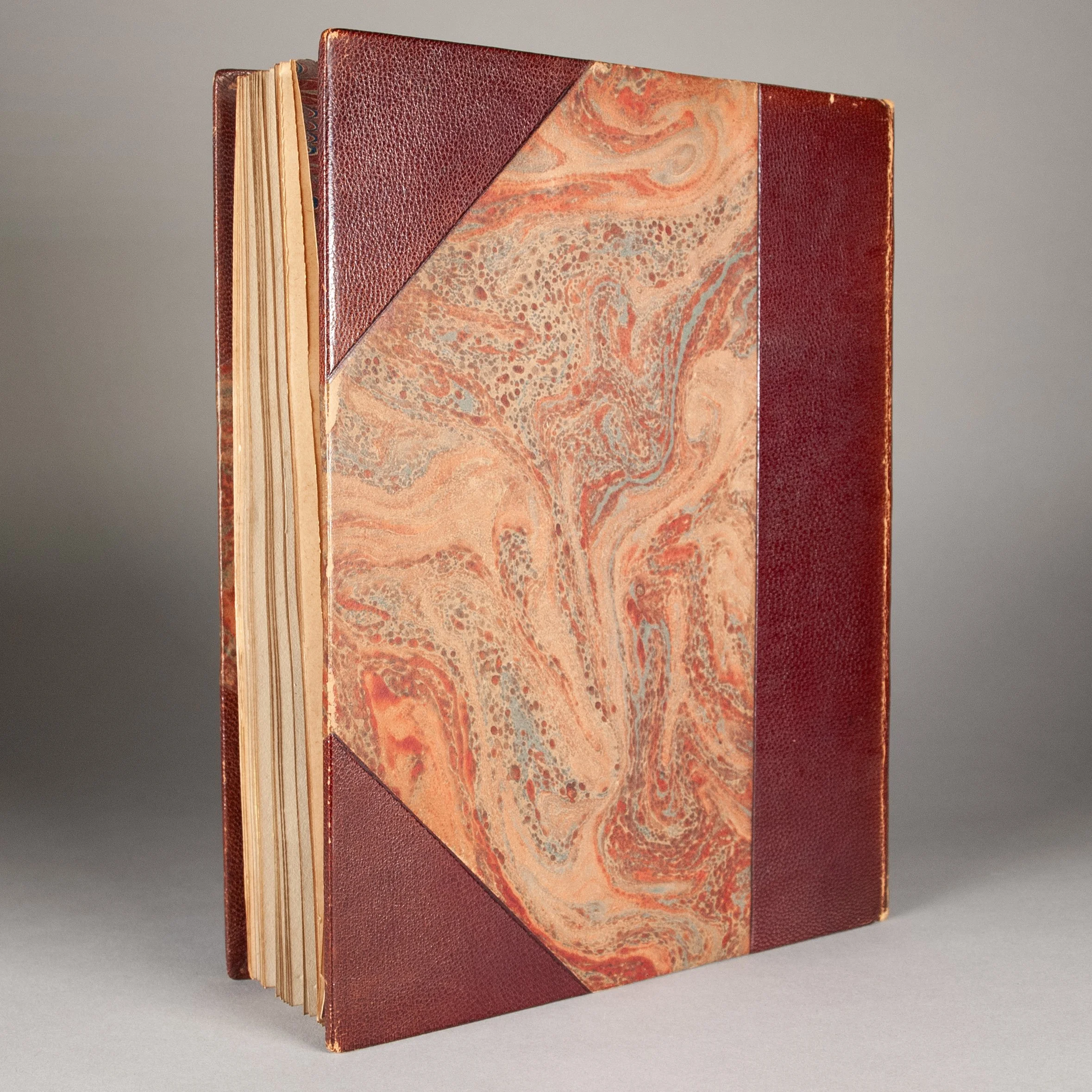 Image 17 of 17