Rare Ovid engravings
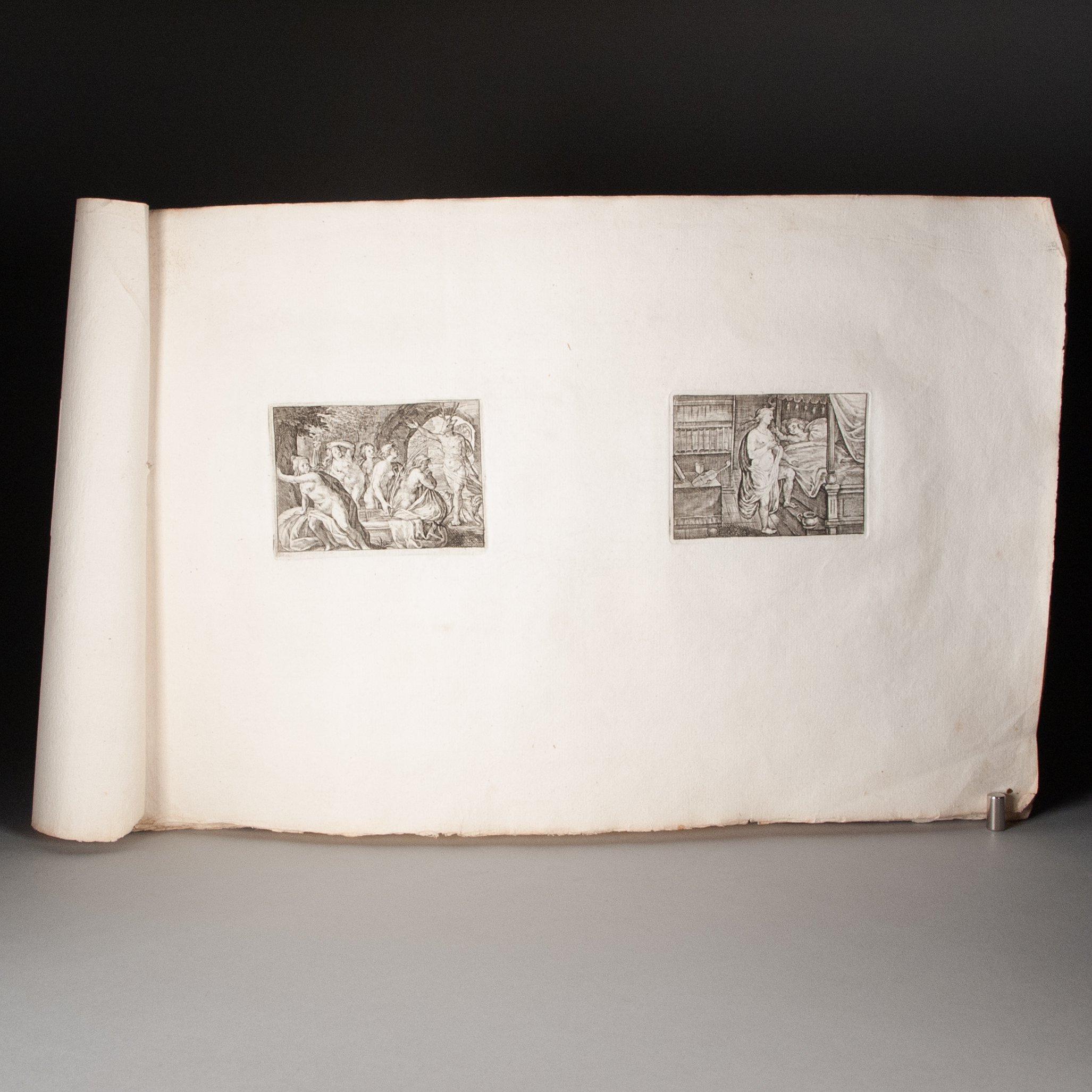
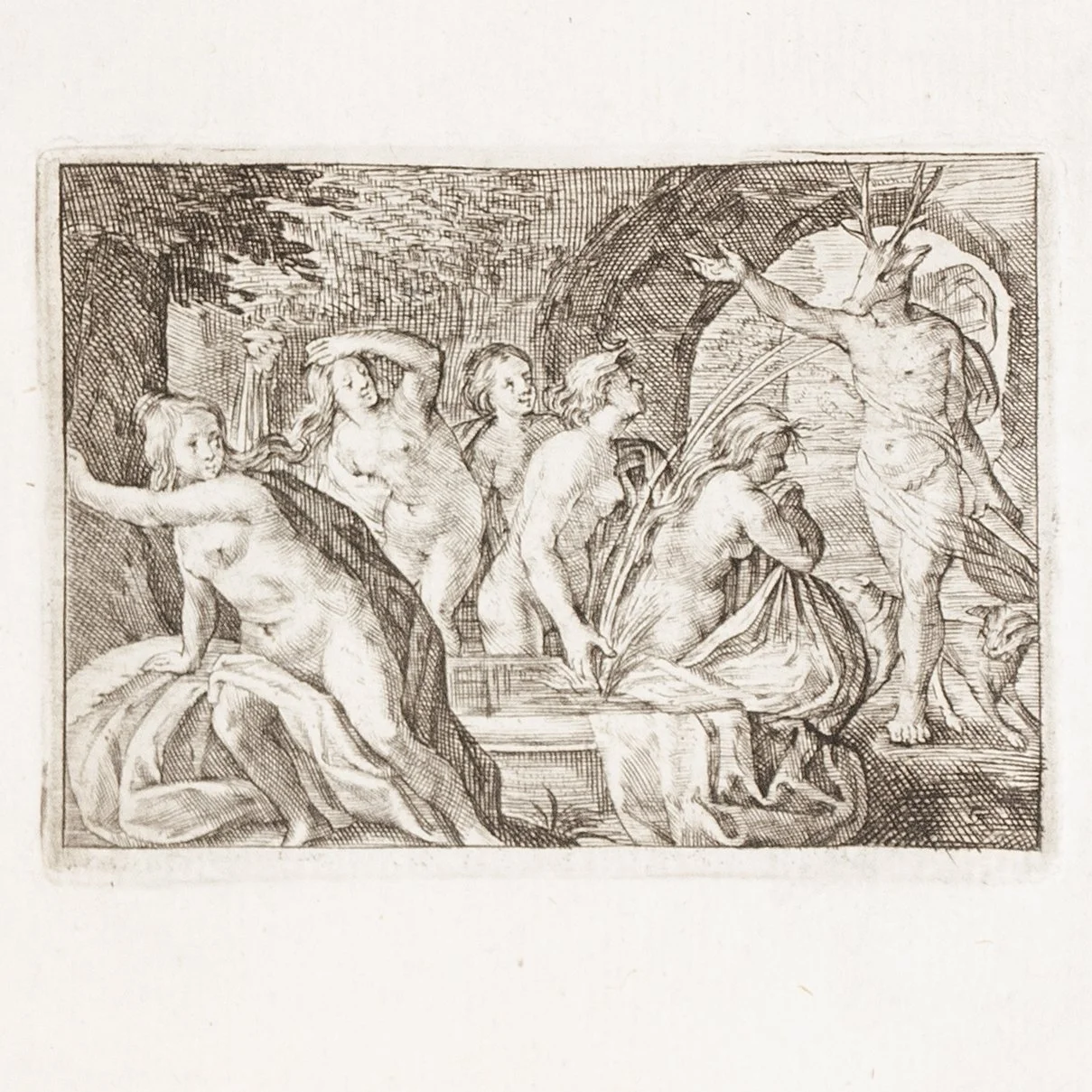
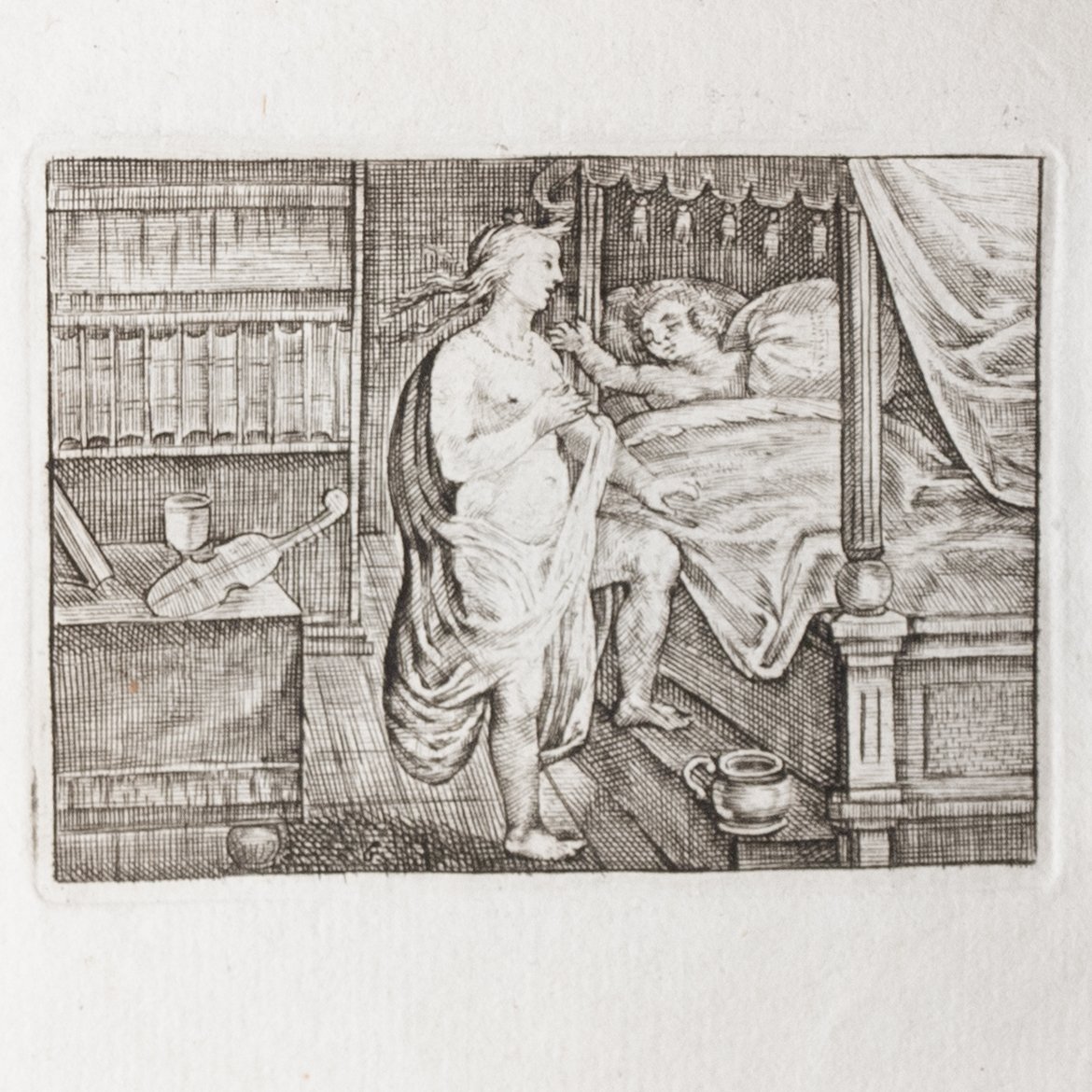
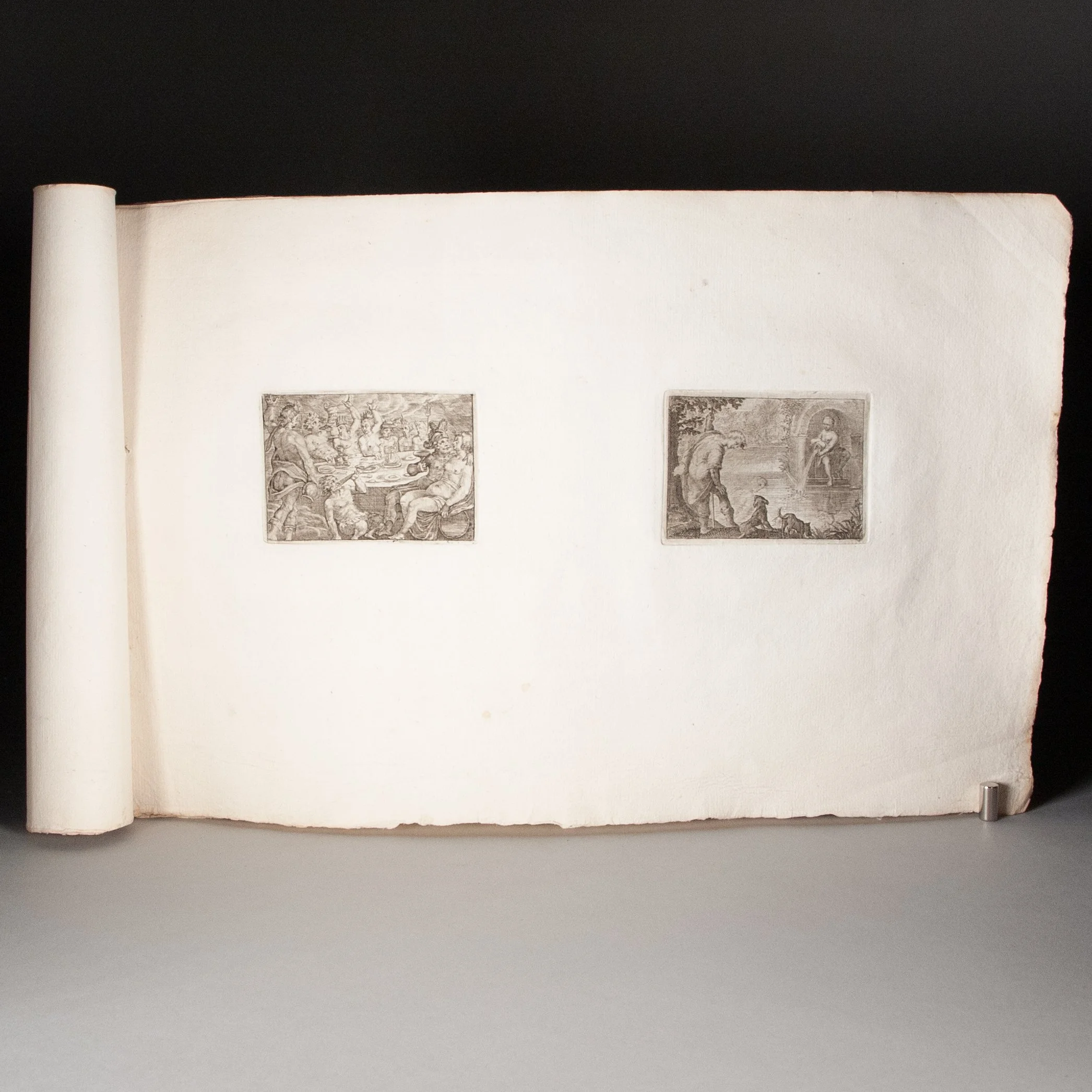
Rare Ovid engravings
[Engravings for Ovid]
by M.P.
[Low Countries? late 17th century?]
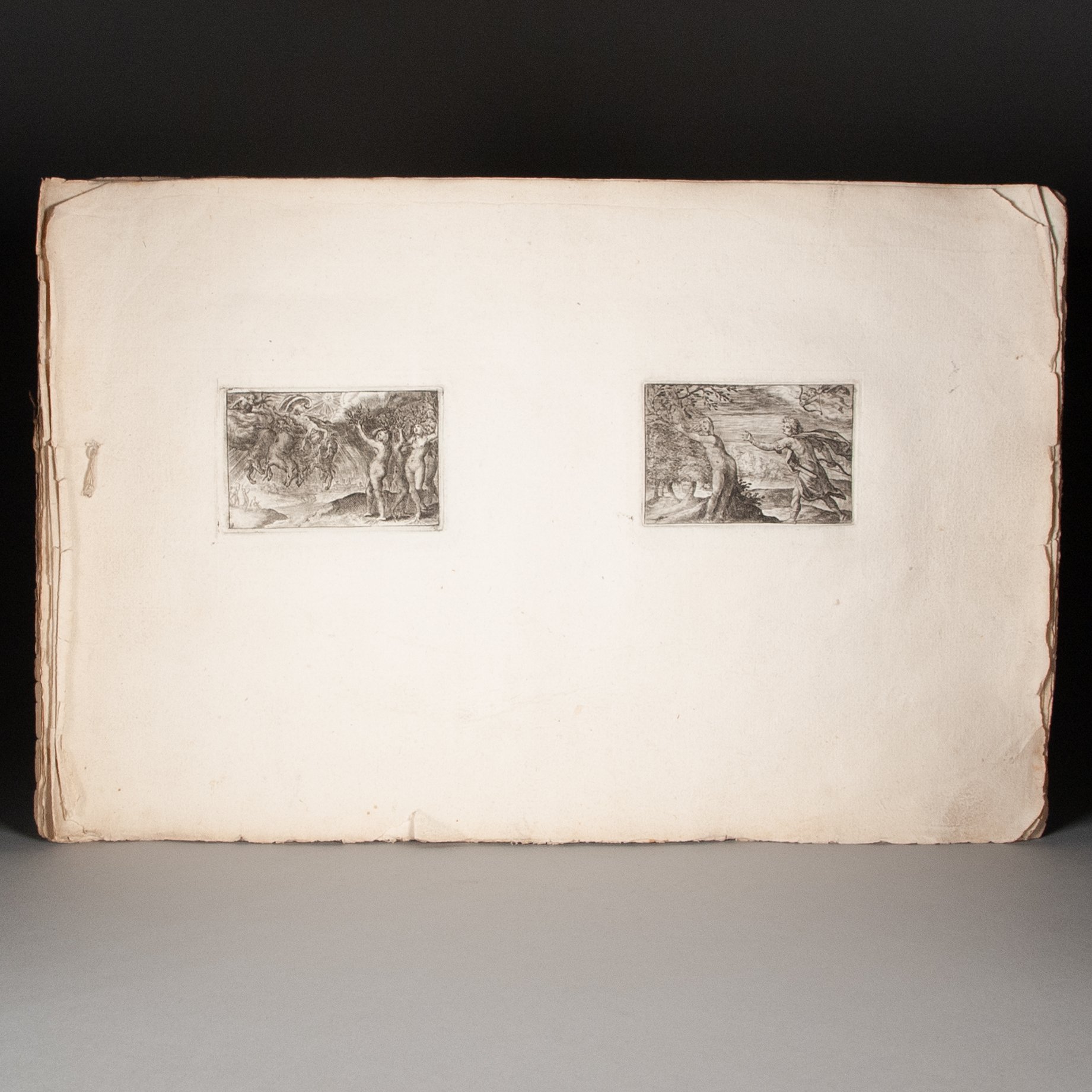
[17] of [18] leaves | Loosely bound suite of prints | 213 x 330 mm
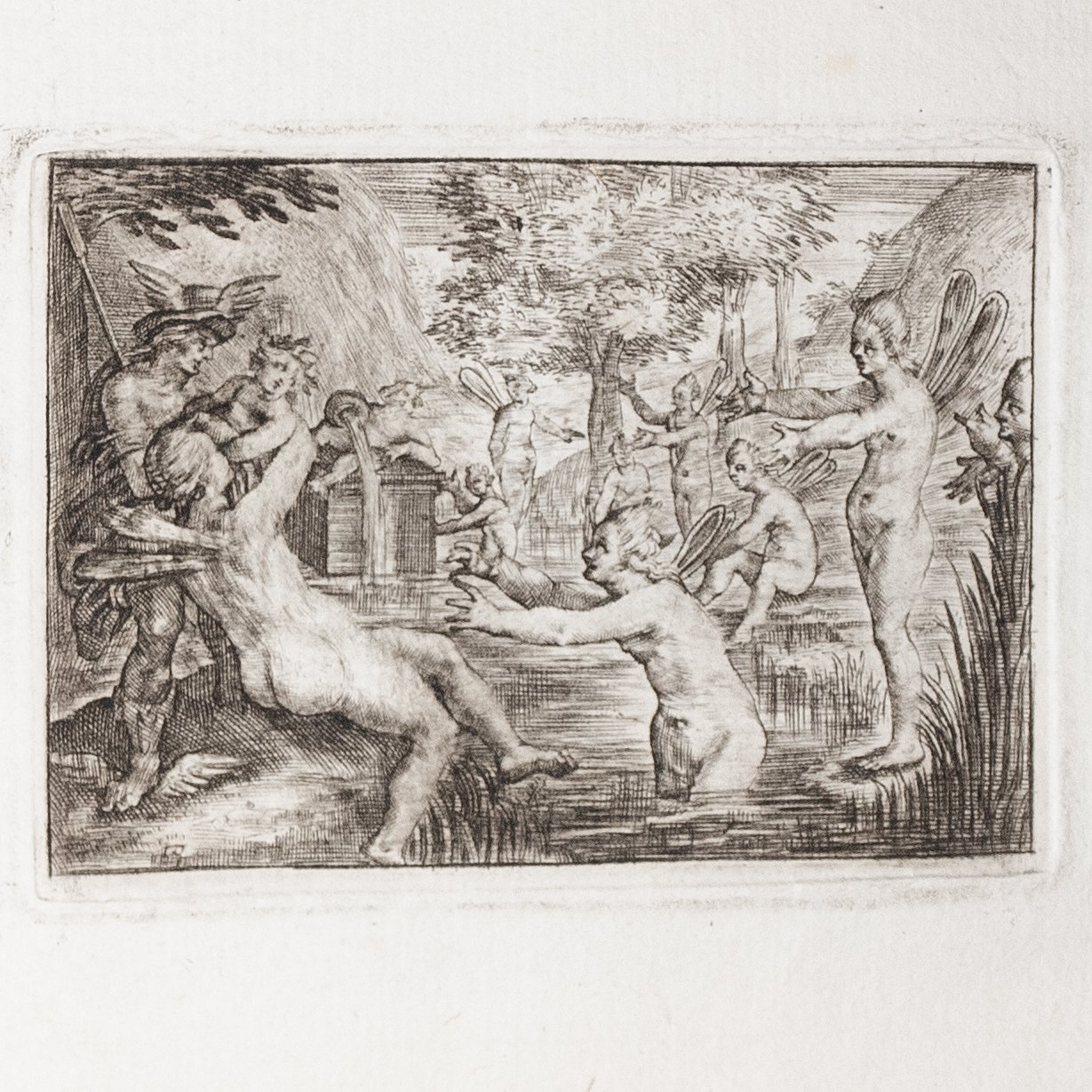
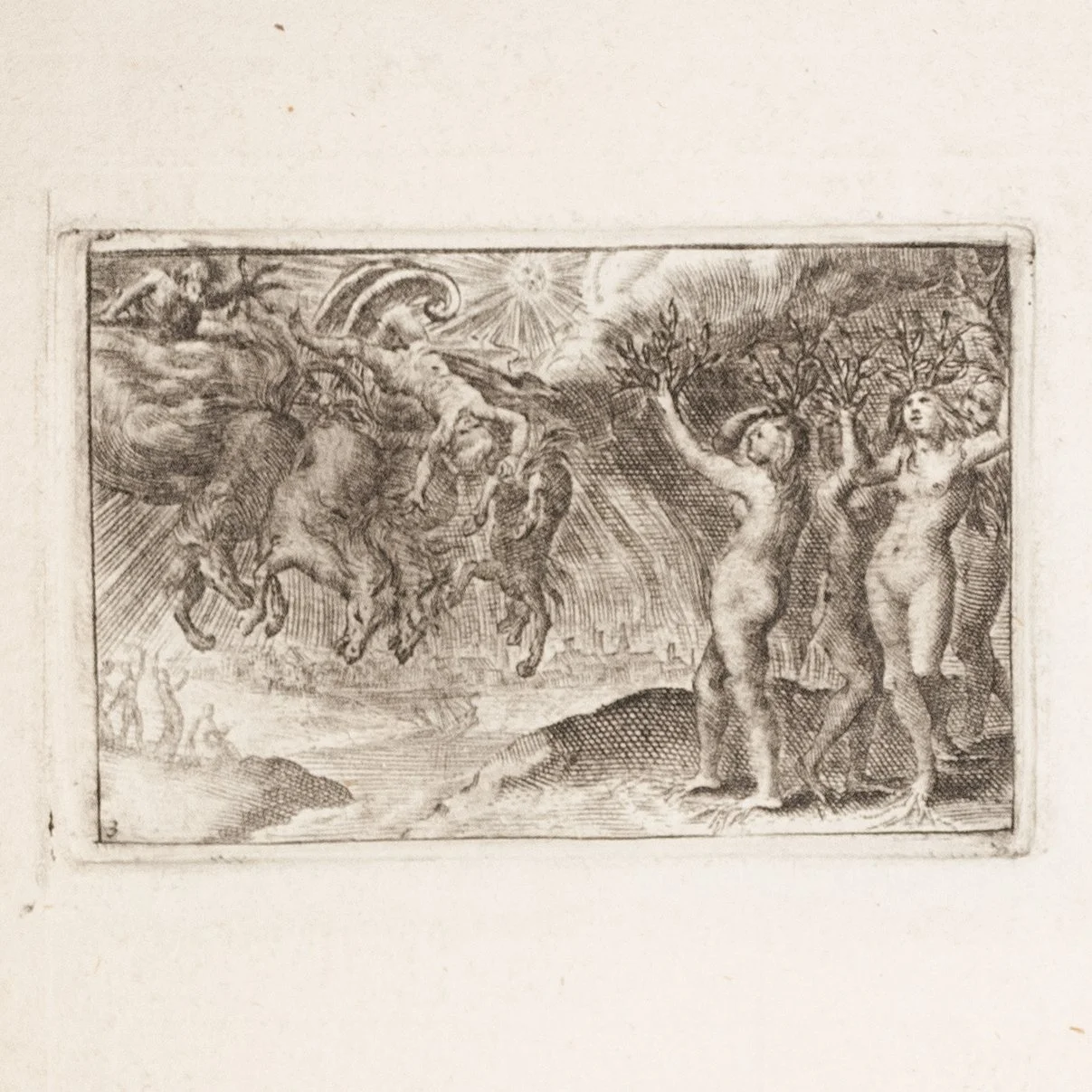
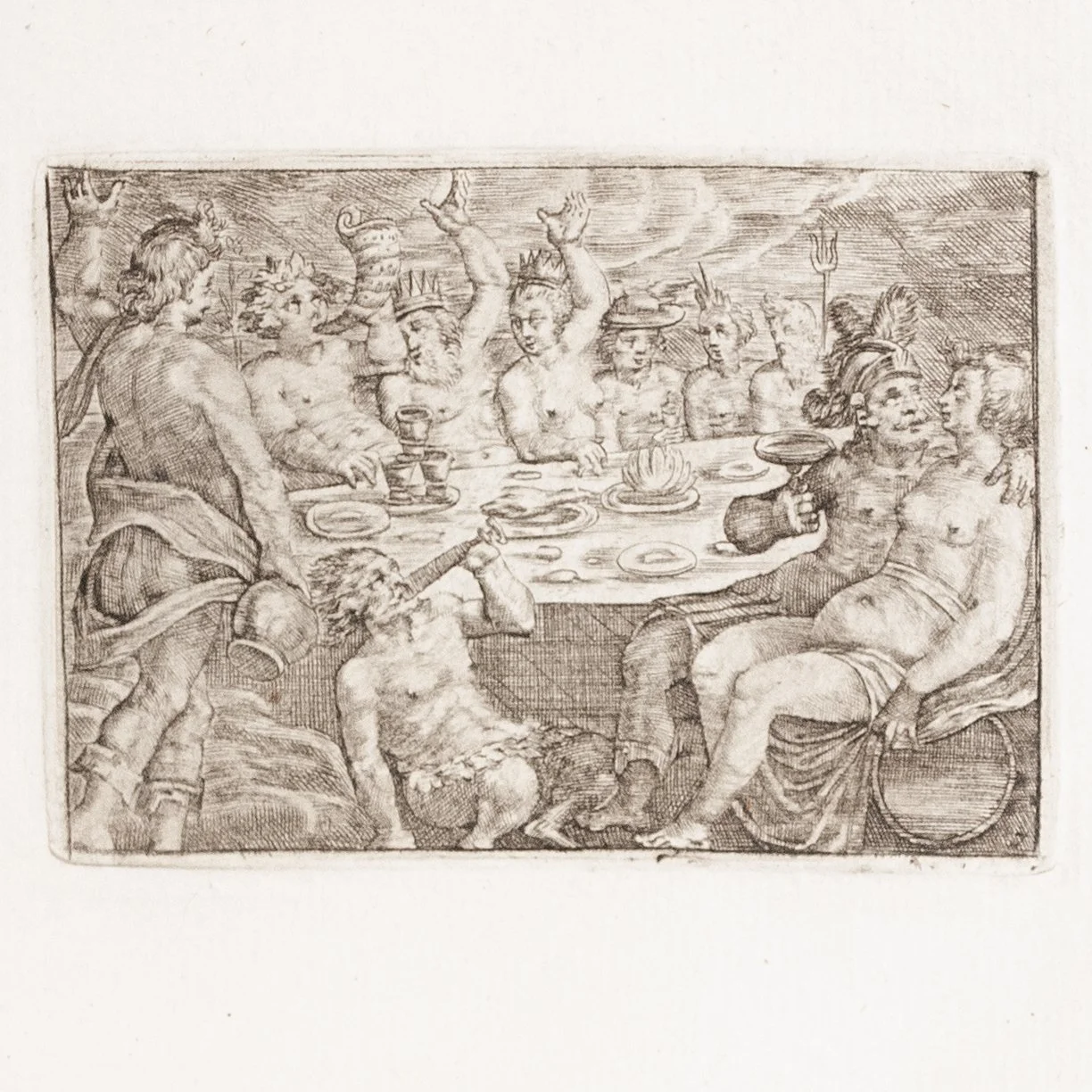
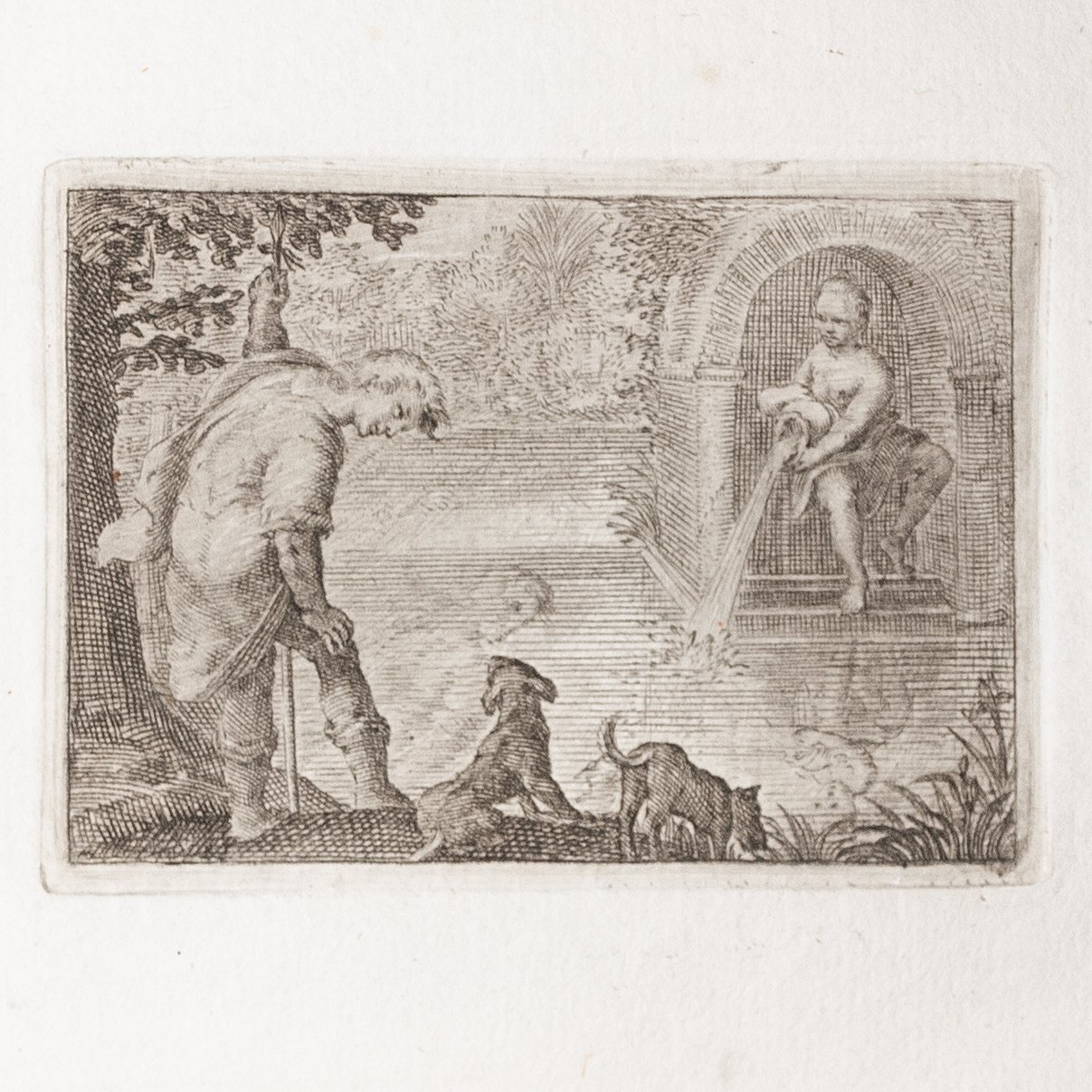
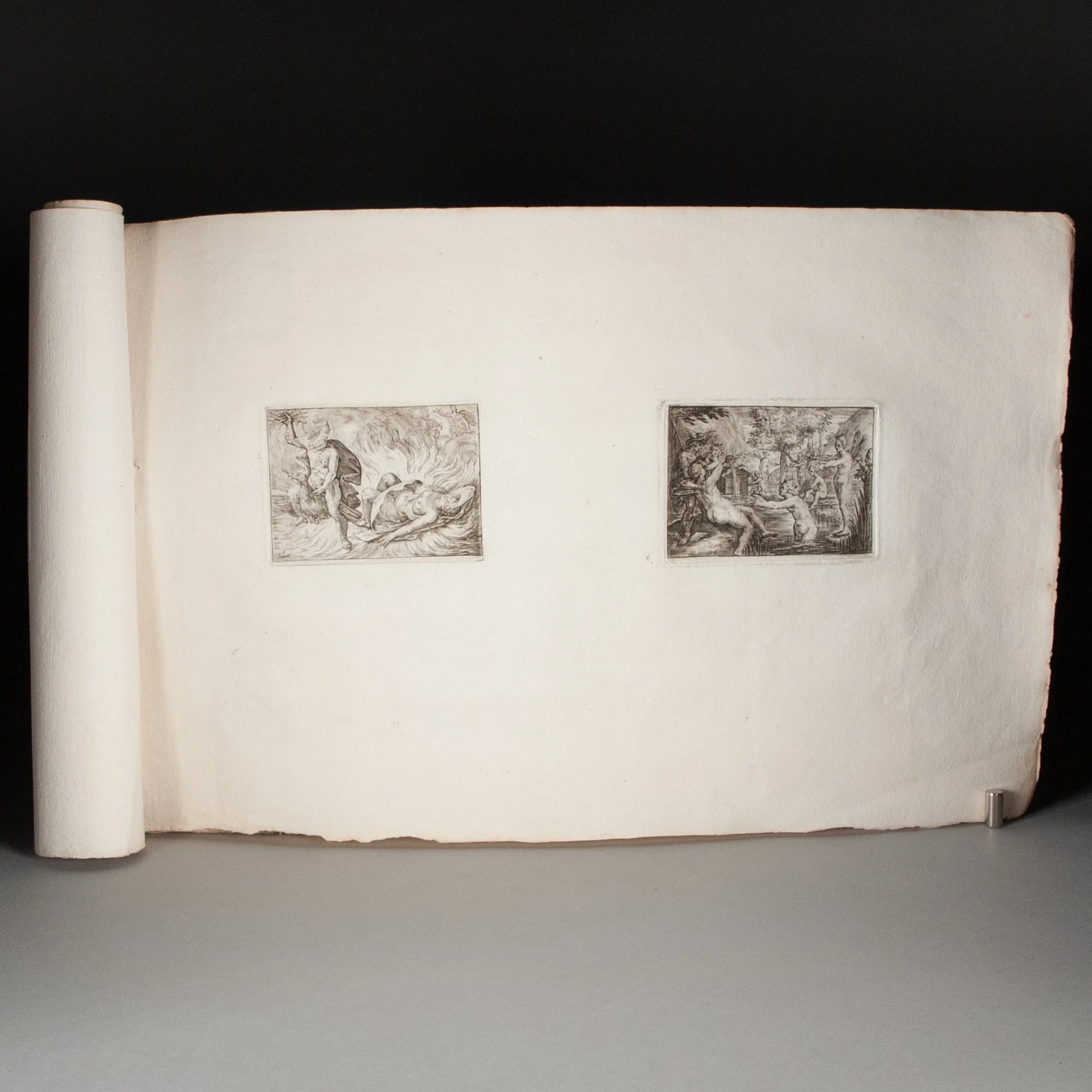
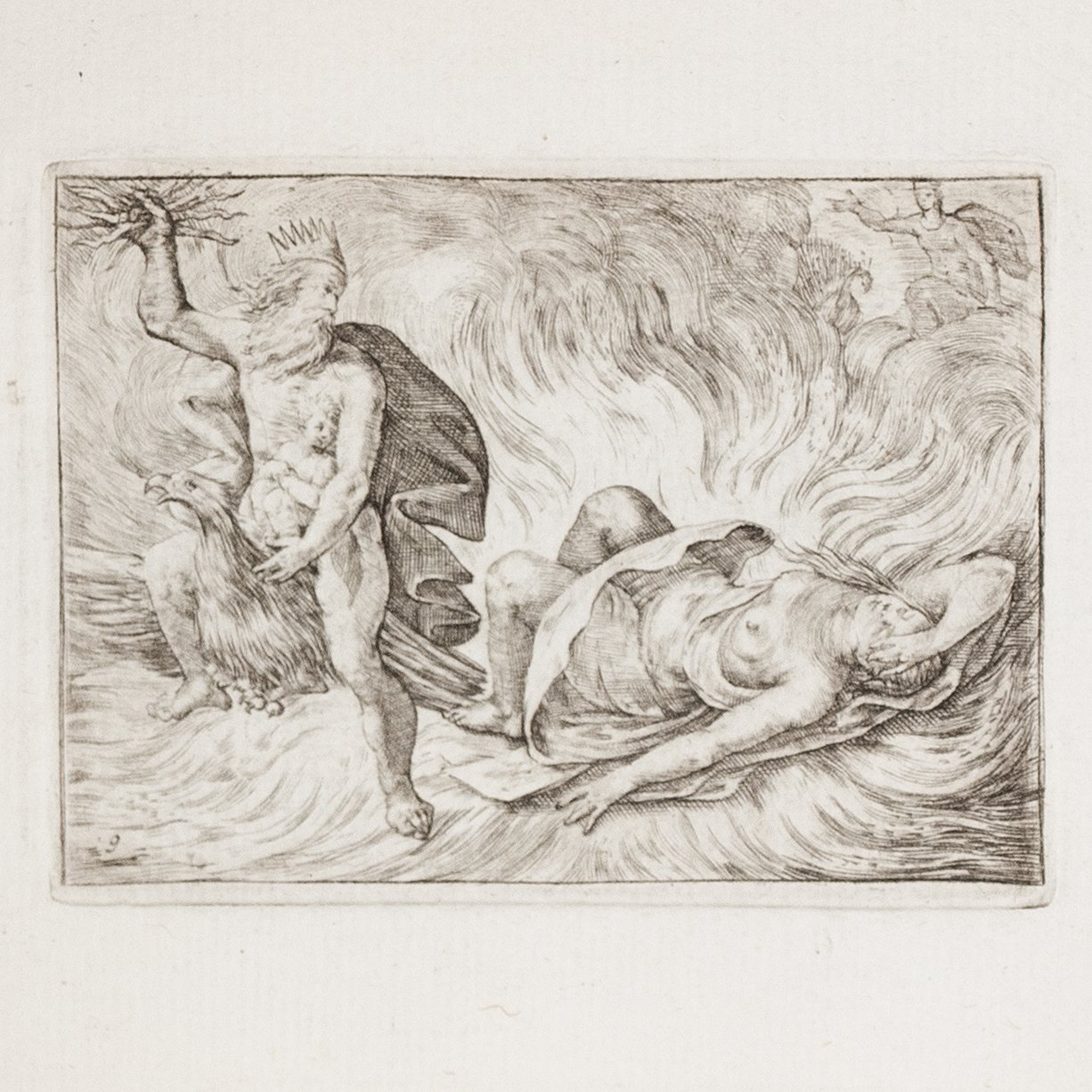
A rare suite of small mythological engravings, unpublished as best we can tell—at least not in any broader, titled context—two of them signed M.P. fe. Nagler, who describes our plate 16, says our MP was active around the end of the 16th century. He otherwise has little to say, except that he is not Martin Plegnick and his style follows that of the Wierix brothers. Regardless of how old the plates themselves were, the paper is roughly a century newer than Nagler's suggested period. It bears a standard Maid of Dort watermark with the equally common Pro Patria motto, here countermarked AC. The motif is associated with Dutch independence from Spain (achieved in 1648) and Churchill finds it used in the late 17th century and throughout the next. ¶ Many scenes have a bacchanalian flavor, others idyllic and romantic. Bacchus himself figures in many of these, there's likely a Narcissus admiring his own reflection, Neptune in his chariot drawn by hippocampi, Orpheus attacked by the Maenads, and perhaps Vertumnus disguised as a plant chasing Pomona. Given the breadth of mythological coverage, we rather suspect these were intended as an accompaniment to Ovid's Metamorphoses. The aforementioned mythological characters, at least, all make appearances in that classical compendium of ancient mythology. Our plate 11 could well have been based on David Vinckboons's Bacchus Captured by Sailors, issued by Blaeu in 1616; our plate 9 is quite similar to Pieter Serwouters's Birth of Bacchus from the same period; and others bear strong compositional similarities to engravings found in Daniel Hensius's Hymnus oft lof-sanck van Bacchus (1615/1616). Whatever their source, and wherever they might fall on the continuum of originality and reproduction, these little engravings are clearly part of a visual currency familiar at the time.
CONDITION: The images roughly 45 x 67 mm and printed two per sheet, with very wide margins. Loosely stab-stitched with old thread. In a custom clamshell box, whose spine label identifies these as 1625 work by Crispijn de Passe. We would love that to be true, but they are decidedly not his 1602 Ovid series, nor do they resemble them in more than a generic way. ¶ Lacking the first leaf, which would have borne plates 1 and 2. The leaves generally a bit tattered at the edges, the first and last couple of leaves especially, with a number of small closed tears (nowhere near the images); scattered light foxing and soiling; the first leaf a little dusty and dark, and the last leaf detached from the stitching, with corresponding loss at its inner margin.
REFERENCES: G.K. Nagler, Die Monogrammisten, v. 4, p. 650, #2052; W.A. Churchill, Watermarks in Paper (1967), #127-153
Item #964