[Calligraphy manuscript]
[Italy, 1610]
[25] leaves | Oblong 4to | 139 x 206 mm
An anonymously produced calligraphy manuscript demonstrating a fine Italian chancery hand, augmented with a set of 21 decorative capitals, five of them adorned with grotesqueries. D.C. Marcin, who wrote a thesis-length analysis of this particular manuscript—unpublished, as best we can tell, but accompanying this manuscript—heaps praise on the elegant Italian corsiva graziosa displayed here. More than a model for professional handwriting, the ten inscriptions provide templates for "the three most common categories of such personal correspondence of a public figure: the message of congratulation, the expression of the sentiment of sorrow, the phraseology of statecraft—happy, sad and official communication" (Marcin 5). ¶ Marcin explains that a teacher would have used an exemplar like this in lieu of the published writing manuals that had begun to flourish. "Toward the end of the 15th century the demand for clerks who could write the required script resulted in the coming into existence of a new order of writing masters who specialized in teaching mainly the current cursive chancery hand to literate young men wishing to advance in public life. To explain how each letter was formed and joined to others into words, and how the text was arranged on the page, these teachers used exemplars they had written themselves" (3). To be sure, a tiny early inscription in the upper right of one leaf calls the text corsiva ordinaria, labeling it as an example of ordinary cursive, suggesting these leaves did indeed serve as handwriting models. We wonder if the manuscript might just as well be the work of a student, the product of someone practicing from the kind of teacher's exemplar Marcin suggests. ¶ Instead of a teacher, Marcin claims the manuscript was made specifically for Belisario Vinta, a high-ranking diplomat for the Grand Duchy of Tuscany. Vinta is probably best remembered today as a correspondent of Galileo, having suggested to him the names for Jupiter's moons. Marcin's proposed provenance could of course be possible, but we lack proof. One of the model inscriptions is indeed addressed to Vinta, but other models are addressed to Antonio Falconcino, Milan; Marcello Prati, Parma, presumably the same we find attested in Parma at least 1611-1626; Ottaviano Incontri, Volterra; and Bernardo Cromerio, Parma. In the face of this, the evidence Marcin adduces seems rather weak. He notes that Vinta's address is the only one lacking a place name, for example, and that the Vinta leaf appeared first when he encountered the manuscript (Heritage described the manuscript as a single stitched gathering in 2007). Where Marcin underscores less polished elements of the manuscript—the inconsistently decorated grotesque capitals, for example, and truncated model inscriptions—he suggests that Vinta and the author must have had exceptional personal rapport, not that the manuscript might not have been produced as an aristocratic commission. Corrections to Marcin's typescript read as if someone is encouraging him to dial back the certainty of his Vinta provenance. ¶ We take our date from Marcin, which fortunately rests on firmer grounds. He thanks in his Acknowledgements Dr. Giuseppe Pansini, late director of the Archivio di stato di Firenze, for dating the manuscript between 5 January and 1 December 1610 (based on the title here used for Vinta; see Marcin 53 for a fuller explanation). The watermark, a swan surmounted with a P, is strikingly similar to Heawood 179 and 182, which Heawood finds in use in 1628 and 1648 (without place specified). Bofarull y Sans finds a pair of similar watermarks, also 17th-century, also without place. ¶ Printed writing manuals have a relatively low survival rate to begin with, and we expect their handwritten counterparts are scarcer still. Whatever the circumstances of its production, it's a wonderful collection of calligraphy samples.
PROVENANCE: Marcin notes that P. William Filby examined the manuscript in Baltimore in 1965 (31), and Marcin completed his own analysis in November 1987, so the manuscript appears to have been in the US for quite some time. It sold at Heritage Auctions in 2007, perhaps to Second Story Books, from whom our source, a fellow ABAA bookseller, later acquired it. ¶ Marcin's accompanying treatise is on its own a fascinating artifact: partially typed, partially assembled from pieces cut from a professionally printed text, with further corrections throughout, some made by hand, others by typed slips. Marcin provides much useful background on the development of Italian writing hands, and takes a deep dive into the particular letterforms of corsiva graziosa, always citing the present manuscript as examples whenever possible. To be honest, we find Marcin's cut-and-paste document no less compelling than its subject.
CONDITION: An unbound collection of 25 leaves (12 bifolia and one singleton), 10 of these blank, the remainder with writing on the rectos only, all on laid paper watermarked with a swan. Two additional scraps, demonstrating a more everyday hand and clipped from larger specimens, have been tipped to two blank leaves. We maintain the order in which we received the item, but Marcin (2) indicates the order when he examined it: all bifolia nested as a single quire, with the inscriptions at front, followed by the decoratively lettered alphabet, and trailed by the 10 blank leaves. In a very nice custom clamshell box. ¶ Some faint dampstaining in the lower margin, and scattered moderate soiling; the singleton wormed and a bit chipped at the edges, with some old adhesive residue, but nothing affecting the text; some of the blank leaves, which formed the end of the manuscript when stitched together, a bit dusty and tattered at the edges.
REFERENCES: D.C. Marcin, The Vinta Exemplar of Corsiva Graziosa (1987), p. 1 (for the date), 4 (after mentioning a few similar items: "the quality of its calligraphy and the range of its options make the Vinta exemplar the best sample known and perhaps the best possible of the splendid script it represents"), 5 ("The exemplar constitutes a most detailed exposition of the conventions and procedures which characterize corsiva graziosa whose canon it enriches especially by an elegant form of head to initiate those ascenders that call for it"), 30 (some speculative context for the production of this manuscript: "I believe that Vinta wished a demonstration of corsiva graziosa written well, elegantly and at speed but in a normal writing situation"), 53-56 (his grounds for calling Vinta the patron); Francisco de A. de Bofarull y Sans, Los animales in las marcas del papel (1910), p. 106, #546-547; Barbara Sanvitale e la congiura del 1611 (1862), p. 31 (Prati in Parma in 1611); Bollettino storico piacentino (1916), p. 135 (Prati in Parma 1625-1626); David P. Becker, The Practice of Letters: The Hofer Collection of Writing Manuals 1514-1800 (1997), p. XI ("Writing books in particular were subject to physical abuse from copying and tracing, even dismemberment, in order to reproduce models and learn hands. As in all texts, copybooks were often passed down from student to student and generation to generation, revealing often valuable information about the transmission of knowledge, but resulting in considerable wear and tear.")
Item #951
[Calligraphy manuscript]
[Italy, 1610]
[25] leaves | Oblong 4to | 139 x 206 mm
An anonymously produced calligraphy manuscript demonstrating a fine Italian chancery hand, augmented with a set of 21 decorative capitals, five of them adorned with grotesqueries. D.C. Marcin, who wrote a thesis-length analysis of this particular manuscript—unpublished, as best we can tell, but accompanying this manuscript—heaps praise on the elegant Italian corsiva graziosa displayed here. More than a model for professional handwriting, the ten inscriptions provide templates for "the three most common categories of such personal correspondence of a public figure: the message of congratulation, the expression of the sentiment of sorrow, the phraseology of statecraft—happy, sad and official communication" (Marcin 5). ¶ Marcin explains that a teacher would have used an exemplar like this in lieu of the published writing manuals that had begun to flourish. "Toward the end of the 15th century the demand for clerks who could write the required script resulted in the coming into existence of a new order of writing masters who specialized in teaching mainly the current cursive chancery hand to literate young men wishing to advance in public life. To explain how each letter was formed and joined to others into words, and how the text was arranged on the page, these teachers used exemplars they had written themselves" (3). To be sure, a tiny early inscription in the upper right of one leaf calls the text corsiva ordinaria, labeling it as an example of ordinary cursive, suggesting these leaves did indeed serve as handwriting models. We wonder if the manuscript might just as well be the work of a student, the product of someone practicing from the kind of teacher's exemplar Marcin suggests. ¶ Instead of a teacher, Marcin claims the manuscript was made specifically for Belisario Vinta, a high-ranking diplomat for the Grand Duchy of Tuscany. Vinta is probably best remembered today as a correspondent of Galileo, having suggested to him the names for Jupiter's moons. Marcin's proposed provenance could of course be possible, but we lack proof. One of the model inscriptions is indeed addressed to Vinta, but other models are addressed to Antonio Falconcino, Milan; Marcello Prati, Parma, presumably the same we find attested in Parma at least 1611-1626; Ottaviano Incontri, Volterra; and Bernardo Cromerio, Parma. In the face of this, the evidence Marcin adduces seems rather weak. He notes that Vinta's address is the only one lacking a place name, for example, and that the Vinta leaf appeared first when he encountered the manuscript (Heritage described the manuscript as a single stitched gathering in 2007). Where Marcin underscores less polished elements of the manuscript—the inconsistently decorated grotesque capitals, for example, and truncated model inscriptions—he suggests that Vinta and the author must have had exceptional personal rapport, not that the manuscript might not have been produced as an aristocratic commission. Corrections to Marcin's typescript read as if someone is encouraging him to dial back the certainty of his Vinta provenance. ¶ We take our date from Marcin, which fortunately rests on firmer grounds. He thanks in his Acknowledgements Dr. Giuseppe Pansini, late director of the Archivio di stato di Firenze, for dating the manuscript between 5 January and 1 December 1610 (based on the title here used for Vinta; see Marcin 53 for a fuller explanation). The watermark, a swan surmounted with a P, is strikingly similar to Heawood 179 and 182, which Heawood finds in use in 1628 and 1648 (without place specified). Bofarull y Sans finds a pair of similar watermarks, also 17th-century, also without place. ¶ Printed writing manuals have a relatively low survival rate to begin with, and we expect their handwritten counterparts are scarcer still. Whatever the circumstances of its production, it's a wonderful collection of calligraphy samples.
PROVENANCE: Marcin notes that P. William Filby examined the manuscript in Baltimore in 1965 (31), and Marcin completed his own analysis in November 1987, so the manuscript appears to have been in the US for quite some time. It sold at Heritage Auctions in 2007, perhaps to Second Story Books, from whom our source, a fellow ABAA bookseller, later acquired it. ¶ Marcin's accompanying treatise is on its own a fascinating artifact: partially typed, partially assembled from pieces cut from a professionally printed text, with further corrections throughout, some made by hand, others by typed slips. Marcin provides much useful background on the development of Italian writing hands, and takes a deep dive into the particular letterforms of corsiva graziosa, always citing the present manuscript as examples whenever possible. To be honest, we find Marcin's cut-and-paste document no less compelling than its subject.
CONDITION: An unbound collection of 25 leaves (12 bifolia and one singleton), 10 of these blank, the remainder with writing on the rectos only, all on laid paper watermarked with a swan. Two additional scraps, demonstrating a more everyday hand and clipped from larger specimens, have been tipped to two blank leaves. We maintain the order in which we received the item, but Marcin (2) indicates the order when he examined it: all bifolia nested as a single quire, with the inscriptions at front, followed by the decoratively lettered alphabet, and trailed by the 10 blank leaves. In a very nice custom clamshell box. ¶ Some faint dampstaining in the lower margin, and scattered moderate soiling; the singleton wormed and a bit chipped at the edges, with some old adhesive residue, but nothing affecting the text; some of the blank leaves, which formed the end of the manuscript when stitched together, a bit dusty and tattered at the edges.
REFERENCES: D.C. Marcin, The Vinta Exemplar of Corsiva Graziosa (1987), p. 1 (for the date), 4 (after mentioning a few similar items: "the quality of its calligraphy and the range of its options make the Vinta exemplar the best sample known and perhaps the best possible of the splendid script it represents"), 5 ("The exemplar constitutes a most detailed exposition of the conventions and procedures which characterize corsiva graziosa whose canon it enriches especially by an elegant form of head to initiate those ascenders that call for it"), 30 (some speculative context for the production of this manuscript: "I believe that Vinta wished a demonstration of corsiva graziosa written well, elegantly and at speed but in a normal writing situation"), 53-56 (his grounds for calling Vinta the patron); Francisco de A. de Bofarull y Sans, Los animales in las marcas del papel (1910), p. 106, #546-547; Barbara Sanvitale e la congiura del 1611 (1862), p. 31 (Prati in Parma in 1611); Bollettino storico piacentino (1916), p. 135 (Prati in Parma 1625-1626); David P. Becker, The Practice of Letters: The Hofer Collection of Writing Manuals 1514-1800 (1997), p. XI ("Writing books in particular were subject to physical abuse from copying and tracing, even dismemberment, in order to reproduce models and learn hands. As in all texts, copybooks were often passed down from student to student and generation to generation, revealing often valuable information about the transmission of knowledge, but resulting in considerable wear and tear.")
Item #951
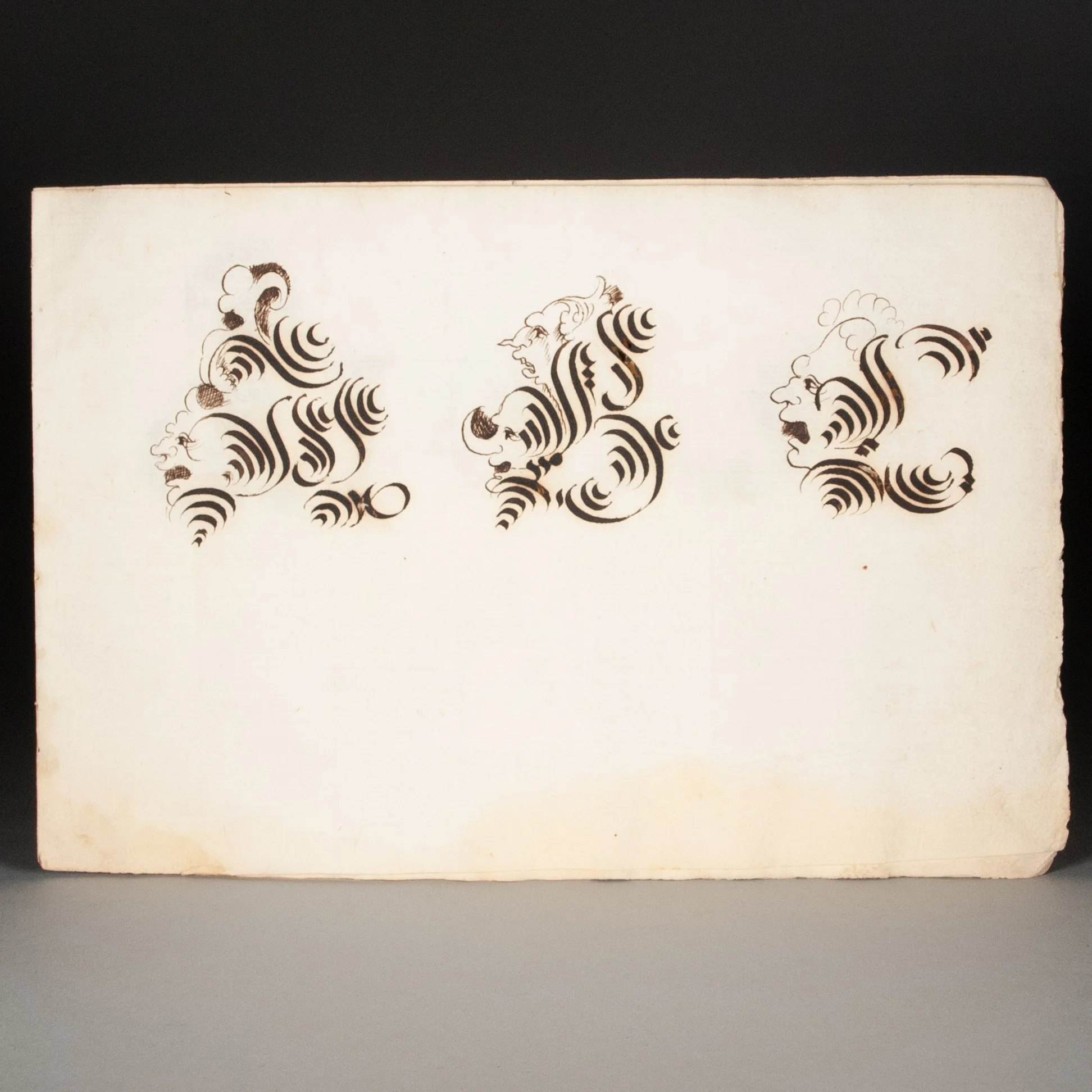 Image 1 of 13
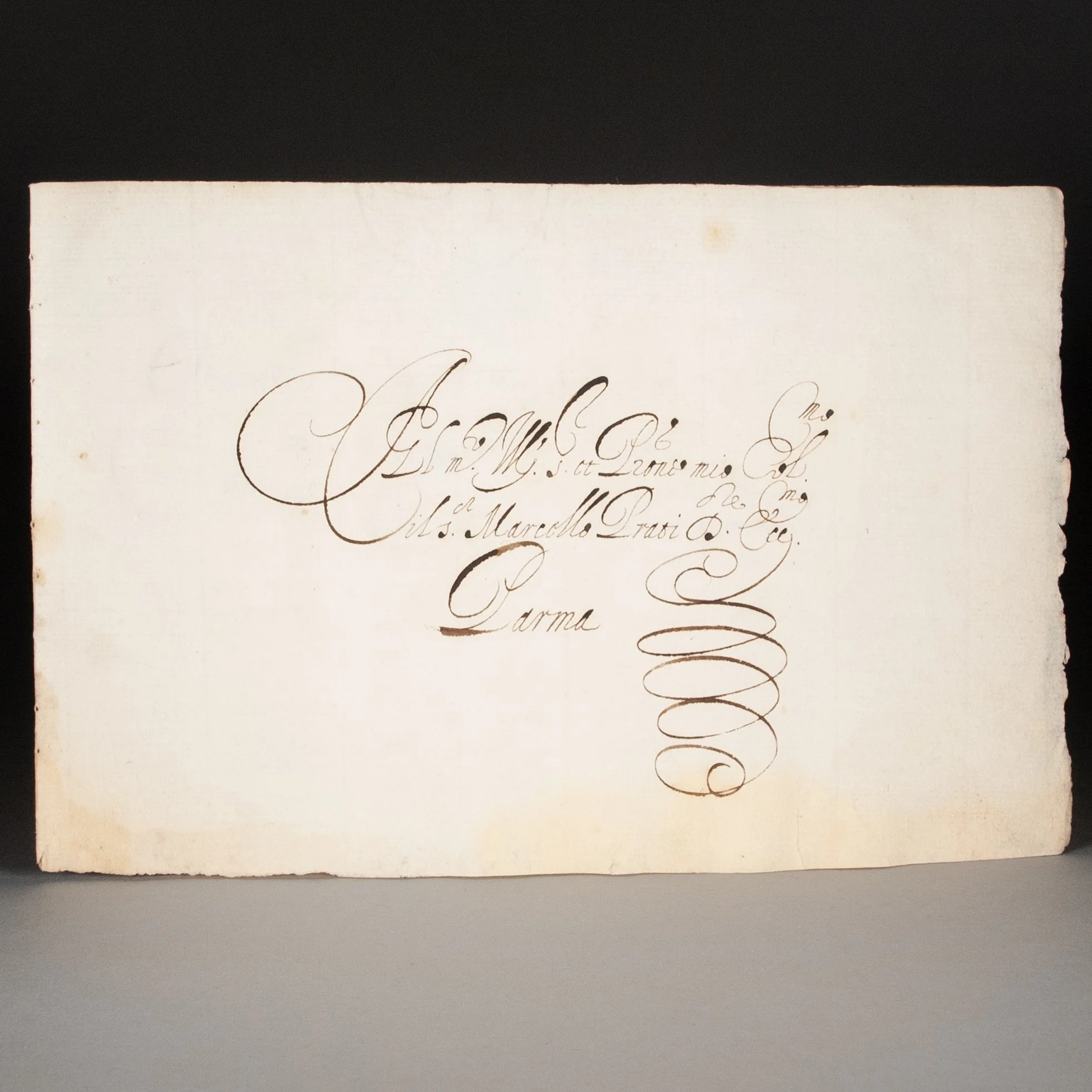 Image 2 of 13
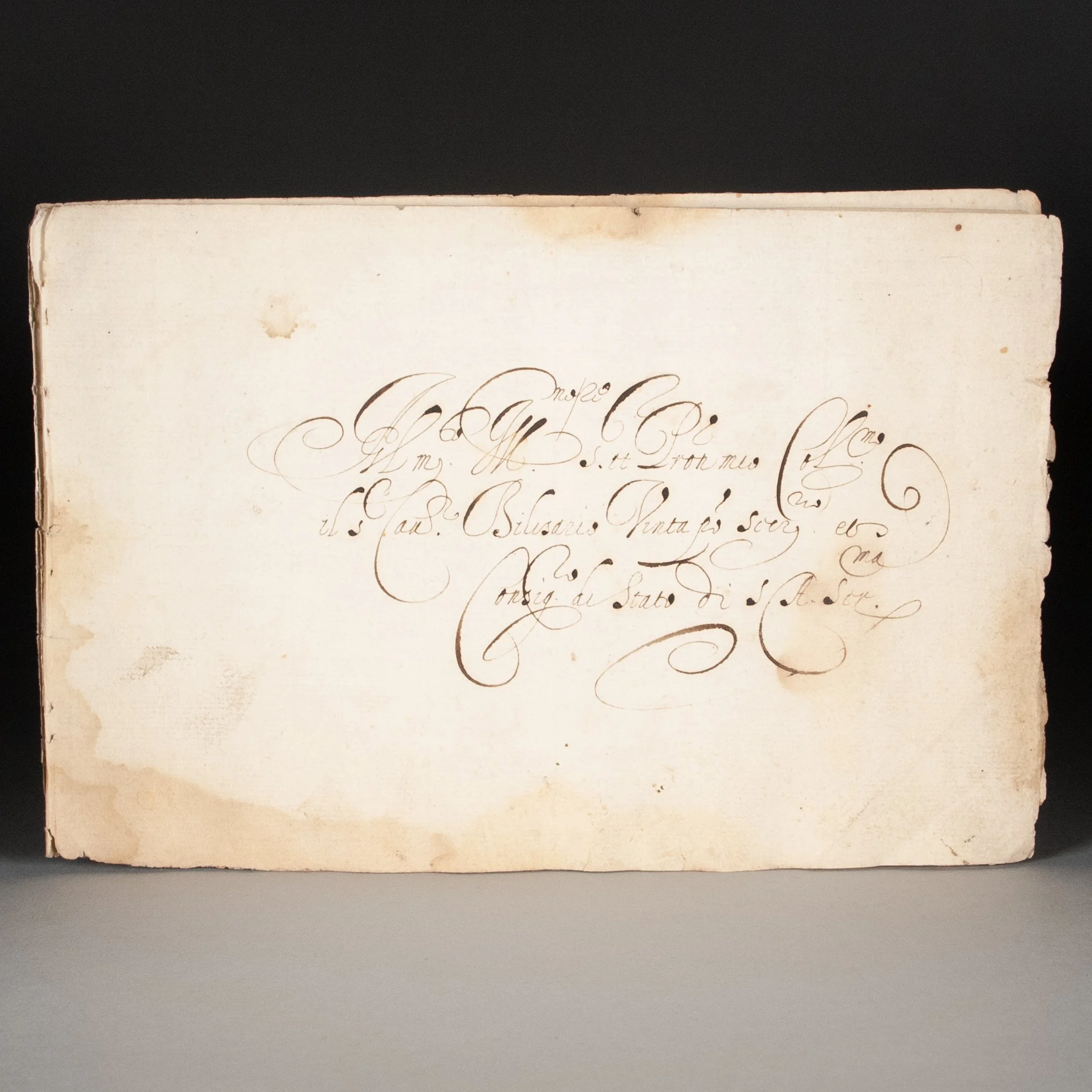 Image 3 of 13
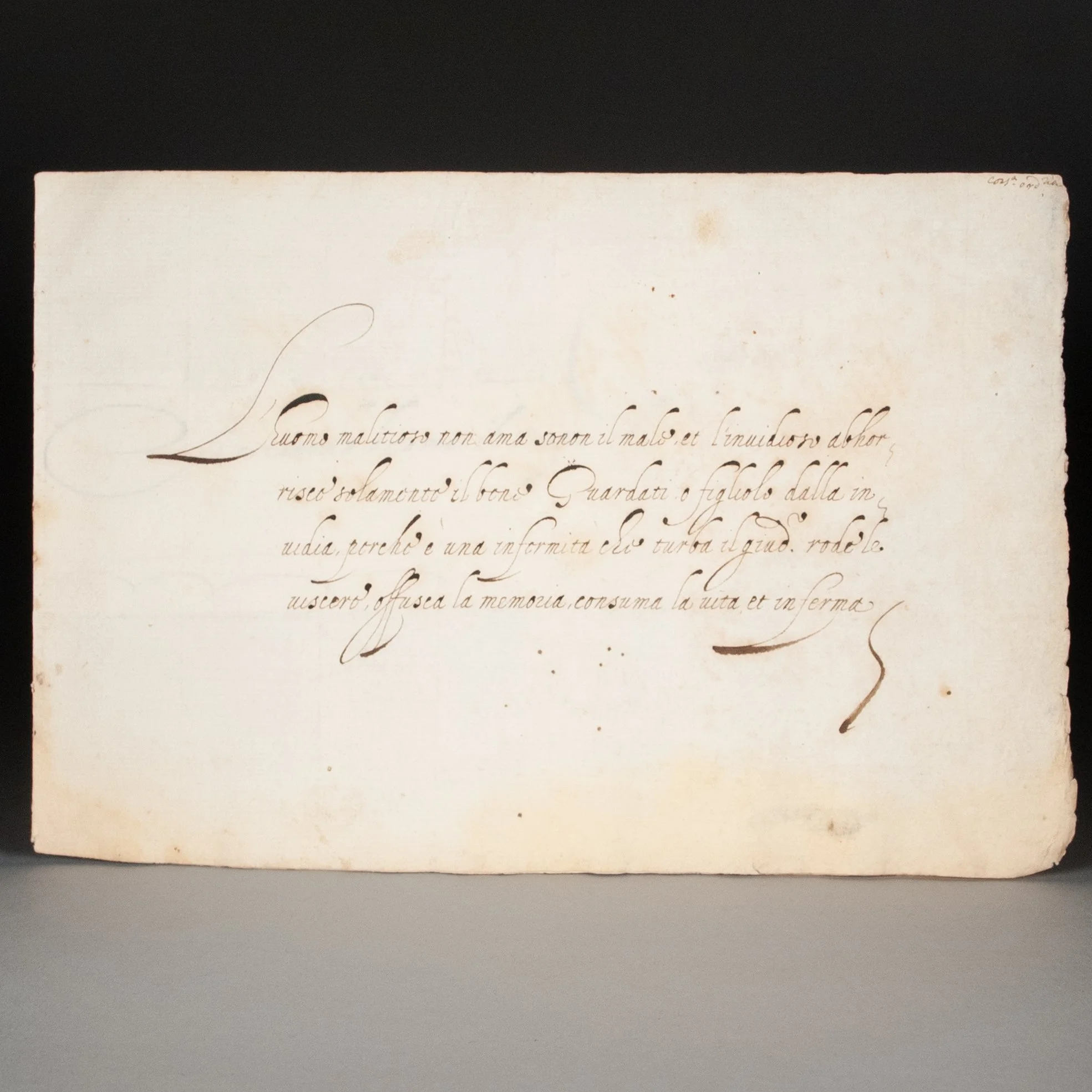 Image 4 of 13
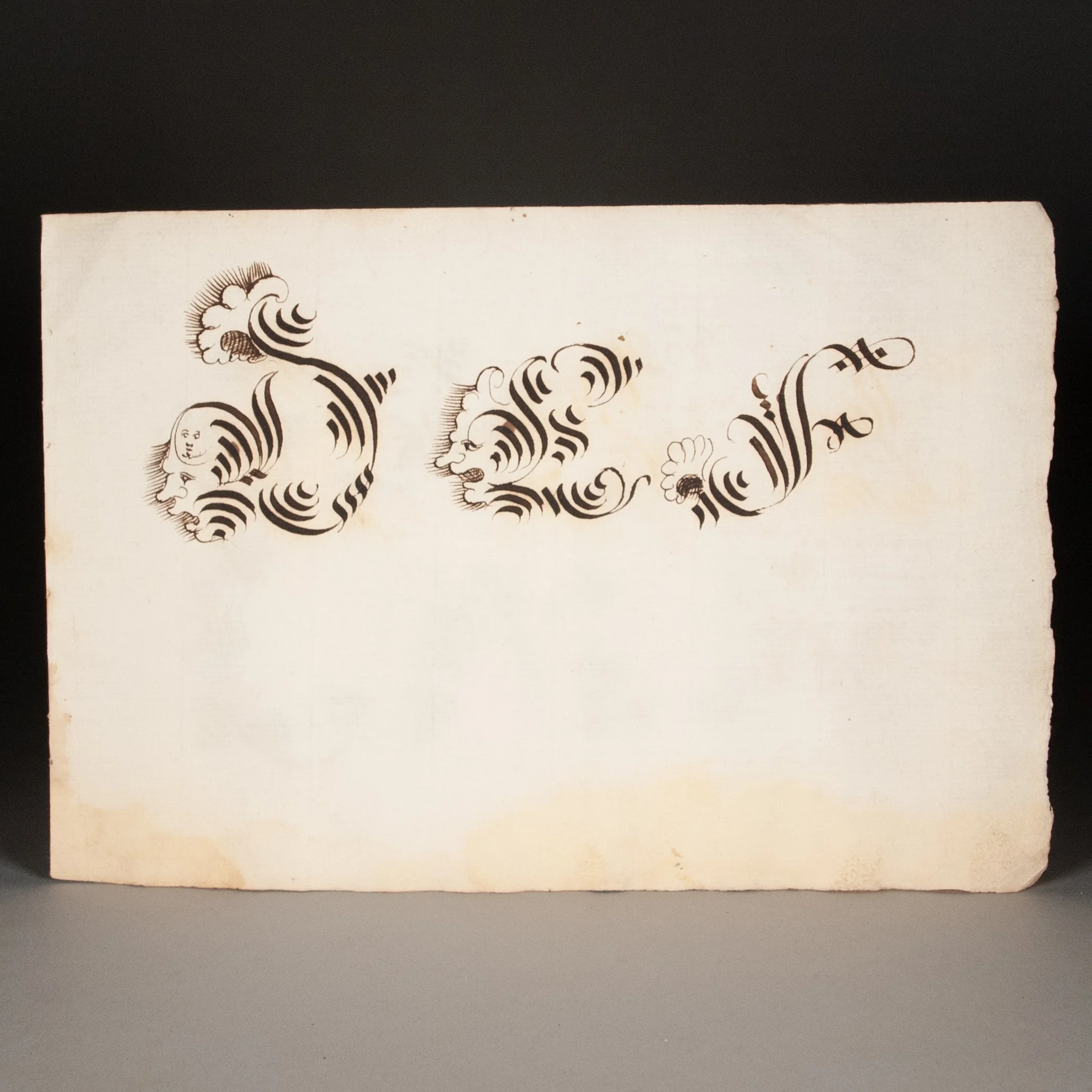 Image 5 of 13
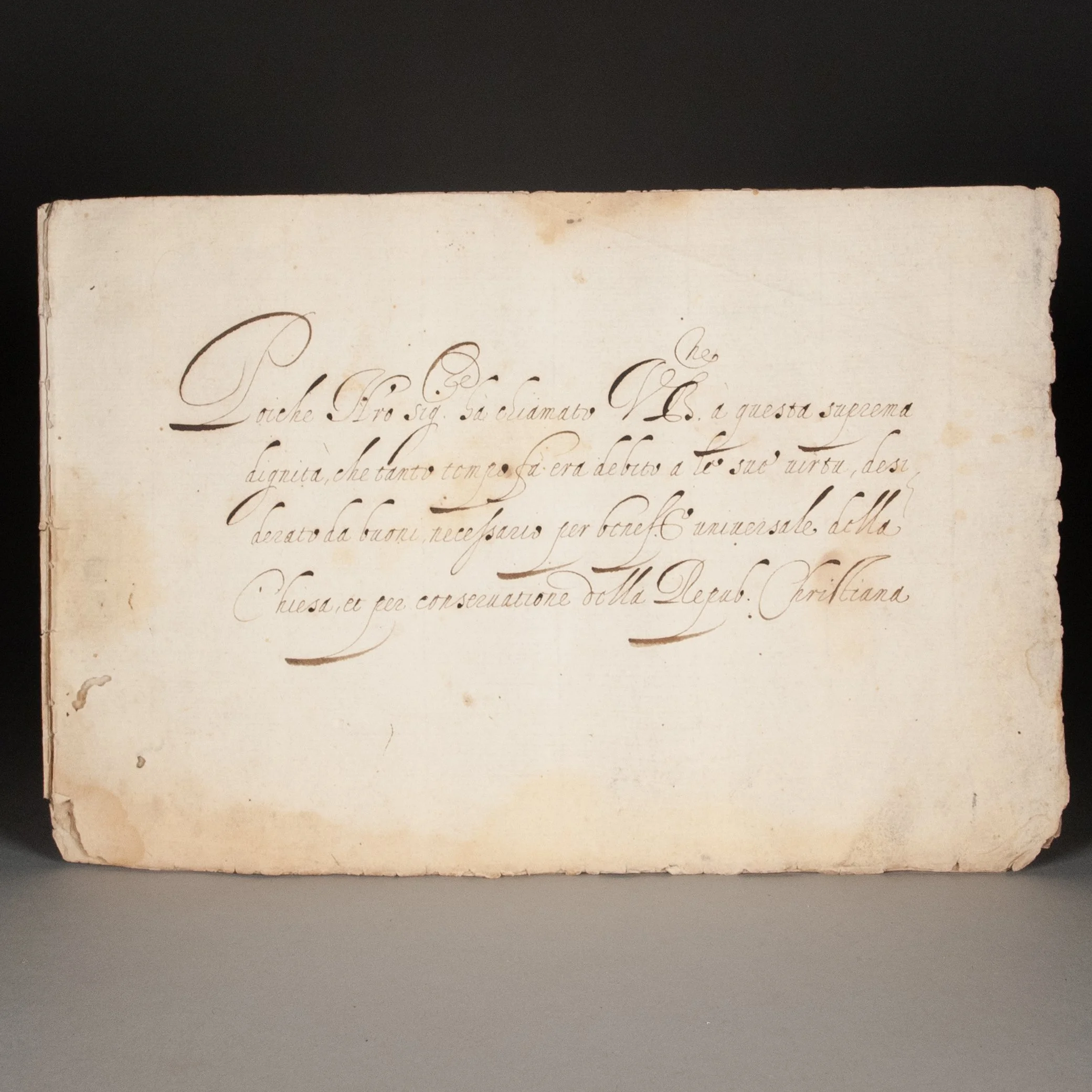 Image 6 of 13
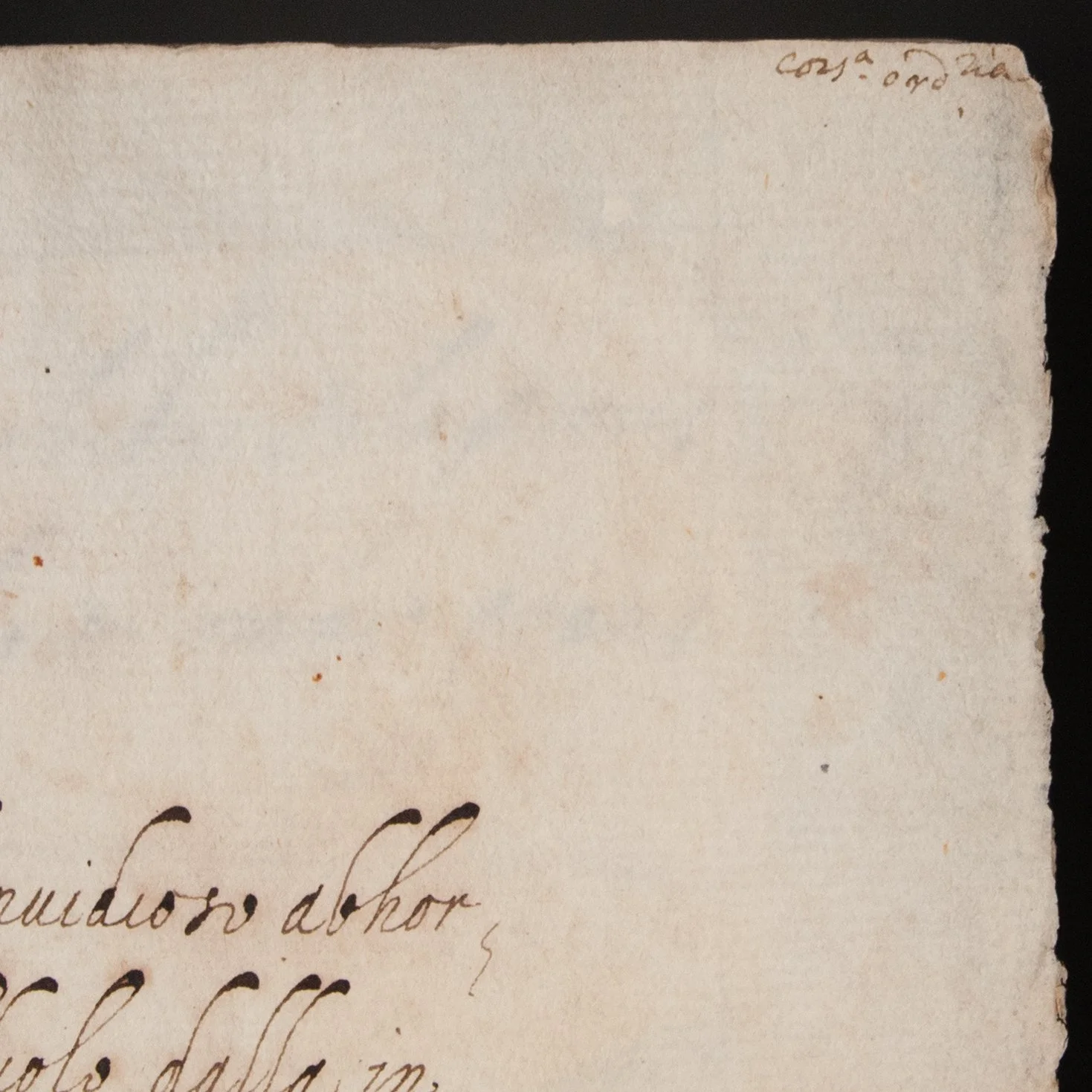 Image 7 of 13
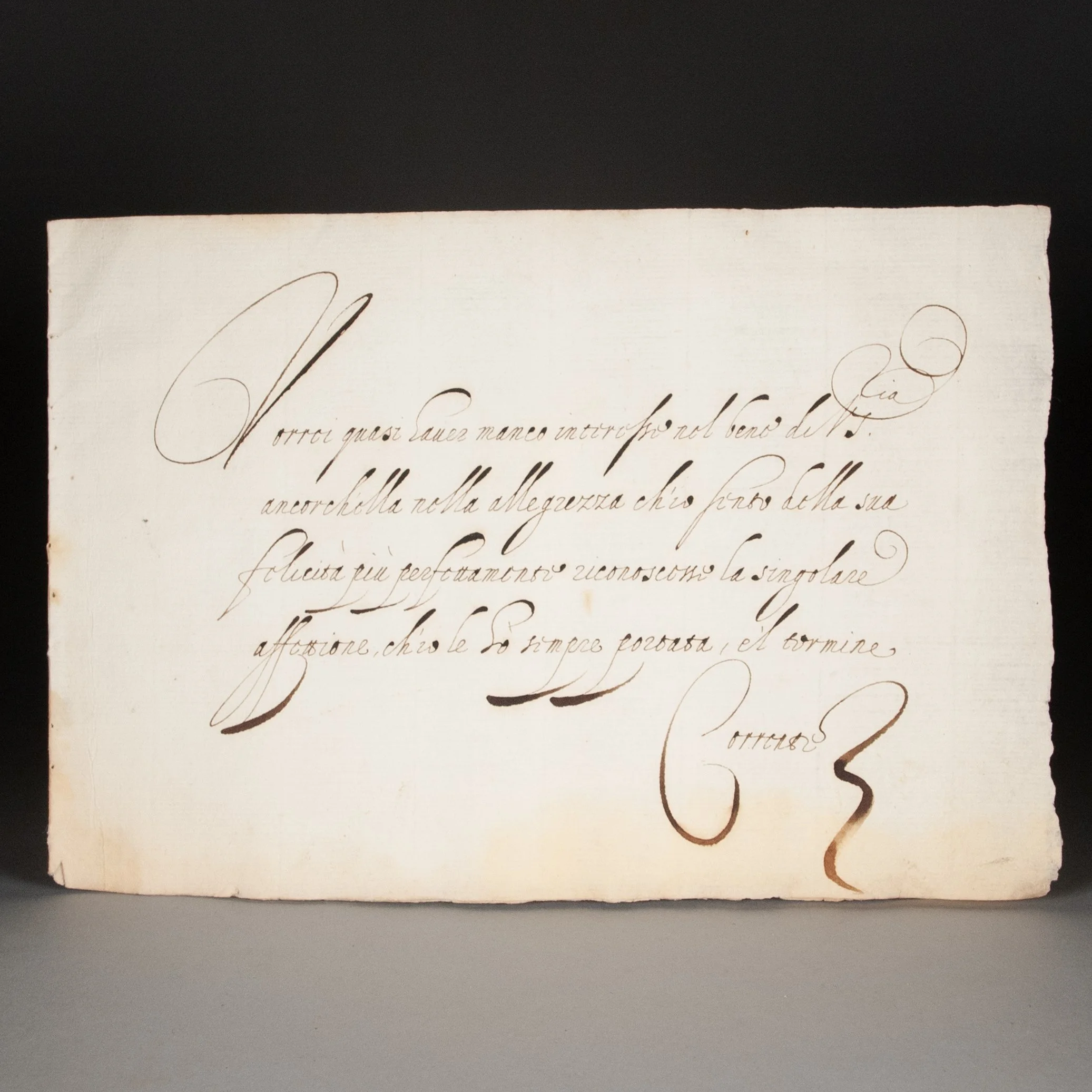 Image 8 of 13
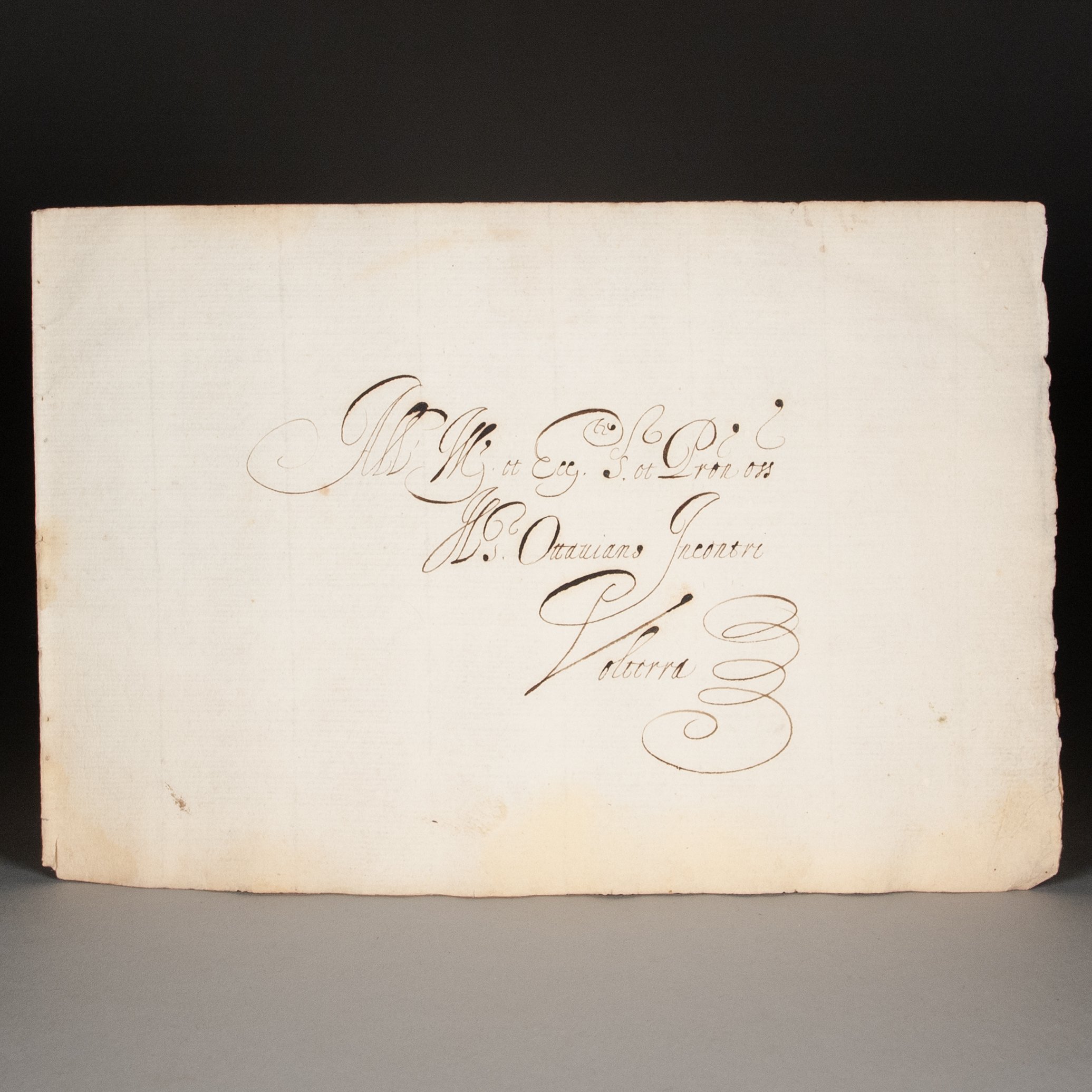 Image 9 of 13
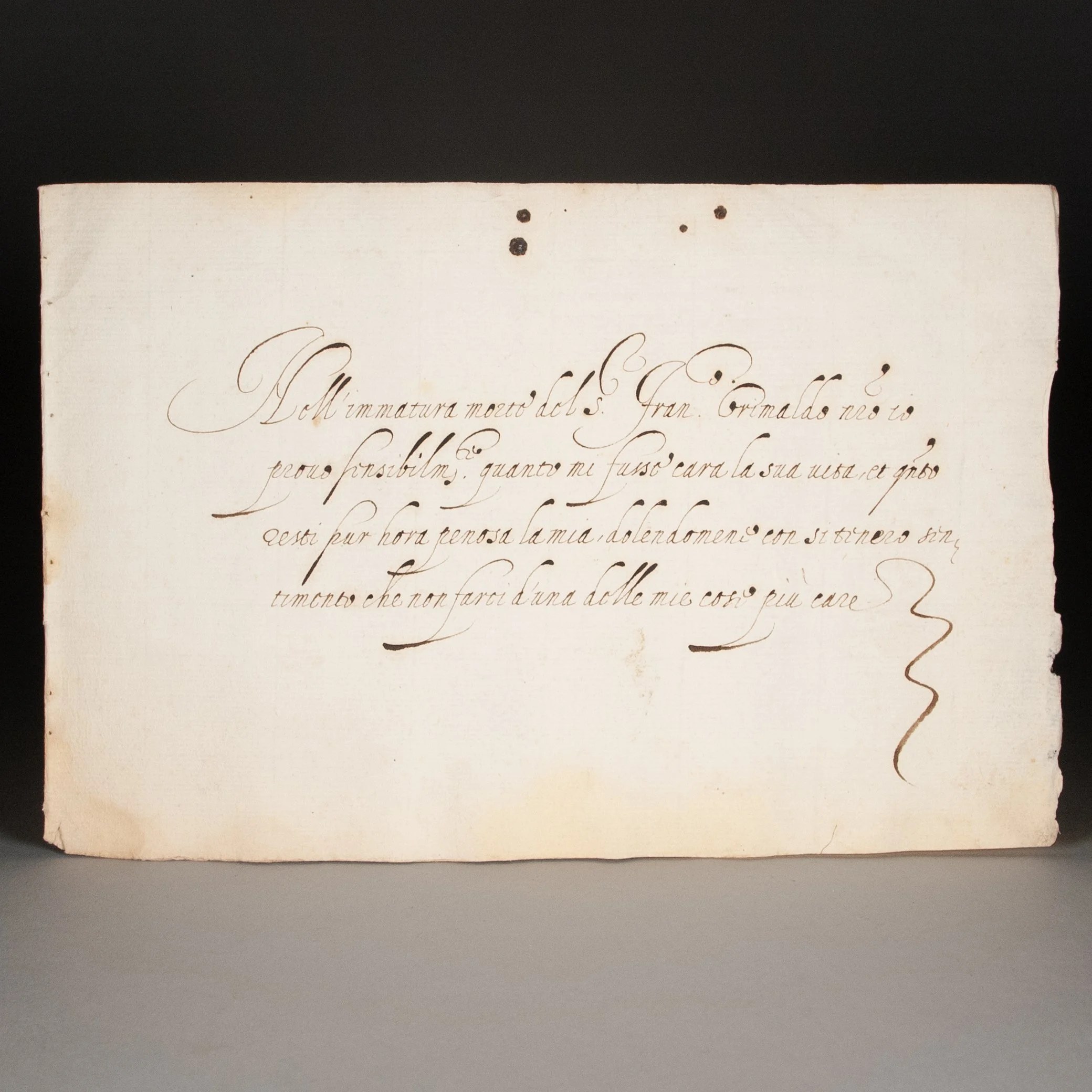 Image 10 of 13
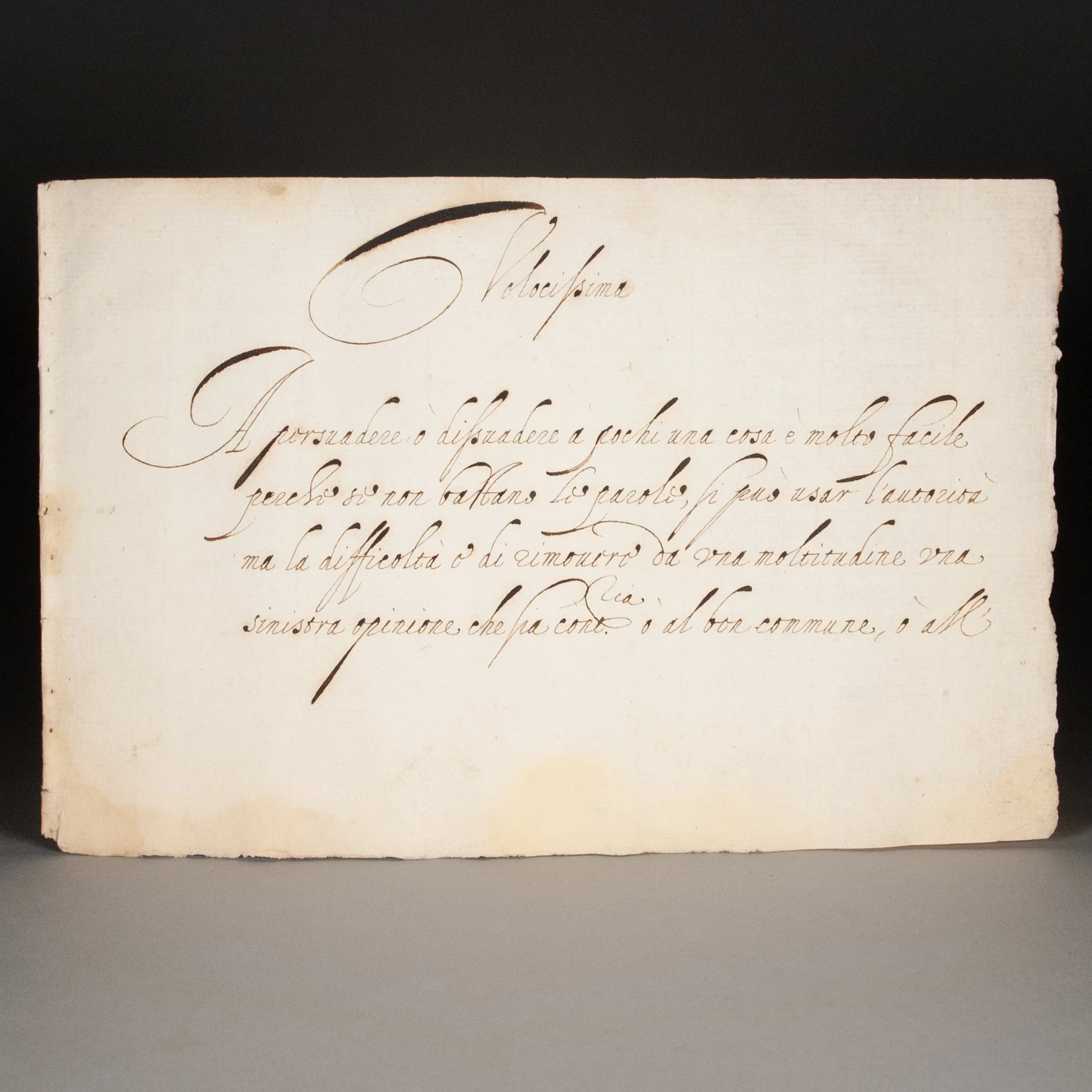 Image 11 of 13
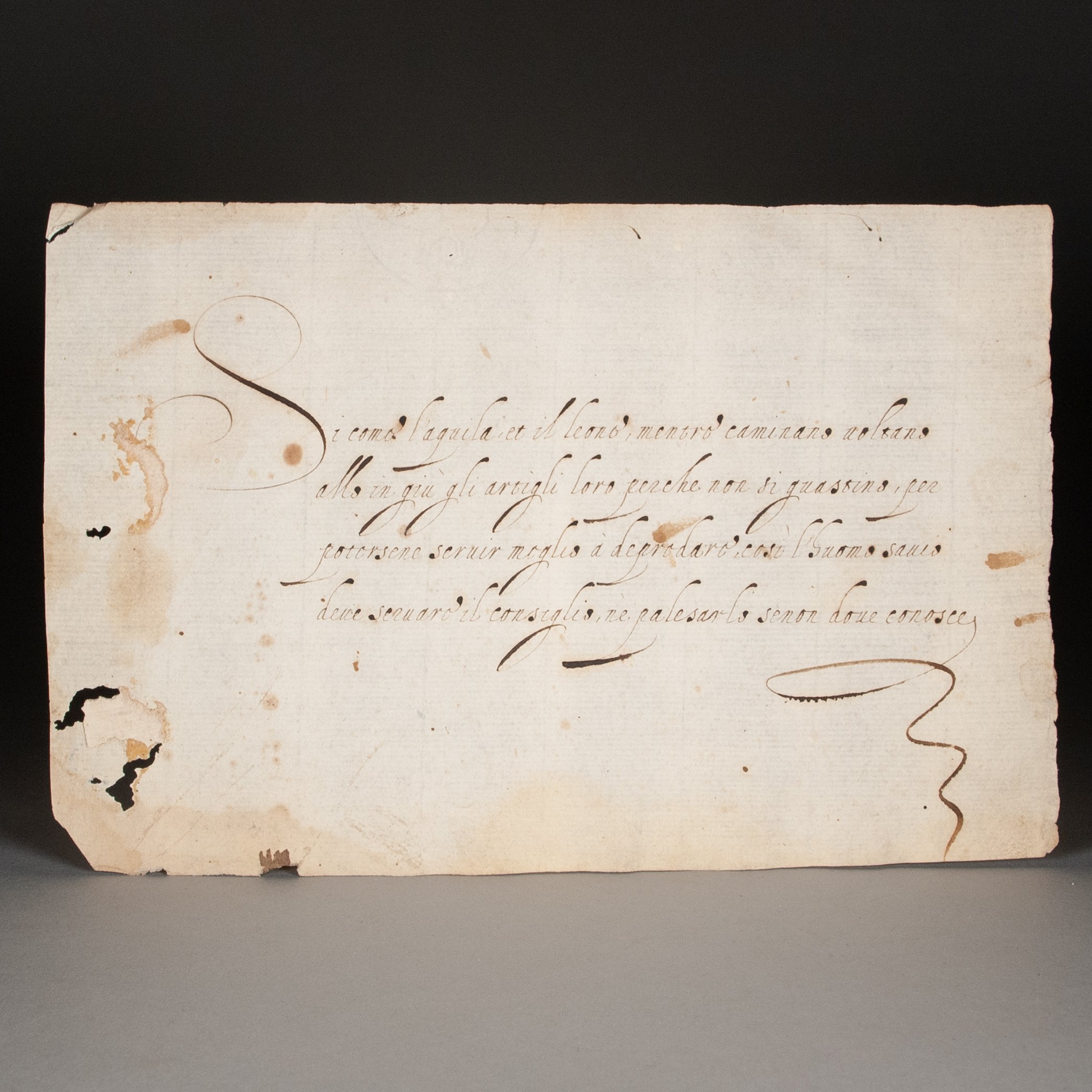 Image 12 of 13
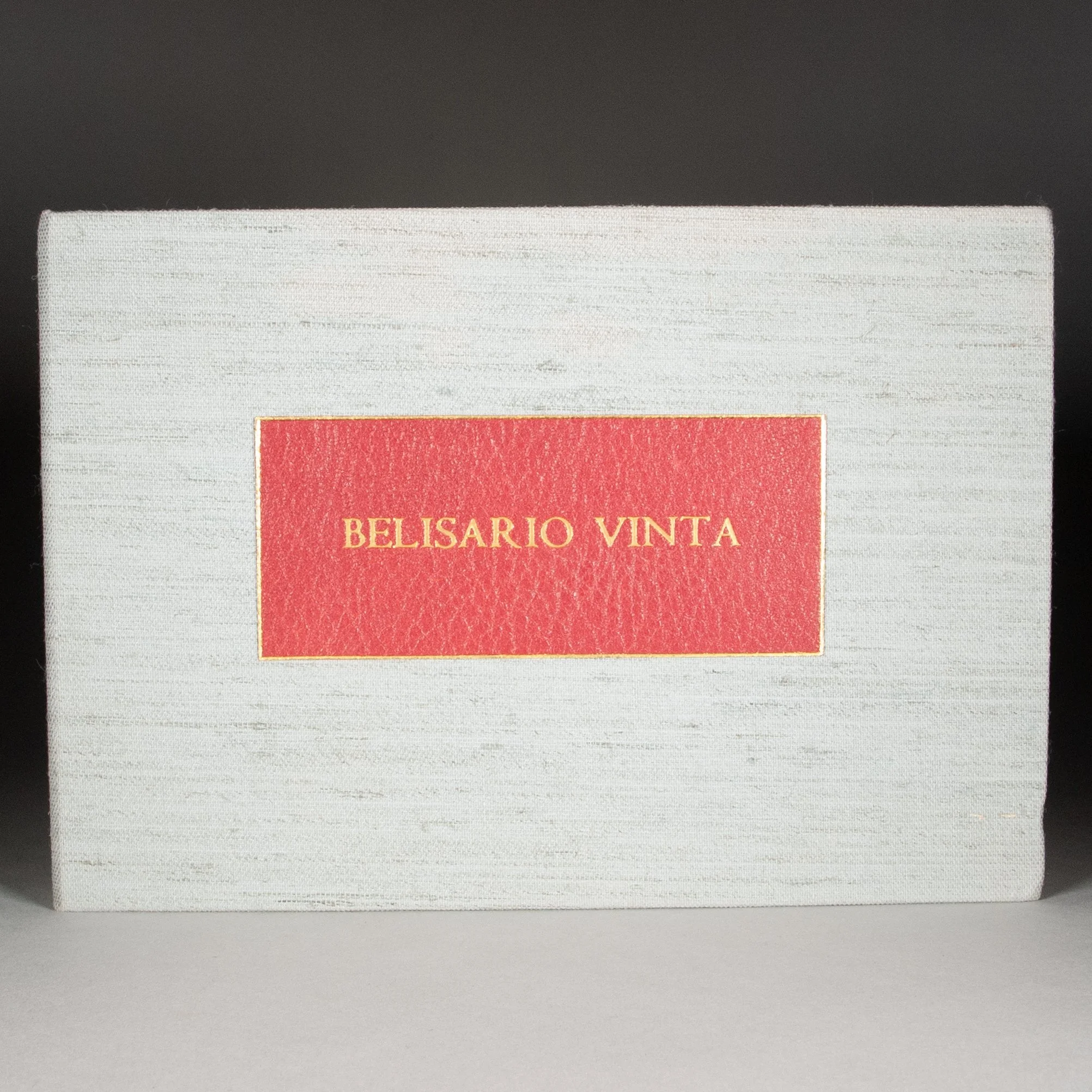 Image 13 of 13