ABC book as type specimen | On recycled paper
ABC book as type specimen | On recycled paper
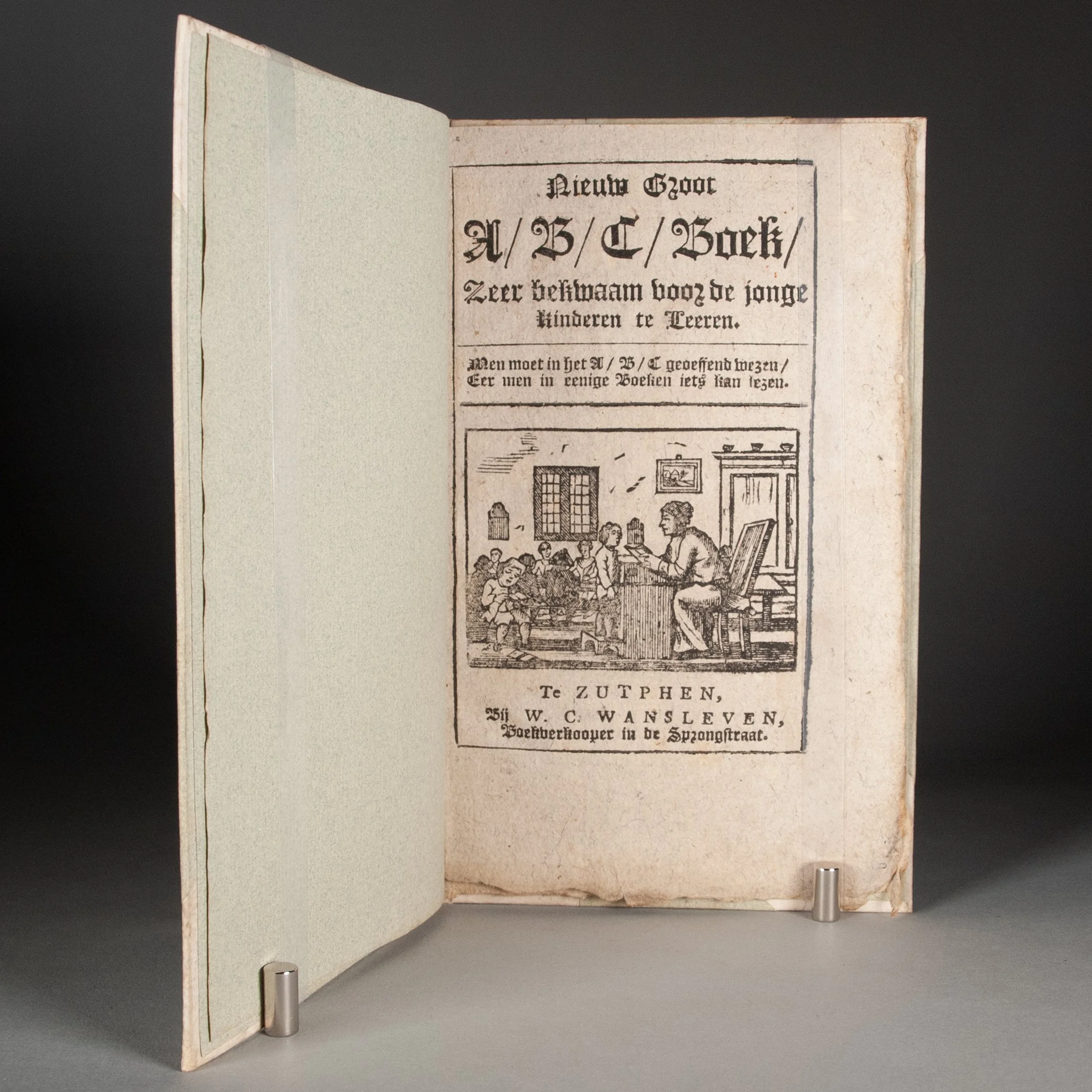
Nieuw groot ABC Boek, zeer bekwaam voor de jonge kinderen et leeren
Zutphen: W.C. Wansleven, [between 1850 and 1860?]
[16] p. | 8vo | A^8 | 178 x 106 mm
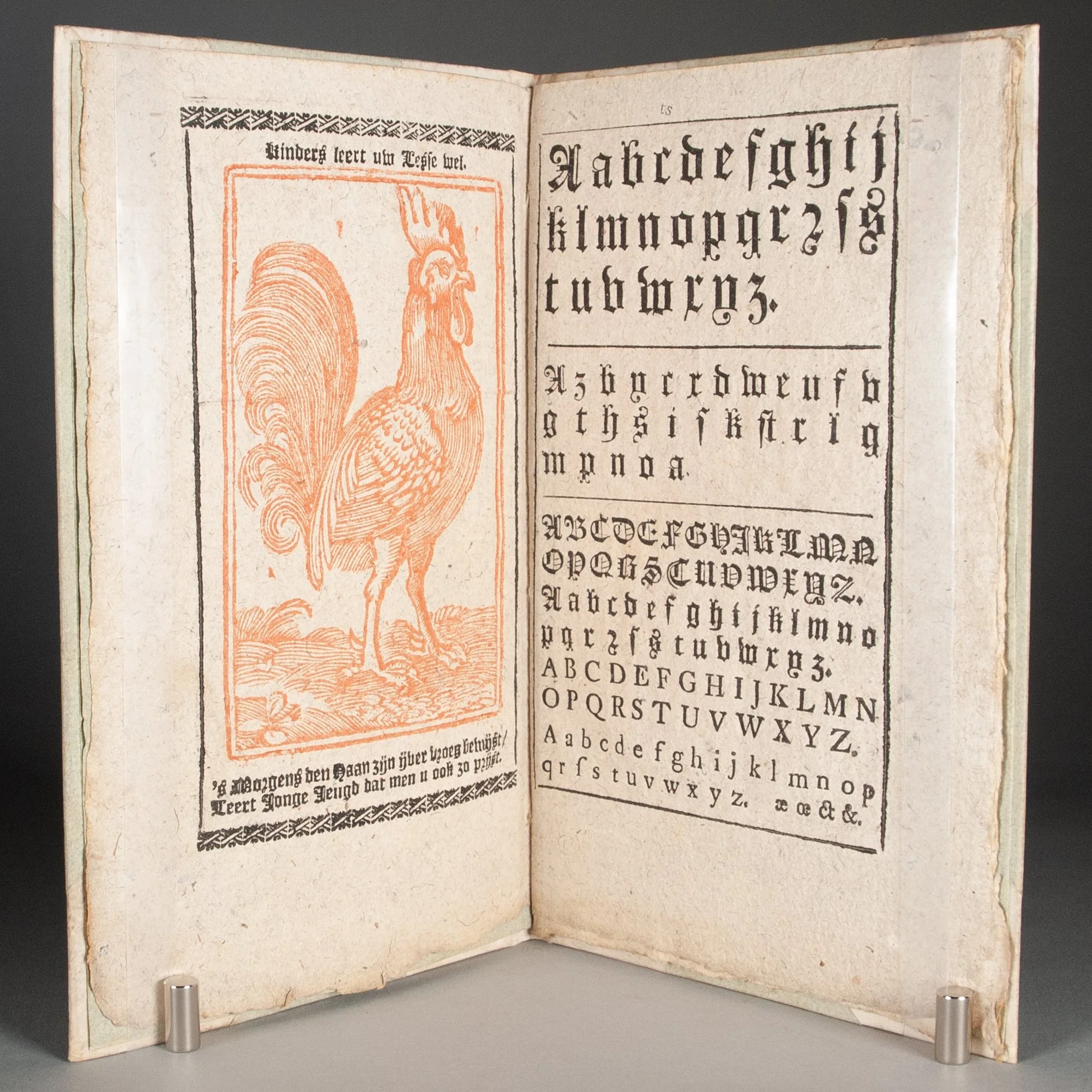
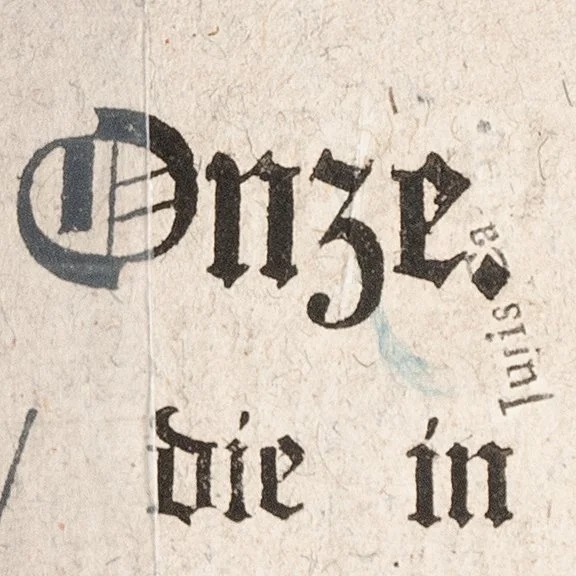
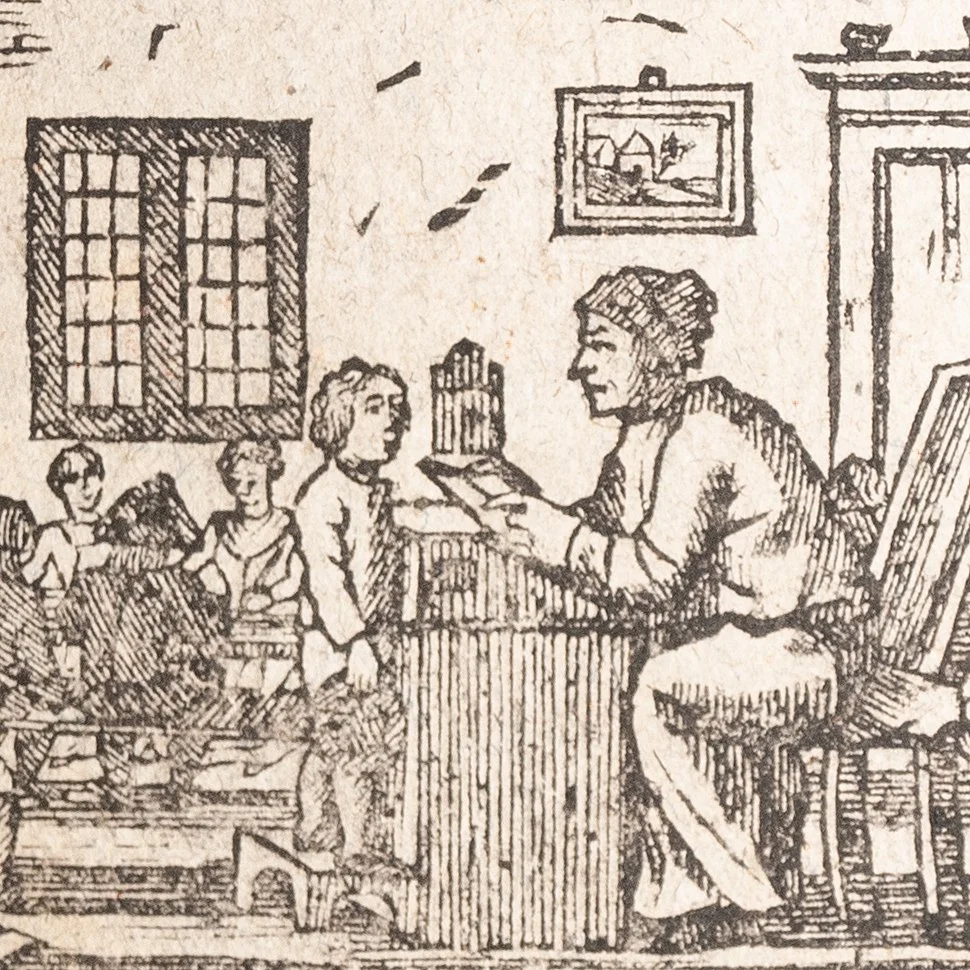
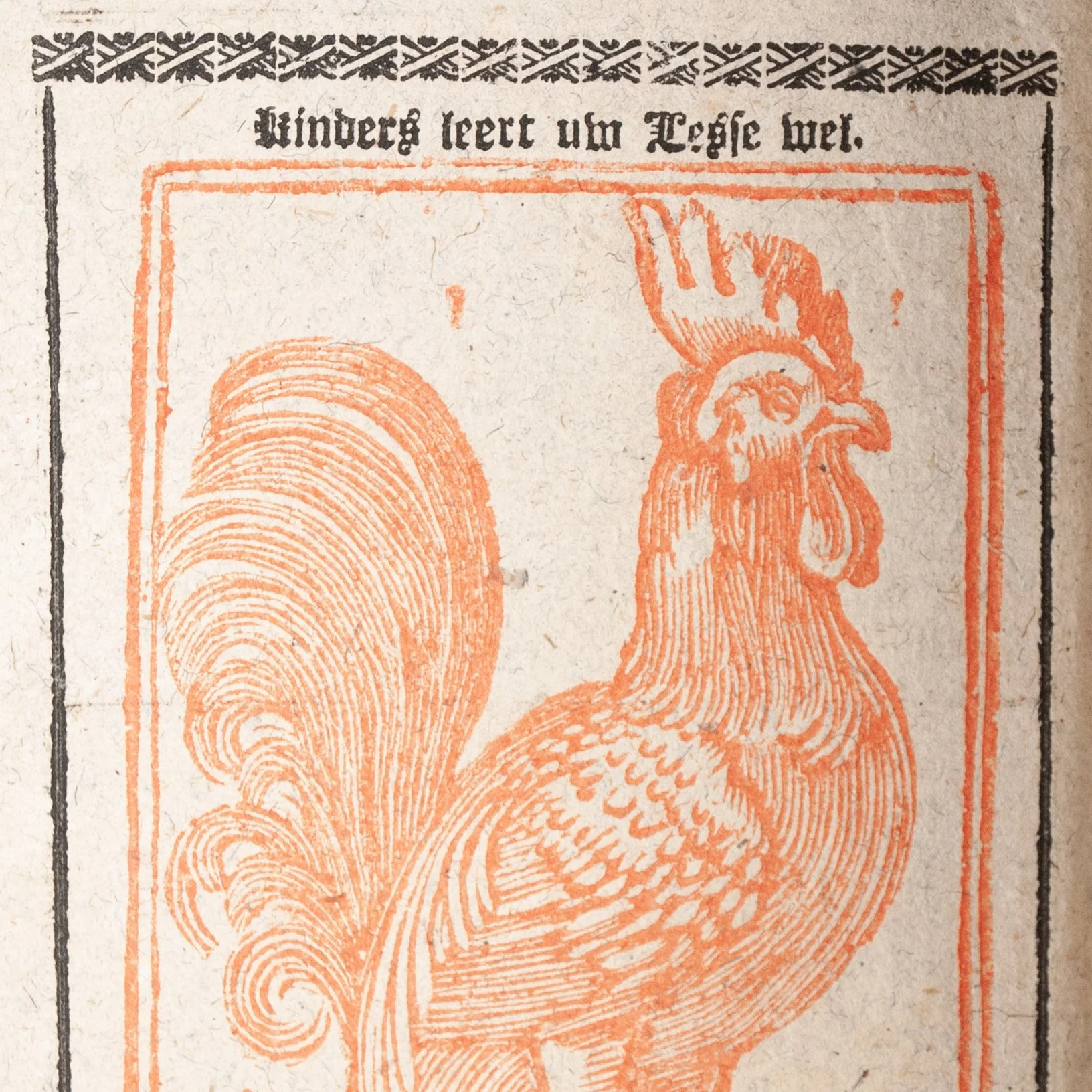
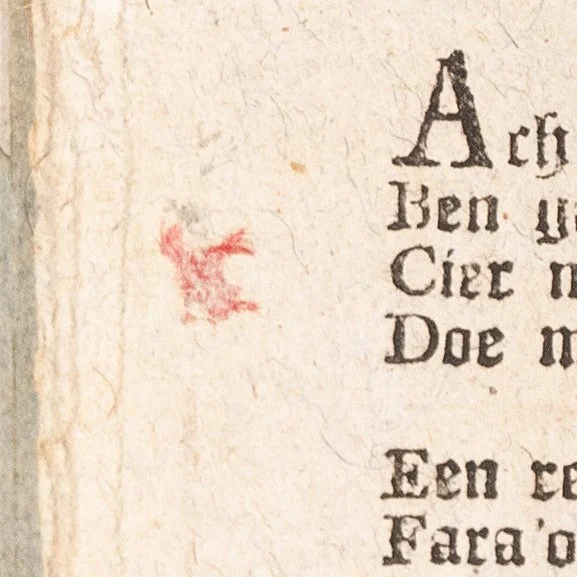
A later edition of a standard primer commonly known as the Groot ABC or Haneboek, the latter for the illustration that commonly adorned the title page, here found on the title verso. The work dates to the Protestant Reformation, when it was adopted as an alternative to Catholic abecedarians, and for centuries was a fixture of the Dutch children’s corpus. “First published for use of the Dutch church and school at London, and at Embden…the ‘Haneboek’ became firmly settled in Dutch education after the Synode of Dordrecht defined in 1621 Dutch Protestantism, and explicitly demanded that children’s primers be based on it” (Forum). The single-sheet pamphlet taught basic language skills, which would pave the way to reading the Dutch vernacular bible, but also provided brief religious texts for the developing devout. This edition is typical, for example, including the Lord’s Prayer and Creed, the Ten Commandments, plus several additional short prayers. ¶ The refrain is familiar at this point, but nonetheless true: survival rates for such slight juvenile pieces are low, and surely some editions have been lost altogether. But what attracts us to the Haneboek specifically is the variety of types they used. The overwhelming majority here is in a gothic type, typical of Dutch religious texts. But fol. [2]r displays the alphabet in a roman type, too, upper and lower case both. The layout of this ABC page even resembles the old hornbook, that quintessential tool of early literacy. This little primer aimed not simply to introduce the fundamentals of language and devotion, but also to introduce children to the typography they’d encounter in their lives. ¶ The Wansleven firm was active 1798-1860. Citing one collector Van Veen, the National Library of the Netherlands notes that a number of copies were printed on gray paper in the second half of the 19th century to be distributed by colporteurs in the Achterhoek region of the Netherlands. These street hawkers were vital to the broad distribution of popular, ephemeral printed material, and trafficked heavily in juvenile literature like this (and equally the kind of material parents would not want their children to read). According to Van Veen, a large portion of these copies on gray paper came onto the market early in the 20th century. ¶ Don't miss the fragments of text embedded in the paper, and a red fiber embedded at end, telling witnesses to the recycled materials used to make it. Fol. [3]r contains the largest fragment of text we've yet found in old paper: a complete five-letter word, plus the first two letters of the next (Juris Ca). ¶ Hardly a rare work at the macro level, but uncommon at the edition level. We find a single copy of this edition in North America (University of Virginia).
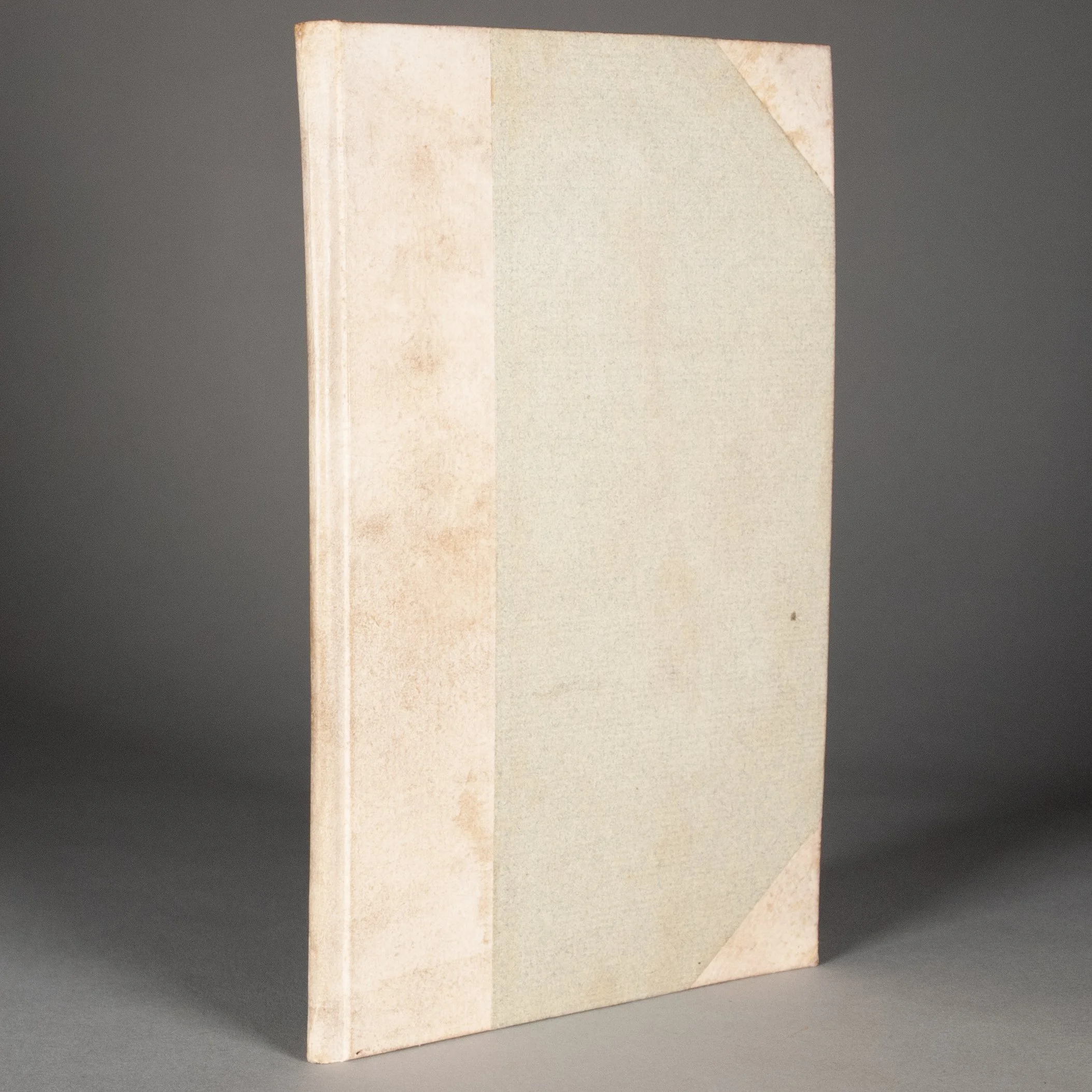
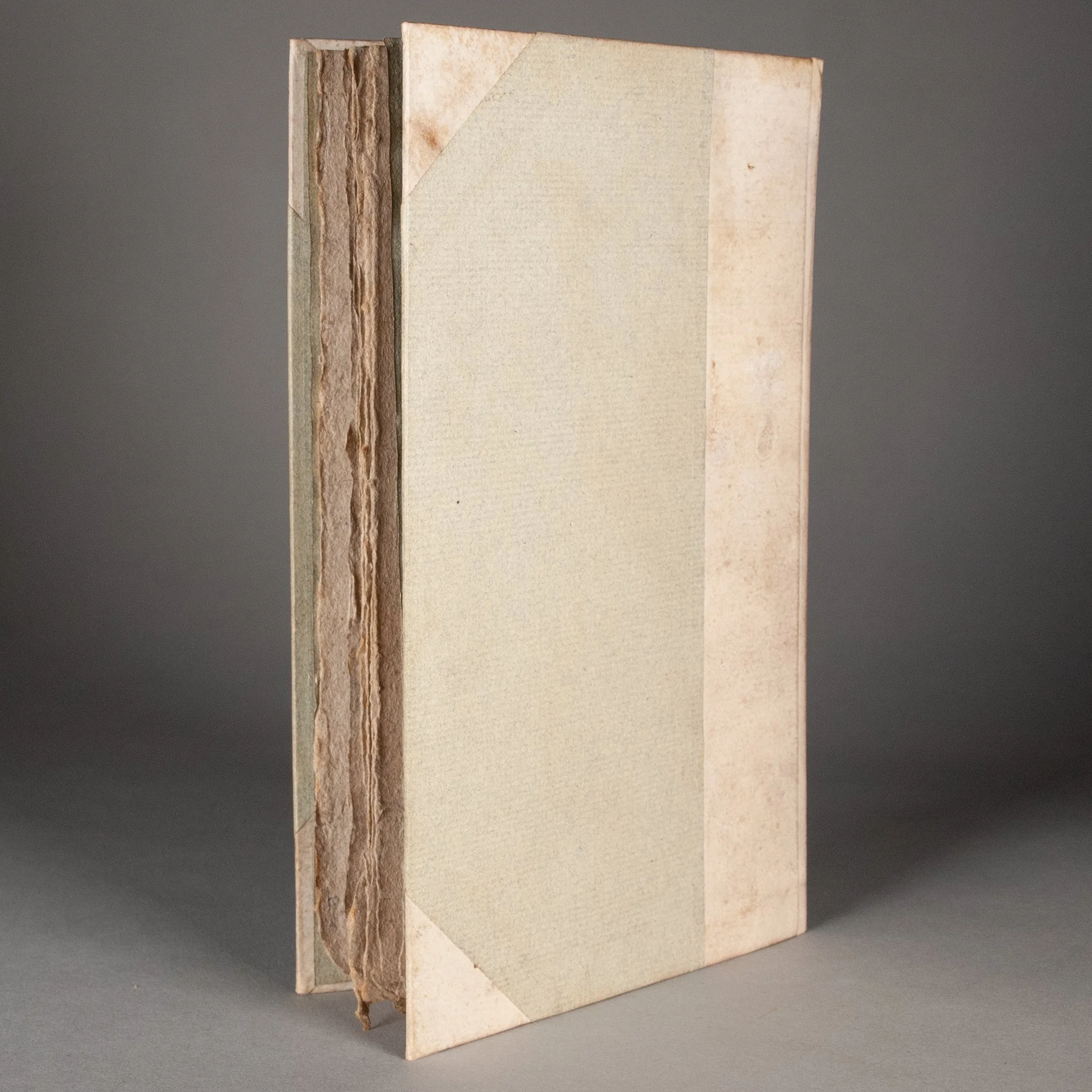
CONDITION: Later half parchment and gray boards. ¶ Edges of the leaves a bit dusty, but very nice internally. The binding lightly slighted, and very gently bowed along the vertical dimension.
REFERENCES: Forum Antiquarian Booksellers, Children’s World of Learning (1994), pt. 1, p. 1 ("Heavily used as primers are, all old ABC Books are rare, but the ‘Groot ABC’ or ‘Haneboek’, being most common and inexpensively produced, is the rarest of all"); pt. 10, p. 1352, #5274 (“the oldest and most popular Dutch A B C book…From serious primer the A B C book gradually changed into a chapbook sold at fairs and by hawkers”); H. George Fletcher, French Book Arts (2018), p. 91 (speaking of France, “colporteurs, hawkers of merchandise…They were important distributors of books and printed ephemera, especially in rural areas, during the first five hundred years of printing. Both revered and reviled—they were as likely to trade in salacious material as not—they were the object of considerably popular interest, and were periodically banned by the authorities for distributing seditious or merely satirical works.”)
Item #808