
Embellished by an early user | With an engraving by Sister Isabella Piccini
Embellished by an early user | With an engraving by Sister Isabella Piccini
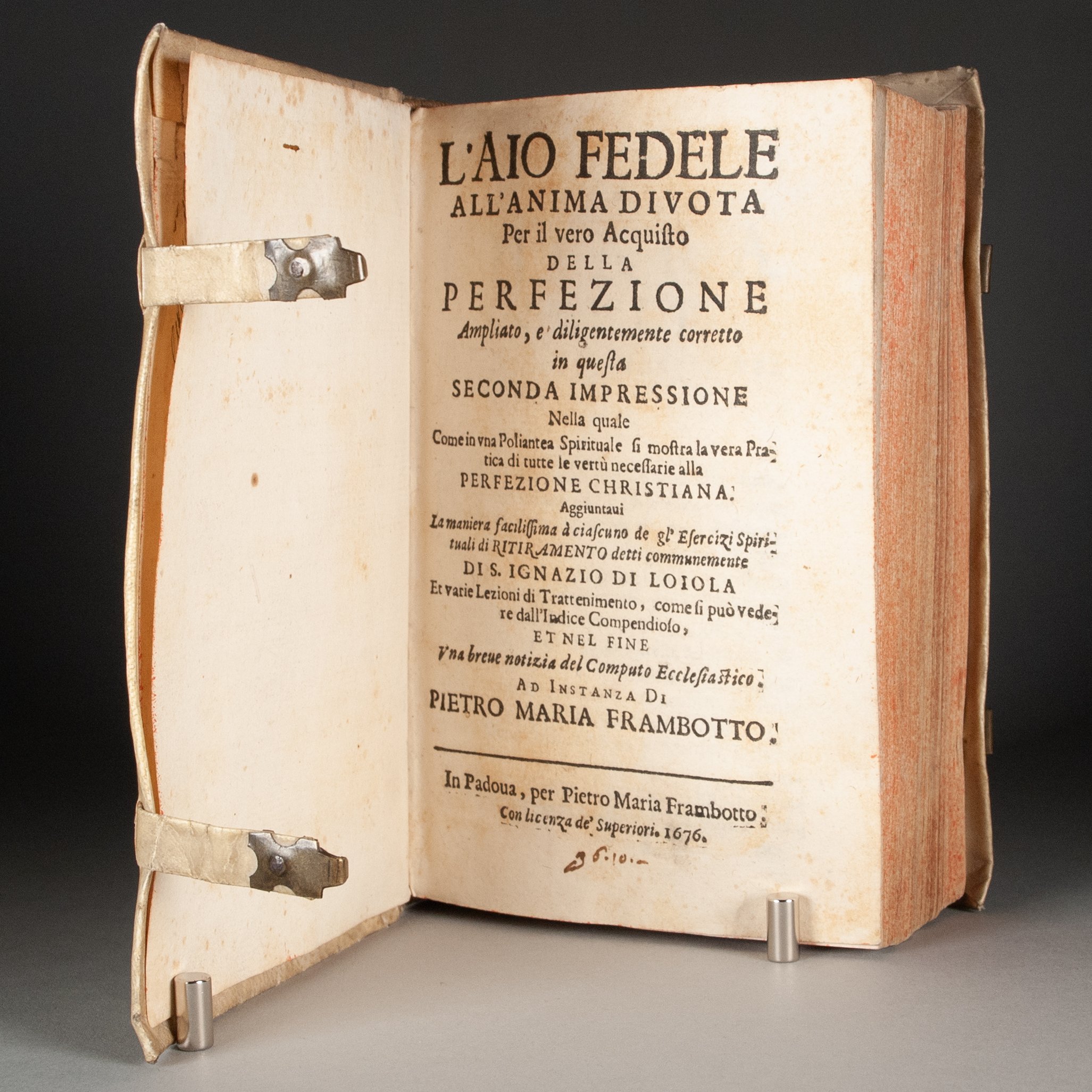
L'aio fedele all'anima divota per il vero acquisto della perfezione ampliato, e diligentemente corretto in questa seconda impressione, nella quale come in una poliantea spirituale si mostra la vera pratica di tutte le vertù necessarie alla perfezione christiana; aggiuntavi la maniera facilissima à ciascuno de gl'esercizi spirituali di ritiramento detti communemente di S. Ignazio di Loiola et varie lezioni de trattenimento, come si può vedere dall'indice compendioso; et nel fine una breve notizia del computo ecclesiastico
by Giovanni Maria Ranieri
Padua: Heirs of Pietro Maria Frambotto, 1676
[40], 793, [15] p. | 8vo | a-b^8 c^4 A-2G^8 2H^2 2I-3C^8 3D^2 3E-3F^8 | 171 x 109 mm
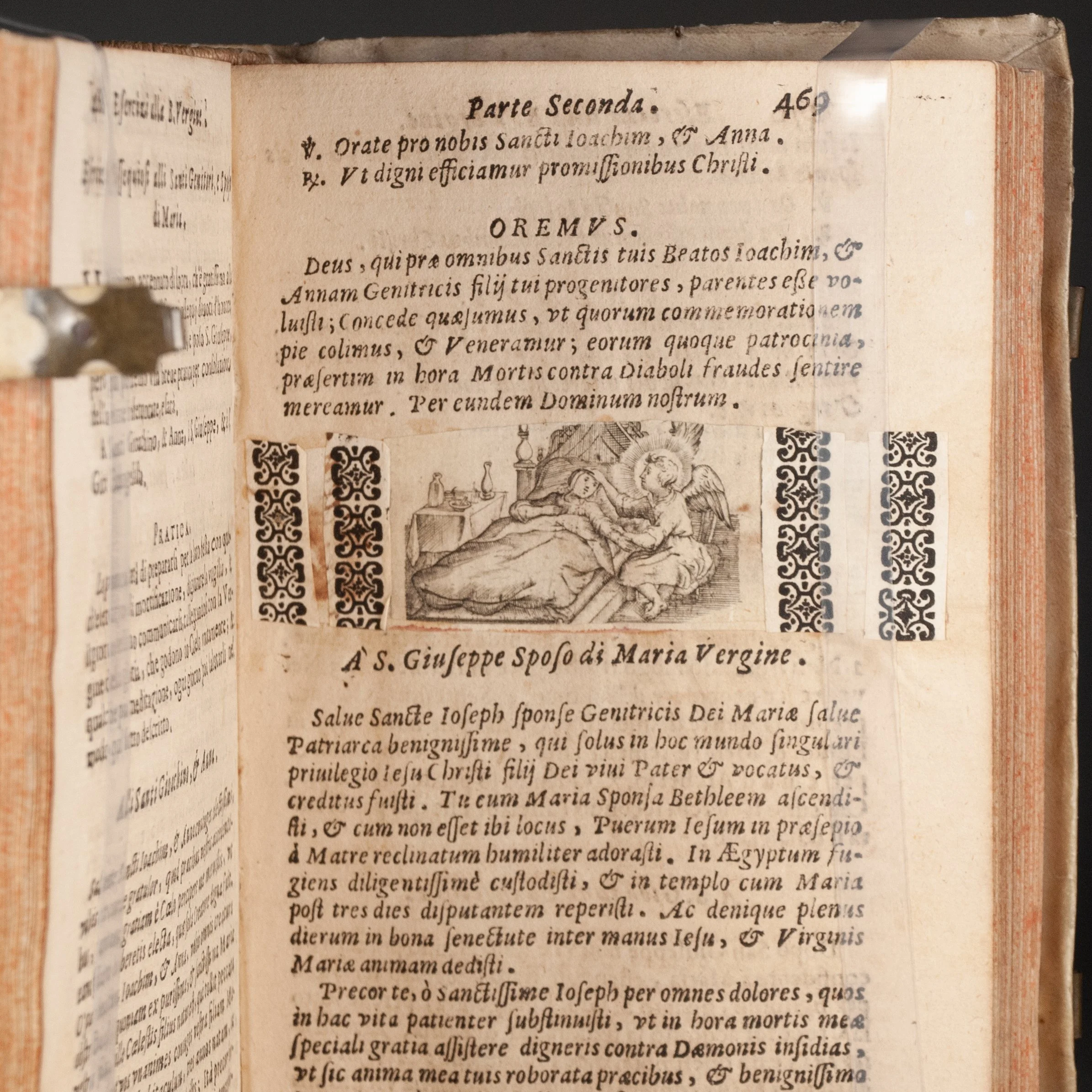
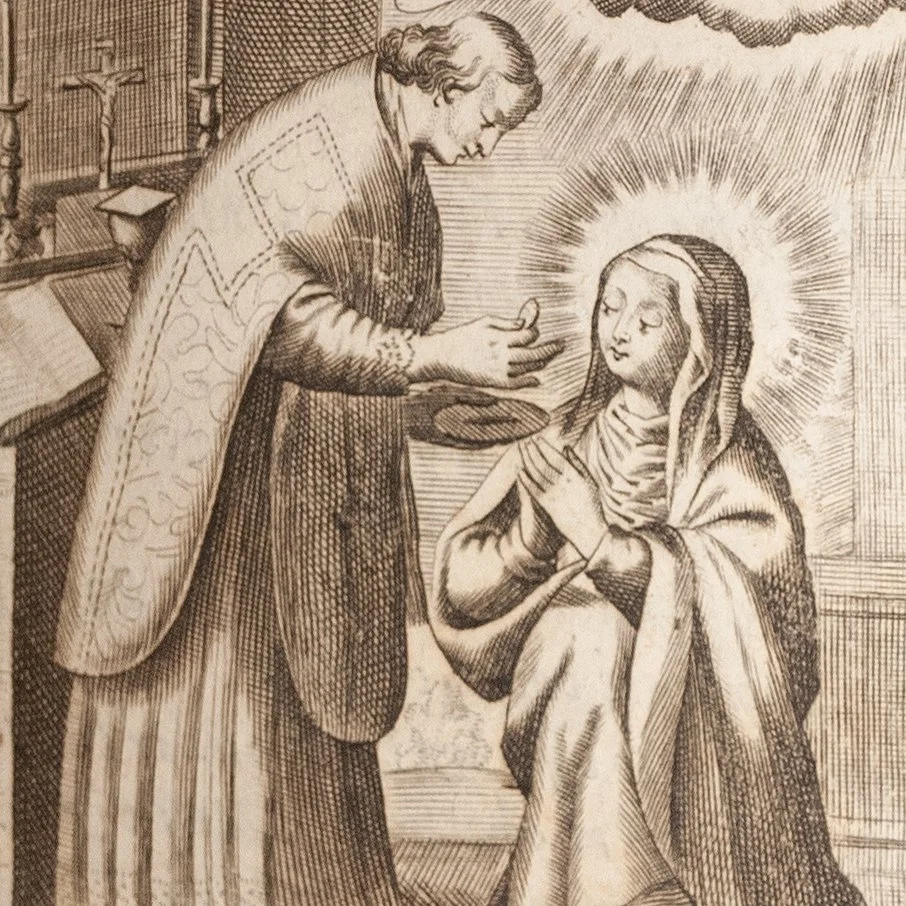
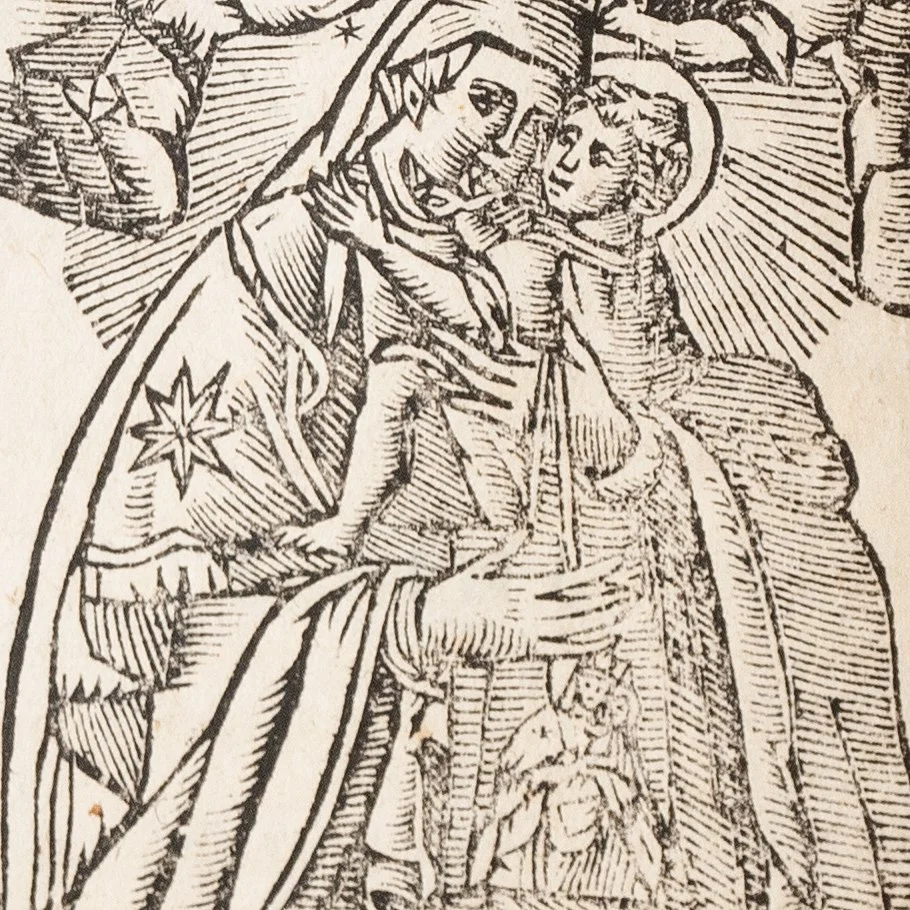
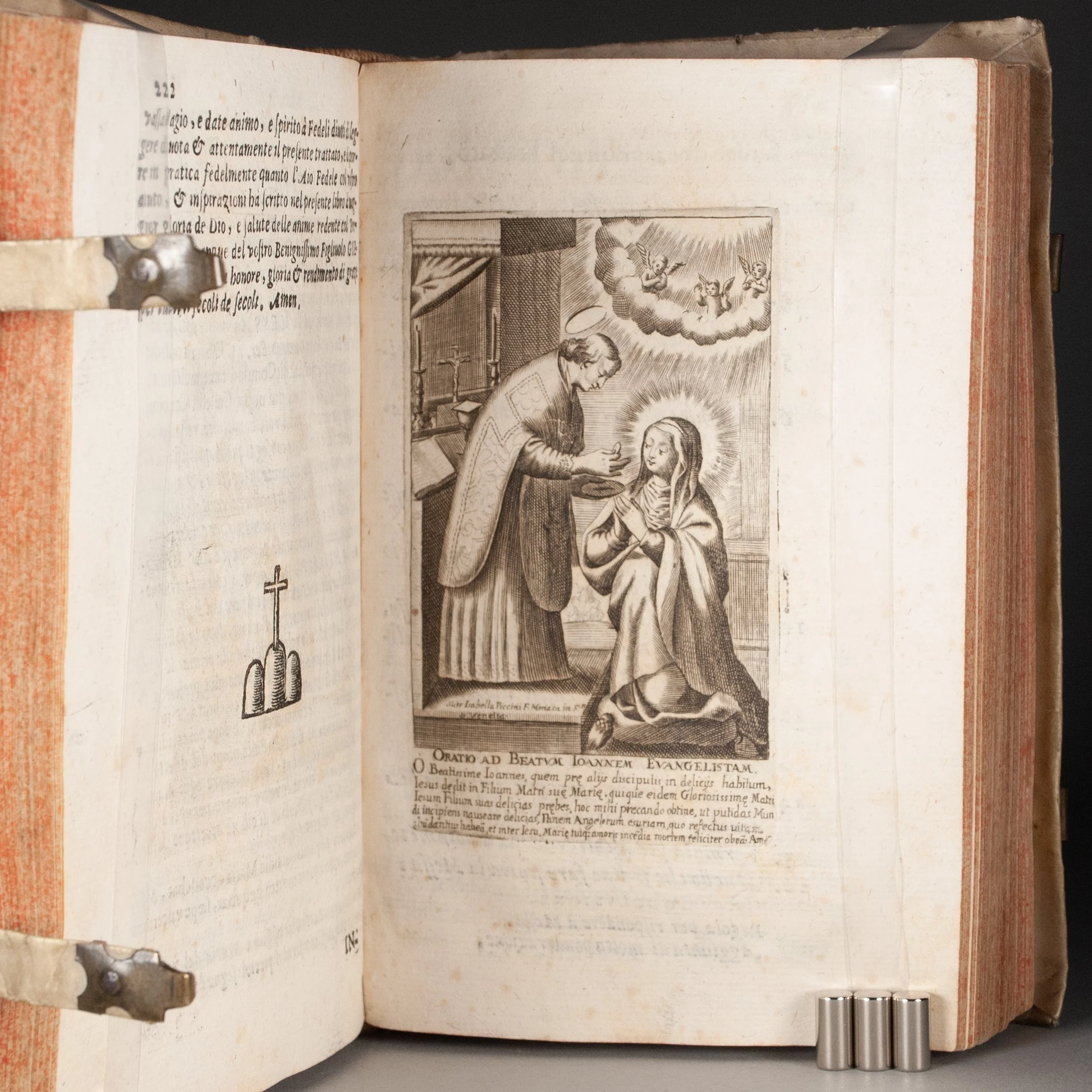
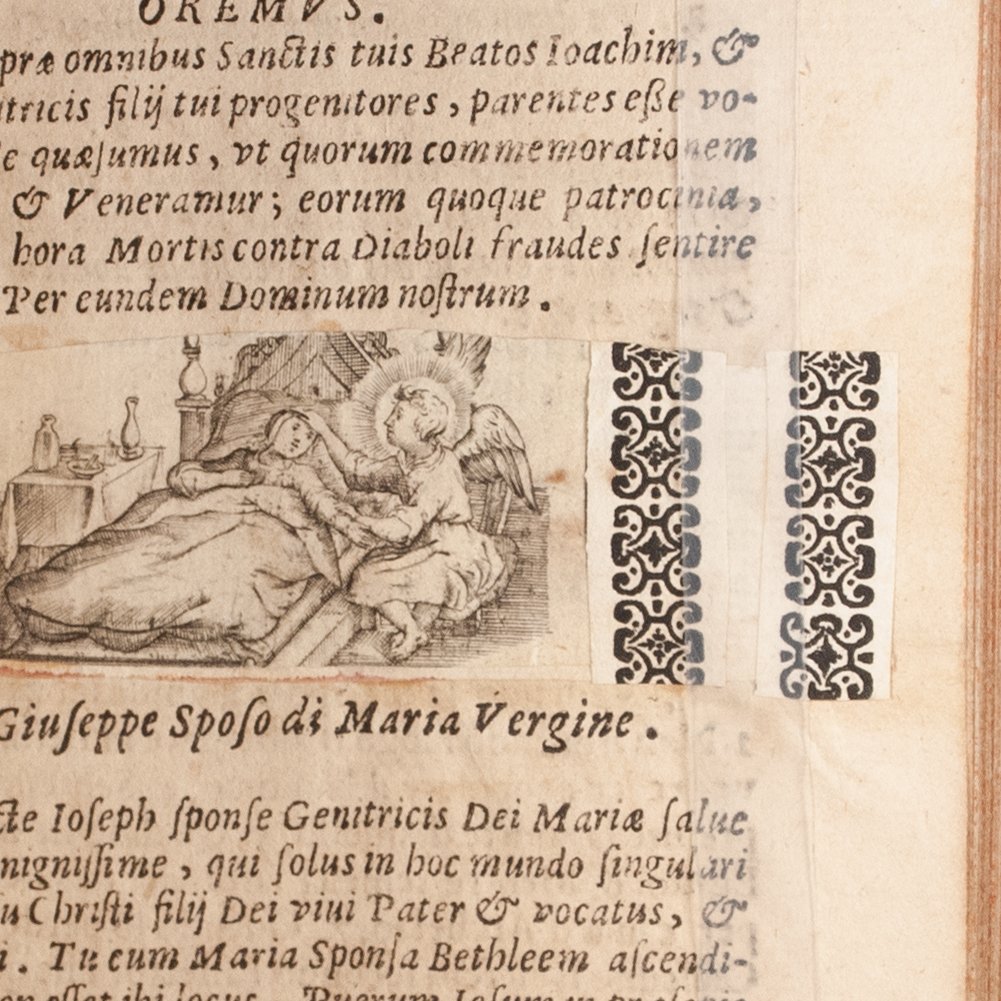
Second edition of this Catholic devotional work, following the first of 1670, and followed by at least three others through 1722. The text is predictably focused on keeping its readers on the virtuous straight and narrow. We're especially fond of the third section, with pious remarks arranged under topical headings. Under curiosity, for example, we're informed that "the devil has many focal points of activity, and among these curiosity is the most important" (p. 530-531; Il demonio ha molti luoghi topici, de quali si siserve, è tra questi principalissimo e la curiosità). At end is an adaptation of Loyola's Spiritual Exercises. ¶ Illustrated with a rather rustic woodcut of the Virgin and Child facing p. 1, the Virgin pictured holding an image of the Virgin and Child, and we rather suspect a small square in the latter is meant to be yet a third appearance of the image. It's a wonderful little Droste effect, of an image repeated within itself. Facing p. 222 is a much more finely executed engraving by Sister Isabella Piccini (signed Suor Isabella Piccini F[ecit]), depicting John the Evangelist giving Mary the Eucharist. Piccini learned the craft from her father and joined Venice's Convent of Santa Croce in 1666. She was rather prolific, and her work proves her capable of "using the burin with no small skill,—a case that we suppose can hardly be matched," Pompeo Molmenti wrote of the very limited class of cloistered women engravers. Some of her prints were published by Antonio Remondini, which would have ensured her broad distribution in Europe. ¶ More compelling still, in what appears to be an otherwise blank spot on p. 469, an early user has added their own small engraving of a bedridden woman tended to by an angel, flanked on either side by a pair of letterpress ornament strips. This modest intervention makes the book a direct participant in an embellishment practice that dates to the 15th century, when prints might be pasted into medieval manuscripts. Commenting on this custom, David Pearson notes that “there are numerous surviving examples of religious texts printed around the turn of the sixteenth century which have been embellished by pasting in cut-out woodcuts. These kinds of homespun enhancements are less commonly encountered there after, as print culture matured, but there are exceptions" (Pearson). ¶ Scarce. WorldCat reports no holdings in North America.
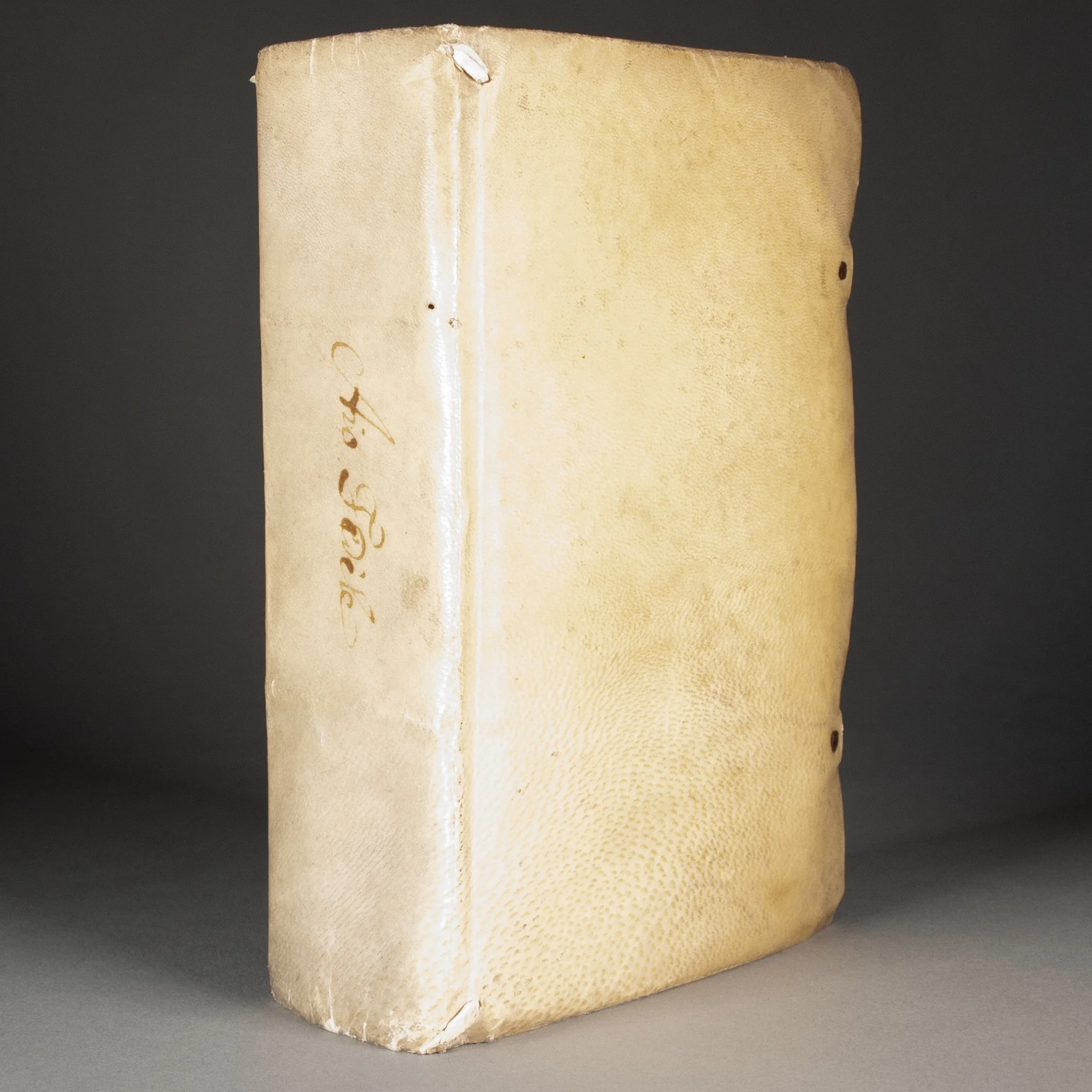
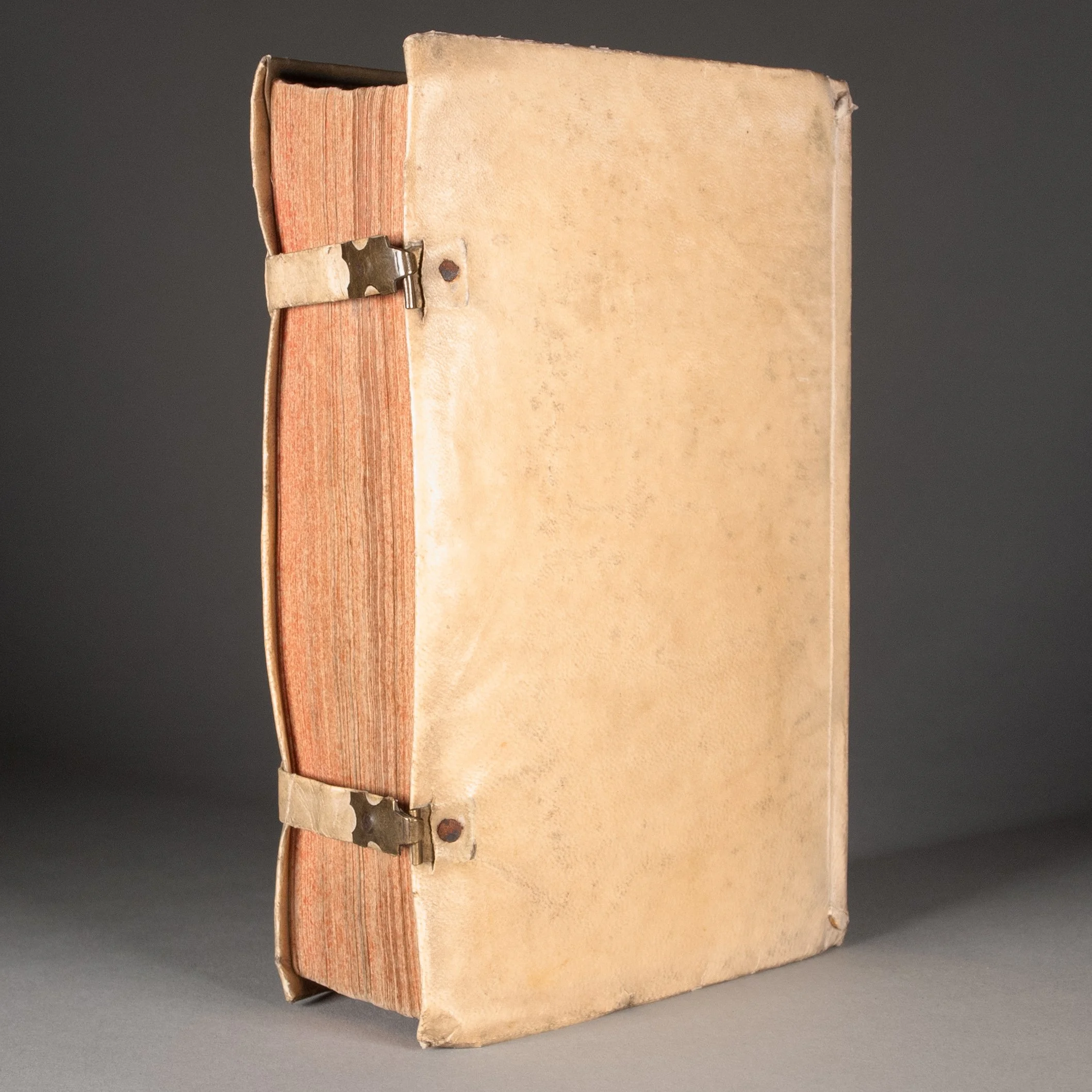
CONDITION: Old semi-limp parchment, with original brass clasps. ¶ Glue from the embellishment has darkened the leaf's other side; scattered light foxing; leaves 2V7 and 3C8 torn in the lower margin, both repaired, the former affecting just a little text. Parchment just lightly soiled, and gently worn at the extremities; bit of worming to the tops of the paste-downs.
REFERENCES: Gaetano Melzi, Dizionario di opere anonime e pseudonime di scrittori italiani (1848), v. 1, p. 25 (the 1670, and attesting authorship) ¶ Ian Mclean, Episodes in the Life of the Early Modern Learned Book (2020), p. 316 ("Frambotto was active between 1624 and 1664; his heirs acted as publishers from 1665 to 1668, after which the imprint of the firm recorded only the name of Pietro Maria Frambotto"); Pompeo Molmenti, Venice (1908), p. 86 (cited above); Francesco Ludovico Maschietto, Elena Lucrezia Cornaro Piscopia (2007), p. 75 ("Isabella Piccini (a nun in Venice from 1665 to 1692) stands out and was considered until the last century as very rare and highly prized"); Alastair Compston, 'All Manner of Ingenuity': A Bio-Bibliography of Dr Thomas Willis 1621-1675 (2021), "Portraits of Thomas Willis," unpaginated ebook (decent bio of Piccini; "Not surprisingly most of her work adorned religious texts, but Isabella also illustrated books on philosophy, horses and poetry, working closely with the firm of printers founded by Giovanni Antonio Remondini (b.1634) who worked in Bassano de Grappa from the mid-seventeenth century and distributed Isabella's prints throughout Europe"); David Pearson, Speaking Volumes (2022), p. 94 (cited above); Yann Sordet, Histoire du livre et de l'édition (2021), p. 177 ("among other uses, woodcut images were promptly used to illustrate some manuscripts")
Item #827