
Decorated manuscript waste binding
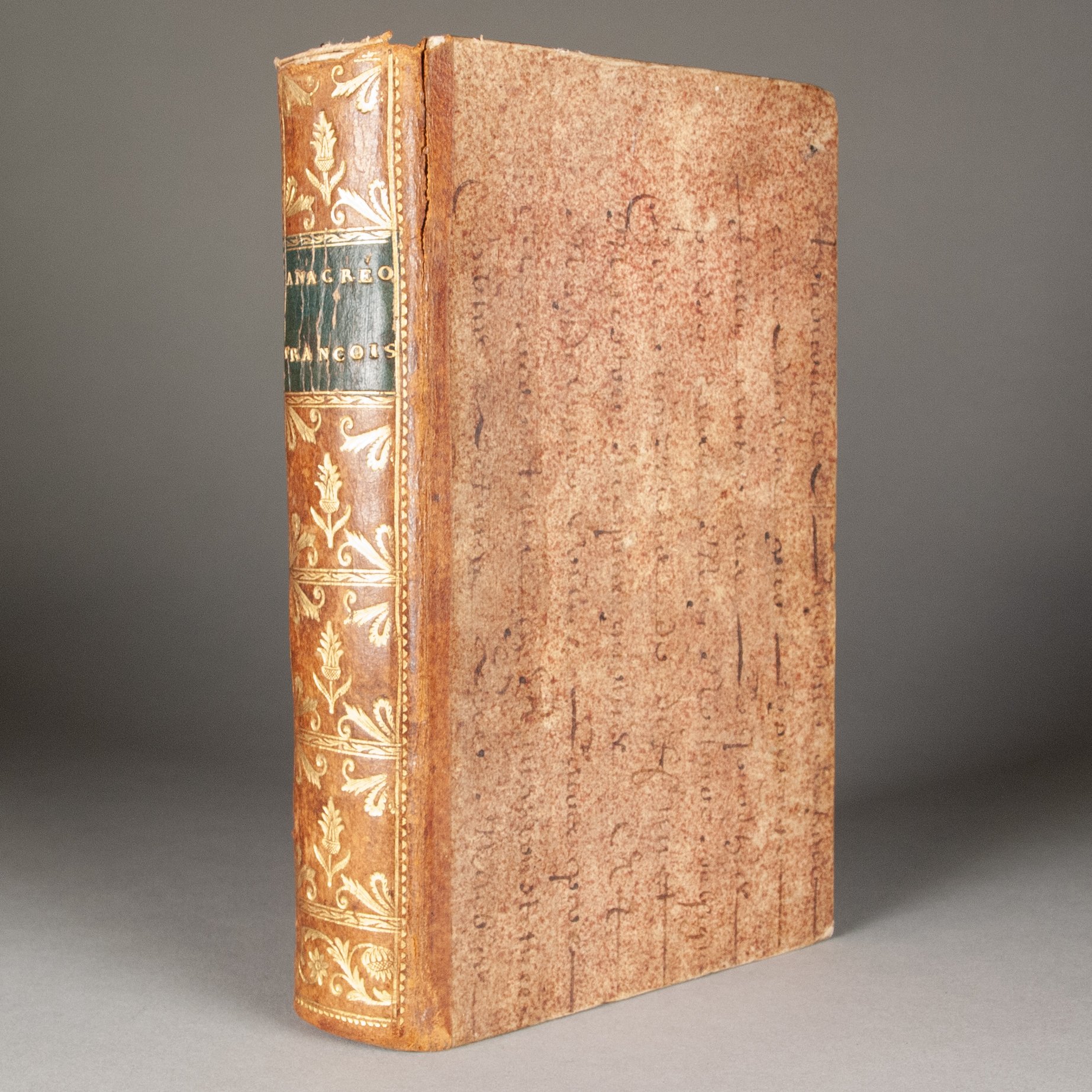
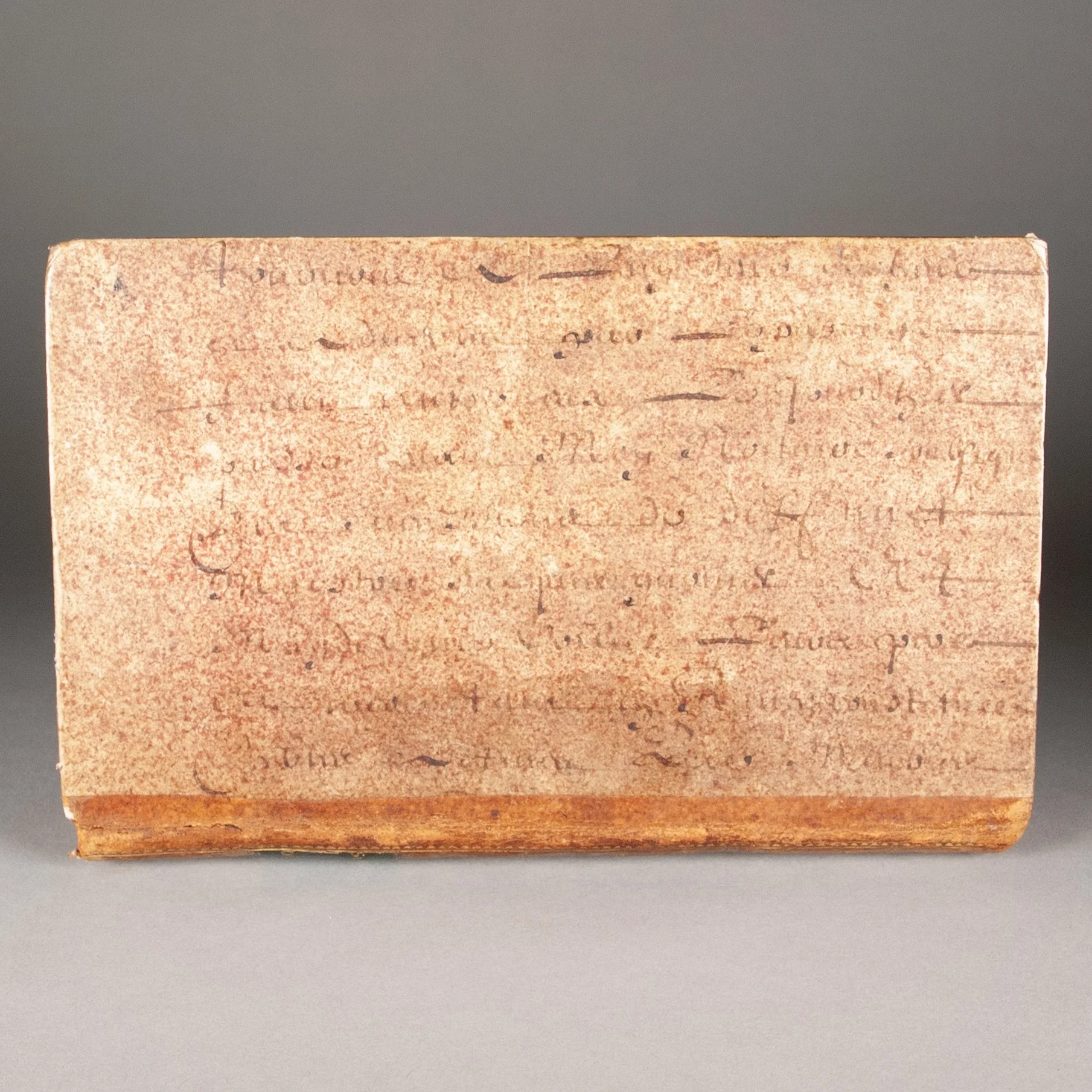
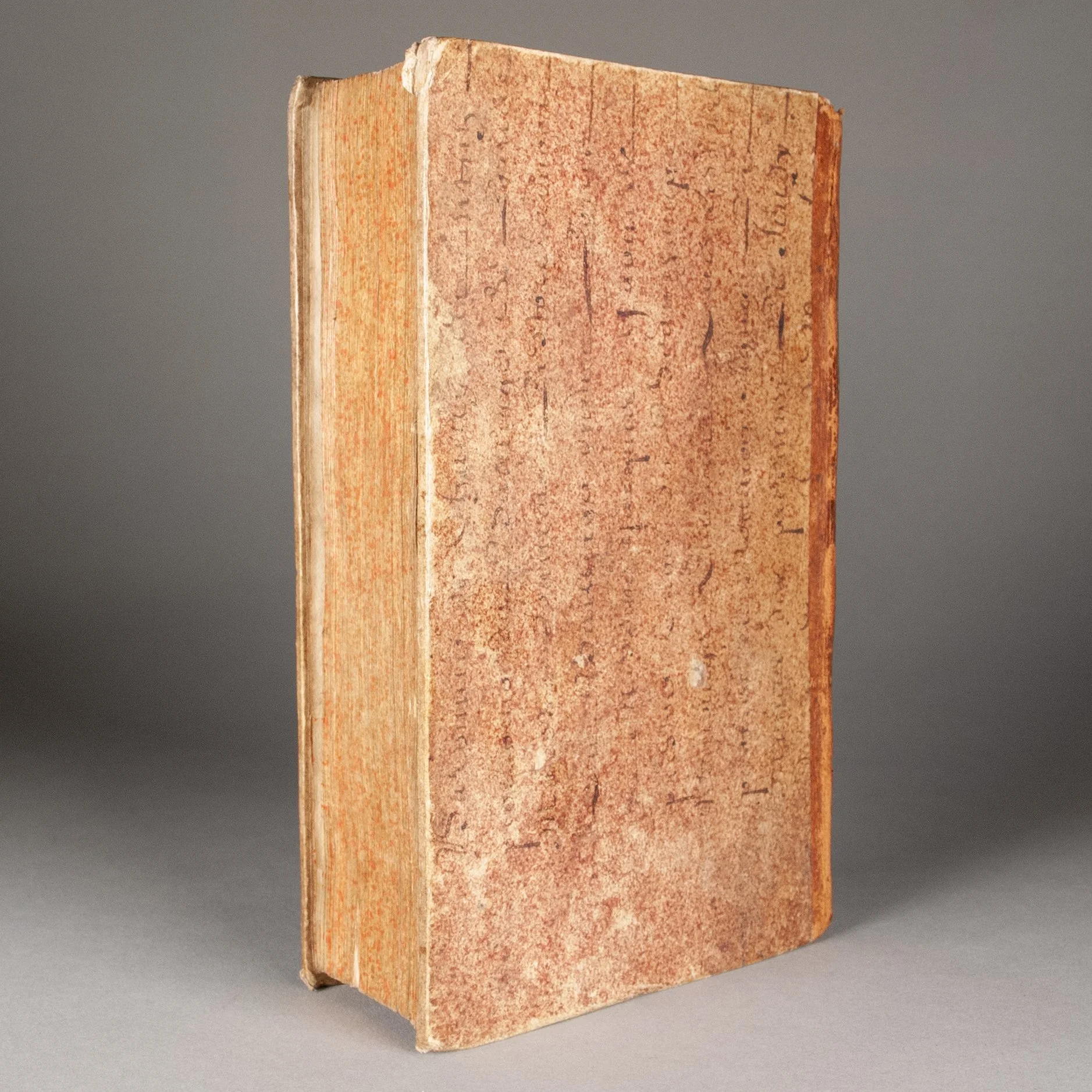
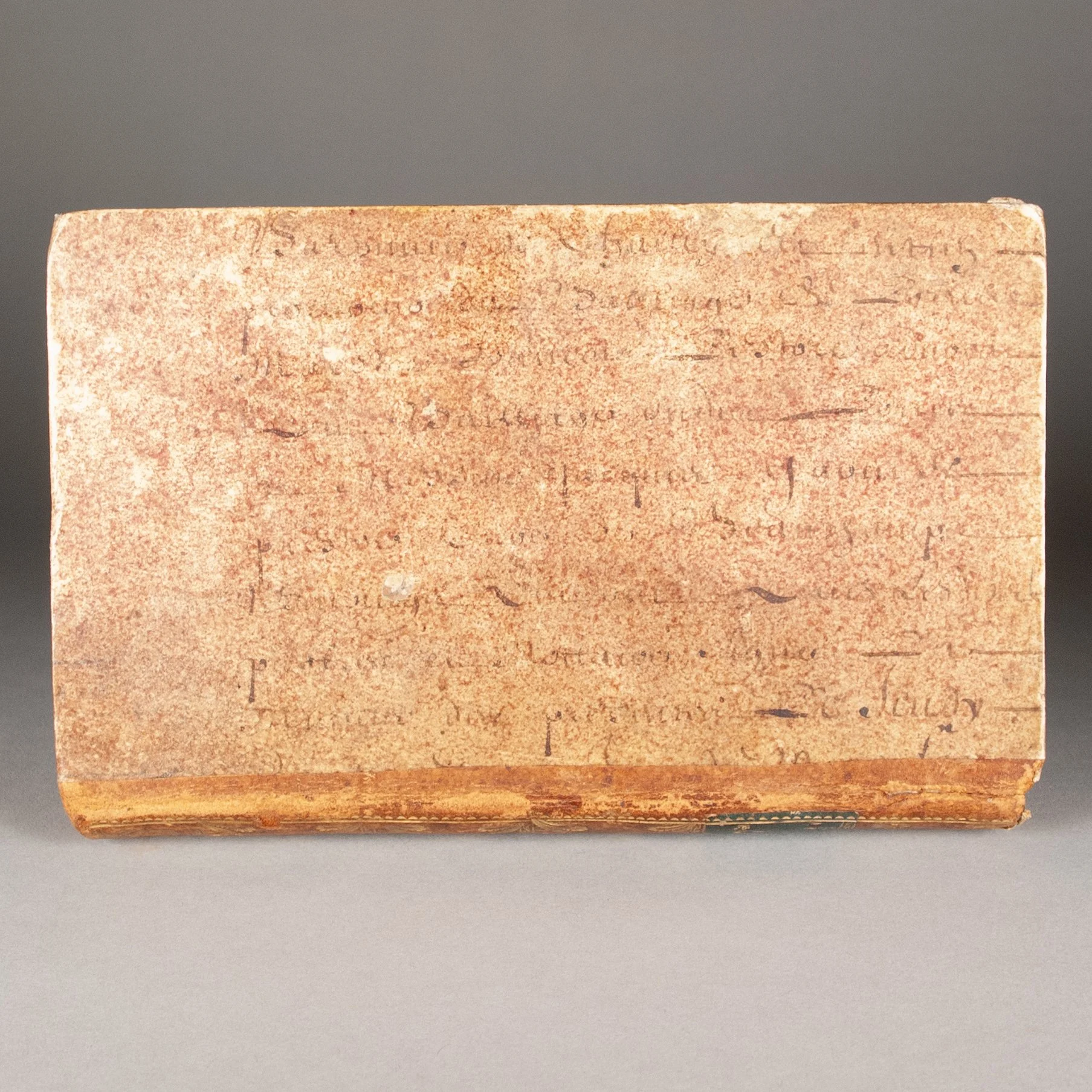
Decorated manuscript waste binding
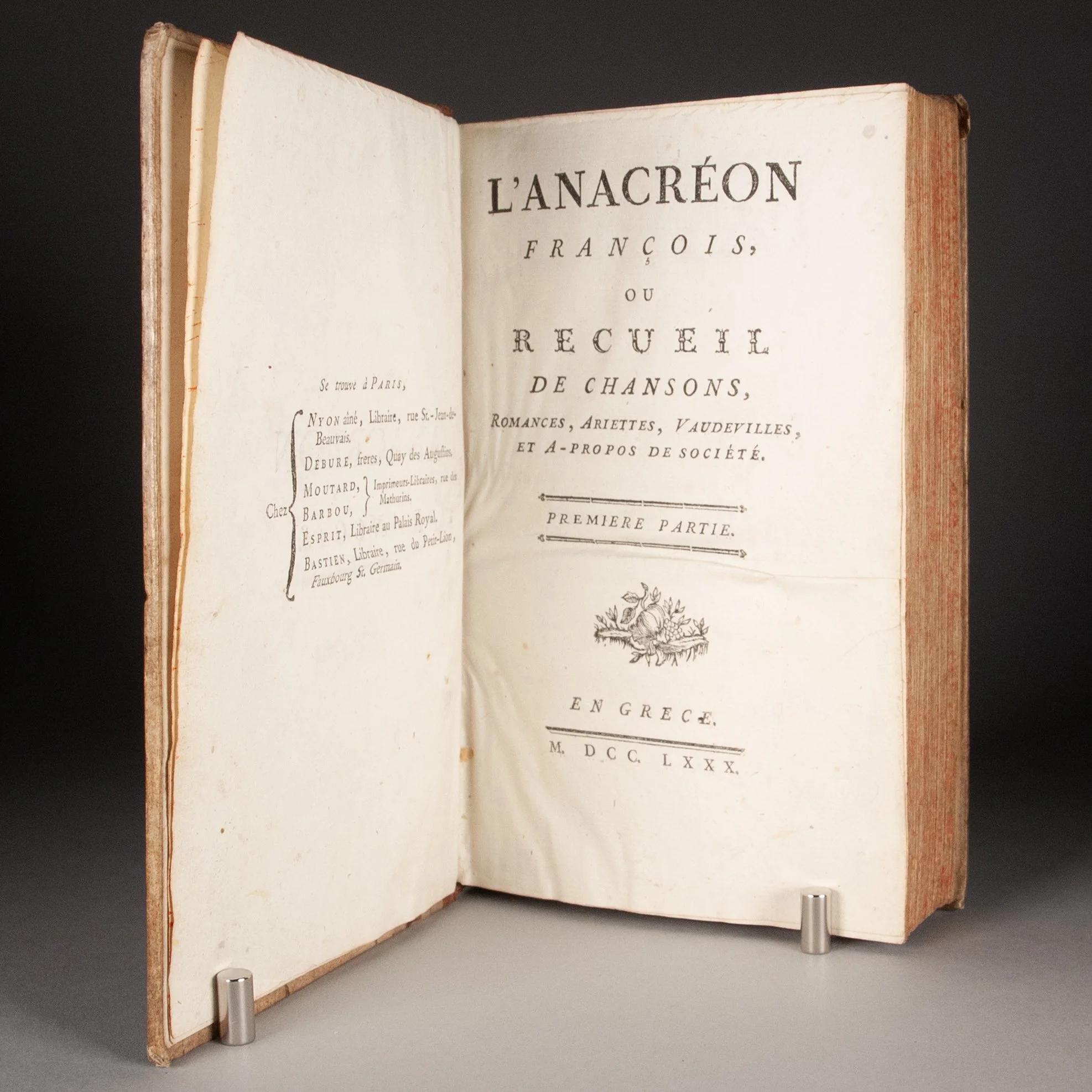
L'Anacréon françois, ou, Recueil de chansons, romances, ariettes, vaudevilles, et a-propos de société
edited by Louis-Pierre Couret de Villeneuve
Greece [Paris?]: Nyon aîné, et al., 1780
[6], 280; [4], 248 p. (2 v. in 1) | 8vo | pi^4 A^8(-A1) B-R^8 S^4; pi^2 A-P^8 Q^4 | 172 x 105 mm
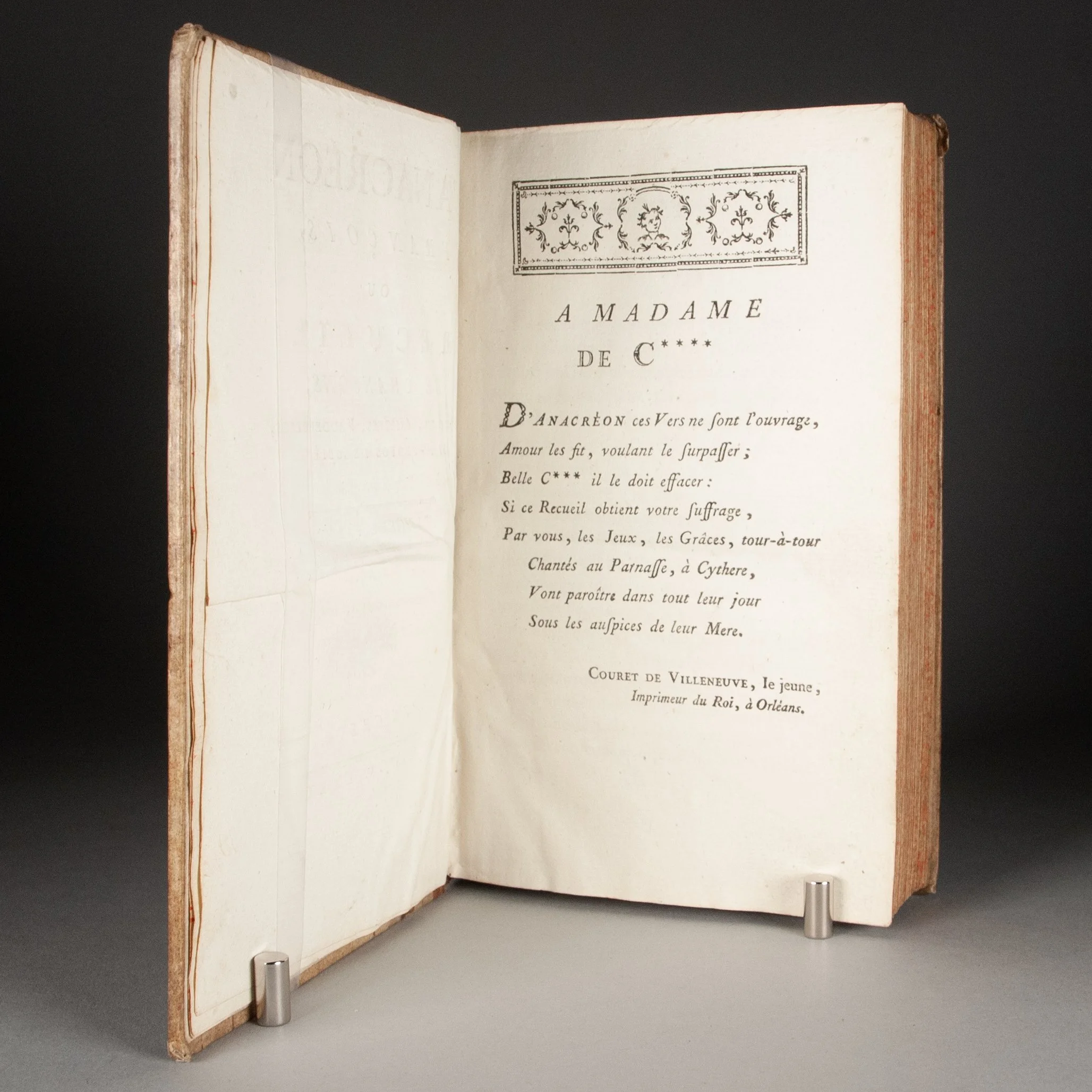
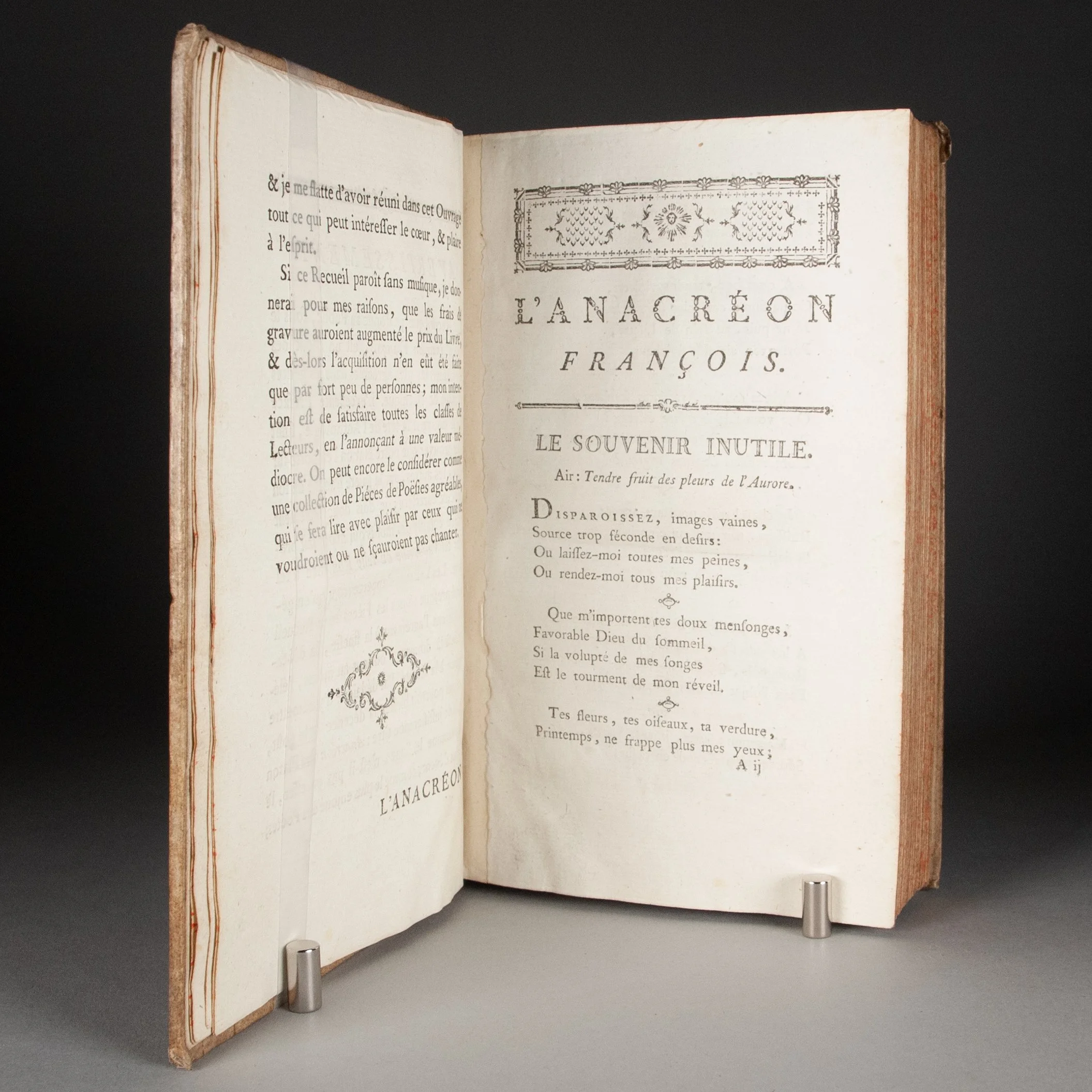
First edition of this collection of libertine French lyrics, "a selection of the most agreeable of erotic and Bacchic productions" (pi4v). Many poems indicate the tune to which they should be performed. Handsomely printed, too, with fairly liberal use of type ornaments like those popularized by Fournier. Each volume has an index at end, which seem to be missing from most copies in WorldCat. We wonder if ours might belong to a later issue. ¶ Here bound using the parchment of a French document—likely of a legal character—which was subsequently sprinkled with a purplish red. This was a budget method of rendering waste more suitable for a binding's exterior, though one we've encountered far more often on printed waste. It calls to mind those examples of marbling over printed waste, for example, but manuscript.
CONDITION: Contemporary quarter leather and parchment waste, as described above; spine heavily tooled in gold and with a leather title label; edges sprinkled red. Second volume has separate half title and dated title page. Leaf A1 in v. 1 appears to have been canceled, as the catchword on pi4v matches the start of A2r. ¶ A few scattered marginal tears, nothing affecting text; nickel-sized stain on the final page. Rear joint split an inch down from the top, the front joint a bit more; headcap gone and the corners a bit bumped.
REFERENCES: Anna Reynolds, "'Worthy to be reserved': Bookbindings and the waste paper trade in early modern England and Scotland," The Paper Trade in Early Modern Europe (2021), p. 365 (on British practice, but we suspect it was similar in France: “Contemporary parchment manuscripts begin to appear in bindings in the last quarter of the sixteenth century, replacing medieval manuscripts as availability began to dwindle at the end of the century. This new sort of waste is made up of legal documents such as deeds, leases, wills, writs, legal suits, and indentures; they are often roughly contemporary with the books they bind, having been written only five to ten years before being used as binding waste.”)
Item #877