Rare De Leu engravings | Le Mire's scarcest work
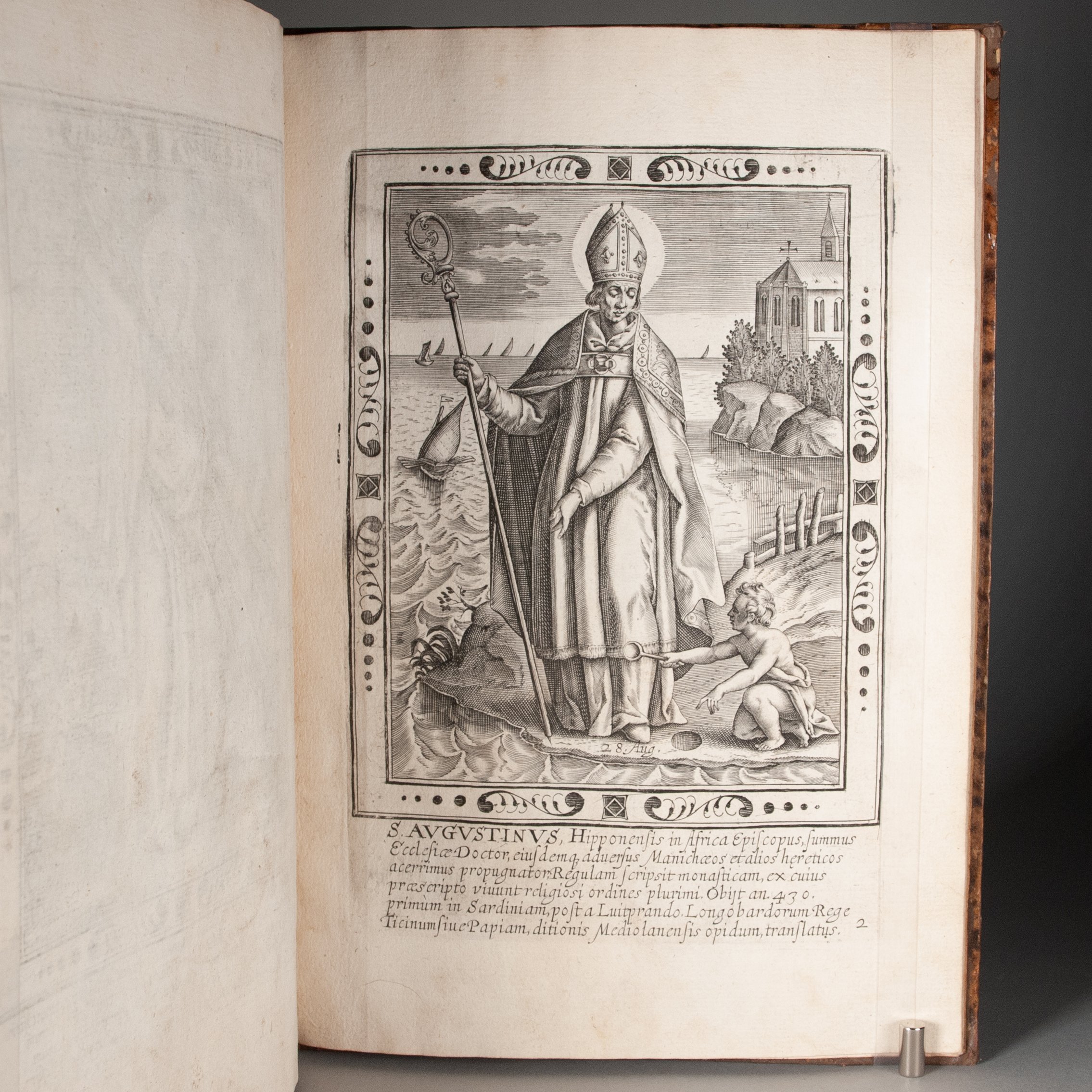
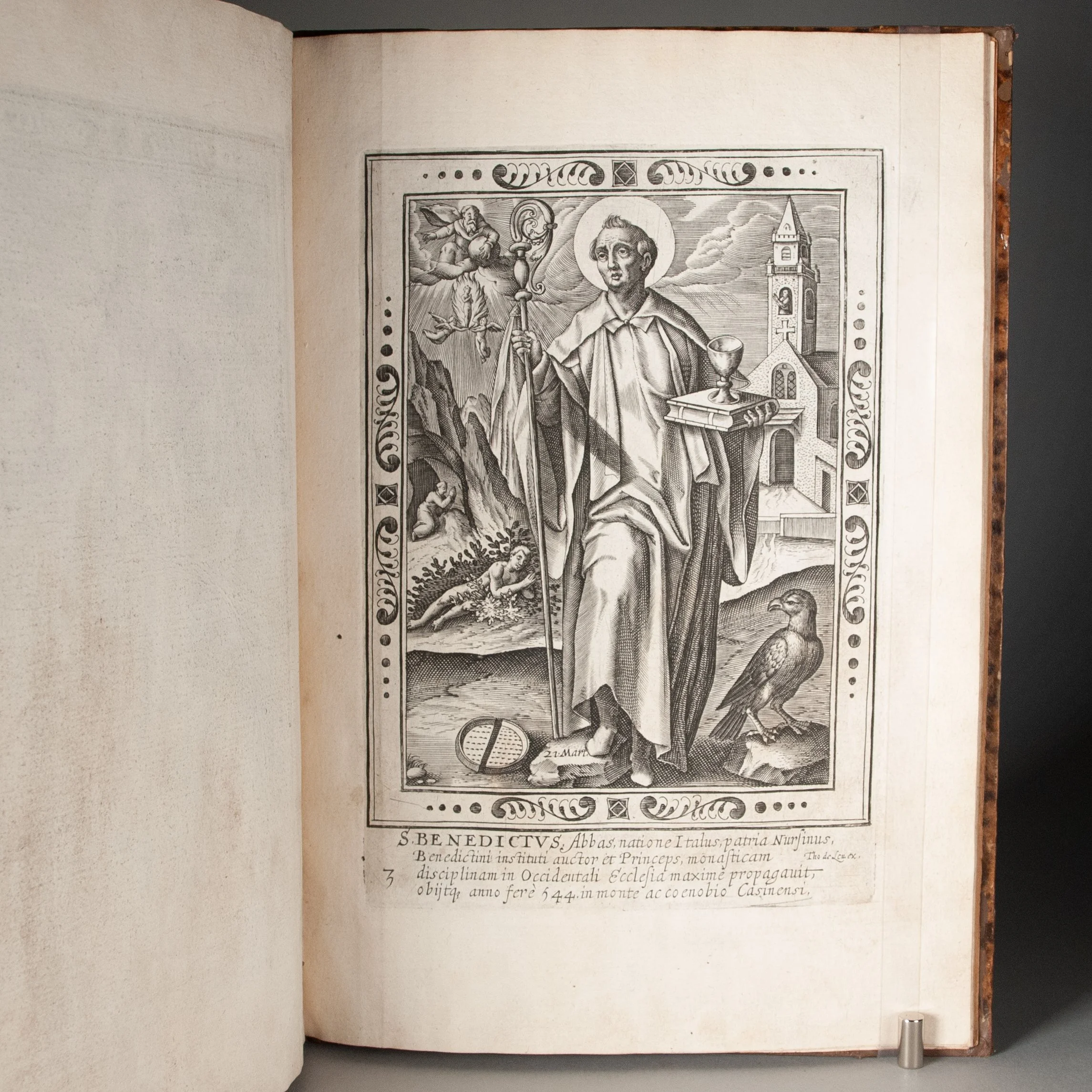
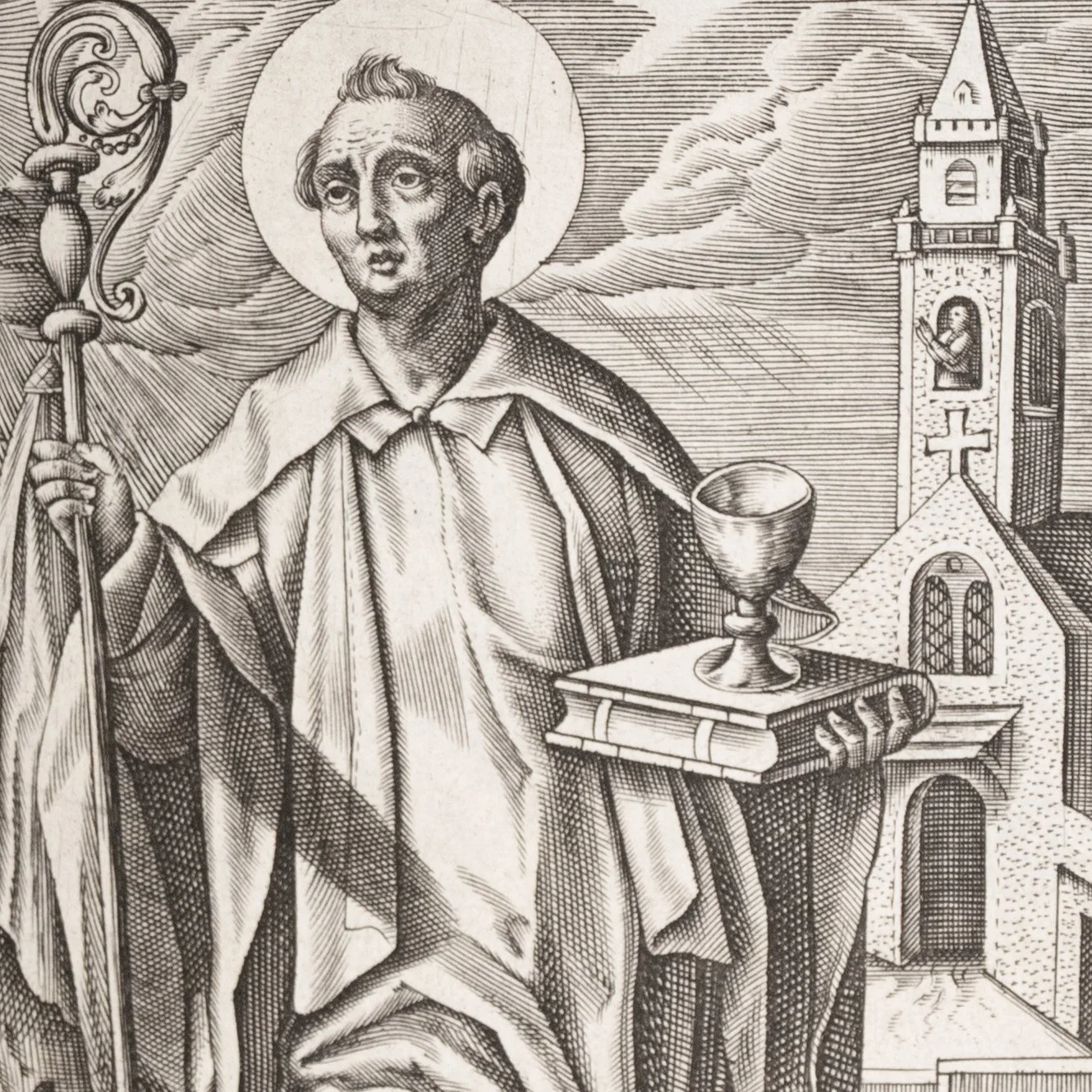
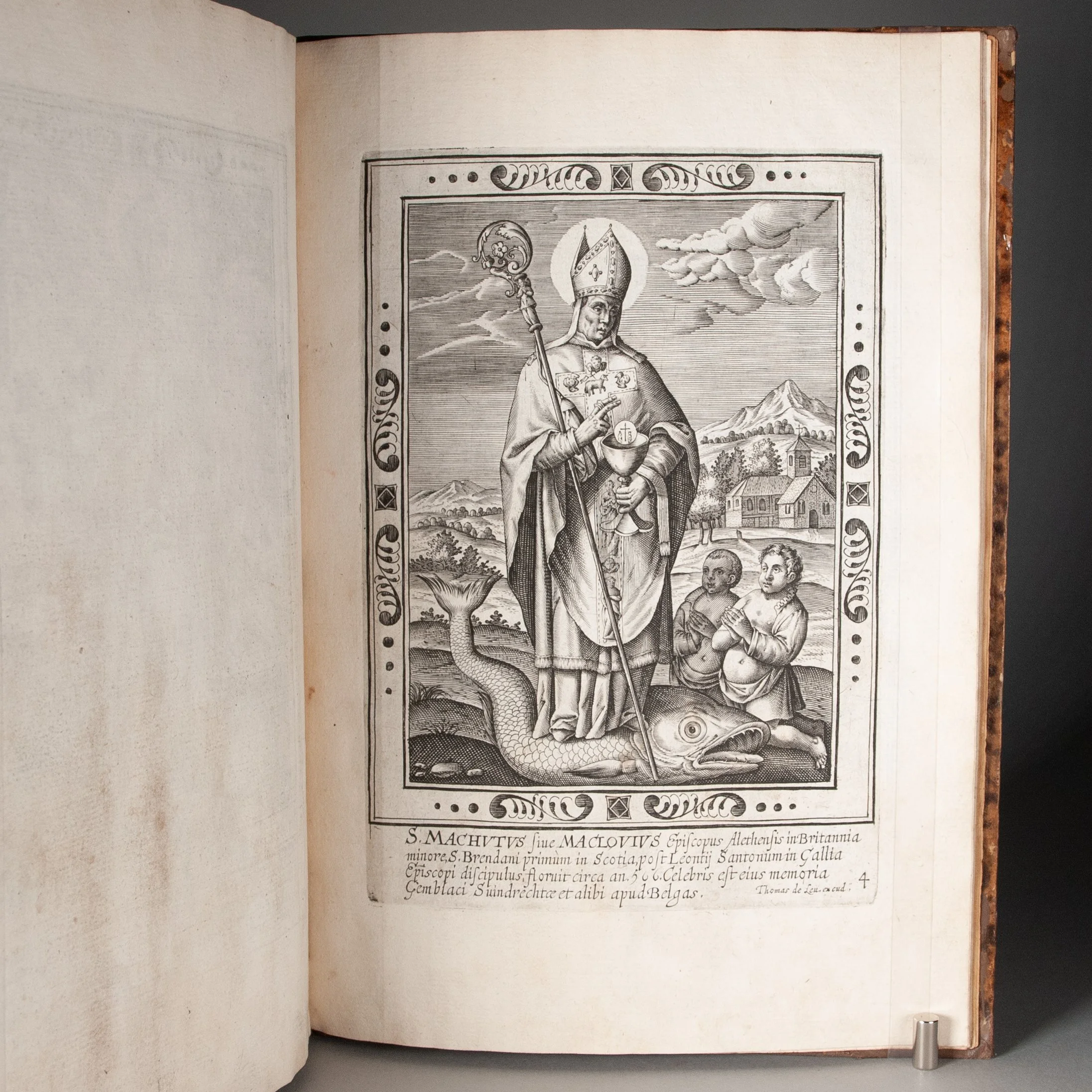
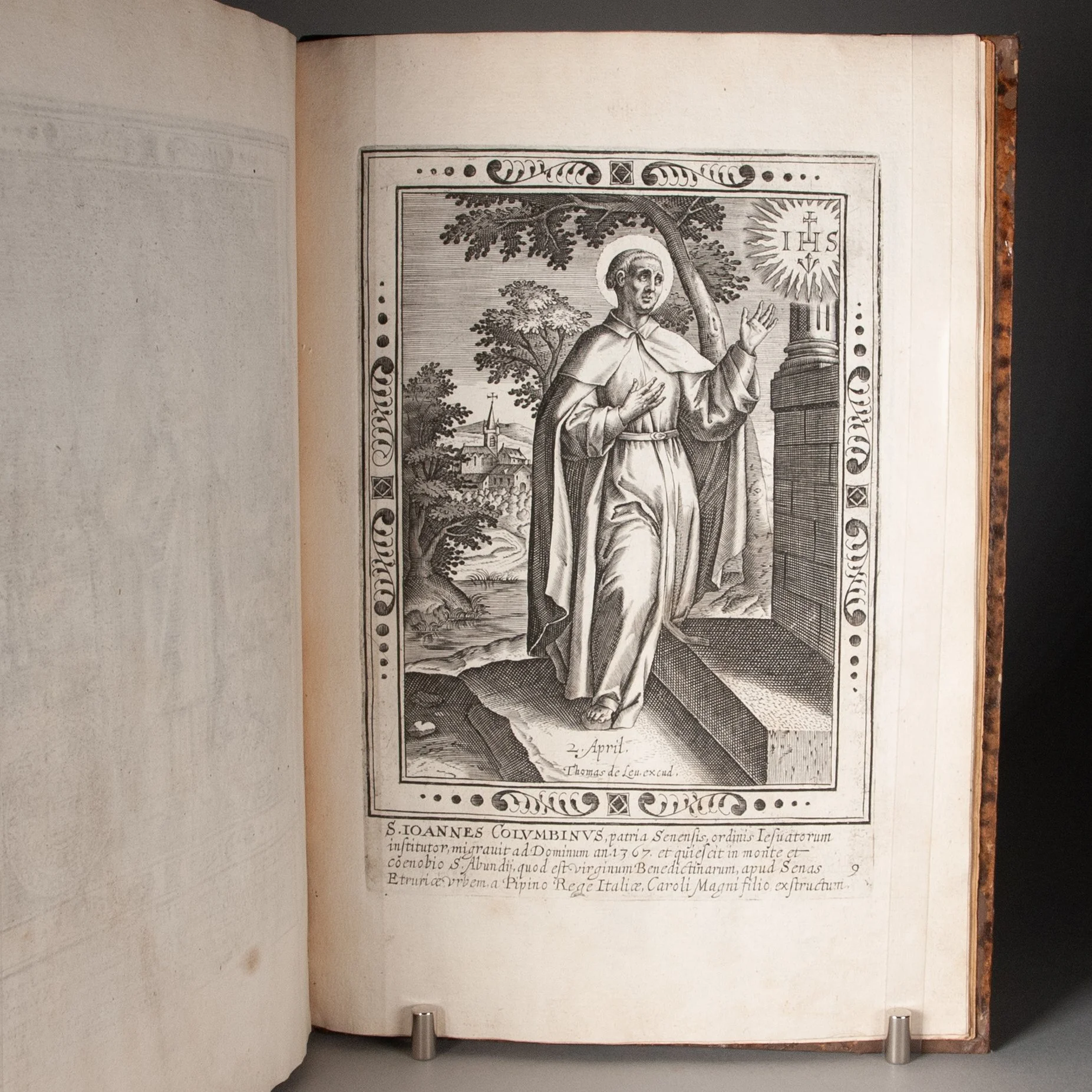
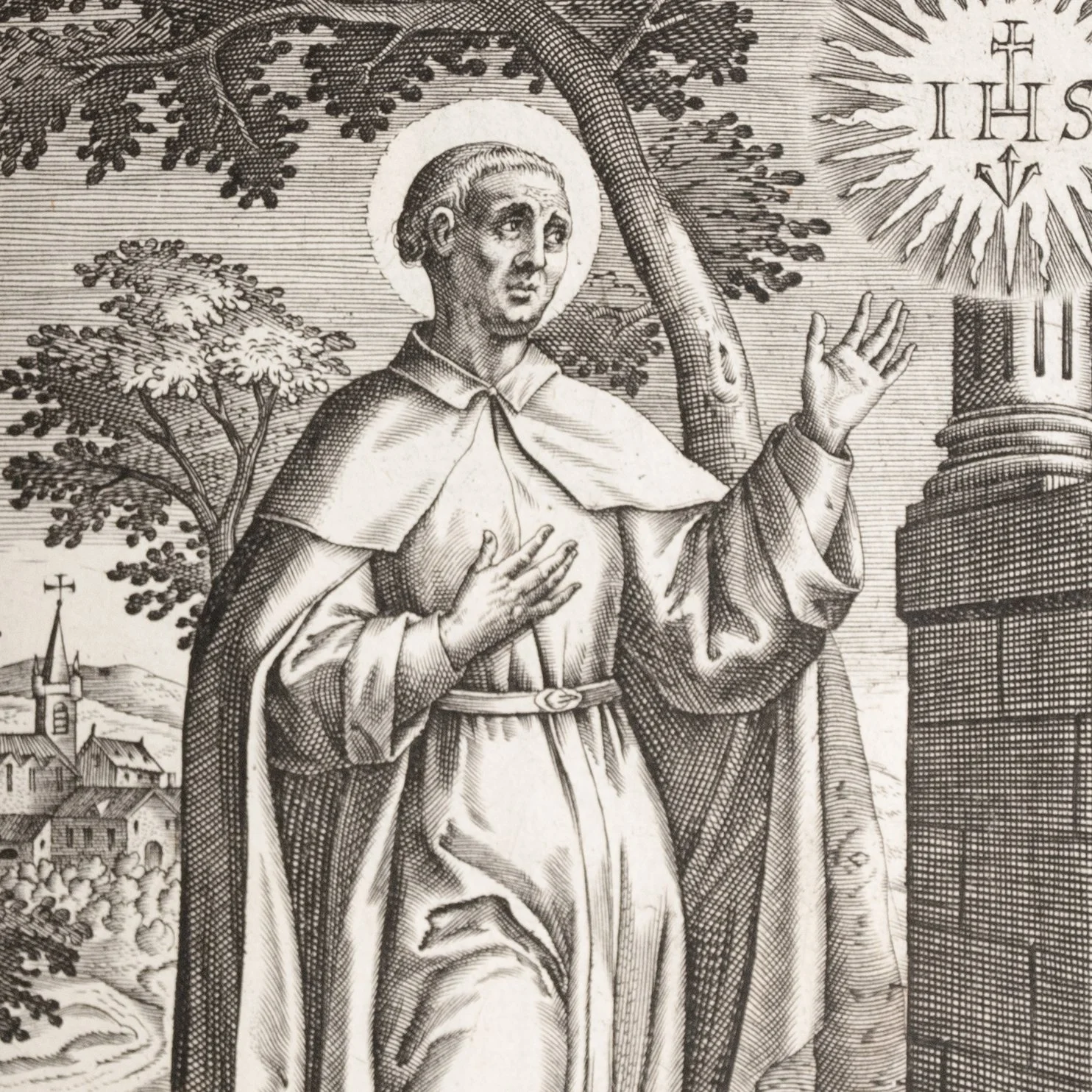
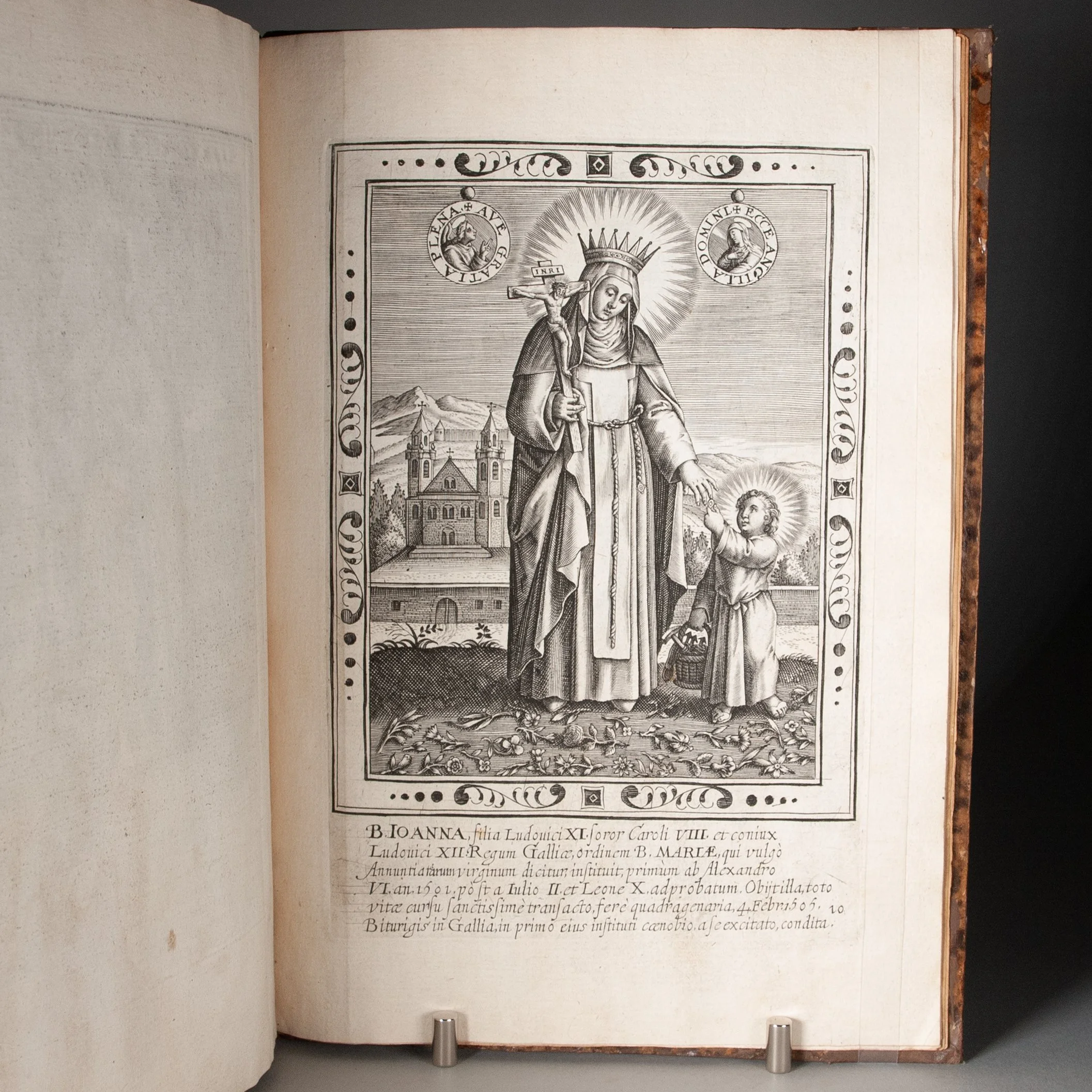
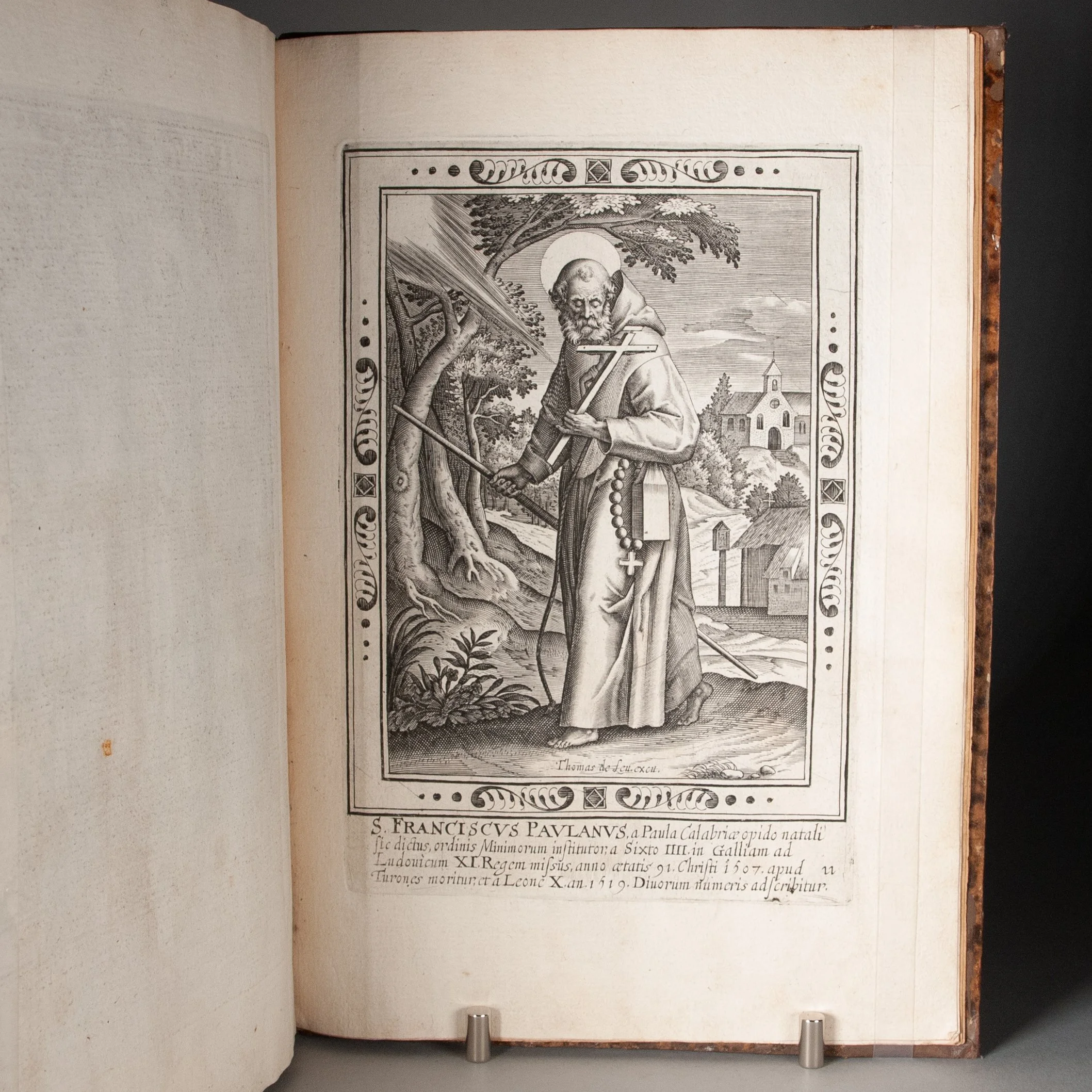
Rare De Leu engravings | Le Mire's scarcest work
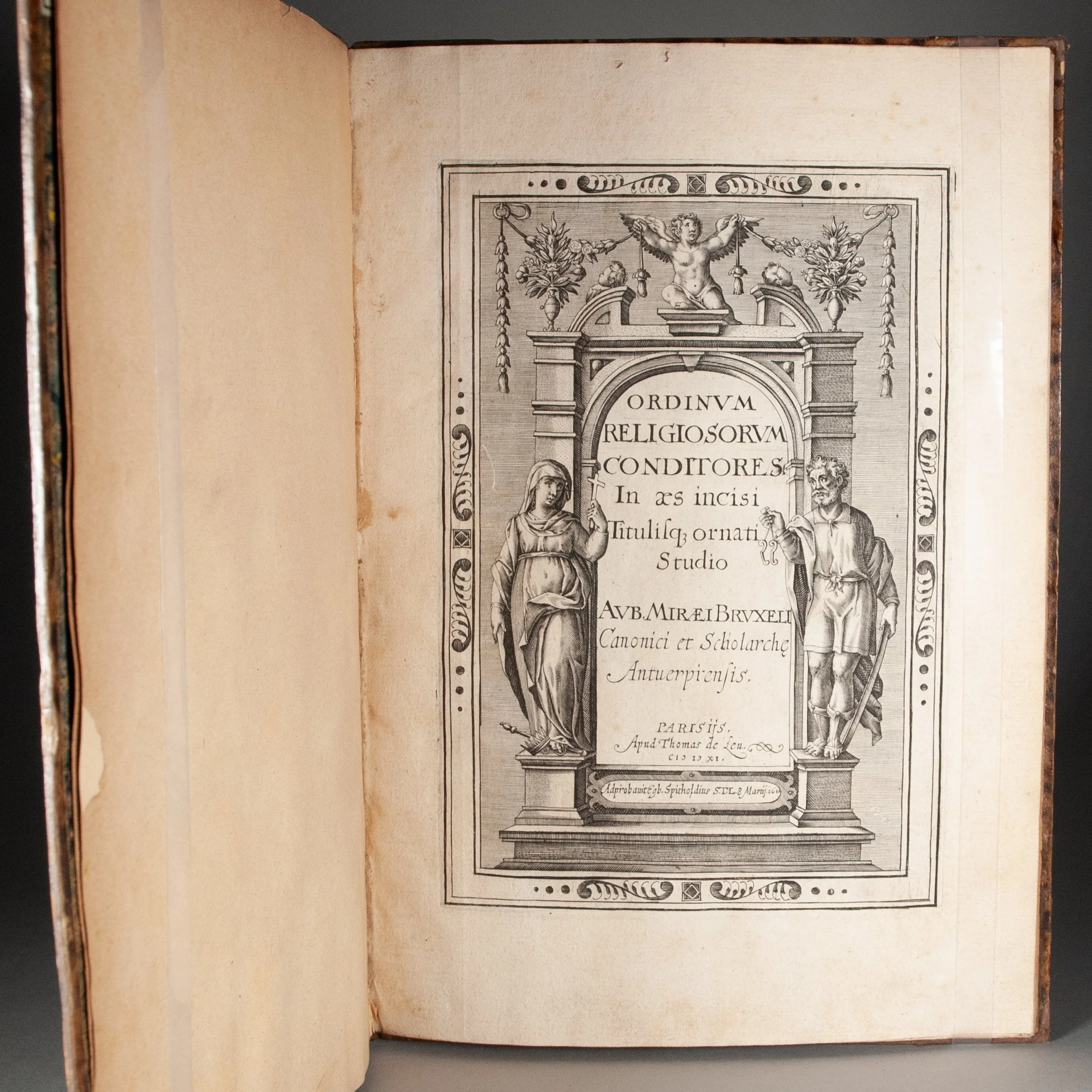
Ordinum religiosorum conditores in aes incisi titulisq[ue] ornati studio
by Aubert Le Mire (Aubertus Miraeus)
Paris: Thomas de Leu, 1611
[1], 13 leaves | Bound suite of prints | 245 x 168 mm
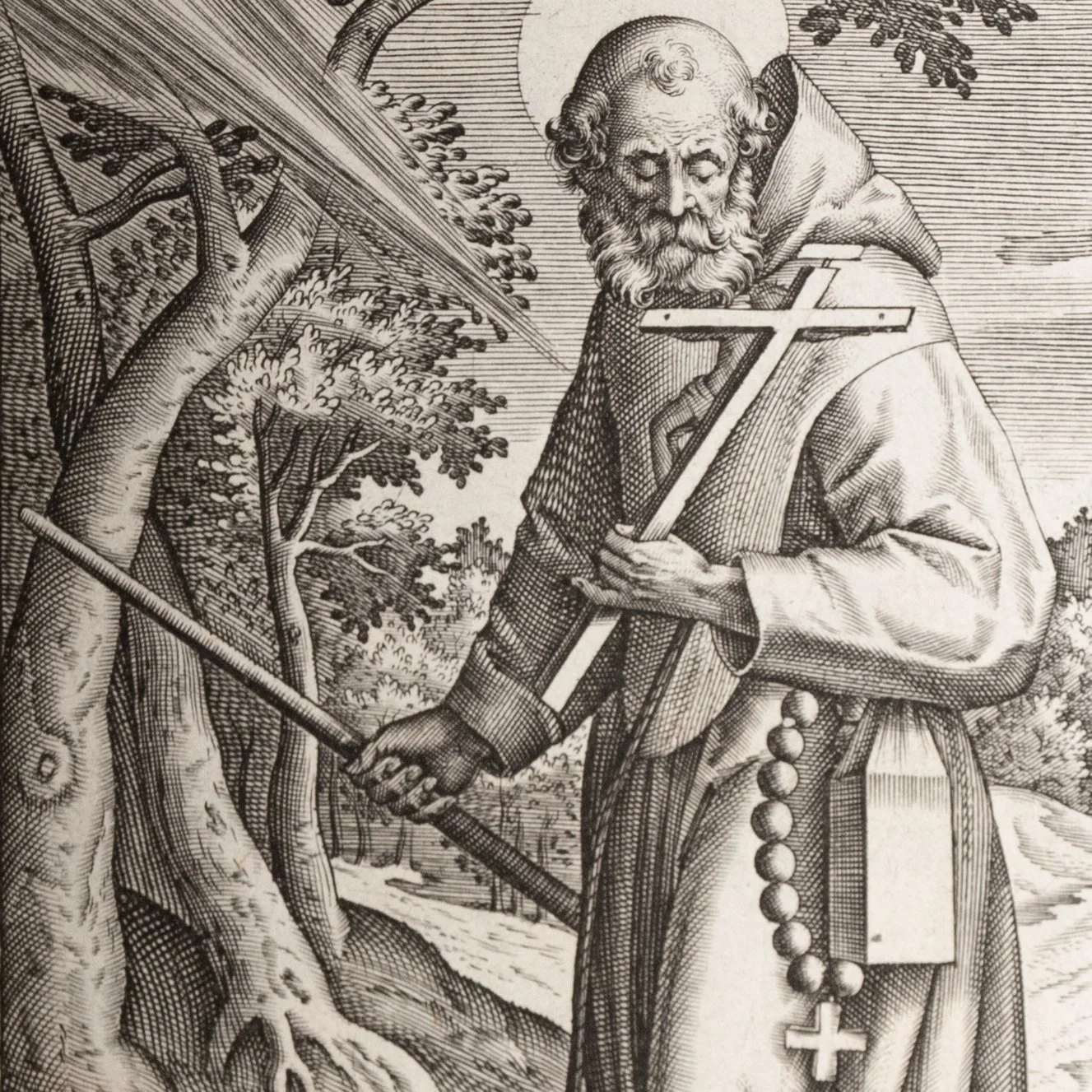
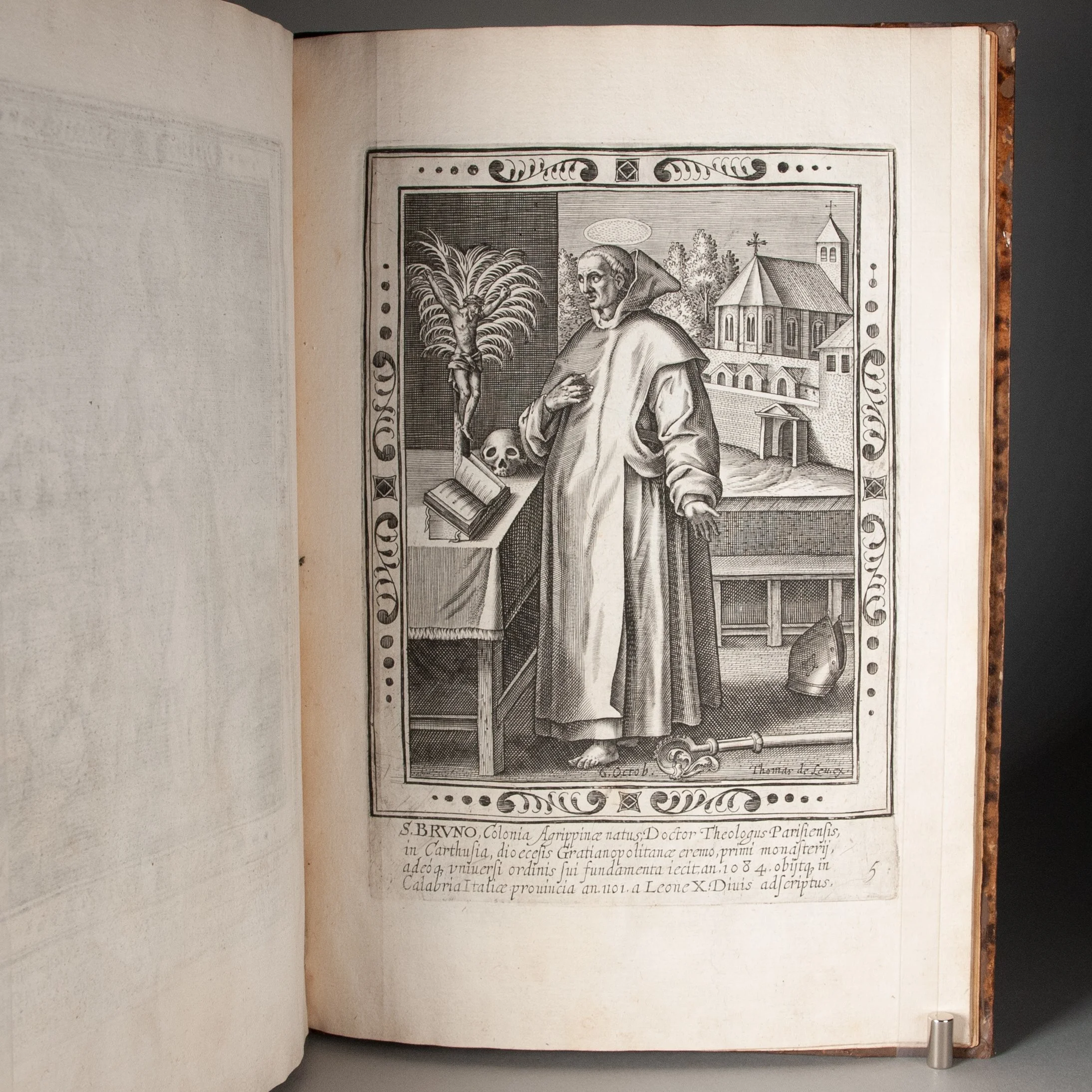
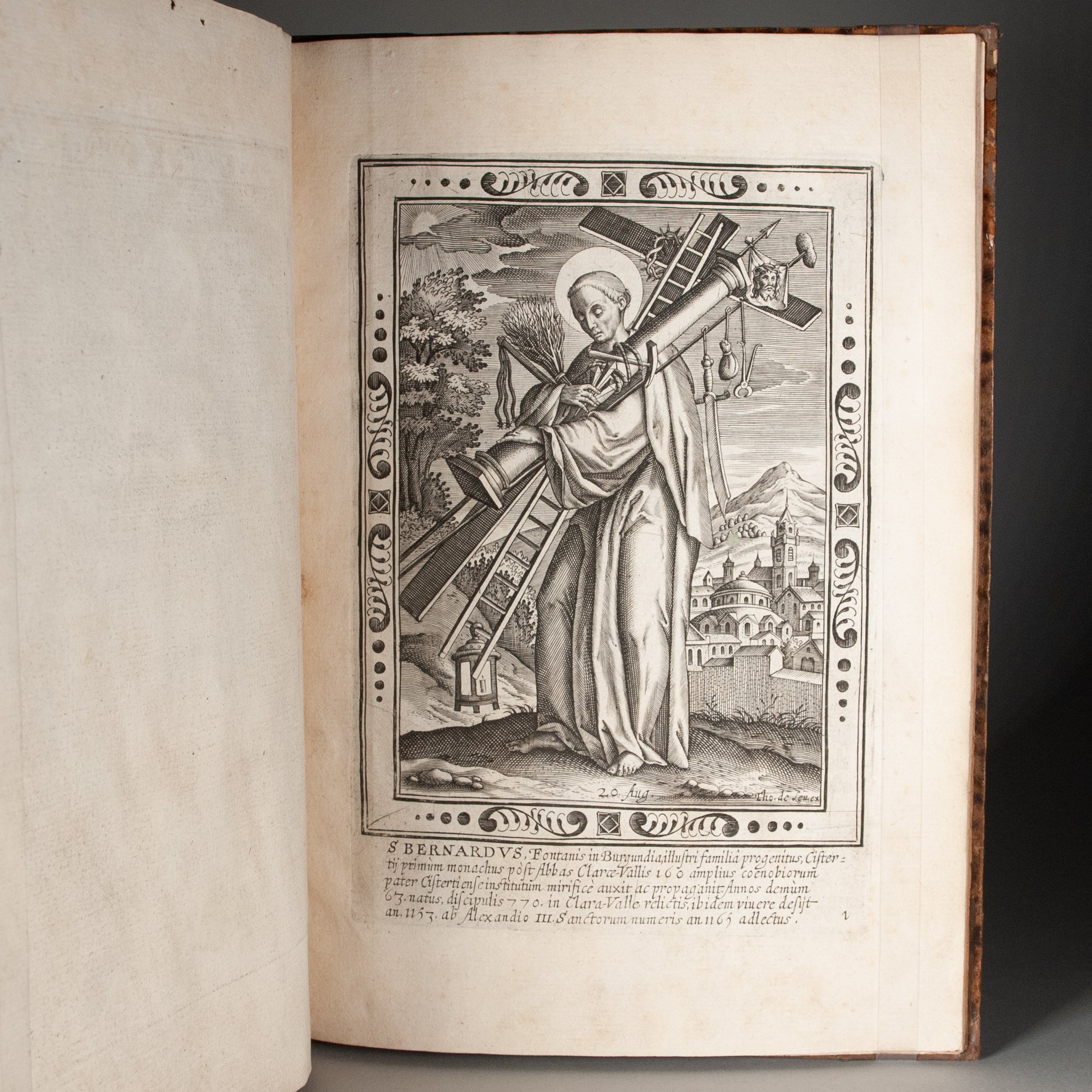
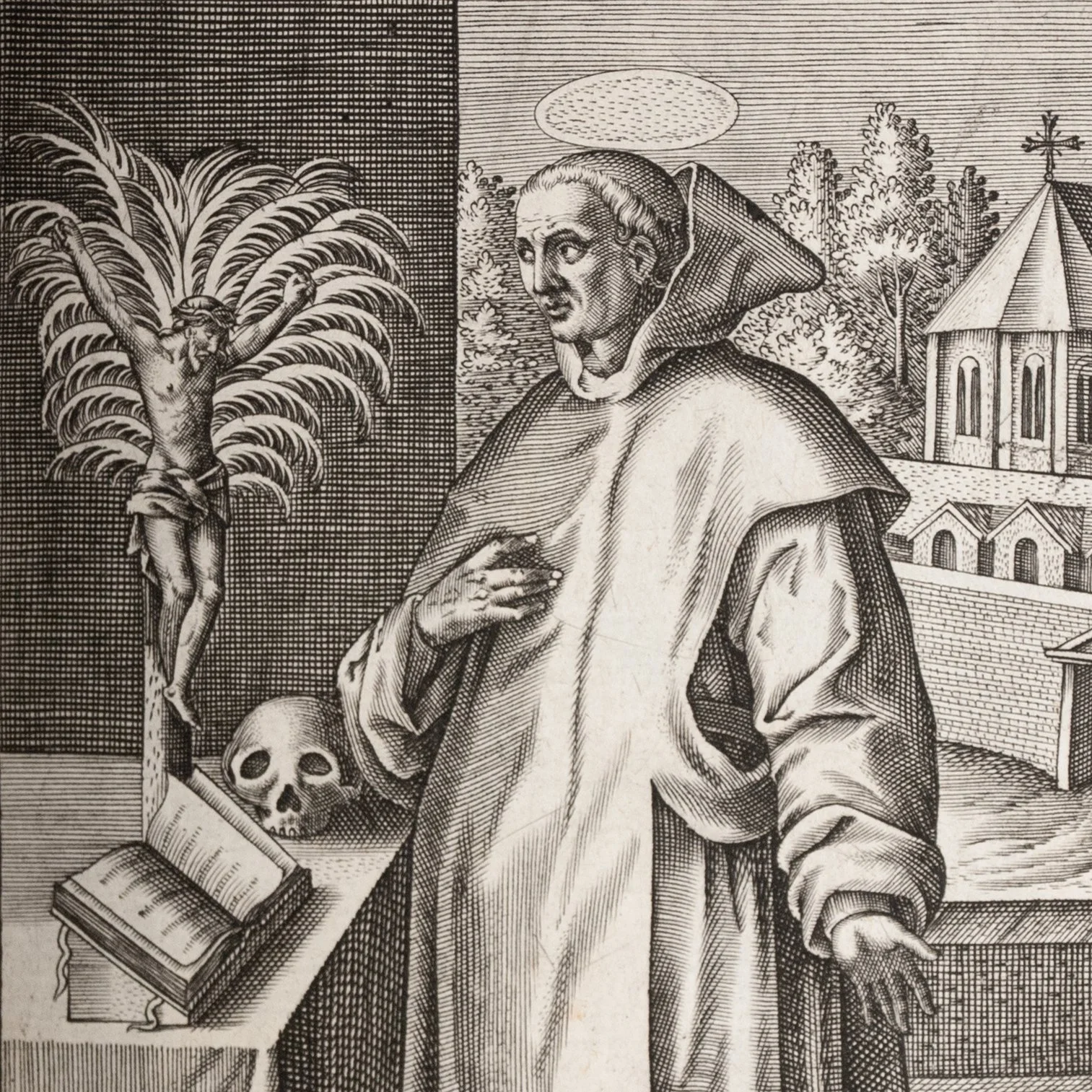
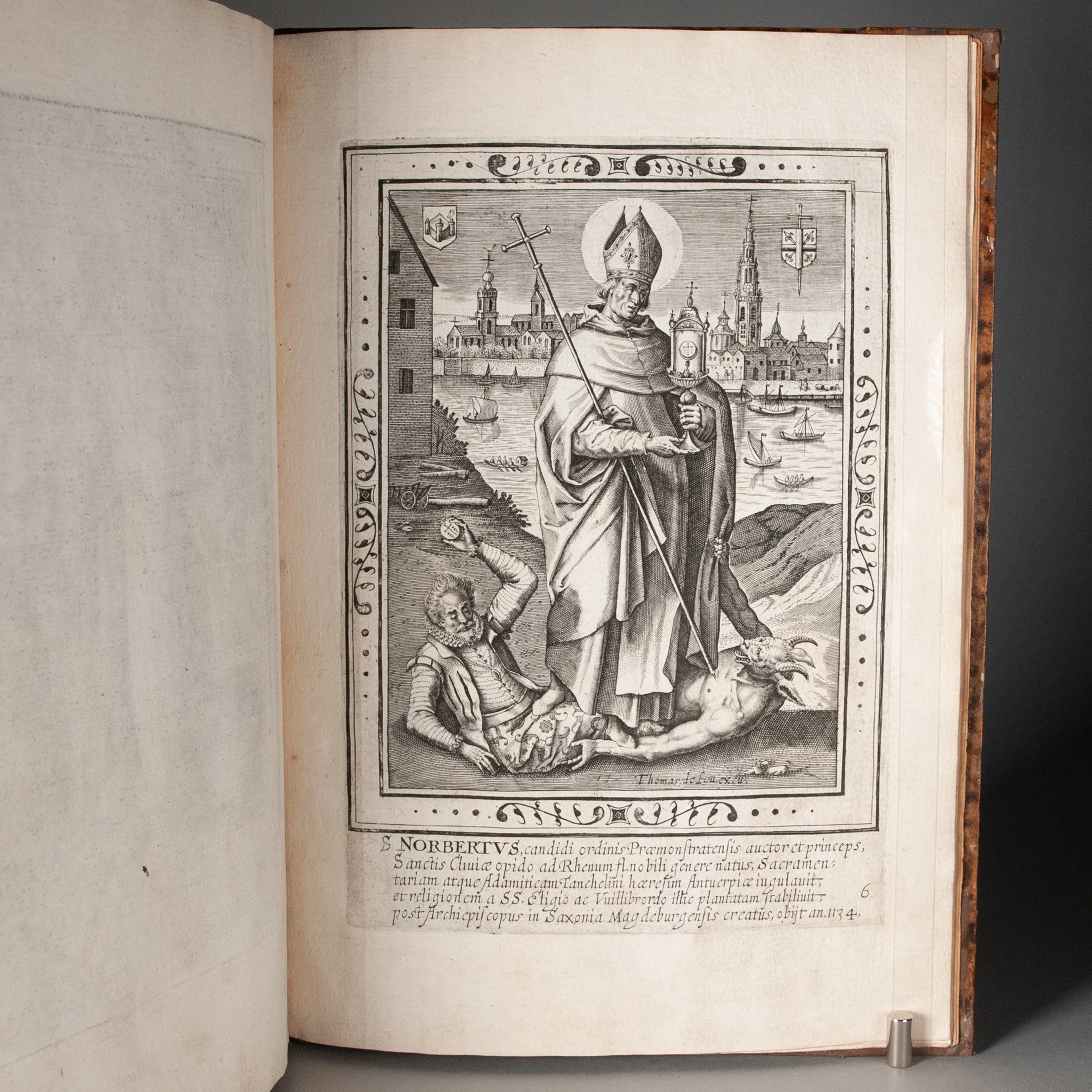
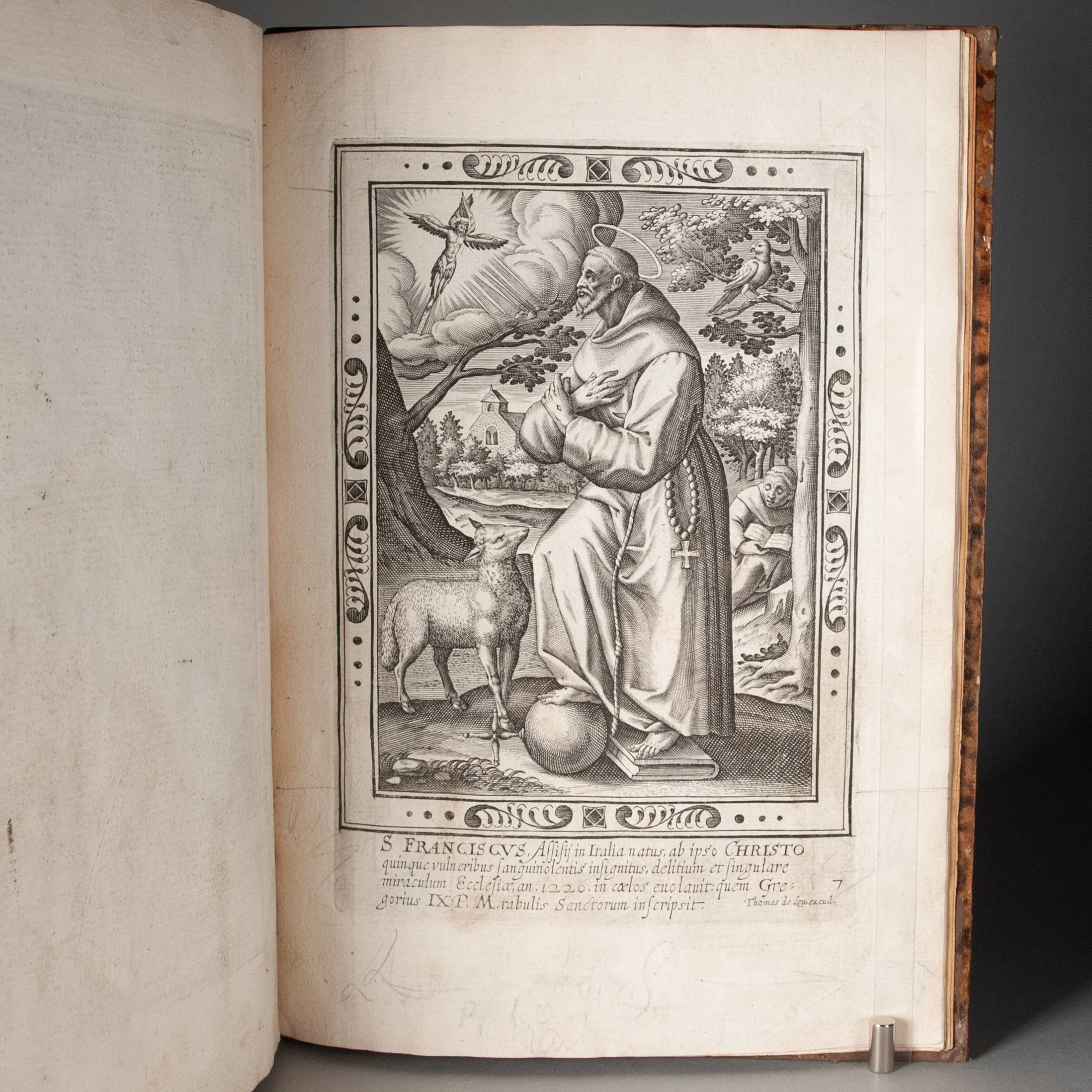
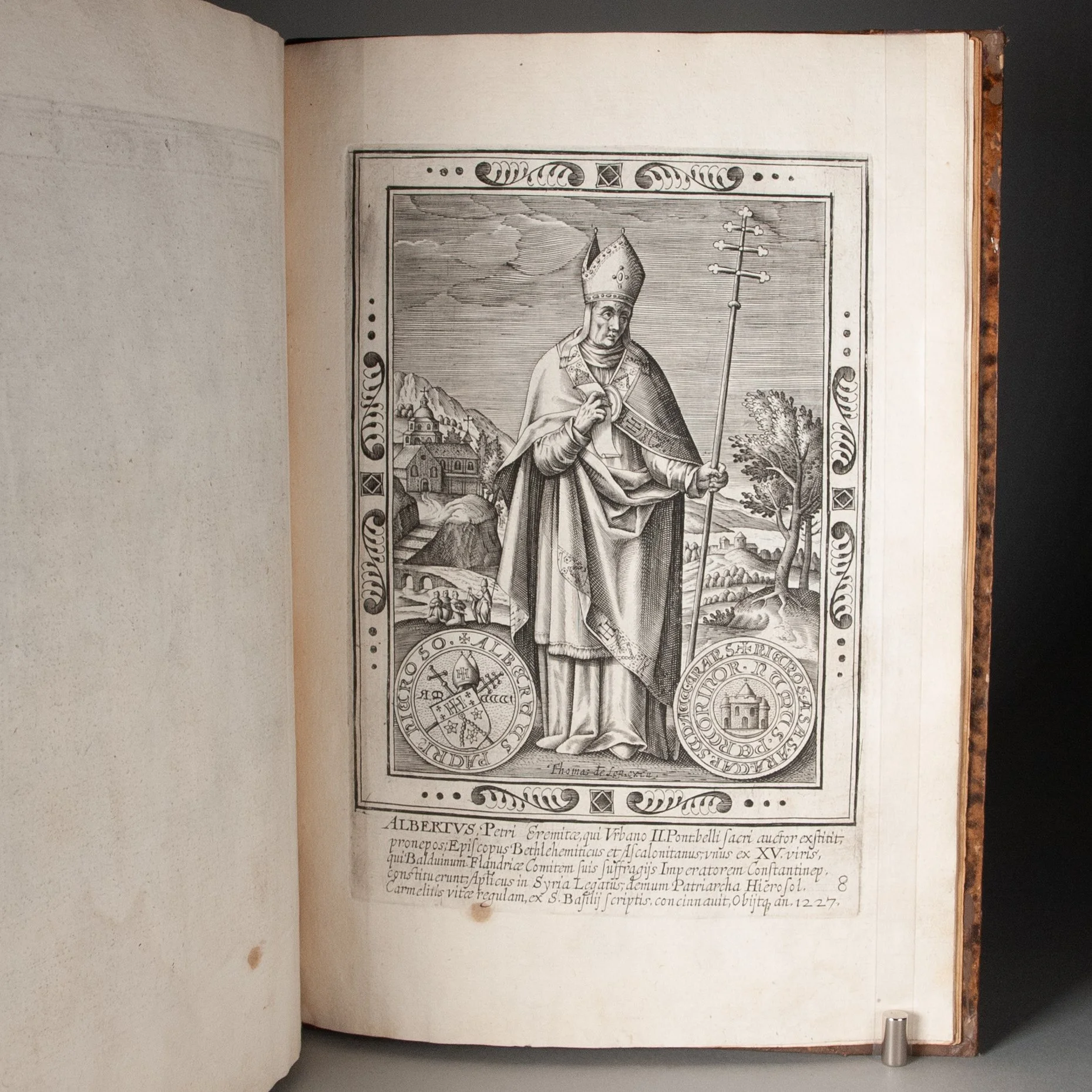
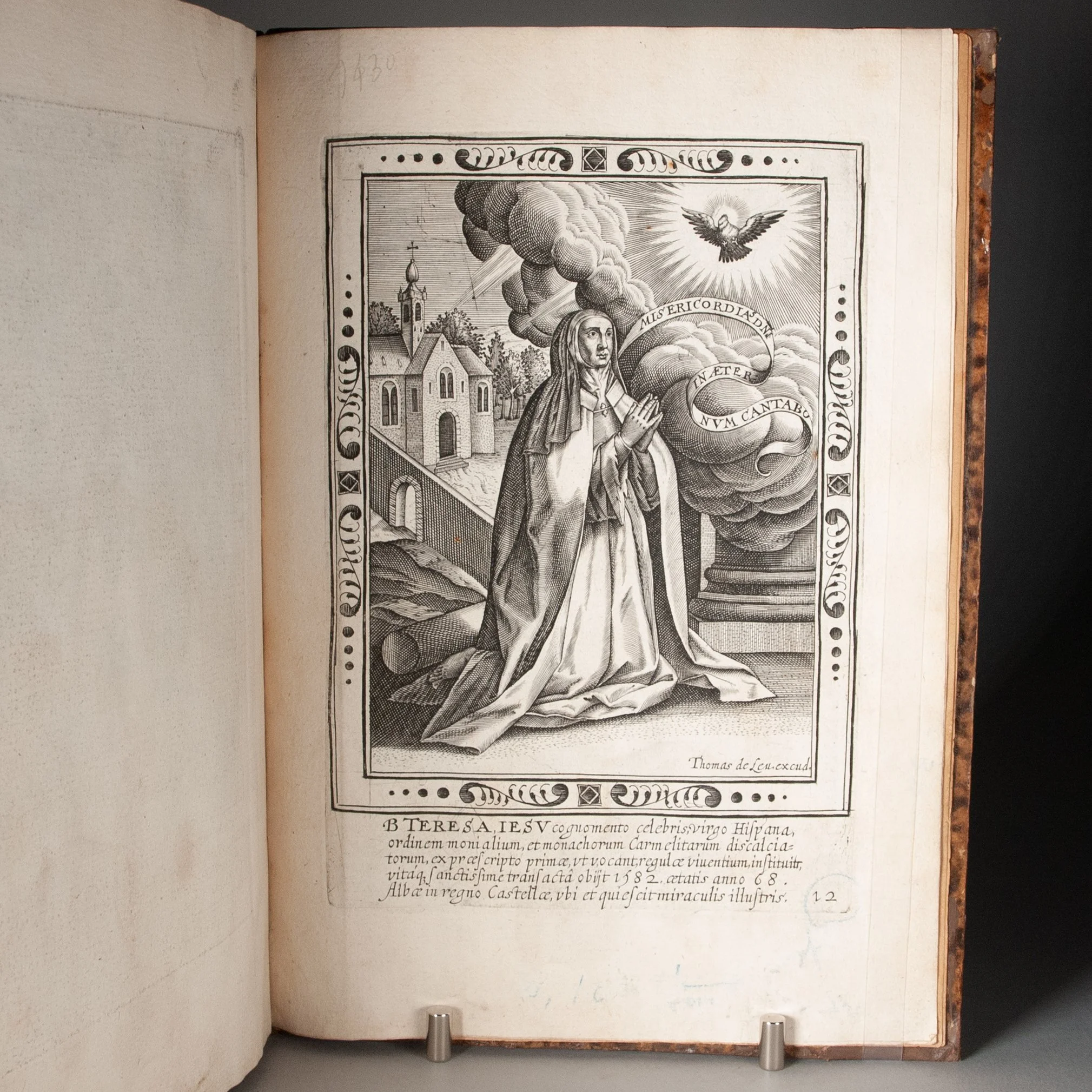
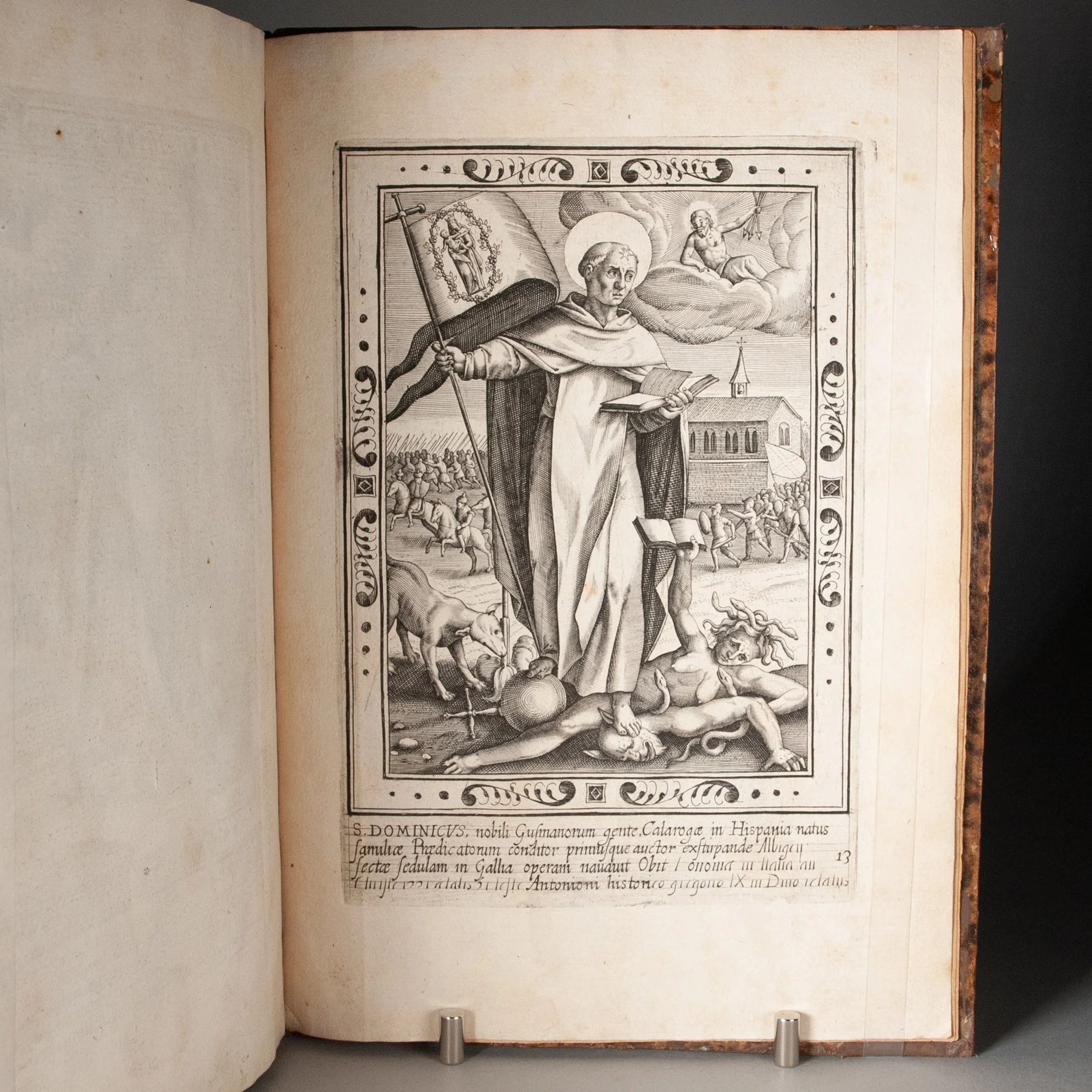
A rare suite of engraved prints depicting the biggest names in Catholic history, copied from Adriaen Collaert's edition of 1608 (which contained 15 plates). The 1636 inventory of Theodoor Galle and Catharina Moerentorf included "forty plates of the founders of the orders," among them Collaert's edition, "another series of eleven founders by H. Wiericx, designed and published by Phil. Galle," and "one with the address of Jan Collaert." Our edition itself is all but unrecorded—attested only by a copy in Lille—so we'd hardly discount the possibility that other, untraceable editions were produced with the same text but different plates. ¶ Miraeus was a very able scholar, but no artist or engraver, so the title's attribution to him must refer to the text beneath the portraits. Miraeus was something of a luminary in his own day. He impressed Justus Lipsius as a student; somehow, despite poor qualifications, was appointed a canon of Antwerp Cathedral; became the cathedral's librarian, a great boon to his historical writing, and subsequently librarian for the city's first municipal library; and was unsurprisingly among the crowd of Antwerp scholars who frequented the home of Christophe Plantin. Based on his 1602 history of the Carthusians, it's clear that he had been researching the early church, and we expect it would have been little trouble for him to compile the short biographies accompanying these portraits. While brief, these captions are rich in documentary fact, and expert contributions to an increasingly rigorous post-Reformation hagiographical literature. And surely this should qualify as the distinguished historian's rarest work. ¶ De Leu ran a substantial business publishing prints, and was himself one of the most skilled engravers in Paris at the time, even if his work often lacked something of the sublime. He signed these engravings excudit, which typically indicates a publisher's role, though we wouldn't discount the possibility that he engraved them, too. We find strong similarities to the rendering of clouds in his Second Day of Creation, and of trees in his Fourth Day of Creation. If he didn't engrave the plates himself, then he schooled his apprentices well in his style and technique, itself heavily influenced by the Flemish engravers from his hometown of Antwerp—the Sadelers and Wierix brothers, for example. Whoever engraved them, there's no denying our plates were copied directly from Collaert's series. Compare his St. Bruno or his Joanna to ours, for example. All the same, these are good copies, with all the detail and character of the originals. Our faces are no less expressive, everything here in strong, sharp impressions. Pictured here is St. Bernard, St. Augustine, St. Benedict, St. Malo, St. Bruno of Cologne, St. Norbert of Xanten, St. Francis of Assisi, St. Albert the Great, Giovanni Colombini, Joan of France, St. Francis of Paola, St. Theresa, and St. Dominic. Book historians especially might enjoy the portrait of Francis of Paola, who sports a girdle book hanging from his waist. ¶ We locate a single copy only, at the city library in Lille. We find no copies of any edition at auction, and no copies in WorldCat.
PROVENANCE: Small label of Louis Ferrand on front paste-down.
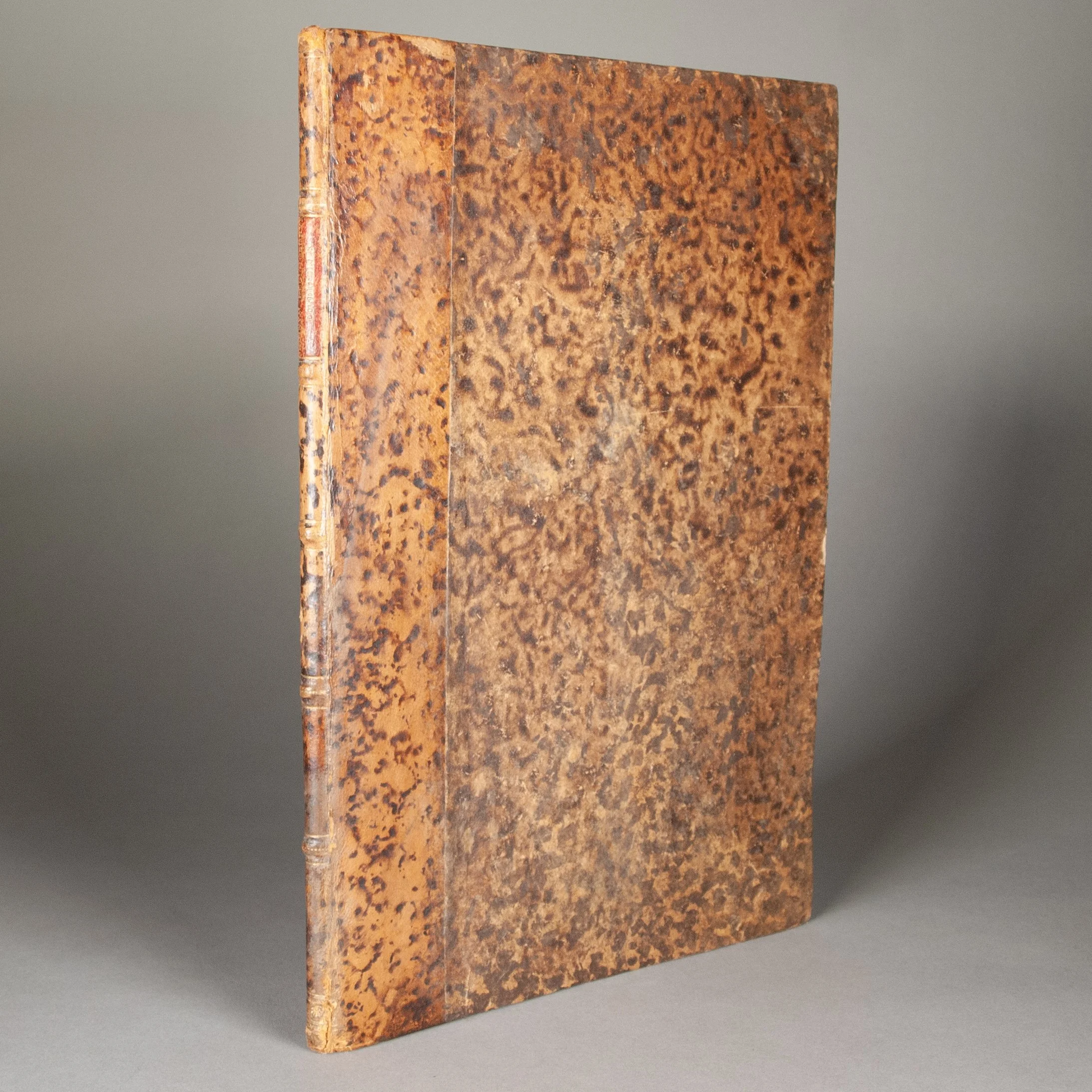
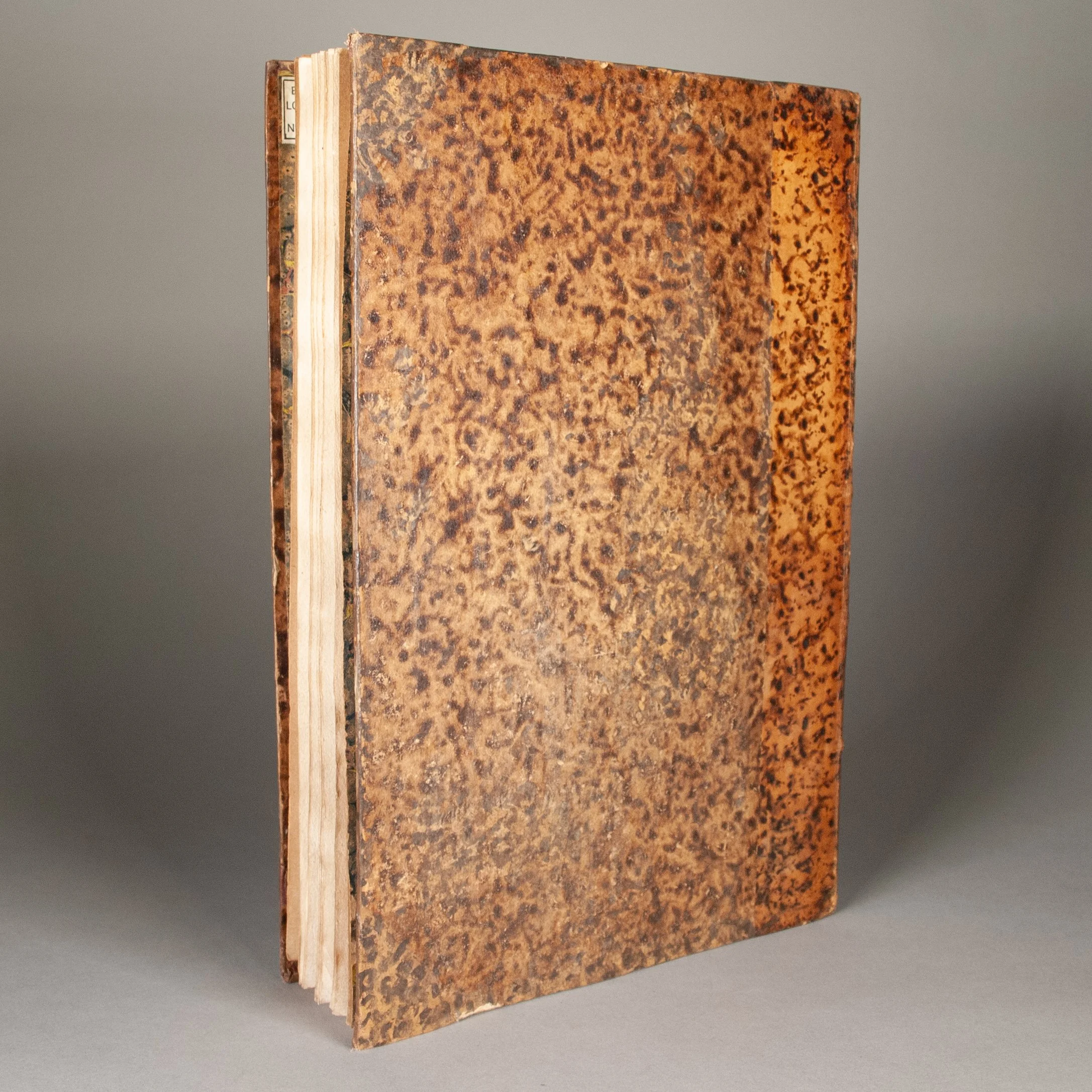
CONDITION: Quarter mottled leather and marbled boards of the late 19th century. ¶ Catalogers at Lille report 54 plates, though we're not prepared to take that entirely on faith. The model for our edition has just 15 plates, and we'd like to think a book four times the size would have a better survival rate. All to say, it's possible some plates are missing, but we've been unable to compare ours to the Lille copy. ¶ Scattered light soiling and foxing; a couple plates with old pencil marks in the lower margin; 1" closed tear in the lower margin of the St. Theresa plate, not affecting the image. Leather of the front joint just starting to split from the bottom, but otherwise just very light wear to the extremities.
REFERENCES: M. Funck, Le livre belge a gravures (1925), p. 219 (citing Collaert's 1608 edition); Antwerpsch Archievenblad v. 2 (1926), p. 149 (for the Galle plate inventory); Cathleen Flanagan, "Aubertus Miraeus, an Early Belgian Librarian," The Journal of Library History 10.4 (Oct 1975), p. 341 (On Miraeus: "Although prominent in his time, Miraeus is an almost forgotten figure today. His efforts to promote the cause of libraries and learning in the Low Countries, however, are deserving of at least some recognition by present-day scholars."); Marianne Grivel, "Leu, Thomas de," Grove Art Online (2003), access online (brief bio; "He ran a busy workshop and published large numbers of prints by other hands...He specialized mainly in portraiture (more than 300 plates)...His work, the style of which is somewhat cold, is reminiscent of Flemish engravers of the 16th century, such as Cornelis Cort, the Sadelers and the Wierix"); George Duplessis, The Wonders of Engraving (1871), p. 237 ("The chief merit of Thomas de Leu was the faithfulness with which he copied the painter's work...his portraits all show great knowledge of physiognomy and correctness of drawing...when he addressed himself, either directly or through masters, to the human figure, he brought out works far superior to his cold engravings after poor compositions without beauty or grandeur"); T.H. Thomas, French Portrait Engraving of the XVIIth and XVIIIthe Centuries (1910), p. 21 ("Few XVIth century engravers in France were men of any marked originality...Of these early men the most important is Thomas de Leu"); Carlos Eire, Reformations (2016), p. 402 (“Hagiography eventually gained a distinctly clerical character…and also a learned, or ‘scientific,’ dimension. The chief goal of this new scholarly type of writing was to provide clergy with lives of the saints that could ostensibly stand up to critical scrutiny, for the hagiographies were written to promote the cult of the saints when skepticism was on the rise; they were at once devotional and polemical…Hagiography may well have been one of the most vigorous Catholic responses to Protestantism. This genre served two purposes at once: as devotional texts attuned to popular piety and as narratives that conveyed Catholic beliefs and values. Translated and reprinted numerous times, these hagiographies became best sellers, and arguably the most effective means of inculcating Catholic values among clergy and laity alike. Less exacting and less tedious than catechisms, which called for memorization, these marvel-rich narratives offered pointed lessons on the truth of Catholic teaching through specific examples.”)
Item #947