
Massive celebratory broadside
Massive celebratory broadside
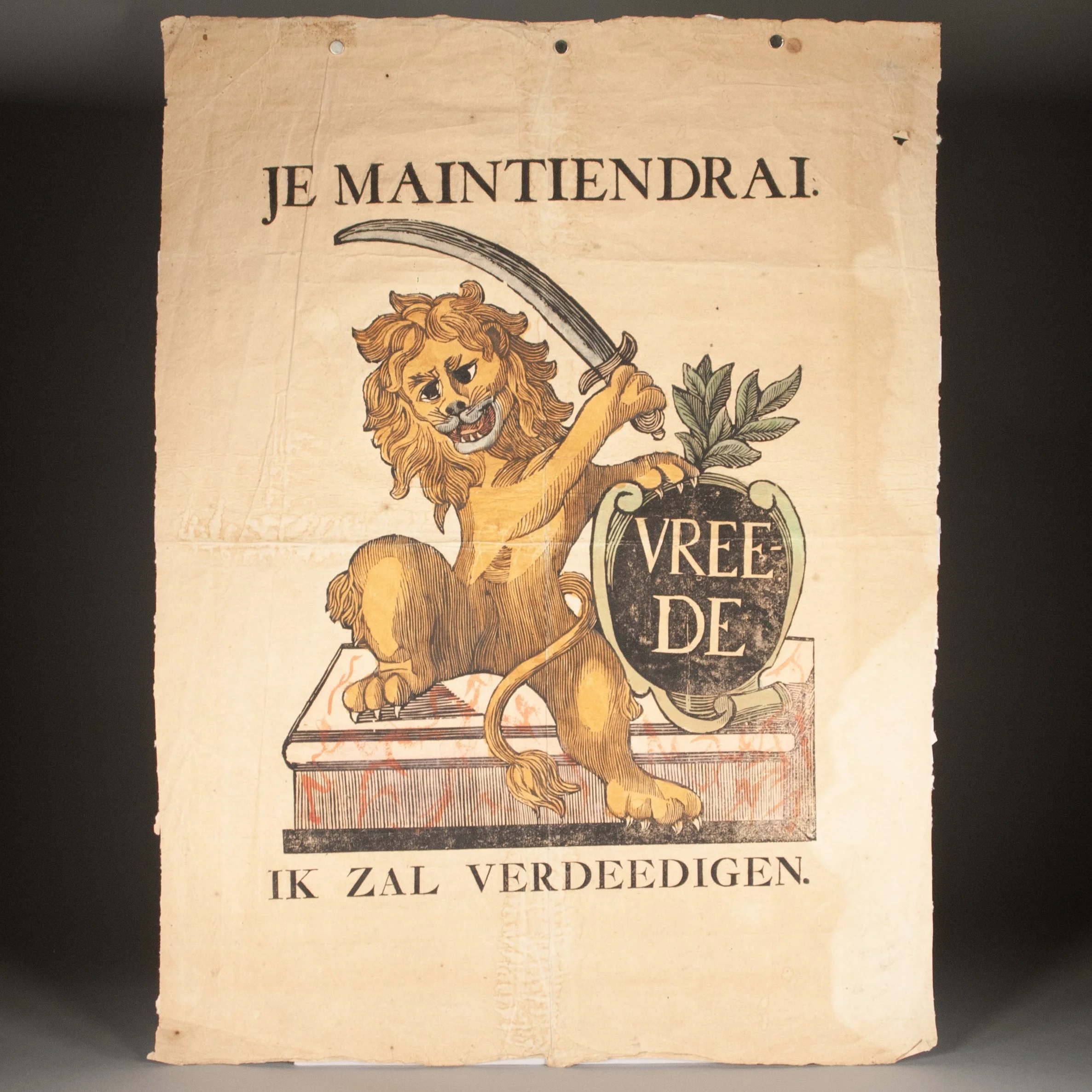
Je maintiendrai. Ik zal verdeedigen.
[Netherlands, not after 1816?]
1 broadside | Full-sheet | 610 x 462 mm
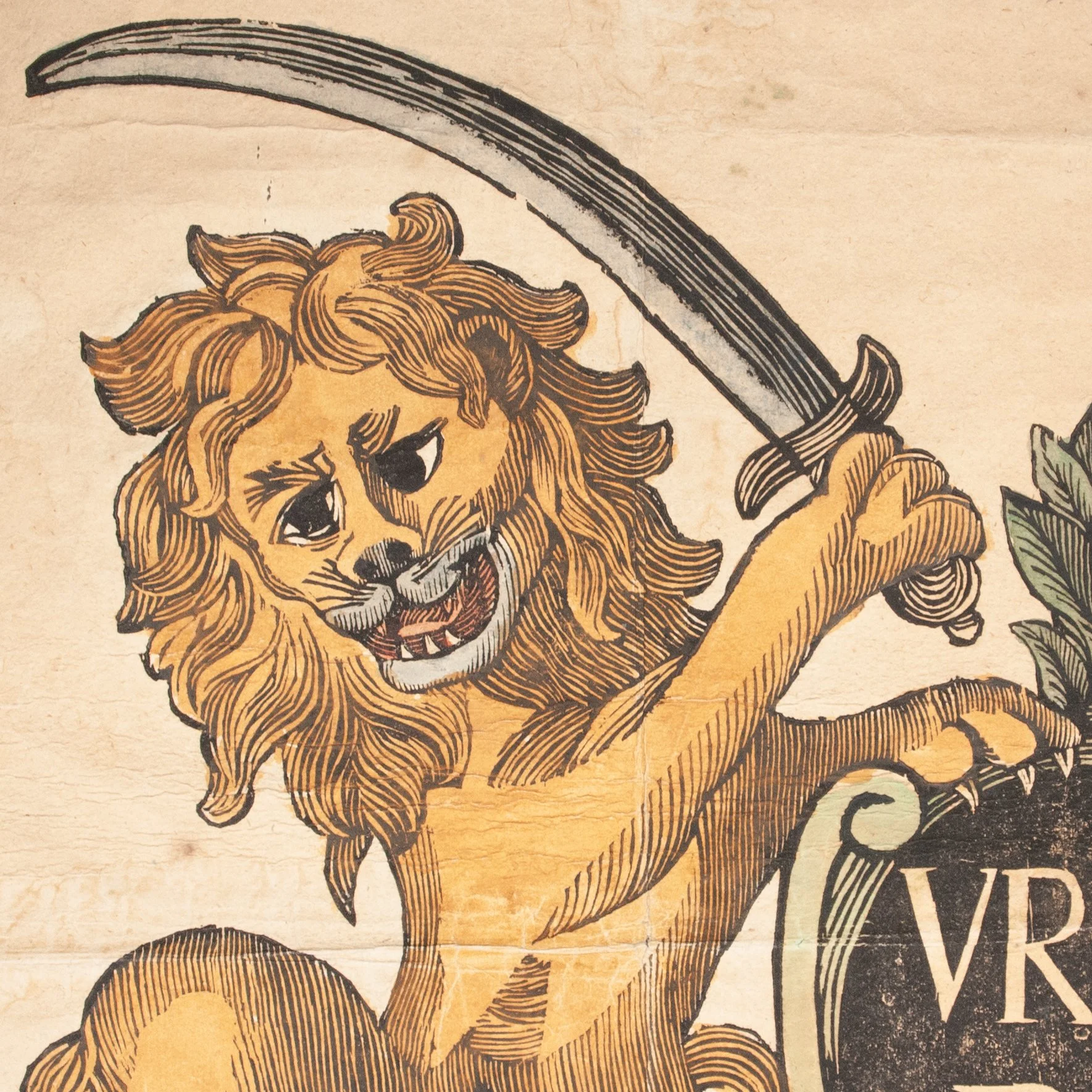
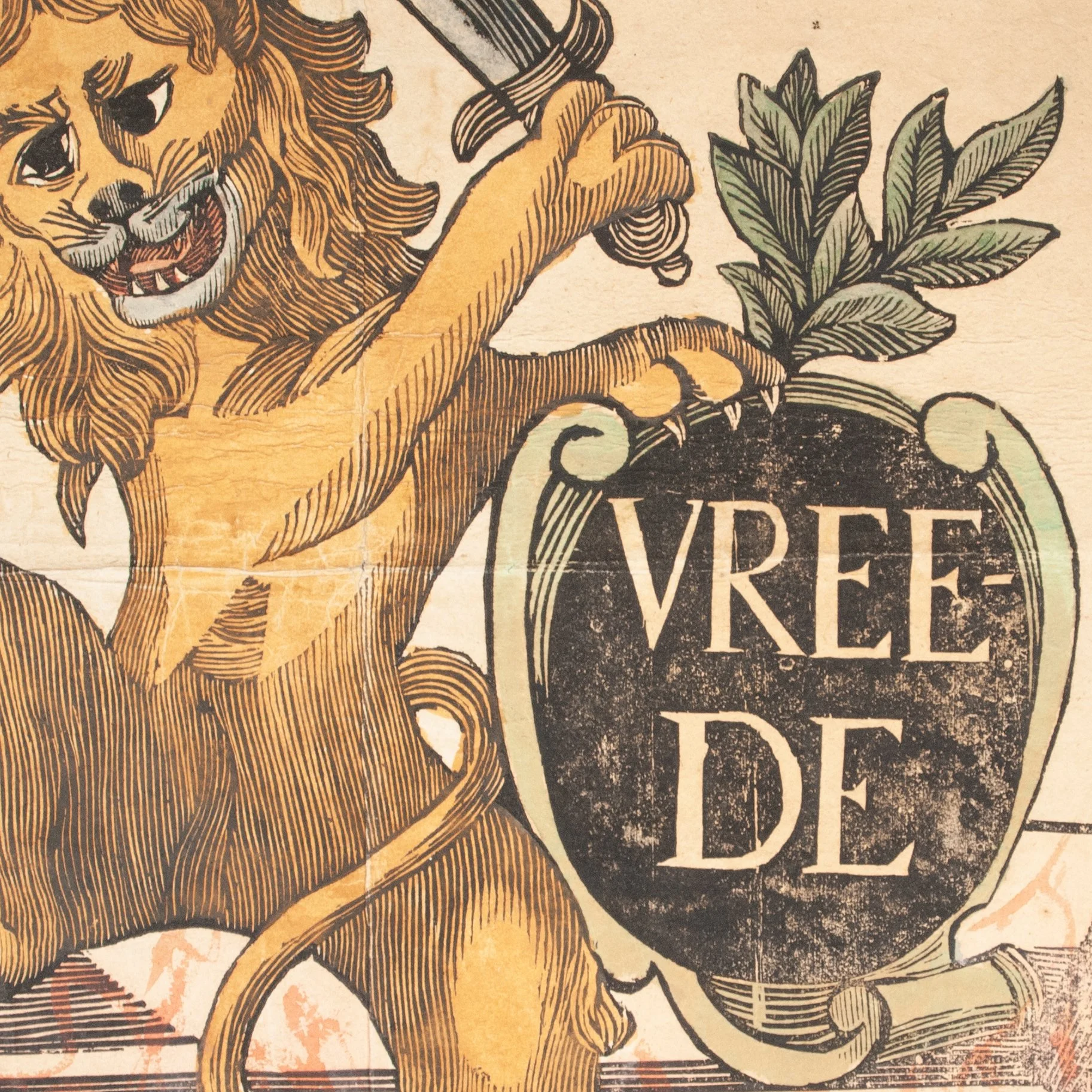
A large, arresting celebratory Dutch broadside, fully two feet tall, incorporating the Dutch Republic Lion and the motto of the House of Orange-Nassau (in both French and Dutch), both of which live on in the Netherlands's current coat of arms. The image is hand-colored, including thin strokes of pink on the platform, perhaps to evoke marble. ¶ This is the first in a series of seven or eight broadsides printed to mark a grand civic occasion—but exactly which occasion is unclear. "No indication whatsoever makes it possible to determine on which occasion these very crude representations were produced" (Atlas van Stolk). It's been suggested they might have been printed to celebrate William V's marriage to Wilhelmina of Prussia on 4 October 1767, William II's marriage to Anna Pavlovna of Russia on 21 February 1816, or the return of William VI in 1813, which culminated in the formation of the United Kingdom of the Netherlands in 1815. Speaking of the latter, Atlas van Stolk remarks that "indeed some seem to refer more to this event." Here the lion holds a shield bearing the word Peace, which could allude to the end of the Napoleonic Wars in 1815. What's more, the traditional Dutch Republic Lion is invariably pictured holding seven arrows, representing the republic's seven provinces. Their absence here may suggest the succeeding government, which represented seventeen provinces—quite a handful for even the largest paw. ¶ Rare. We find a copy only at the University of Leiden.
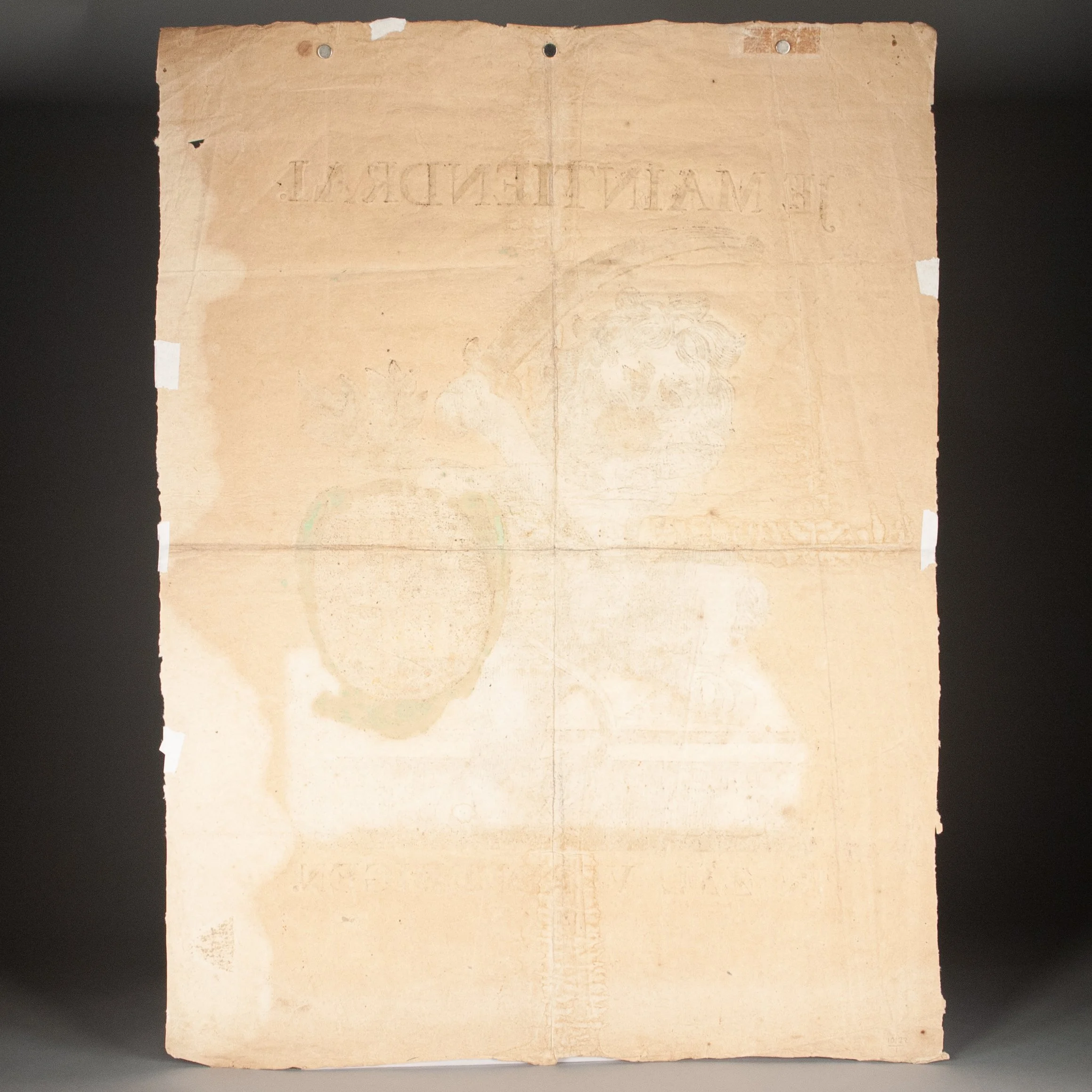
CONDITION: Printed on one side of a full sheet of unwatermarked laid paper. ¶ Plenty of creases, including three hard creases across the short dimension, and one along the long dimension; paper darkened with age, and some dampstaining along some creases; mild soiling and the edges a little tattered, with occasional small closed tears; small tear, little more than a cm, near the upper right corner, not affecting any content; scattered pinholes; half a dozen pieces of "archival" tape on the verso, plus an old adhesive stain in the upper edge.
REFERENCES: Atlas van Stolk (1908), v. 8, p. 201-202, #6501 (the full series); F. Muller, Beredeneerde beschrijving van nederlandsche historieplaten, zinneprenten en historische kaarten (1879), v. 3, p. 109-110, #6102 (the full series)
Item #933