
Child's keepsake
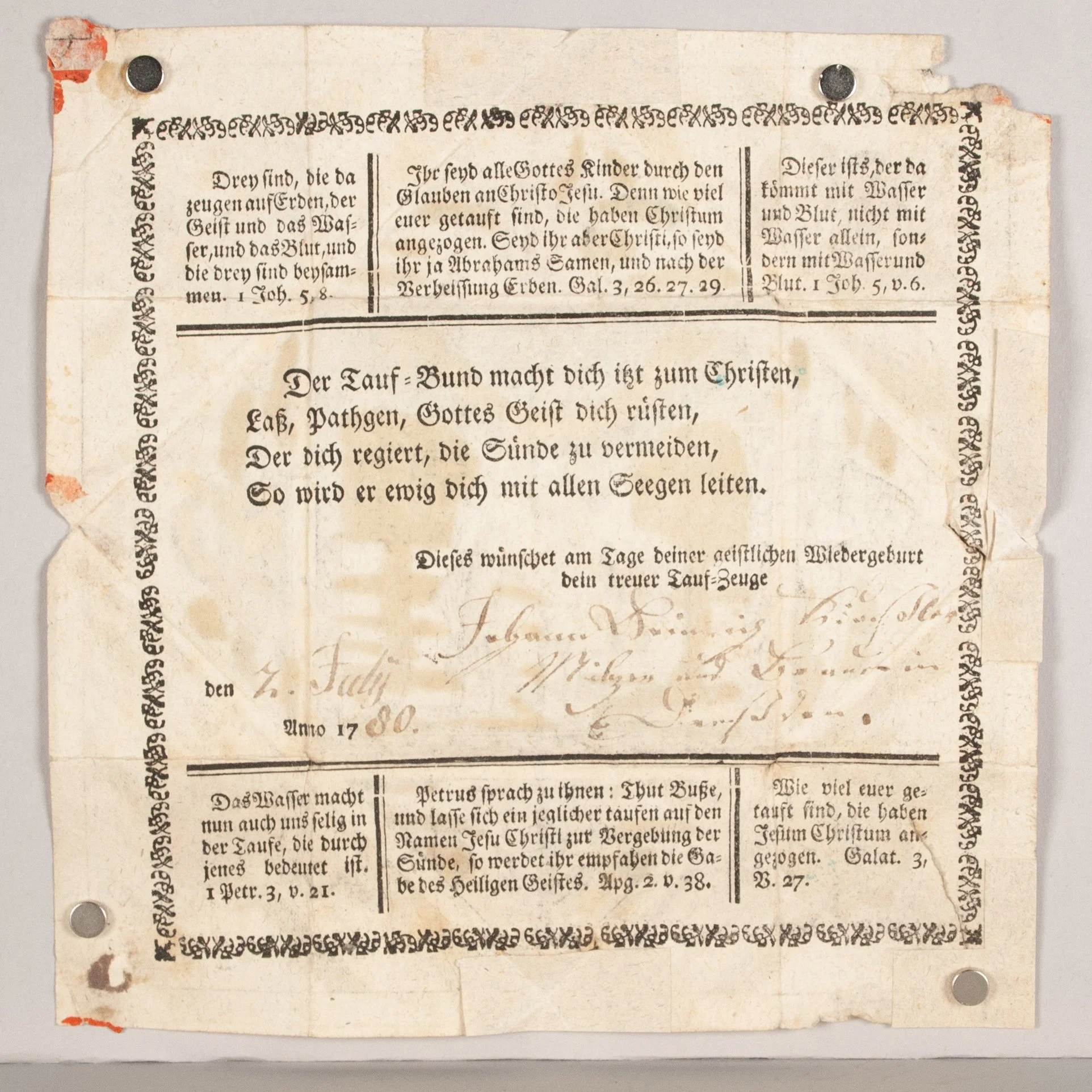
Child's keepsake
[Taufbrief | Taufpatenbrief | Taufzettel | Baptism certificate]
[Germany? 2 July 1780]
1 document | 158 x 155 mm folded to 74 x 74 mm
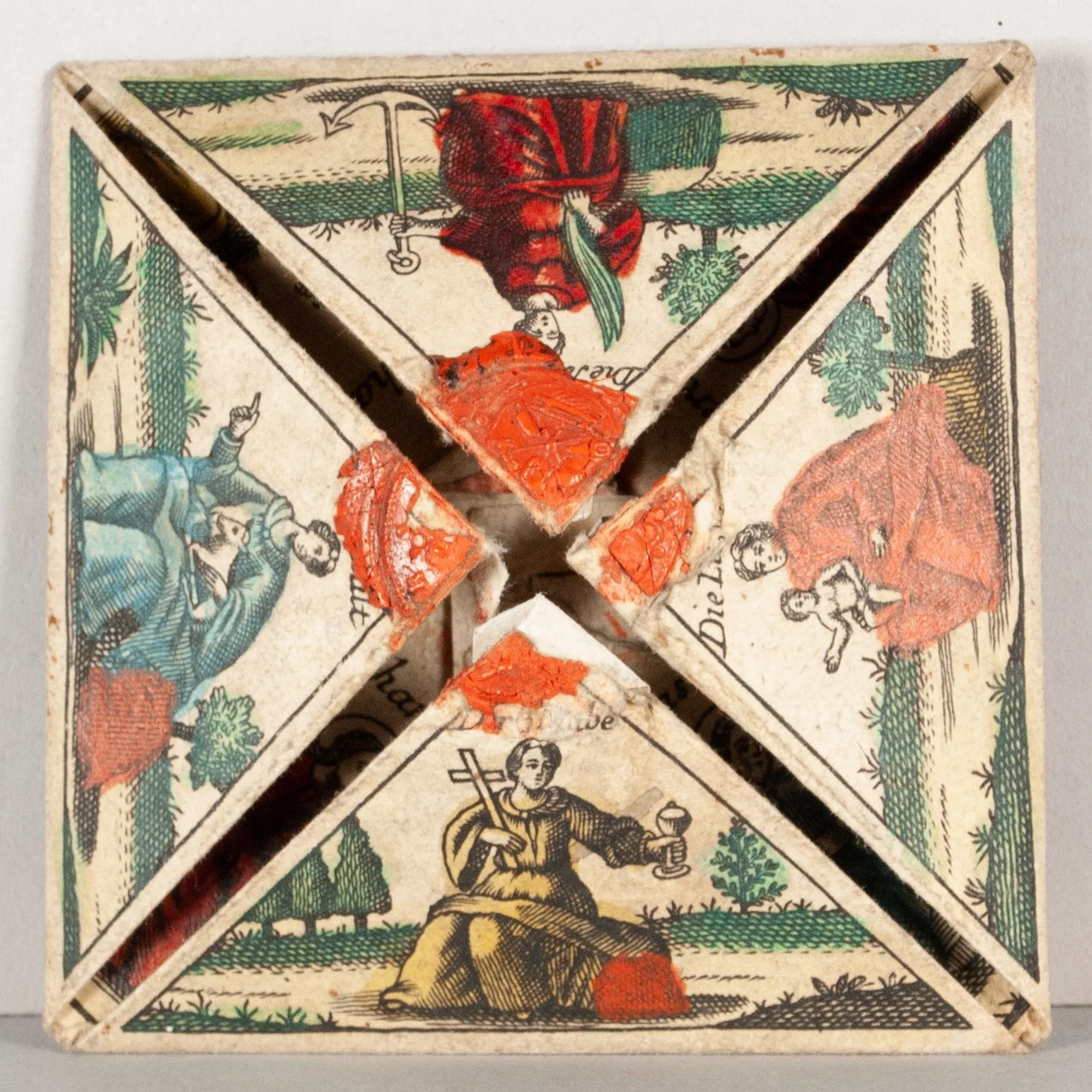
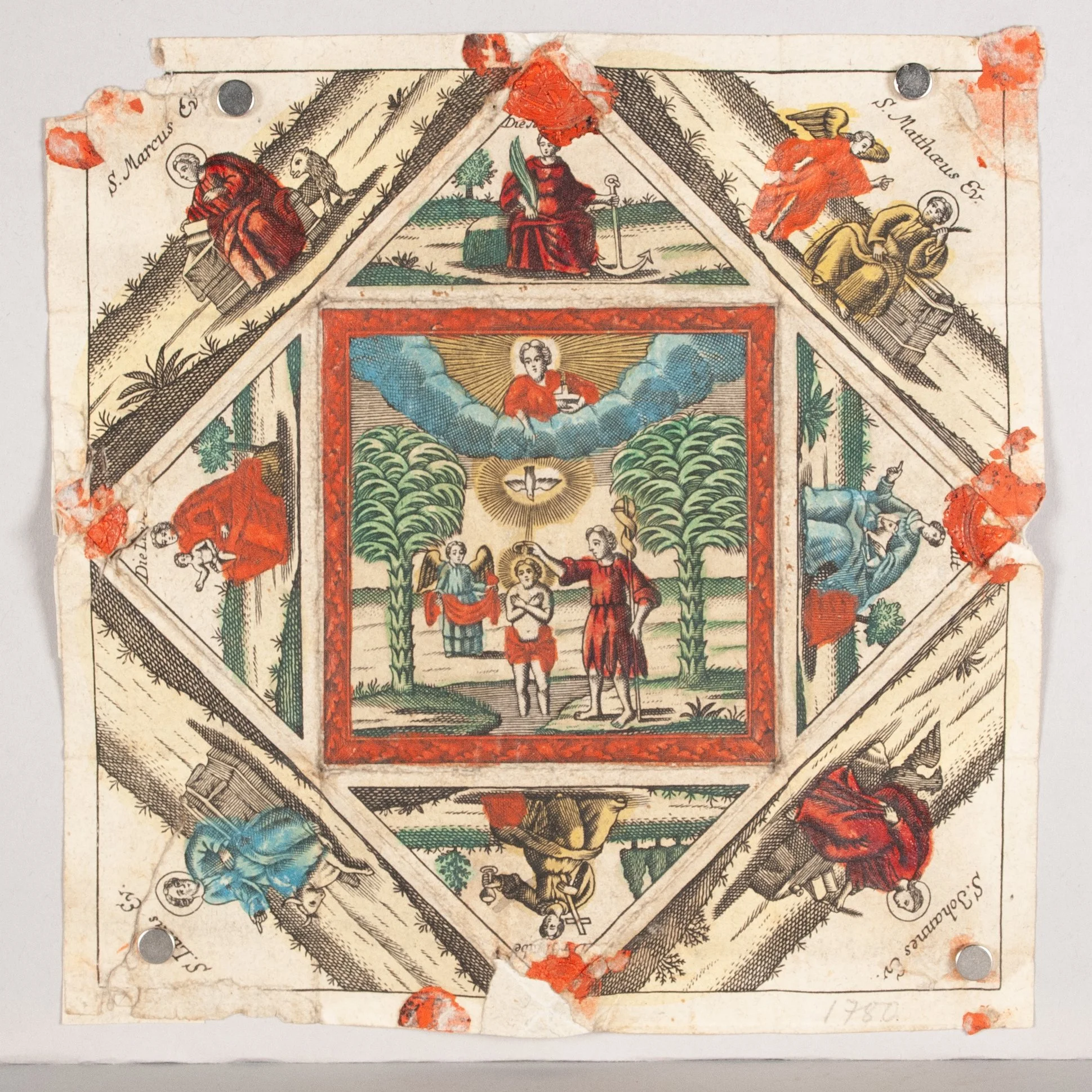
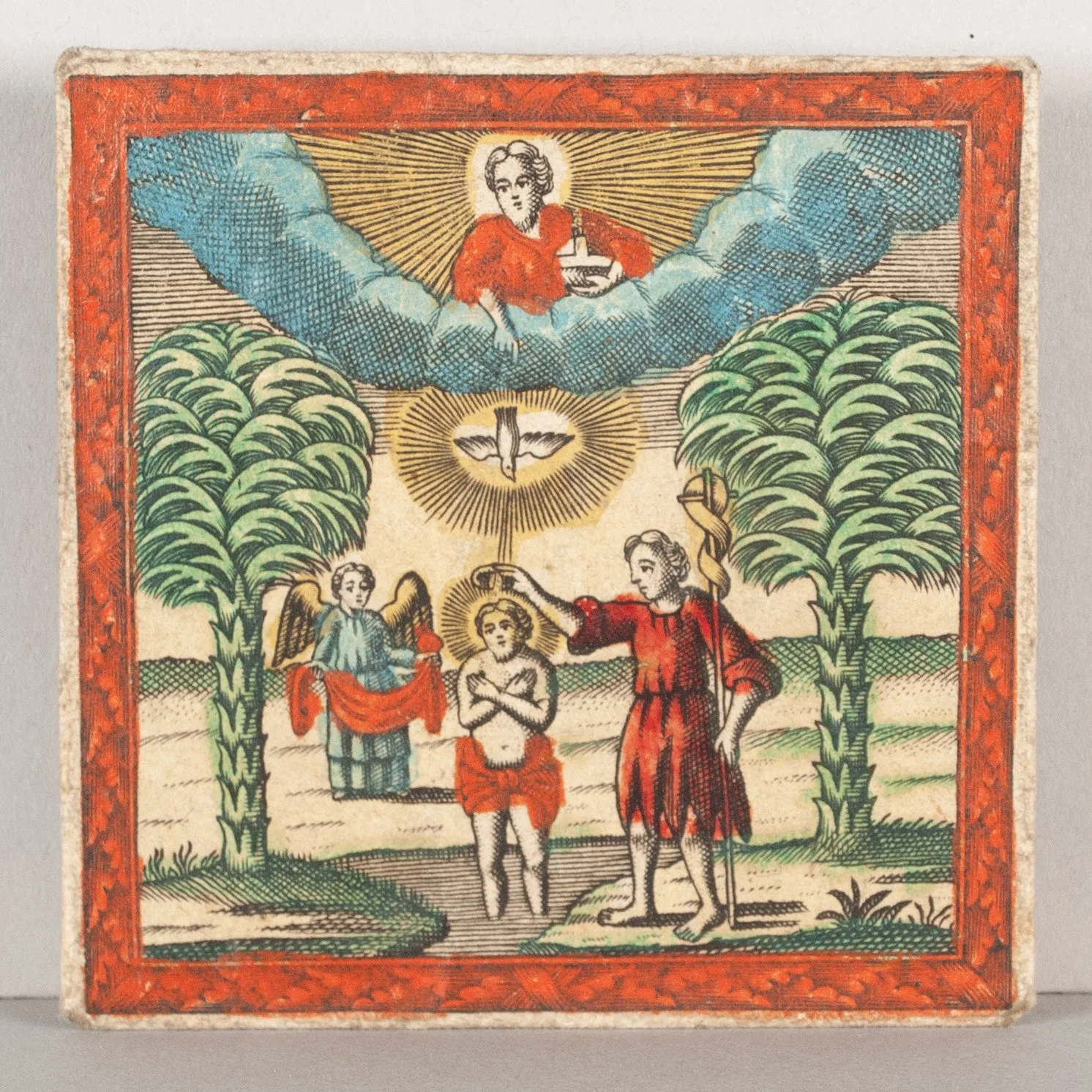
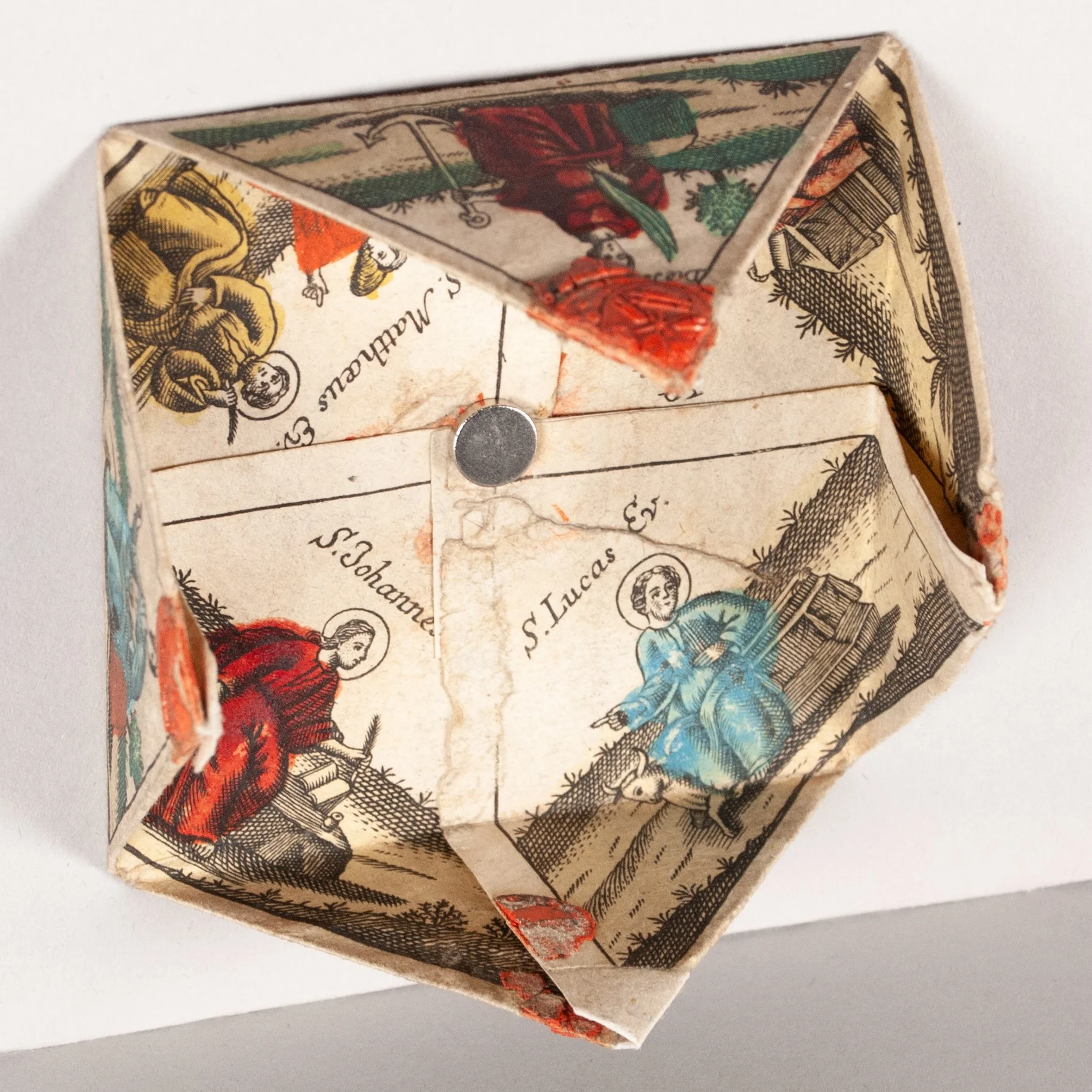
A model example of a German Taufbrief, a popular piece of juvenile ephemera that commemorated a child's baptism. Often printed, sometimes manuscript, and frequently well decorated, these were given to the child by their baptismal sponsors (or godparents). They appear to have been quite common in Germany and among the Pennsylvania Dutch, and "became especially popular in Alsace and in Bern, Switzerland" (Earnest). They are invariably folded in an elaborate manner, as here, which served a particular function: the Taufbrief commonly contained a coin or some other present for the child. ¶ Our printed text within includes a variety of biblical passages bearing on baptism. The outside, fully etched and engraved, is covered with religious illustration, hand-colored in red, blue, yellow, and green. A depiction of baptism appears at center, the Four Evangelists in the corners.
PROVENANCE: Dated 2 July 1780 and signed by one Johann. What we suspect is a place name seems to start with D and end with sden or sdan (could it be Dresden with an ß?). The wax seal appears to portray implements of building (shovel and saw, for example), and may bear the initials IR—our Johann maybe, who perhaps worked in the building and engineering trades.
CONDITION: A small sheet folded in at the corners, then folded in at the corners again. Sealed with red wax. ¶ Some tears and loss at the various corners, some of them repaired, the letterpress area unaffected; St. Mark's corner bears the greatest loss, though not affecting the image, and St. Luke's corner has a 3.5 cm closed tear, which does affect the image; the illustrated side moderately soiled.
REFERENCES: Corinne and Russell Earnest, To the Latest Posterity: Pennsylvania-German Family Registers in the Fraktur Tradition (2004), p. 132n6 (cited above; Taufbriefe "were often folded over coins or medals meant as gifts from sponsors...Often, only the names of the sponsors were written on these certificates, and sometimes a date—which may or may not be the date of baptism. These documents frequently lacked the child's name, the child's date of birth, the child's parents' names, and the location."); Sandra Aebersold and Barbara Caluori, Sämtliche Briefe an Johann Heinrich Pestalozzi (2010), p. 42 ("given to the child by the godparents on the day of the baptism. They carried pious and good wishes, and also served as a container for the more or less substantial 'godparents' gift, a monetary present.")
Item #938