Album of illustration and ornament
Album of illustration and ornament
[Album of illustrations and ornaments]
[France, assembled ca. 1815-1820 with clippings from 17th-19th centuries]
[73] leaves | 291 x 230 mm
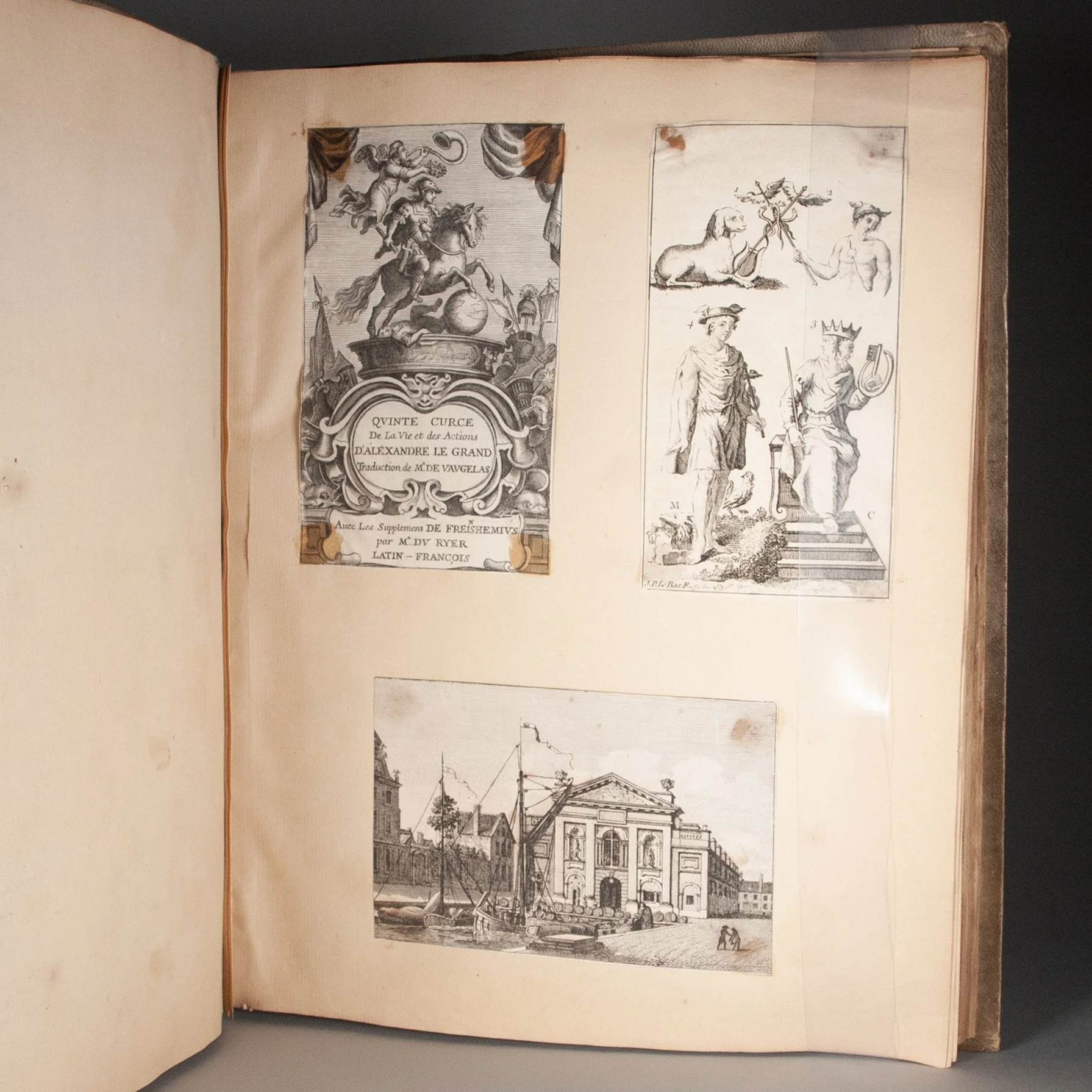
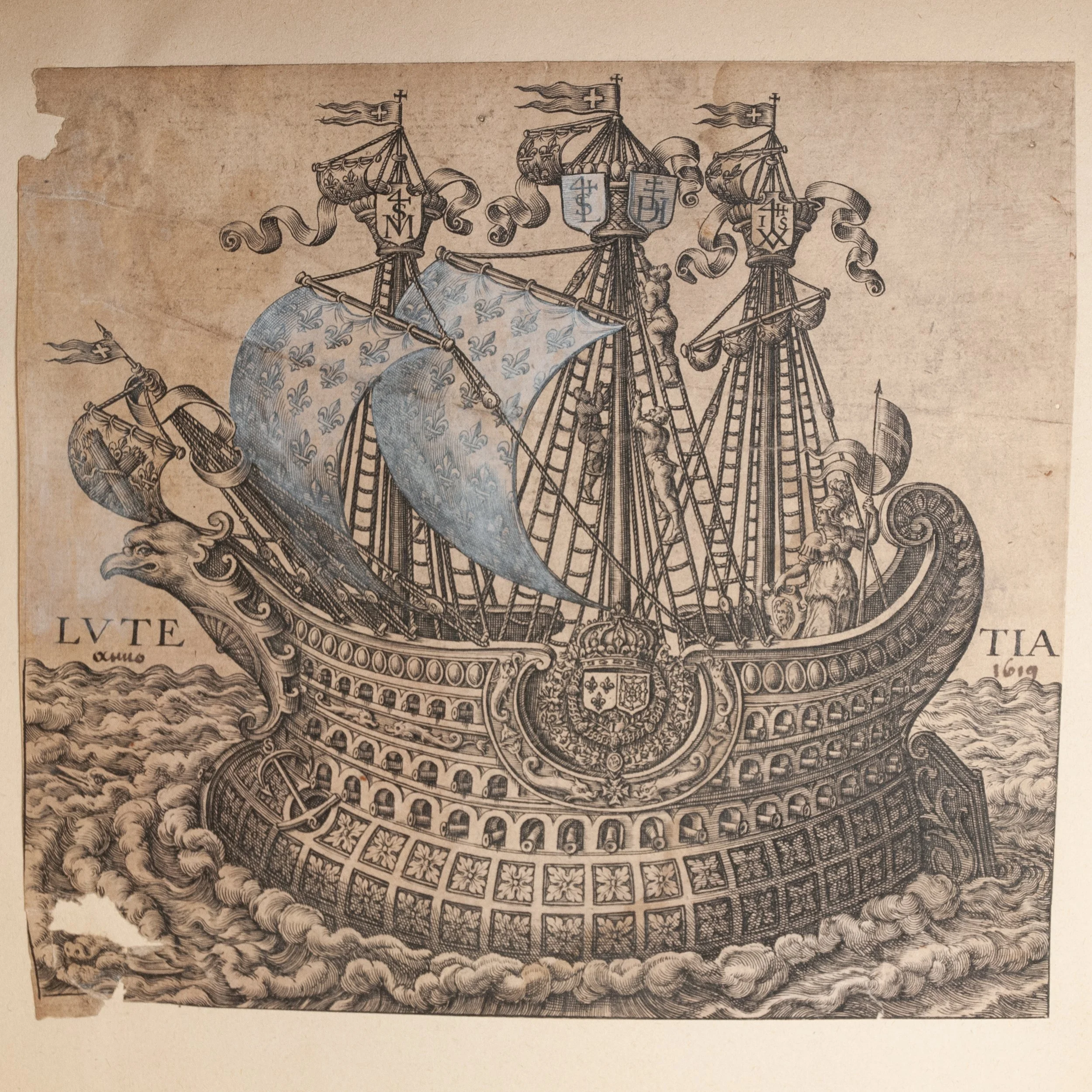
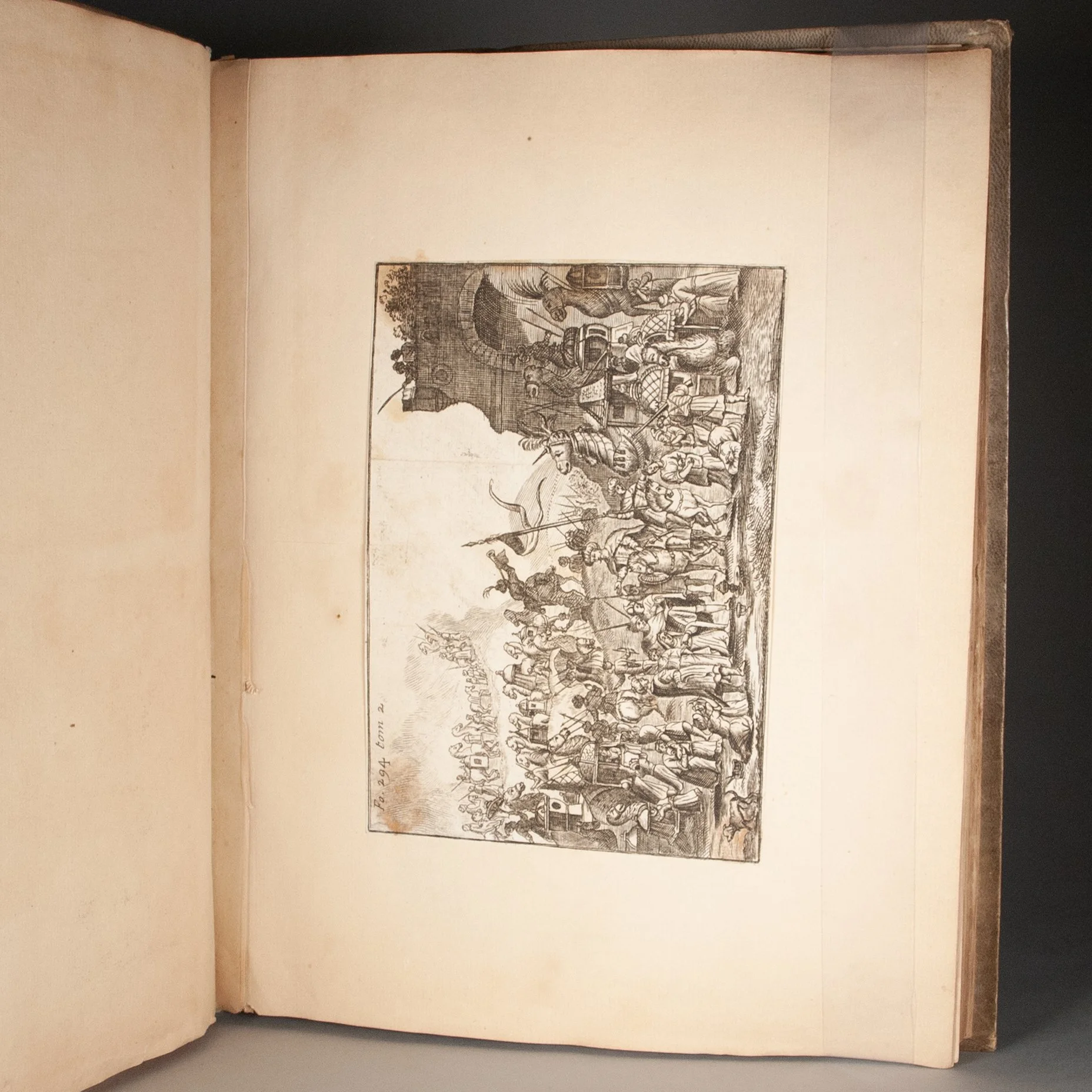
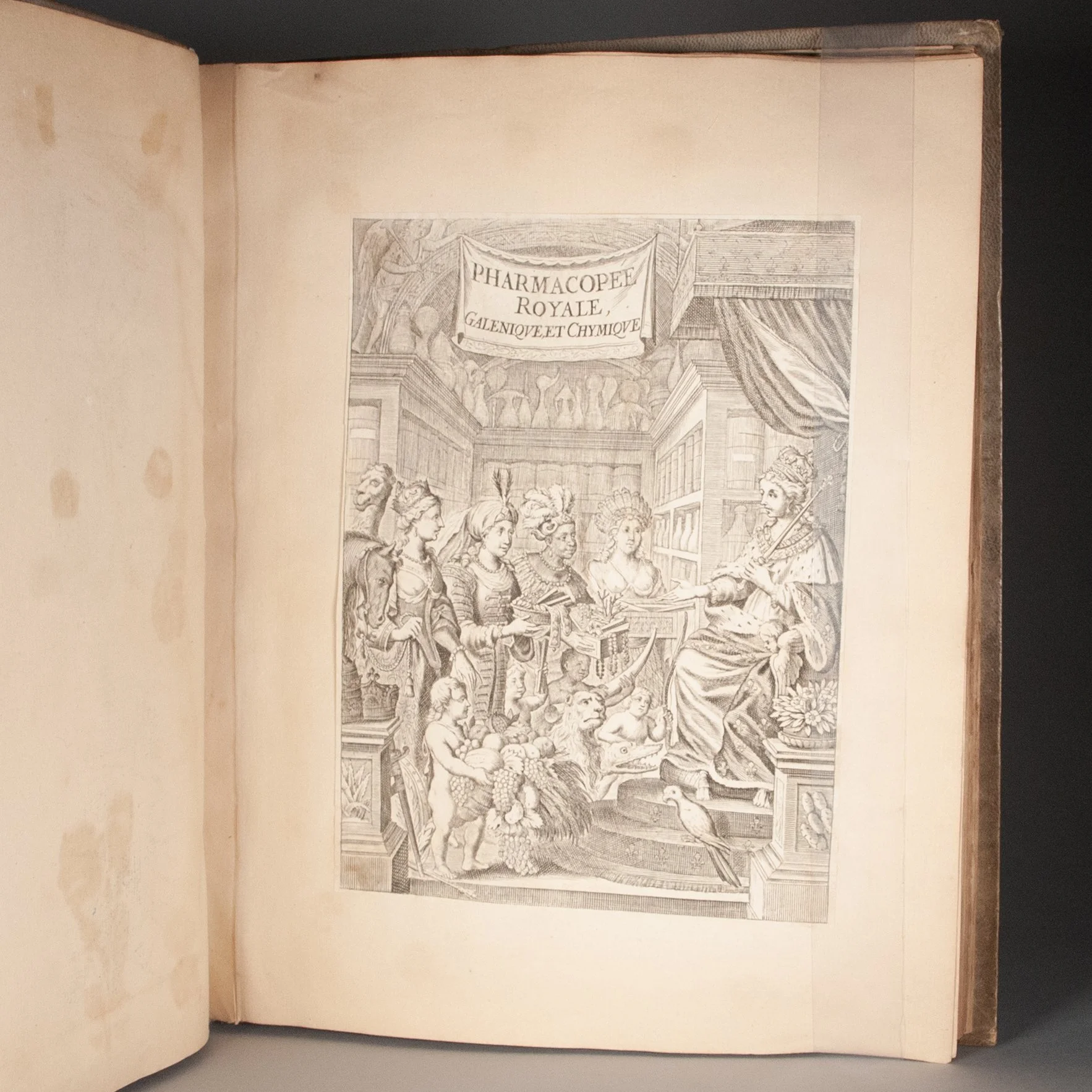
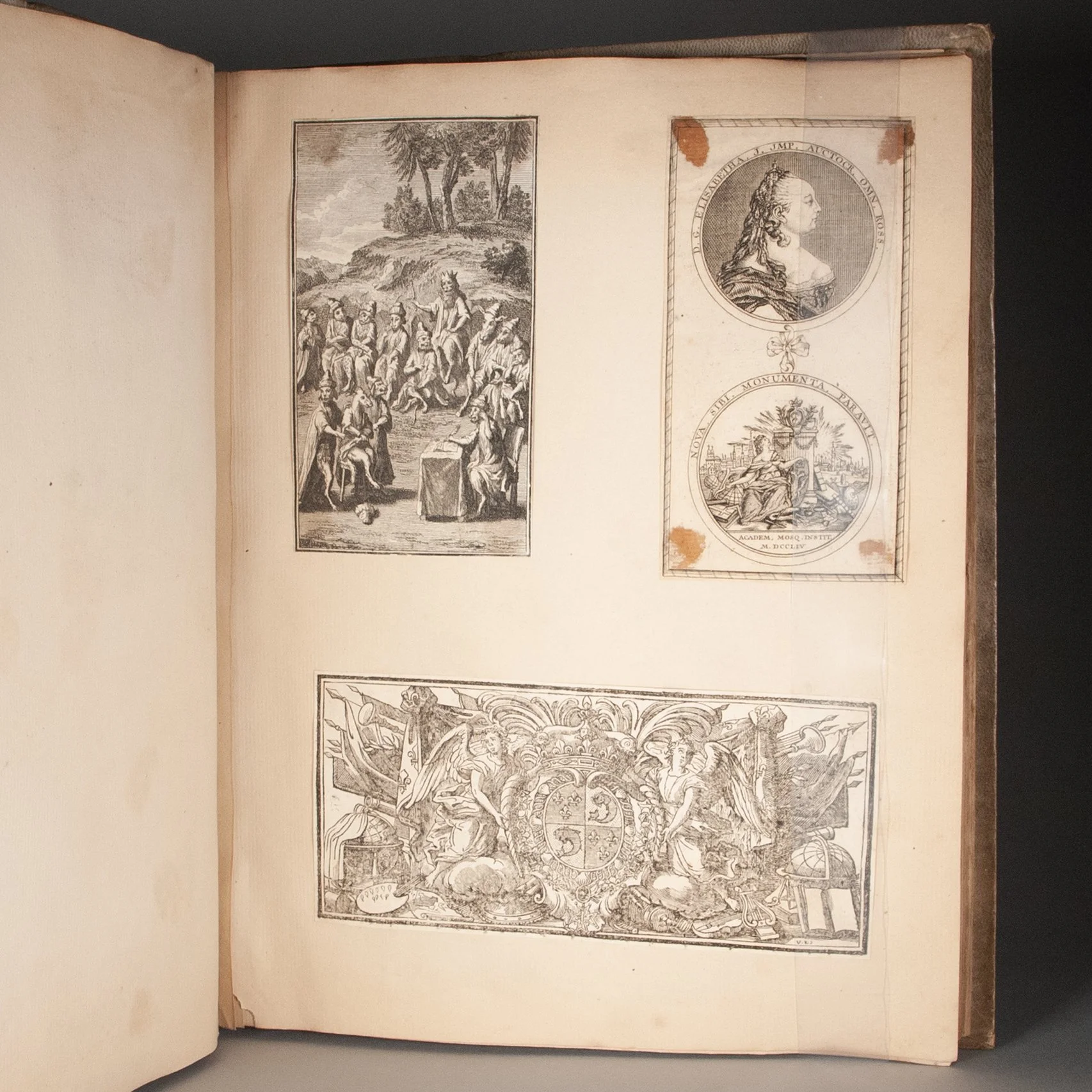
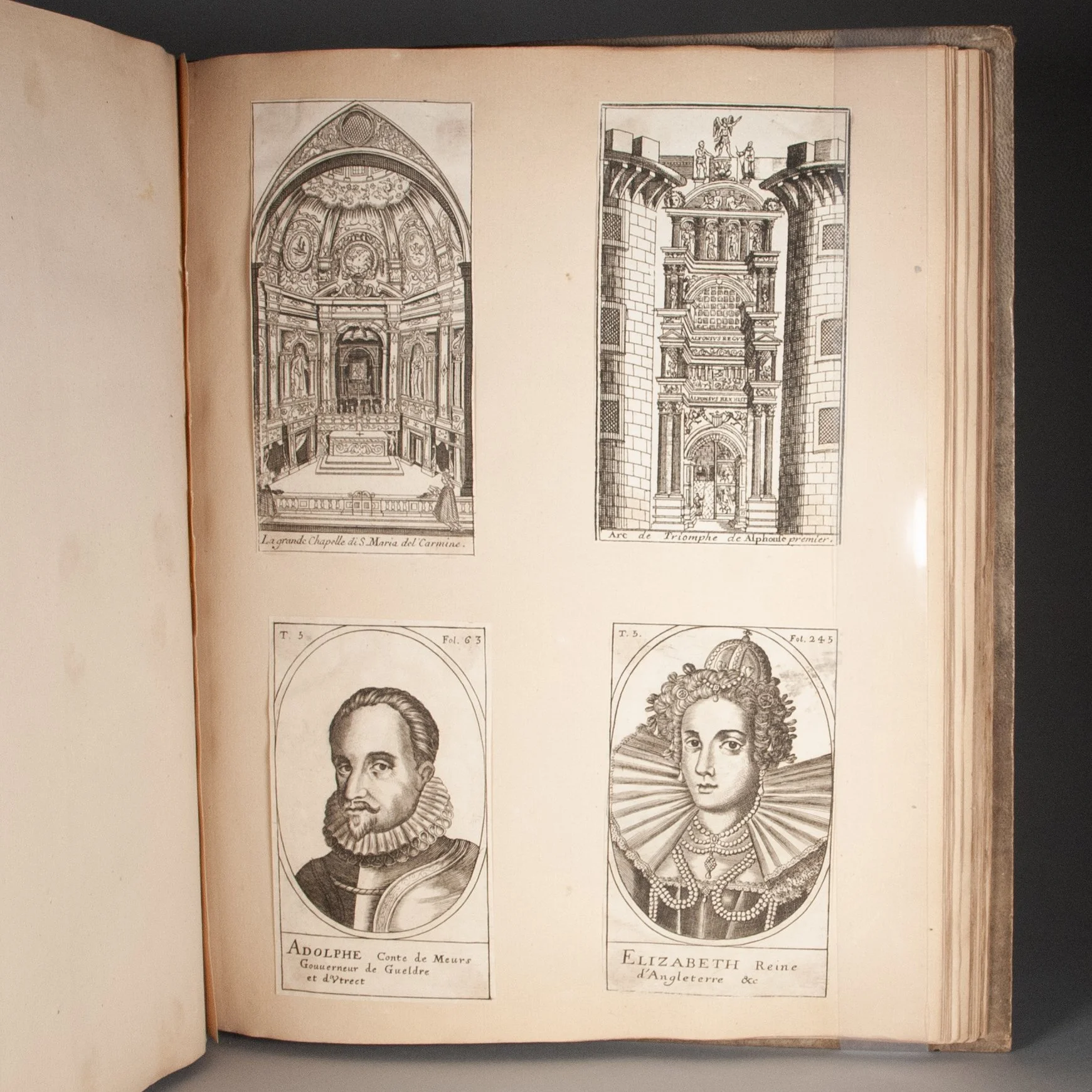
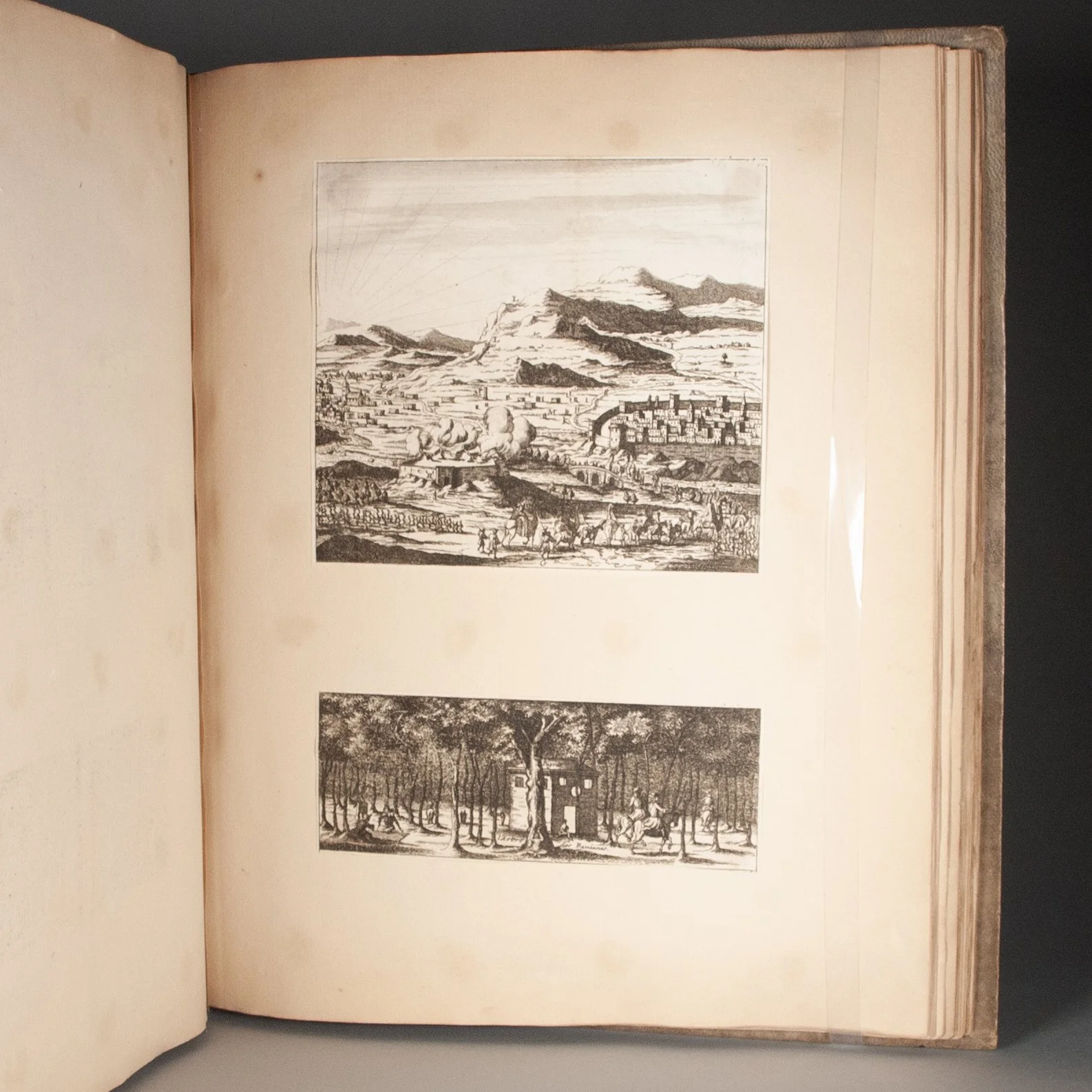
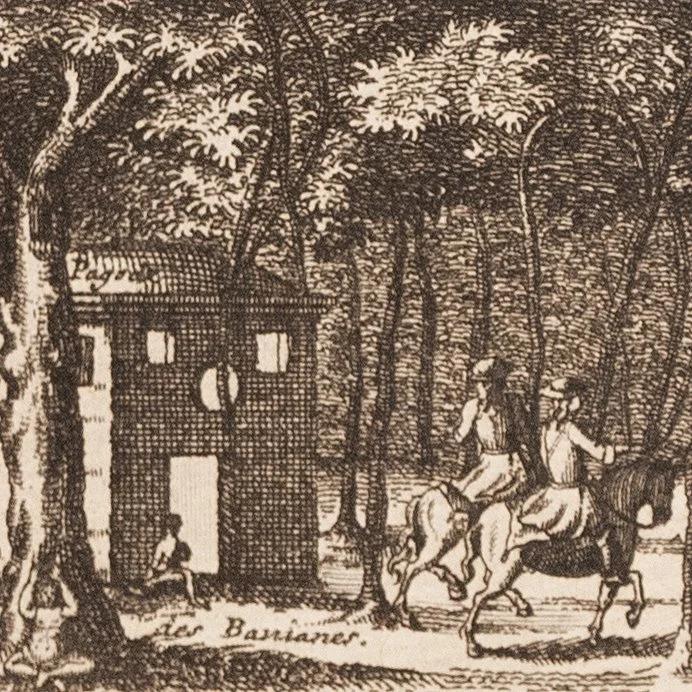
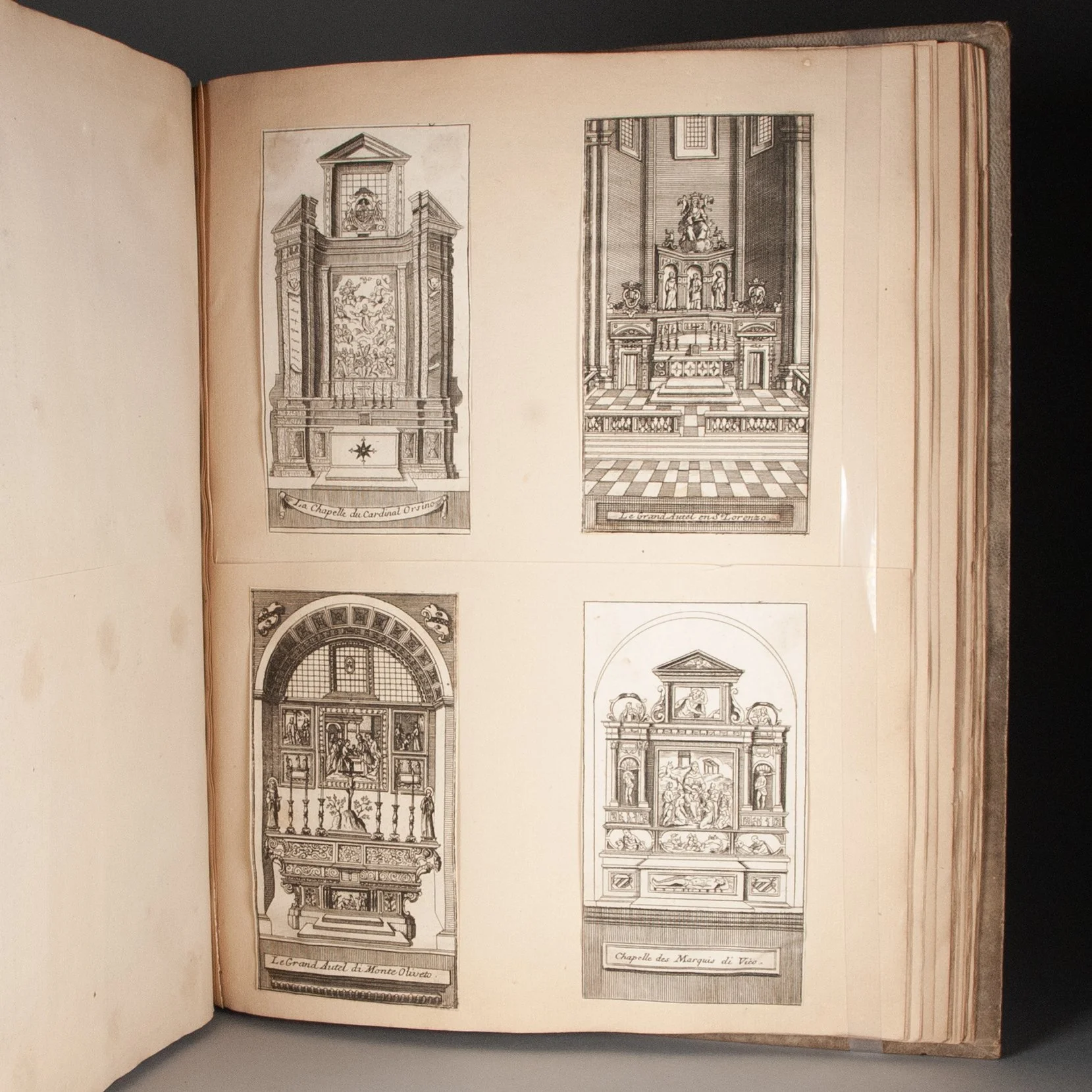
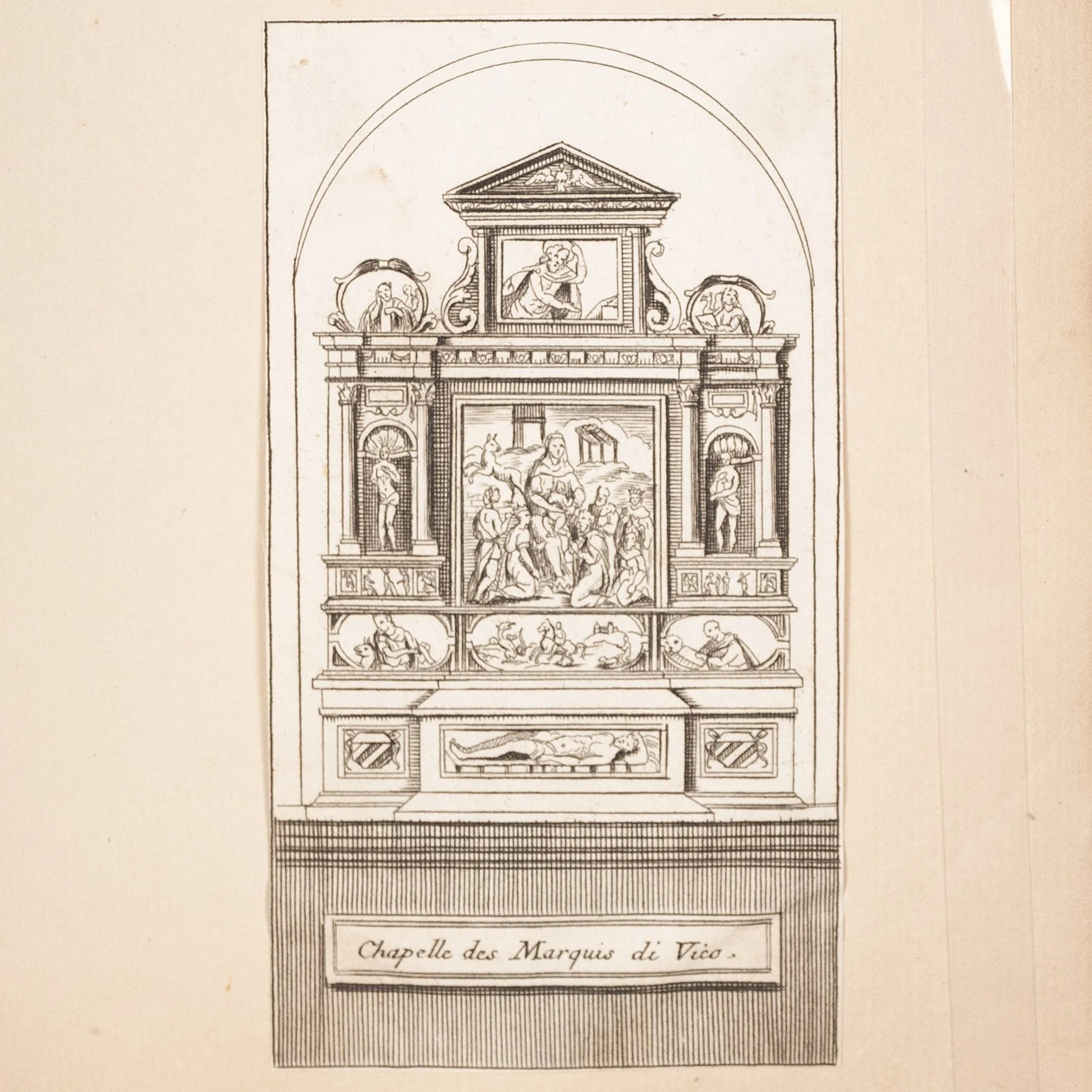
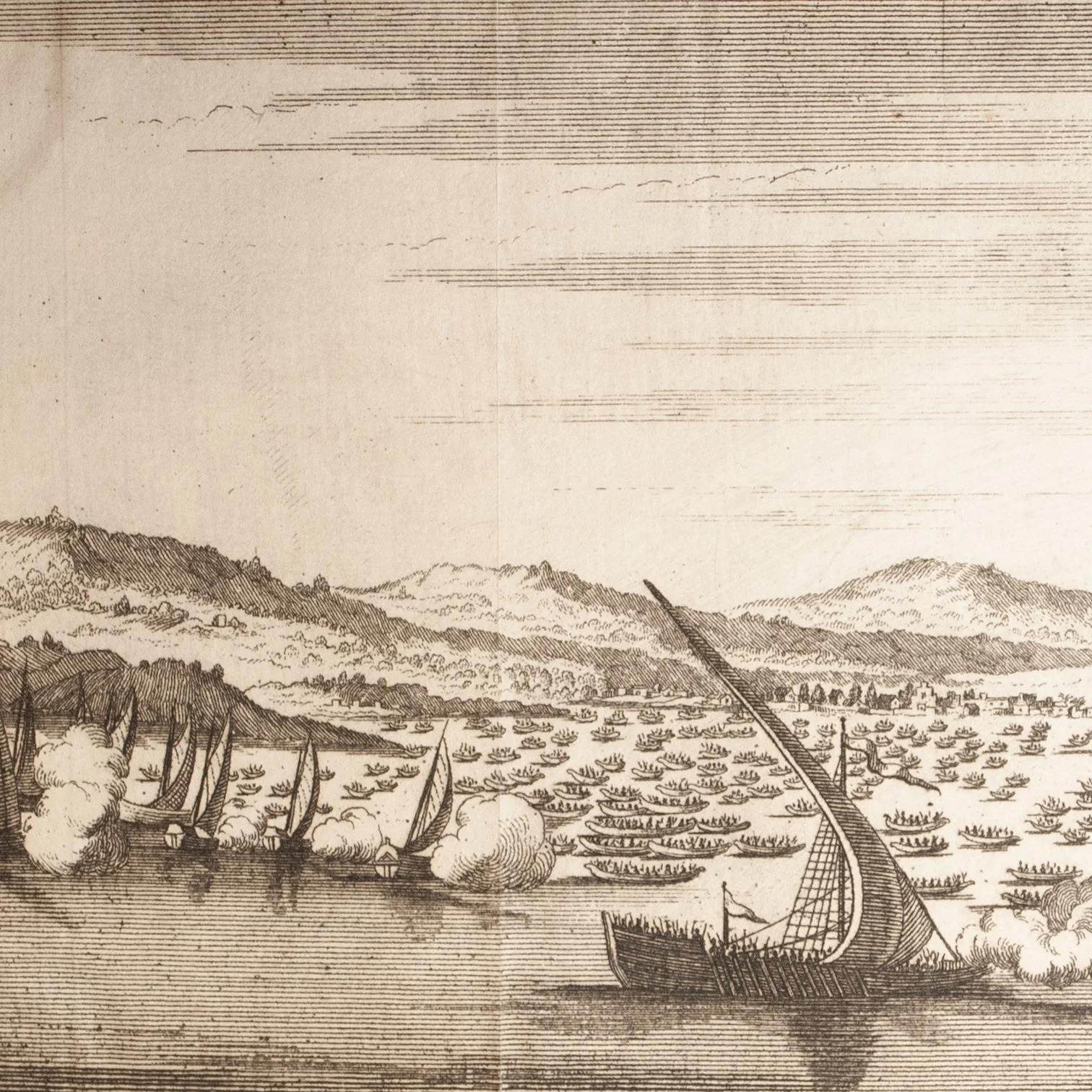
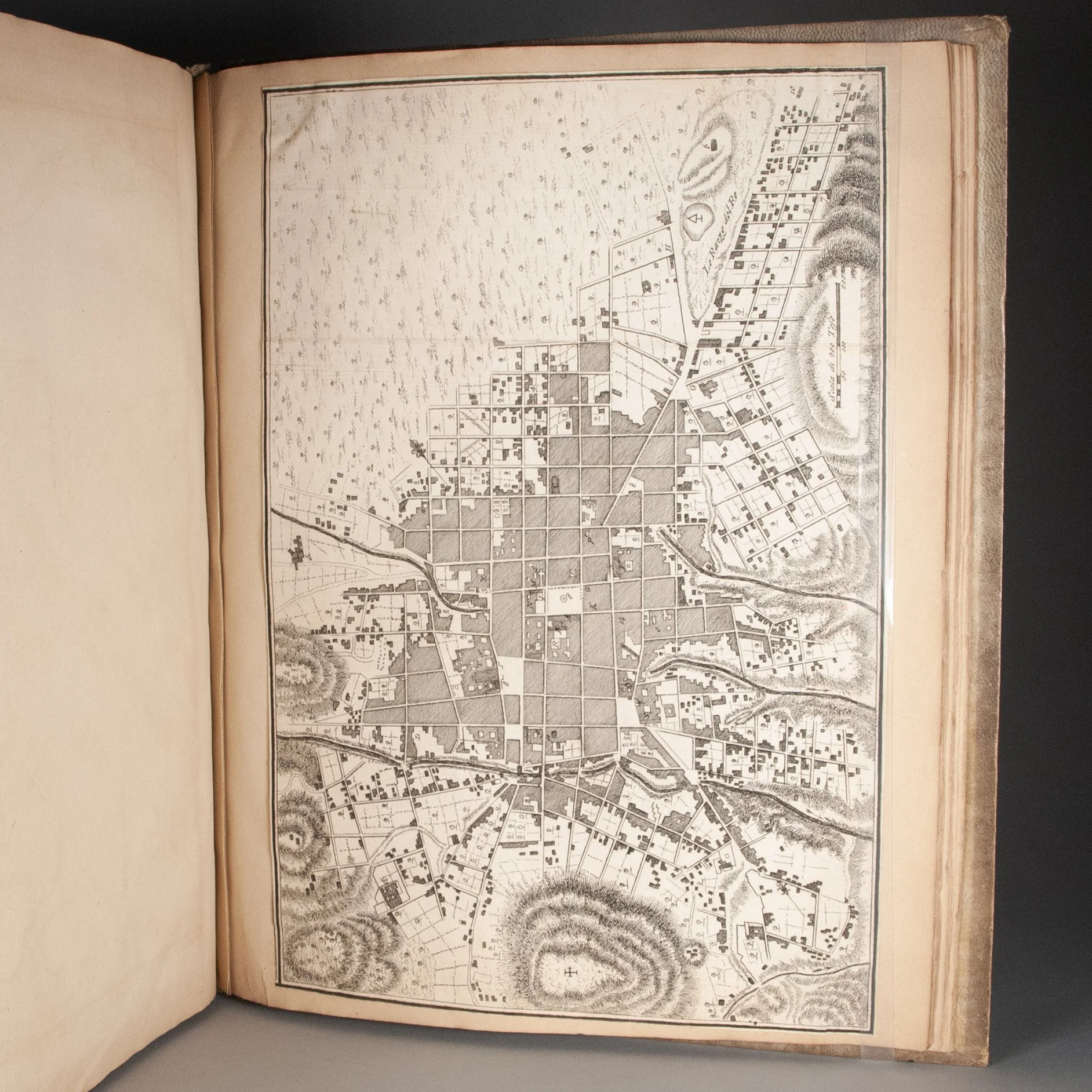
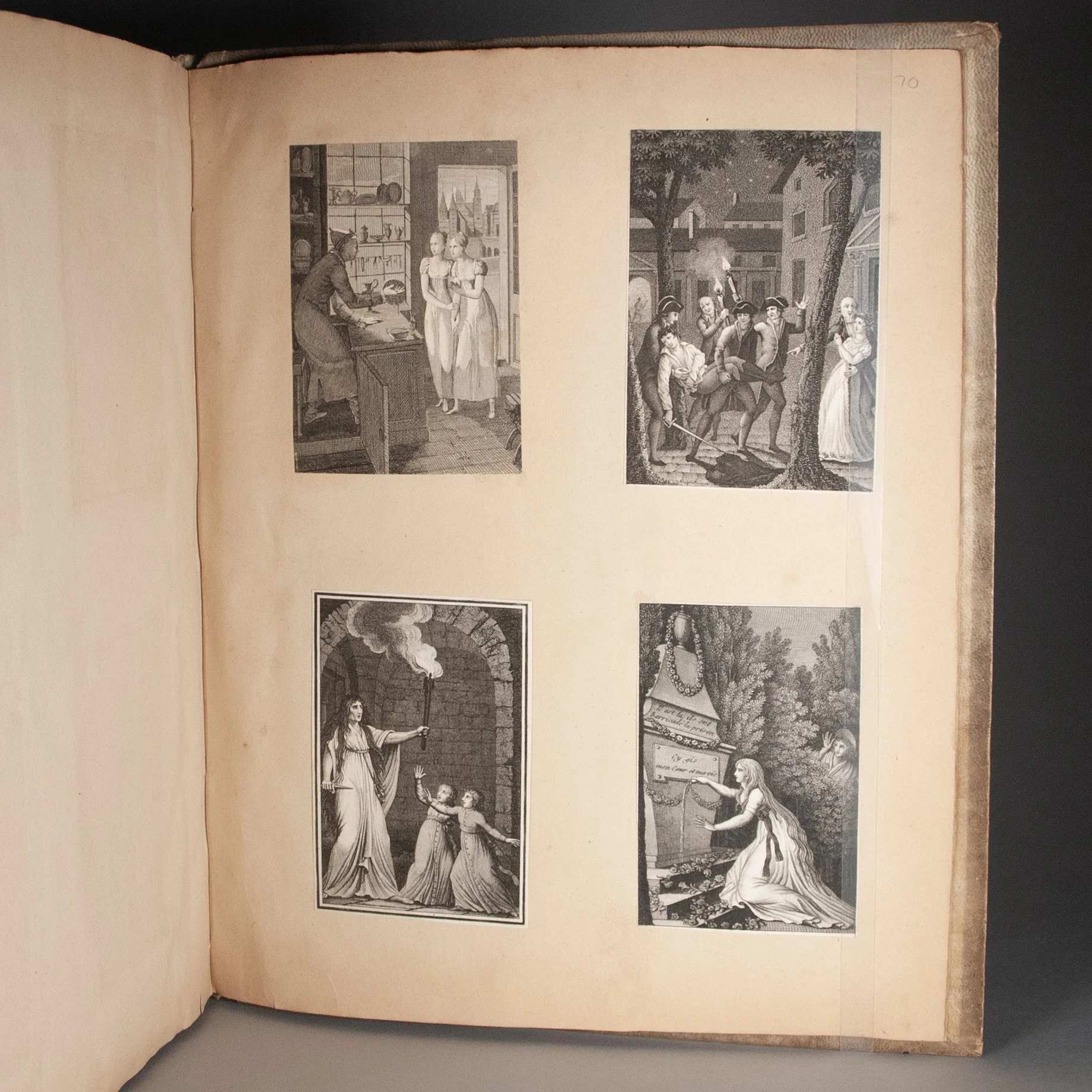
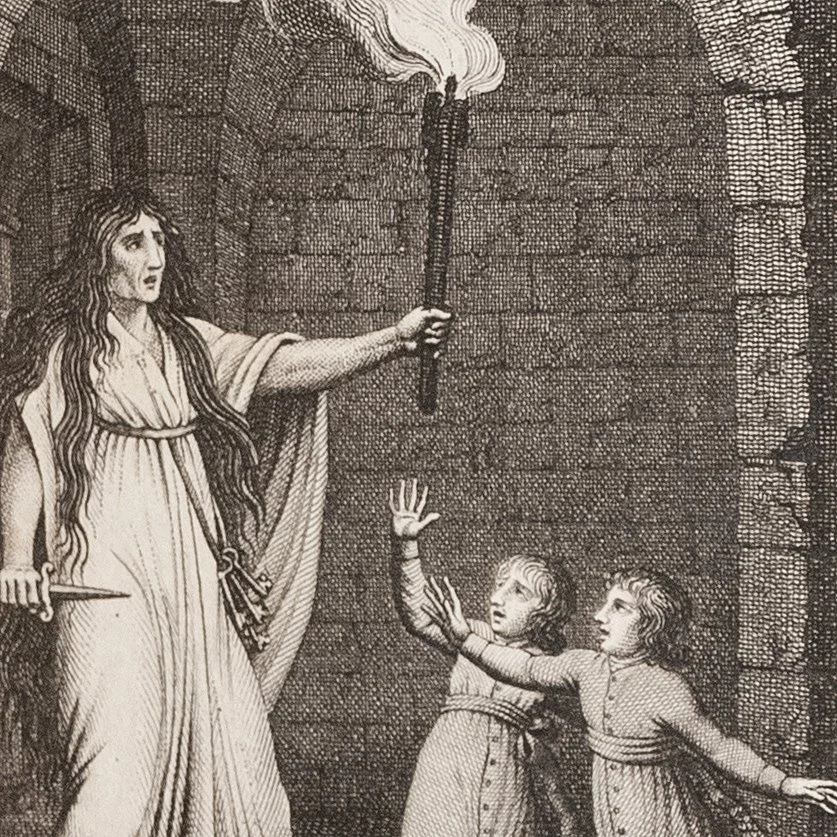
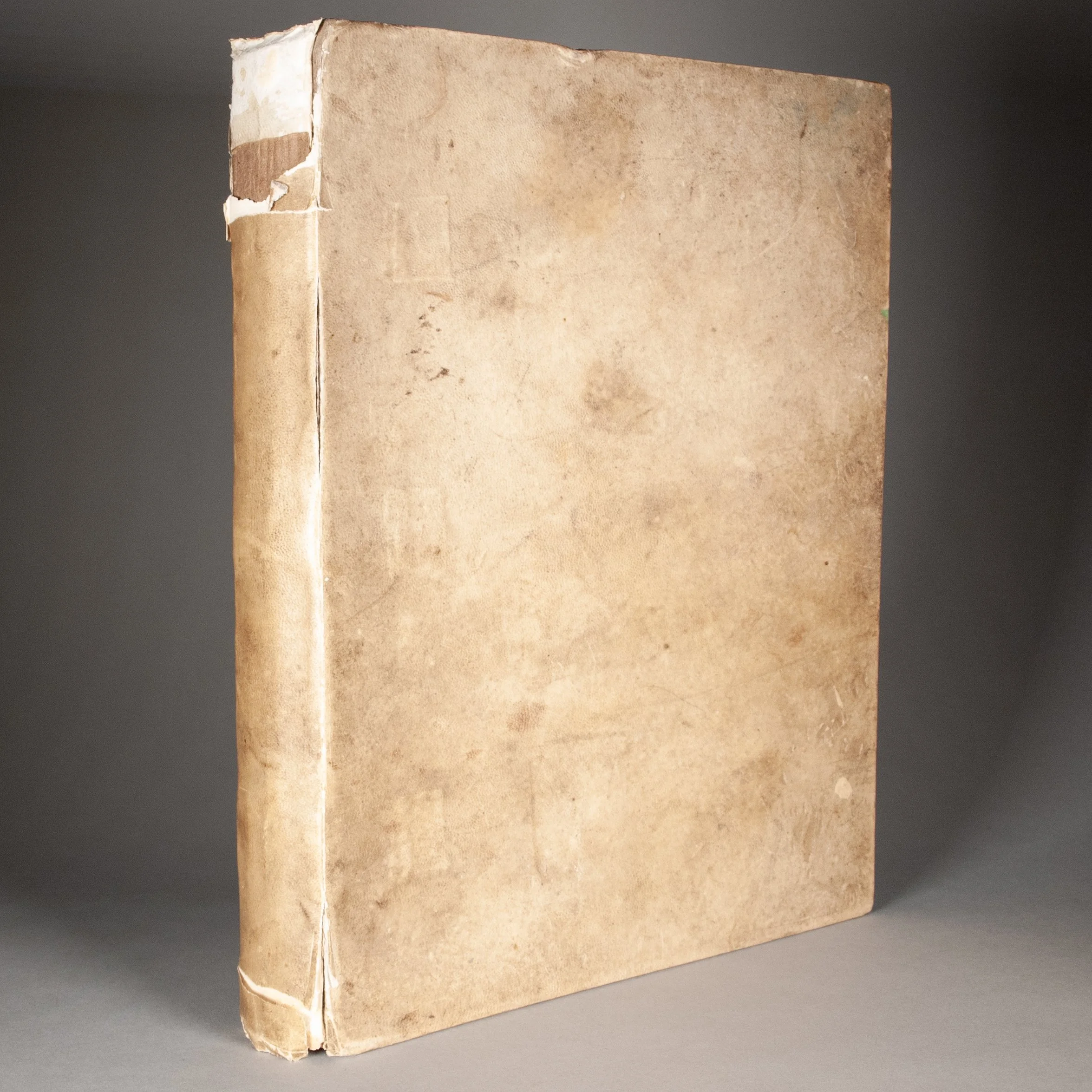
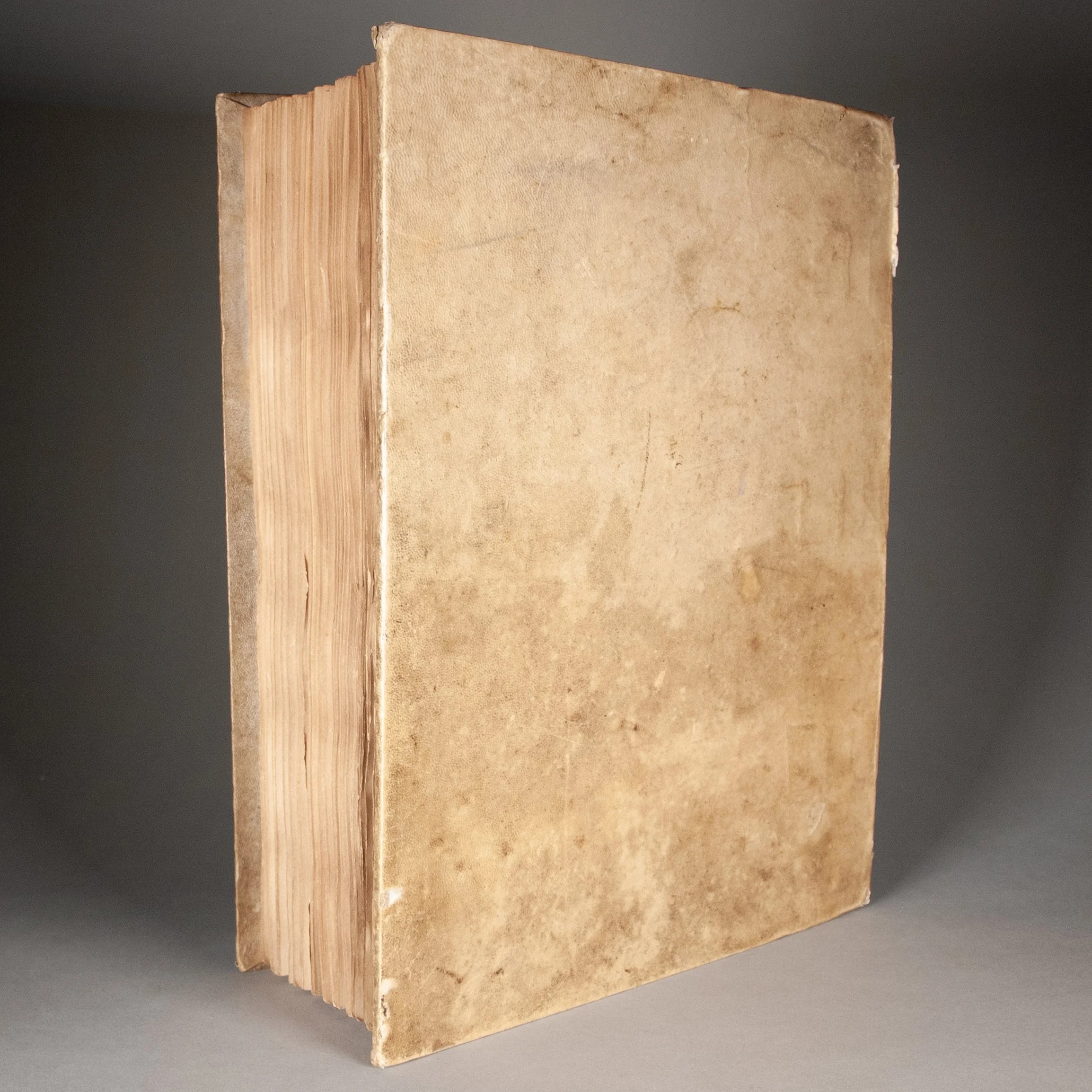
An album of 203 clippings mounted to 73 leaves, tremendously broad in scope. The vast majority of the pieces are 18th-century, a few 17th-century, and some from the early 19th. The oldest is likely the engraving of a ship on fol. 57 (Lutetia), here dated 1619 in an old hand, and found on the title pages of a variety of Parisian imprints from the late 16th and early 17th centuries. A handful near the back of the album are certainly 19th-century, a few perhaps from its middle years, though they could well have been added after the album had been compiled. Most of the leaves are a handmade laid paper, though the last couple dozen are a pre-industrial wove paper, so we suggest ca. 1815-1820 as an approximate date of assemblage—when both kinds of paper were still widely used, and before wove had largely replaced the use of laid. Most clippings appear to be French, some perhaps Flemish, and a handful are Italian. ¶ Most of these appear to have been clipped from books rather than issued as single-sheet prints. The material documents an impressive breadth of interest. There are maps and battle scenes; architecture and monuments, both exterior and interior views; religious and biblical scenes; the occasional title page, including a French edition of Quintus Curtius and a Pharmacopée royale galenique et chymique (very nearly identical to the engraved title from the 1676 edition, so perhaps late 17th century); some thirty head- and tail-pieces, engraved and woodcut, one with the arms of the Dauphin, and many others with the royal arms of France; a plate from Antoine Gallande's Contes et fables indiennes (Paris, 1724; fol. 6); some seafaring images; science, mythology, and hieroglyphs; agriculture, idylls, and landscapes; an image of silk production; portraits and figures; the ancient world, including an aerial view of old Baghdad; scenes from imaginative literature; and even a couple of political cartoons (fol. 49, dated 1790, and fol. 52 and 66). We're particularly taken by some dozen small depictions of altars, capturing in broad strokes their sculptures and painted altarpieces, among the most important venues for renaissance art. These include the altars of Caracciolo di Vico Chapel at the Church of San Giovanni a Carbonara in Naples, the Chapel of Cardinal Orsino (in Croatia's Cathedral of St. Lawrence?), and one at Monte Oliveto (presumably the Tuscan abbey; fol. 43-44). ¶ Albums like this belong to a tradition that dates to at least the 16th century, when the print emerged as collectible art, and countless individuals engaged in the practice over the centuries (John Bagford perhaps most destructive among them). Besides simply delighting and inspiring, such albums could equally serve as repositories of visual information. In 18th-century Britain, for example, "an era when comparatively few books were published with dedicated illustrations, prints were typically collected in thematic portfolios and kept in the library for the sake of visual reference and as an aid to reading" (Peltz). Nor was it strictly necessary for such illustrations to have been extracted from books. In Plantin's day at least, "it so happened every now and then that the illustrations were disseminated as loose-sheet prints or incorporated in books other than those for which they had originally been intended" (Imhof). However these albums were assembled, those that remain intact are telling witnesses to individual enterprise within the expansive landscape of print. "Cutting, pasting, and assemblage are not fringe methods for organizing information but, as Adam Smyth and Ann Blair have consistently shown us in their work, at the center of early modern print culture and—I would add, expanding their claims—all pre-digital textual media, from the ancient past to the near present" (Trettien). ¶ The names of those responsible for the images are in many cases trimmed, but among the artists and engravers represented here are Louis-Fabricius Dubourg (1693-1775), Jacques-Philippe Le Bas (1707-1783), Antoine Coypel (1661-1722), Charles-Louis Simonneau (1645-1728), Jacobus Harrewijn (1660-1727), Jean-Baptiste Bouchet, Carlo Faucci (1729-1784), Charles-Nicolas Cochin the Younger (1715-1790), Hyacinthe Rigaud (1659-1743), and Louis Delaistre (1800-1871). At least a few are by Louise-Magdeleine Horthemels (1686-1767; fol. 15, 26, 41), and we suspect a few others that appear to come from the same source. Horthemels belonged to a sprawling family of engravers, herself "the most important female engraver in this dynasty" (Poulson). Her two sisters were also engravers, and she married the engraver Charles-Nicolas Cochin the Elder, with whom she had another eminent engraver, Charles-Nicolas Cochin the Younger.
CONDITION: Full parchment over boards. Pieces are typically mounted with spots of glue at the corners. Three leaves near the end are half-leaves. The laid paper is watermarked with a shield surmounted by a crown, then topped with a crescent. The final image is hand-colored, all others uncolored. ¶ Many leaves neatly removed over the years; a handful of leaves very nearly detached, and others sliced along the inner margin, doubtless collateral damage from the removal of other leaves; the clippings are invariably trimmed close, frequently sacrificing names associated with their production; small closed tears in some images; glue often shows through the recto of the image; occasional light soiling, but the images generally look quite good. Paper covering the hinges split, but all cords intact and the hinges not at all shaky; parchment splitting along the front joint, with a tear across the tail of the spine, 2" of loss at the head; parchment soiled.
REFERENCES: Elizabeth Poulson, "Louise-Magdeleine Horthemels: Reproductive Engraver," Woman's Art Journal 6.2 (1985/1986),p. 20 (cited above); Lucy Peltz, "Facing the Text: the Amateur and Commercial Histories of Extra-Illustration, c.1770-1840," Owners, Annotators and the Signs of Reading (2005), p. 100 (cited above); Dirk Imhof, "From Arnold Nicolai to Peter Paul Rubens: Book Illustration under Plantin and the First Moretuses," A Century of Typographical Excellence: Christophe Plantin & the Officina Plantiniana (2020), p. 136 (cited above); Whitney Trettien, "What Is a Fragment," Papers of the Bibliographical Society of America 117.4 (Dec 2023), p. 547-548 (cited above); Cynthia Osiecki, "Rethinking the 'Floris-style,'" Nederlands Kunsthistorisch Jaarboek 67 (2017), p. 341 (citing some 16th-century print albums); Bernard Barryte, "Making, Publishing, and Collecting: The Kirk Edward Long Collection in Context," Renaissance Impressions: Sixteenth-Century Master Prints from the Kirk Edward Long Collection (2021), p. 13 (speaking of the 1570s: "Following then common practice, collectors would mount their prints in albums")
Item #929