
Early Italian binding in strictly original condition
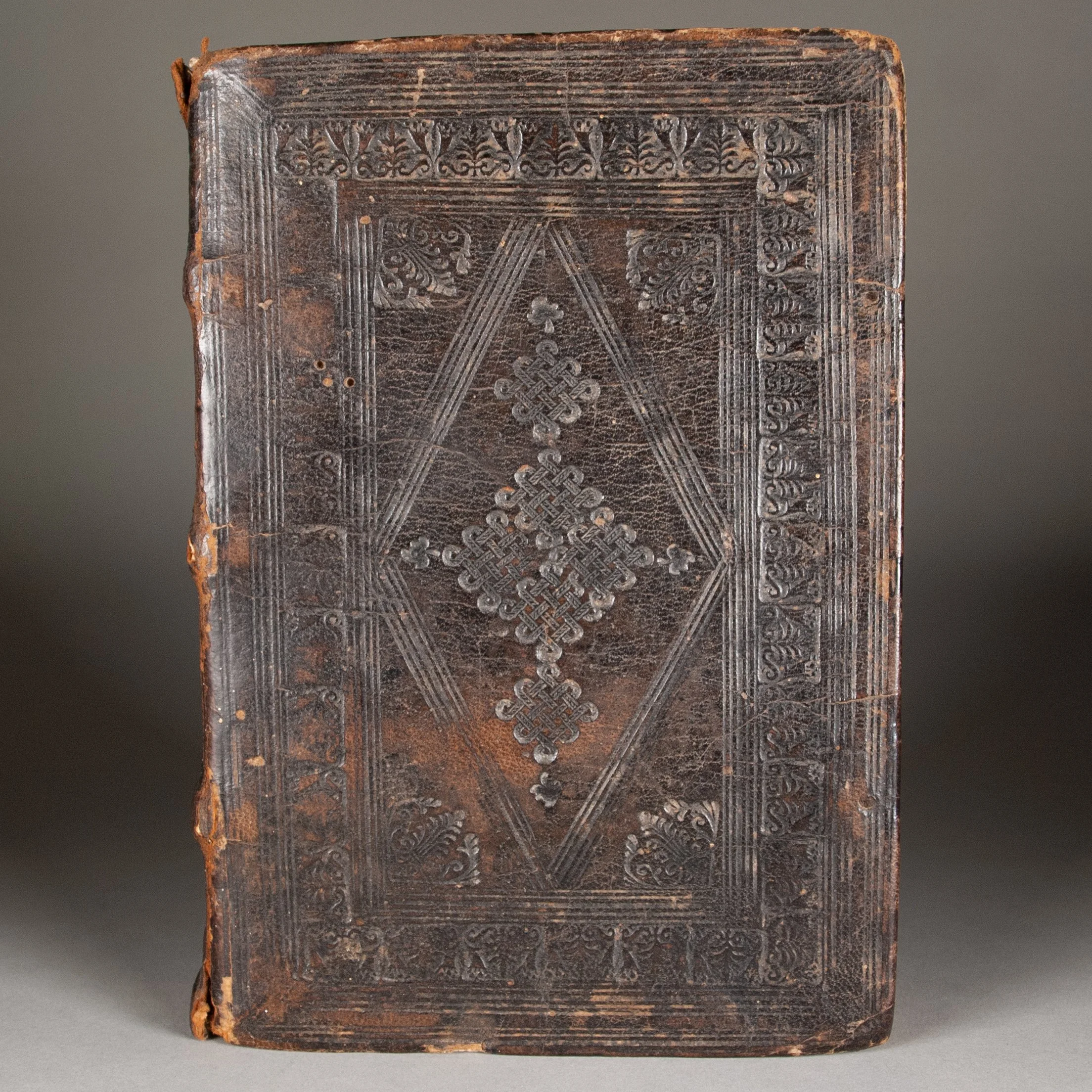
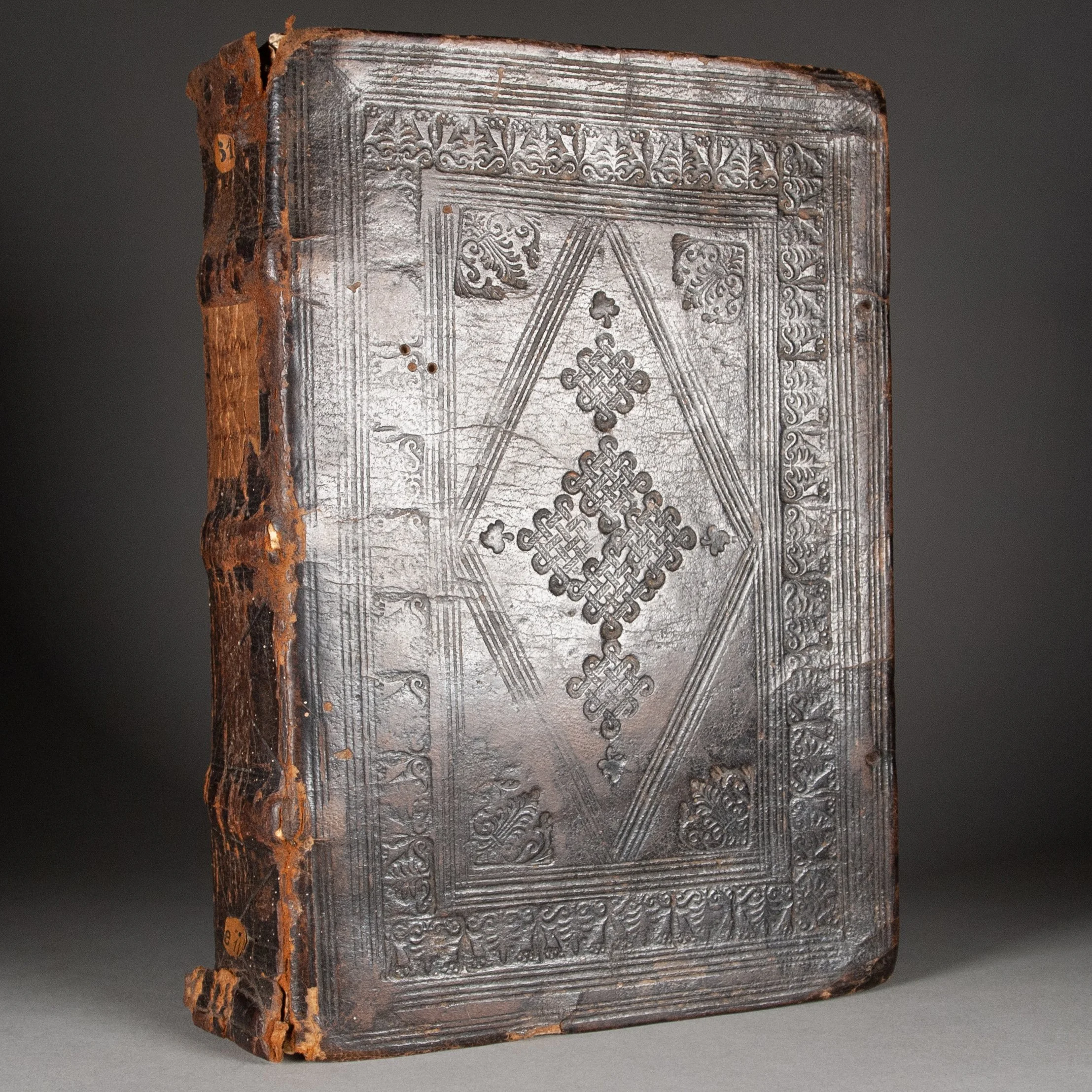
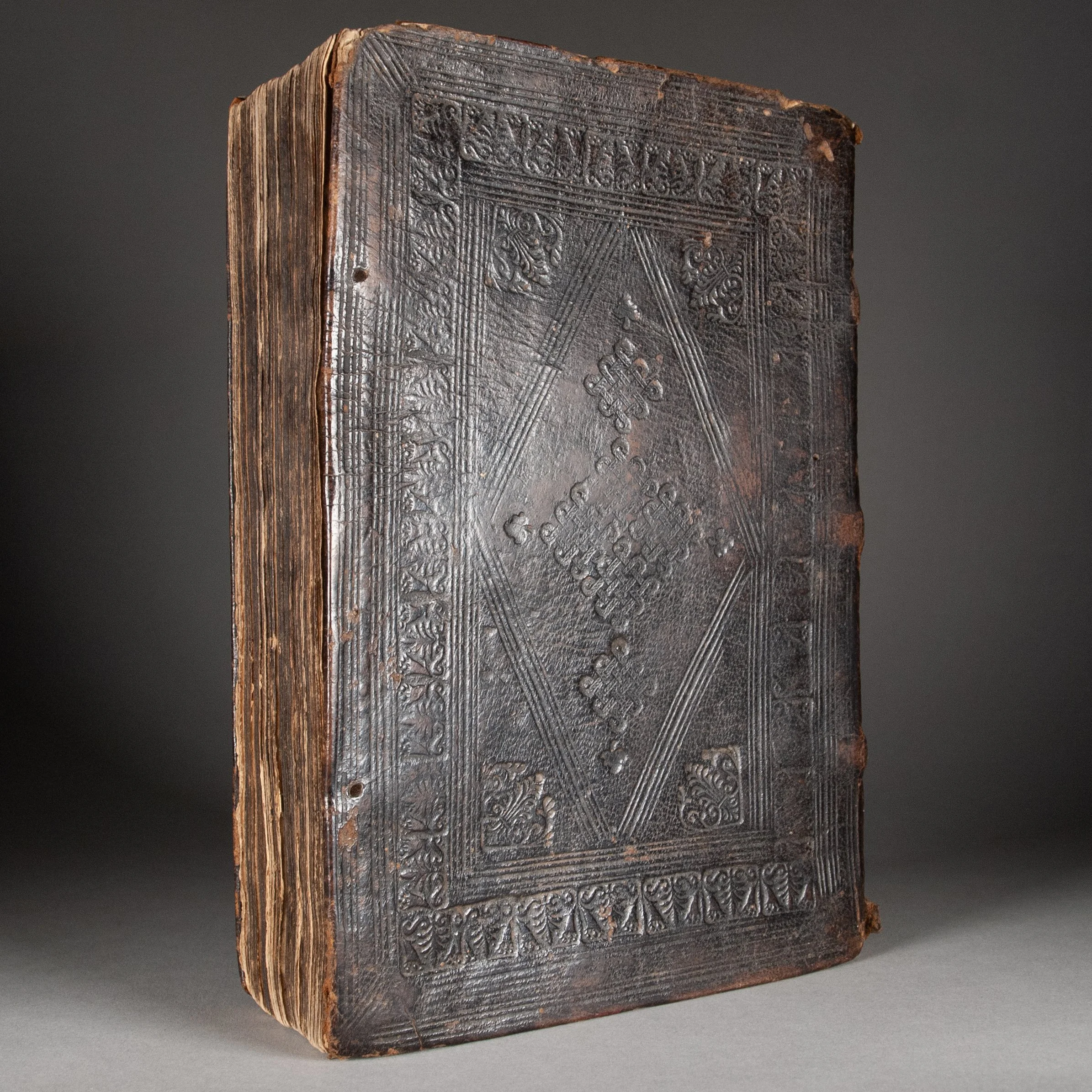
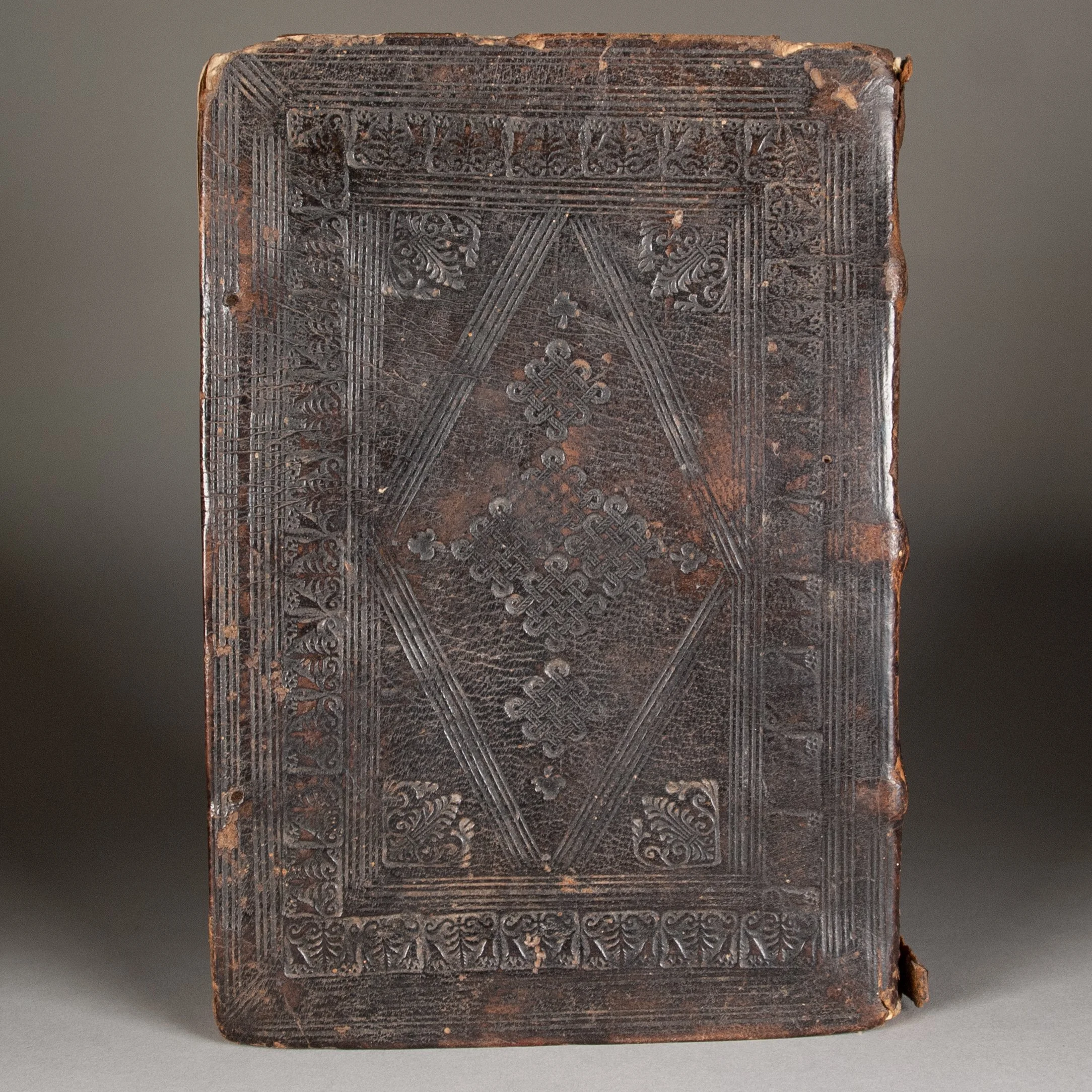
Early Italian binding in strictly original condition
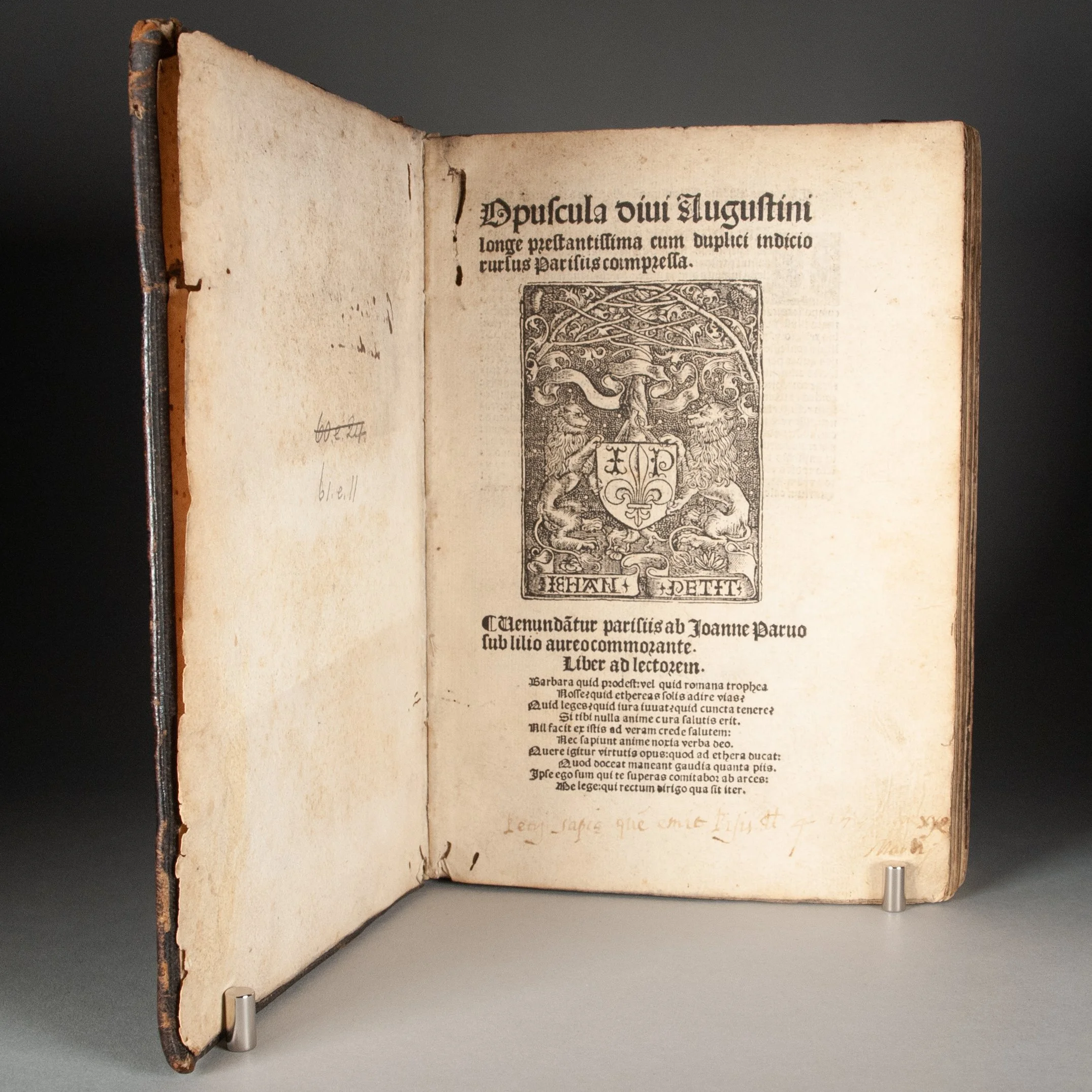
Opuscula divi Augustini longe prestantissima cum duplici indicio cursus Parisiis compressa
by Saint Augustine of Hippo
Paris: Jean Petit, 1521
[14], ccc leaves | 4to | ã^8 ẽ^6 a-z^8 A-N^8 O-P^6 | 207 x 141 mm
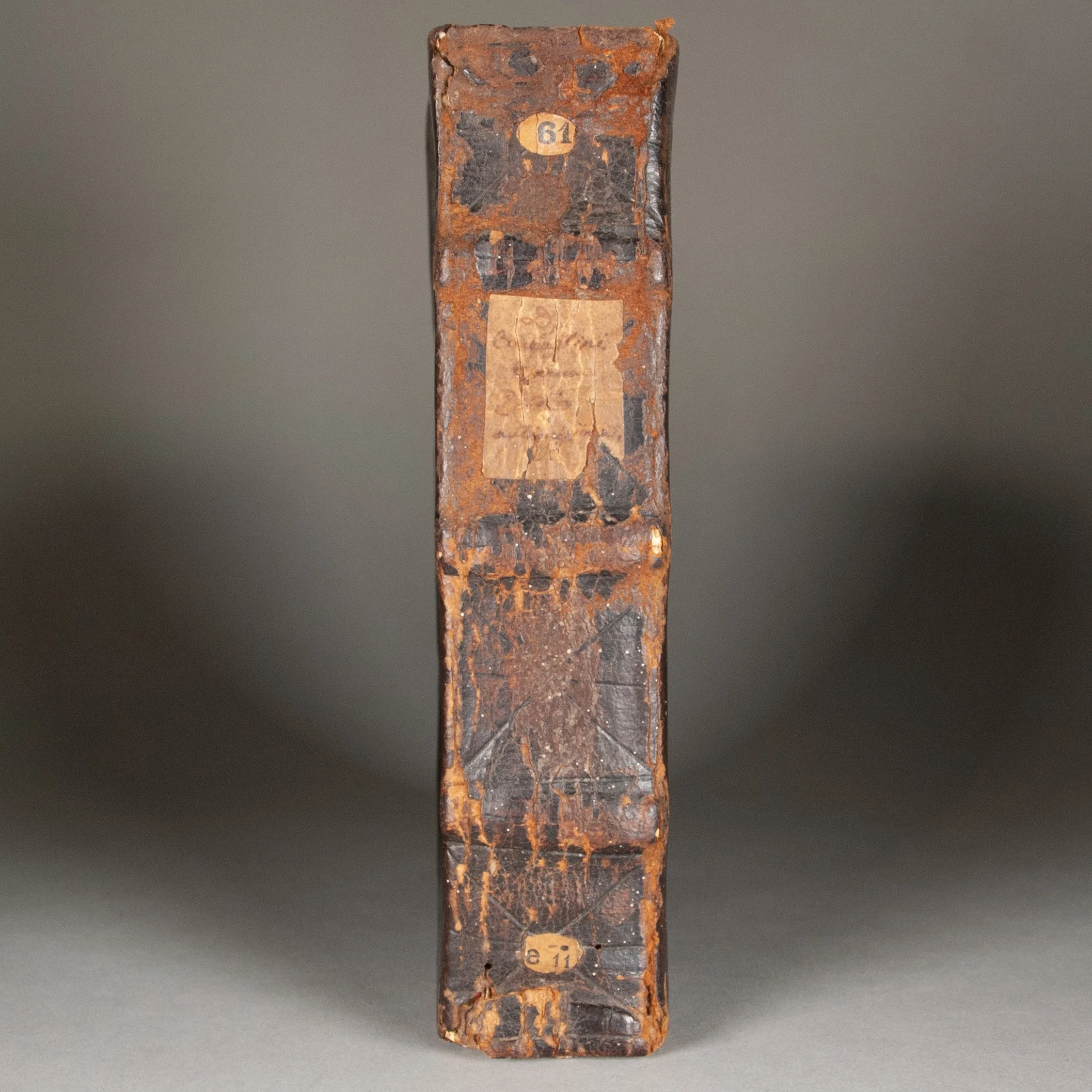
The first part of a later edition of St. Augustine's collected works, edited by Jodocus Badius Ascensius and reprinted from Petit's edition of 1513, itself largely based on André Bocard's edition of 1502. The second part was actually published in 1520. The USTC record cited below represents only this first part, and we more frequently find it cataloged on its own in WorldCat. ¶ Of course Augustine was hugely influential, and Badius an enviable scholar, but we'd rather spill our proverbial ink on the binding. It's emblematic contemporary Italian work, in strictly original condition, dark goatskin tooled in blind, each board framed with fillets and a palmette roll, surrounding a central lozenge dominated by a knotwork motif. The knotwork especially was characteristic of Italian bindings at the time, "so generally used there in the fifteenth century, surviving in the following period in fairly widespread favour" (Goldschmidt), and a motif heavily influenced by Islamic decorative work. The fleurons, here added to the knotwork's cardinal points, were likewise first used on Italian bindings in the 15th century. They mark an early case of printer's ornaments' influence on binding design, and they spread throughout Europe as the 16th century advanced. The spine, too, is standard Italian work of the time, each compartment decorated with three rules crossing at the middle to form a kind of giant asterisk. The palmette, for its part, has a long tradition in bookbinding. "Palmettes, one of the favourite elements of late classical decorative art, never disappeared from the binder's repertory. They appear on Carolingian and romanesque covers, and on gothic bindings" (Hobson). Among our literature, we find a binding of similar composition on a late 15th-century Roman manuscript of Sallust, partially tooled in gold (Hobson fig. 75). ¶ A solid, completely unrestored contemporary binding. We love the cosmopolitan character of this book: a French imprint in an Italian binding that borrowed from Islamic design. Books and style transcended borders.
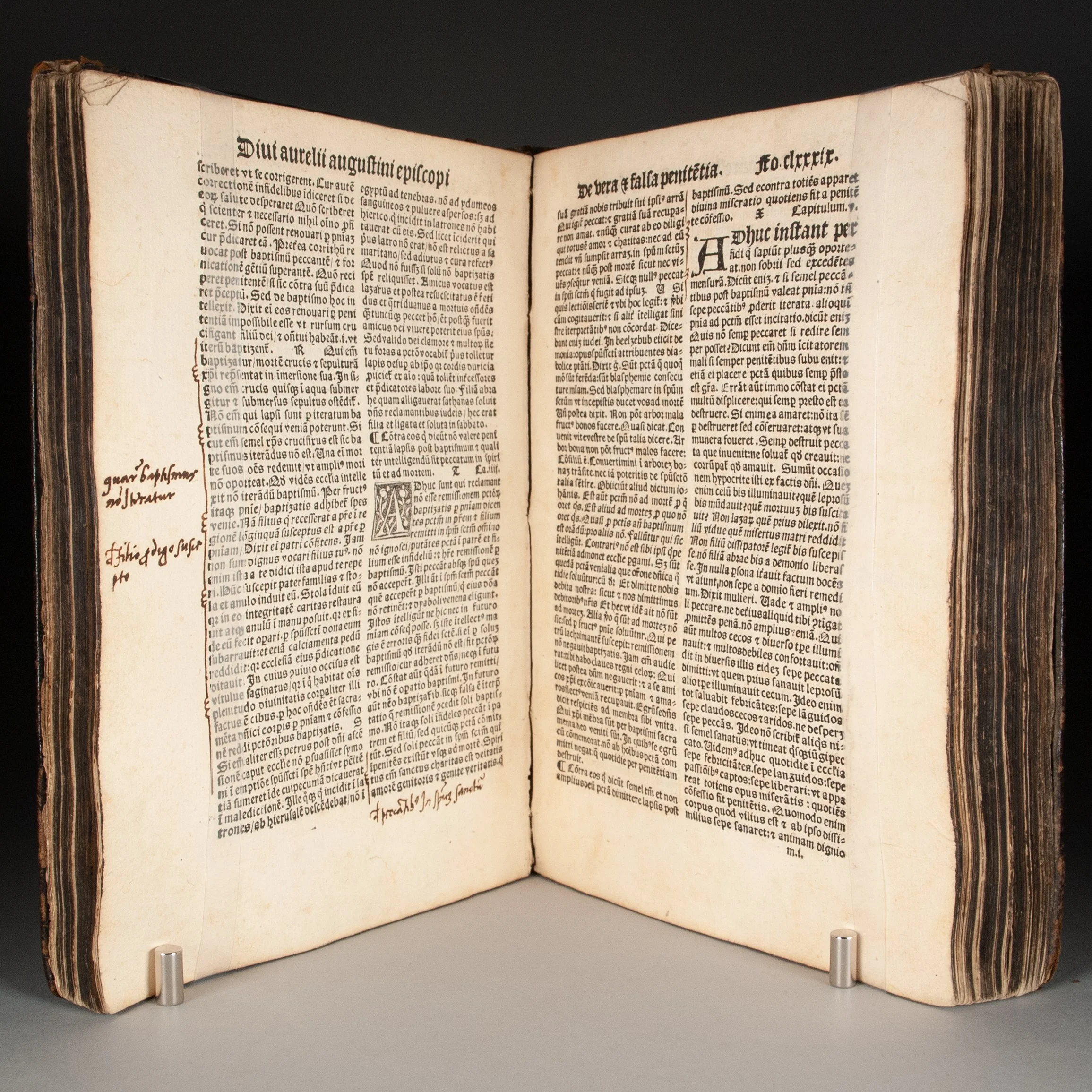
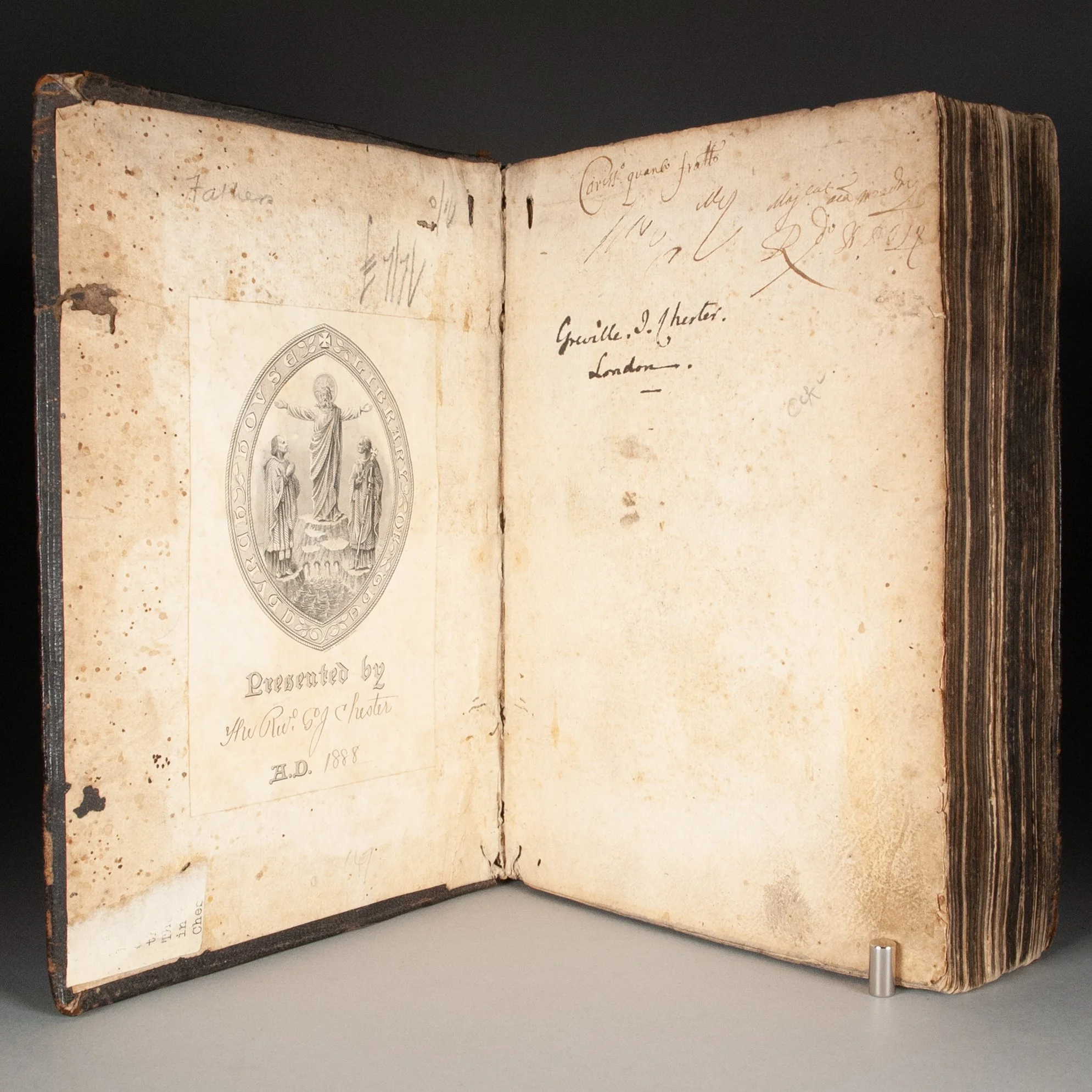
PROVENANCE: Early annotations on two dozen pages, generally of the nota bene and wayfinding variety. ¶ Contemporary inscription at foot of title, and early ownership inscription on final blank page of one P. Antonio Basso, 13 March 1613. Inscription, bookplate, and round sticker of Rev. Greville J. Chester (1830-1892), a very active archaeologist and collector who spent much time in Egypt (from which a number of British museums benefited). Partially removed label in lower corner of front paste-down, probably Chester's, and a few other old markings in pen and pencil. A few old paper labels on the spine.
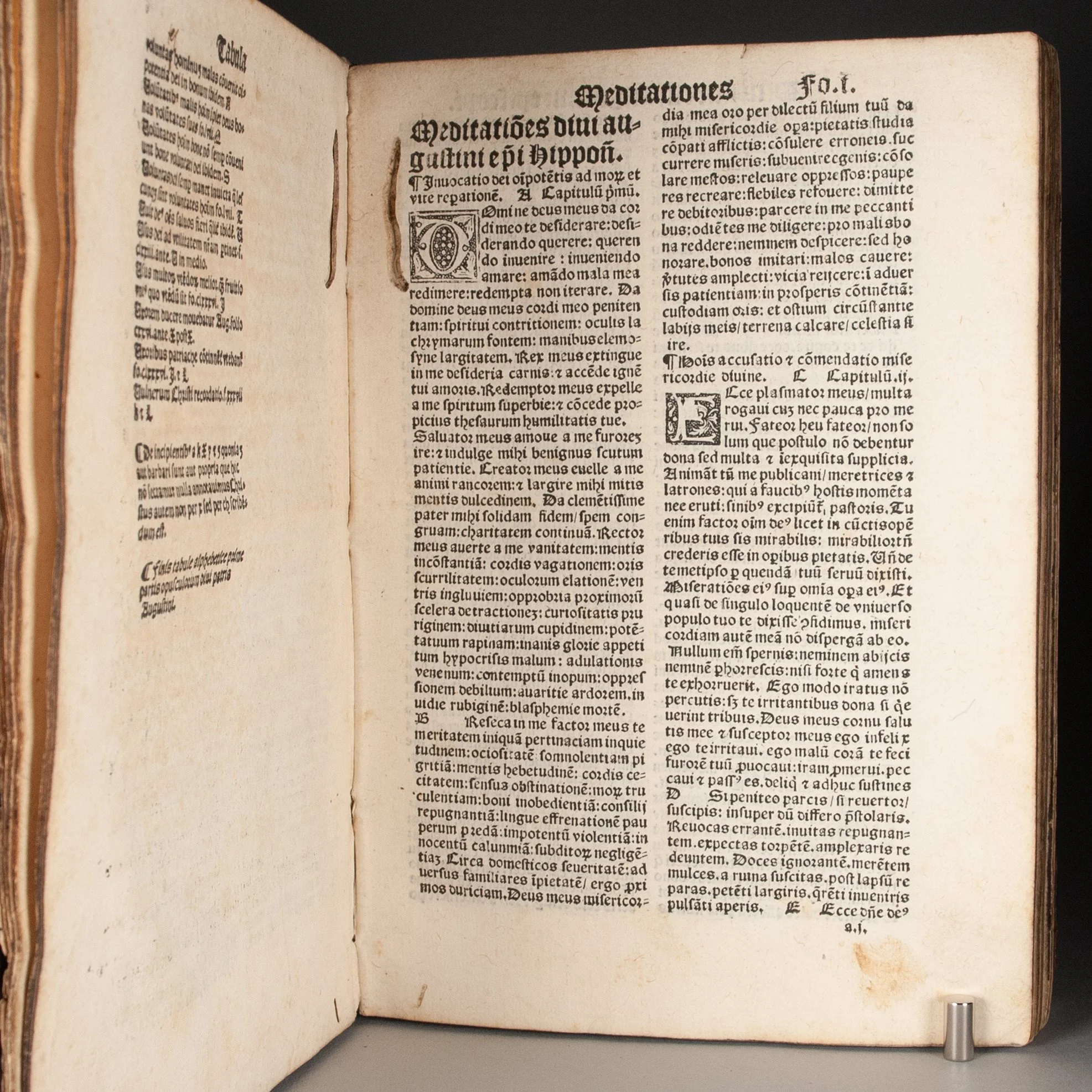
CONDITION: Contemporary Italian morocco, as described above; edges stained black. With Petit's device on the title and criblé initials throughout. Take note of the lower corner of fol. 71r, where a few pieces of type escaped into the margin. ¶ First three gatherings with a fairly substantial worm track, generally sticking to the inner margin, but occasionally touching some text; some additional scattered worming in the lower margin; first few gatherings a bit soiled, the last couple with some marginal dampstaining; last two gatherings are misquired. Spine heavily rubbed, with tears at the head and tail; corners bumped and edges worn; ties lost.
REFERENCES: USTC 145439; Renouard, Bibliographie des impressions et des oeuvres de Josse Badius Ascenscius (1908), v. 2, p. 60 (for the 1520 second part only; "I've never encountered a copy of the first part"); Brigitte Moreau, Inventaire chronologique des éditions parisiennes du XVIe siècle, v. 3, p. 53, #18 ¶ E. Ph. Goldschmidt, Gothic & Renaissance Bookbindings (1928), v. 1, p. 71 ("as a rule Italian blind-stamped leather bindings are tooled solely with ornamental stamps, among which the motif of interlaced knotwork is largely predominant"), 105 (cited above); Anthony Hobson, Humanists and Bookbinders (1989), p. 60 (cited above), 72 ("The epigraphic vineleaf appeared on bindings not long after the introduction of printers' flowers in the Veronese Arte de ben morire and Aesop"); Ilse Schunke, "Venezianische Renaissanceeinbände," Studi di bibliografia e di storia in onore di Tammaro de Marinis (1964), v. 4, plate VIII (Venetian binding with a central knotwork motif), plate XVII (Venetian binding with similar layout: borders and cornerpieces surrounding a large central lozenge)
Item #893