Suasoriae, controversiae, cum declamationum excerptis; tomus tertius [containing waste from] Domini Nostri Jesu Christi Testamentum Novum Turcice redditum
by Seneca the Elder | Turkish New Testament translated by William Seaman
Amsterdam: Louis and Daniel Elzevir, 1658 | Oxford: H. Hall, 1666 (the waste)
440, [152] p. | 12mo | A-2A^12 2B^8 | 139 x 76 mm
The third volume (of three) from the third Elzevir edition of Seneca the Elder's collected works, this volume containing his Controversiae, a collection of mock lawsuits, and Suasoriae, invented speeches in which he assigns real ancient figures difficult decisions. ¶ But we find far more interesting the printed waste used at front, leaf 3h3 taken from William Seaman's 1666 Ottoman Turkish translation of the New Testament, printed from Arabic type. (Used as a rear fly-leaf is printed waste from elsewhere yet, likely a late 15th- or early 16th-century edition of Peter Lombard's Sentences.) While Arabic-speaking lands themselves had very few presses before the 19th century, European printers made a number of early forays into Arabic printing. A woodcut Arabic alphabet appeared in Breydenbach's 1486 Peregrinatio, an Arabic grammar printed at Granada in 1505 was the first to feature a substantial amount of Arabic text, and at Rome in 1514 appeared the first book printed entirely in Arabic type. The loci of Arabic printing soon moved north, to cities with large universities, like Paris and Leiden, marking a shift from the more evangelical motivations of earlier efforts. "In each case, the primary motivation behind scholarly interest in Arabic and its typography was an inward-looking one, with the Protestant universities of northern Europe encouraging the study of Arabic in order to clarify the lexical obscurities of the Hebrew Bible by the exercise of linguistic comparison" (Green). ¶ England, perhaps unsurprisingly given the aforementioned Protestant motivation, boasted half a dozen Arabic presses in the second half of the 17th century. Naturally Oxford was among them, where printing in Arabic appears to have begun in 1648. Seaman's was the very first edition of the New Testament to appear in Turkish, though one might reasonably have expected one to appear sooner. After all, it was "the language of a non-Christian power which not only was hugely important in geopolitical terms, but also had some theological resonance, having often featured in Christian apocalyptic thinking in the early modern period" (Malcolm). By this point, the Bible had already been translated into a variety of less conspicuous languages. "And yet the story of the attempt to produce a Turkish translation of the Bible is one the most hit-and-miss of all, involving two virtually simultaneous and ill-coordinated initiatives in the Netherlands and England." The Dutch started first, but their ill-fated project came to nought. ¶ The Turkish New Testament is very rare in commerce. We find no appearances at auction since 1924.
PROVENANCE: Ink stamp of Cornwell House on a front fly-leaf, presumably having once belonged to Sir Fairmedow Penyston (1656-1705) or an heir.
CONDITION: Polished brown leather, likely British work of the late 17th century. ¶ Upper corner torn from title page, an old signature along with it, but not affecting text; closed tear in C12 at the lower inner margin, not touching text. Pastedowns gone; corner torn away from the Turkish waste, just touching the text; binding extremities a trifle rubbed.
REFERENCES: Alphonse Willems, Les Elzevier (1880), p. 319, #1251; Darlow and Moule, Historical catalogue of the printed editions of Holy Scripture, v. 2, p. 1632, #9435 (the Seaman waste); ESTC R31588 (the waste) ¶ Nile Green, "The Development of Arabic-Script Typography in Georgian Britain," Printing History New Series 5 (Jan 2009), p. 16 (cited above, and generally good background on early Arabic printing); Noel Malcolm, "Comenius, Boyle, Oldenbourg, and the Translation of the Bible into Turkish," Church History and Religious Culture 87.3 (2007), p. 328 (cited above, and throughout for an excellent comparison of the English and Dutch projects); Yann Sordet, Histoire du livre et de l'édition (2021), p. 327 (for the Breydenbach), 432 (good background on 16c Arabic printing); David Pearson, English Bookbinding Styles 1450-1800, p. 72, fig. 3.71 (binding comp)
Item #706
Suasoriae, controversiae, cum declamationum excerptis; tomus tertius [containing waste from] Domini Nostri Jesu Christi Testamentum Novum Turcice redditum
by Seneca the Elder | Turkish New Testament translated by William Seaman
Amsterdam: Louis and Daniel Elzevir, 1658 | Oxford: H. Hall, 1666 (the waste)
440, [152] p. | 12mo | A-2A^12 2B^8 | 139 x 76 mm
The third volume (of three) from the third Elzevir edition of Seneca the Elder's collected works, this volume containing his Controversiae, a collection of mock lawsuits, and Suasoriae, invented speeches in which he assigns real ancient figures difficult decisions. ¶ But we find far more interesting the printed waste used at front, leaf 3h3 taken from William Seaman's 1666 Ottoman Turkish translation of the New Testament, printed from Arabic type. (Used as a rear fly-leaf is printed waste from elsewhere yet, likely a late 15th- or early 16th-century edition of Peter Lombard's Sentences.) While Arabic-speaking lands themselves had very few presses before the 19th century, European printers made a number of early forays into Arabic printing. A woodcut Arabic alphabet appeared in Breydenbach's 1486 Peregrinatio, an Arabic grammar printed at Granada in 1505 was the first to feature a substantial amount of Arabic text, and at Rome in 1514 appeared the first book printed entirely in Arabic type. The loci of Arabic printing soon moved north, to cities with large universities, like Paris and Leiden, marking a shift from the more evangelical motivations of earlier efforts. "In each case, the primary motivation behind scholarly interest in Arabic and its typography was an inward-looking one, with the Protestant universities of northern Europe encouraging the study of Arabic in order to clarify the lexical obscurities of the Hebrew Bible by the exercise of linguistic comparison" (Green). ¶ England, perhaps unsurprisingly given the aforementioned Protestant motivation, boasted half a dozen Arabic presses in the second half of the 17th century. Naturally Oxford was among them, where printing in Arabic appears to have begun in 1648. Seaman's was the very first edition of the New Testament to appear in Turkish, though one might reasonably have expected one to appear sooner. After all, it was "the language of a non-Christian power which not only was hugely important in geopolitical terms, but also had some theological resonance, having often featured in Christian apocalyptic thinking in the early modern period" (Malcolm). By this point, the Bible had already been translated into a variety of less conspicuous languages. "And yet the story of the attempt to produce a Turkish translation of the Bible is one the most hit-and-miss of all, involving two virtually simultaneous and ill-coordinated initiatives in the Netherlands and England." The Dutch started first, but their ill-fated project came to nought. ¶ The Turkish New Testament is very rare in commerce. We find no appearances at auction since 1924.
PROVENANCE: Ink stamp of Cornwell House on a front fly-leaf, presumably having once belonged to Sir Fairmedow Penyston (1656-1705) or an heir.
CONDITION: Polished brown leather, likely British work of the late 17th century. ¶ Upper corner torn from title page, an old signature along with it, but not affecting text; closed tear in C12 at the lower inner margin, not touching text. Pastedowns gone; corner torn away from the Turkish waste, just touching the text; binding extremities a trifle rubbed.
REFERENCES: Alphonse Willems, Les Elzevier (1880), p. 319, #1251; Darlow and Moule, Historical catalogue of the printed editions of Holy Scripture, v. 2, p. 1632, #9435 (the Seaman waste); ESTC R31588 (the waste) ¶ Nile Green, "The Development of Arabic-Script Typography in Georgian Britain," Printing History New Series 5 (Jan 2009), p. 16 (cited above, and generally good background on early Arabic printing); Noel Malcolm, "Comenius, Boyle, Oldenbourg, and the Translation of the Bible into Turkish," Church History and Religious Culture 87.3 (2007), p. 328 (cited above, and throughout for an excellent comparison of the English and Dutch projects); Yann Sordet, Histoire du livre et de l'édition (2021), p. 327 (for the Breydenbach), 432 (good background on 16c Arabic printing); David Pearson, English Bookbinding Styles 1450-1800, p. 72, fig. 3.71 (binding comp)
Item #706
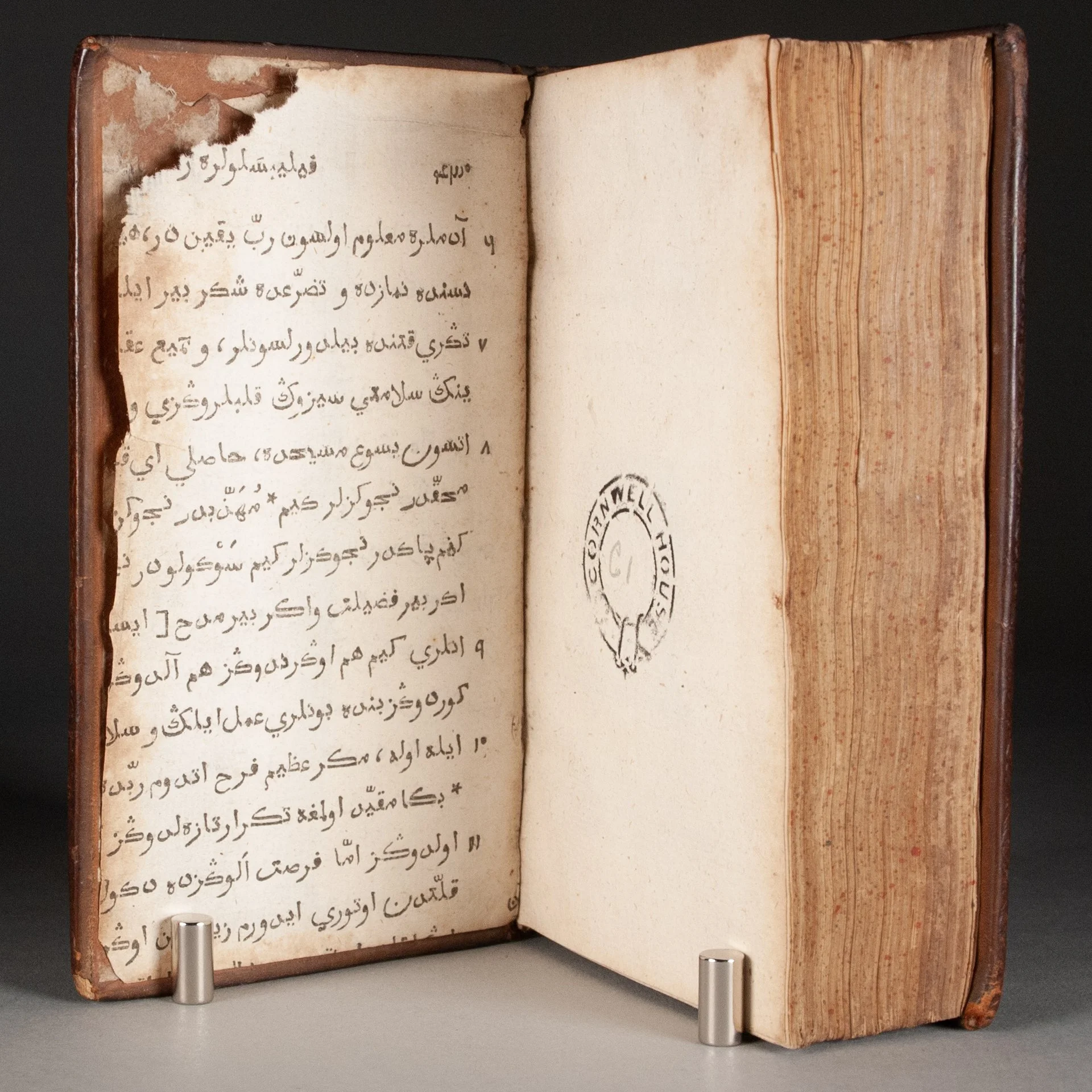 Image 1 of 7
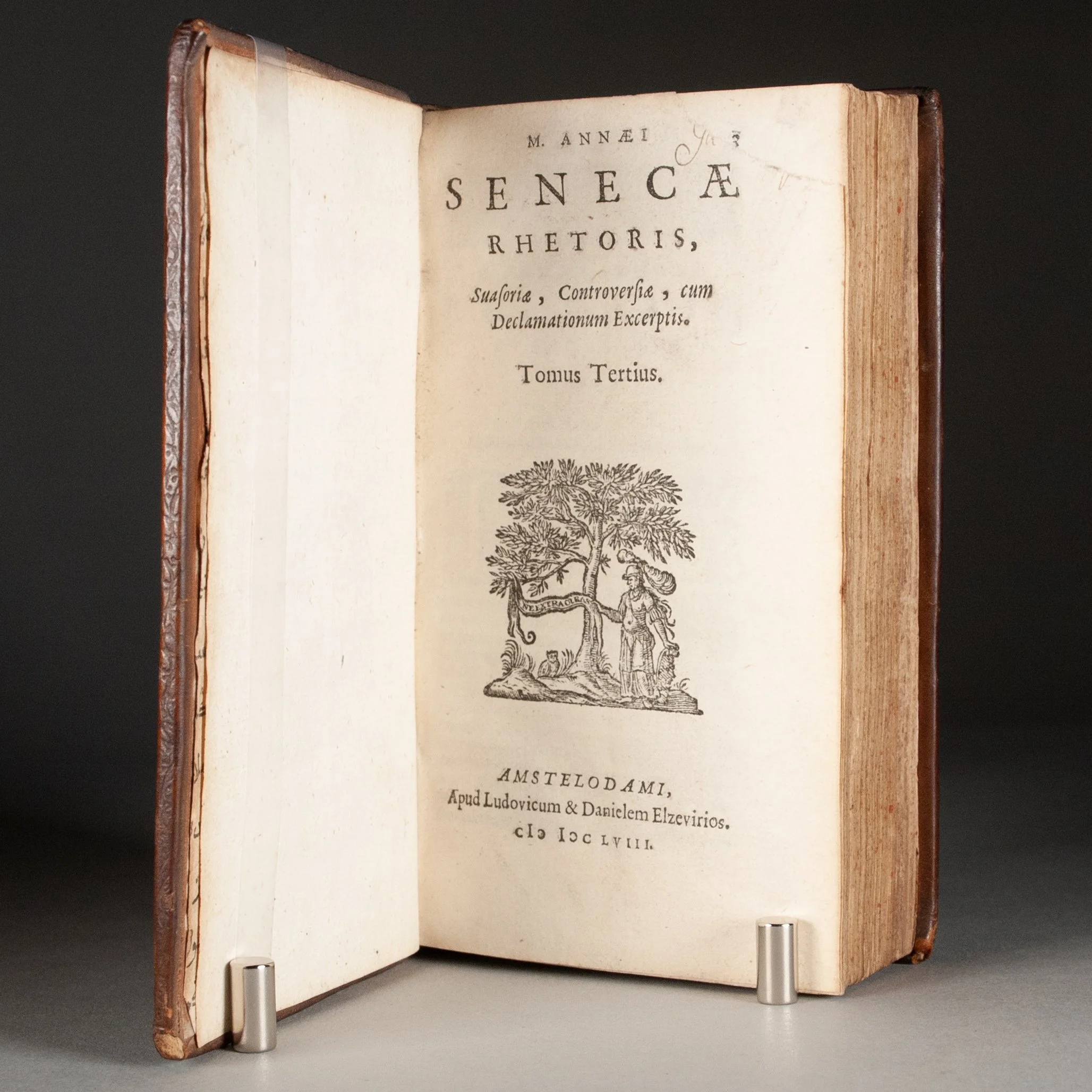 Image 2 of 7
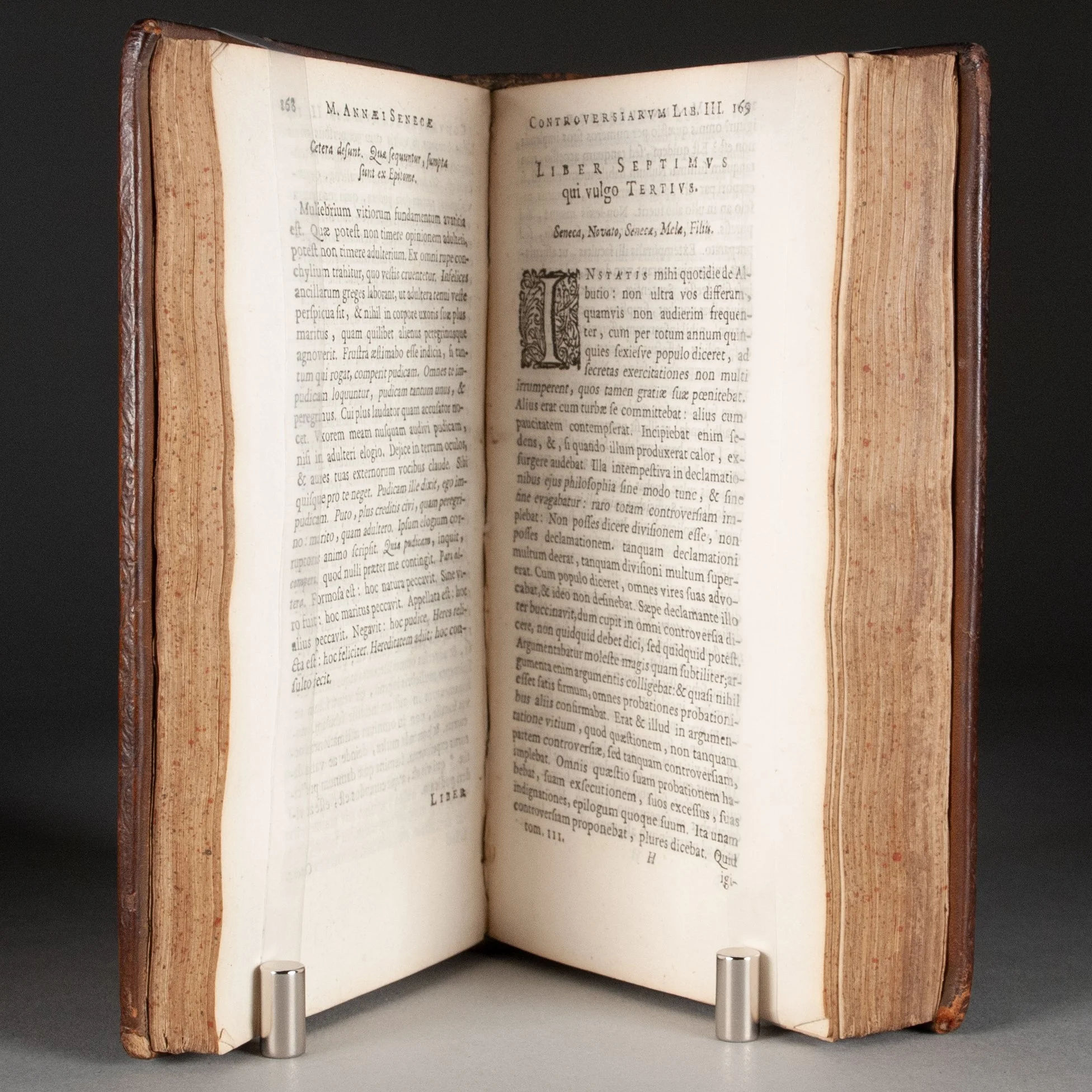 Image 3 of 7
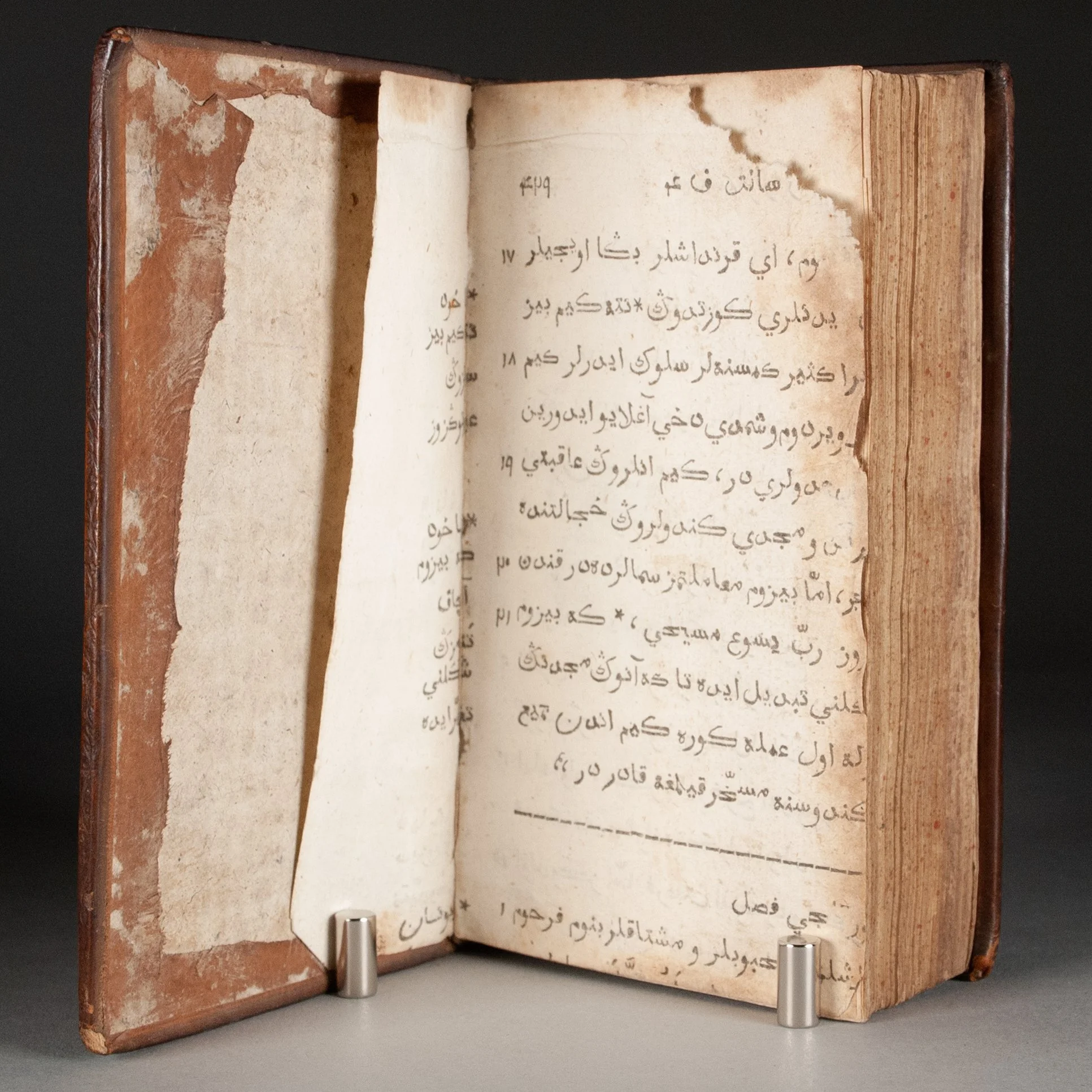 Image 4 of 7
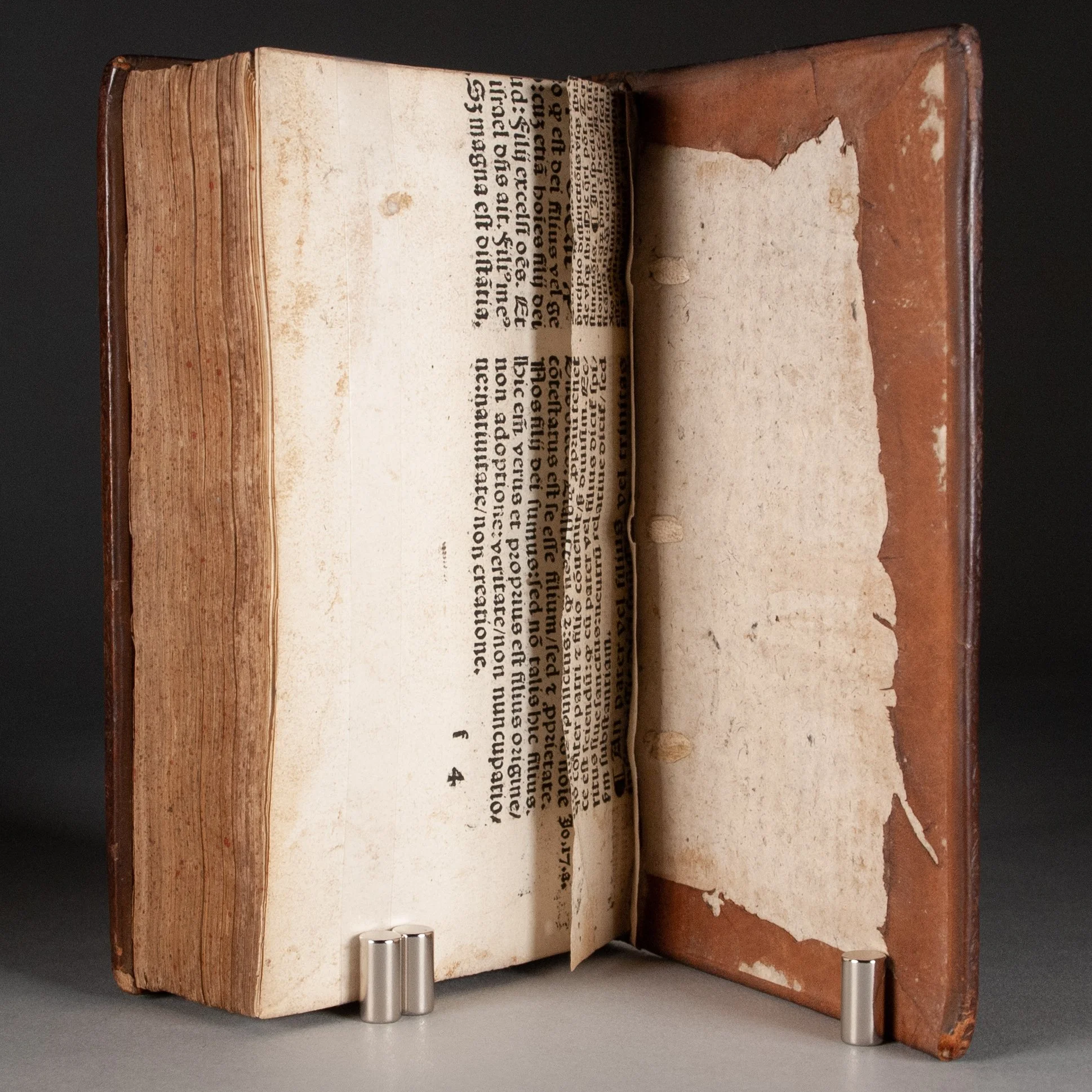 Image 5 of 7
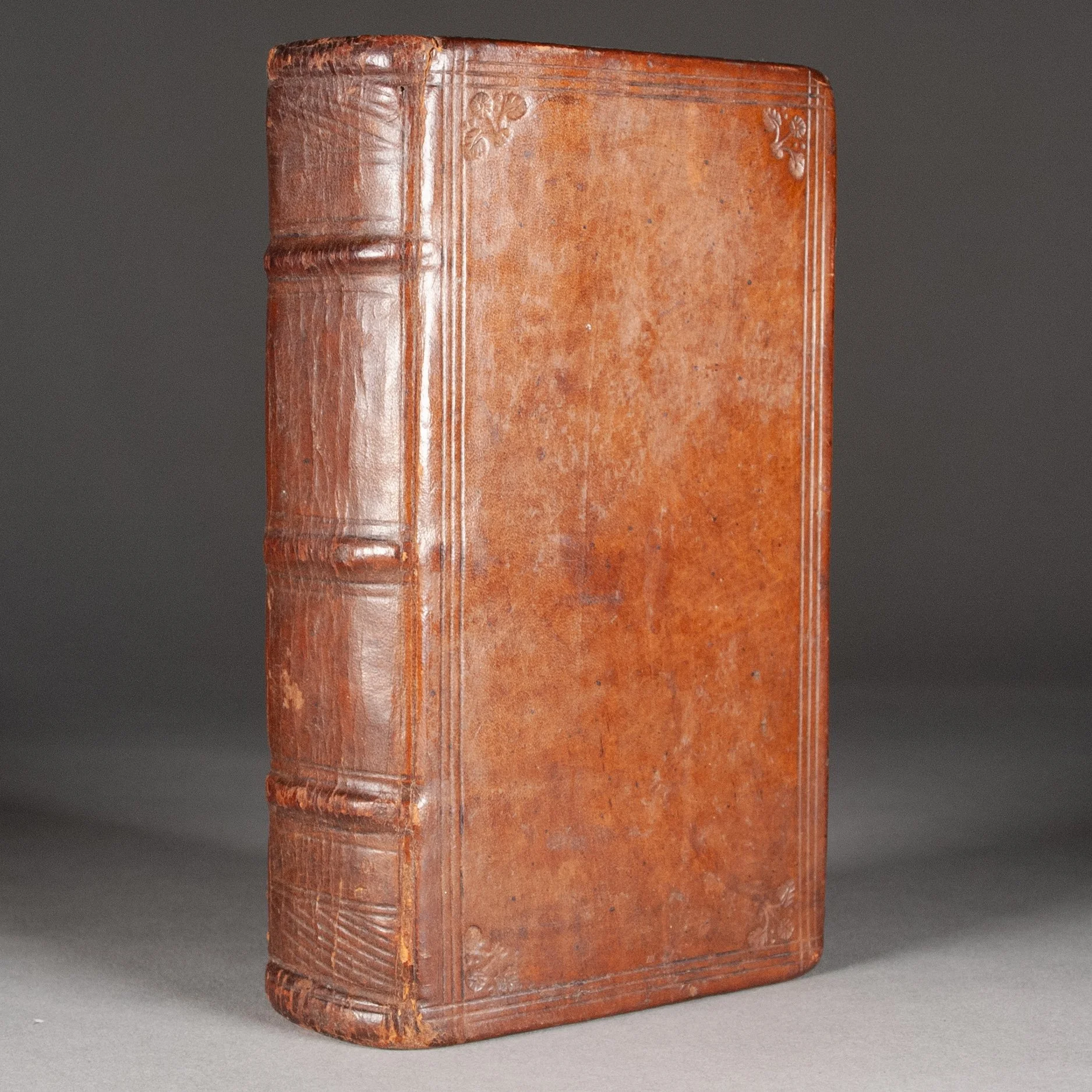 Image 6 of 7
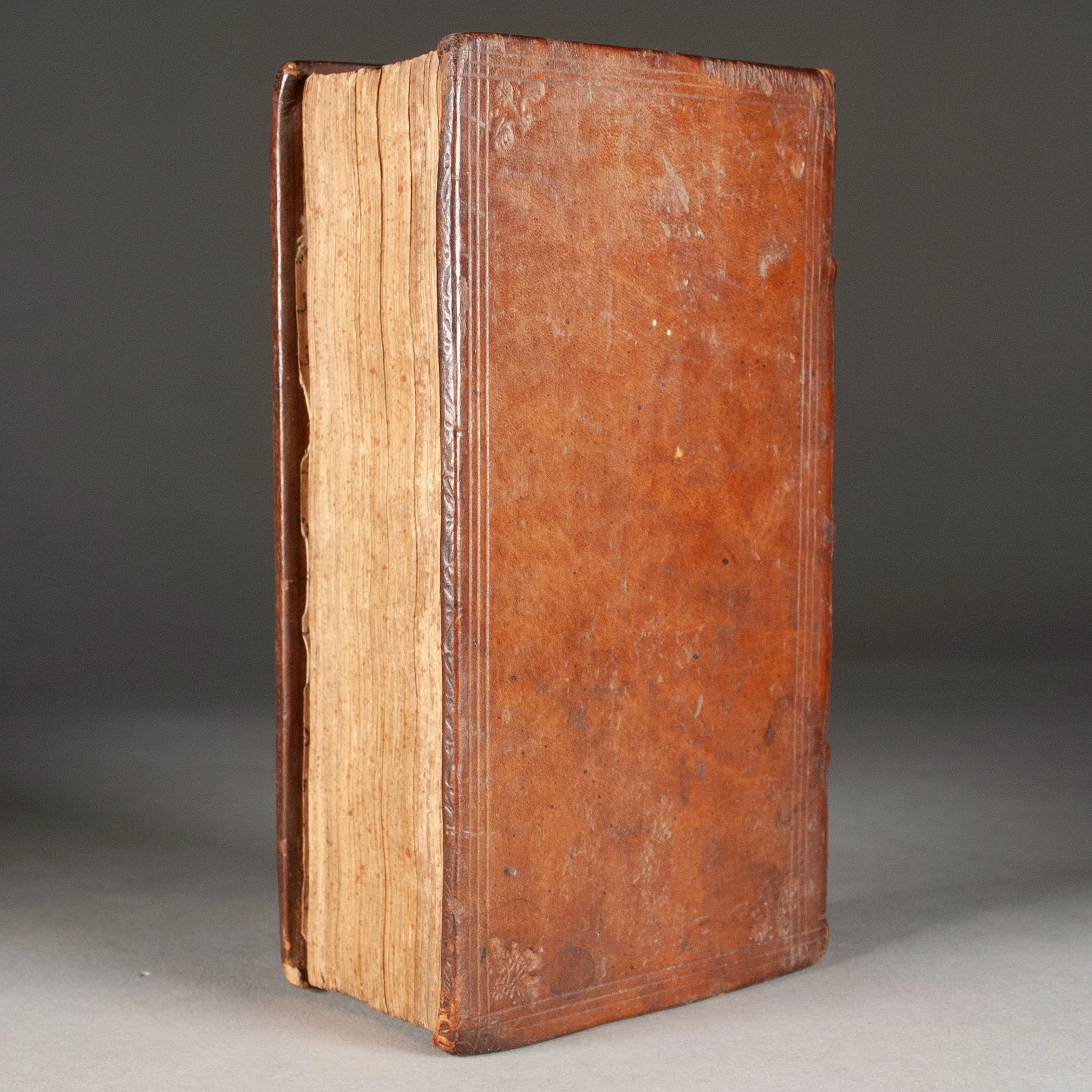 Image 7 of 7