The booke of common prayer and administration of the sacraments, and other rites and ceremonies of the Church of England [bound with] The genealogies recorded in the sacred scriptures according to every family and tribe, with the line of our saviour Jesus Christ, observed from Adam to the Blessed Virgin Mary [and] The Holy Bible, contayning the Old Testament and the New... [and] The booke of Psalmes collected into English meeter by Thomas Sternhold, John Hopkins, and others...
Genealogies by John Speed
Common Prayer: London: Robert Barker and John Bill, 1631 | Genealogies: [London: Felix Kingston? 1630?] | Bible: Robert Barker and John Bill, 1630 | Psalms: London: [T. Harper?] for the Company of Stationers, 1630
[128]; [2], 34, [4]; [1,188]; [2], 114, [12] p. | 4to | A-H^8; A-D^4 E-F^2; A^8 A-3P^8 3R-4F^8 4G^2; A-H^8 | 239 x 173 mm
The three pillars of Anglican devotion—the Bible, Book of Common Prayer, and Psalms—here bound with John Speed's Genealogies, a guide to early Christian genealogy commonly bound with the Bible. Everything the British churchgoer would need. ¶ In an exceptional contemporary English fanfare binding, heavily tooled in gold with caterpillars, butterflies, and a variety of floral and arabesque tools, very likely from the studio of the Squirrel Binder, "one of the leading London shops" (Folger). We take a cautious approach to binding attribution—tools could be copied, passed around, and can differ slightly from impression to impression—but ours shares enough similarities for a reasonably confident attribution. To start with the most distinctive tools, our caterpillars and butterflies match those on a ca. 1620 London binding described by Geoffrey Hobson in 1935, before Howard Nixon gave the binder his name in 1970 (Maggs offered this same binding under the Squirrel Binder's name in 1996 for £10,000). And compare ours to another strikingly similar London binding of ca. 1620. While our binding doesn't employ the namesake squirrel tool—not all of his bindings did—our central oval is framed by perhaps the same fan-like floral tool at its cardinal points, these then surrounded by similarly delicate arabesques built up from gouges and punctuated at center with what looks like the same floral tool. What's more, emanating from each corner at the end of a single thin line, nearly touching the central lozenge, is the same symmetrical arabesque tool in the same position. ¶ Researchers have identified several dozen bindings from this particular studio. It did a good deal of work for Lord Herbert of Cherbury, to the point that Cherbury's discrete corpus of commissions was at times thought to have been the work of someone else altogether. "As I have not found any other evidence that any of the tools was used after 1635," Mirjam Foot reports, "it seems probable that this shop was active in London during the first thirty-five, or maybe forty years of the seventeenth century." As it happens, John Bill, who figures in two of our imprints, appears to have himself enlisted the Squirrel Binder to produce a number of royal bindings for James I. Suggesting a still more enduring relationship, Nixon and Foot suggest the Squirrel Binder "may have been the binder who regularly worked for John Bill." Regular readers will know we're really quite fond of downmarket, workaday bindings. But rest assured we maintain a healthy appetite for decadence, too. “Much can be learned from luxury bindings," after all. "They reflect the taste and aesthetic of their times and places, as well as of particular individuals. They very commonly, and indeed almost invariably, interrelate with decorative motifs in many media, especially furniture and other interior decoration" (Needham). ¶ A substantial, unpublished binding from one of the great English workshops. We find in auction records just four reasonably attributable examples of the Squirrel Binder's work, most recently at Sotheby's in 2015 ($16,250).
PROVENANCE: Bookplate and penciled inscription of Simon Thomas Scrope of Danby Hall, Yorkshire. Older ownership signature of Thomas Dilworth S.J., and even older inscription on rear fly-leaf.
CONDITION: Contemporary dark morocco (perhaps black faded to a splotchy brown), ornately tooled in gold, as described above; edges gilt. New Testament has separate dated title page (same imprint as the main title). ¶ The Bible lacks gathering 3Q; many leaves soiled and tattered at the edges, with occasional chipping and scattered small tears; some two dozen fore margins repaired in the New Testament, sometimes affecting text, likewise a handful of upper margins; Bible's B2 repaired in the upper inner margin, some text supplied in manuscript; a few old repairs in Bible's 2F gathering, affecting a little text; lower corner torn from Bible 2X5, nowhere near the text; small, discreet slices in the lower margin of Bible 3G, not touching the text; Bible 3T2 a little short, and 3Z8 heavily torn and repaired, affecting text. Binding repaired at the corners and board edges, and very discreetly rebacked, preserving the entirety of the original decorated spine; joints just starting to crack at the head and tail, with a little additional wear through the leather of the front joint, and the front board just a hair shaky; marbled paper was later laid over the original endpapers, the marbled paper then itself covered with plain paper (former fly-leaves?), perhaps in the 19th century; ties lost; some visible stitching in the front gutter, the fly-leaf apparently whipstitched to the first gathering (either an old folk repair or done during rebacking).
REFERENCES: ESTC S93887 (Common Prayer), S3189 (Genealogies), S90517 (Bible), S90776 (Psalms, but most of our pages numbered) ¶ Mirjam Foot, The Henry Davis Gift, v. 1, p. 51-52 (overview of Squirrel bindings, with a rough count of his known output), 54 (cited above, and on the John Bill connection), v. 2, #69 (ca. 1620 binding by the Squirrel Binder, mentioned above), #71 (ca. 1635 binding by Lord Herbert of Cherbury's binder, very nearly as similar to ours, though Foot notes in v. 1, p. 52, that they in fact came "from the same shop"); Howard Nixon and Mirjam Foot, The History of Decorated Bookbinding in England, p. 57 (cited above, also confirming Herbert of Cherbury's binder and the Squirrel Binder as "unquestionably the same"); Frederick Bearman, et al., Fine and Historic Bookbindings from the Folger Shakespeare Library, p. 88 (cited above; "active from c. 1610 to 1635, Lord Herbert of Cherbury was one of the principal customers."); Geoffrey D. Hobson, Les reliures à la fanfare, plate XXIV, p. 67; Maggs Bros., Bookbinding in the British Isles...Catalogue 1212, Part I (Summer 1996), p. 44-46, #23 (the binding Hobson described in 1935); Paul Needham, "Fragments in Books: Dutch Prototypography in the Van Ess Library," 'So Precious a Foundation': The Library of Leander Van Ess, p. 88 (cited above); The Book Collector Autumn 1994, p. 431 (suggesting that the Squirrel Binder's tools some decades later passed to Robert Steele)
Item #1000
The booke of common prayer and administration of the sacraments, and other rites and ceremonies of the Church of England [bound with] The genealogies recorded in the sacred scriptures according to every family and tribe, with the line of our saviour Jesus Christ, observed from Adam to the Blessed Virgin Mary [and] The Holy Bible, contayning the Old Testament and the New... [and] The booke of Psalmes collected into English meeter by Thomas Sternhold, John Hopkins, and others...
Genealogies by John Speed
Common Prayer: London: Robert Barker and John Bill, 1631 | Genealogies: [London: Felix Kingston? 1630?] | Bible: Robert Barker and John Bill, 1630 | Psalms: London: [T. Harper?] for the Company of Stationers, 1630
[128]; [2], 34, [4]; [1,188]; [2], 114, [12] p. | 4to | A-H^8; A-D^4 E-F^2; A^8 A-3P^8 3R-4F^8 4G^2; A-H^8 | 239 x 173 mm
The three pillars of Anglican devotion—the Bible, Book of Common Prayer, and Psalms—here bound with John Speed's Genealogies, a guide to early Christian genealogy commonly bound with the Bible. Everything the British churchgoer would need. ¶ In an exceptional contemporary English fanfare binding, heavily tooled in gold with caterpillars, butterflies, and a variety of floral and arabesque tools, very likely from the studio of the Squirrel Binder, "one of the leading London shops" (Folger). We take a cautious approach to binding attribution—tools could be copied, passed around, and can differ slightly from impression to impression—but ours shares enough similarities for a reasonably confident attribution. To start with the most distinctive tools, our caterpillars and butterflies match those on a ca. 1620 London binding described by Geoffrey Hobson in 1935, before Howard Nixon gave the binder his name in 1970 (Maggs offered this same binding under the Squirrel Binder's name in 1996 for £10,000). And compare ours to another strikingly similar London binding of ca. 1620. While our binding doesn't employ the namesake squirrel tool—not all of his bindings did—our central oval is framed by perhaps the same fan-like floral tool at its cardinal points, these then surrounded by similarly delicate arabesques built up from gouges and punctuated at center with what looks like the same floral tool. What's more, emanating from each corner at the end of a single thin line, nearly touching the central lozenge, is the same symmetrical arabesque tool in the same position. ¶ Researchers have identified several dozen bindings from this particular studio. It did a good deal of work for Lord Herbert of Cherbury, to the point that Cherbury's discrete corpus of commissions was at times thought to have been the work of someone else altogether. "As I have not found any other evidence that any of the tools was used after 1635," Mirjam Foot reports, "it seems probable that this shop was active in London during the first thirty-five, or maybe forty years of the seventeenth century." As it happens, John Bill, who figures in two of our imprints, appears to have himself enlisted the Squirrel Binder to produce a number of royal bindings for James I. Suggesting a still more enduring relationship, Nixon and Foot suggest the Squirrel Binder "may have been the binder who regularly worked for John Bill." Regular readers will know we're really quite fond of downmarket, workaday bindings. But rest assured we maintain a healthy appetite for decadence, too. “Much can be learned from luxury bindings," after all. "They reflect the taste and aesthetic of their times and places, as well as of particular individuals. They very commonly, and indeed almost invariably, interrelate with decorative motifs in many media, especially furniture and other interior decoration" (Needham). ¶ A substantial, unpublished binding from one of the great English workshops. We find in auction records just four reasonably attributable examples of the Squirrel Binder's work, most recently at Sotheby's in 2015 ($16,250).
PROVENANCE: Bookplate and penciled inscription of Simon Thomas Scrope of Danby Hall, Yorkshire. Older ownership signature of Thomas Dilworth S.J., and even older inscription on rear fly-leaf.
CONDITION: Contemporary dark morocco (perhaps black faded to a splotchy brown), ornately tooled in gold, as described above; edges gilt. New Testament has separate dated title page (same imprint as the main title). ¶ The Bible lacks gathering 3Q; many leaves soiled and tattered at the edges, with occasional chipping and scattered small tears; some two dozen fore margins repaired in the New Testament, sometimes affecting text, likewise a handful of upper margins; Bible's B2 repaired in the upper inner margin, some text supplied in manuscript; a few old repairs in Bible's 2F gathering, affecting a little text; lower corner torn from Bible 2X5, nowhere near the text; small, discreet slices in the lower margin of Bible 3G, not touching the text; Bible 3T2 a little short, and 3Z8 heavily torn and repaired, affecting text. Binding repaired at the corners and board edges, and very discreetly rebacked, preserving the entirety of the original decorated spine; joints just starting to crack at the head and tail, with a little additional wear through the leather of the front joint, and the front board just a hair shaky; marbled paper was later laid over the original endpapers, the marbled paper then itself covered with plain paper (former fly-leaves?), perhaps in the 19th century; ties lost; some visible stitching in the front gutter, the fly-leaf apparently whipstitched to the first gathering (either an old folk repair or done during rebacking).
REFERENCES: ESTC S93887 (Common Prayer), S3189 (Genealogies), S90517 (Bible), S90776 (Psalms, but most of our pages numbered) ¶ Mirjam Foot, The Henry Davis Gift, v. 1, p. 51-52 (overview of Squirrel bindings, with a rough count of his known output), 54 (cited above, and on the John Bill connection), v. 2, #69 (ca. 1620 binding by the Squirrel Binder, mentioned above), #71 (ca. 1635 binding by Lord Herbert of Cherbury's binder, very nearly as similar to ours, though Foot notes in v. 1, p. 52, that they in fact came "from the same shop"); Howard Nixon and Mirjam Foot, The History of Decorated Bookbinding in England, p. 57 (cited above, also confirming Herbert of Cherbury's binder and the Squirrel Binder as "unquestionably the same"); Frederick Bearman, et al., Fine and Historic Bookbindings from the Folger Shakespeare Library, p. 88 (cited above; "active from c. 1610 to 1635, Lord Herbert of Cherbury was one of the principal customers."); Geoffrey D. Hobson, Les reliures à la fanfare, plate XXIV, p. 67; Maggs Bros., Bookbinding in the British Isles...Catalogue 1212, Part I (Summer 1996), p. 44-46, #23 (the binding Hobson described in 1935); Paul Needham, "Fragments in Books: Dutch Prototypography in the Van Ess Library," 'So Precious a Foundation': The Library of Leander Van Ess, p. 88 (cited above); The Book Collector Autumn 1994, p. 431 (suggesting that the Squirrel Binder's tools some decades later passed to Robert Steele)
Item #1000

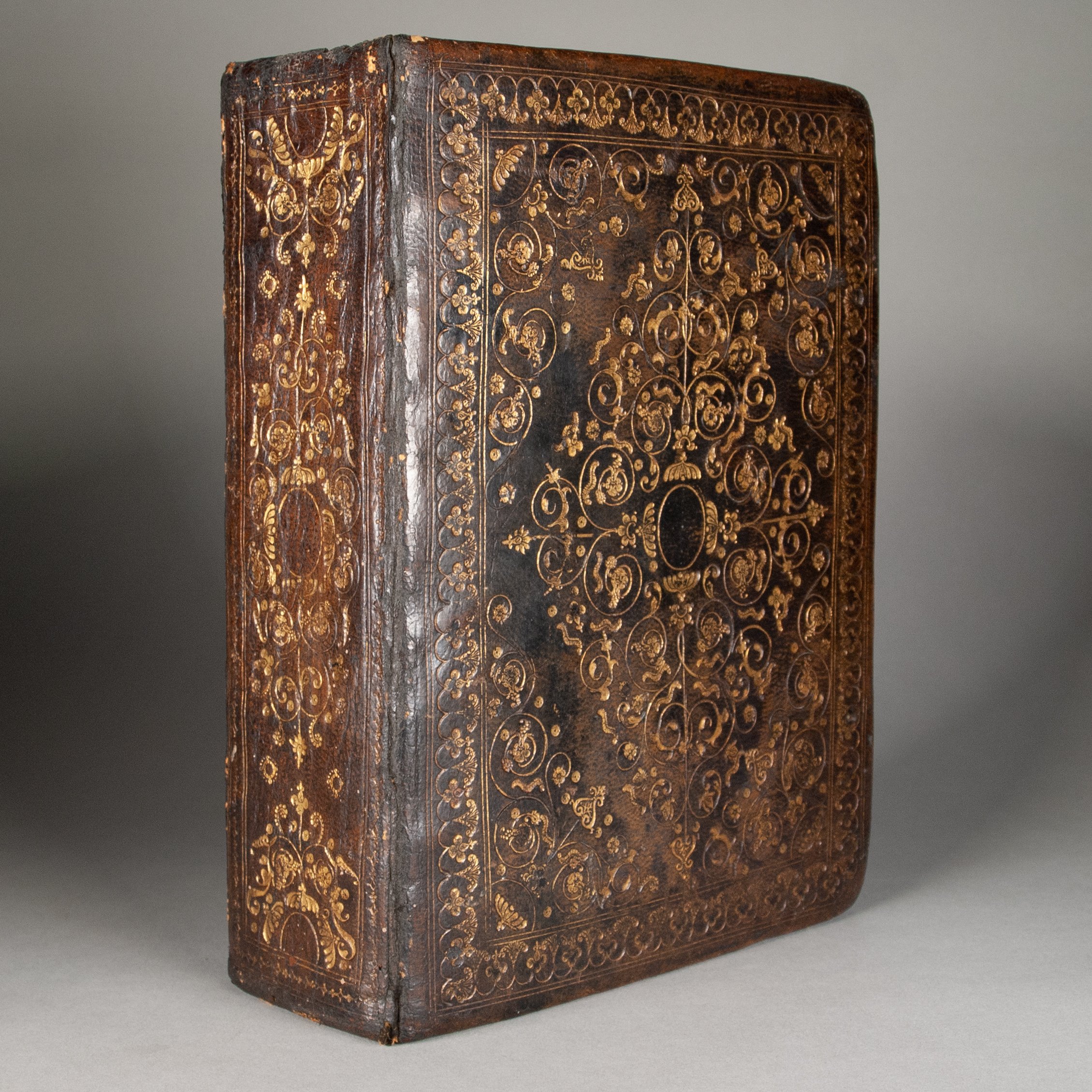 Image 1 of 12
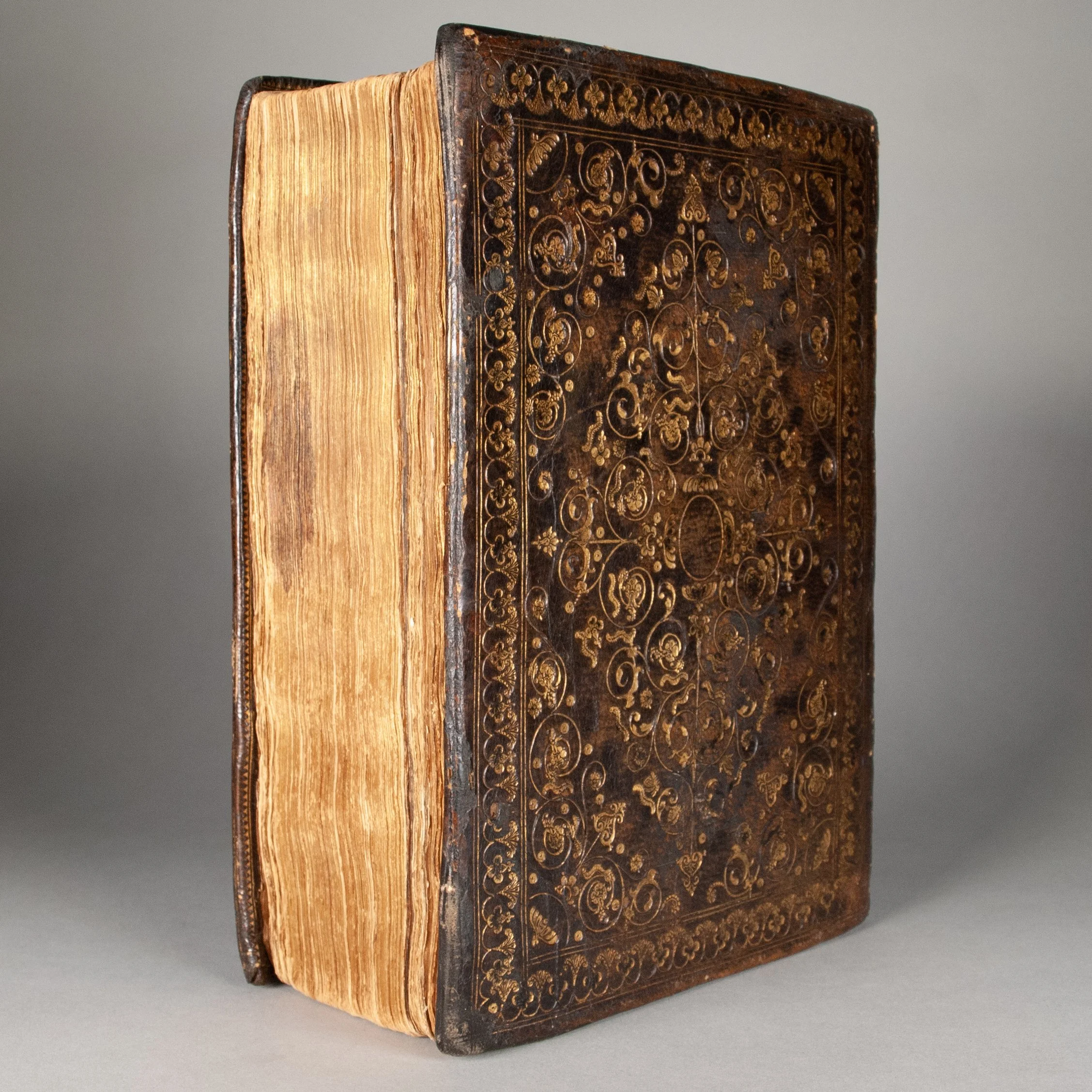 Image 2 of 12
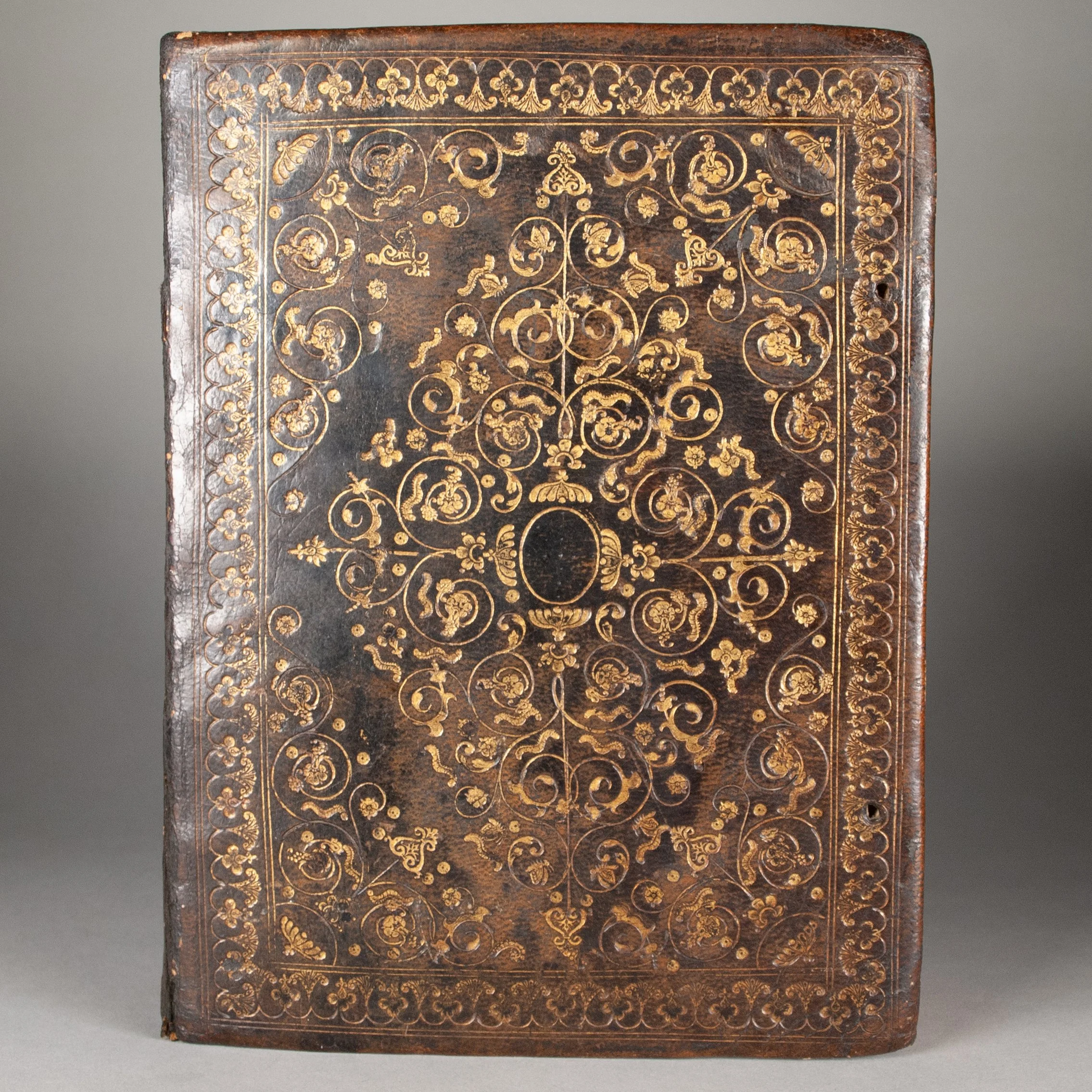 Image 3 of 12
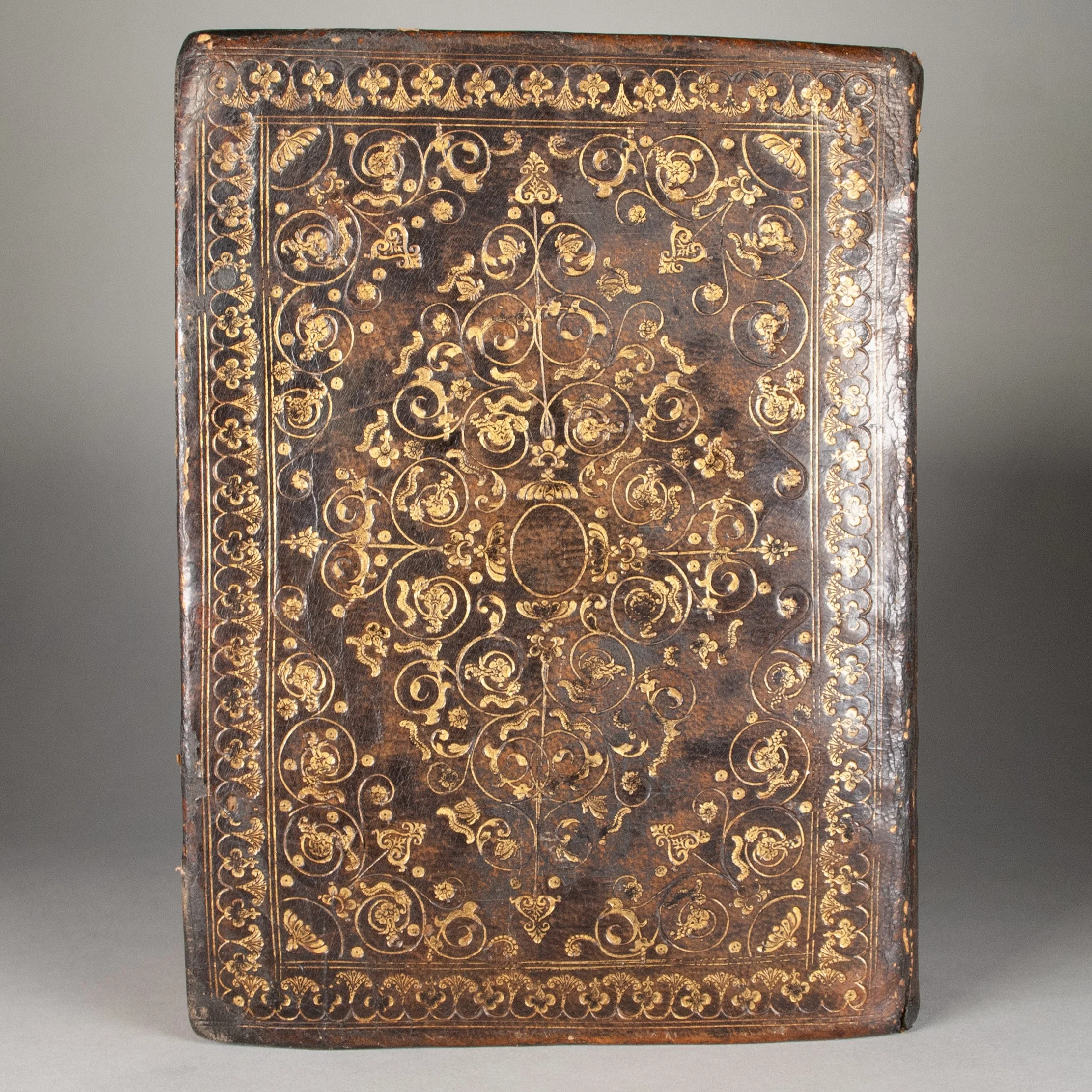 Image 4 of 12
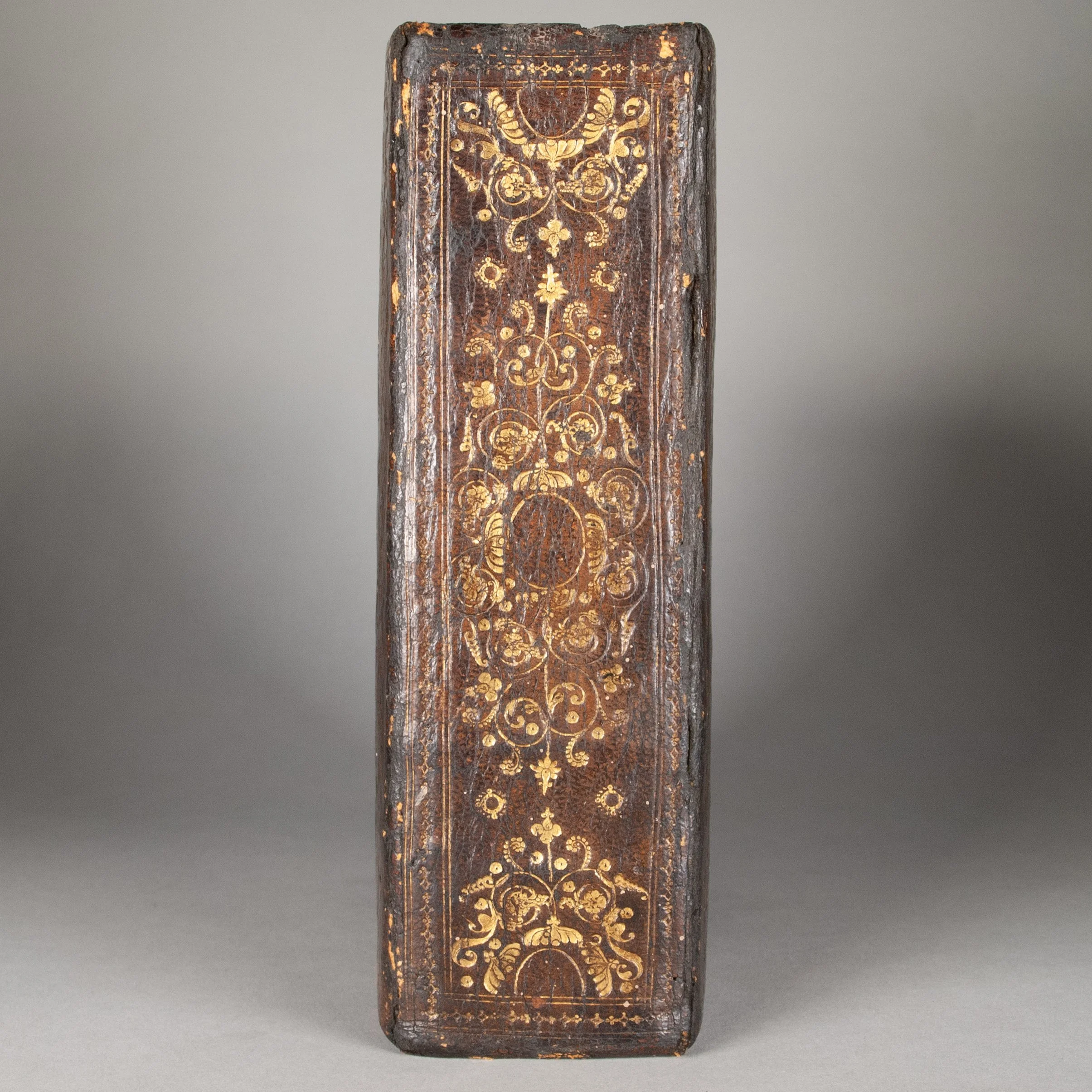 Image 5 of 12
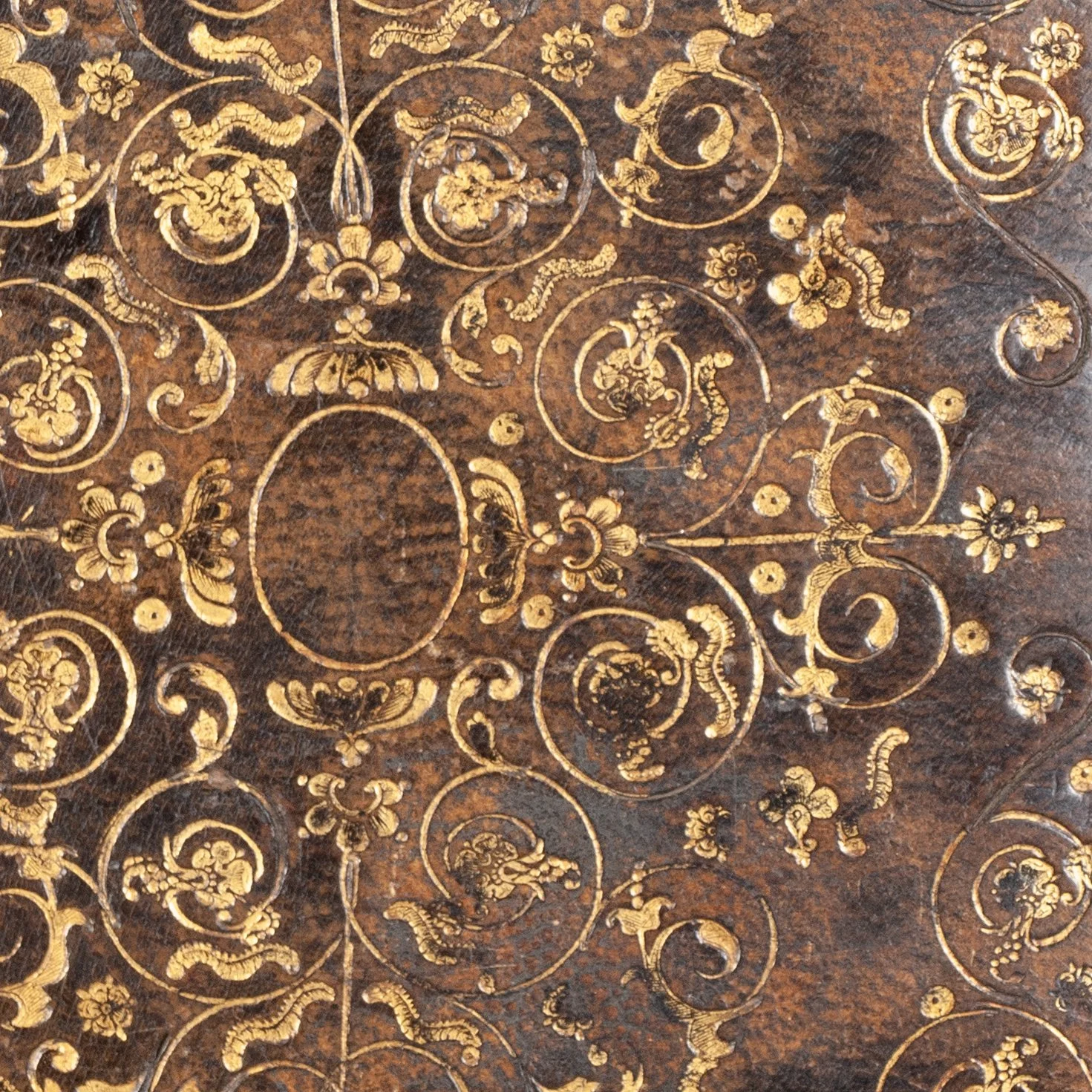 Image 6 of 12
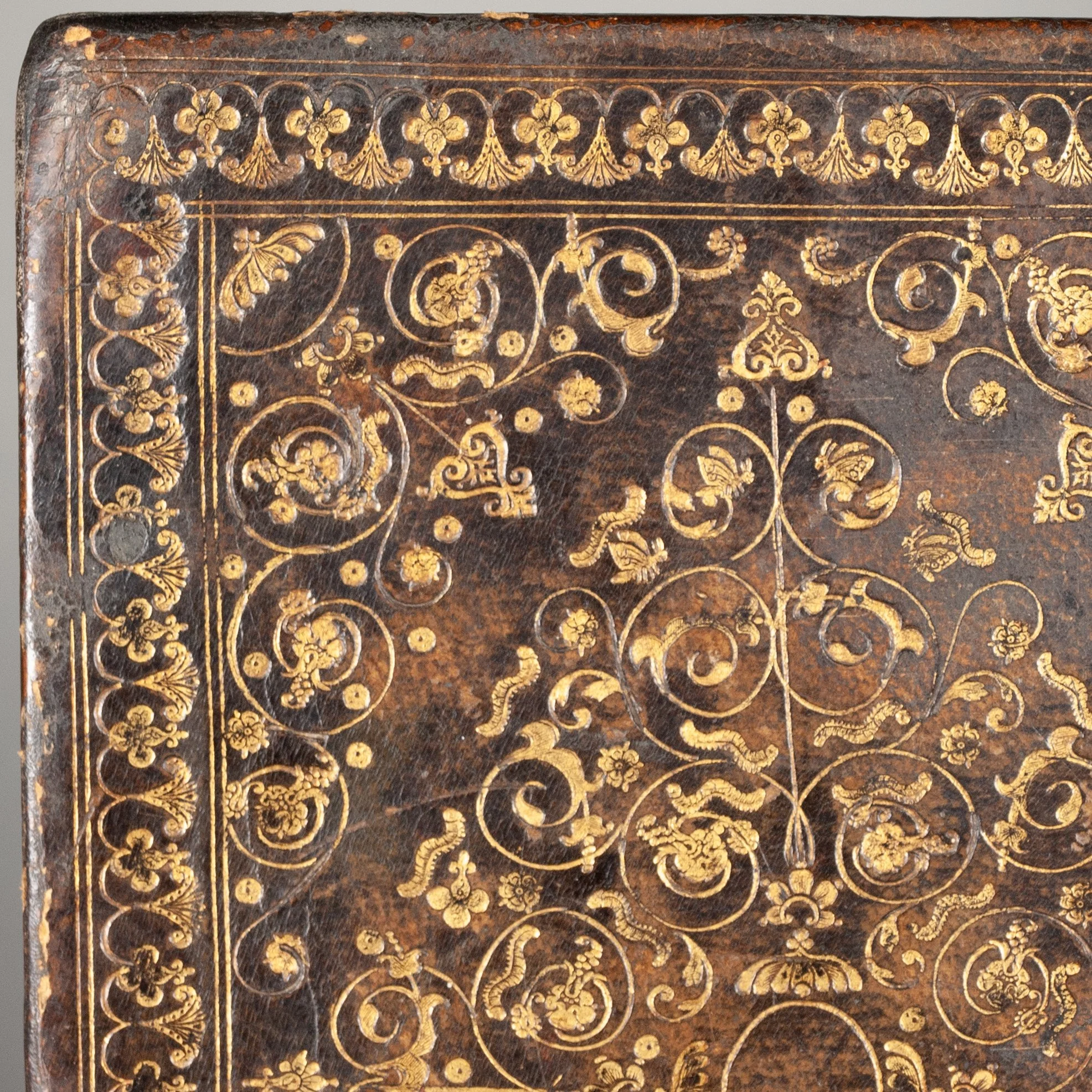 Image 7 of 12
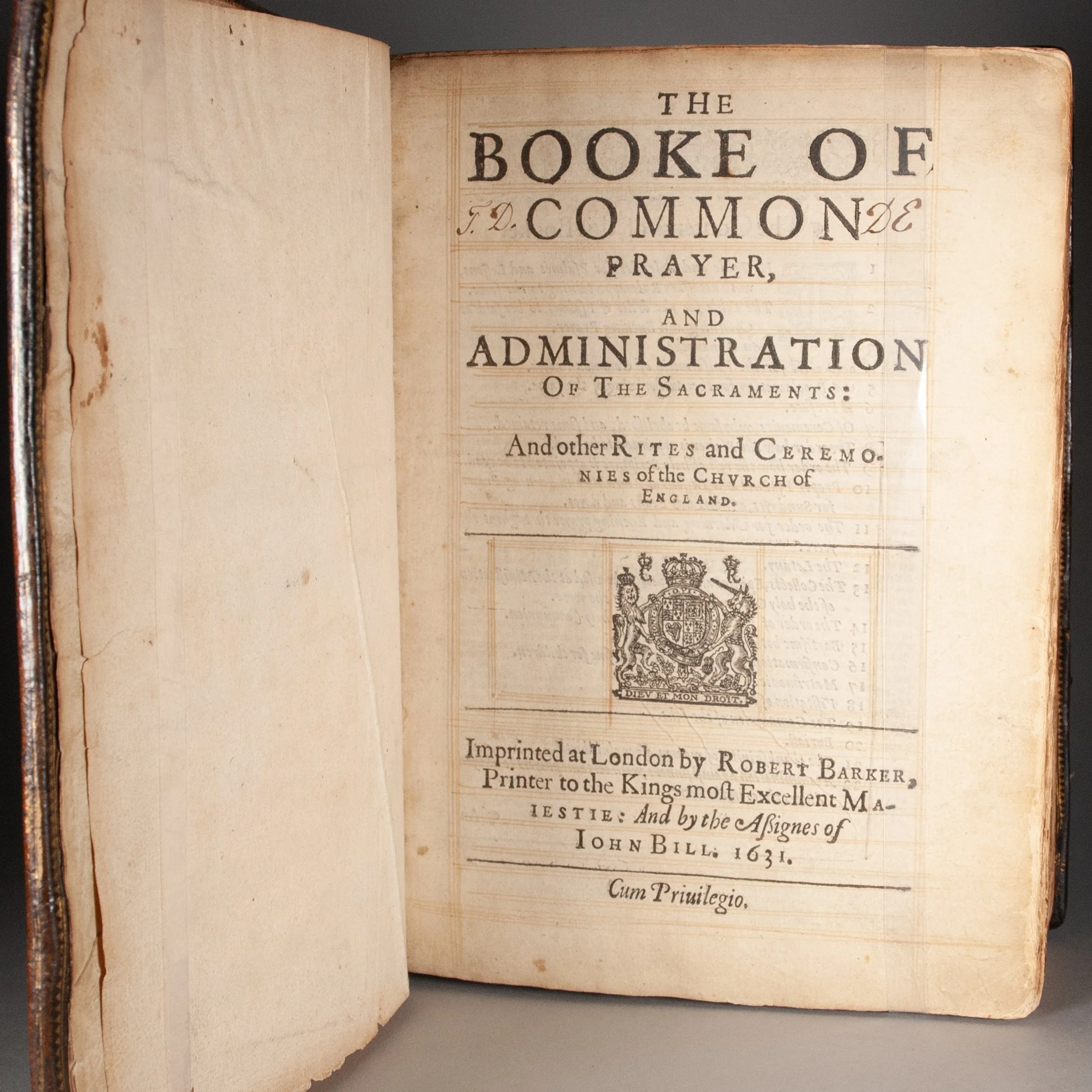 Image 8 of 12
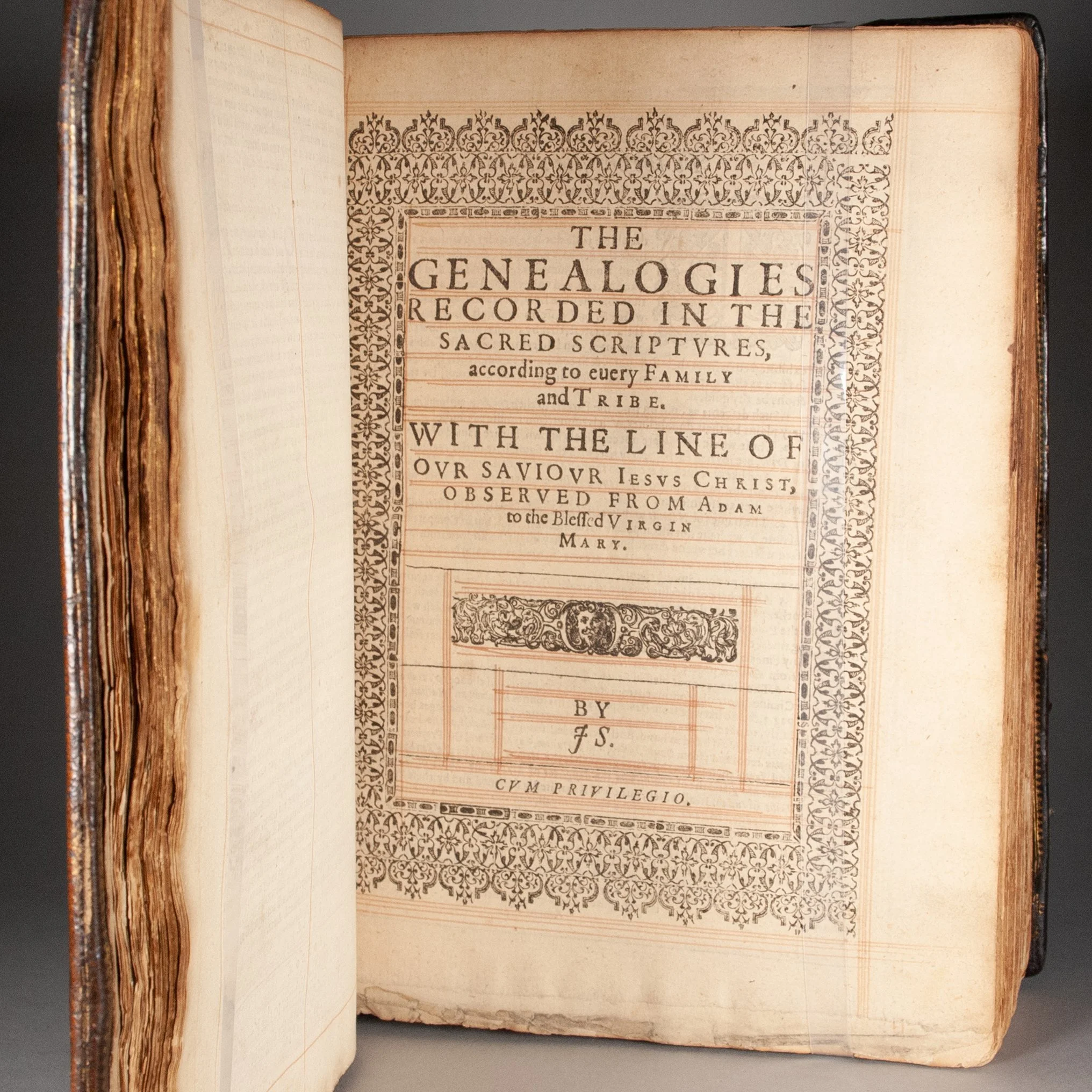 Image 9 of 12
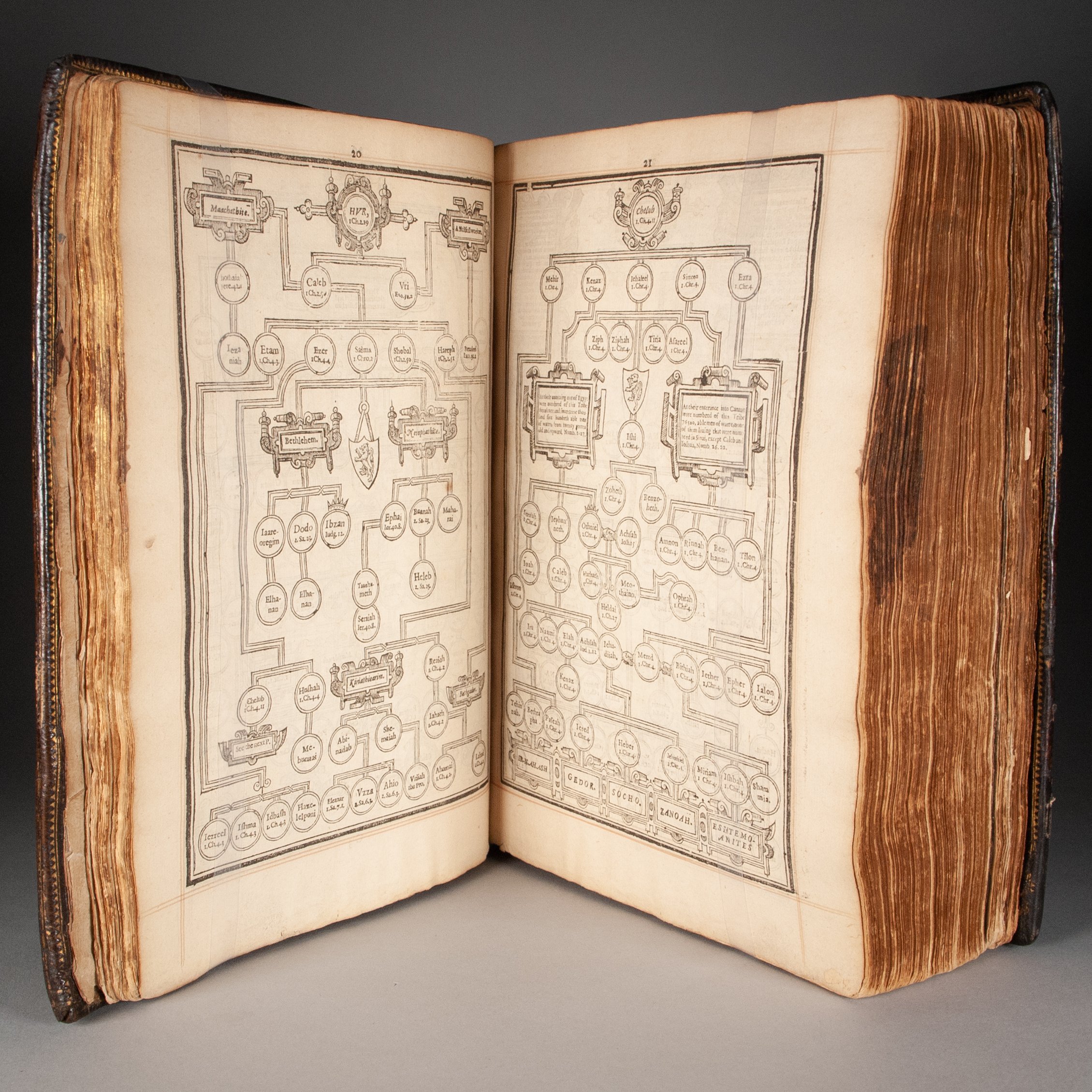 Image 10 of 12
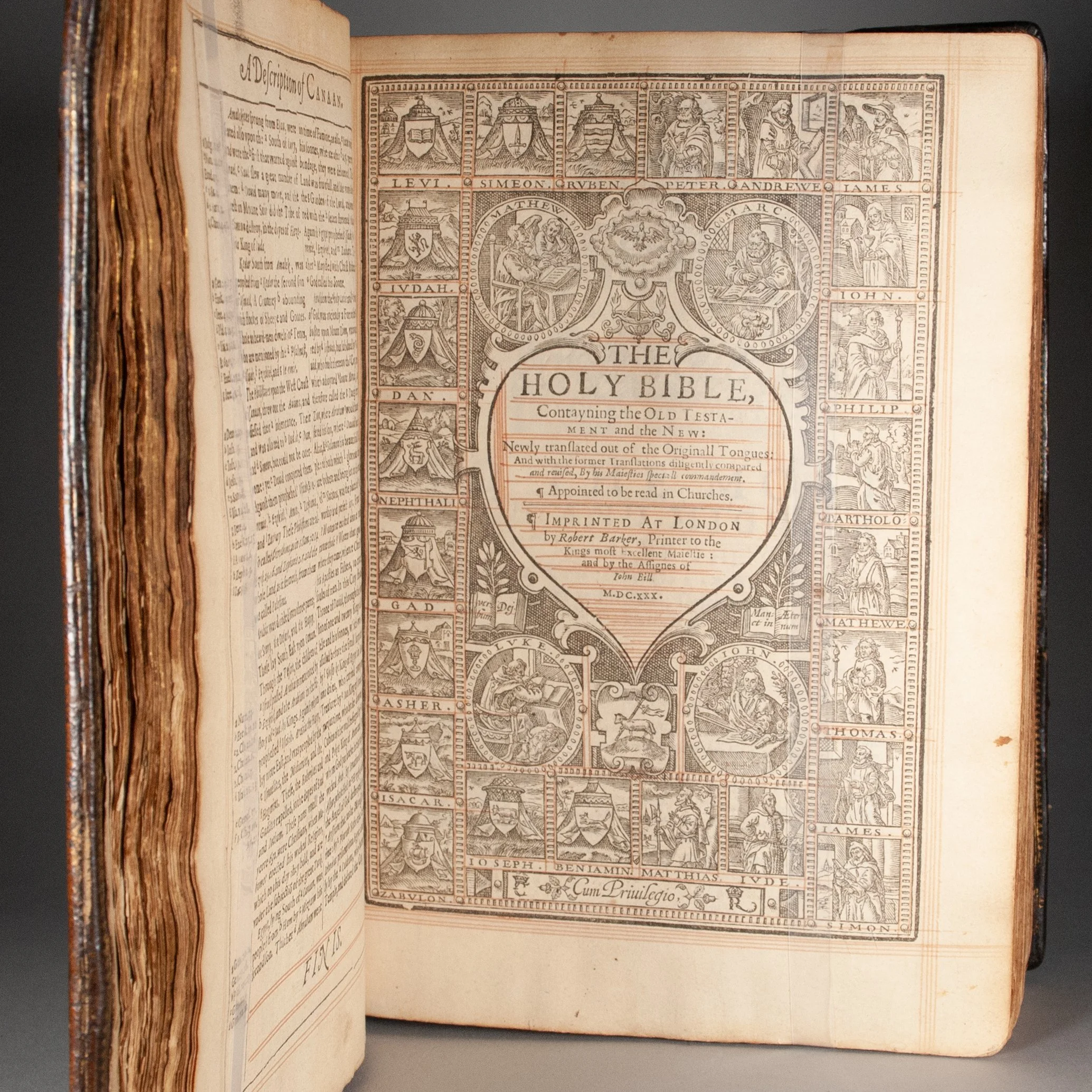 Image 11 of 12
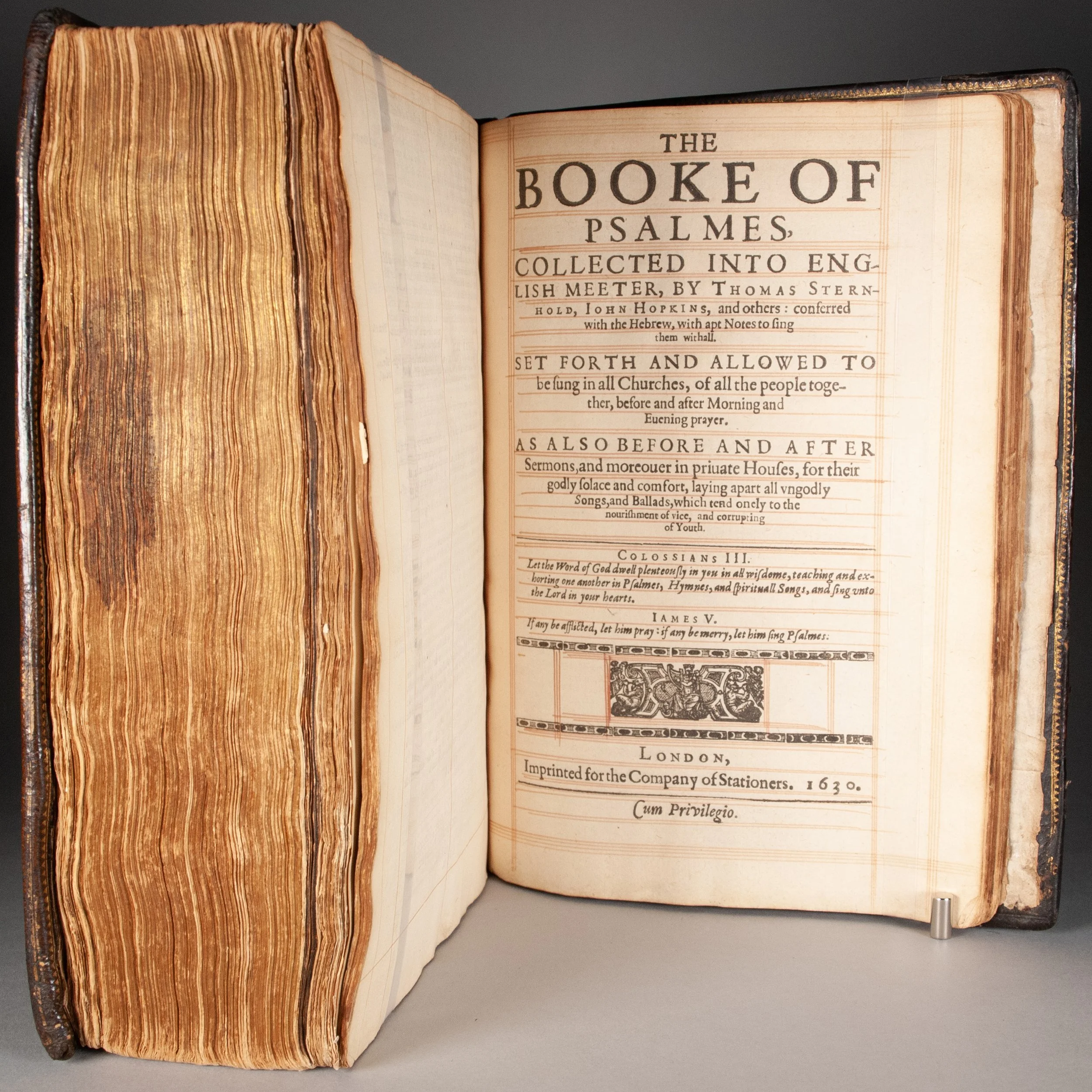 Image 12 of 12