Frommer und gläubiger Seelen Heilige Unterredungen oder Gespräche mit Gott; in welchen Sie alle Morgen und Abend, an Sonn- und Fest-Tagen, bey der Beicht und heiligen Abendmahl, wie auch unter mancherley Noth und anliegen ihr Hertz vor dem Herrn ausschütten, aus dem Munde andächtiger Bether aufgefasset, und denen Einfältigen, die im Geist und in der Wahrheit bethen wollen zu nützlichen Gebrauch [bound with] Vollständiges Evangelisches Gesang-Büchlein darinnen Theils alte, theils sonsten in den Kirchen übliche neue Psalmen und Gesänge, Herrn D. Martini Lutheri, dann auch anderer reiner Lehrer und frommer Hertzen &c. zu finden; sowol zu Hause, als in der Kirchen, und auf der Reise, auch sonsten in allerhand Zufällen höchst-erbaulich zu gebrauchen
Frommer by Nathaniel Hilarius | Gesang-Büchlein by Martin Luther, et al.
Leipzig: Gottfried Lunitz, [ca. 1696] | Nuremberg: Johann Hoffmann, 1696
[24], 576; 301, [11] p. + [6] plates | 12mo | a^12 A-Aa^12; a-n^12 | 141 x 78 mm
An unrecorded edition of a Lutheran prayer book, here bound with a hymnal, some of the latter's songs attributed to Martin Luther himself. The only Frommer we can trace was printed at Leipzig in 1713 by Anna Martha Hessin. Her edition included a preface by Christian Weiss, absent from ours, so we expect our edition is earlier, and likely closer in age to the 1696 hymnal. Our imprint has been injuriously trimmed, but we're fairly confident the printer's name reads Gottfried Lunitius (though we're unsure of the word preceding). Gottfried Lunitz was indeed a small-time printer in Leipzig, from whom we find a single recorded imprint, a broadside of 1688. The Frommer contains prayers for every occasion, from daily supplications to others meant for particular feast days. The hymnal contains 159 songs, "highly edifying for use at home, in church, while traveling, and in all manner of life's circumstances." It's the only edition we find under this particular title, though we expect the hymns were common currency. They lack notated music, fairly standard at the time, as the tunes were familiar enough or simple to pick up by ear. Relatively few were able to read music anyway. “Notation, never commanded by congregations,” at least in early America, “was the property of the smaller, more musically committed group which sang in harmony” (Crawford and Krummel). ¶ In a market dominated by flamboyant filigree and repoussé, we're rather taken by the tasteful simplicity of this silver binding, delicately elevated with simple gilt accents. The gold-hued grounds are likely silver gilt—vermeil, en français—a technique in which a layer of gold is applied to solid silver. The covers each bear a raised oval in silver gilt, a monogram and airy floral decoration engraved therein. Engraving was the dominant decorative technique in the 16th and 17th centuries, before yielding to more elaborate embossing in the next century. Religiously influenced restraint led to silver falling out of fashion altogether in the 19th century. The book's paste-downs are bronze varnish paper, a specialty of Augsburg before brocade papers usurped that slice of the decorative paper market. ¶ Like so many others, the binding was almost certainly produced in Germany. (Holland was the only other land to produce such bindings at scale.) Bronze varnish paper had its heyday in the late 17th century and first few decades of the next, suggesting a binding more or less contemporary with the text. And when so many silver bindings were made by anonymous craftsmen, ours rather exceptionally includes a maker's mark. The small plate on the bottom edge, at the tail of the spine, pairs a small monogram (EE, we think, their stems against each other) with a separate letter G. We expect the monogram belonged to the silversmith himself. The G is more likely the mark of the city's assay master—probably indicating the year it was examined for purity, a common use of such letters, or less probably indicating the city where it was made. We do not find our monogram, nor our particular G, in Marc Rosenberg's Goldschmiede Merkzeichen. ¶ Of course this is still a luxury binding, but let's call it quiet luxury—made from the best materials, without fawning ostentation. We've found nothing to match its austere elegance. Every silver binding we've encountered, whether in the wild or in our literature, cloys with more elaborate engraving or embossing.
PROVENANCE: Luxury bindings like these were commonly gifts for special occasions. “Wedding presents in the form of finely-bound Bibles and prayer-books," for example, "given either by the new husband to his bride or presented to the happy couple, were fairly common” (Foot). Given the different initials on the front and back covers, we rather suspect this particular book belonged to a couple, perhaps a gift from a husband to his wife. Bindings of precious metal could be passed on, and were not infrequently transferred to newer books.
CONDITION: Contemporary silver binding, described above, with bronze varnish endpapers; all edges gilt. Frommer illustrated with a frontispiece, plus plates facing p. 1, 130, 256, 342, and 460. Wrapped in Fifield Kenized silver cloth to prevent further tarnishing, and housed in a custom corrugated clamshell box. ¶ Trimmed close, occasionally shaving a little text, the imprint on the Frommer title bearing the worst; fore-edges of the first and last couple of gatherings a bit roughed up by the clasp. The binding is varnished, rather as expected, and the raised oval on the rear cover a little crushed; tail the spine dented.
REFERENCES: VD17 1:664154A (Gesang-Büchlein) ¶ On the content: Richard Crawford and D.W. Krummel, “Early American Music Printing and Publishing,” Printing and Society in Early America, p. 189 (“The printed tunes [in early America] were almost certainly known to the people who sang them; and if they were not, they were few enough in number and uncomplicated enough in style to be learned simply by ear. It seems more likely that the tunes were included [in later Bay Psalm books]…in order to record, for the few who could read music, an official version of each tune.”), 190 (cited above); Andrew Pettegree and Arthur der Weduwen, The Bookshop of the World: Making and Trading Books in the Dutch Golden Age (Yale, 2019), p. 131 (on psalters: “The absence of musical notation became, indeed, the norm rather than the exception”); Richard Schoenbohm, “Music in the Lutheran Church before and at the Time of J.S. Bach,” Church History 12.3 (Sept 1943), p. 204 (in an early Lutheran service at Leipzig, for example, perhaps around the time of Bach, the hymn number “was not announced, but from tablets placed in conspicuous places around the building, the numbers of all that were to be sung during the service could be read”) ¶ On the binding: Mirjam Foot, The History of Bookbinding as a Mirror of Society, p. 5 (cited above), 60-61 (such bindings "were made by metal workers, goldsmiths, jewellers and ivory carvers and were considered objects of art rather than mere protection for a text"); Exhibition of Silver, Embroidered and Curious Bookbindings (Grolier Club, 1903), p. ix (“Religious books have, from the earliest times, reflected the reverence of their owners in their costly covers of ivory, gold, and silver ornamented with precious stones and enamels"); J.F. Hayward, "Silver Bindings from the Abbey Collection," Connoisseur 130 (Oct 1952), p. 99 ("in the Sixteenth Century and subsequently, the taste for silver bindings was most strongly manifested in Germany and the Low Countries"), 103 (17c silver bindings were typically engraved, 18c ones usually embossed), 104 104 ("There are no great names in the history of silver bindings; with very few exceptions the artists or craftsmen who produced them are anonymous"); Sotheby's, Silver and Enamel Bindings, preface ("During the period covered by this collection [17c and 18c] the production of these bindings took place almost exclusively in Holland and Germany...In the seventeenth century the covers were mainly engraved, often inspired by contemporary engravings by masters such as de Bry, Collaert, and others...in the eighteenth century methods somewhat changed and many bindings are more or less heavily embossed...By the end of the eighteenth century silver bindings went out of fashion, not appealing to the changing religious views of the nineteenth century...In judging the relationship between bindings and the books placed in them, it should be remembered that the books themselves were often liable to be changed, which accounts for the fact that they do not always fit in perfectly and that sometimes the binding is earlier than the book...Silver bindings of the period covered here [17c, 18c] rarely bear guild or makers' marks")
Item #988
Frommer und gläubiger Seelen Heilige Unterredungen oder Gespräche mit Gott; in welchen Sie alle Morgen und Abend, an Sonn- und Fest-Tagen, bey der Beicht und heiligen Abendmahl, wie auch unter mancherley Noth und anliegen ihr Hertz vor dem Herrn ausschütten, aus dem Munde andächtiger Bether aufgefasset, und denen Einfältigen, die im Geist und in der Wahrheit bethen wollen zu nützlichen Gebrauch [bound with] Vollständiges Evangelisches Gesang-Büchlein darinnen Theils alte, theils sonsten in den Kirchen übliche neue Psalmen und Gesänge, Herrn D. Martini Lutheri, dann auch anderer reiner Lehrer und frommer Hertzen &c. zu finden; sowol zu Hause, als in der Kirchen, und auf der Reise, auch sonsten in allerhand Zufällen höchst-erbaulich zu gebrauchen
Frommer by Nathaniel Hilarius | Gesang-Büchlein by Martin Luther, et al.
Leipzig: Gottfried Lunitz, [ca. 1696] | Nuremberg: Johann Hoffmann, 1696
[24], 576; 301, [11] p. + [6] plates | 12mo | a^12 A-Aa^12; a-n^12 | 141 x 78 mm
An unrecorded edition of a Lutheran prayer book, here bound with a hymnal, some of the latter's songs attributed to Martin Luther himself. The only Frommer we can trace was printed at Leipzig in 1713 by Anna Martha Hessin. Her edition included a preface by Christian Weiss, absent from ours, so we expect our edition is earlier, and likely closer in age to the 1696 hymnal. Our imprint has been injuriously trimmed, but we're fairly confident the printer's name reads Gottfried Lunitius (though we're unsure of the word preceding). Gottfried Lunitz was indeed a small-time printer in Leipzig, from whom we find a single recorded imprint, a broadside of 1688. The Frommer contains prayers for every occasion, from daily supplications to others meant for particular feast days. The hymnal contains 159 songs, "highly edifying for use at home, in church, while traveling, and in all manner of life's circumstances." It's the only edition we find under this particular title, though we expect the hymns were common currency. They lack notated music, fairly standard at the time, as the tunes were familiar enough or simple to pick up by ear. Relatively few were able to read music anyway. “Notation, never commanded by congregations,” at least in early America, “was the property of the smaller, more musically committed group which sang in harmony” (Crawford and Krummel). ¶ In a market dominated by flamboyant filigree and repoussé, we're rather taken by the tasteful simplicity of this silver binding, delicately elevated with simple gilt accents. The gold-hued grounds are likely silver gilt—vermeil, en français—a technique in which a layer of gold is applied to solid silver. The covers each bear a raised oval in silver gilt, a monogram and airy floral decoration engraved therein. Engraving was the dominant decorative technique in the 16th and 17th centuries, before yielding to more elaborate embossing in the next century. Religiously influenced restraint led to silver falling out of fashion altogether in the 19th century. The book's paste-downs are bronze varnish paper, a specialty of Augsburg before brocade papers usurped that slice of the decorative paper market. ¶ Like so many others, the binding was almost certainly produced in Germany. (Holland was the only other land to produce such bindings at scale.) Bronze varnish paper had its heyday in the late 17th century and first few decades of the next, suggesting a binding more or less contemporary with the text. And when so many silver bindings were made by anonymous craftsmen, ours rather exceptionally includes a maker's mark. The small plate on the bottom edge, at the tail of the spine, pairs a small monogram (EE, we think, their stems against each other) with a separate letter G. We expect the monogram belonged to the silversmith himself. The G is more likely the mark of the city's assay master—probably indicating the year it was examined for purity, a common use of such letters, or less probably indicating the city where it was made. We do not find our monogram, nor our particular G, in Marc Rosenberg's Goldschmiede Merkzeichen. ¶ Of course this is still a luxury binding, but let's call it quiet luxury—made from the best materials, without fawning ostentation. We've found nothing to match its austere elegance. Every silver binding we've encountered, whether in the wild or in our literature, cloys with more elaborate engraving or embossing.
PROVENANCE: Luxury bindings like these were commonly gifts for special occasions. “Wedding presents in the form of finely-bound Bibles and prayer-books," for example, "given either by the new husband to his bride or presented to the happy couple, were fairly common” (Foot). Given the different initials on the front and back covers, we rather suspect this particular book belonged to a couple, perhaps a gift from a husband to his wife. Bindings of precious metal could be passed on, and were not infrequently transferred to newer books.
CONDITION: Contemporary silver binding, described above, with bronze varnish endpapers; all edges gilt. Frommer illustrated with a frontispiece, plus plates facing p. 1, 130, 256, 342, and 460. Wrapped in Fifield Kenized silver cloth to prevent further tarnishing, and housed in a custom corrugated clamshell box. ¶ Trimmed close, occasionally shaving a little text, the imprint on the Frommer title bearing the worst; fore-edges of the first and last couple of gatherings a bit roughed up by the clasp. The binding is varnished, rather as expected, and the raised oval on the rear cover a little crushed; tail the spine dented.
REFERENCES: VD17 1:664154A (Gesang-Büchlein) ¶ On the content: Richard Crawford and D.W. Krummel, “Early American Music Printing and Publishing,” Printing and Society in Early America, p. 189 (“The printed tunes [in early America] were almost certainly known to the people who sang them; and if they were not, they were few enough in number and uncomplicated enough in style to be learned simply by ear. It seems more likely that the tunes were included [in later Bay Psalm books]…in order to record, for the few who could read music, an official version of each tune.”), 190 (cited above); Andrew Pettegree and Arthur der Weduwen, The Bookshop of the World: Making and Trading Books in the Dutch Golden Age (Yale, 2019), p. 131 (on psalters: “The absence of musical notation became, indeed, the norm rather than the exception”); Richard Schoenbohm, “Music in the Lutheran Church before and at the Time of J.S. Bach,” Church History 12.3 (Sept 1943), p. 204 (in an early Lutheran service at Leipzig, for example, perhaps around the time of Bach, the hymn number “was not announced, but from tablets placed in conspicuous places around the building, the numbers of all that were to be sung during the service could be read”) ¶ On the binding: Mirjam Foot, The History of Bookbinding as a Mirror of Society, p. 5 (cited above), 60-61 (such bindings "were made by metal workers, goldsmiths, jewellers and ivory carvers and were considered objects of art rather than mere protection for a text"); Exhibition of Silver, Embroidered and Curious Bookbindings (Grolier Club, 1903), p. ix (“Religious books have, from the earliest times, reflected the reverence of their owners in their costly covers of ivory, gold, and silver ornamented with precious stones and enamels"); J.F. Hayward, "Silver Bindings from the Abbey Collection," Connoisseur 130 (Oct 1952), p. 99 ("in the Sixteenth Century and subsequently, the taste for silver bindings was most strongly manifested in Germany and the Low Countries"), 103 (17c silver bindings were typically engraved, 18c ones usually embossed), 104 104 ("There are no great names in the history of silver bindings; with very few exceptions the artists or craftsmen who produced them are anonymous"); Sotheby's, Silver and Enamel Bindings, preface ("During the period covered by this collection [17c and 18c] the production of these bindings took place almost exclusively in Holland and Germany...In the seventeenth century the covers were mainly engraved, often inspired by contemporary engravings by masters such as de Bry, Collaert, and others...in the eighteenth century methods somewhat changed and many bindings are more or less heavily embossed...By the end of the eighteenth century silver bindings went out of fashion, not appealing to the changing religious views of the nineteenth century...In judging the relationship between bindings and the books placed in them, it should be remembered that the books themselves were often liable to be changed, which accounts for the fact that they do not always fit in perfectly and that sometimes the binding is earlier than the book...Silver bindings of the period covered here [17c, 18c] rarely bear guild or makers' marks")
Item #988

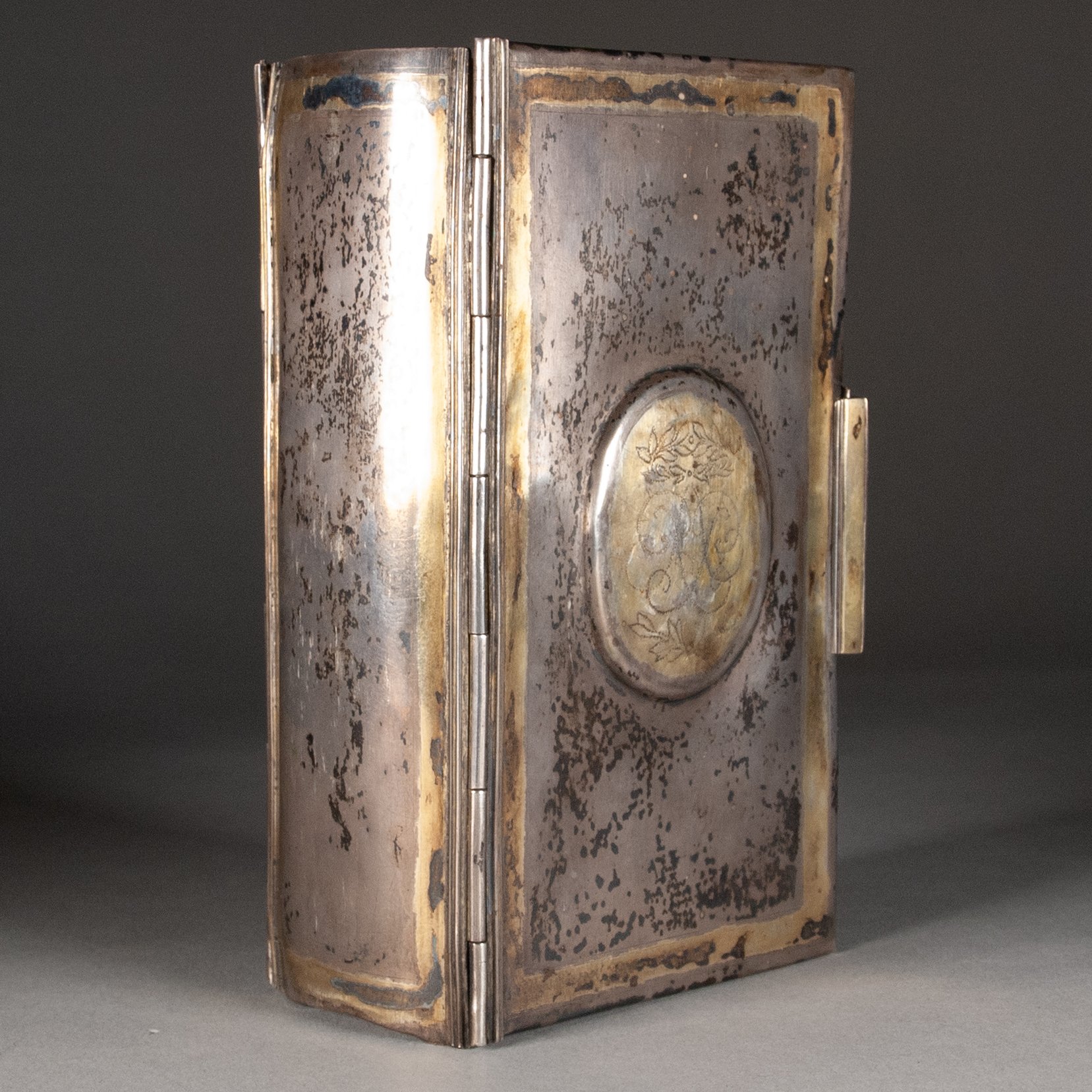 Image 1 of 12
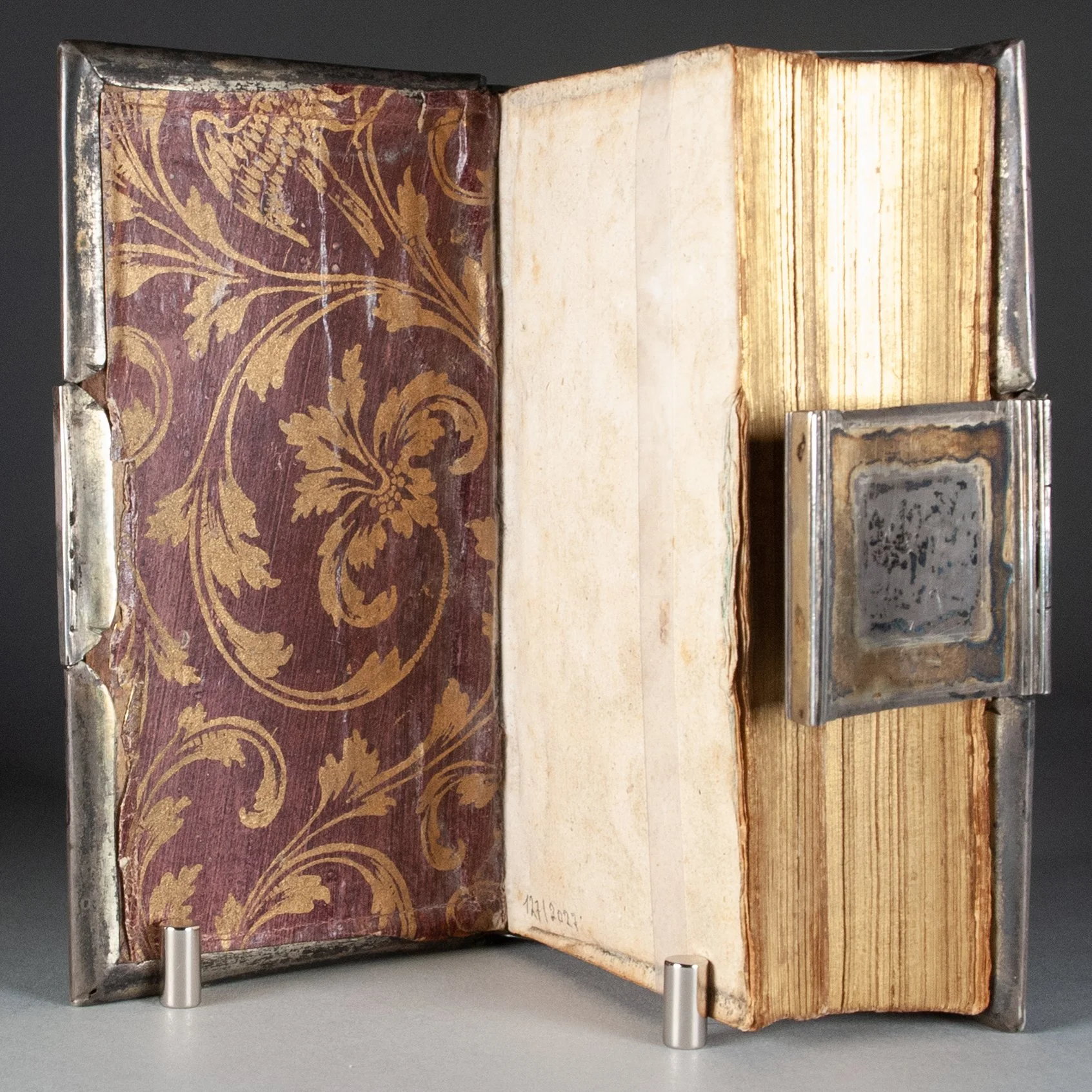 Image 2 of 12
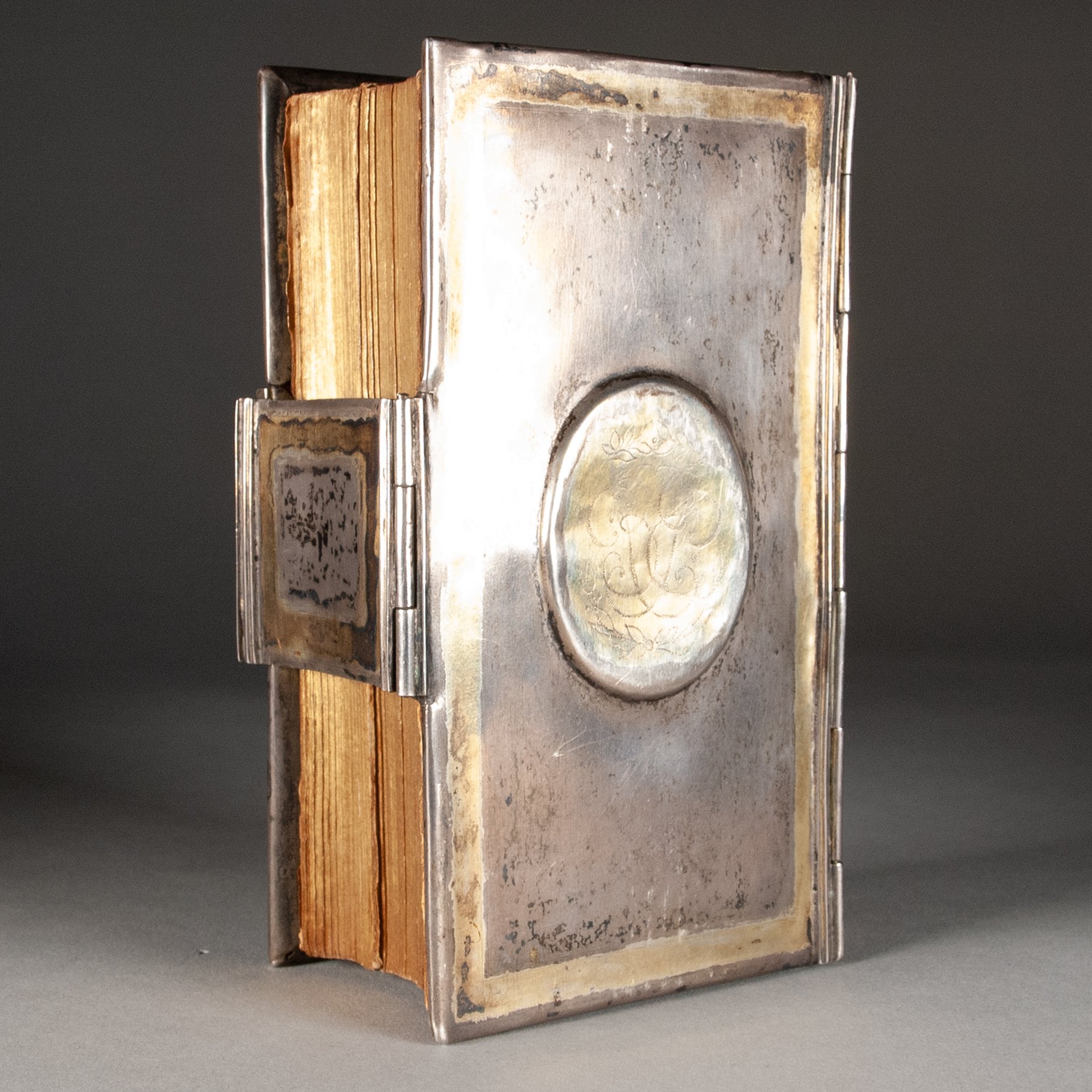 Image 3 of 12
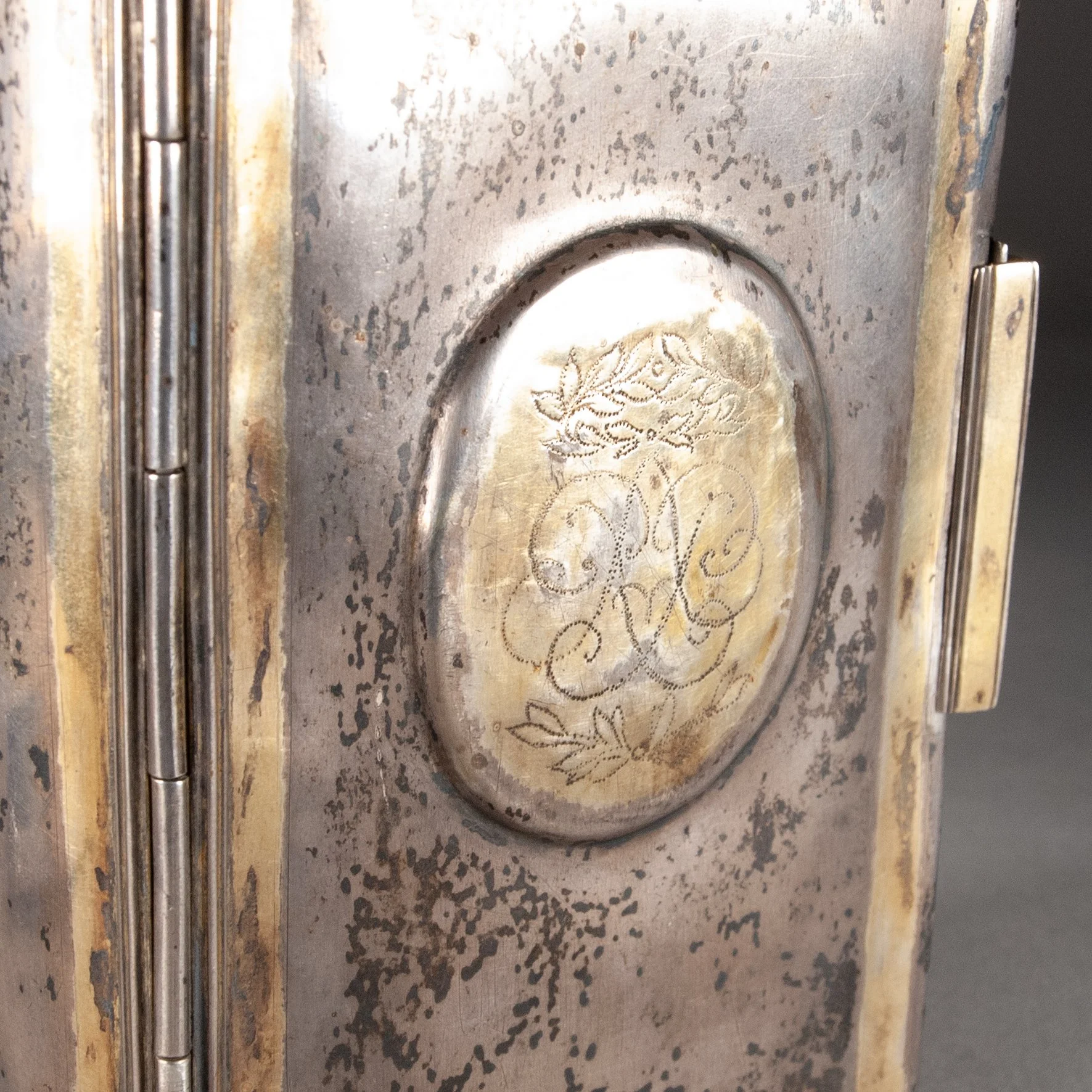 Image 4 of 12
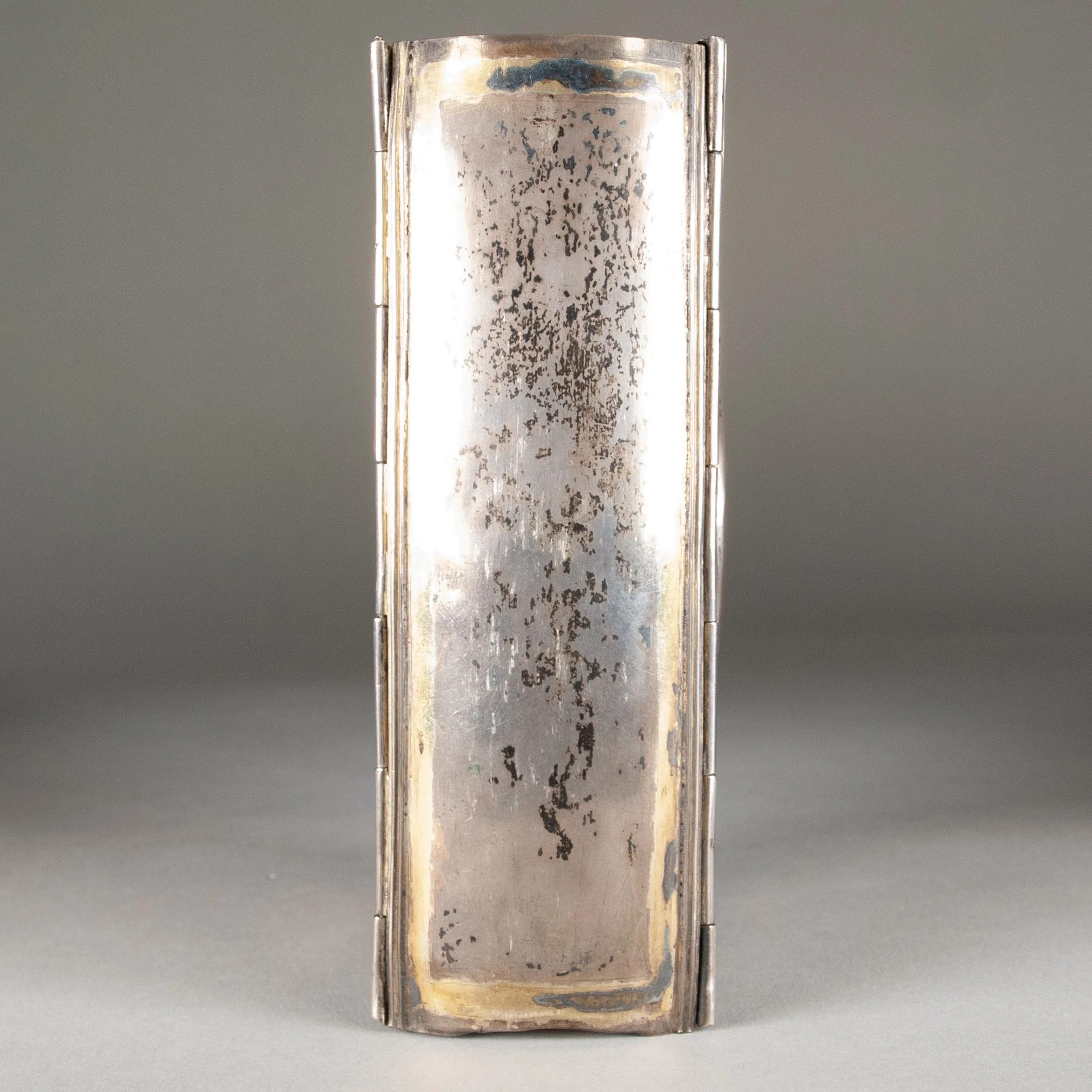 Image 5 of 12
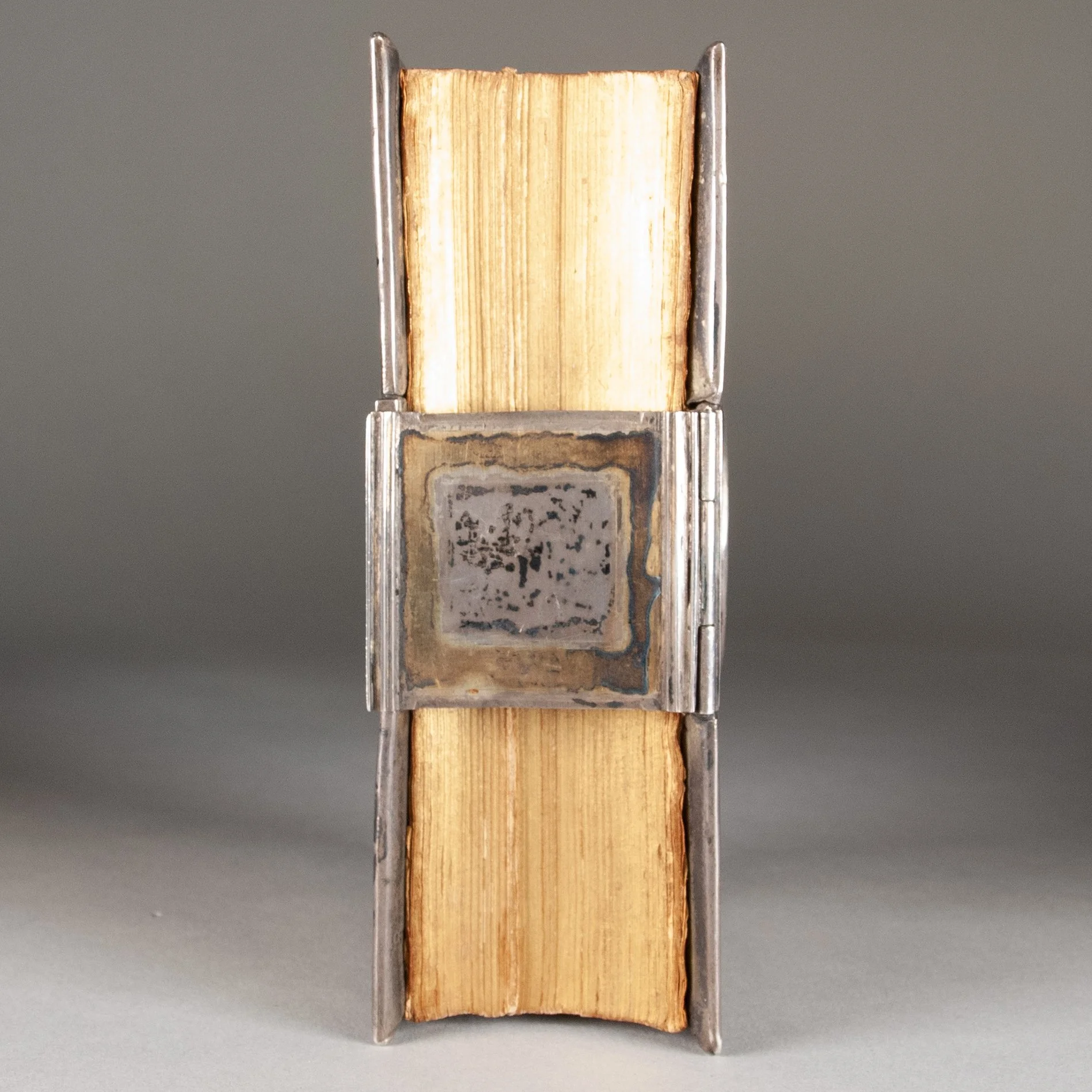 Image 6 of 12
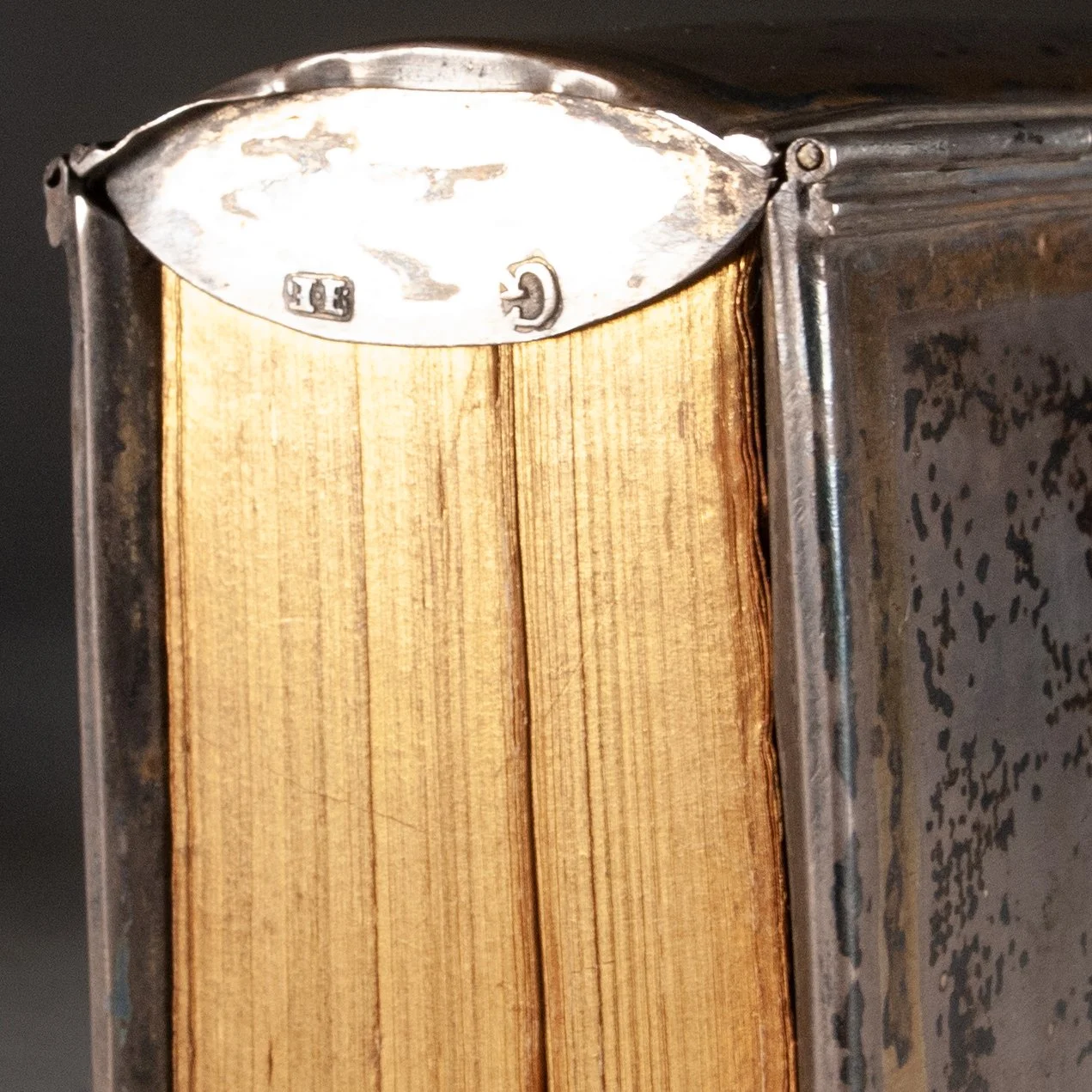 Image 7 of 12
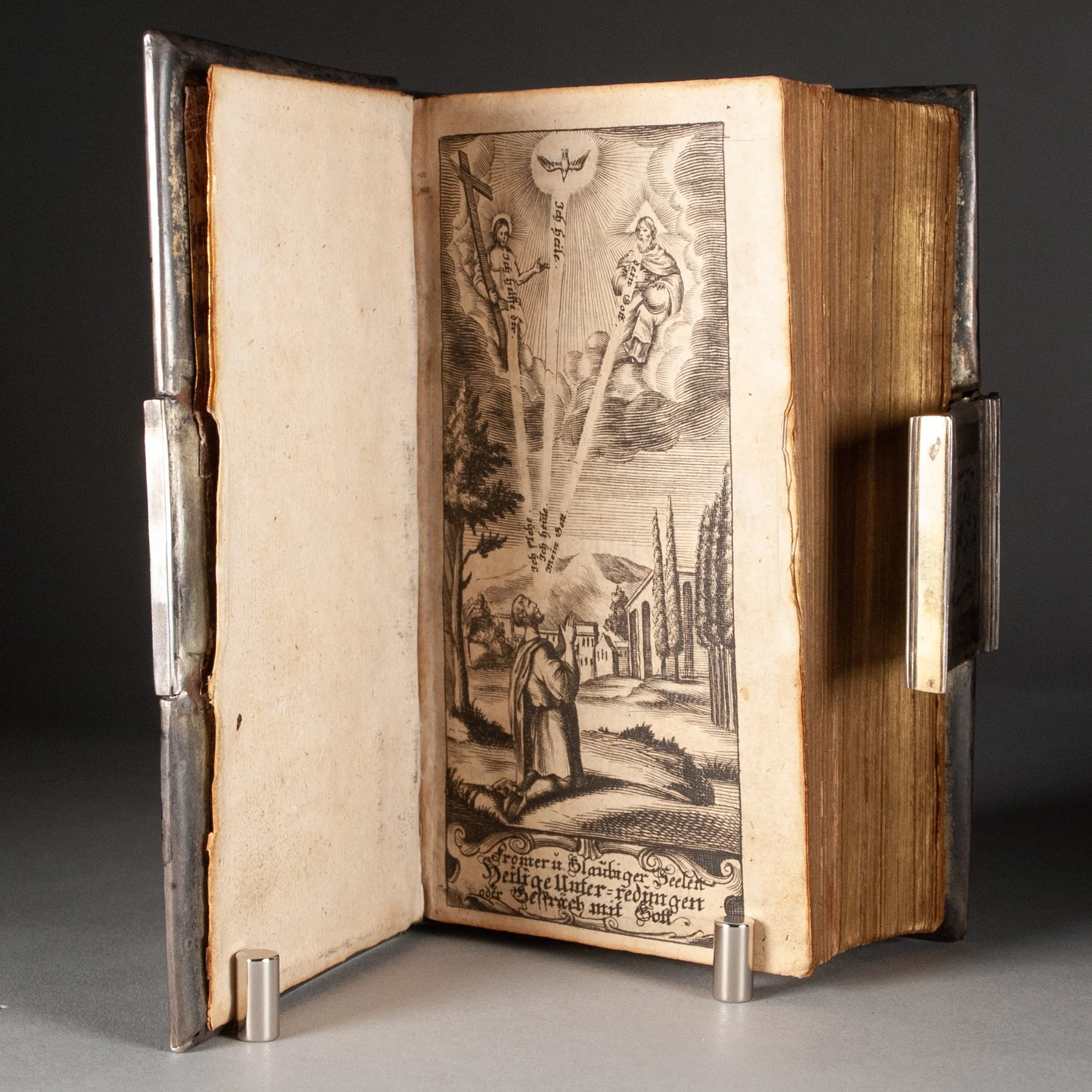 Image 8 of 12
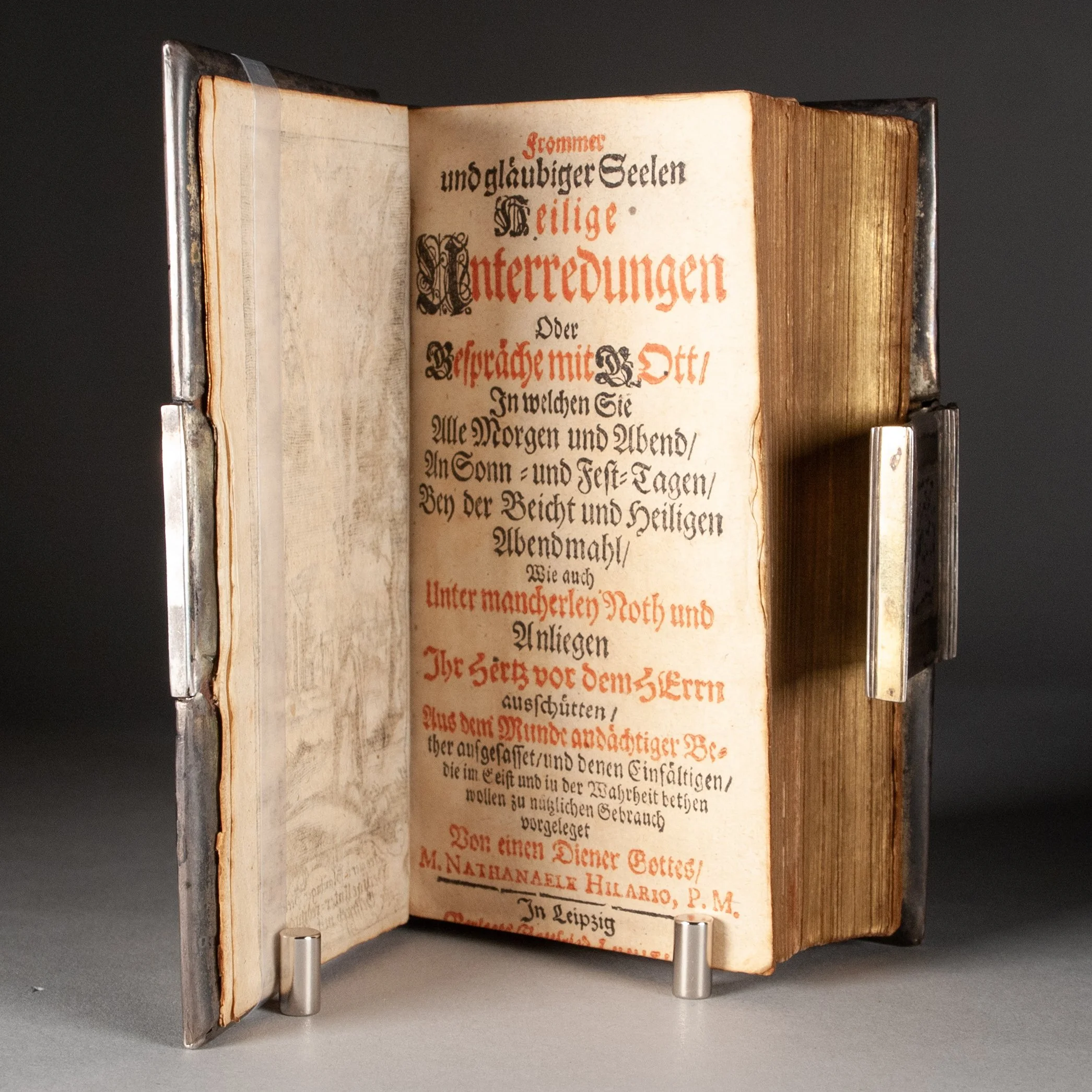 Image 9 of 12
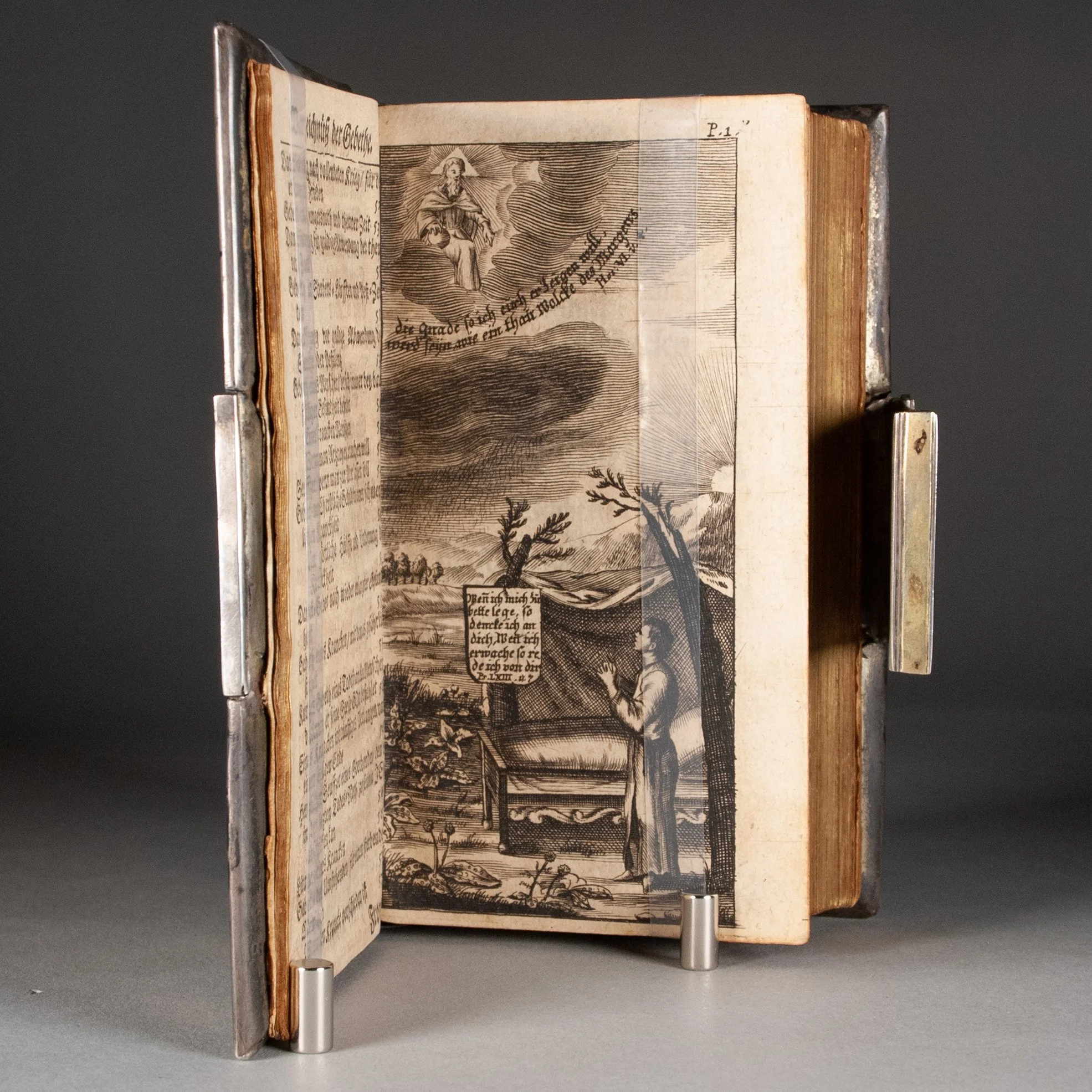 Image 10 of 12
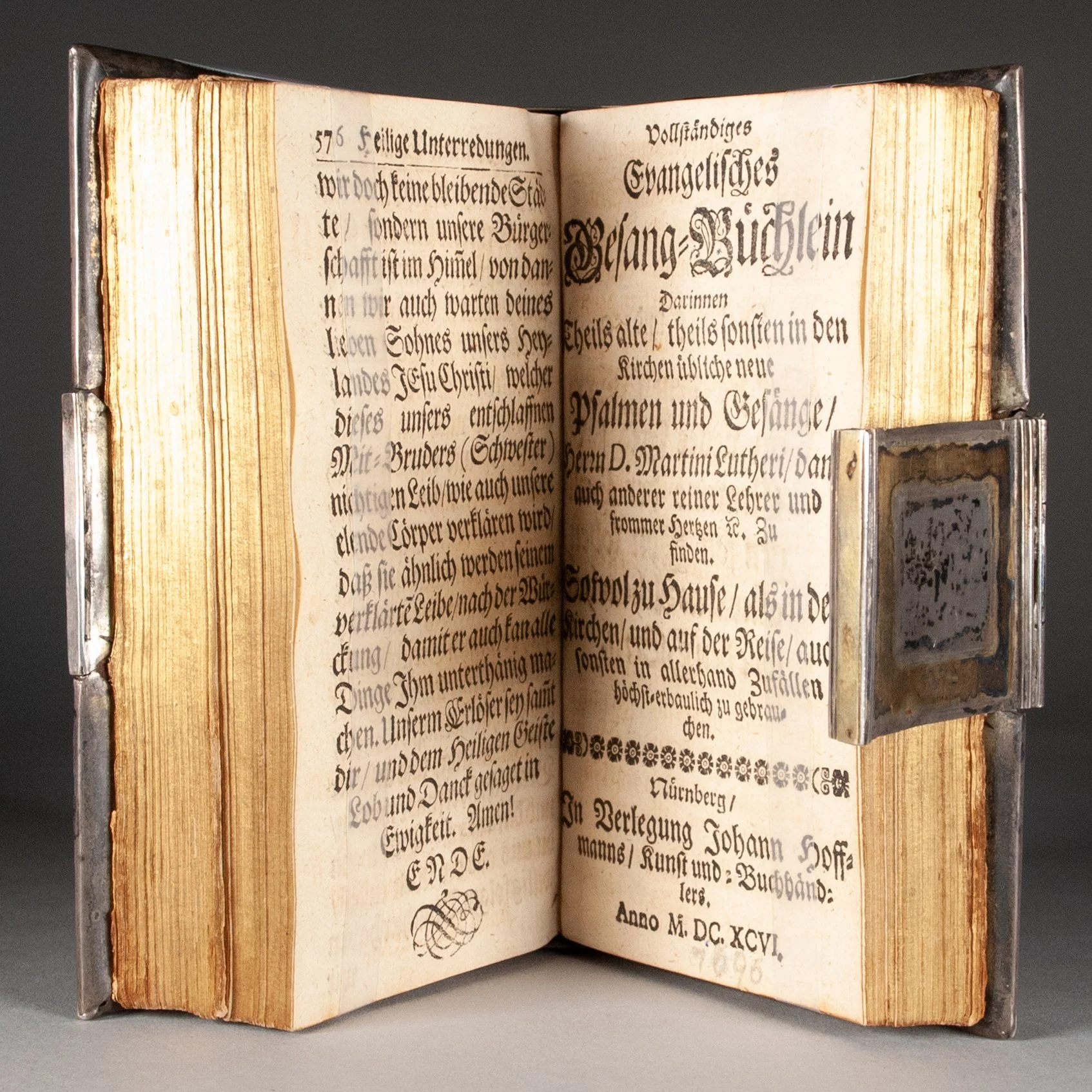 Image 11 of 12
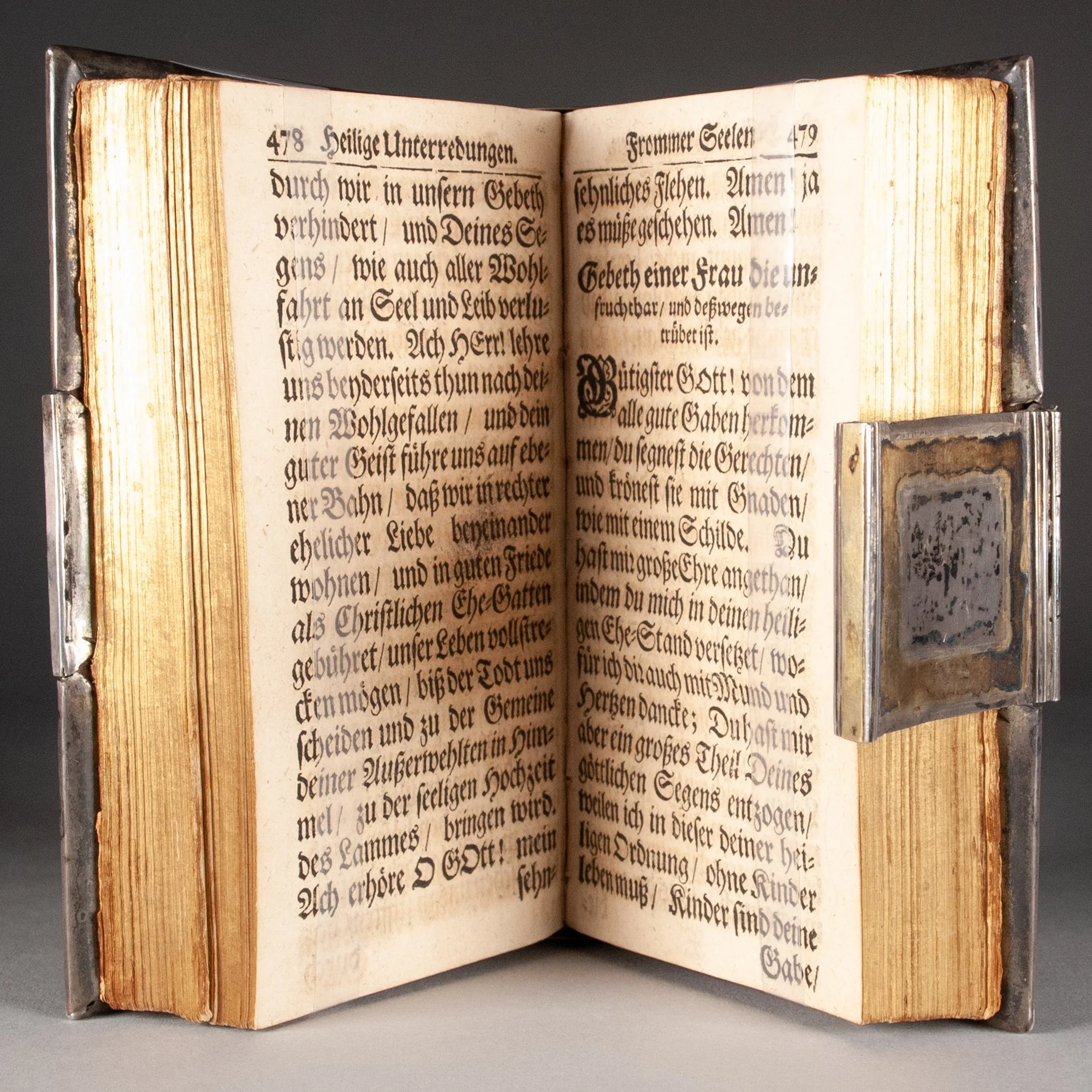 Image 12 of 12