Scala sancta, or, The exaltation of the soul; being a train of pious thoughts compleating the whole duty of man, or devotions compiled by R.A., gent., in his solitudes
by Richard Allestree
London: T. Snowden for Gabriel Kunholt, Bookbinder, 1678
[16], 286 p. + [1] plate (frontis) | 8vo | A^4 a^4 B-S^8 T^8(-T8) | 183 x 112 mm
First edition, followed by just one other in 1692, which seems rather restrained for a devotional by the wildly popular English churchman. The title identifies it as a complement to his Whole Duty of Man, first published in 1658 and then frequently reprinted, even through the 19th century. ¶ In a very handsome contemporary English Restoration binding, this "generally considered to be the best period of English bookbinding" (Foot) and often hailed as its "golden age" (Hobson). A bookseller's note penciled on a front fly-leaf calls it the work of Samuel Mearne, which we can safely ignore. (It seems there was an enduring habit of attributing any attractive Restoration binding to his hands.) It far more closely resembles the work of the Queens' Binders. "They all started work in the 1670s, and made frequent use of the recently introduced drawer-handle tools and volutes with pointillé outlines rather than the floral volutes much used by the other binders of the period" (Nixon). ¶ Our binding is almost certainly the work of Queens' Binder B, whose studio "produced some of the finest English bindings of the Restoration period" (Nixon). The compositional similarities with a binding in the Bodleian's Broxbourne Collection (Nixon 68) are undeniable: a rectangular central compartment littered with drawer handles, circles and spangles, and flowers, including the four-petaled, two-leaved tool characteristic of the Queens' Binders; and an outer frame with a pointillé tulip bissecting each side, a rounder pointillé flower at each corner, with additional flowers arching from these on delicate built-up pointillé stems, the remaining space similarly filled with dots, circles, and a floral tool. We find all but three of our tools on this Broxbourne binding, including the far outer roll and both four-petaled tools (Queens' Binder B used a version with elliptical petals, on our spine, but also one with rounder petals, used on our covers). One of our missing tools we find on Nixon 67, and another on Nixon/Foot 67, both also attributed to Queens' Binder B. "The excellence of his tooling on all its products suggests a small shop with only one finisher" (Nixon). The studio did work for both Catherine of Braganza and Mary of Modena, hence the plural "Queens", and Samuel Pepys also had a few by this binder. "They could have been bound to Pepys's order, for they seem to have entered his library in the second half of the 1670s, the decade when this bindery seems to have been at work" (Nixon and Foot). ¶ This title rare in commerce. We find just two auction records, in 1950 and 1936.
PROVENANCE: Old ownership signature of Anna Bull on the title page. Given the later Lygon family birth records scattered across the front and rear endpapers (1781-1789), this must be Anna Lygon, who married Edward Bull in 1681. She managed the estate following her husband's death, and left a bequest after her own to establish several village schools. Allestree appears to have enjoyed a robust female readership. He even dedicated the present to Mary Aubrey, second wife of politician William Montagu. ¶ A bookseller's note on a front fly-leaf indicates this copy belonged to the Earl of Beauchamp. There's no direct evidence for this, though it is possible, as the title belonged to the Lygon family. "God save the king" penned on the rear free endpaper (and offset to the paste-down). ¶ Front paste-down with the gold-stamped red leather bookplate of William Alfred Foyle, co-founder of the legendary Foyles bookshop, this among his books sold by Christie's in July 2000 (paired with another Allestree title in a fine Restoration binding).
CONDITION: Contemporary red leather, lavishly tooled in gold, as described above; edges gilt, marbled endpapers. ¶ Upper corner of leaf C3 torn away, repaired, and with some lost text supplied in manuscript; leaves a bit dusty and lightly soiled. Spine ends expertly and very discreetly repaired; joints rubbed, the leather worn through in parts of the front joint; corners gently bumped; front cover moderately soiled, and with a single small burn mark. A very attractive book.
REFERENCES: ESTC R213044 ¶ Hallow History Group, "Hallow Park: Time-line 1547-1981," accessed online (for Anna Bull); Howard Nixon, English Restoration Bookbindings, p. 32 (cited above; "They all [the four Queens' Binders] used a conventional pointillé tool with four petals and two leaves, and the shape of this is usually the easiest method of distinguishing between them"), 35 ("All these have drawer-handle tooling, but he usually intorduces floral tools as well"), #67 (using a smaller tulip tool also found on our binding), #68 (the strikingly similar Broxbourne Library binding), #69 (another by Queens' Binder B using some of our tools); Howard Nixon and Mirjam Foot, The History of Decorated Bookbinding in England, p. 73 (some general background on the Queens' Binders), 75 (cited above; on work by Queens' Binder B: "they are all of excellent quality and were probably all tooled by the same finisher"), plate 67 (Queens' Binder B, and using our six-petaled flower); Howard Nixon, Five Centuries of English Bookbinding, p. 100 (reproducing the same Broxbourne Library binding, which "shows nearly all the tools that he commonly used"); Mirjam Foot, Henry Davis Gift, v. 1, p. 10 (cited above); G.D. Hobson, Thirty Bindings, p. x (cited above; "This was, in fact, the Golden Age of the art in England")
Item #1002
Scala sancta, or, The exaltation of the soul; being a train of pious thoughts compleating the whole duty of man, or devotions compiled by R.A., gent., in his solitudes
by Richard Allestree
London: T. Snowden for Gabriel Kunholt, Bookbinder, 1678
[16], 286 p. + [1] plate (frontis) | 8vo | A^4 a^4 B-S^8 T^8(-T8) | 183 x 112 mm
First edition, followed by just one other in 1692, which seems rather restrained for a devotional by the wildly popular English churchman. The title identifies it as a complement to his Whole Duty of Man, first published in 1658 and then frequently reprinted, even through the 19th century. ¶ In a very handsome contemporary English Restoration binding, this "generally considered to be the best period of English bookbinding" (Foot) and often hailed as its "golden age" (Hobson). A bookseller's note penciled on a front fly-leaf calls it the work of Samuel Mearne, which we can safely ignore. (It seems there was an enduring habit of attributing any attractive Restoration binding to his hands.) It far more closely resembles the work of the Queens' Binders. "They all started work in the 1670s, and made frequent use of the recently introduced drawer-handle tools and volutes with pointillé outlines rather than the floral volutes much used by the other binders of the period" (Nixon). ¶ Our binding is almost certainly the work of Queens' Binder B, whose studio "produced some of the finest English bindings of the Restoration period" (Nixon). The compositional similarities with a binding in the Bodleian's Broxbourne Collection (Nixon 68) are undeniable: a rectangular central compartment littered with drawer handles, circles and spangles, and flowers, including the four-petaled, two-leaved tool characteristic of the Queens' Binders; and an outer frame with a pointillé tulip bissecting each side, a rounder pointillé flower at each corner, with additional flowers arching from these on delicate built-up pointillé stems, the remaining space similarly filled with dots, circles, and a floral tool. We find all but three of our tools on this Broxbourne binding, including the far outer roll and both four-petaled tools (Queens' Binder B used a version with elliptical petals, on our spine, but also one with rounder petals, used on our covers). One of our missing tools we find on Nixon 67, and another on Nixon/Foot 67, both also attributed to Queens' Binder B. "The excellence of his tooling on all its products suggests a small shop with only one finisher" (Nixon). The studio did work for both Catherine of Braganza and Mary of Modena, hence the plural "Queens", and Samuel Pepys also had a few by this binder. "They could have been bound to Pepys's order, for they seem to have entered his library in the second half of the 1670s, the decade when this bindery seems to have been at work" (Nixon and Foot). ¶ This title rare in commerce. We find just two auction records, in 1950 and 1936.
PROVENANCE: Old ownership signature of Anna Bull on the title page. Given the later Lygon family birth records scattered across the front and rear endpapers (1781-1789), this must be Anna Lygon, who married Edward Bull in 1681. She managed the estate following her husband's death, and left a bequest after her own to establish several village schools. Allestree appears to have enjoyed a robust female readership. He even dedicated the present to Mary Aubrey, second wife of politician William Montagu. ¶ A bookseller's note on a front fly-leaf indicates this copy belonged to the Earl of Beauchamp. There's no direct evidence for this, though it is possible, as the title belonged to the Lygon family. "God save the king" penned on the rear free endpaper (and offset to the paste-down). ¶ Front paste-down with the gold-stamped red leather bookplate of William Alfred Foyle, co-founder of the legendary Foyles bookshop, this among his books sold by Christie's in July 2000 (paired with another Allestree title in a fine Restoration binding).
CONDITION: Contemporary red leather, lavishly tooled in gold, as described above; edges gilt, marbled endpapers. ¶ Upper corner of leaf C3 torn away, repaired, and with some lost text supplied in manuscript; leaves a bit dusty and lightly soiled. Spine ends expertly and very discreetly repaired; joints rubbed, the leather worn through in parts of the front joint; corners gently bumped; front cover moderately soiled, and with a single small burn mark. A very attractive book.
REFERENCES: ESTC R213044 ¶ Hallow History Group, "Hallow Park: Time-line 1547-1981," accessed online (for Anna Bull); Howard Nixon, English Restoration Bookbindings, p. 32 (cited above; "They all [the four Queens' Binders] used a conventional pointillé tool with four petals and two leaves, and the shape of this is usually the easiest method of distinguishing between them"), 35 ("All these have drawer-handle tooling, but he usually intorduces floral tools as well"), #67 (using a smaller tulip tool also found on our binding), #68 (the strikingly similar Broxbourne Library binding), #69 (another by Queens' Binder B using some of our tools); Howard Nixon and Mirjam Foot, The History of Decorated Bookbinding in England, p. 73 (some general background on the Queens' Binders), 75 (cited above; on work by Queens' Binder B: "they are all of excellent quality and were probably all tooled by the same finisher"), plate 67 (Queens' Binder B, and using our six-petaled flower); Howard Nixon, Five Centuries of English Bookbinding, p. 100 (reproducing the same Broxbourne Library binding, which "shows nearly all the tools that he commonly used"); Mirjam Foot, Henry Davis Gift, v. 1, p. 10 (cited above); G.D. Hobson, Thirty Bindings, p. x (cited above; "This was, in fact, the Golden Age of the art in England")
Item #1002

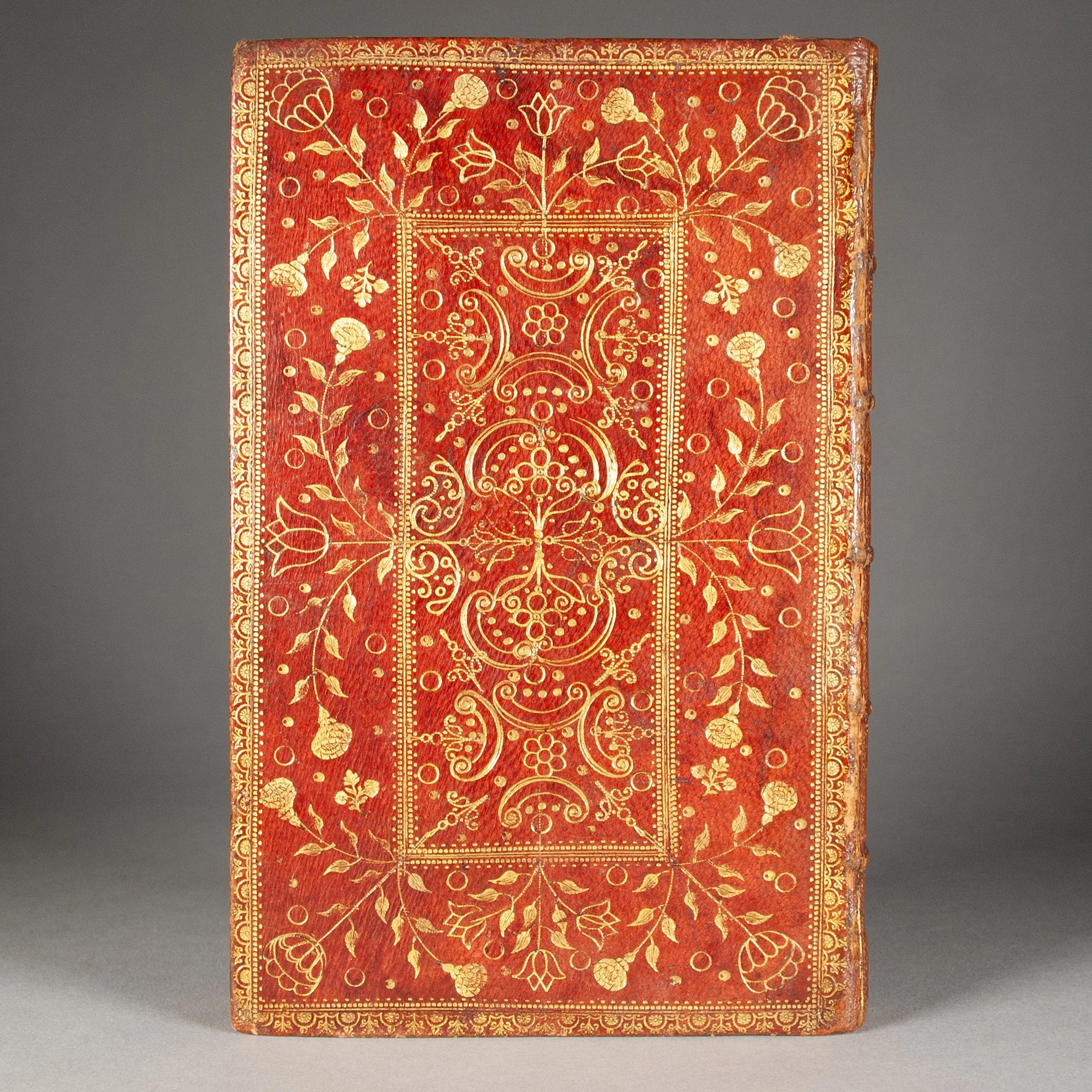 Image 1 of 11
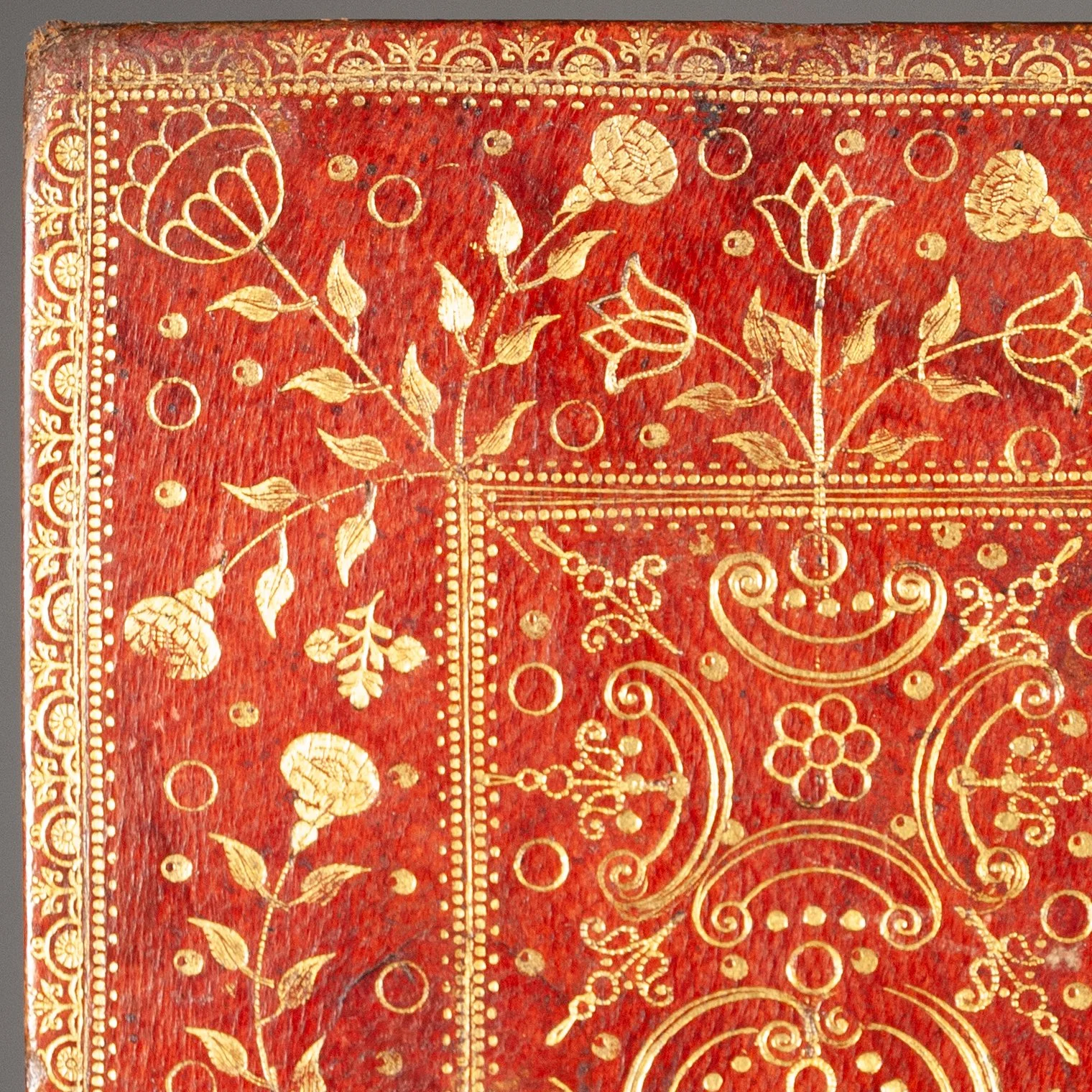 Image 2 of 11
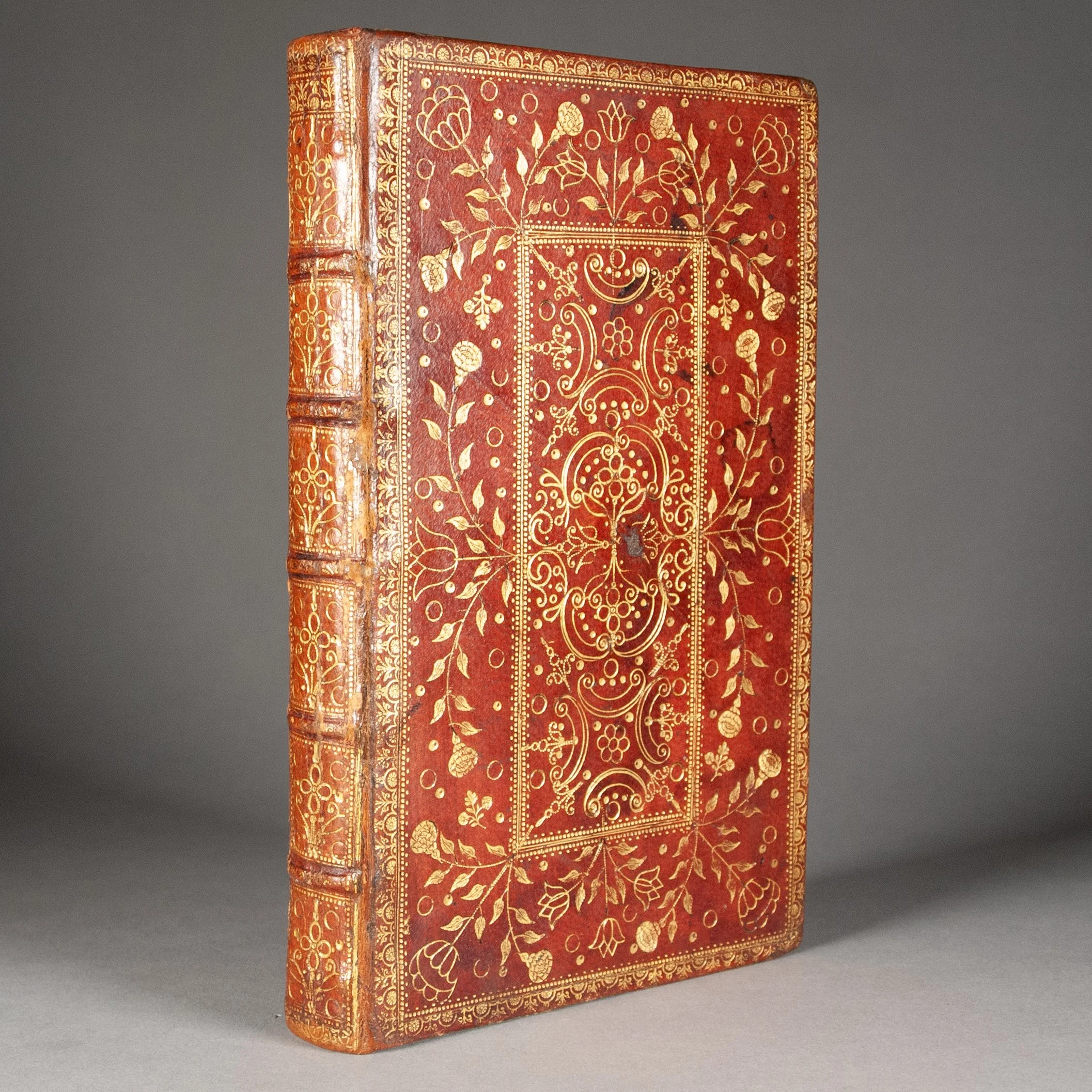 Image 3 of 11
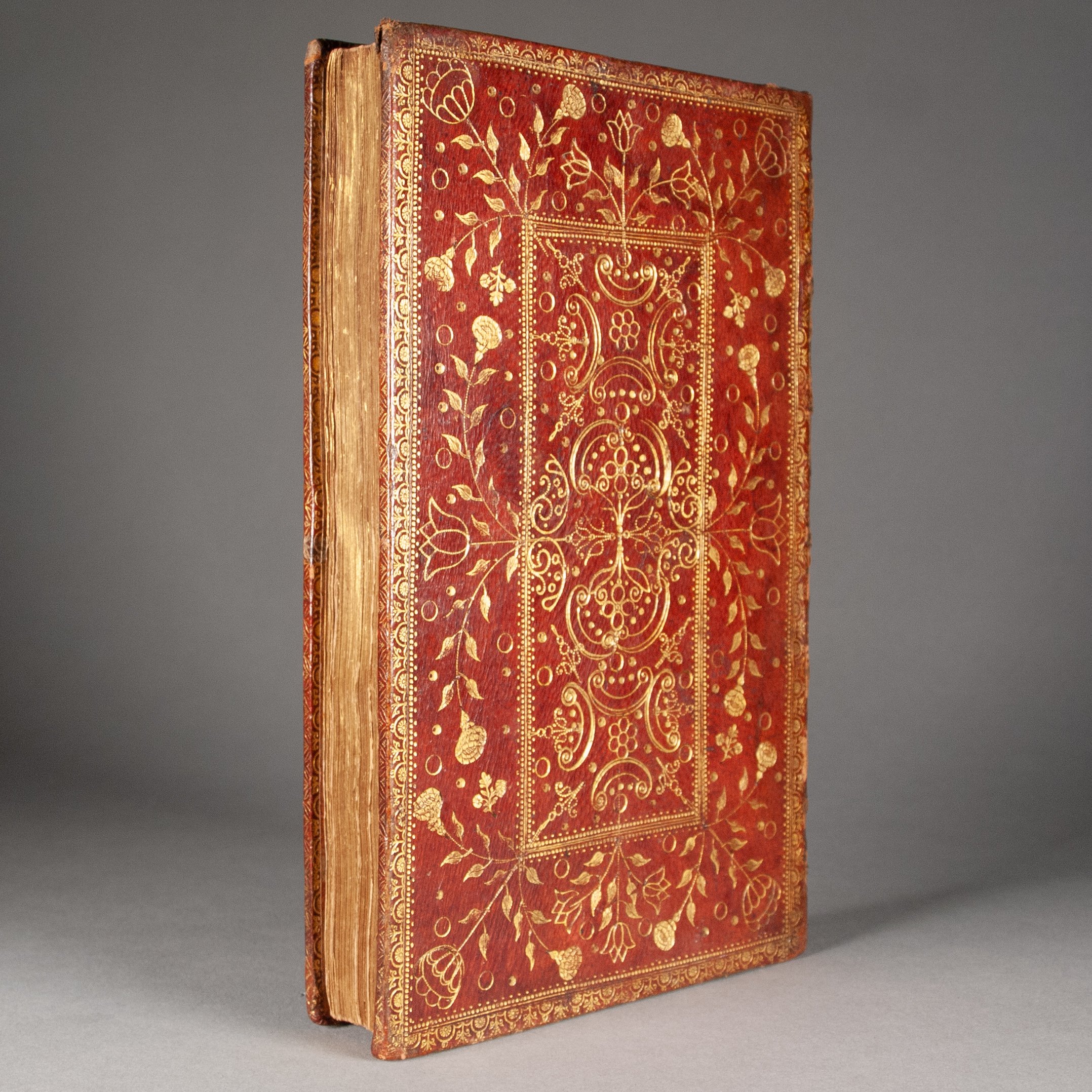 Image 4 of 11
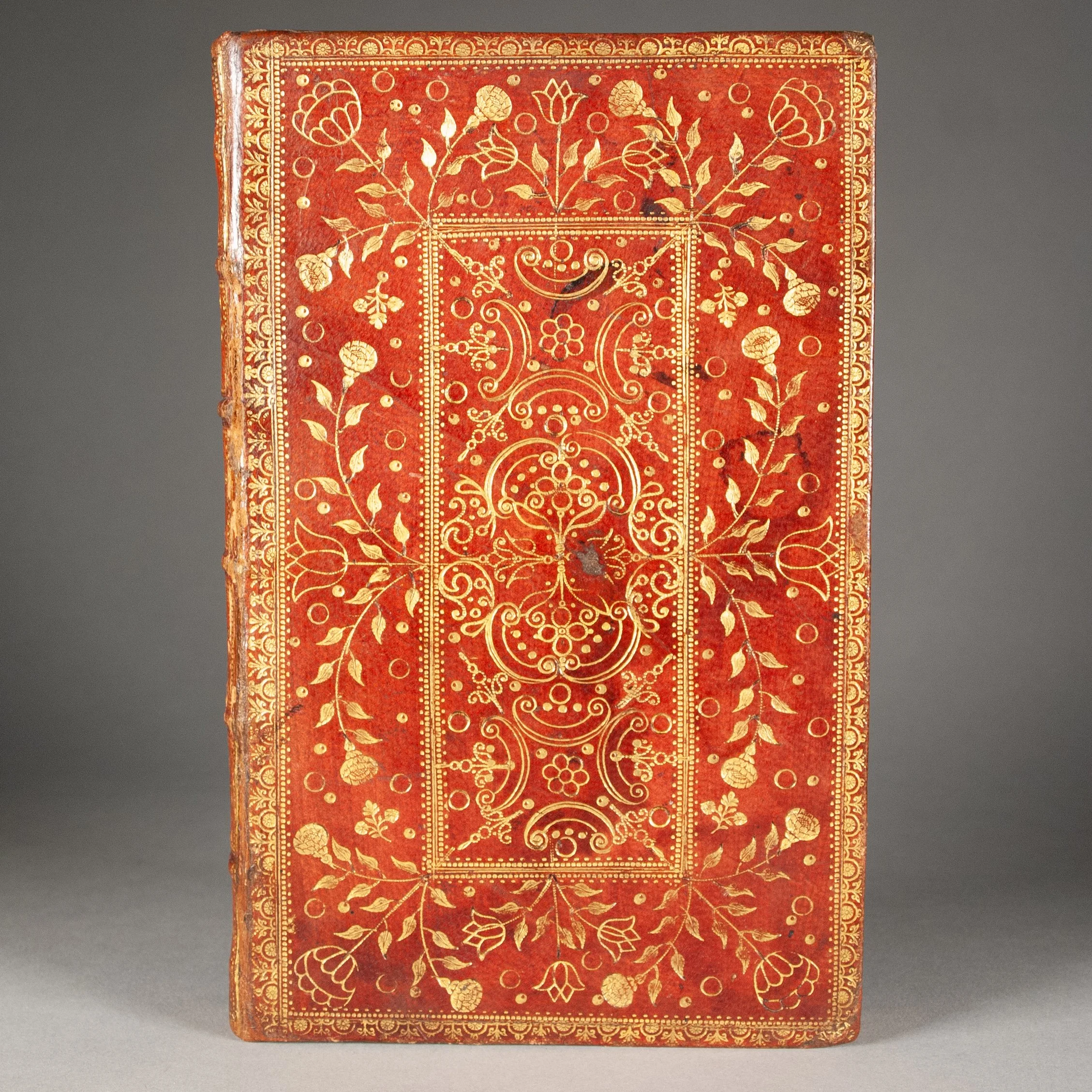 Image 5 of 11
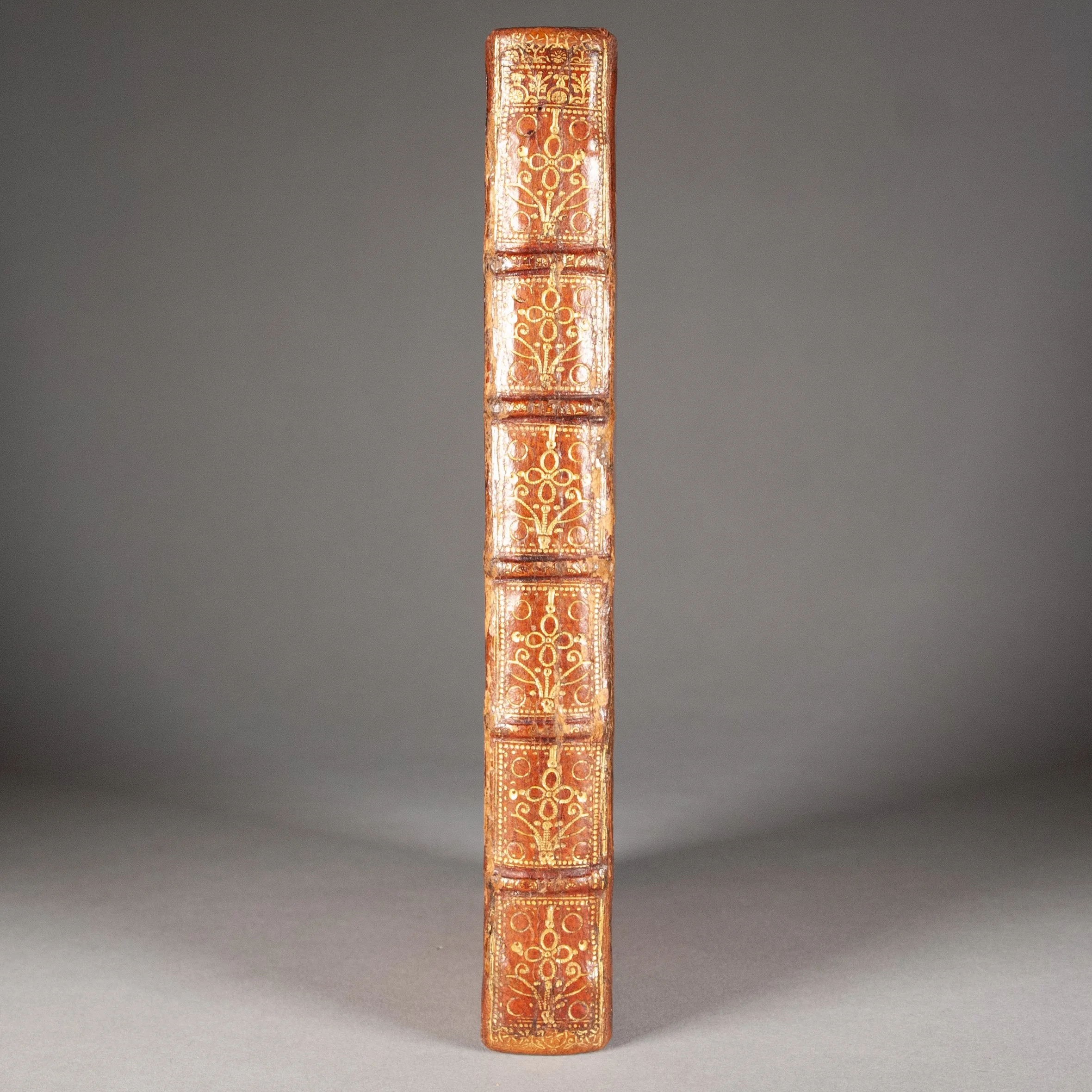 Image 6 of 11
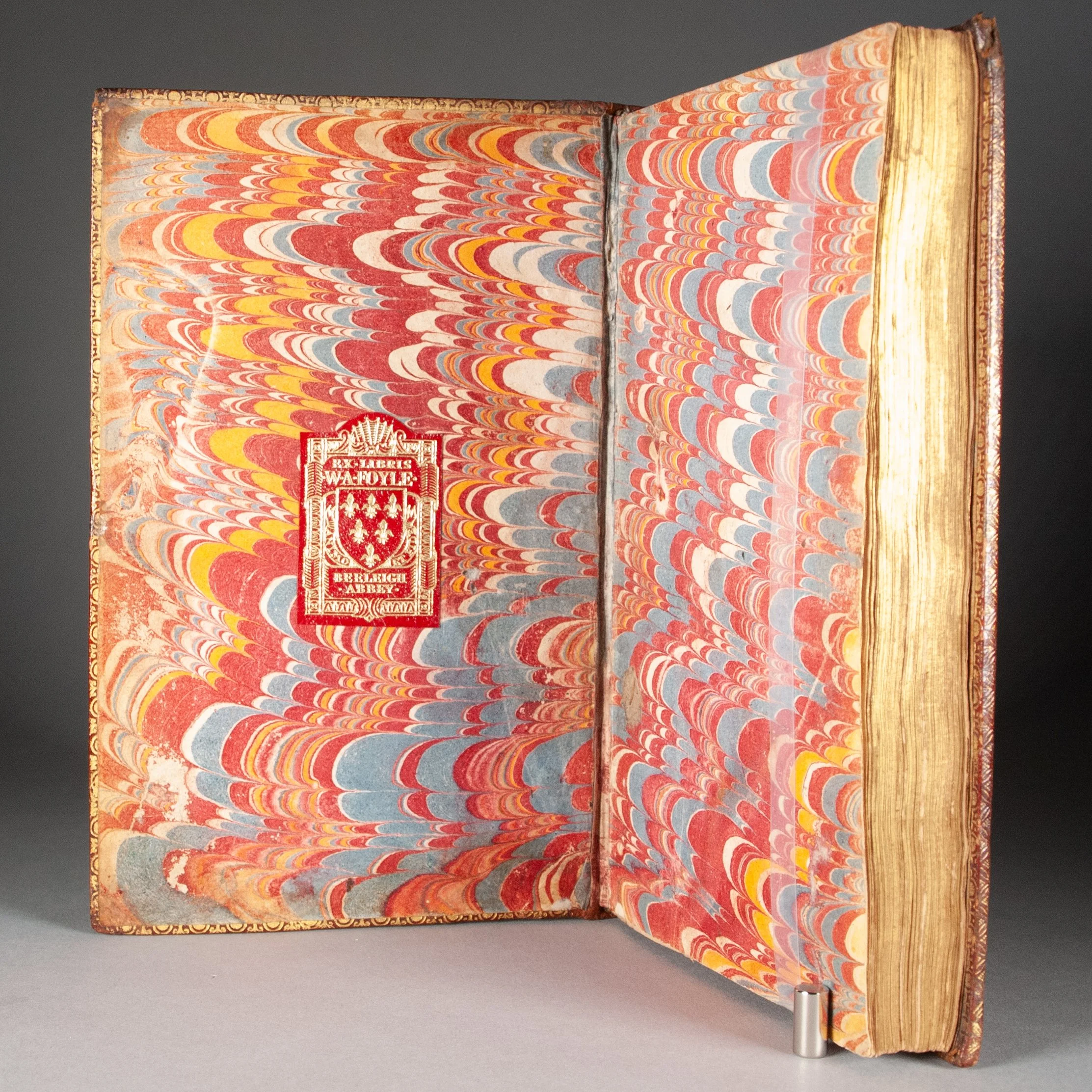 Image 7 of 11
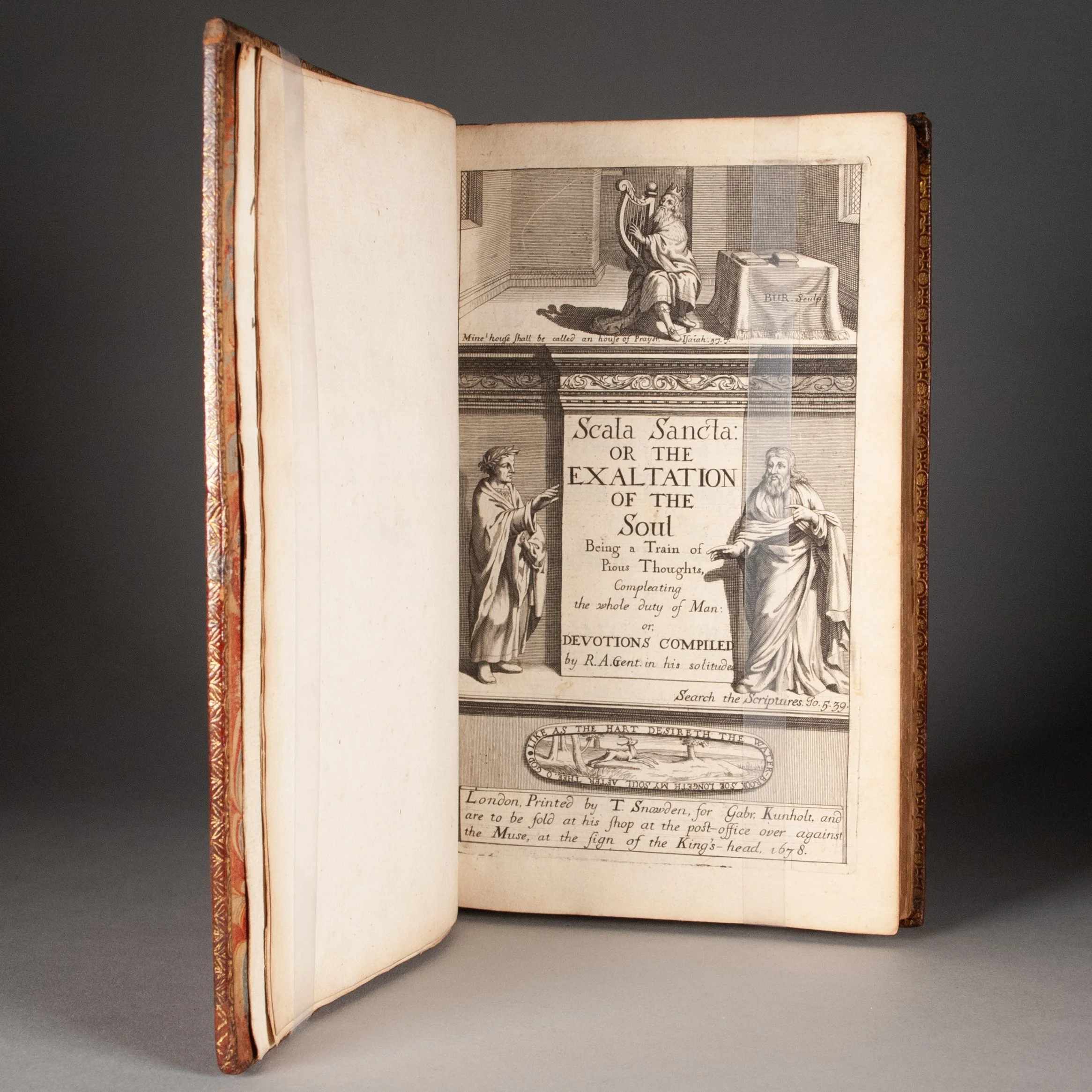 Image 8 of 11
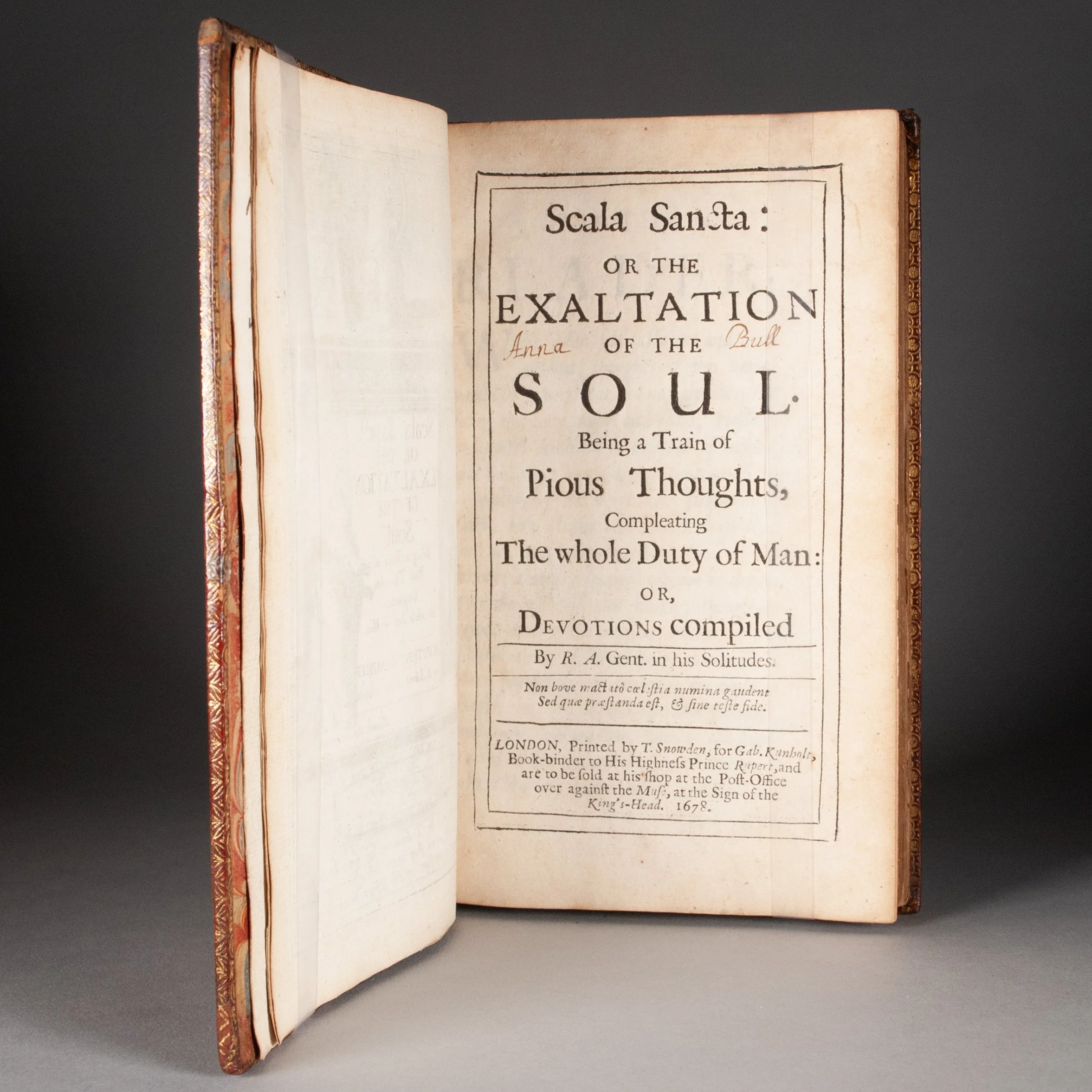 Image 9 of 11
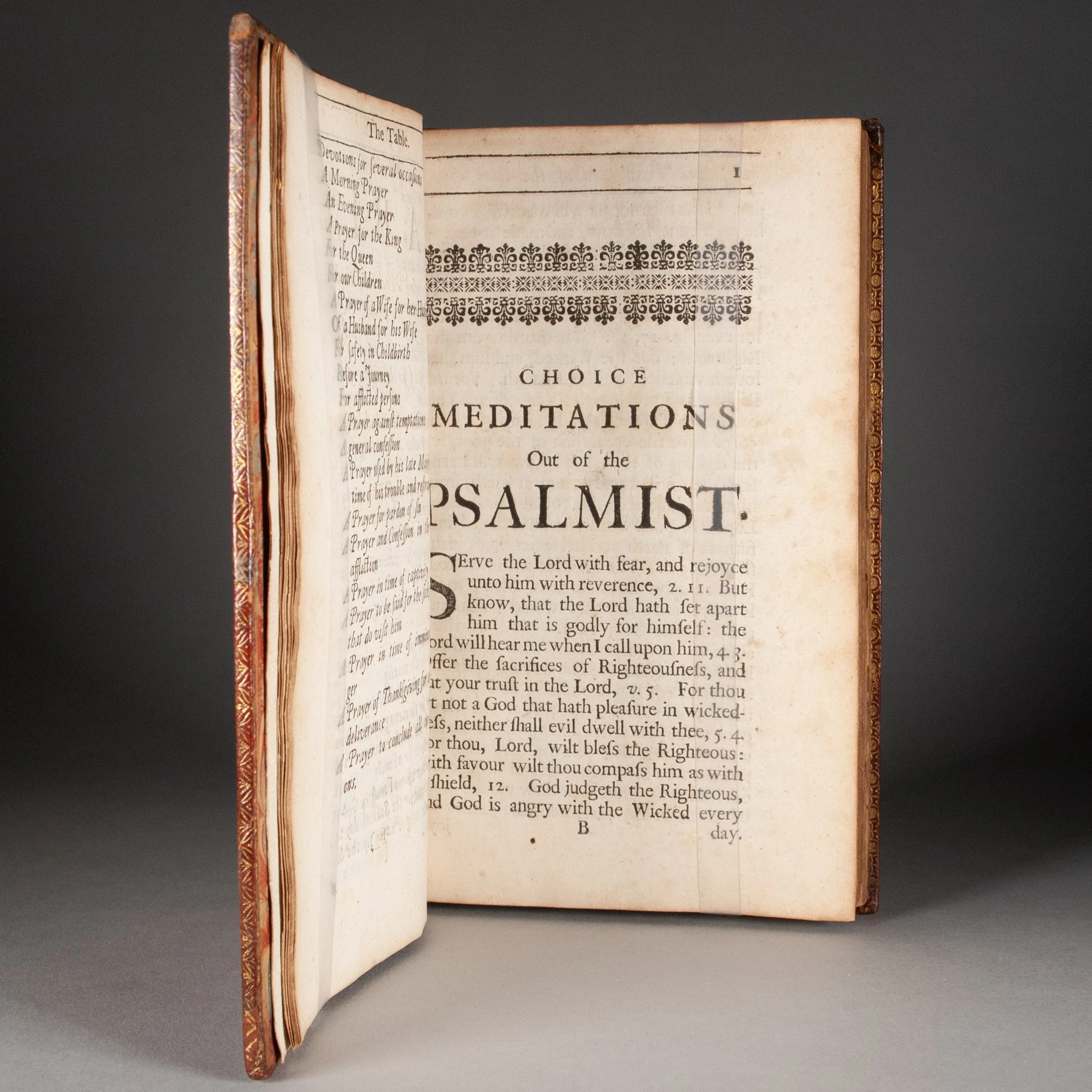 Image 10 of 11
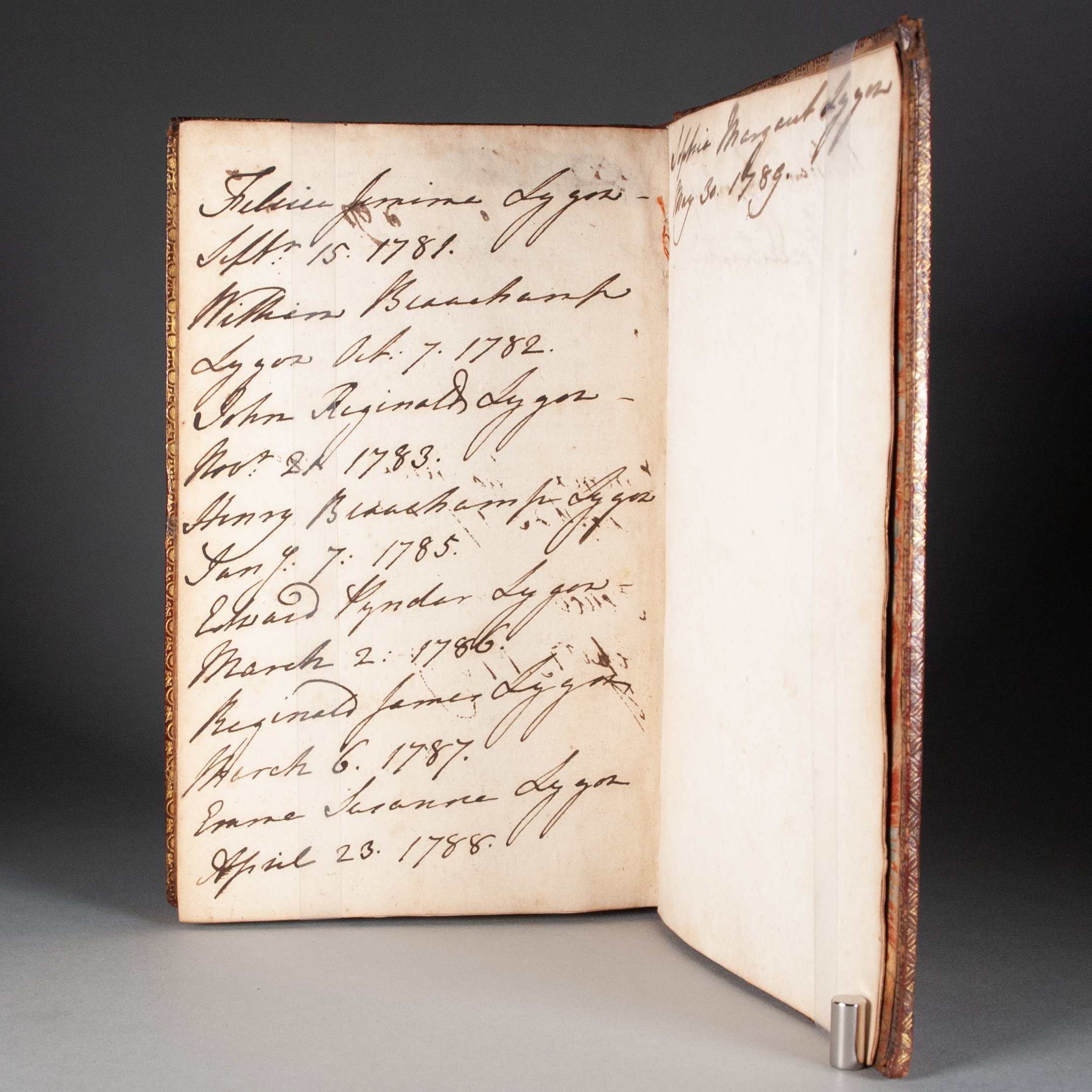 Image 11 of 11