Königliche Hals-Zierde, einer Gottliebenden Seele, in sich begreiffend: ueberaus kräftige Morgen- Abend- Mess- Beicht- und Communiongebether, zu dem hochwürdigsten Sacrament des Altars, der Allerheiligsten Dreyfaltigkeit, vom süssen Namen Jesu, Leiden Christi, zu der Mutter Gottes allen heiligen Engeln und verschiedenen heiligen Gottes: nebst beygefügten Tagzeiten, zu der göttlichen Vorsichtigkeit, von der unbestekten Empfängnuss Mariä, des H. Johannis von Nepomuck, und deren armen Seelen im Fegfeuer; wie auch mit unterschiedlichen Litaneyen und andern nothwendigen Gebethern versehen ist; womit andächtige herzen ihre Seelen, als gleich mit allerhand kostbaren Edelgesteinen bestermassen schmücken und auszieren können; allen gottliebenden herzen zu grösseret Andacht aus verschiedenen approbirten Büchern zusammen getragen, auch auf ein neues in vielen verbesseret; mit dem Officio zum Kindeln Jesu, und sieben Buss, Psalmen, sammt kern aller Gebether vermehret
Mariazell: Lorenz Ignati Milde, Bookbinder, [ca. 1780?]
[2], 447, [7] p. + [8] plates | 8vo | A-2E^8 2F^4 | 176 x 110 mm
By all appearances an unrecorded edition of this Catholic prayer book, which was published periodically in Austria throughout the 18th and 19th centuries. The book contains prayers for every possible occasion, as the verbose title makes quite plain (who are we to judge?), and is illustrated with nine full-page illustrations, the eight plates in elaborate rococo frames. The title translates roughly as Royal Neck Ornament. The book seems rather cumbersome for a pendant, but it may reflect the widespread belief that carrying devotional texts on your person could offer protection against all kinds of adversity. Mariazell, the site of Austria's most important Catholic pilgrimage site, must have done a brisk trade in such apotropaic goods. ¶ In an alluring contemporary parchment Bauerneinband, or peasant binding, popular in Central Europe at the time. A light rose-colored ground has been lavishly gold-tooled with drawer handles, hatched arabesques, and floral tools, building concentric frames around a large central Star of Bethlehem. Select negative space was then painted a mixture of white, green, and dark brown, the whole binding then covered with a very thin layer of varnish, or perhaps egg glair. “Spectacular through the richness and polychromy of the décor,” these bindings probably originated in Hungary, “then spread to Germany, the Netherlands and the northern countries, in the 17th-18th centuries” (Carșote). While it’s been suggested that Bauern might refer to peasant owners or production by untrained craftspeople, which is perhaps true in some cases, it more likely refers simply to a folk decorative style. The skills demonstrated certainly exceeded those of the amateur binder. Our tooling is admittedly more traditional than other Bauern motifs we've seen, but certainly still demonstrates the characteristic unrestrained, over-the-top exuberance. ¶ This would have been a relatively extravagant binding, commonly found on the kind of religious texts that would have made suitable gifts. “Wedding presents in the form of finely-bound Bibles and prayer-books, given either by the new husband to his bride or presented to the happy couple, were fairly common” (Foot). Whatever the occasion, found on religious texts as they so often are, “their production can be seen as an act of worship in itself.” It's worth underscoring that our publisher identifies himself as a bookbinder, raising the possibility that he did the work himself. For dated Milde imprints, we find only an 1801 Christliche Hals-Zierde and a 1772 Tägliche Andachts-Übungen, which presents a rather wide spread for our undated book. The very same frontispiece appeared in the 1772 imprint, its impression a bit sharper than ours, so we'll suggest our Hals-Zierde was perhaps published around 1780.
PROVENANCE: Inscriptions on the rear free endpaper record the deaths of Magdalena Mühlberger on 21 August 1807 and Joseph Mühlberger on 16 April 1829.
CONDITION: Contemporary parchment Bauerneinband, as described above; block-printed endpapers; edges silver. With plates facing p. 27, 42, 71, 216, 262, 336, 350, and 420. ¶ Small tear in lower margin of 2E7, nowhere near the text; mildly foxed and scattered light staining; small hole in the frontispiece, just affecting the Crucifix; some of the plate impressions quite poor. Spine just a hair cocked; some of the color worn away and the gilding dulled; silver edges tarnished; light wear to the extremities.
REFERENCES: Cristina Carșote, Luminița Kövari, Carmen Albu, Emanuel Hadîmbu, Elena Badea, Lucreția Miu, and Gabriela Dumitrescu, “Bindings of Rare Books from the Collections of the Romanian Academy Library: A Multidisciplinary Study,” Revista de Pielarie Incaltaminte 18.4 (2018), p. 311 (cited above); Julia Miller, Books Will Speak Plain (Legacy Press, 2010), p. 223 (“The association with peasants appears to reflect the use of folk decorative motifs on the bindings rather than peasant production”); Mirjam M. Romme, “Contemporary Collectors XLIV: The Henry Davis Collection I: The British Museum Gift,” The Book Collector 18.1 (Spring 1969), p. 36 (“Later in the 18th century we get the so-called Peasant bindings, usually found on books printed in Germany, Holland, Switzerland, and Eastern Europe”); Mirjam Foot, The History of Bookbinding as a Mirror of Society, 55 (cited above), 60 (cited above); H. George Fletcher, Judging a Book by Its Cover: Bookbindings from the Collections of the Grolier Club, p. 216-217, #4.38 (a German Bauerneinband, or what he calls a "German polychrome vellum binding," also with a central Star of Bethlehem); Jan Storm van Leeuwen, De meest opmerkelijke boekbanden uit eigen bezit, p. 63 and 136, #87 (another example with central Star of Bethlehem)
Item #1001
Königliche Hals-Zierde, einer Gottliebenden Seele, in sich begreiffend: ueberaus kräftige Morgen- Abend- Mess- Beicht- und Communiongebether, zu dem hochwürdigsten Sacrament des Altars, der Allerheiligsten Dreyfaltigkeit, vom süssen Namen Jesu, Leiden Christi, zu der Mutter Gottes allen heiligen Engeln und verschiedenen heiligen Gottes: nebst beygefügten Tagzeiten, zu der göttlichen Vorsichtigkeit, von der unbestekten Empfängnuss Mariä, des H. Johannis von Nepomuck, und deren armen Seelen im Fegfeuer; wie auch mit unterschiedlichen Litaneyen und andern nothwendigen Gebethern versehen ist; womit andächtige herzen ihre Seelen, als gleich mit allerhand kostbaren Edelgesteinen bestermassen schmücken und auszieren können; allen gottliebenden herzen zu grösseret Andacht aus verschiedenen approbirten Büchern zusammen getragen, auch auf ein neues in vielen verbesseret; mit dem Officio zum Kindeln Jesu, und sieben Buss, Psalmen, sammt kern aller Gebether vermehret
Mariazell: Lorenz Ignati Milde, Bookbinder, [ca. 1780?]
[2], 447, [7] p. + [8] plates | 8vo | A-2E^8 2F^4 | 176 x 110 mm
By all appearances an unrecorded edition of this Catholic prayer book, which was published periodically in Austria throughout the 18th and 19th centuries. The book contains prayers for every possible occasion, as the verbose title makes quite plain (who are we to judge?), and is illustrated with nine full-page illustrations, the eight plates in elaborate rococo frames. The title translates roughly as Royal Neck Ornament. The book seems rather cumbersome for a pendant, but it may reflect the widespread belief that carrying devotional texts on your person could offer protection against all kinds of adversity. Mariazell, the site of Austria's most important Catholic pilgrimage site, must have done a brisk trade in such apotropaic goods. ¶ In an alluring contemporary parchment Bauerneinband, or peasant binding, popular in Central Europe at the time. A light rose-colored ground has been lavishly gold-tooled with drawer handles, hatched arabesques, and floral tools, building concentric frames around a large central Star of Bethlehem. Select negative space was then painted a mixture of white, green, and dark brown, the whole binding then covered with a very thin layer of varnish, or perhaps egg glair. “Spectacular through the richness and polychromy of the décor,” these bindings probably originated in Hungary, “then spread to Germany, the Netherlands and the northern countries, in the 17th-18th centuries” (Carșote). While it’s been suggested that Bauern might refer to peasant owners or production by untrained craftspeople, which is perhaps true in some cases, it more likely refers simply to a folk decorative style. The skills demonstrated certainly exceeded those of the amateur binder. Our tooling is admittedly more traditional than other Bauern motifs we've seen, but certainly still demonstrates the characteristic unrestrained, over-the-top exuberance. ¶ This would have been a relatively extravagant binding, commonly found on the kind of religious texts that would have made suitable gifts. “Wedding presents in the form of finely-bound Bibles and prayer-books, given either by the new husband to his bride or presented to the happy couple, were fairly common” (Foot). Whatever the occasion, found on religious texts as they so often are, “their production can be seen as an act of worship in itself.” It's worth underscoring that our publisher identifies himself as a bookbinder, raising the possibility that he did the work himself. For dated Milde imprints, we find only an 1801 Christliche Hals-Zierde and a 1772 Tägliche Andachts-Übungen, which presents a rather wide spread for our undated book. The very same frontispiece appeared in the 1772 imprint, its impression a bit sharper than ours, so we'll suggest our Hals-Zierde was perhaps published around 1780.
PROVENANCE: Inscriptions on the rear free endpaper record the deaths of Magdalena Mühlberger on 21 August 1807 and Joseph Mühlberger on 16 April 1829.
CONDITION: Contemporary parchment Bauerneinband, as described above; block-printed endpapers; edges silver. With plates facing p. 27, 42, 71, 216, 262, 336, 350, and 420. ¶ Small tear in lower margin of 2E7, nowhere near the text; mildly foxed and scattered light staining; small hole in the frontispiece, just affecting the Crucifix; some of the plate impressions quite poor. Spine just a hair cocked; some of the color worn away and the gilding dulled; silver edges tarnished; light wear to the extremities.
REFERENCES: Cristina Carșote, Luminița Kövari, Carmen Albu, Emanuel Hadîmbu, Elena Badea, Lucreția Miu, and Gabriela Dumitrescu, “Bindings of Rare Books from the Collections of the Romanian Academy Library: A Multidisciplinary Study,” Revista de Pielarie Incaltaminte 18.4 (2018), p. 311 (cited above); Julia Miller, Books Will Speak Plain (Legacy Press, 2010), p. 223 (“The association with peasants appears to reflect the use of folk decorative motifs on the bindings rather than peasant production”); Mirjam M. Romme, “Contemporary Collectors XLIV: The Henry Davis Collection I: The British Museum Gift,” The Book Collector 18.1 (Spring 1969), p. 36 (“Later in the 18th century we get the so-called Peasant bindings, usually found on books printed in Germany, Holland, Switzerland, and Eastern Europe”); Mirjam Foot, The History of Bookbinding as a Mirror of Society, 55 (cited above), 60 (cited above); H. George Fletcher, Judging a Book by Its Cover: Bookbindings from the Collections of the Grolier Club, p. 216-217, #4.38 (a German Bauerneinband, or what he calls a "German polychrome vellum binding," also with a central Star of Bethlehem); Jan Storm van Leeuwen, De meest opmerkelijke boekbanden uit eigen bezit, p. 63 and 136, #87 (another example with central Star of Bethlehem)
Item #1001

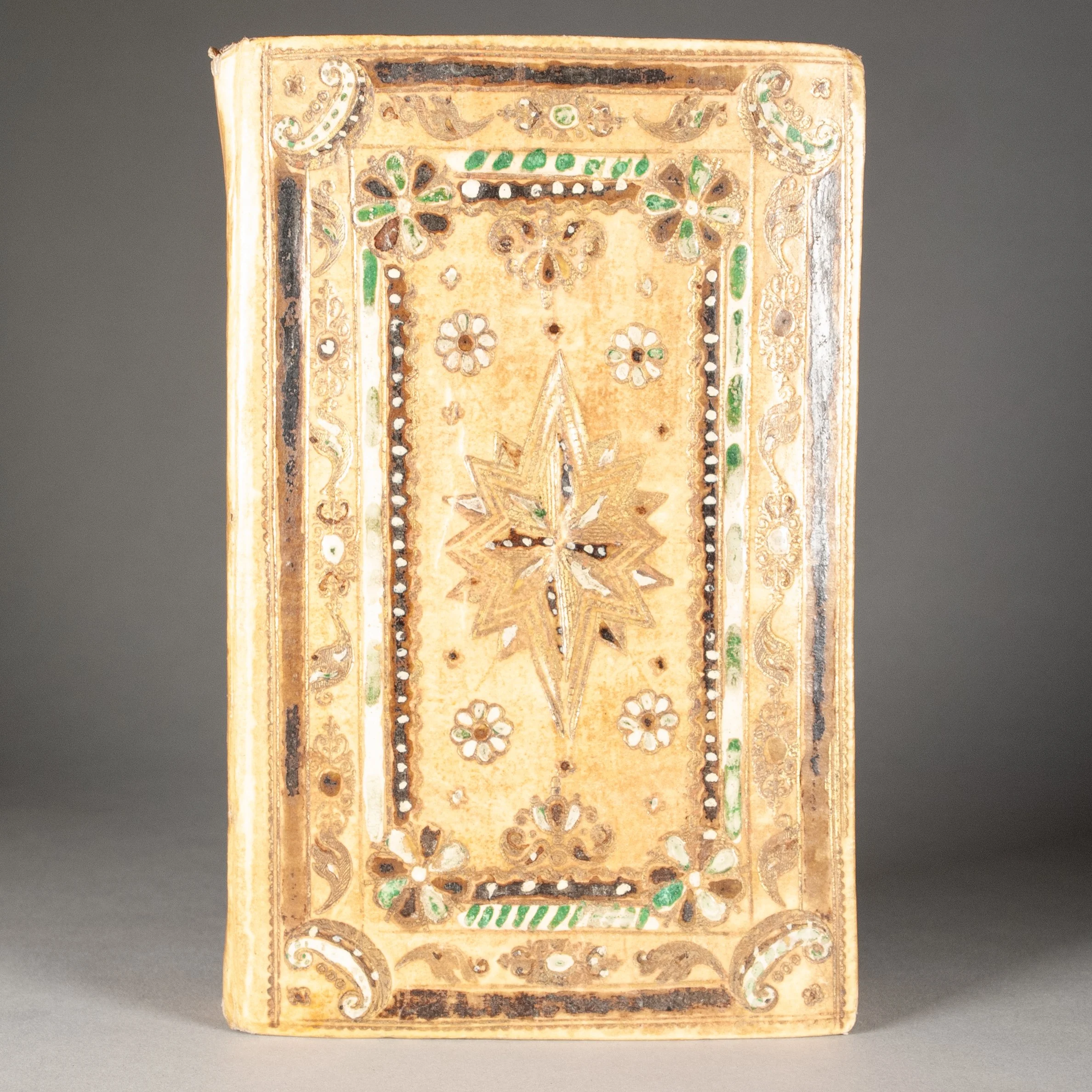 Image 1 of 9
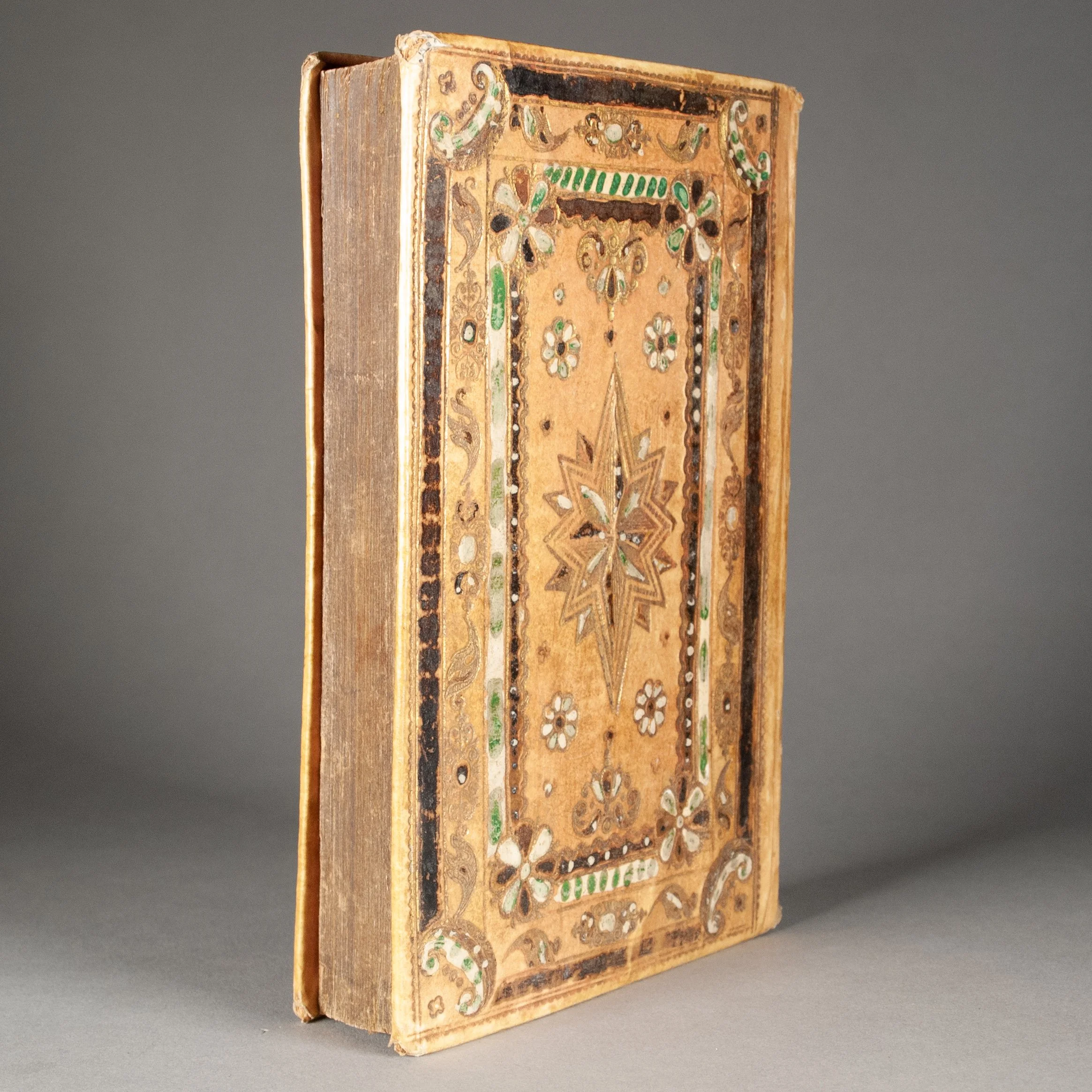 Image 2 of 9
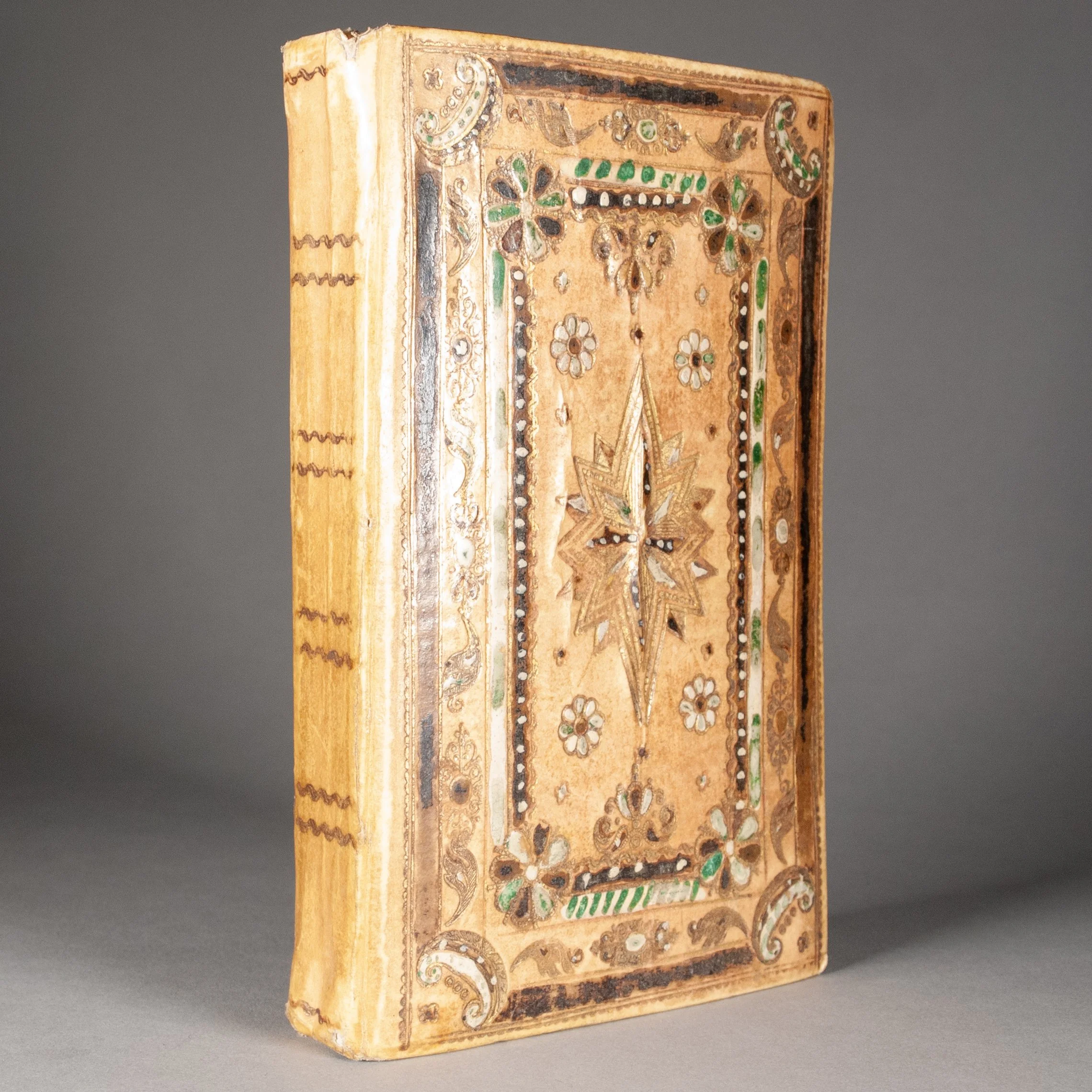 Image 3 of 9
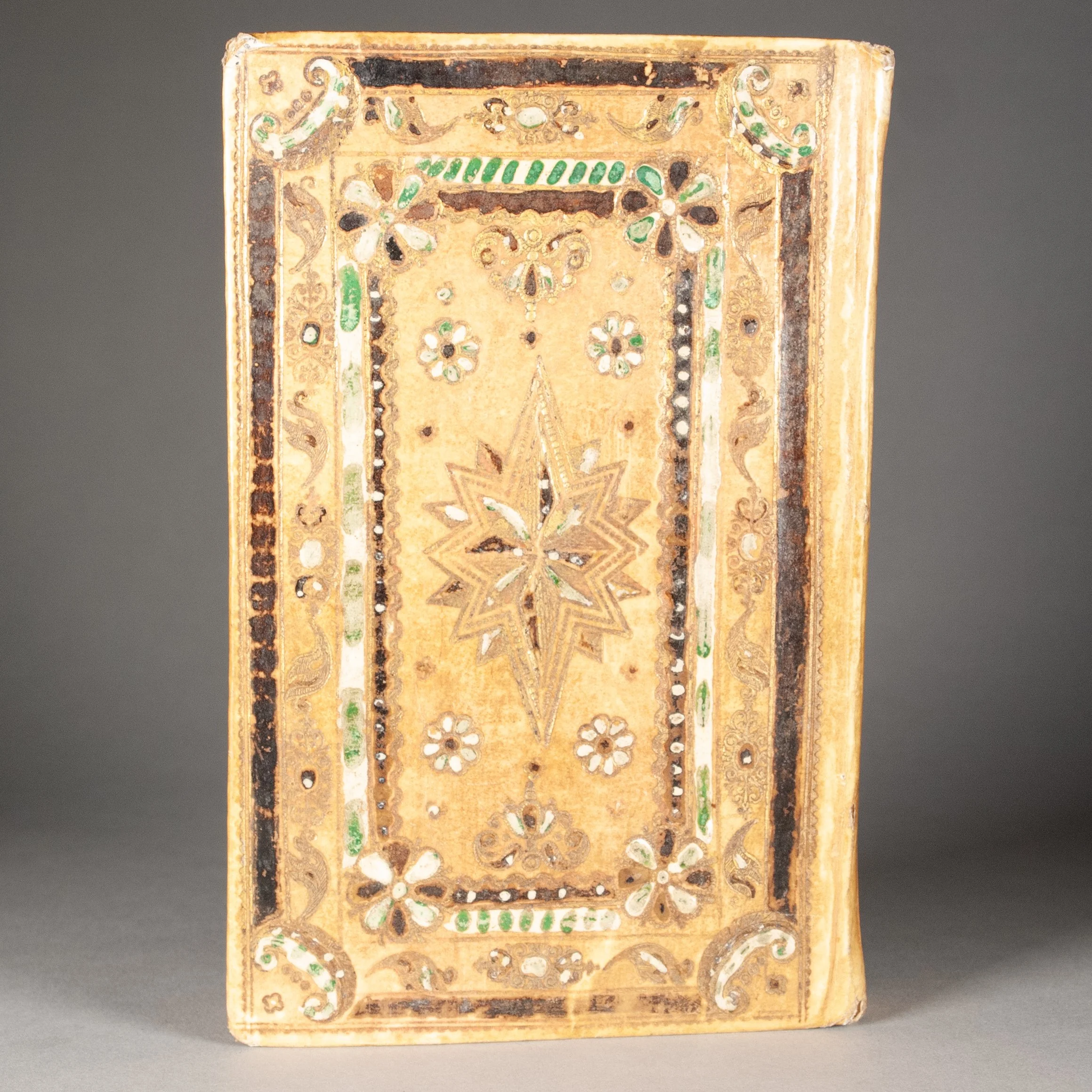 Image 4 of 9
 Image 5 of 9
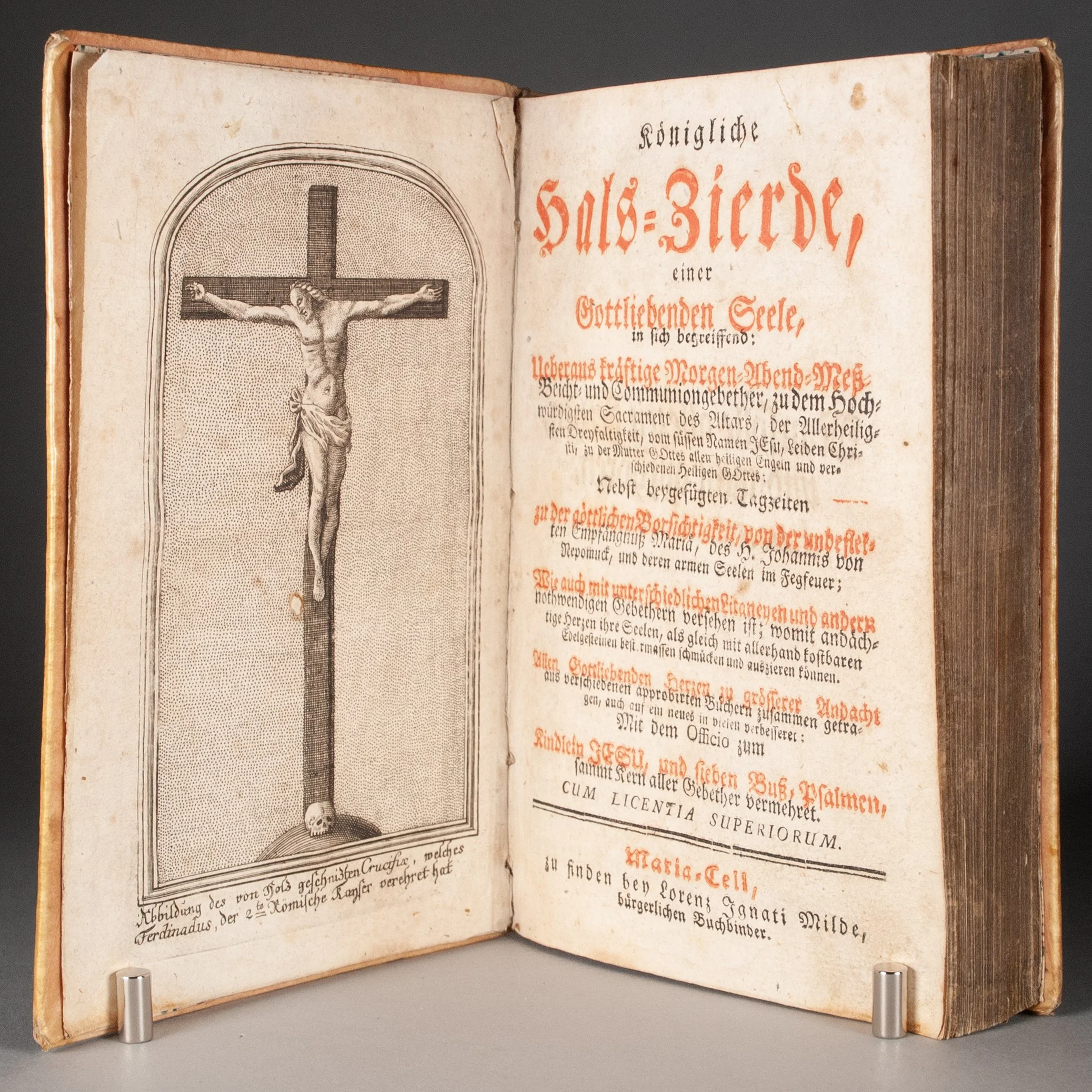 Image 6 of 9
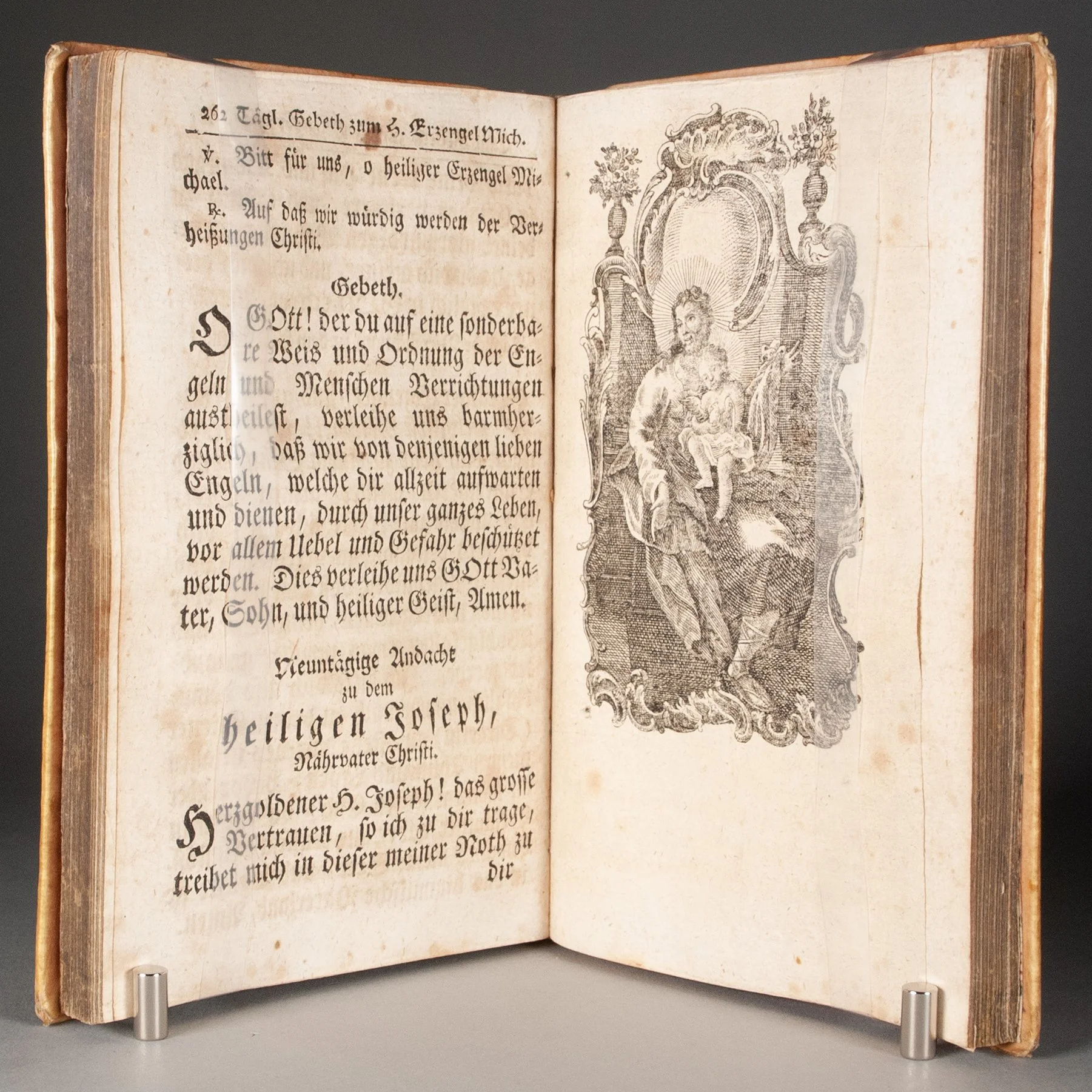 Image 7 of 9
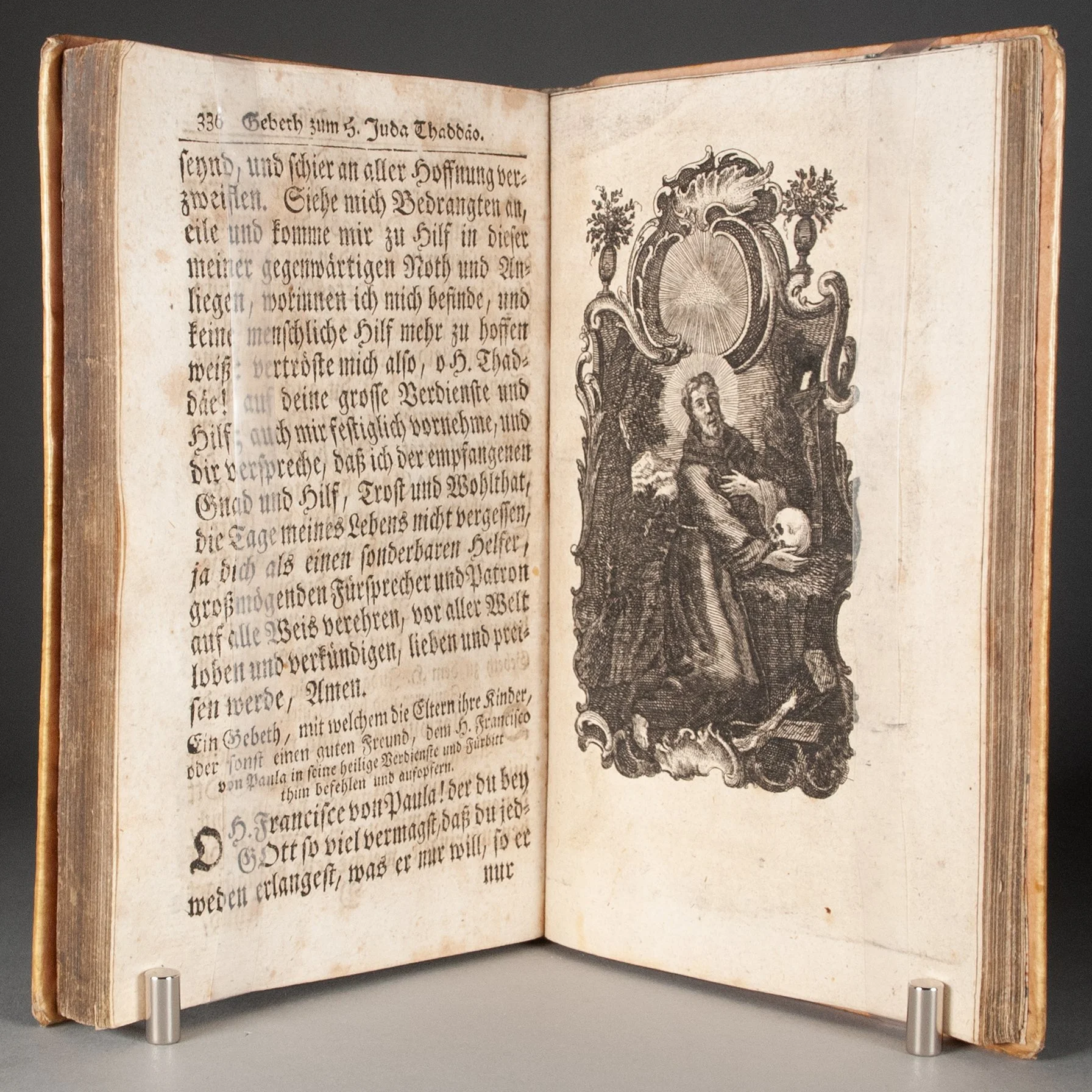 Image 8 of 9
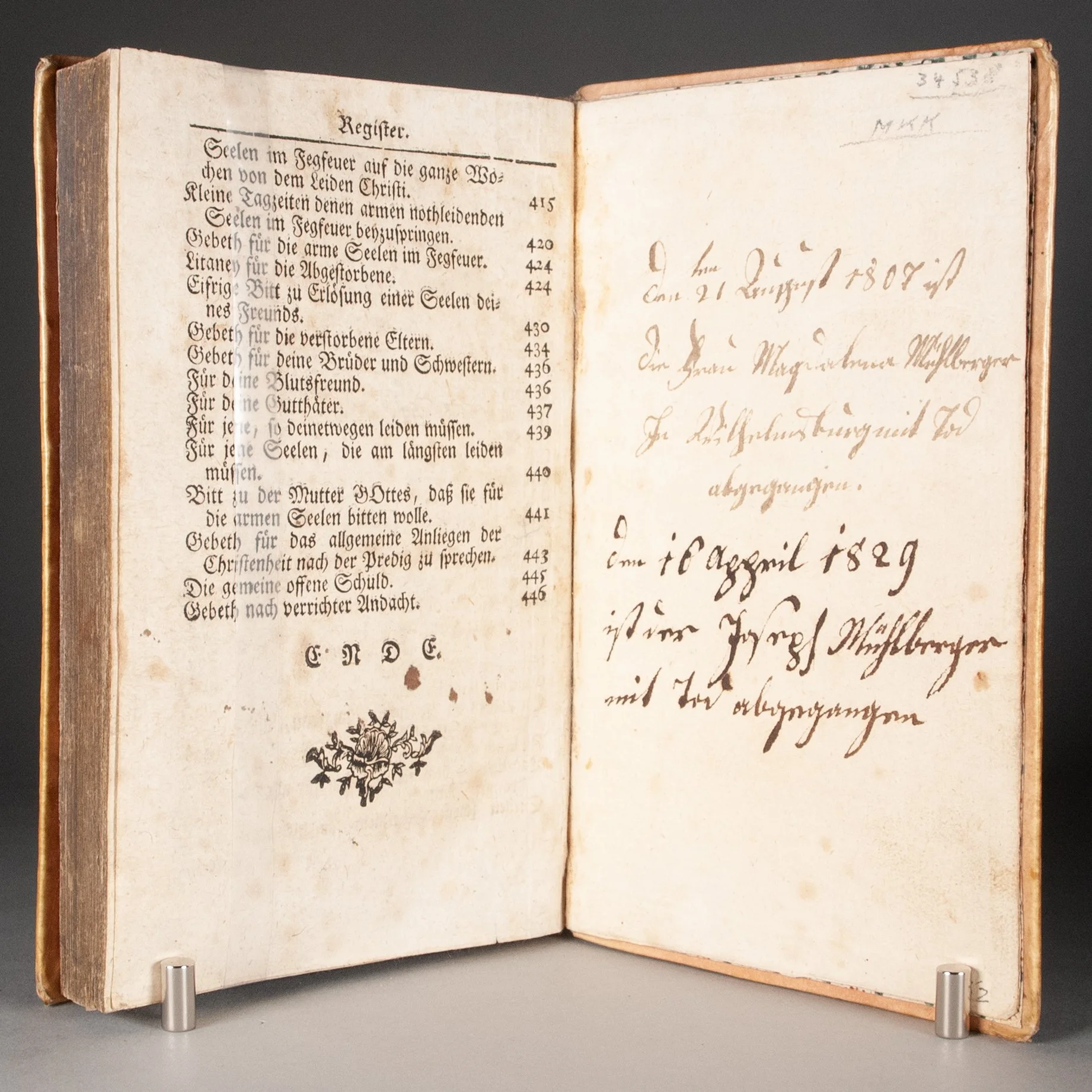 Image 9 of 9