Verzeichnuss meines Gnedigen Herren Marggraff Georg Friderichen zu Brandenburg, &c. Kay. Landgericht des Burggraffthumbs zu Nürmberg, auch Fürstlichen Obern Hofgericht, dises 1572 Jars
[Nuremberg, 1571?]
1 broadside | Full-sheet | 410 x 289 mm
An unexpectedly stunning piece of government ephemera, the routine made extravagant with gold accents and hand coloring. This degree of decoration is unusual. We're accustomed to seeing it on certain liturgical ephemera—altar cards, for example, which sat on a church's altar. We shouldn't be surprised to find it on announcements for festive events, or perhaps on presentation copies of student theses. But we've never encountered gold on such a run-of-the-mill government notice. ¶ The broadside is a court calendar, laying out the dates when Nuremberg's two high courts would be in session: the regional court (Landgericht), which functioned as a kind of everyday court for everyday people, governed by German customary law; and the imperial court (Hofgericht), which largely settled affairs between nobles and applied the traditional Roman jus commune. This was during the reign of George Frederick of Brandenburg-Ansbach, hence his name in the title. The Latin inscription above, part of the woodcut itself, pays homage to Rudolf I, first ruler from the House of Habsburg, whose line continued to reign over the Holy Roman Empire. Rudolf was granted in 1273 the same authority here assigned to George Frederick. ¶ The calendar itself notes the opening days of the Holy Roman Empire's four annual terms, each starting the Monday after a particular religious feast day. Then comes the list of specific session dates for 1572, likewise Mondays after feast days, followed by their particular calendar dates. “During the sixteenth and seventeenth centuries the illustrated single-leaf broadside, in German ‘Flugblatt’, became one of the most widespread and multifunctional means of everyday communication throughout Europe.” Broadsides of all kinds were commonly posted in public spaces. Official proclamations might even have their content announced by the town crier. In our case, anyone interacting with the Nuremberg court might have wanted to stay apprised of its schedule. It's easy to imagine this broadside, for example, hanging in official administrative buildings, or in lawyers' private offices. ¶ We find no other copies.
PROVENANCE: Old label in upper left corner (K.B. 513), perhaps an accession number from one of Germany's old court libraries (Königliche Bibliothek), with a corresponding penciled inscription on the verso. Small ink stamp on verso of a private print collector, a single S within a circle, possibly representing the Von Scheurl family of Nuremberg. The Von Scheurl collection briefly passed into Nuremberg's Germanisches Nationalmuseum, but today remains largely in private hands.
CONDITION: Printed on the recto only of a full sheet of laid paper, the text within an architectural woodcut frame, this heightened with gold and hand-colored with blue, red, black, and more. The top of the woodcut depicts an enthroned Holy Roman Emperor surrounded by various coats of arms, including those of Brandenburg and the Holy Roman Empire. ¶ Hard crease across the short dimension, with a bit of additional wrinkling; scattered worming, affecting the woodcut; various paper remnants along the top and inside edges of the verso, presumably from having been hinged to different supports over the years; lightly foxed and soiled; some of the color worn away.
REFERENCES: Falk Eisermann, "Mixing Pop and Politics: Origins, Transmission, and Readers of Illustrated Broadsides in Fifteenth-Century Germany," Incunabula and Their Readers, 159 (cited above); John Roger Paas, "Johann Georg Schleder (1597-1685), Journalist, Chornicler, and Broadsheet Author," Broadsheets: Single-Sheet Publishing in the First Age of Print, p. 316 (“broadsheets have become invaluable primary sources for in-depth studies of the early modern period, for either alone or as groups they can help us appreciate how people at the time thought and what they believed. They were one of the most frequently produced and widely available printed sources, and those that remain are essential cultural-historical objects.”); Roger Chartier, The Cultural Uses of Print in Early Modern France, p. 230 (on 18c France, but much of this was true throughout early modern Europe: “Posters had many purposes, primarily administrative, with the systematic posting of edicts and ordinances, laws and calls to assembly, mercuriales (lists of current food prices), and recruitment appeals. Official placards put out by royal, military, and municipal authorities were called to public attention by being proclaimed to the sound of trumpet and drum.”); Georgia Bumgardner, "Vignettes of the Past: American Historical Broadsides through the War of 1812," Printing History 4.7/8 (1982), p. 37 (“As one of the vehicles of communication, the broadside is only somewhat less ephemeral than word of mouth"); Frits Lugt, Les marques de collections de dessins & d'estampes, p. 437, #2335 (the Von Scheurl stamp)
Item #912
Verzeichnuss meines Gnedigen Herren Marggraff Georg Friderichen zu Brandenburg, &c. Kay. Landgericht des Burggraffthumbs zu Nürmberg, auch Fürstlichen Obern Hofgericht, dises 1572 Jars
[Nuremberg, 1571?]
1 broadside | Full-sheet | 410 x 289 mm
An unexpectedly stunning piece of government ephemera, the routine made extravagant with gold accents and hand coloring. This degree of decoration is unusual. We're accustomed to seeing it on certain liturgical ephemera—altar cards, for example, which sat on a church's altar. We shouldn't be surprised to find it on announcements for festive events, or perhaps on presentation copies of student theses. But we've never encountered gold on such a run-of-the-mill government notice. ¶ The broadside is a court calendar, laying out the dates when Nuremberg's two high courts would be in session: the regional court (Landgericht), which functioned as a kind of everyday court for everyday people, governed by German customary law; and the imperial court (Hofgericht), which largely settled affairs between nobles and applied the traditional Roman jus commune. This was during the reign of George Frederick of Brandenburg-Ansbach, hence his name in the title. The Latin inscription above, part of the woodcut itself, pays homage to Rudolf I, first ruler from the House of Habsburg, whose line continued to reign over the Holy Roman Empire. Rudolf was granted in 1273 the same authority here assigned to George Frederick. ¶ The calendar itself notes the opening days of the Holy Roman Empire's four annual terms, each starting the Monday after a particular religious feast day. Then comes the list of specific session dates for 1572, likewise Mondays after feast days, followed by their particular calendar dates. “During the sixteenth and seventeenth centuries the illustrated single-leaf broadside, in German ‘Flugblatt’, became one of the most widespread and multifunctional means of everyday communication throughout Europe.” Broadsides of all kinds were commonly posted in public spaces. Official proclamations might even have their content announced by the town crier. In our case, anyone interacting with the Nuremberg court might have wanted to stay apprised of its schedule. It's easy to imagine this broadside, for example, hanging in official administrative buildings, or in lawyers' private offices. ¶ We find no other copies.
PROVENANCE: Old label in upper left corner (K.B. 513), perhaps an accession number from one of Germany's old court libraries (Königliche Bibliothek), with a corresponding penciled inscription on the verso. Small ink stamp on verso of a private print collector, a single S within a circle, possibly representing the Von Scheurl family of Nuremberg. The Von Scheurl collection briefly passed into Nuremberg's Germanisches Nationalmuseum, but today remains largely in private hands.
CONDITION: Printed on the recto only of a full sheet of laid paper, the text within an architectural woodcut frame, this heightened with gold and hand-colored with blue, red, black, and more. The top of the woodcut depicts an enthroned Holy Roman Emperor surrounded by various coats of arms, including those of Brandenburg and the Holy Roman Empire. ¶ Hard crease across the short dimension, with a bit of additional wrinkling; scattered worming, affecting the woodcut; various paper remnants along the top and inside edges of the verso, presumably from having been hinged to different supports over the years; lightly foxed and soiled; some of the color worn away.
REFERENCES: Falk Eisermann, "Mixing Pop and Politics: Origins, Transmission, and Readers of Illustrated Broadsides in Fifteenth-Century Germany," Incunabula and Their Readers, 159 (cited above); John Roger Paas, "Johann Georg Schleder (1597-1685), Journalist, Chornicler, and Broadsheet Author," Broadsheets: Single-Sheet Publishing in the First Age of Print, p. 316 (“broadsheets have become invaluable primary sources for in-depth studies of the early modern period, for either alone or as groups they can help us appreciate how people at the time thought and what they believed. They were one of the most frequently produced and widely available printed sources, and those that remain are essential cultural-historical objects.”); Roger Chartier, The Cultural Uses of Print in Early Modern France, p. 230 (on 18c France, but much of this was true throughout early modern Europe: “Posters had many purposes, primarily administrative, with the systematic posting of edicts and ordinances, laws and calls to assembly, mercuriales (lists of current food prices), and recruitment appeals. Official placards put out by royal, military, and municipal authorities were called to public attention by being proclaimed to the sound of trumpet and drum.”); Georgia Bumgardner, "Vignettes of the Past: American Historical Broadsides through the War of 1812," Printing History 4.7/8 (1982), p. 37 (“As one of the vehicles of communication, the broadside is only somewhat less ephemeral than word of mouth"); Frits Lugt, Les marques de collections de dessins & d'estampes, p. 437, #2335 (the Von Scheurl stamp)
Item #912

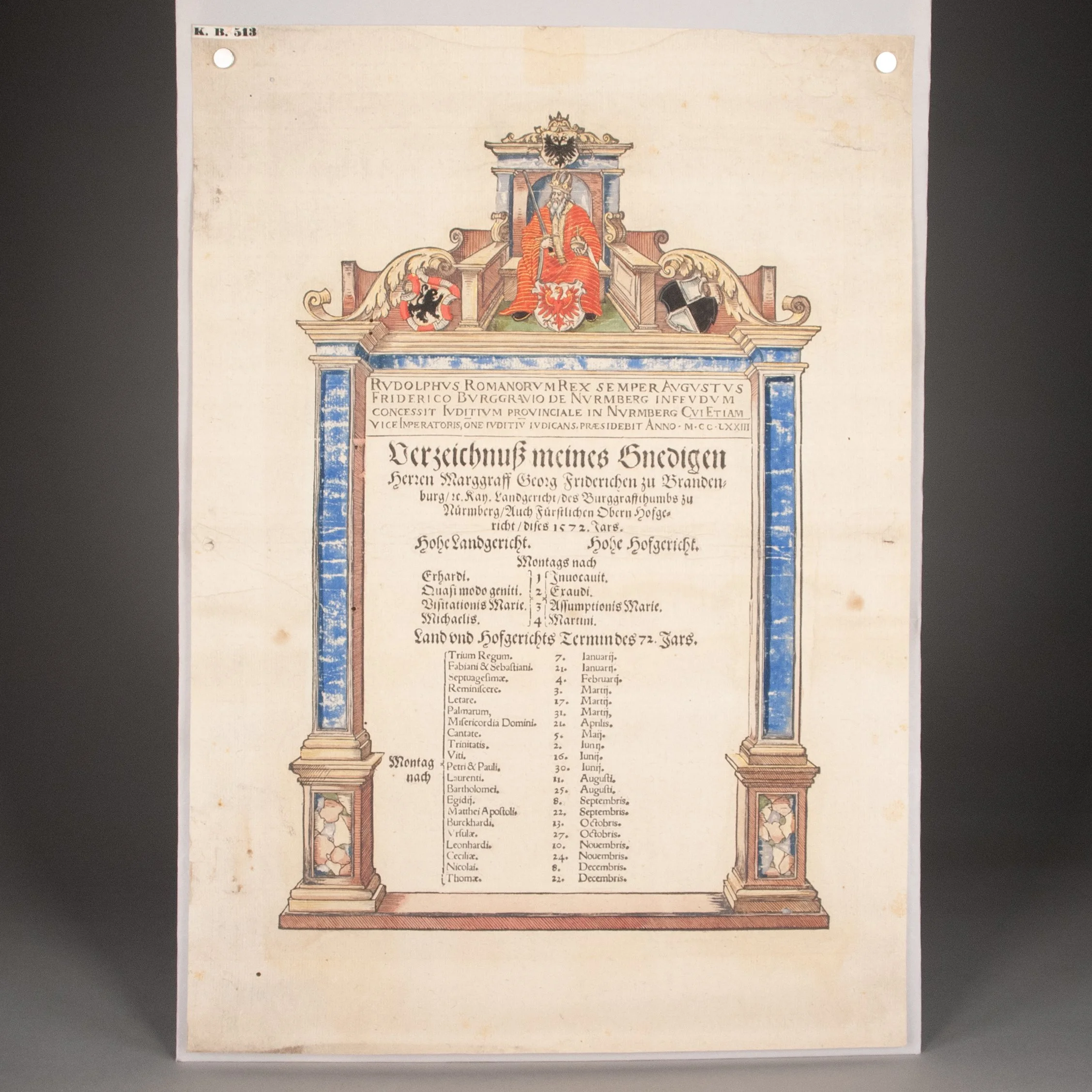 Image 1 of 7
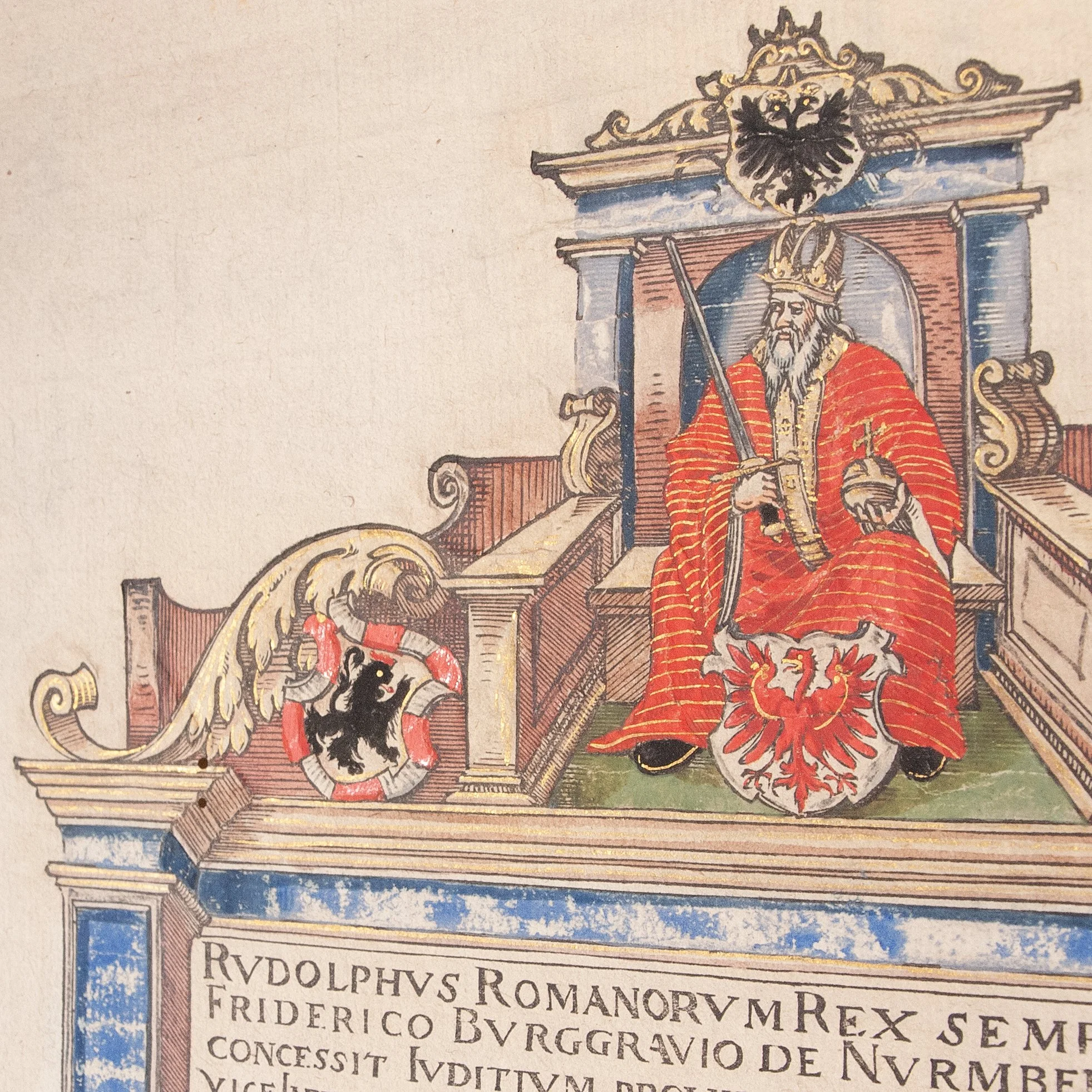 Image 2 of 7
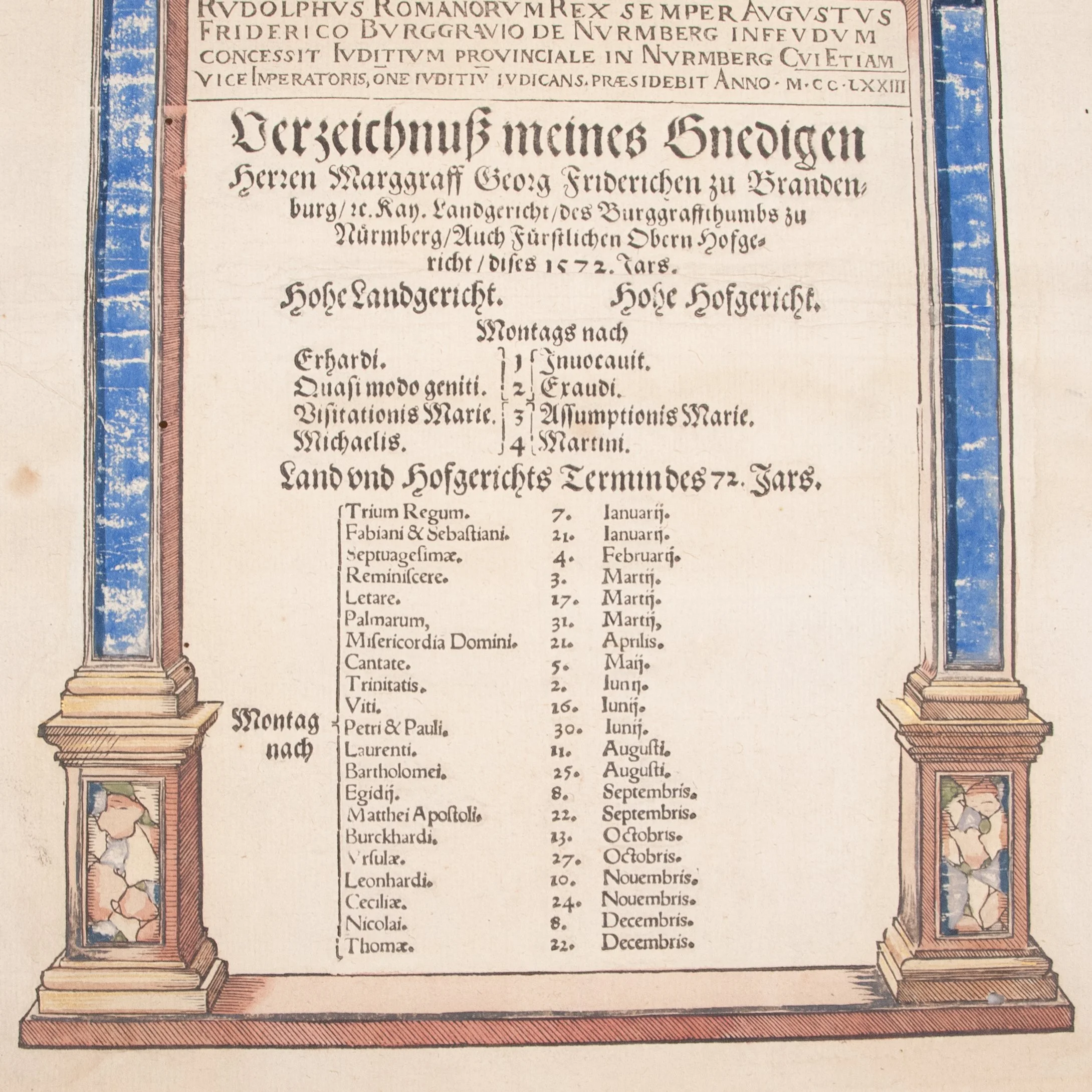 Image 3 of 7
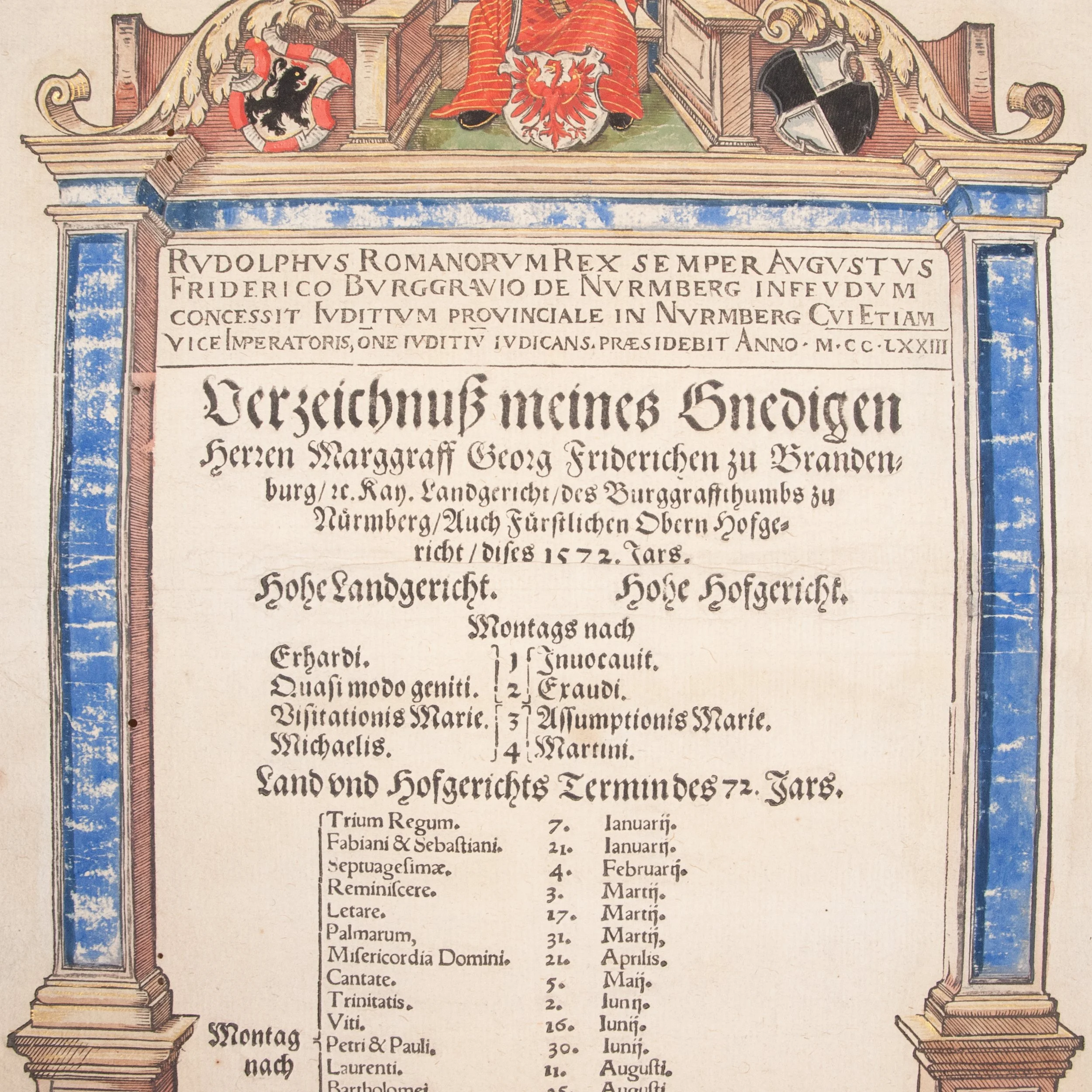 Image 4 of 7
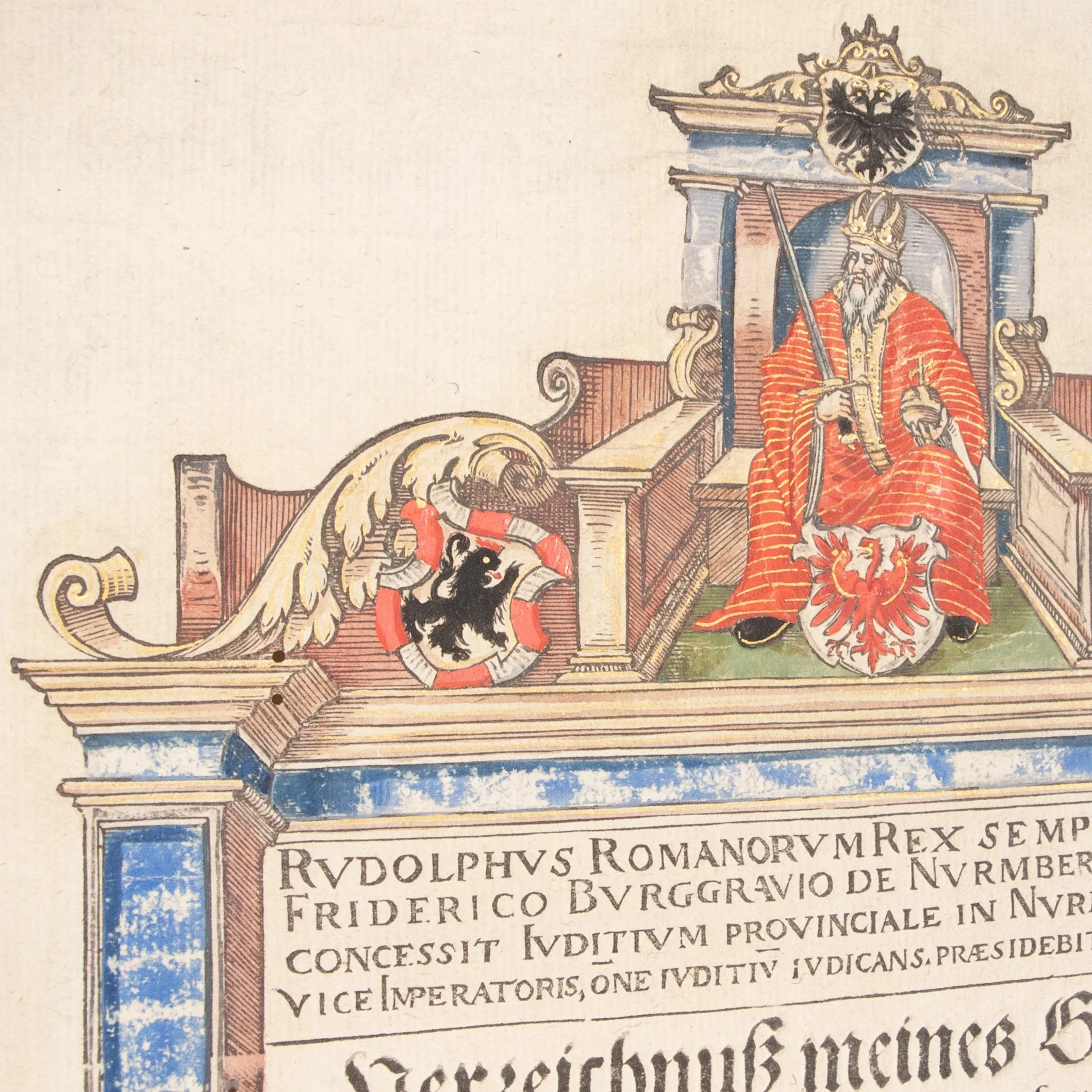 Image 5 of 7
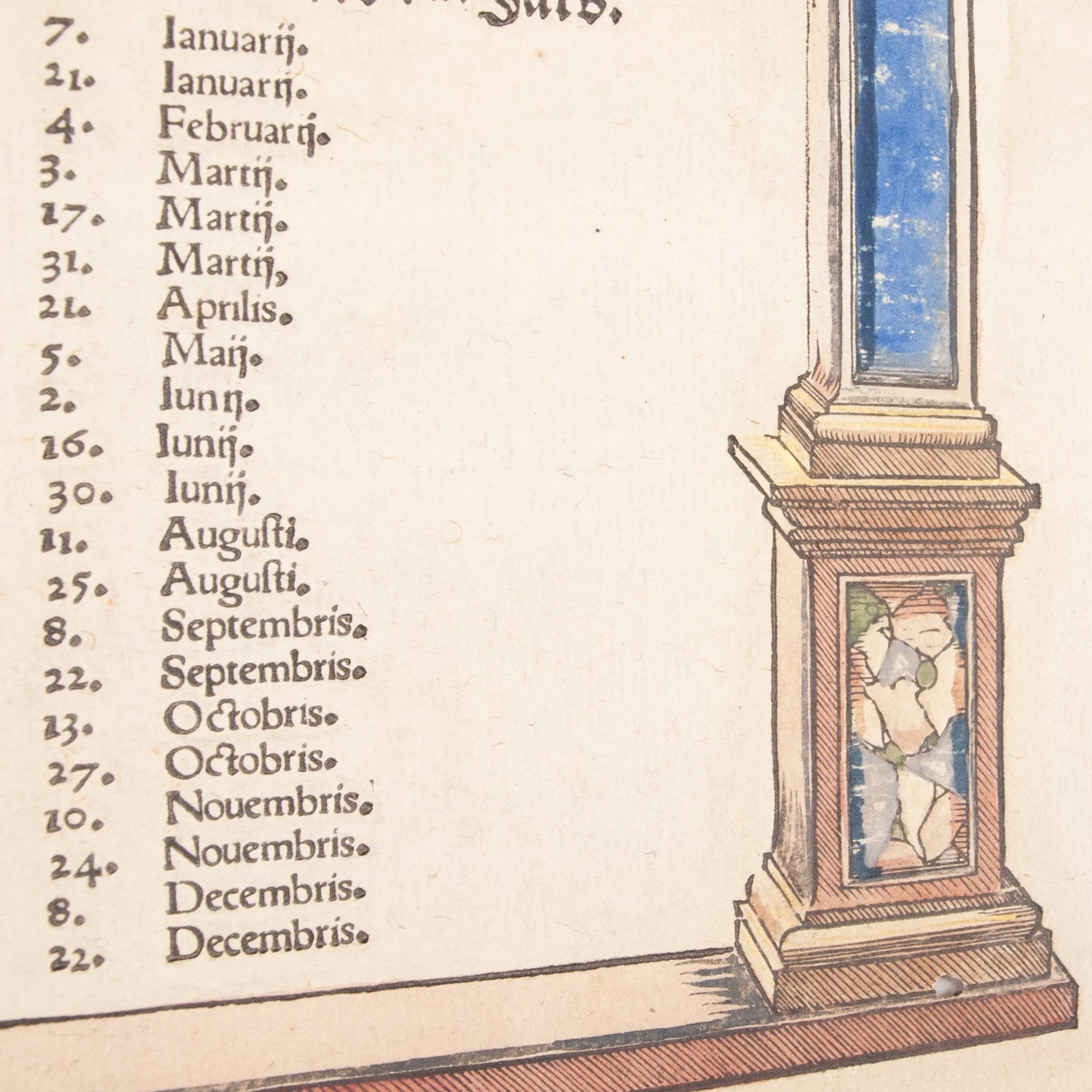 Image 6 of 7
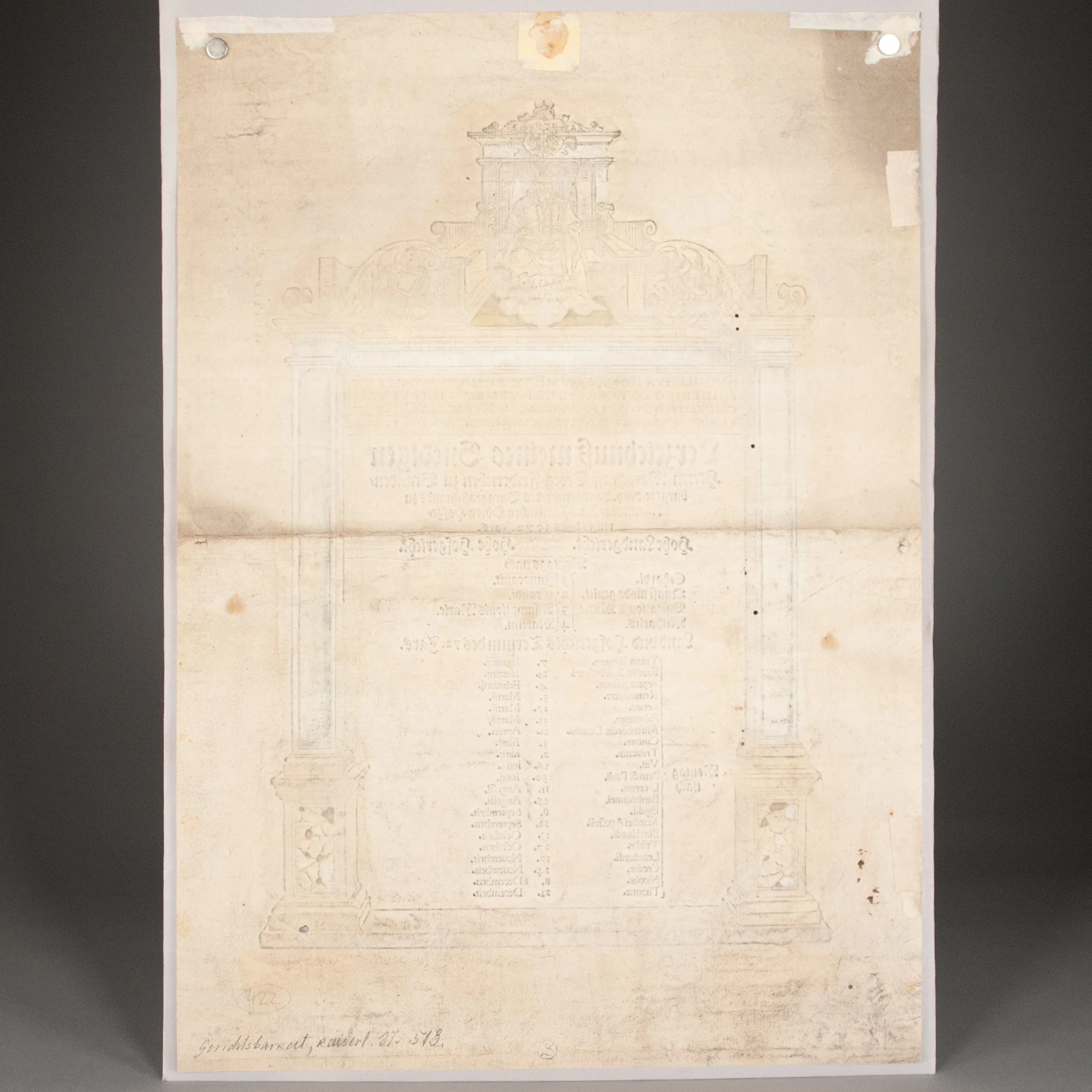 Image 7 of 7