De arte bibendi libri tres autore Vincentio Obsopoeo Germano; quibus adiunximus De arte jocandi libros quatuor Matthaei Delij Hamburgensis, cum luculenta in eosdem praefatione; D. Sebastiani Hamaxurgi apud fontes salutares frumentatoris hexastichon [bound with part of Martin Luther's Small Catechism in manuscript]
Arte bibendi by Vincentius Opsopäus (Opsopoeus) with contributions from Joachim Camerarius, Sebald Heyden, Sebastian Hamaxurgus, and Nicodemus Frischlin | Arte jocandi by Matthaeus Delius and edited by Philipp Melanchthon | Small Catechism by Martin Luther and translated by Lorenz Rhodomann
Frankfurt: Heirs of Christian Egenolff (Egenolph), 1582
[208] p. of print + [53] and [2] p. of manuscript (and dozens more blank leaves) | 8vo | A-F^8 G-H^4 I-O^8 (printed content only) | 145 x 96 mm
Likely the fourth edition of the German poet’s guide to drinking responsibly, first published in 1536 and followed by at least half a dozen more through the end of the next century. This was the second edition to include the Arte jocandi, which Egenolff's heirs appended to their edition of 1578, and which appeared independently at Wittenberg in 1555. Following the Arte jocandi is Nicodemus Frischlin's In ebrietatem elegia, a poem that rather seems to disapprove of drunkenness. With a dedication to Johann Hartung and laudatory poems by Joachim Camerarius, Sebald Heyden, and Sebastian Hamaxurgus. ¶ Opsopäus made this earnest case for moderate drinking amidst an epidemic of alcoholism in early modern Germany—one that fueled a culture of bingeing and glorified some of the most destructive effects of alcohol consumption. Throughout the 16th and 17th centuries, records of Germany’s alarming drunkenness cropped up in the work of some of Europe’s most prominent literati, Erasmus and Montaigne among them. “Whether or not these accounts exaggerated the problem, the German ‘national vice’ of drunkenness became a major issue of the 16th-century German reform movement” (Tlusty). Drinking was a sin after all. “The attacks on drunkenness in the so-called Trinkliteratur and the countless ordinances, laws, and decrees against drunkenness passed throughout Germany in the 16th century constituted a major temperance movement.” ¶ Modeled on Ovid’s Art of Love, but serious rather than ironic, the author here seeks to redress this crippling and pervasive vice. And his counsel stems from personal experience. “This Art was born from the sweat of hard drinking. It’s the real deal, kids, and I’m passing it on to you” (A7r: Hanc multo…; Fontaine translation). While Germany was hardly alone in its struggles with excessive alcohol consumption, a particularly dangerous culture took root there. “The idea that hardcore drinking is a mark of he-man prowess first emerged in Germany in the fifteenth century and spread like a virus in the sixteenth" (Fontaine). Or to couch it in more familiar terms, "binge and bro culture...started not in classical Greece or Rome but in Germany five hundred years ago. The crusades were over, the economy was changing, and the knights of the medieval world no longer had any purpose in their lives. They turned to wine to fill the void. Jousting gave way to drinking contests, and with Germany’s vineyards four times larger—and per capita consumption six times higher—than today, the pressure to indulge was ample." Fontaine even finds in Book 2 evidence of what today we'd call toxic masculinity. "When guys are drunk, they brag about their hard-as-wood erections, spill the beans about raunchy sexual bouts, sing lewd and funny songs, and by the end, the table's spewing out nothing but wine-venom" (D2v: Iactatur madido...; Fontaine). ¶ The Arte jocandi is more obscure, "an almost unknown" text "by an almost unknown Mattheus Delius," and which "seems to have been completely ignored by critics" (Bowen). It was undeniably modeled on the Arte bibendi—both in its Ovidian verse, and in its morally informed instructive angle. Wit is useful, for example, in both rhetoric and friendly conversation, but one should avoid obscenity. Delius was a student of Melanchthon, who edited the text for its 1555 publication, and was known to Luther himself. He seemed a promising star for the Protestant movement before his life was cut tragically short. ¶ Speaking of Protestantism, the manuscript following the aforementioned is no less seductive: The first two sections of Luther's Small Catechism—on the Ten Commandments and the Apostles' Creed—but here in Lorenz Rhodomann's Greek translation published in 1626. Catechisms presented the fundamentals of faith in a simple question-and-answer format, and generally were intended for a younger audience—especially the Small Catechism, adapted from Luther's Large Catechism that should have appealed to more sophisticated readers. Many early Protestant catechisms would have been used in the home, a parent or clergyman helping the child to memorize it. Mothers especially were tasked with catechizing their children. Rhodomann's dual Latin-Greek edition might more likely have been used in a classroom setting. Compared to their pre-Reformation brethren, Lutheran catechisms "showed an unprecedented secular concern, aiming not only to offer religious instruction but also to promote a strong civic conscience among the young" (Watt). ¶ Hidden among scores of blank leaves after the Catechism excerpts are two pages from Hero and Leander by Musaeus Grammaticus, here just the start of the poem in parallel Greek and Latin. ¶ An improbable hybrid conduct book of sorts, bringing together the best guidance on how to drink, how to joke, and how to be a good God-fearing Lutheran.
PROVENANCE: 1623 inscription of Gabriel Donner on front fly-leaf verso—presumably the same Gabriel Donner, native of Zeitz, who matriculated at Rostock in July 1637. Beneath his is the ownership inscription of one David Funccius, possibly Bohemian composer David Funck (1648-1699?) or Nuremberg publisher and engraver David Funck (1642-1709). ¶ An old handwritten table of contents on the front paste-down indicates a copy of Friedrich Dedekind's Grobianus et Grobiana was removed from the front of the volume. Not unlike the approach of Arte bibendi and Arte jocandi, this satirical poem ironically taught good etiquette, and would have been a natural fit for this particular volume. ¶ Two bookplates on front paste-down, that of wine writer Friedrich von Bassermann-Jordan atop an older one, and with Bassermann-Jordan's ink stamp on the facing fly-leaf. An old ink stamp perhaps obliterated from the front paste-down, predating Bassermann-Jordan's bookplate.
CONDITION: An early binding of medieval manuscript waste, using a bifolium from a copy of Peter Lombard's Sentences (the end of chapter one and start of chapter two from Book 4, Distinctio 22). It's a pregothic script, perhaps of the 12th or early 13th century. We note a straight-shafted 'd' on the front cover, 'h' ending on the baseline, and exclusive use of long 's', even in the terminal position. The fragment even preserves a decorative, tendrilled initial 'P' in red and blue on the spine (now worn), and pricking holes to guide page ruling. ¶ Scattered mild foxing, soiling, and toning; shaved close, affecting a headline; title dusty and bit worn. Front hinge separated and cords severed, doubtless to remove Grobianus et Grobiana (but fortuitously revealing another decorative initial on spine tail's turn-in); binding wormed in spots, the lower inside front corner the worst; parchment soiled and worn, the spine quite heavily so; scrap of later paper adhered to the rear paste-down.
REFERENCES: USTC 628982; VD16 O 811 ¶ On Obsopoeus: Beverly Ann Tlusty, “Defining ‘drunk’ in early modern Germany,” Contemporary Drug Problems 21.3 (Fall 1994), p. 427 (“It is, in fact, the vices that follow from drunkenness, more than drunkenness itself, that are the focus of much of the 16th-century Trinkliteratur”); Vincent Obsopoeus (Michael Fontaine, tr.), How to Drink (Princeton University, 2020), xii (cited above), xv (“His text pulls back the curtain on the birth of a new and poisonous culture of hazing, peer pressure, competitive drinking, and even, in book 2, on what some now call ‘toxic’ masculinity"; the book "proved popular, but in time the Catholic Church placed it on its Index of Forbidden Books"), 139/141; Barbara C. Bowen, “A Neglected Renaissance Art of Joking,” Rhetorica: A Journal of the History of Rhetoric 21.3 (Summer 2003), p. 139-140 (the work “is not, as the title might imply, a paradoxical encomium of drunkenness, but a plea for moderate drinking, either in the home where peace and love reign, or in carefully chosen company…Obsopoeus disapproves strongly of the present age, in which ebrietas is considered a virtus maxima, and inveighs against not only drunkenness but boasters, blasphemers, immodesty, and the crimes committed by the Papacy”) ¶ On the rest: Barbara C. Bowen, "A Neglected Renaissance Art of Joking," Rhetorica 21.3 (Summer 2003), p. 137 (cited above), 138 (cited above), 139 (on Melanchthon's role); Jeffrey R. Watt, "The Impact of the Reformation and Counter-Reformation," Family Life in Early Modern Times 1500-1789 (2001), p. 144 (cited above), 202 (and catechizing habits); Carlos M.N. Eire, Reformations (2016), p. 591-592 (on the Small Catechism: "this slim volume would play a very important role in shaping Lutheranism. For Luther himself, it became one of his favorite works, of which he was immensely proud. Though many catechisms were written and published by other Luther clerics, Luther’s was unsurpassed, and frequently copied."); Adolph Hofmeister, Die Matrikel der Universität Rostock III (1895), p. 111 (for Gabriel Donner)
Item #818
De arte bibendi libri tres autore Vincentio Obsopoeo Germano; quibus adiunximus De arte jocandi libros quatuor Matthaei Delij Hamburgensis, cum luculenta in eosdem praefatione; D. Sebastiani Hamaxurgi apud fontes salutares frumentatoris hexastichon [bound with part of Martin Luther's Small Catechism in manuscript]
Arte bibendi by Vincentius Opsopäus (Opsopoeus) with contributions from Joachim Camerarius, Sebald Heyden, Sebastian Hamaxurgus, and Nicodemus Frischlin | Arte jocandi by Matthaeus Delius and edited by Philipp Melanchthon | Small Catechism by Martin Luther and translated by Lorenz Rhodomann
Frankfurt: Heirs of Christian Egenolff (Egenolph), 1582
[208] p. of print + [53] and [2] p. of manuscript (and dozens more blank leaves) | 8vo | A-F^8 G-H^4 I-O^8 (printed content only) | 145 x 96 mm
Likely the fourth edition of the German poet’s guide to drinking responsibly, first published in 1536 and followed by at least half a dozen more through the end of the next century. This was the second edition to include the Arte jocandi, which Egenolff's heirs appended to their edition of 1578, and which appeared independently at Wittenberg in 1555. Following the Arte jocandi is Nicodemus Frischlin's In ebrietatem elegia, a poem that rather seems to disapprove of drunkenness. With a dedication to Johann Hartung and laudatory poems by Joachim Camerarius, Sebald Heyden, and Sebastian Hamaxurgus. ¶ Opsopäus made this earnest case for moderate drinking amidst an epidemic of alcoholism in early modern Germany—one that fueled a culture of bingeing and glorified some of the most destructive effects of alcohol consumption. Throughout the 16th and 17th centuries, records of Germany’s alarming drunkenness cropped up in the work of some of Europe’s most prominent literati, Erasmus and Montaigne among them. “Whether or not these accounts exaggerated the problem, the German ‘national vice’ of drunkenness became a major issue of the 16th-century German reform movement” (Tlusty). Drinking was a sin after all. “The attacks on drunkenness in the so-called Trinkliteratur and the countless ordinances, laws, and decrees against drunkenness passed throughout Germany in the 16th century constituted a major temperance movement.” ¶ Modeled on Ovid’s Art of Love, but serious rather than ironic, the author here seeks to redress this crippling and pervasive vice. And his counsel stems from personal experience. “This Art was born from the sweat of hard drinking. It’s the real deal, kids, and I’m passing it on to you” (A7r: Hanc multo…; Fontaine translation). While Germany was hardly alone in its struggles with excessive alcohol consumption, a particularly dangerous culture took root there. “The idea that hardcore drinking is a mark of he-man prowess first emerged in Germany in the fifteenth century and spread like a virus in the sixteenth" (Fontaine). Or to couch it in more familiar terms, "binge and bro culture...started not in classical Greece or Rome but in Germany five hundred years ago. The crusades were over, the economy was changing, and the knights of the medieval world no longer had any purpose in their lives. They turned to wine to fill the void. Jousting gave way to drinking contests, and with Germany’s vineyards four times larger—and per capita consumption six times higher—than today, the pressure to indulge was ample." Fontaine even finds in Book 2 evidence of what today we'd call toxic masculinity. "When guys are drunk, they brag about their hard-as-wood erections, spill the beans about raunchy sexual bouts, sing lewd and funny songs, and by the end, the table's spewing out nothing but wine-venom" (D2v: Iactatur madido...; Fontaine). ¶ The Arte jocandi is more obscure, "an almost unknown" text "by an almost unknown Mattheus Delius," and which "seems to have been completely ignored by critics" (Bowen). It was undeniably modeled on the Arte bibendi—both in its Ovidian verse, and in its morally informed instructive angle. Wit is useful, for example, in both rhetoric and friendly conversation, but one should avoid obscenity. Delius was a student of Melanchthon, who edited the text for its 1555 publication, and was known to Luther himself. He seemed a promising star for the Protestant movement before his life was cut tragically short. ¶ Speaking of Protestantism, the manuscript following the aforementioned is no less seductive: The first two sections of Luther's Small Catechism—on the Ten Commandments and the Apostles' Creed—but here in Lorenz Rhodomann's Greek translation published in 1626. Catechisms presented the fundamentals of faith in a simple question-and-answer format, and generally were intended for a younger audience—especially the Small Catechism, adapted from Luther's Large Catechism that should have appealed to more sophisticated readers. Many early Protestant catechisms would have been used in the home, a parent or clergyman helping the child to memorize it. Mothers especially were tasked with catechizing their children. Rhodomann's dual Latin-Greek edition might more likely have been used in a classroom setting. Compared to their pre-Reformation brethren, Lutheran catechisms "showed an unprecedented secular concern, aiming not only to offer religious instruction but also to promote a strong civic conscience among the young" (Watt). ¶ Hidden among scores of blank leaves after the Catechism excerpts are two pages from Hero and Leander by Musaeus Grammaticus, here just the start of the poem in parallel Greek and Latin. ¶ An improbable hybrid conduct book of sorts, bringing together the best guidance on how to drink, how to joke, and how to be a good God-fearing Lutheran.
PROVENANCE: 1623 inscription of Gabriel Donner on front fly-leaf verso—presumably the same Gabriel Donner, native of Zeitz, who matriculated at Rostock in July 1637. Beneath his is the ownership inscription of one David Funccius, possibly Bohemian composer David Funck (1648-1699?) or Nuremberg publisher and engraver David Funck (1642-1709). ¶ An old handwritten table of contents on the front paste-down indicates a copy of Friedrich Dedekind's Grobianus et Grobiana was removed from the front of the volume. Not unlike the approach of Arte bibendi and Arte jocandi, this satirical poem ironically taught good etiquette, and would have been a natural fit for this particular volume. ¶ Two bookplates on front paste-down, that of wine writer Friedrich von Bassermann-Jordan atop an older one, and with Bassermann-Jordan's ink stamp on the facing fly-leaf. An old ink stamp perhaps obliterated from the front paste-down, predating Bassermann-Jordan's bookplate.
CONDITION: An early binding of medieval manuscript waste, using a bifolium from a copy of Peter Lombard's Sentences (the end of chapter one and start of chapter two from Book 4, Distinctio 22). It's a pregothic script, perhaps of the 12th or early 13th century. We note a straight-shafted 'd' on the front cover, 'h' ending on the baseline, and exclusive use of long 's', even in the terminal position. The fragment even preserves a decorative, tendrilled initial 'P' in red and blue on the spine (now worn), and pricking holes to guide page ruling. ¶ Scattered mild foxing, soiling, and toning; shaved close, affecting a headline; title dusty and bit worn. Front hinge separated and cords severed, doubtless to remove Grobianus et Grobiana (but fortuitously revealing another decorative initial on spine tail's turn-in); binding wormed in spots, the lower inside front corner the worst; parchment soiled and worn, the spine quite heavily so; scrap of later paper adhered to the rear paste-down.
REFERENCES: USTC 628982; VD16 O 811 ¶ On Obsopoeus: Beverly Ann Tlusty, “Defining ‘drunk’ in early modern Germany,” Contemporary Drug Problems 21.3 (Fall 1994), p. 427 (“It is, in fact, the vices that follow from drunkenness, more than drunkenness itself, that are the focus of much of the 16th-century Trinkliteratur”); Vincent Obsopoeus (Michael Fontaine, tr.), How to Drink (Princeton University, 2020), xii (cited above), xv (“His text pulls back the curtain on the birth of a new and poisonous culture of hazing, peer pressure, competitive drinking, and even, in book 2, on what some now call ‘toxic’ masculinity"; the book "proved popular, but in time the Catholic Church placed it on its Index of Forbidden Books"), 139/141; Barbara C. Bowen, “A Neglected Renaissance Art of Joking,” Rhetorica: A Journal of the History of Rhetoric 21.3 (Summer 2003), p. 139-140 (the work “is not, as the title might imply, a paradoxical encomium of drunkenness, but a plea for moderate drinking, either in the home where peace and love reign, or in carefully chosen company…Obsopoeus disapproves strongly of the present age, in which ebrietas is considered a virtus maxima, and inveighs against not only drunkenness but boasters, blasphemers, immodesty, and the crimes committed by the Papacy”) ¶ On the rest: Barbara C. Bowen, "A Neglected Renaissance Art of Joking," Rhetorica 21.3 (Summer 2003), p. 137 (cited above), 138 (cited above), 139 (on Melanchthon's role); Jeffrey R. Watt, "The Impact of the Reformation and Counter-Reformation," Family Life in Early Modern Times 1500-1789 (2001), p. 144 (cited above), 202 (and catechizing habits); Carlos M.N. Eire, Reformations (2016), p. 591-592 (on the Small Catechism: "this slim volume would play a very important role in shaping Lutheranism. For Luther himself, it became one of his favorite works, of which he was immensely proud. Though many catechisms were written and published by other Luther clerics, Luther’s was unsurpassed, and frequently copied."); Adolph Hofmeister, Die Matrikel der Universität Rostock III (1895), p. 111 (for Gabriel Donner)
Item #818
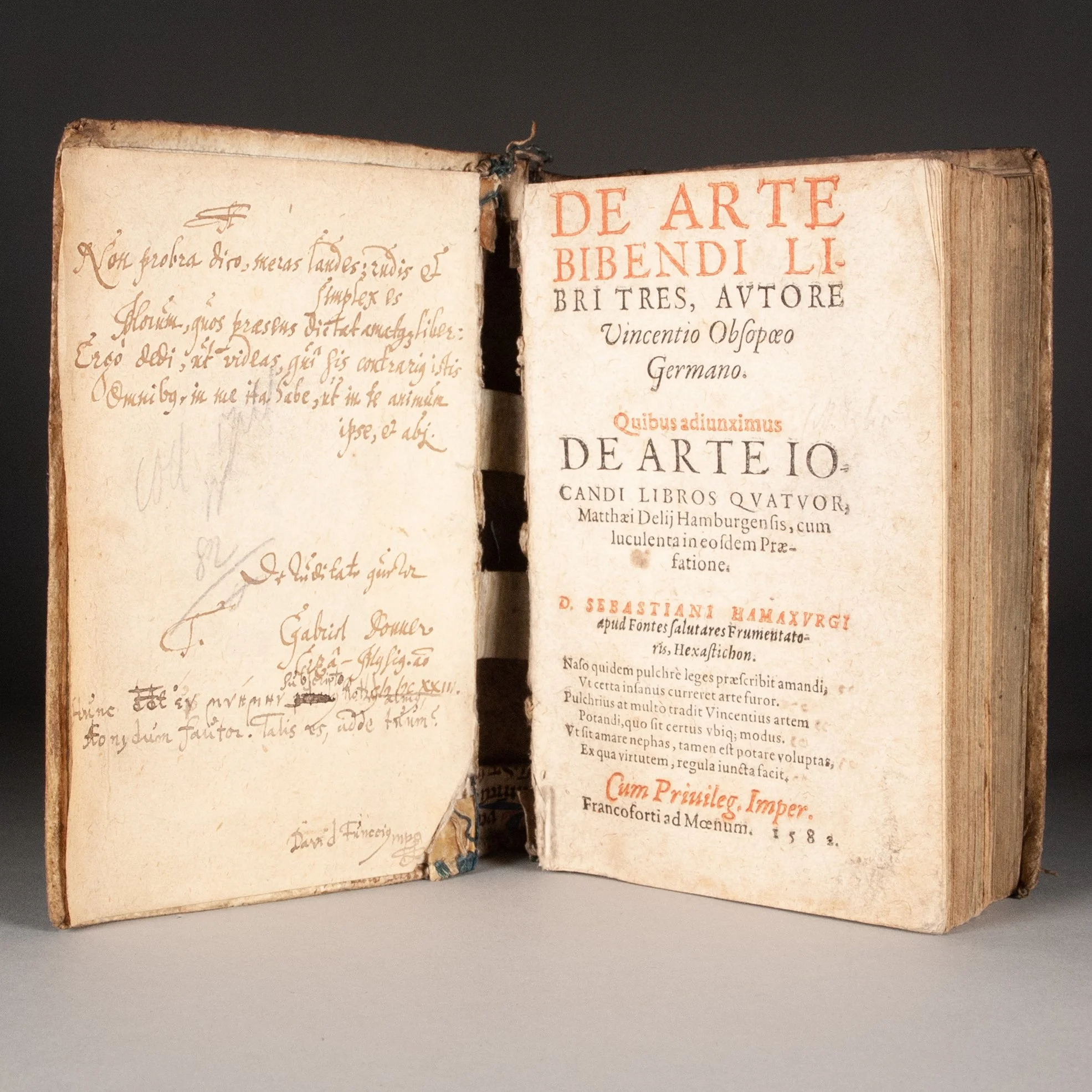 Image 1 of 11
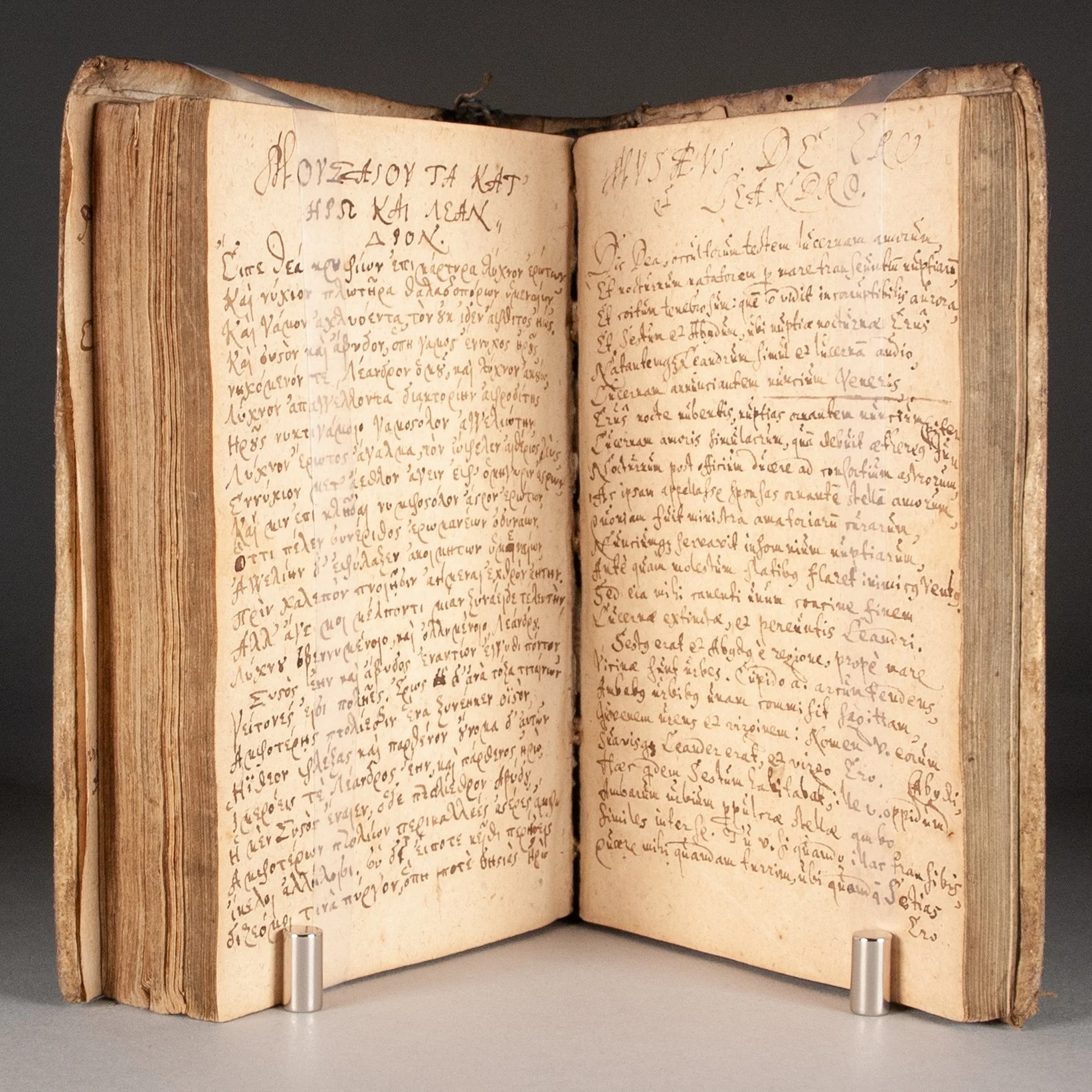 Image 2 of 11
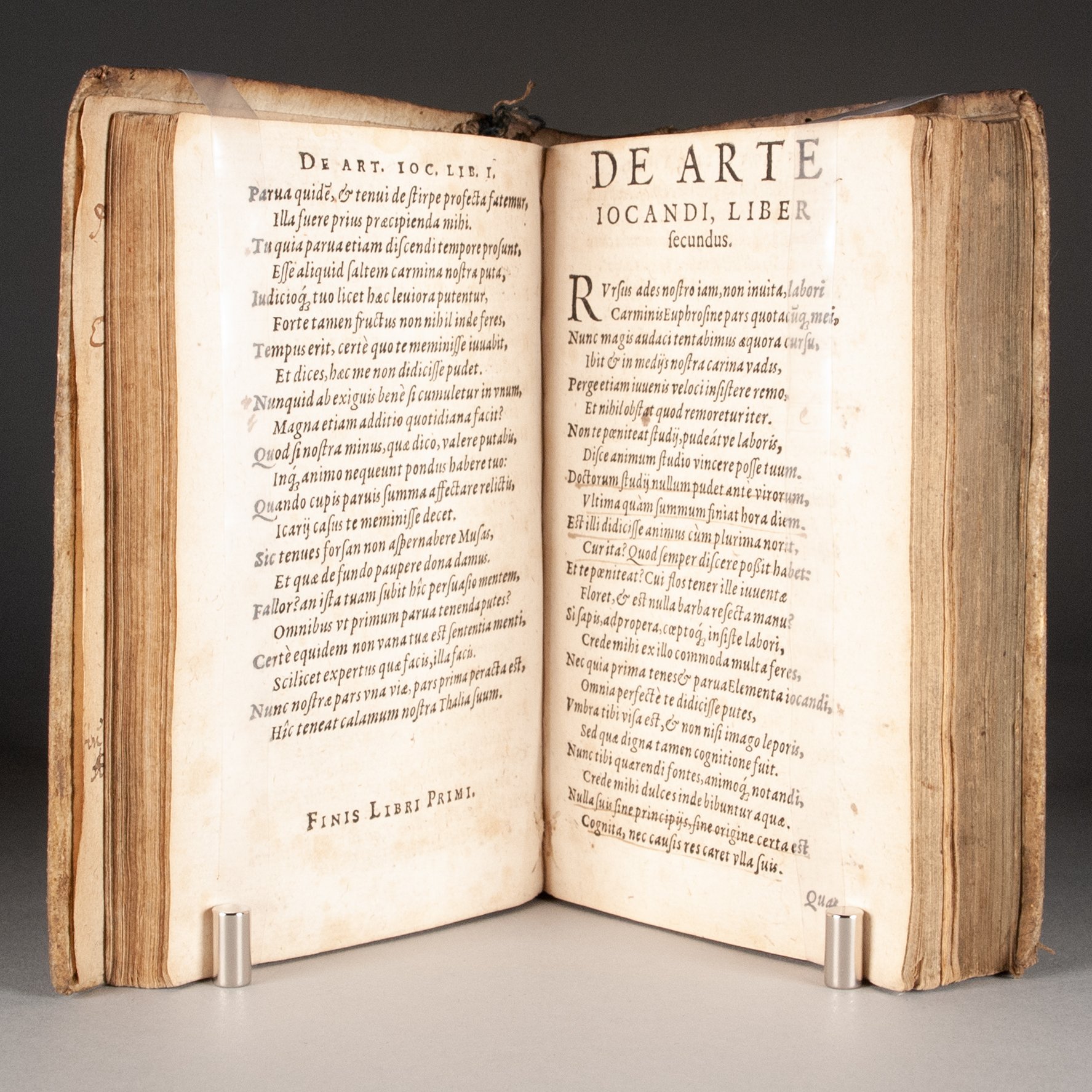 Image 3 of 11
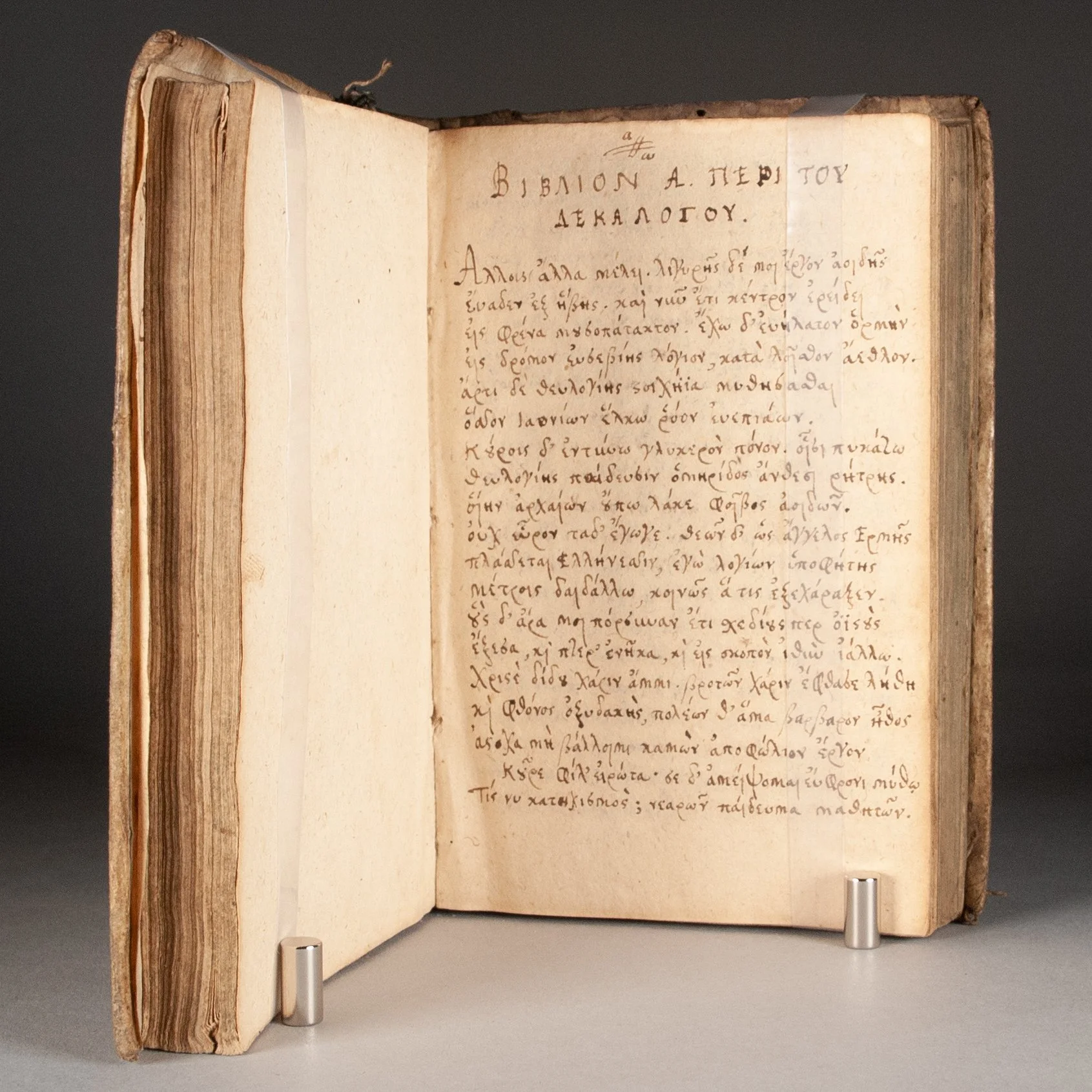 Image 4 of 11
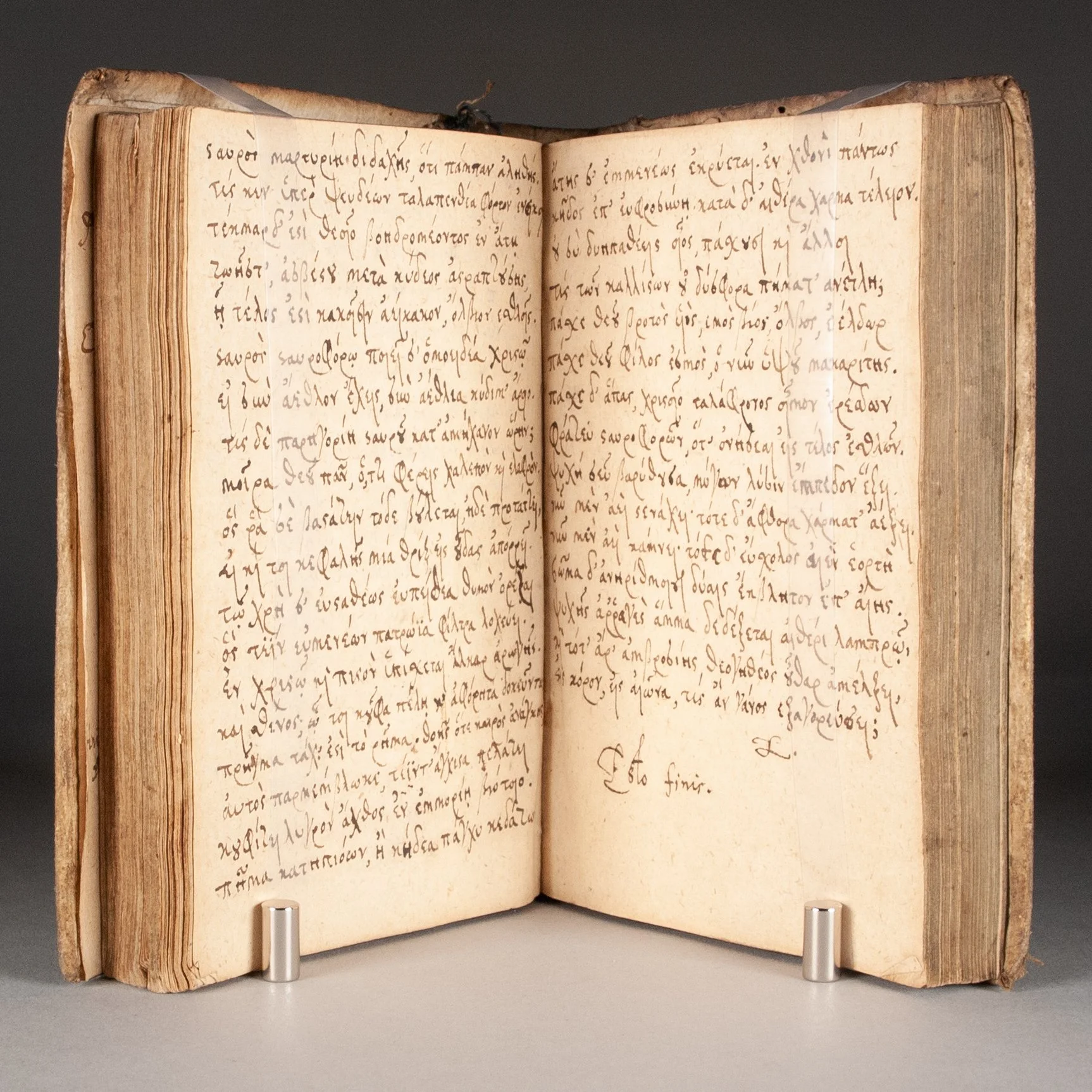 Image 5 of 11
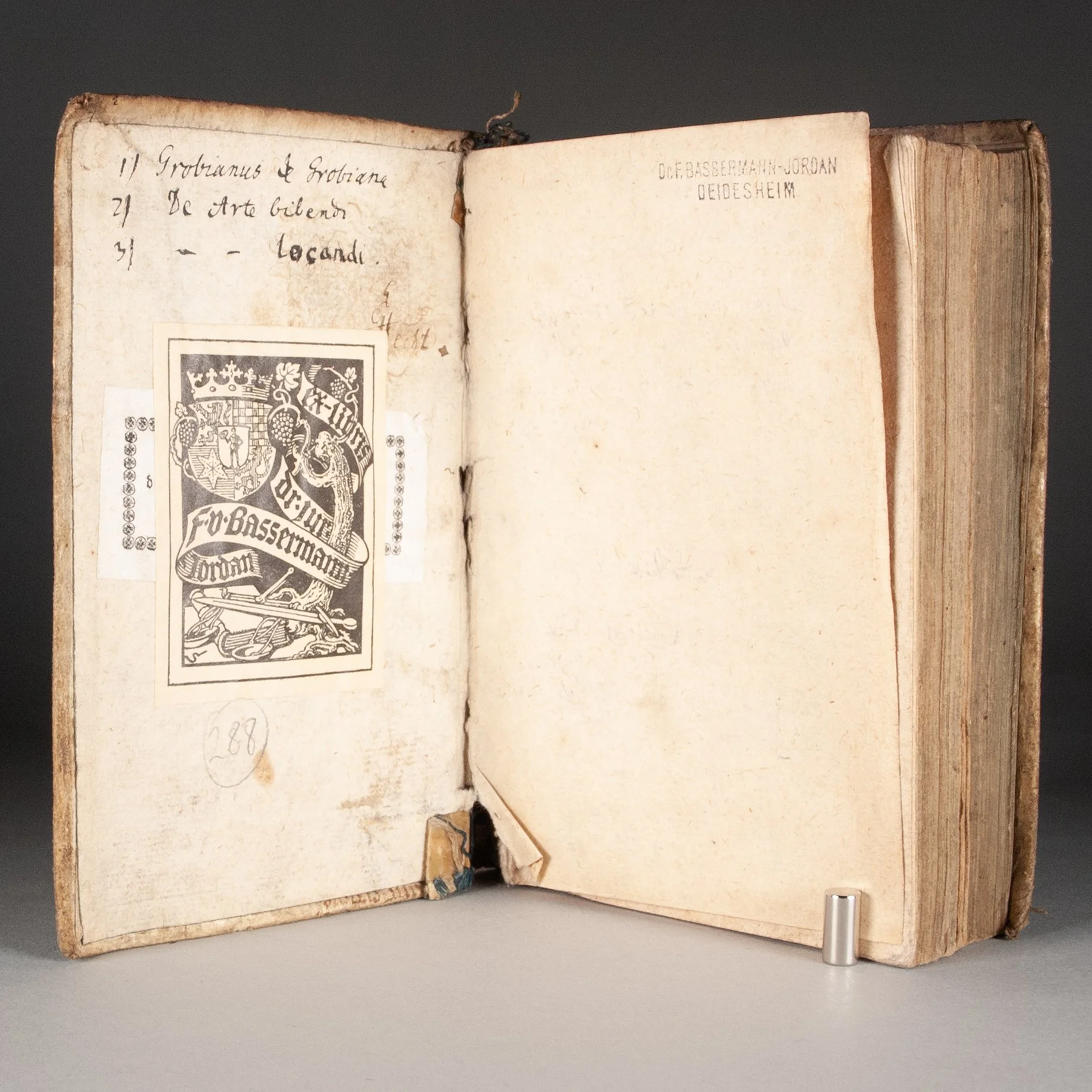 Image 6 of 11
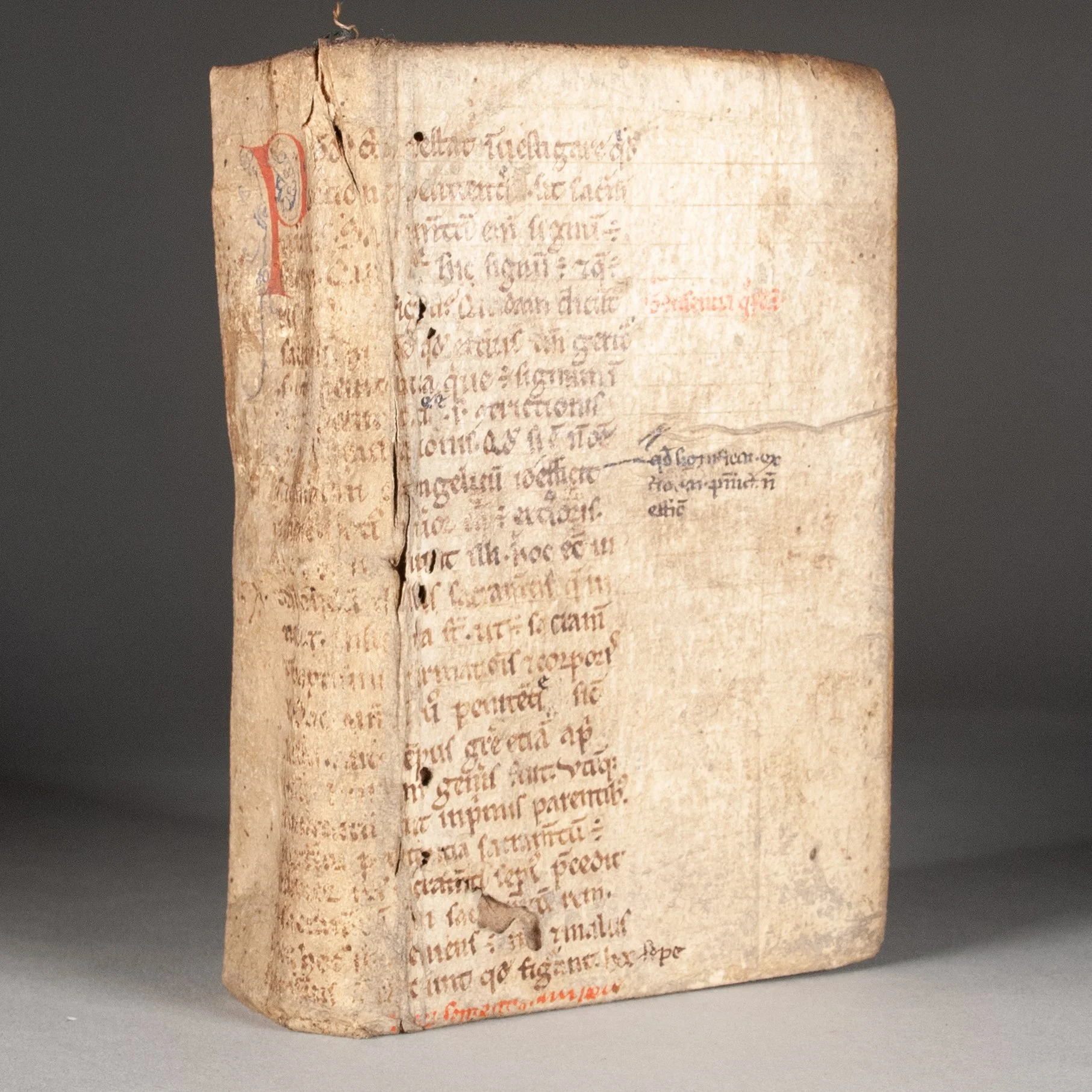 Image 7 of 11
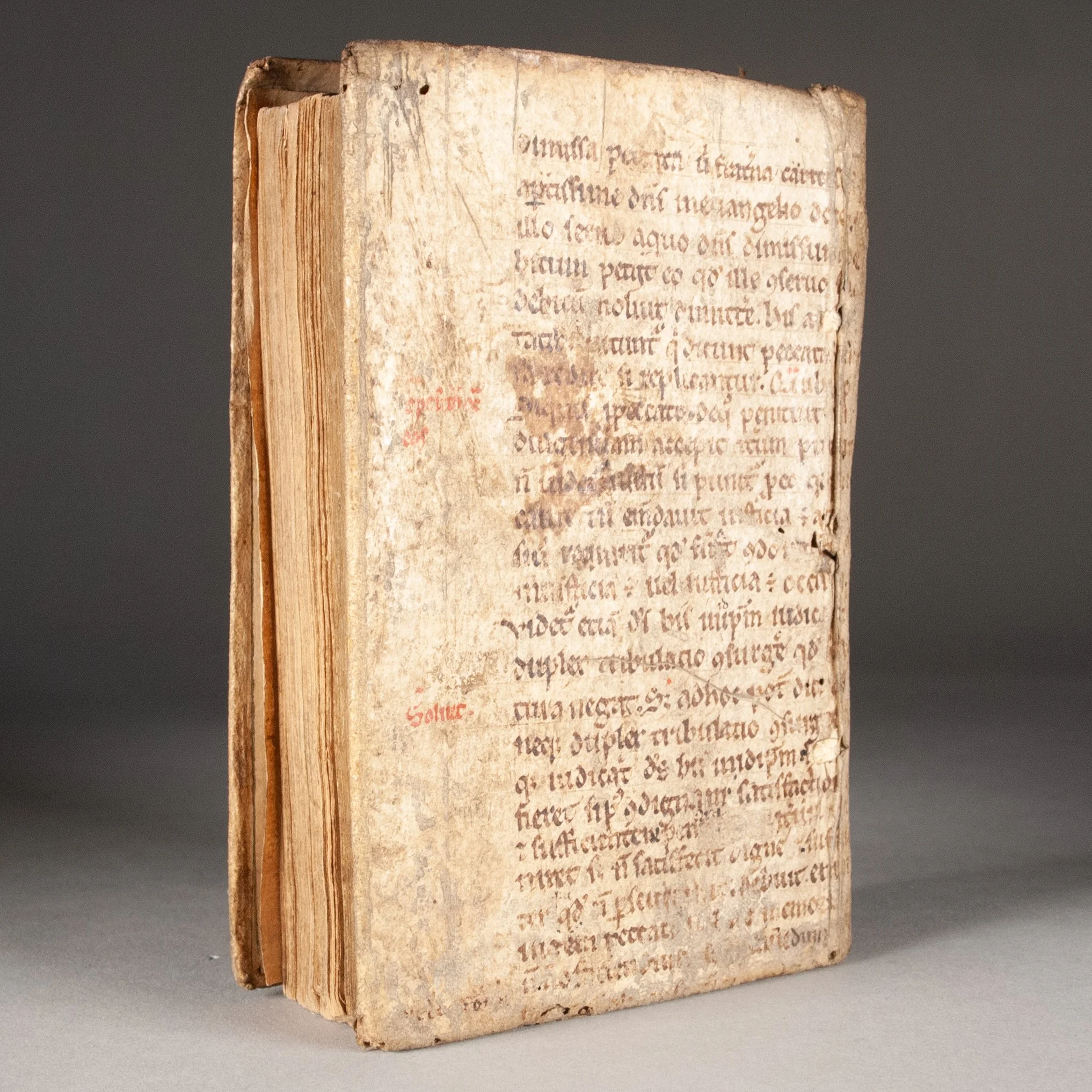 Image 8 of 11
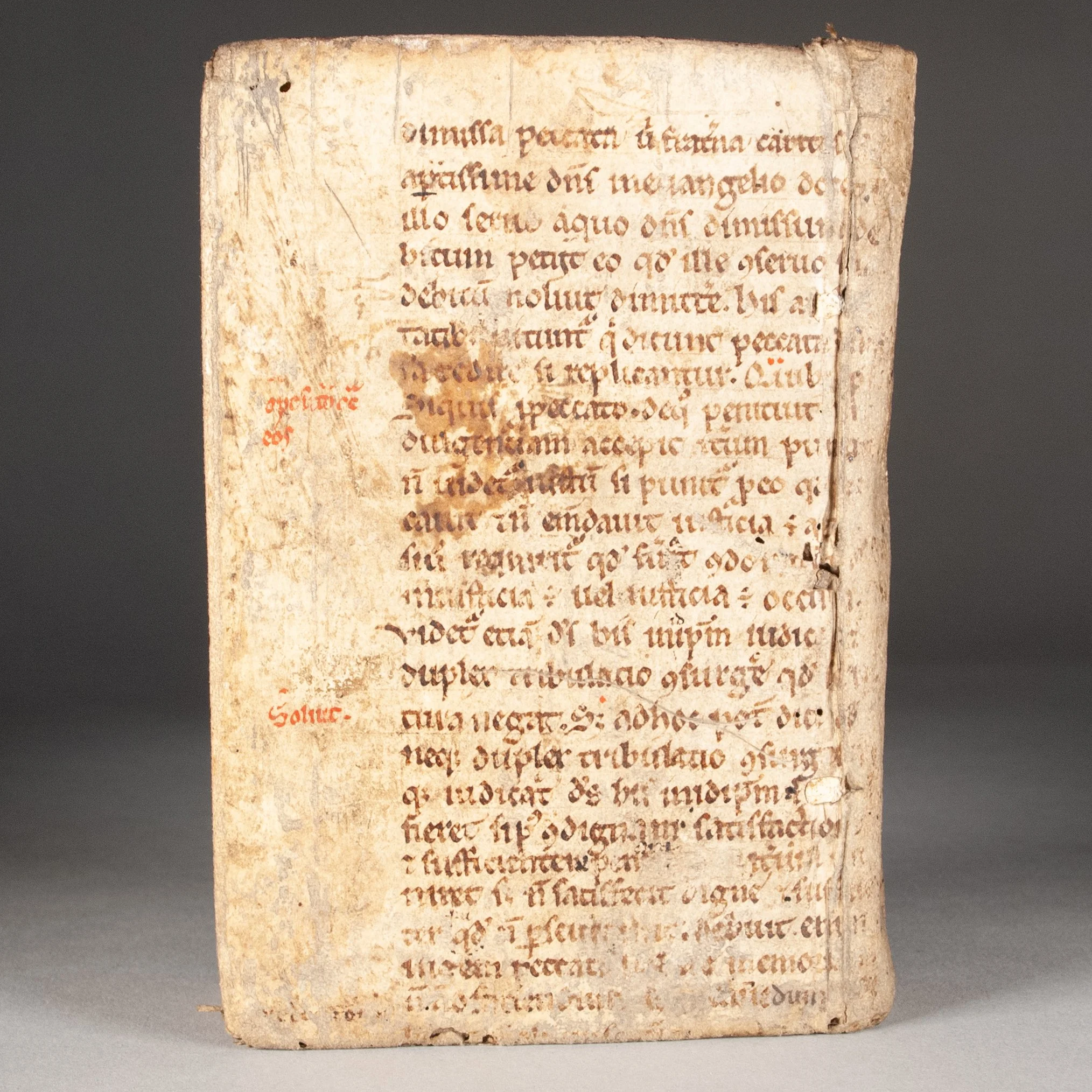 Image 9 of 11
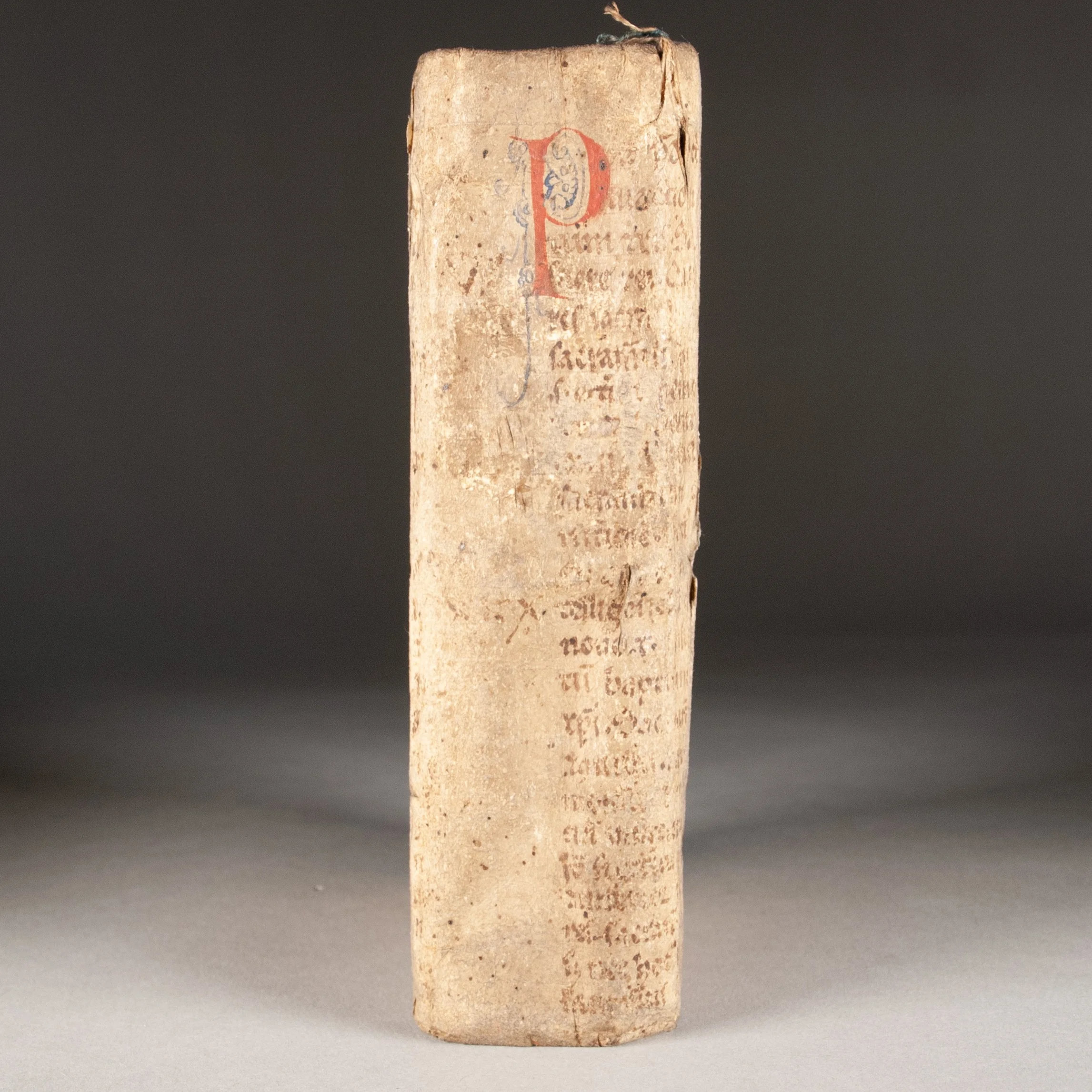 Image 10 of 11
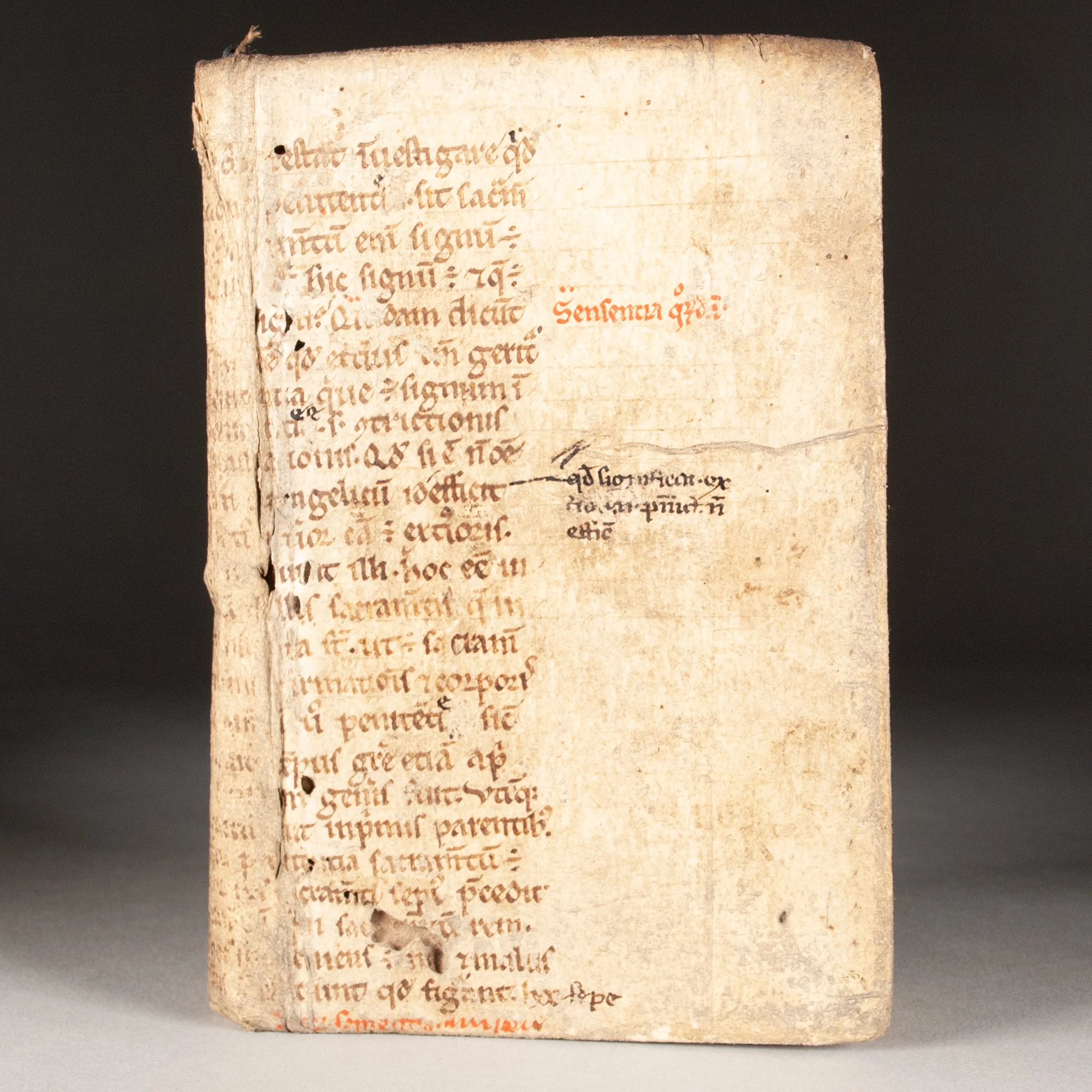 Image 11 of 11