[Manuscript Gospel commentaries interleaved with a printed Greek New Testament]
by Henry Hammond, Samuel Clarke, and Hugo Grotius
[Morpeth? late 18th to early 19th century]
[204] leaves of manuscript interleaved with 40, 35-36, 41-224 leaves of printed text | 194 x 118 mm
A fantastically engaging feat of private scholarship, a printed Greek New Testament interleaved with a sprawling manuscript commentary drawn from published work. Our scribe routinely cites Henry Hammond, Samuel Clarke, and Hugo Grotius (with occasional passages attributed to one Dr. Myddleton, perhaps Conyers Middleton?). He was likely drawing on Hammond's Paraphrase and Annotations upon All Books of the New Testament (1653), Clarke's Paraphrase on the Four Evangelists (1703), and Grotius's Annotationes in Libros Evangeliorum (1641, and never translated into English, but certainly tapped by English commenters, Hammond among them). The Myddleton attribution may refer to Conyers Middleton's Reflections on the Variations or Inconsistencies among the Four Evangelists, included in his Posthumous Works of 1753. ¶ The New Testament has a rich tradition of sustained scrutiny. “No other text posed the problem of the Textus Receptus or lectio recepta in so stark a form; and no other text was necessary to salvation. The character of the vulgate established by Erasmus, Beza and Stephanus was so obviously haphazard that thoughtful critics, in countries where it was allowable to do so, had the strongest incentives for questioning its authenticity” (Kenney). Establishing an accurate text was no small matter, to say nothing of accurate interpretation. For those seeking accuracy and authenticity, returning to the original Greek was perhaps the most reliable path, with scholarly commentaries providing important guardrails. ¶ While this particular level of intervention was not as widespread as the New Testament itself, there had indeed long existed a tradition of aggressive book modification. “The readers and writers of the sixteenth and early seventeenth centuries"—and surely many in the eighteenth and even some today—"did not simply think of their books as aggregations of text; they physically aggregated, resituated, and customized them. Out of necessity and desire, they assembled volumes into unique configurations and built new works out of old ones" (Knight). Here, for example, our owner wanted more than a single standalone commentary, and more than a plain New Testament. He wanted multiple commentaries running alongside the original text. And if what you want is not available to buy, you make it yourself. ¶ The manuscript's paper is laid, likely of the late 18th or early 19th century, its watermark largely buried in the gutter (but incorporates a final initial G). We've been unable to identify this particular edition of the Greek New Testament, though we expect it was printed in the British Isles. The size, 12mo format, and two-column layout are consistent with editions published at London and Dublin (and surely elsewhere) in the 18th century. ¶ An extraordinary demonstration of comparative close reading, and a compelling fusion of print and manuscript.
PROVENANCE: Armorial bookplate of Rev. Frederick Ekins (1766-1842) on the front paste-down. Ekins was rector at Morpeth, north of Newcastle, a position he appears to have assumed following the death of his father in 1791. We suspect Ekins was the industrious owner behind this heavily customized volume, given the obvious interest a parish priest would have taken in the text. His active dates coincide with the paper, script, and binding style. ¶ Bookplate of his grandson on the front free endpaper, Sir Lambton Loraine, 11th Baronet, the son of Ekins's daughter, Caroline Isabella Ekins, who had married the 10th Baronet. Recent bookplate of North Walsham historian and collector Ronald Clive Fiske on the free endpaper verso.
CONDITION: Contemporary (to the manuscript) half red leather and marbled boards, with the binder's ticket of Lubbock, New Castle (just south of Morpeth). The spine lavishly tooled in gold, and the boards with a tasteful blend of gilt and blind rolls; marbled endpapers. Following p. 40 is an additional leaf of the Gospel of Mark taken from another copy still of the Greek New Testament. Leaf [145] of the manuscript content is blank, but otherwise all leaves contain text. ¶ The printed New Testament is incomplete, but the Gospels proper lack only the last leaf of John; p. 39-40 lacking the lower third, likely explaining the additional leaf inserted here; trimming occasionally affecting manuscript content; opening page dusty, and some scattered light foxing. Expertly rebacked, the corners repaired, too; bit of cracking to the marbled paper at the board edges.
REFERENCES: E.J. Kenney, The Classical Text: Aspects of Editing in the Age of the Printed Book (Univ of Calif, 1974), p. 99 (cited above); James Raven and Goran Proot, “Renaissance and Reformation,” The Oxford Illustrated History of the Book (OUP, 2020), p. 165 (on translating the Bible: “Textual differences were often minute, but as daunting and high-profile claims about printed variants ensured, tiny differences in translation and emphasis supported momentous doctrinal dispute.”); Jeffrey Todd Knight, Bound to Read: Compilations, Collections, and the Making of Renaissance Literature (2013), p. 8 (cited above; "Models of literary production in the period were perhaps to a surprising degree predicated on the possibility that a text could be taken up and joined to something else"); Bernard Burke, Genealogical and Heraldic Dictionary of the Peerage and Baronetage of the British Empire (1858), p. 627 (for the Ekins genealogy)
Item #850
[Manuscript Gospel commentaries interleaved with a printed Greek New Testament]
by Henry Hammond, Samuel Clarke, and Hugo Grotius
[Morpeth? late 18th to early 19th century]
[204] leaves of manuscript interleaved with 40, 35-36, 41-224 leaves of printed text | 194 x 118 mm
A fantastically engaging feat of private scholarship, a printed Greek New Testament interleaved with a sprawling manuscript commentary drawn from published work. Our scribe routinely cites Henry Hammond, Samuel Clarke, and Hugo Grotius (with occasional passages attributed to one Dr. Myddleton, perhaps Conyers Middleton?). He was likely drawing on Hammond's Paraphrase and Annotations upon All Books of the New Testament (1653), Clarke's Paraphrase on the Four Evangelists (1703), and Grotius's Annotationes in Libros Evangeliorum (1641, and never translated into English, but certainly tapped by English commenters, Hammond among them). The Myddleton attribution may refer to Conyers Middleton's Reflections on the Variations or Inconsistencies among the Four Evangelists, included in his Posthumous Works of 1753. ¶ The New Testament has a rich tradition of sustained scrutiny. “No other text posed the problem of the Textus Receptus or lectio recepta in so stark a form; and no other text was necessary to salvation. The character of the vulgate established by Erasmus, Beza and Stephanus was so obviously haphazard that thoughtful critics, in countries where it was allowable to do so, had the strongest incentives for questioning its authenticity” (Kenney). Establishing an accurate text was no small matter, to say nothing of accurate interpretation. For those seeking accuracy and authenticity, returning to the original Greek was perhaps the most reliable path, with scholarly commentaries providing important guardrails. ¶ While this particular level of intervention was not as widespread as the New Testament itself, there had indeed long existed a tradition of aggressive book modification. “The readers and writers of the sixteenth and early seventeenth centuries"—and surely many in the eighteenth and even some today—"did not simply think of their books as aggregations of text; they physically aggregated, resituated, and customized them. Out of necessity and desire, they assembled volumes into unique configurations and built new works out of old ones" (Knight). Here, for example, our owner wanted more than a single standalone commentary, and more than a plain New Testament. He wanted multiple commentaries running alongside the original text. And if what you want is not available to buy, you make it yourself. ¶ The manuscript's paper is laid, likely of the late 18th or early 19th century, its watermark largely buried in the gutter (but incorporates a final initial G). We've been unable to identify this particular edition of the Greek New Testament, though we expect it was printed in the British Isles. The size, 12mo format, and two-column layout are consistent with editions published at London and Dublin (and surely elsewhere) in the 18th century. ¶ An extraordinary demonstration of comparative close reading, and a compelling fusion of print and manuscript.
PROVENANCE: Armorial bookplate of Rev. Frederick Ekins (1766-1842) on the front paste-down. Ekins was rector at Morpeth, north of Newcastle, a position he appears to have assumed following the death of his father in 1791. We suspect Ekins was the industrious owner behind this heavily customized volume, given the obvious interest a parish priest would have taken in the text. His active dates coincide with the paper, script, and binding style. ¶ Bookplate of his grandson on the front free endpaper, Sir Lambton Loraine, 11th Baronet, the son of Ekins's daughter, Caroline Isabella Ekins, who had married the 10th Baronet. Recent bookplate of North Walsham historian and collector Ronald Clive Fiske on the free endpaper verso.
CONDITION: Contemporary (to the manuscript) half red leather and marbled boards, with the binder's ticket of Lubbock, New Castle (just south of Morpeth). The spine lavishly tooled in gold, and the boards with a tasteful blend of gilt and blind rolls; marbled endpapers. Following p. 40 is an additional leaf of the Gospel of Mark taken from another copy still of the Greek New Testament. Leaf [145] of the manuscript content is blank, but otherwise all leaves contain text. ¶ The printed New Testament is incomplete, but the Gospels proper lack only the last leaf of John; p. 39-40 lacking the lower third, likely explaining the additional leaf inserted here; trimming occasionally affecting manuscript content; opening page dusty, and some scattered light foxing. Expertly rebacked, the corners repaired, too; bit of cracking to the marbled paper at the board edges.
REFERENCES: E.J. Kenney, The Classical Text: Aspects of Editing in the Age of the Printed Book (Univ of Calif, 1974), p. 99 (cited above); James Raven and Goran Proot, “Renaissance and Reformation,” The Oxford Illustrated History of the Book (OUP, 2020), p. 165 (on translating the Bible: “Textual differences were often minute, but as daunting and high-profile claims about printed variants ensured, tiny differences in translation and emphasis supported momentous doctrinal dispute.”); Jeffrey Todd Knight, Bound to Read: Compilations, Collections, and the Making of Renaissance Literature (2013), p. 8 (cited above; "Models of literary production in the period were perhaps to a surprising degree predicated on the possibility that a text could be taken up and joined to something else"); Bernard Burke, Genealogical and Heraldic Dictionary of the Peerage and Baronetage of the British Empire (1858), p. 627 (for the Ekins genealogy)
Item #850

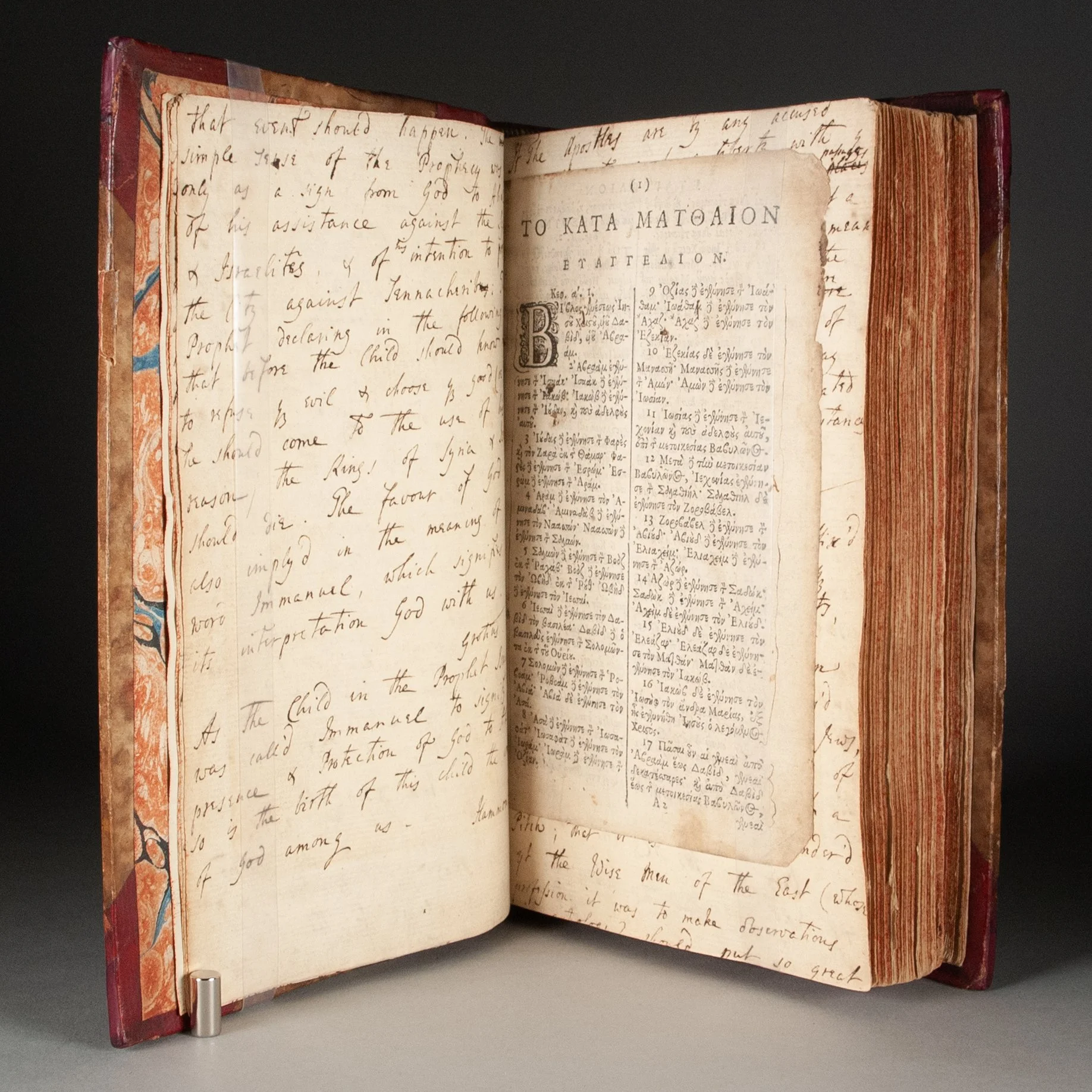 Image 1 of 8
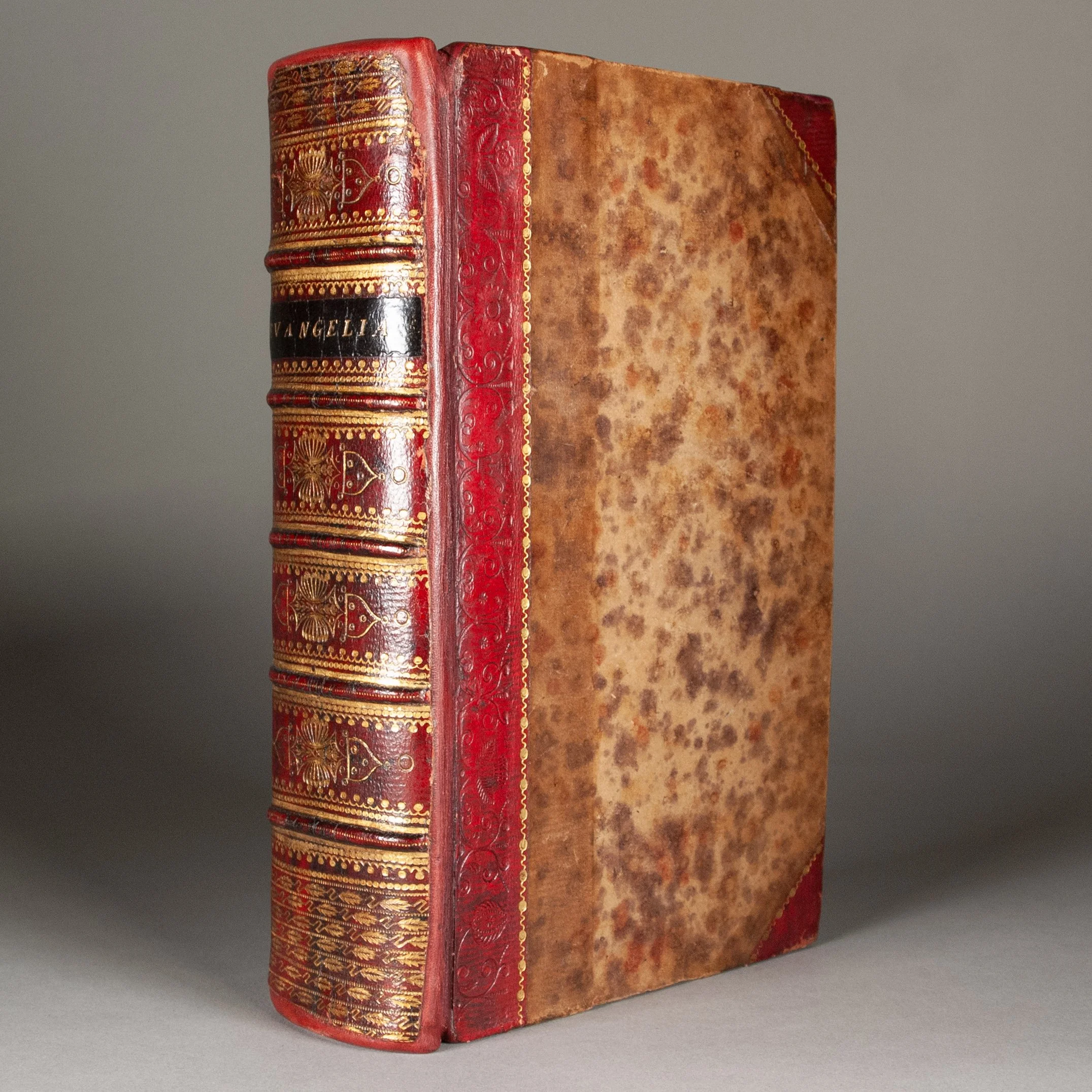 Image 2 of 8
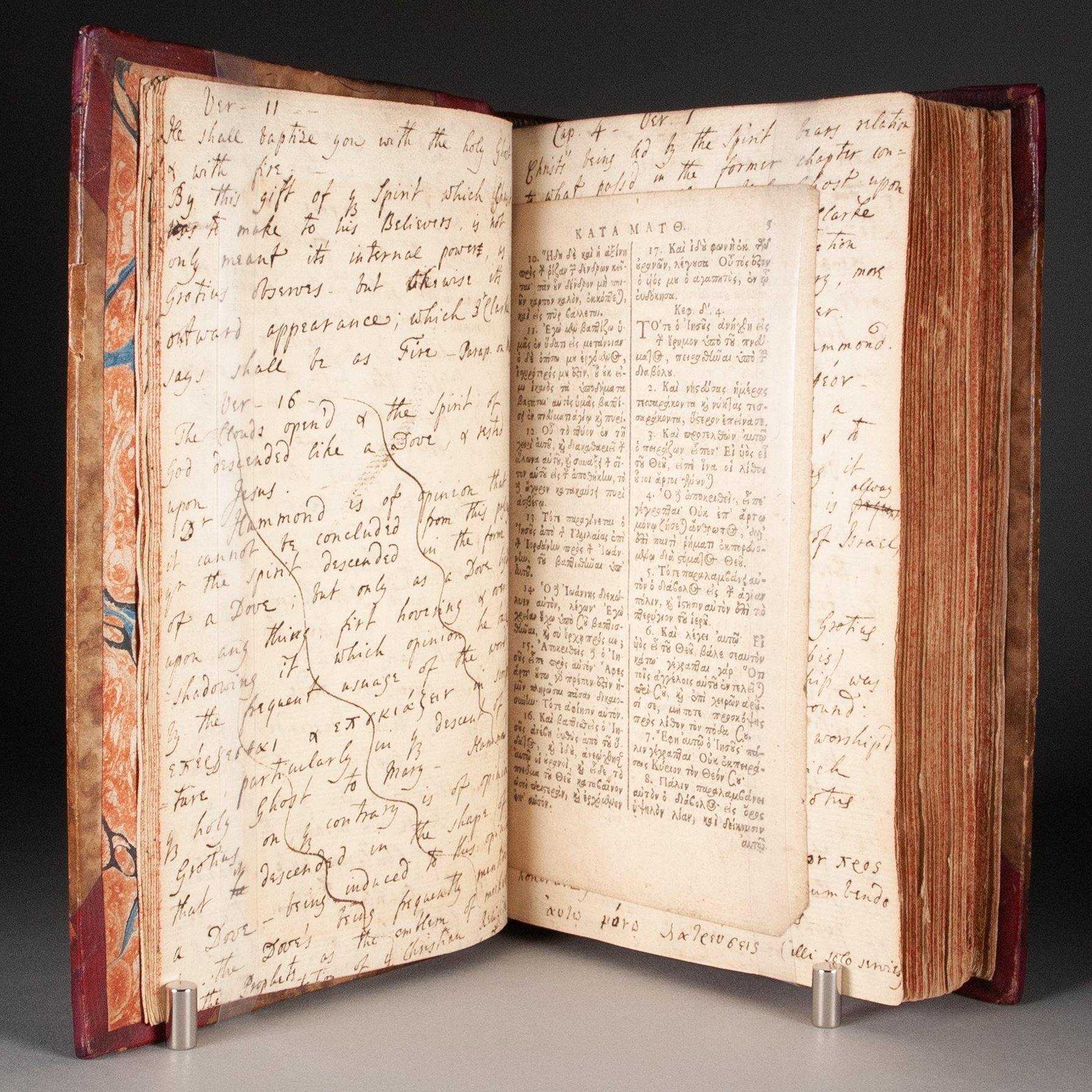 Image 3 of 8
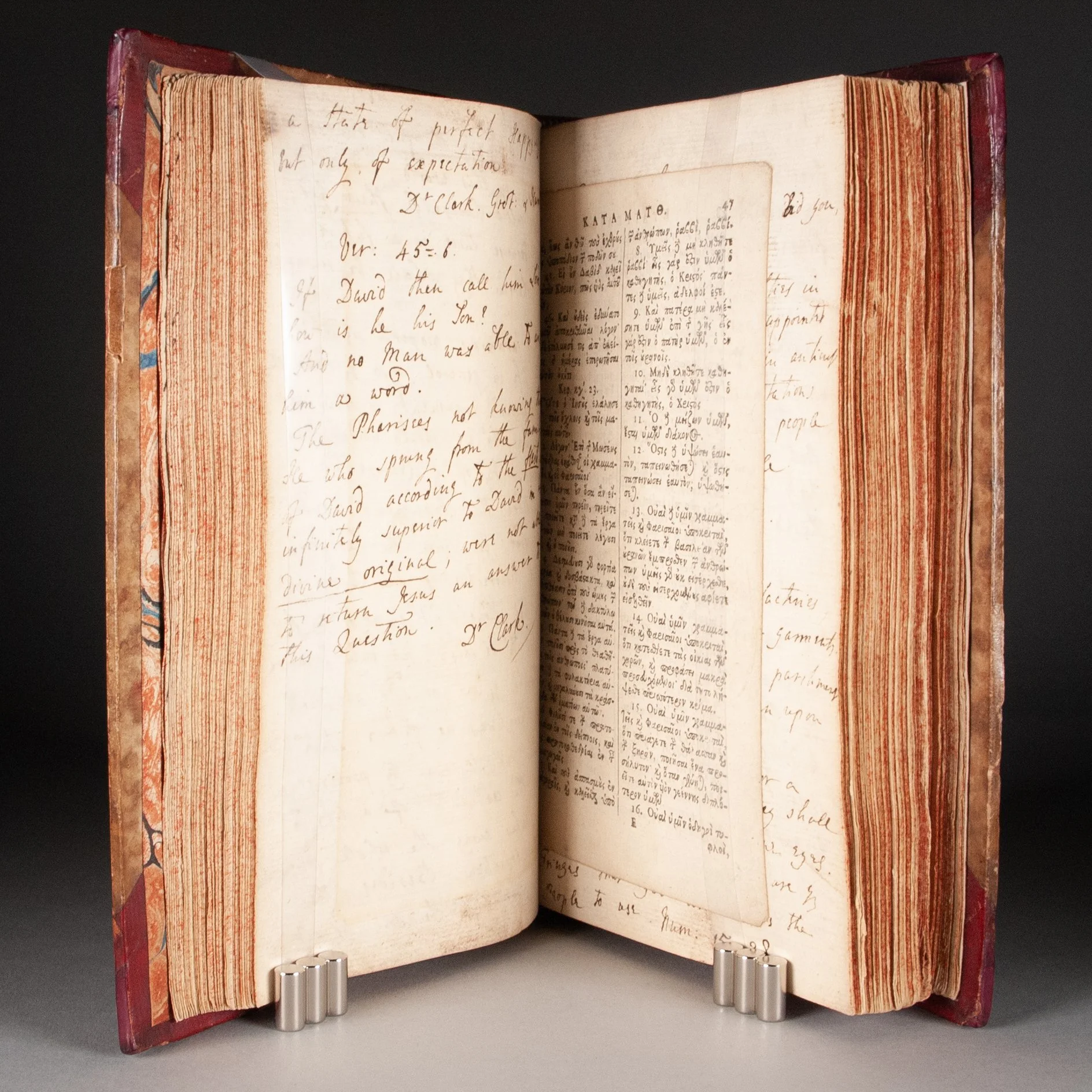 Image 4 of 8
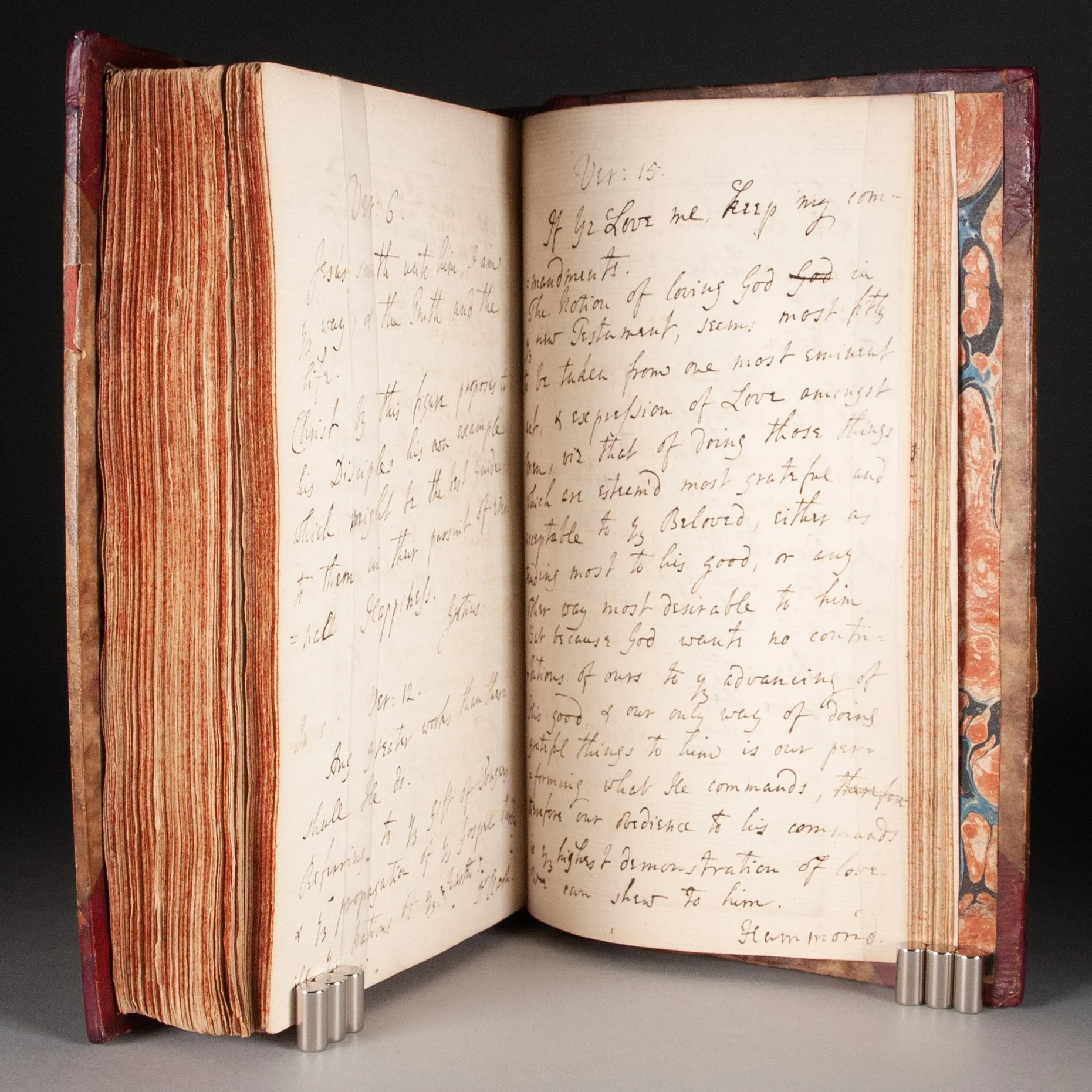 Image 5 of 8
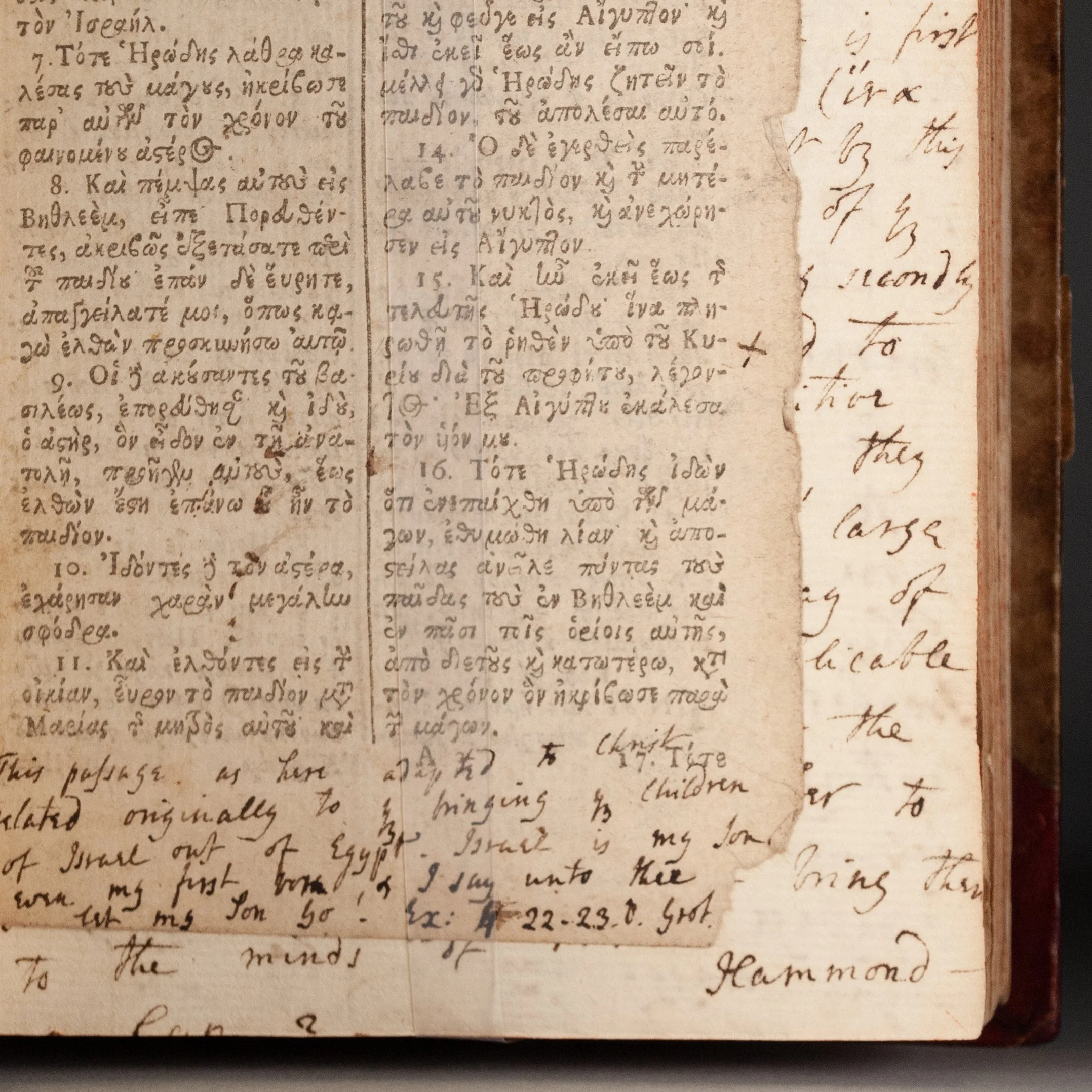 Image 6 of 8
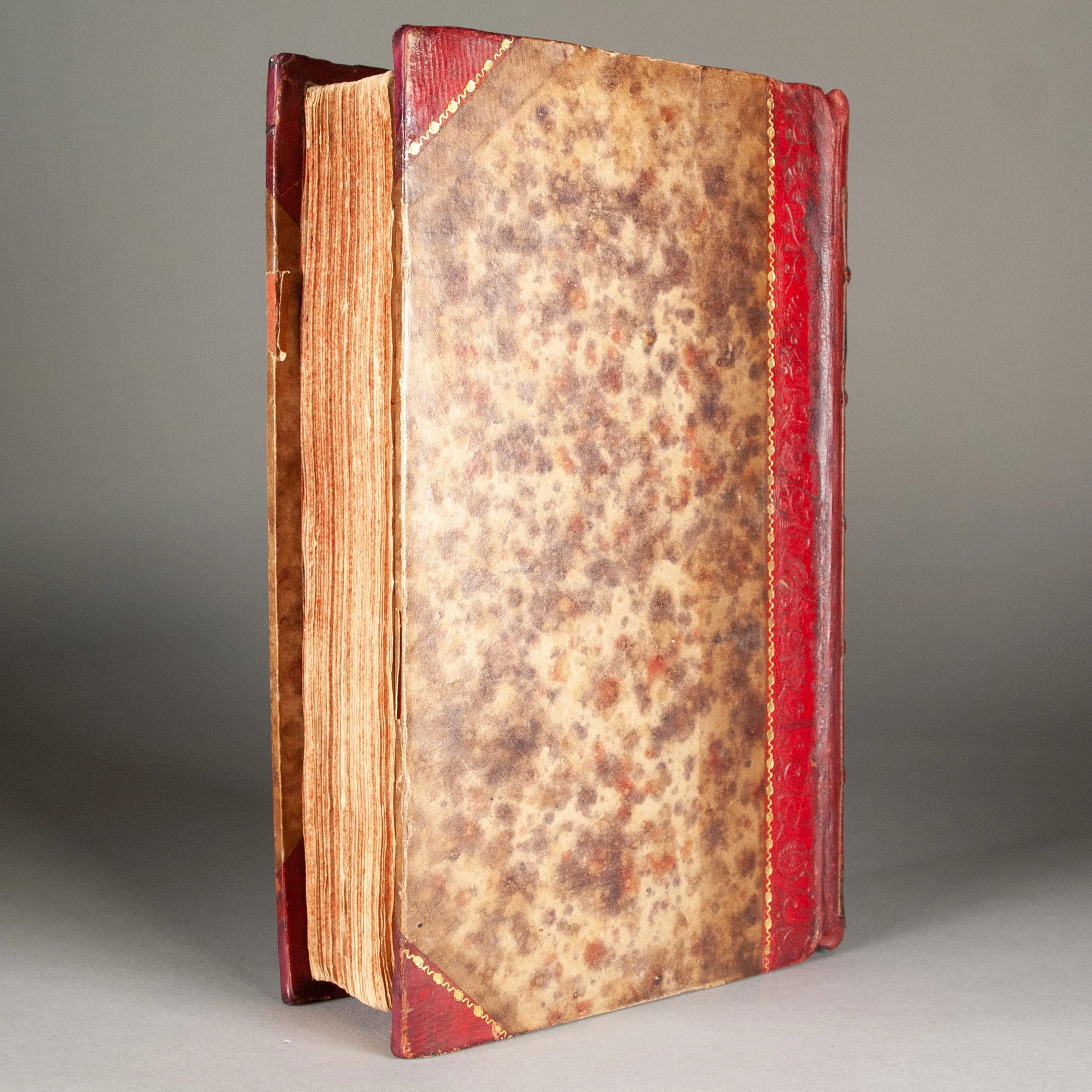 Image 7 of 8
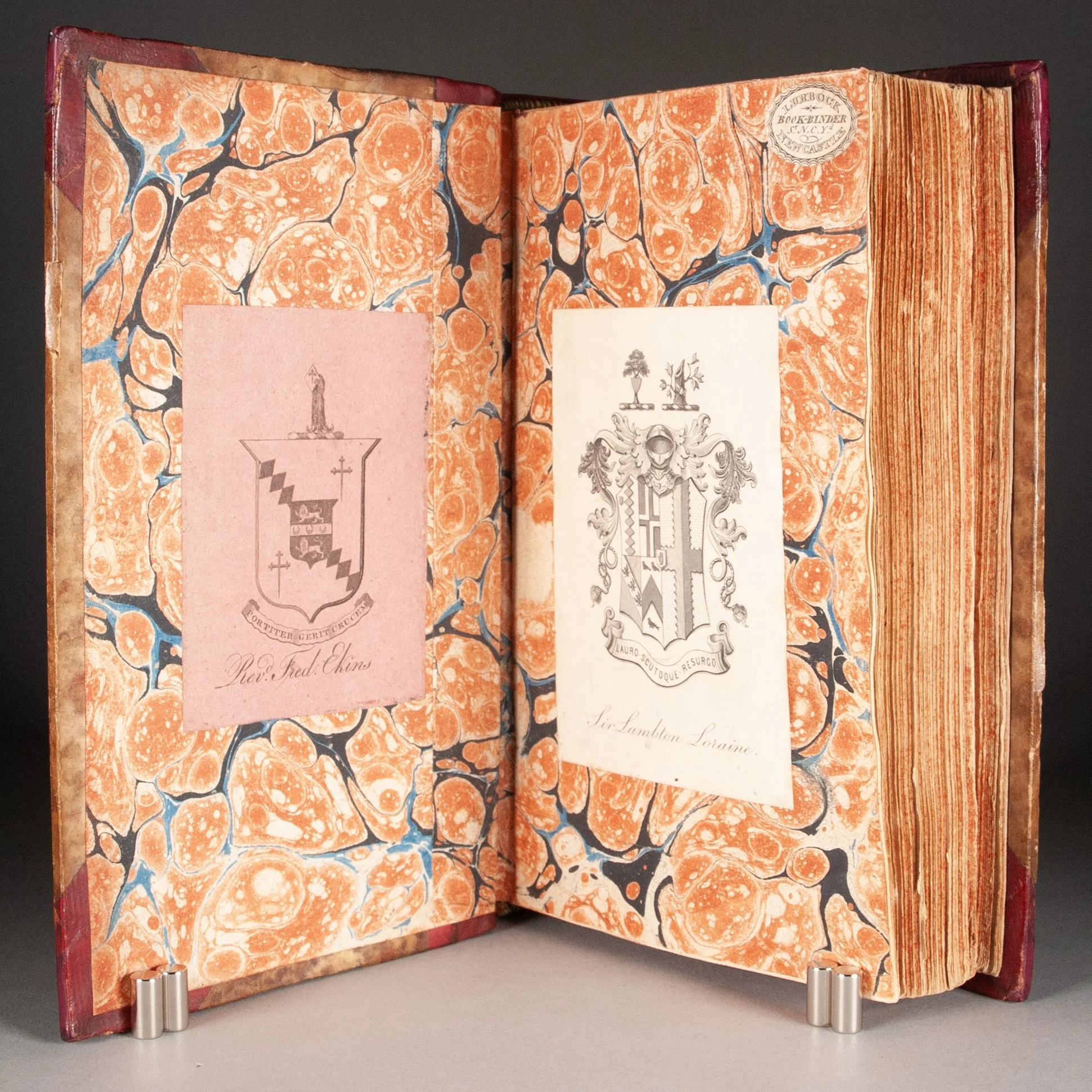 Image 8 of 8