Epistolae familiares; quarum postrema hac editione praeter Manutij annotationes, aliae doctissimorum hominum & numquam alibi impressae in margine adscribuntur; eiusdem Manutij scholia; verba Graeca Latinis expressa
by Cicero | with notes by Paolo Manuzio (Paulus Manutius)
Lyon [Geneva]: [Jacques II Berjon for] Antoine Gryphe (Antonius Gryphius), 1585
686, [2] p. | 16mo | a-vv^8 | 123 x 76 mm
A pocket-sized edition of Cicero's correspondence with family, friends, politicians, and other associates. The collection came together in the early fifteenth century, quickly became required school reading, and went on to enjoy enduring popularity. “Here was a great letter writer who used rhetorical devices in a highly sophisticated and powerful way to express moving personal views. Cicero supplied what was missing from previous rhetoric: a living, breathing set of letters of the highest quality from which to learn" (Grendler). Imprint notwithstanding, this edition was actually printed in Geneva. The Calvinist capitol began attracting like-minded Lyonnais printers and booksellers in the 1560s, and collaboration between the two cities remained high until century's end. Gryphe patronized four Genevan printers, who collectively produced for him at least 35 editions between 1578 and 1592. Our edition should not be confused with another Gryphe edition published the same year (USTC 199342). ¶ In an absolutely heartwarming contemporary binding, likely produced in Rome in the early years of the seventeenth century, in a style that's come to be called a friendship binding. Such covers bear the tooled names of two different people, and naturally present vexing cases of ownership. These books are generally assumed to have been a gift from one to the other, with the recipient's name typically on the front. As tokens of friendship, they appear to have enjoyed a certain vogue, especially in Rome, in the later years of the sixteenth century and early years of the next. Ours has on its front cover the name of Torquato de Cupis, and on its rear, Giovanni Battista Crescenzi. The latter was a painter and architect, with a high post under Pope Paul V. He is perhaps best known for designing Spain's royal mausoleum at El Escorial. The former taught at the Collegio Romano, only the second university founded by the Jesuits. ¶ The distinctive escutcheon on our covers is typically taken as a hallmark of the Soresini workshop in Rome (aka the Borghese Bindery). Note the same escutcheon on Henry Davis 356, a ca. 1600-1610 Soresini binding, likewise on another that appeared at Sotheby's in 2023. This "dynasty of binders" produced exemplary work and served the Vatican Library from 1575 through the 1650s (Choulis). These particular bindings deployed the escutcheon with an otherwise completely different set of tools, and so we'll stop short of definitively calling ours a Soresini binding. For one truly almost identical to ours, see lot 1065 in the fifth Brooker sale at Sotheby's London, 10 December 2024 (£4,826), now at the Morgan. ¶ A fantastic witness to a curious chapter in the history of bookbinding. We find a single copy of this edition in North America (Brown). As for other Crescenzi-De Cupis bindings, Robin Halwas, whose exhaustive research we cannot surpass, has traced eight examples altogether, ours included.
PROVENANCE: If indeed a gift from Crescenzi to De Cupis, it's hardly a shocking choice. At the time, the Epistolae familiares was the single most frequently taught classic among Venetians, and doubtless elsewhere, too. And thanks to Halwas's thorough research, the book's subsequent ownership has now been well documented. The rear paste-down bears the engraved bookplate of the Colonna-D'Avalos family, possibly representing ownership by Prospero Colonna. We have the remnants of a bookplate on the front paste-down, which should have indicated ownership by Jan Willem Six de Vromade (1872-1936), whence it passed through Von Stockum's Antiquariaat (Catalogue de la Bibliothèque de M. J.W. Six de Vromade; première partie, 16-21 November 1925, lot 97). It went to Anton W.M. Mensing (1866-1936), then sold by Sotheby & Co. (Mensing Library, 15-17 December 1936, lot 127). It then passed through Menno Hertzberger; Internationaal Antiquariaat (Bibliothèques choisies et collections de gravures surtout de feu M. Rud. Teltscher, Heemstede; M. R.G.H. Steinberg, Amsterdam, 7-8 June 1939, lot 511); and Christie's (Valuable manuscripts, autograph letters, music and printed books, 27 November 1996, lot 367). Finally to us from a private collector.
CONDITION: Contemporary red leather (sheepskin?), lavishly tooled in gold with a floral motif, incorporating hatched arabesques, eagles, crescents, stars, and circles; arms of De Cupis on the front cover, those of Crescenzi on the rear; edges gilt and gauffered. Last leaf is blank. ¶ Paper darkened; light discoloration in the lower margin of the first third of the text block, not affecting text. Headcap gone and upper spine compartment repaired, a handwritten leather title label there affixed; bottom compartment a bit wormed, with a 2 cm closed tear in the leather; single wormhole in upper compartment; ties lost; extremities gently bumped and rubbed.
REFERENCES: USTC 452119 (perhaps duplicating 199341); Baudrier, Bibliographie Lyonnaise, v. 8, p. 393; GLN-6205; Alain Dubois, "Imprimerie et librairie entre Lyon et Genève (1560-1610) l'exemple de Jacob Stoer," Bibliothèque de l'École des chartes 168.2 (Jul/Dec 2010), p. 514, #24b ¶ On the text: Dubois, p. 449 ("It is generally accepted that Geneva, following the collapse of the religious book market at the end of the 1560s, attracted the capital of Lyonnais booksellers, Protestant and Catholic alike, because of the particularly advantageous economic conditions it offered"), 453 (background on religious emigration of Lyon booksellers), 459 (Gryphe's Geneva colleagues); Paul Grendler, Schooling in Renaissance Italy, p. 123 (“a collective title for a large group of Cicero’s letters to diverse correspondents (excluding Atticus) came into existence in the first two decades of the fifteenth century and entered common usage about 1430, possibly as a result of the letters’ introduction into the school curriculum"), 206 (the most widely taught classic by Venetian teachers, 1587-1588), 221 (cited above); Anthony Grafton, Bring out Your Dead, p. 109-110 (“Written rather than oral texts, apparently personal and informal rather than public and theatrical, these offered the student a vast range of models of prose rather than the highly formal one of Cicero’s oratory. They also seemed more appropriate models for young men whose future tasks would involve far more document preparation than public speaking. Accordingly, students at early stages of their education, from Strasbourg to Rome, spent large amounts of time reading, translating, and imitating Cicero’s letters.”) ¶ On the binding: Mirjam Foot, The Henry Davis Gift, v. 1, p. 325-326 (background on Borghese bindery, with Cupius and Crescenzi mentioned as patrons), v. 3, p. 424, #356 (cited above, using the same escutcheon); Konstantinos Choulis, "Conservation Treatments on the Greek Manuscripts of the Fondo Antico in the Vatican Library under Paul V (1605-1621)," Studi in onore del Cardinale Raffaele Farina, p. 148 (cited above); Sotheby & Co., The Mensing Library, p. 36-37, #127 (this copy; "The recipient seems to have disposed of the book during his life-time (possibly on leaving Rome permanently for Spain about 1620), as it bears at end the armorial bookplate (Colonna impaling d'Avalos) of the well known Roman patron of letters, Prospero Colonna, who died in 1661")
Item #1003
Epistolae familiares; quarum postrema hac editione praeter Manutij annotationes, aliae doctissimorum hominum & numquam alibi impressae in margine adscribuntur; eiusdem Manutij scholia; verba Graeca Latinis expressa
by Cicero | with notes by Paolo Manuzio (Paulus Manutius)
Lyon [Geneva]: [Jacques II Berjon for] Antoine Gryphe (Antonius Gryphius), 1585
686, [2] p. | 16mo | a-vv^8 | 123 x 76 mm
A pocket-sized edition of Cicero's correspondence with family, friends, politicians, and other associates. The collection came together in the early fifteenth century, quickly became required school reading, and went on to enjoy enduring popularity. “Here was a great letter writer who used rhetorical devices in a highly sophisticated and powerful way to express moving personal views. Cicero supplied what was missing from previous rhetoric: a living, breathing set of letters of the highest quality from which to learn" (Grendler). Imprint notwithstanding, this edition was actually printed in Geneva. The Calvinist capitol began attracting like-minded Lyonnais printers and booksellers in the 1560s, and collaboration between the two cities remained high until century's end. Gryphe patronized four Genevan printers, who collectively produced for him at least 35 editions between 1578 and 1592. Our edition should not be confused with another Gryphe edition published the same year (USTC 199342). ¶ In an absolutely heartwarming contemporary binding, likely produced in Rome in the early years of the seventeenth century, in a style that's come to be called a friendship binding. Such covers bear the tooled names of two different people, and naturally present vexing cases of ownership. These books are generally assumed to have been a gift from one to the other, with the recipient's name typically on the front. As tokens of friendship, they appear to have enjoyed a certain vogue, especially in Rome, in the later years of the sixteenth century and early years of the next. Ours has on its front cover the name of Torquato de Cupis, and on its rear, Giovanni Battista Crescenzi. The latter was a painter and architect, with a high post under Pope Paul V. He is perhaps best known for designing Spain's royal mausoleum at El Escorial. The former taught at the Collegio Romano, only the second university founded by the Jesuits. ¶ The distinctive escutcheon on our covers is typically taken as a hallmark of the Soresini workshop in Rome (aka the Borghese Bindery). Note the same escutcheon on Henry Davis 356, a ca. 1600-1610 Soresini binding, likewise on another that appeared at Sotheby's in 2023. This "dynasty of binders" produced exemplary work and served the Vatican Library from 1575 through the 1650s (Choulis). These particular bindings deployed the escutcheon with an otherwise completely different set of tools, and so we'll stop short of definitively calling ours a Soresini binding. For one truly almost identical to ours, see lot 1065 in the fifth Brooker sale at Sotheby's London, 10 December 2024 (£4,826), now at the Morgan. ¶ A fantastic witness to a curious chapter in the history of bookbinding. We find a single copy of this edition in North America (Brown). As for other Crescenzi-De Cupis bindings, Robin Halwas, whose exhaustive research we cannot surpass, has traced eight examples altogether, ours included.
PROVENANCE: If indeed a gift from Crescenzi to De Cupis, it's hardly a shocking choice. At the time, the Epistolae familiares was the single most frequently taught classic among Venetians, and doubtless elsewhere, too. And thanks to Halwas's thorough research, the book's subsequent ownership has now been well documented. The rear paste-down bears the engraved bookplate of the Colonna-D'Avalos family, possibly representing ownership by Prospero Colonna. We have the remnants of a bookplate on the front paste-down, which should have indicated ownership by Jan Willem Six de Vromade (1872-1936), whence it passed through Von Stockum's Antiquariaat (Catalogue de la Bibliothèque de M. J.W. Six de Vromade; première partie, 16-21 November 1925, lot 97). It went to Anton W.M. Mensing (1866-1936), then sold by Sotheby & Co. (Mensing Library, 15-17 December 1936, lot 127). It then passed through Menno Hertzberger; Internationaal Antiquariaat (Bibliothèques choisies et collections de gravures surtout de feu M. Rud. Teltscher, Heemstede; M. R.G.H. Steinberg, Amsterdam, 7-8 June 1939, lot 511); and Christie's (Valuable manuscripts, autograph letters, music and printed books, 27 November 1996, lot 367). Finally to us from a private collector.
CONDITION: Contemporary red leather (sheepskin?), lavishly tooled in gold with a floral motif, incorporating hatched arabesques, eagles, crescents, stars, and circles; arms of De Cupis on the front cover, those of Crescenzi on the rear; edges gilt and gauffered. Last leaf is blank. ¶ Paper darkened; light discoloration in the lower margin of the first third of the text block, not affecting text. Headcap gone and upper spine compartment repaired, a handwritten leather title label there affixed; bottom compartment a bit wormed, with a 2 cm closed tear in the leather; single wormhole in upper compartment; ties lost; extremities gently bumped and rubbed.
REFERENCES: USTC 452119 (perhaps duplicating 199341); Baudrier, Bibliographie Lyonnaise, v. 8, p. 393; GLN-6205; Alain Dubois, "Imprimerie et librairie entre Lyon et Genève (1560-1610) l'exemple de Jacob Stoer," Bibliothèque de l'École des chartes 168.2 (Jul/Dec 2010), p. 514, #24b ¶ On the text: Dubois, p. 449 ("It is generally accepted that Geneva, following the collapse of the religious book market at the end of the 1560s, attracted the capital of Lyonnais booksellers, Protestant and Catholic alike, because of the particularly advantageous economic conditions it offered"), 453 (background on religious emigration of Lyon booksellers), 459 (Gryphe's Geneva colleagues); Paul Grendler, Schooling in Renaissance Italy, p. 123 (“a collective title for a large group of Cicero’s letters to diverse correspondents (excluding Atticus) came into existence in the first two decades of the fifteenth century and entered common usage about 1430, possibly as a result of the letters’ introduction into the school curriculum"), 206 (the most widely taught classic by Venetian teachers, 1587-1588), 221 (cited above); Anthony Grafton, Bring out Your Dead, p. 109-110 (“Written rather than oral texts, apparently personal and informal rather than public and theatrical, these offered the student a vast range of models of prose rather than the highly formal one of Cicero’s oratory. They also seemed more appropriate models for young men whose future tasks would involve far more document preparation than public speaking. Accordingly, students at early stages of their education, from Strasbourg to Rome, spent large amounts of time reading, translating, and imitating Cicero’s letters.”) ¶ On the binding: Mirjam Foot, The Henry Davis Gift, v. 1, p. 325-326 (background on Borghese bindery, with Cupius and Crescenzi mentioned as patrons), v. 3, p. 424, #356 (cited above, using the same escutcheon); Konstantinos Choulis, "Conservation Treatments on the Greek Manuscripts of the Fondo Antico in the Vatican Library under Paul V (1605-1621)," Studi in onore del Cardinale Raffaele Farina, p. 148 (cited above); Sotheby & Co., The Mensing Library, p. 36-37, #127 (this copy; "The recipient seems to have disposed of the book during his life-time (possibly on leaving Rome permanently for Spain about 1620), as it bears at end the armorial bookplate (Colonna impaling d'Avalos) of the well known Roman patron of letters, Prospero Colonna, who died in 1661")
Item #1003

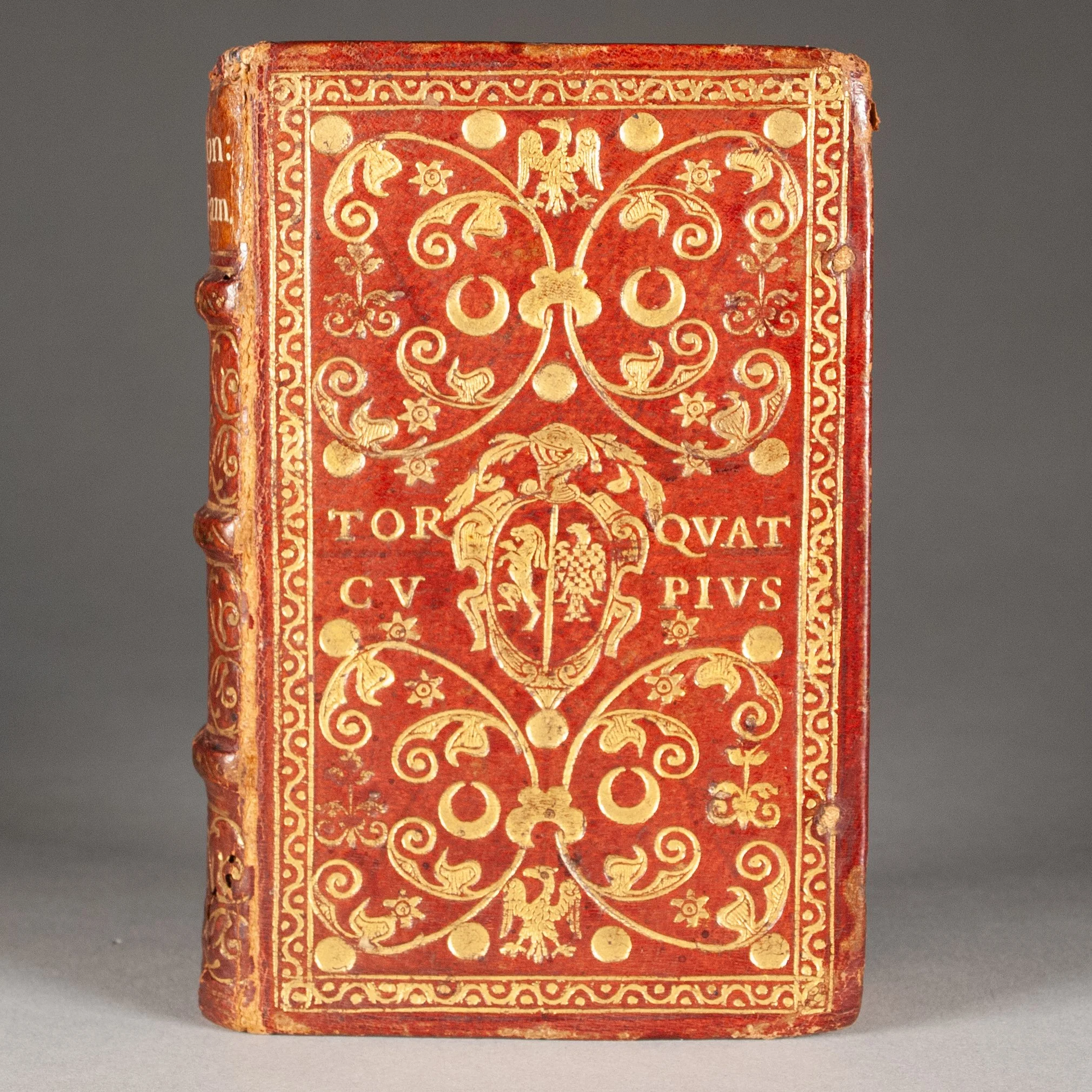 Image 1 of 11
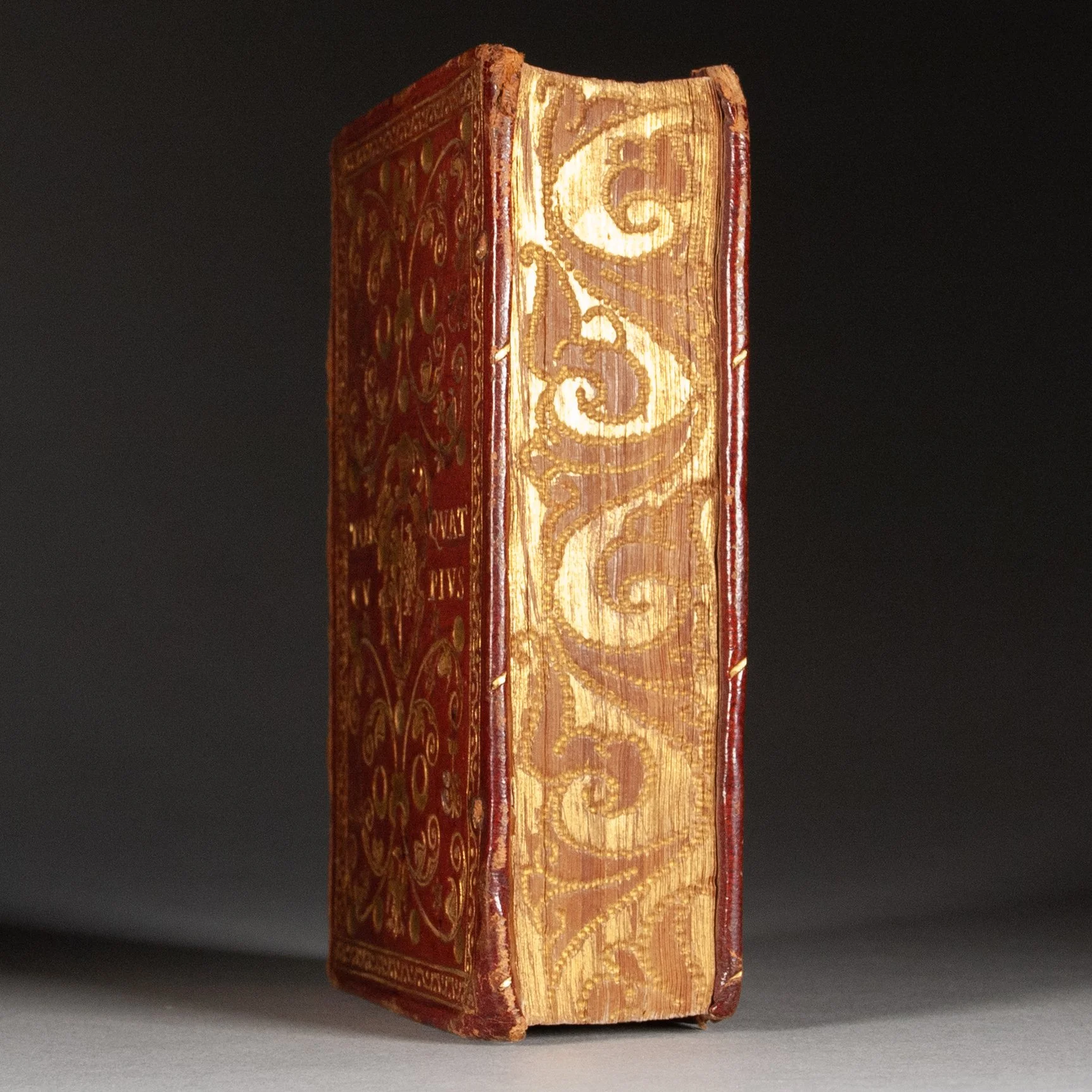 Image 2 of 11
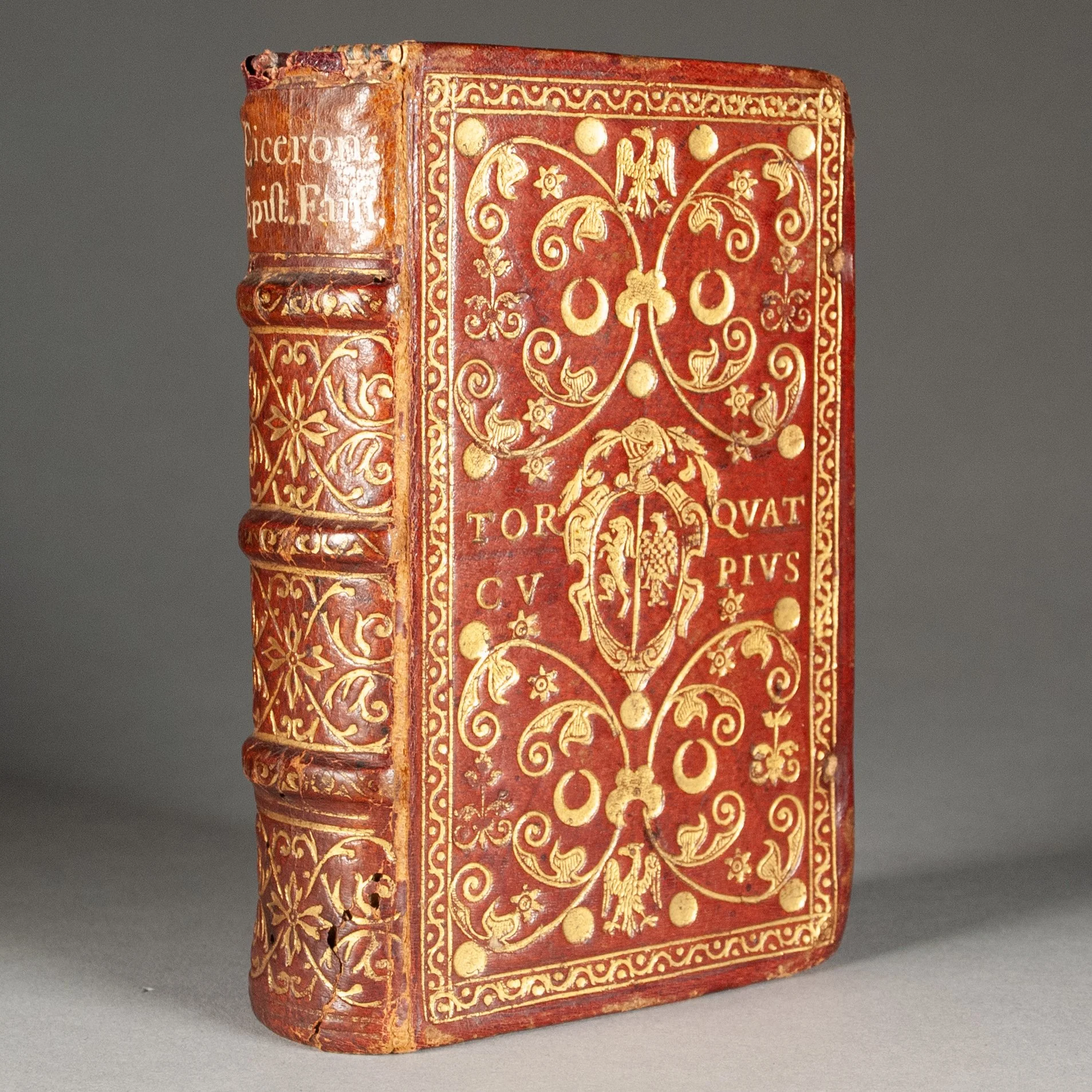 Image 3 of 11
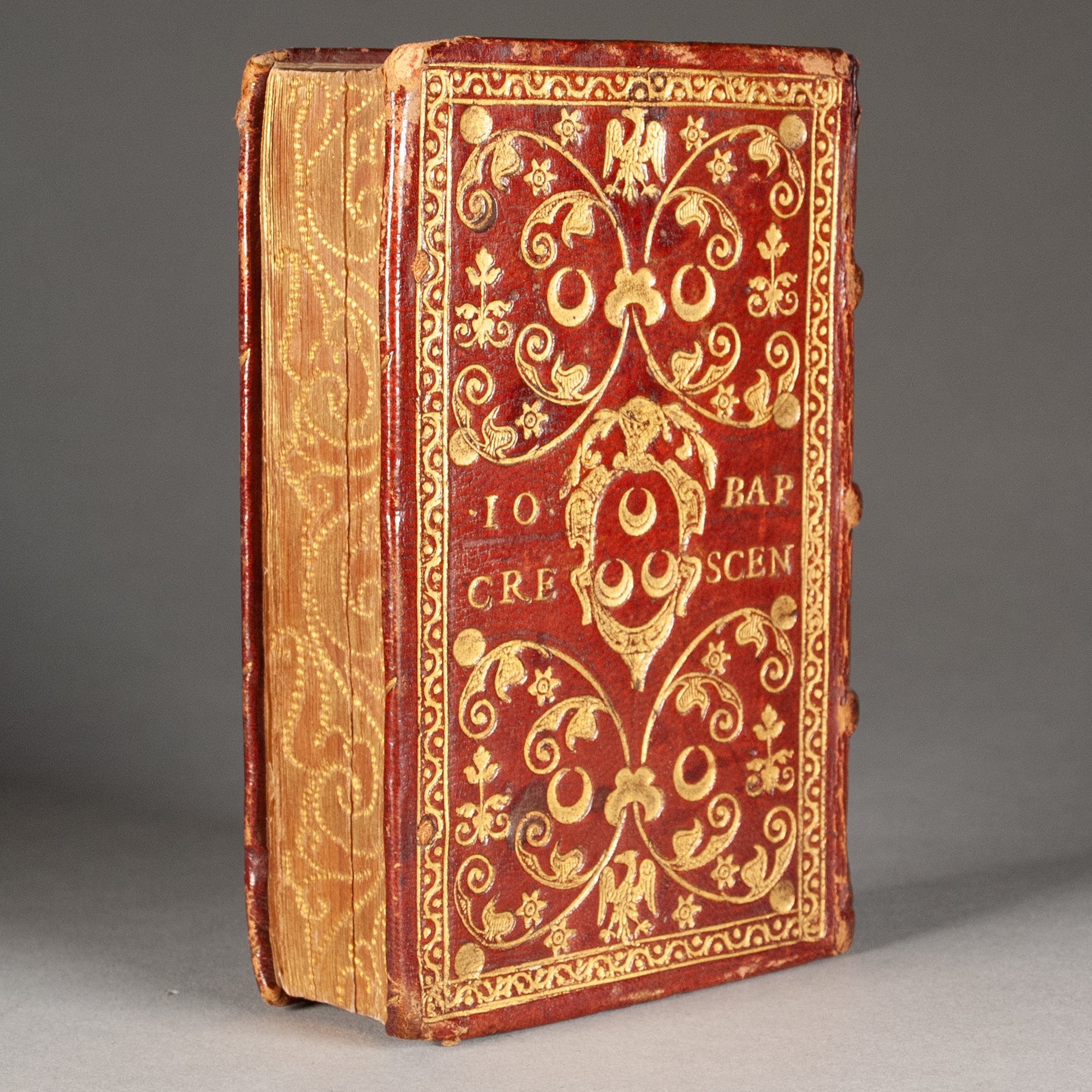 Image 4 of 11
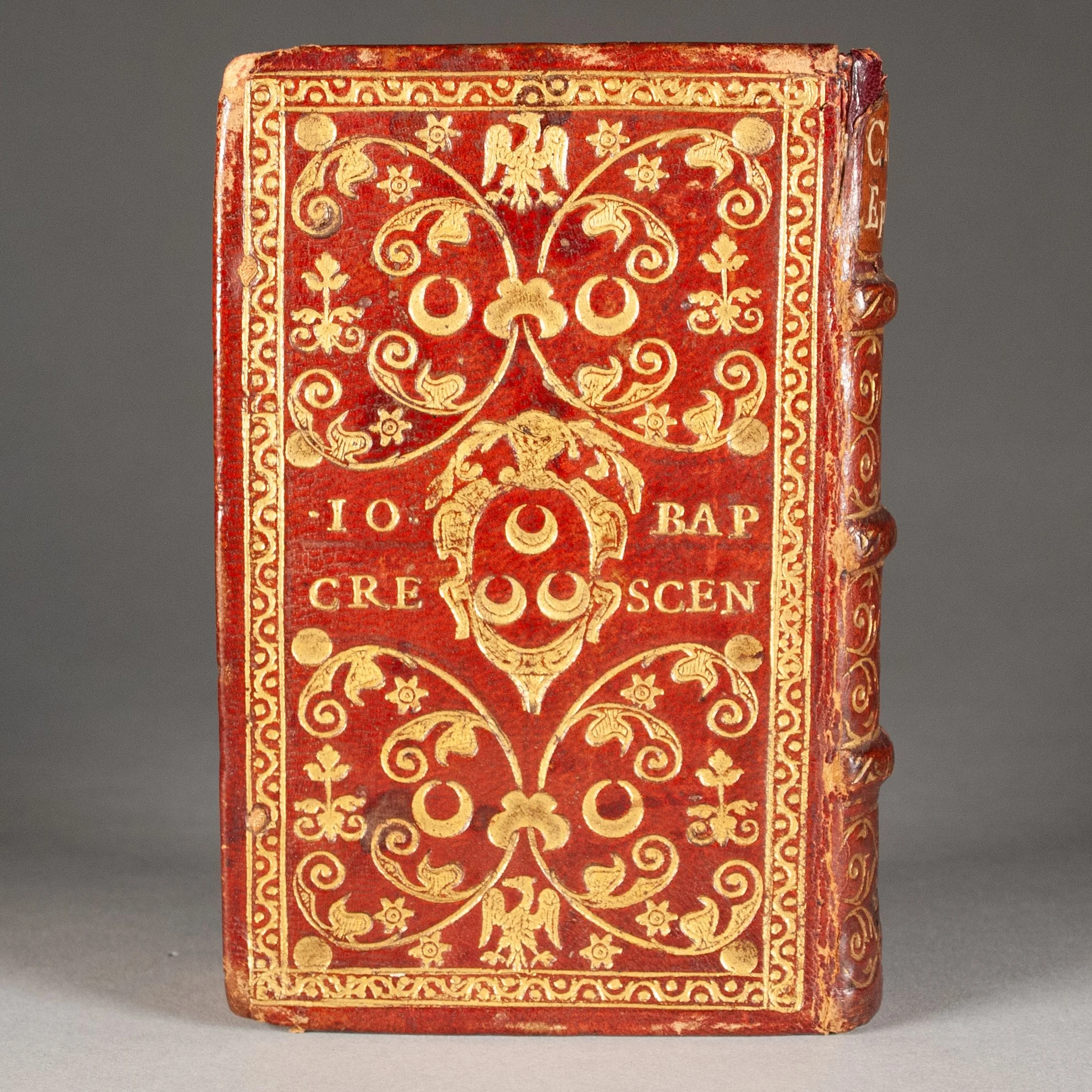 Image 5 of 11
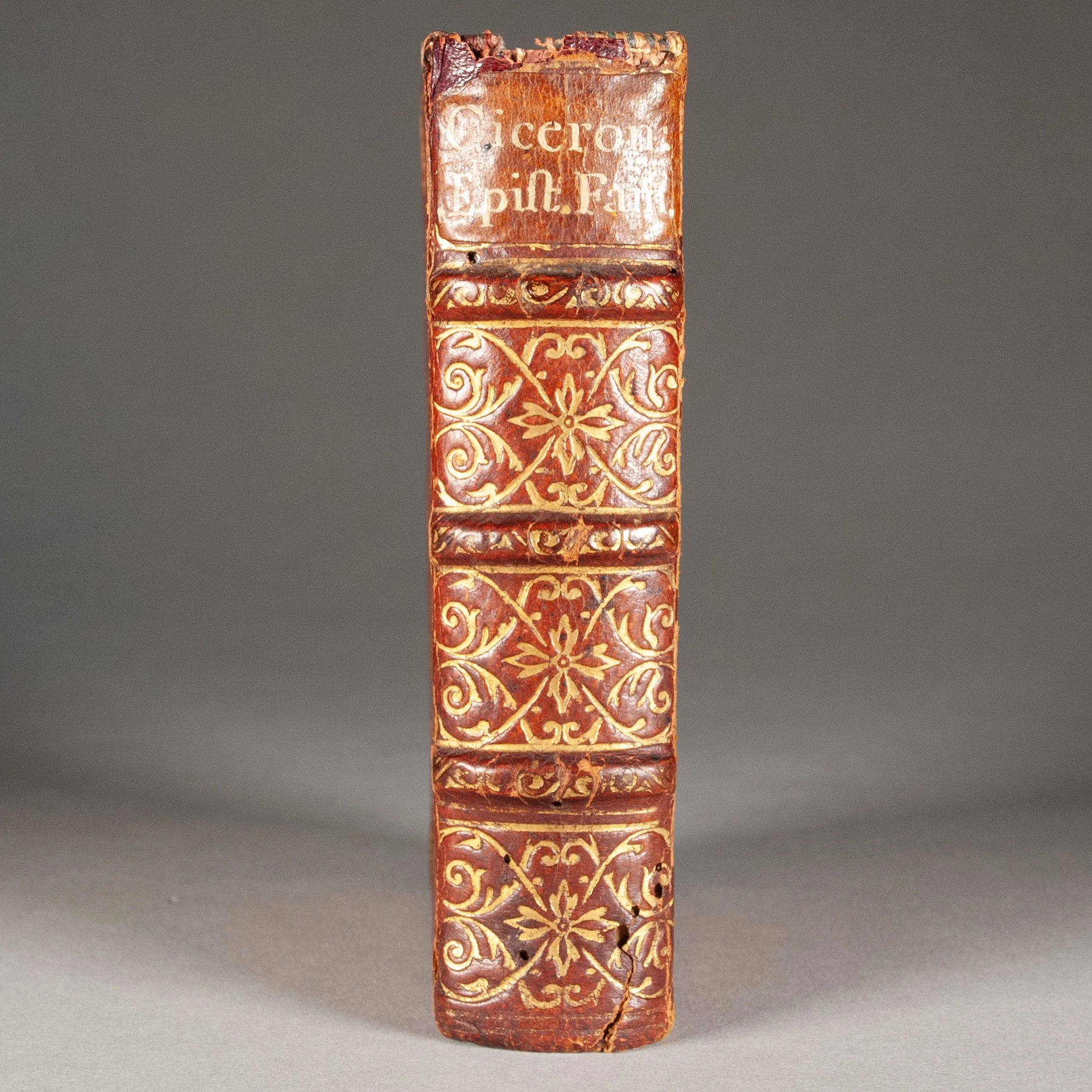 Image 6 of 11
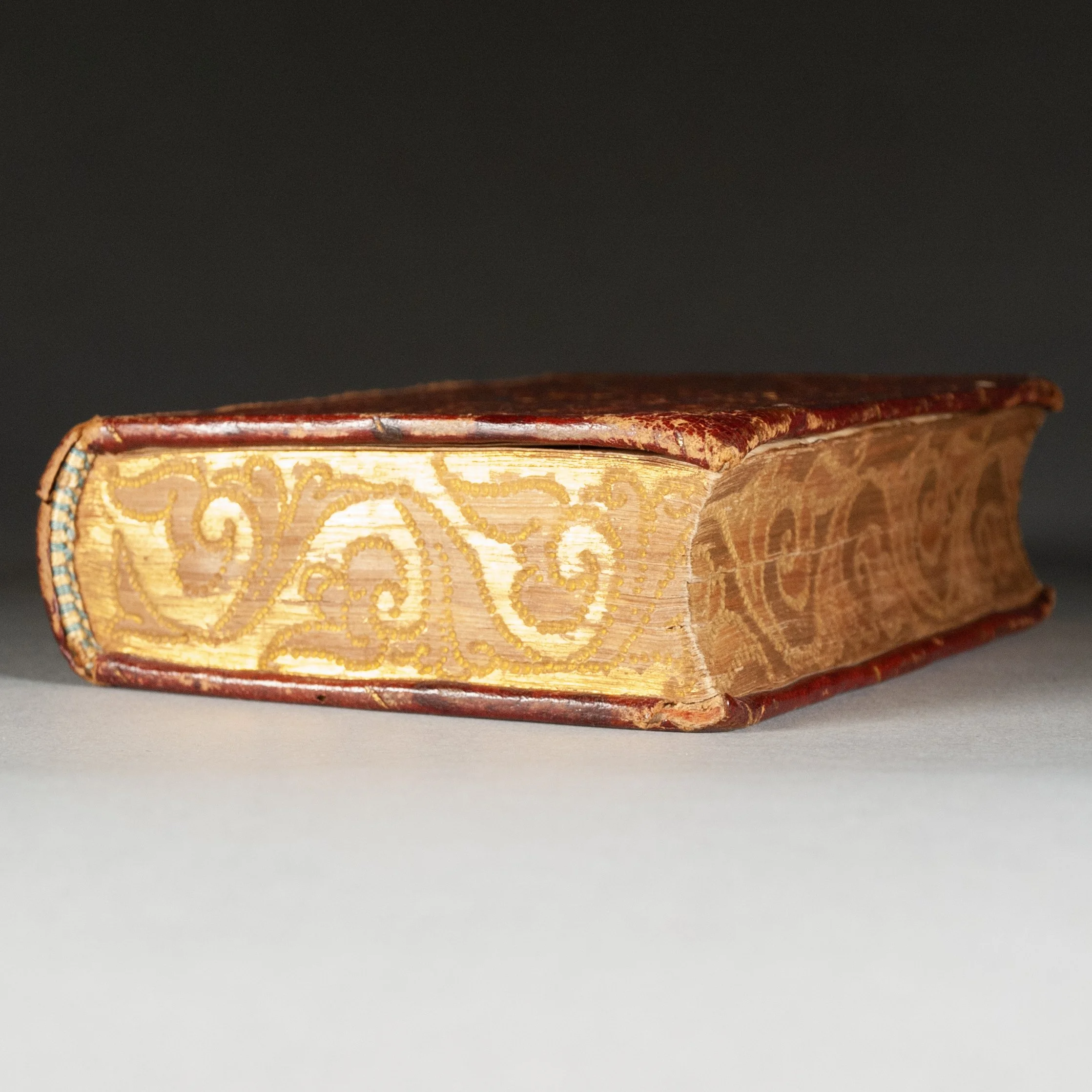 Image 7 of 11
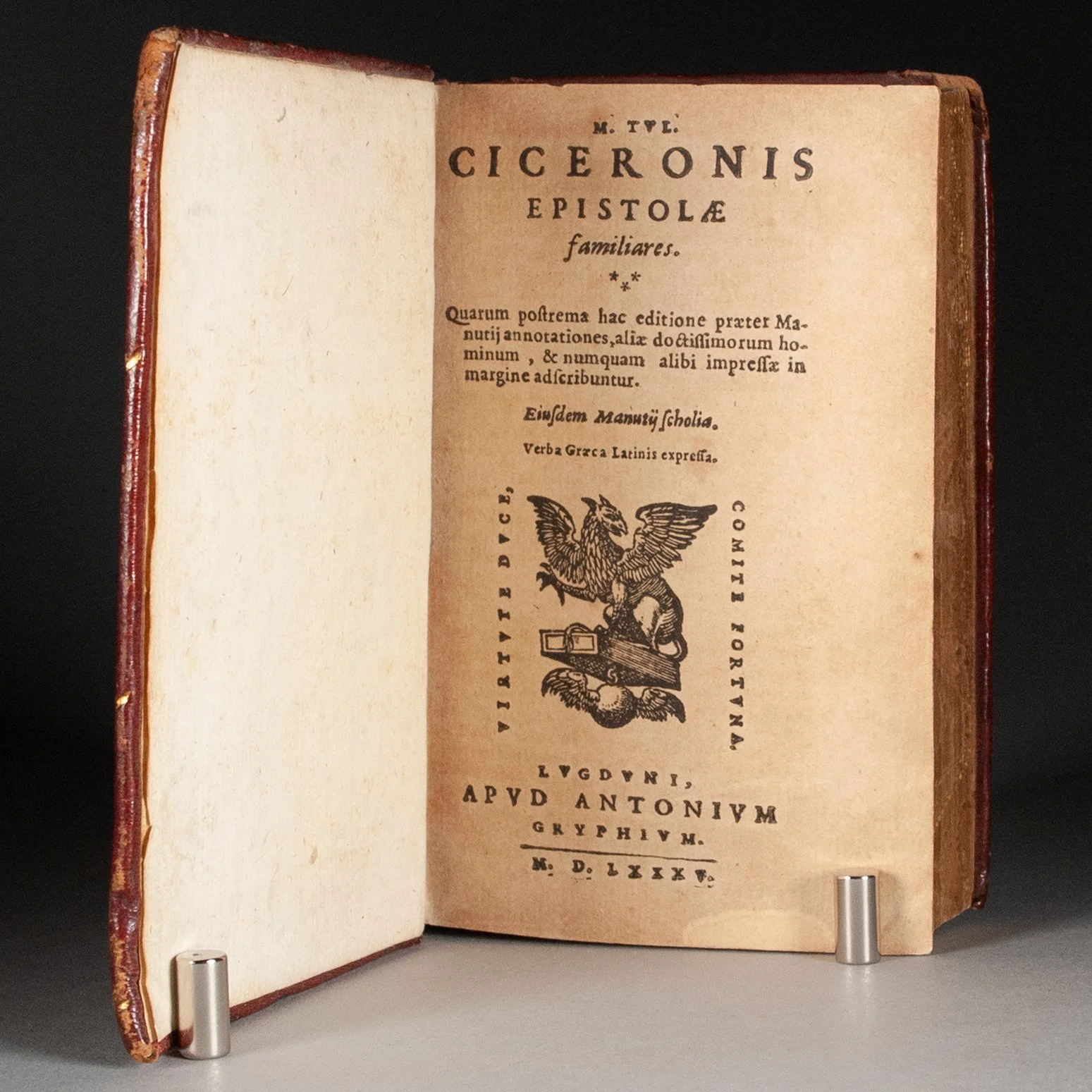 Image 8 of 11
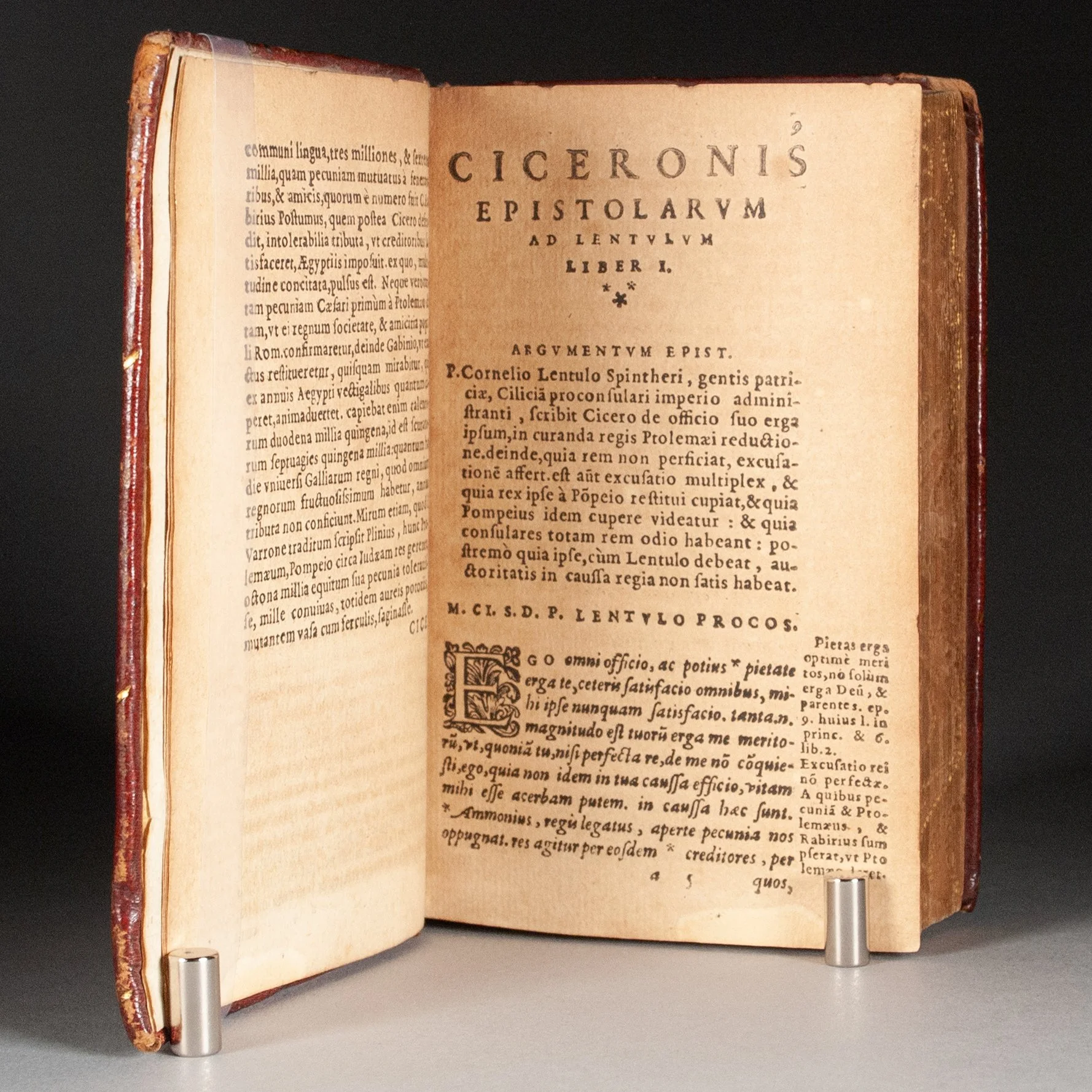 Image 9 of 11
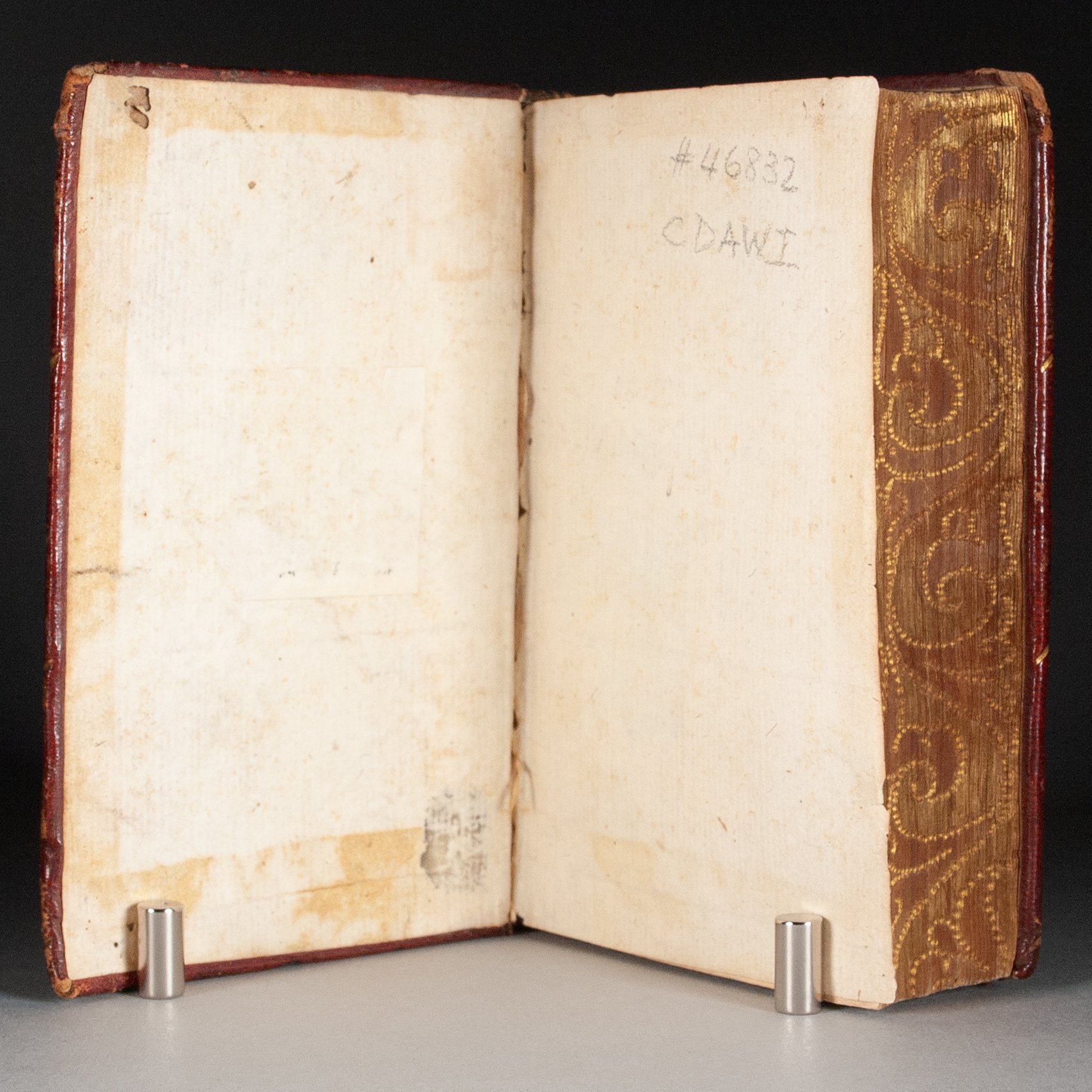 Image 10 of 11
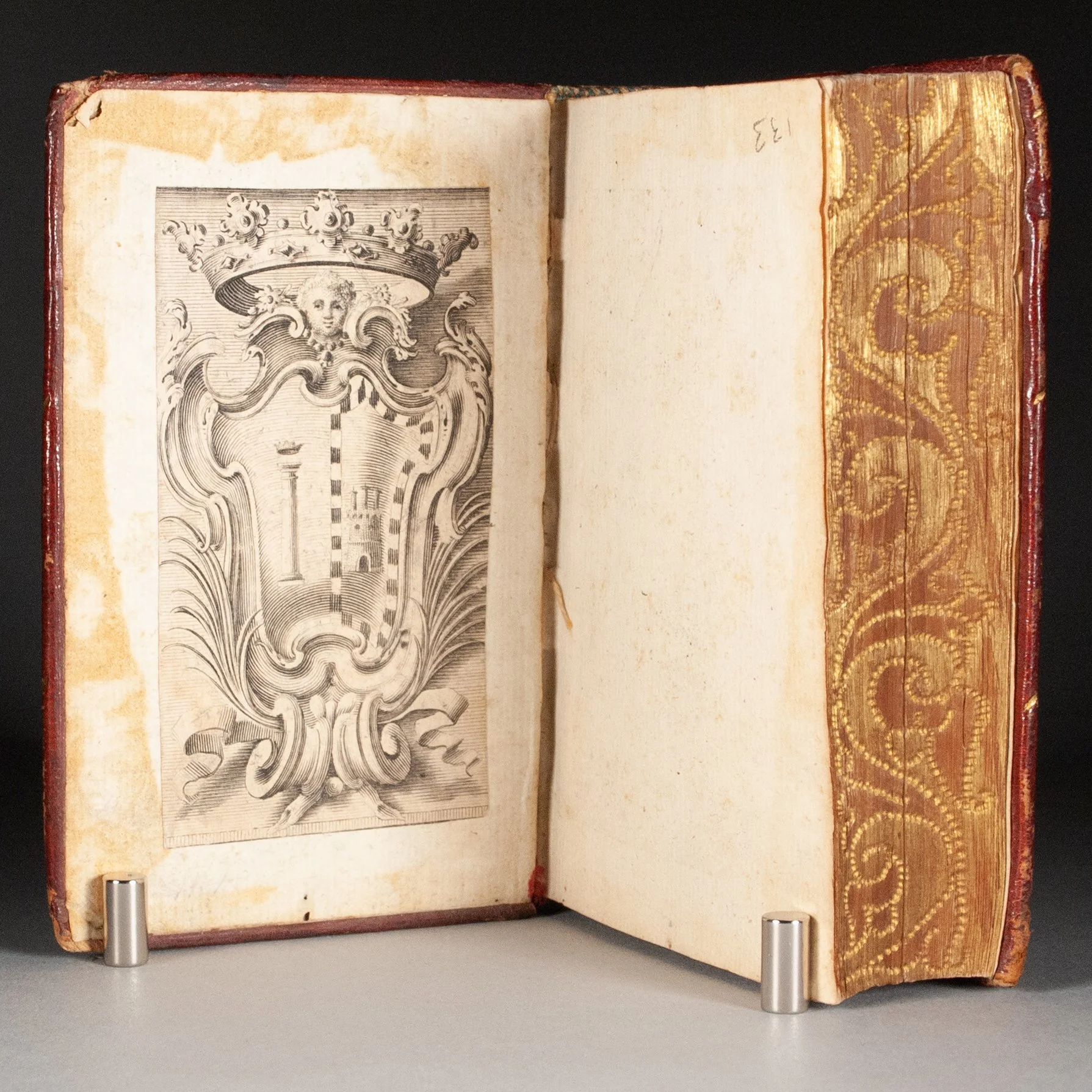 Image 11 of 11