Christ Catholisches Gebett Büchlein, worinen sehr schönne Morgen Gebetter, Mess, Vesper, Beicht und Communion Gebetter, wie auch zu der H. Dreyfaltigkeit, vom bitteren Leiden, zu der Mutter Gottes und denen Heiligen, sambt etlichen Litaneyen, auf etlichen Bücheren heraus gemomen
compiled by J.A.R. (Reinhart?)
[Miltenberg?] 1765
[2], 111, [2], 112-154, [1], 155-273, 276-317, 195-230, 45, [2] p. | 8vo | 167 x 97 mm
A German Catholic woman's personalized devotional manuscript, "compiled from several books" (auf etlichen Bücheren heraus gemomen, i.e., genomen). Regular readers will know we're generally fond of manuscripts made well into the age of print, as they so often partake of both worlds. This one is no exception. This handwritten collection taken auf etlichen Bücheren could theoretically have been compiled from other manuscript sources—and indeed appears to splice together two separate manuscripts. But doubtless it was the abundance of print that afforded the opportunity. Here with six neatly drawn full-page illustrations in black and red (title verso, 112, 154, 184, 225 and 224). Despite the obvious success of the Reformation in Germany, Bavaria has long endured as a Catholic stronghold, making it a natural region for this book's production. ¶ The manuscript would have functioned much like a private vade mecum for everyday devotion. It gathers prayers for all occasions and times of day; a comprehensive set of texts for Mass, including preparations and other instructions (e.g., p. 20-21: "When the priest makes the sign of the cross over the offering, reflect on how Christ was nailed to the cross"); prayers and instructions for Holy Communion and Confession; a robust section of Marian devotions; and prayers for particular feast days (New Year's Day, Easter, etc.). The section following p. 317, starting with p. 195, was likely written by the same person but extracted from another manuscript. It opens with a plague prayer to St. Sebastian (wieder die Pest). The final discrete sequence of 45 p. taps scripture to function as a kind of conduct book (p. 22: How parents should treat their children; p. 24: How children should treat their parents). The content is clearly of a tradition current among German Catholics at the time, being not unlike a manuscript we handled previously, nor unlike a 1774 manuscript at the Bridwell. ¶ One Anna Barbara Reinhart—presumably not the Swiss mathematician, who seems completely unconnected to Miltenberg—boldly claims the book for herself on p. 199 (second sequence): Barbara Reinhartin, bin ich genand Milldenberg ist mein Vatterland, anno 1765. And at the foot of p. 106 (first sequence) is a complementary ABR 1765. But nestled at the bottom of p. 37 is an inscription that points to someone else as scribe: Bete auch fur mich der ich dieser buch geschriben, signed J.A.R. ("Pray also for me, the one who wrote this book"). The pronoun der suggests the scribe was male. It reads like an echo of the very long ora pro me scribal tradition, which dates at least to the late seventh century. "Scribes frequently asked for prayers, and some clearly regarded the copying of a biblical manuscript as a pious activity" (Ganz). J.A.R. seems to have copied the text the same year Anna Barbara took possession of it—see 1765 also on p. 183 and 184, and on p. 44 at end—so we suspect it was produced as a gift for Anna, rather than her own scribal work (though the last two and a half pages may belong to a different hand). The giving of devotional books was a common practice within families—among women especially—and so perhaps, too, was their handwritten production. We do find an Anna Barbara Reinhard born in Niederkirchen in 1766—certainly too young for ours, but ours possibly an ancestor.
PROVENANCE: Old ink stamp of the Miltenberg Franciscans on title and p. 168, with their shelfmark on the title and front fly-leaf, and their label on the spine. The religious house itself was dissolved in 1983. The library seems to have made its way to Dettelbach sometime thereafter, and then to the antiquarian trade. The provenance of ours should not be conflated with books from the Engelberg Monastery, which found a new home at the Miltenberg Museum.
CONDITION: Contemporary brown leather over scaleboard, with floral block-printed paste-downs; edges of the leaves minimally gauffered. Written in black and red ink on laid paper, largely in Kurrentschrift, but blended with a more traditional Fraktur hand. At least a couple of headings were written in blue and red. With a few dozen blank leaves at end. ¶ Page 274/275 torn out; soiled throughout, largely in the lower corner, doubtless from heavy fingering. Binding extremities worn, exposing the board; spine a trifle cocked at the head; leather heavily rubbed. Certainly used, but still solid, all cords intact.
REFERENCES: David Ganz, "Early Manuscripts of the Latin Bible," The Oxford Handbook of the Latin Bible, p. 108 (cited above; "ora pro me ('pray for me') colophons are found in the Codex Amiatinus, the Burchard Gospels, the Book of Durrow, and the Valerianus Gospels"); Heidi Brayman Hackel and Catherine E. Kelly, Reading Women: Literacy, Authorship, and Culture in the Atlantic World, 1500-1800, p. 13 (“Women’s self-defining through book consumption extended beyond the fashion of romances to the rewards of piety, promising the possibility of allowing women to entertain spiritual questions previously reserved for men and to elevate themselves above the commodification of gentlewomen readers at leisure.”); Mary Ellen Lamb, “Inventing the Early Modern Woman Reader through the World of Goods: Lyly’s Gentlewoman Reader and Katherine Stubbes,” Reading Women, p. 29 (“Devout reading promised, or threatened, to elevate women above the commodity status to which gentlewomen readers were relegated”); p. 4 (in 16c England, but we expect much held throughout early modern Europe: "Devotional books were famously associated with and recommended to literate women as a form of religious study or practice...Devotional reading was also endorsed as an escape from the fraught state of idleness, part of what Carol Meale and Julia Boffey term 'a programme of virtuous activities designed to occupy body and mind,' including pursuits like praying, spinning, sewing, and other household tasks.")
Item #1011
Christ Catholisches Gebett Büchlein, worinen sehr schönne Morgen Gebetter, Mess, Vesper, Beicht und Communion Gebetter, wie auch zu der H. Dreyfaltigkeit, vom bitteren Leiden, zu der Mutter Gottes und denen Heiligen, sambt etlichen Litaneyen, auf etlichen Bücheren heraus gemomen
compiled by J.A.R. (Reinhart?)
[Miltenberg?] 1765
[2], 111, [2], 112-154, [1], 155-273, 276-317, 195-230, 45, [2] p. | 8vo | 167 x 97 mm
A German Catholic woman's personalized devotional manuscript, "compiled from several books" (auf etlichen Bücheren heraus gemomen, i.e., genomen). Regular readers will know we're generally fond of manuscripts made well into the age of print, as they so often partake of both worlds. This one is no exception. This handwritten collection taken auf etlichen Bücheren could theoretically have been compiled from other manuscript sources—and indeed appears to splice together two separate manuscripts. But doubtless it was the abundance of print that afforded the opportunity. Here with six neatly drawn full-page illustrations in black and red (title verso, 112, 154, 184, 225 and 224). Despite the obvious success of the Reformation in Germany, Bavaria has long endured as a Catholic stronghold, making it a natural region for this book's production. ¶ The manuscript would have functioned much like a private vade mecum for everyday devotion. It gathers prayers for all occasions and times of day; a comprehensive set of texts for Mass, including preparations and other instructions (e.g., p. 20-21: "When the priest makes the sign of the cross over the offering, reflect on how Christ was nailed to the cross"); prayers and instructions for Holy Communion and Confession; a robust section of Marian devotions; and prayers for particular feast days (New Year's Day, Easter, etc.). The section following p. 317, starting with p. 195, was likely written by the same person but extracted from another manuscript. It opens with a plague prayer to St. Sebastian (wieder die Pest). The final discrete sequence of 45 p. taps scripture to function as a kind of conduct book (p. 22: How parents should treat their children; p. 24: How children should treat their parents). The content is clearly of a tradition current among German Catholics at the time, being not unlike a manuscript we handled previously, nor unlike a 1774 manuscript at the Bridwell. ¶ One Anna Barbara Reinhart—presumably not the Swiss mathematician, who seems completely unconnected to Miltenberg—boldly claims the book for herself on p. 199 (second sequence): Barbara Reinhartin, bin ich genand Milldenberg ist mein Vatterland, anno 1765. And at the foot of p. 106 (first sequence) is a complementary ABR 1765. But nestled at the bottom of p. 37 is an inscription that points to someone else as scribe: Bete auch fur mich der ich dieser buch geschriben, signed J.A.R. ("Pray also for me, the one who wrote this book"). The pronoun der suggests the scribe was male. It reads like an echo of the very long ora pro me scribal tradition, which dates at least to the late seventh century. "Scribes frequently asked for prayers, and some clearly regarded the copying of a biblical manuscript as a pious activity" (Ganz). J.A.R. seems to have copied the text the same year Anna Barbara took possession of it—see 1765 also on p. 183 and 184, and on p. 44 at end—so we suspect it was produced as a gift for Anna, rather than her own scribal work (though the last two and a half pages may belong to a different hand). The giving of devotional books was a common practice within families—among women especially—and so perhaps, too, was their handwritten production. We do find an Anna Barbara Reinhard born in Niederkirchen in 1766—certainly too young for ours, but ours possibly an ancestor.
PROVENANCE: Old ink stamp of the Miltenberg Franciscans on title and p. 168, with their shelfmark on the title and front fly-leaf, and their label on the spine. The religious house itself was dissolved in 1983. The library seems to have made its way to Dettelbach sometime thereafter, and then to the antiquarian trade. The provenance of ours should not be conflated with books from the Engelberg Monastery, which found a new home at the Miltenberg Museum.
CONDITION: Contemporary brown leather over scaleboard, with floral block-printed paste-downs; edges of the leaves minimally gauffered. Written in black and red ink on laid paper, largely in Kurrentschrift, but blended with a more traditional Fraktur hand. At least a couple of headings were written in blue and red. With a few dozen blank leaves at end. ¶ Page 274/275 torn out; soiled throughout, largely in the lower corner, doubtless from heavy fingering. Binding extremities worn, exposing the board; spine a trifle cocked at the head; leather heavily rubbed. Certainly used, but still solid, all cords intact.
REFERENCES: David Ganz, "Early Manuscripts of the Latin Bible," The Oxford Handbook of the Latin Bible, p. 108 (cited above; "ora pro me ('pray for me') colophons are found in the Codex Amiatinus, the Burchard Gospels, the Book of Durrow, and the Valerianus Gospels"); Heidi Brayman Hackel and Catherine E. Kelly, Reading Women: Literacy, Authorship, and Culture in the Atlantic World, 1500-1800, p. 13 (“Women’s self-defining through book consumption extended beyond the fashion of romances to the rewards of piety, promising the possibility of allowing women to entertain spiritual questions previously reserved for men and to elevate themselves above the commodification of gentlewomen readers at leisure.”); Mary Ellen Lamb, “Inventing the Early Modern Woman Reader through the World of Goods: Lyly’s Gentlewoman Reader and Katherine Stubbes,” Reading Women, p. 29 (“Devout reading promised, or threatened, to elevate women above the commodity status to which gentlewomen readers were relegated”); p. 4 (in 16c England, but we expect much held throughout early modern Europe: "Devotional books were famously associated with and recommended to literate women as a form of religious study or practice...Devotional reading was also endorsed as an escape from the fraught state of idleness, part of what Carol Meale and Julia Boffey term 'a programme of virtuous activities designed to occupy body and mind,' including pursuits like praying, spinning, sewing, and other household tasks.")
Item #1011

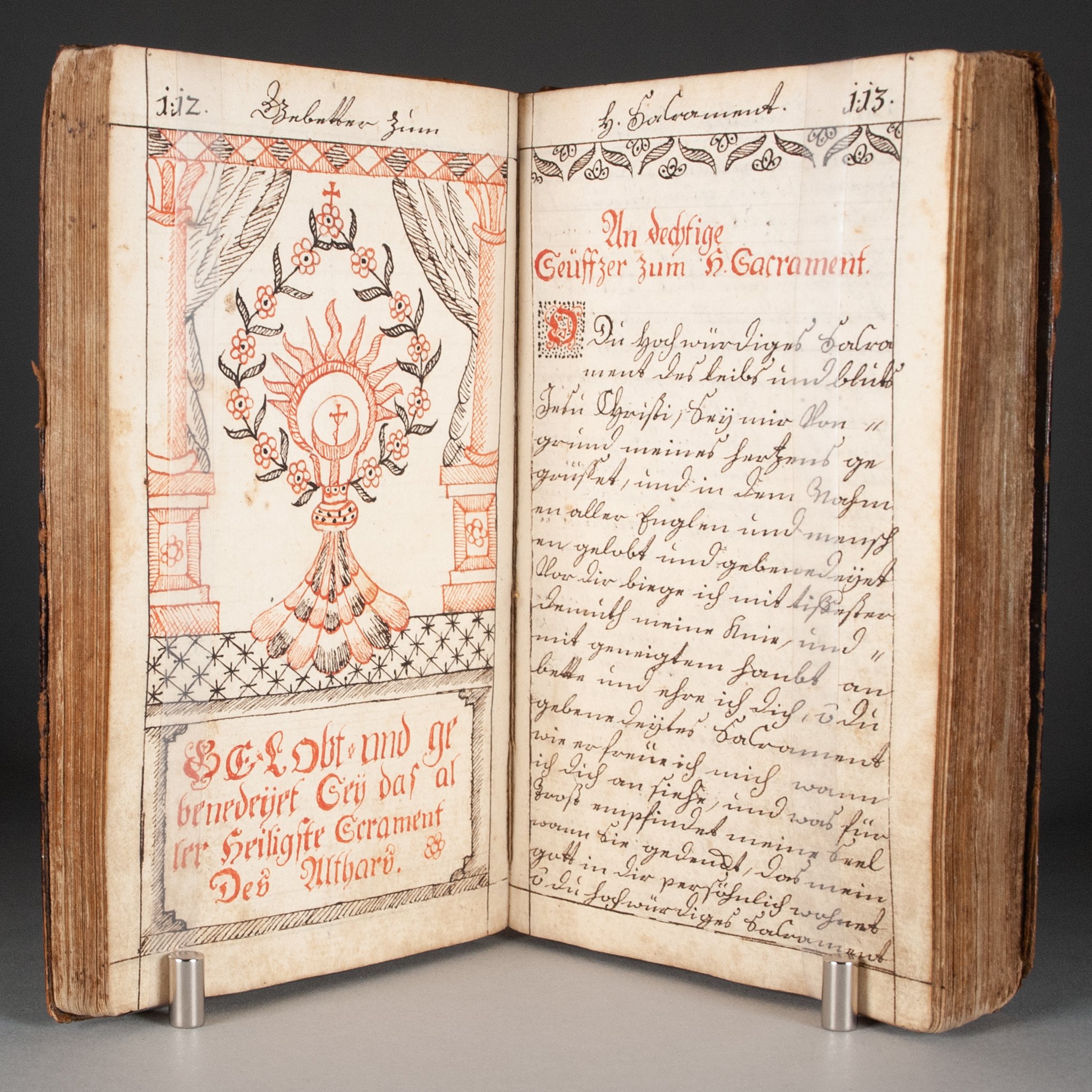 Image 1 of 22
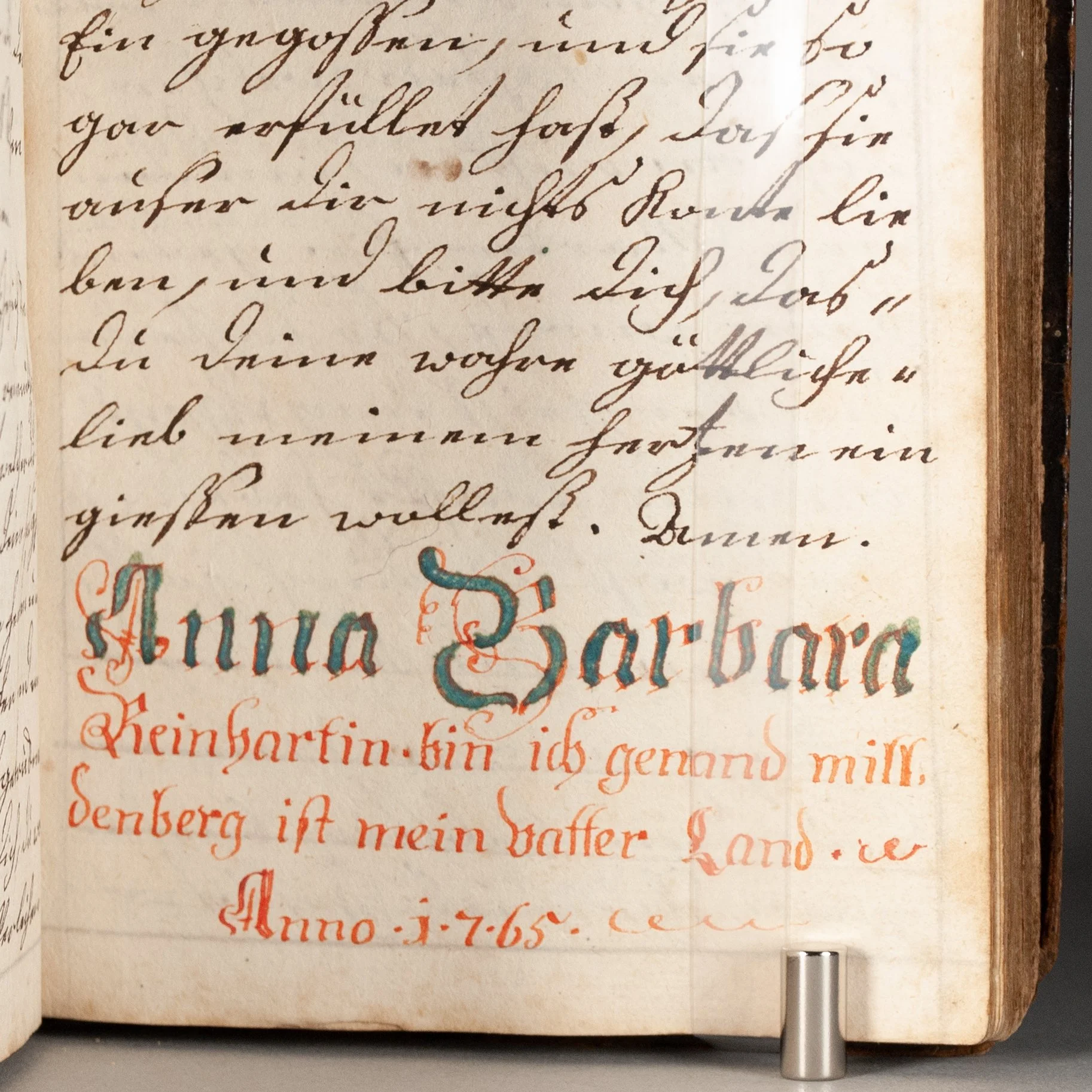 Image 2 of 22
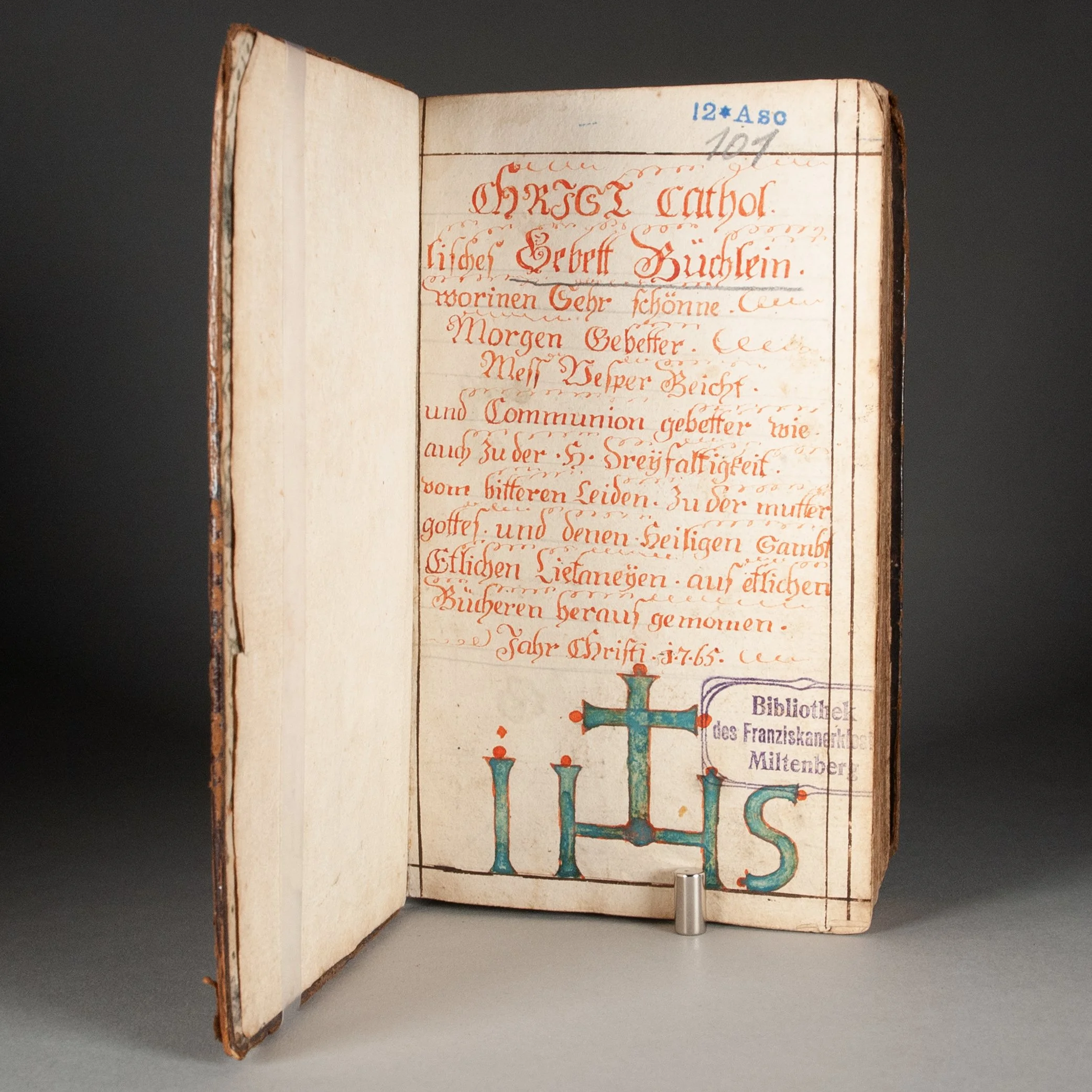 Image 3 of 22
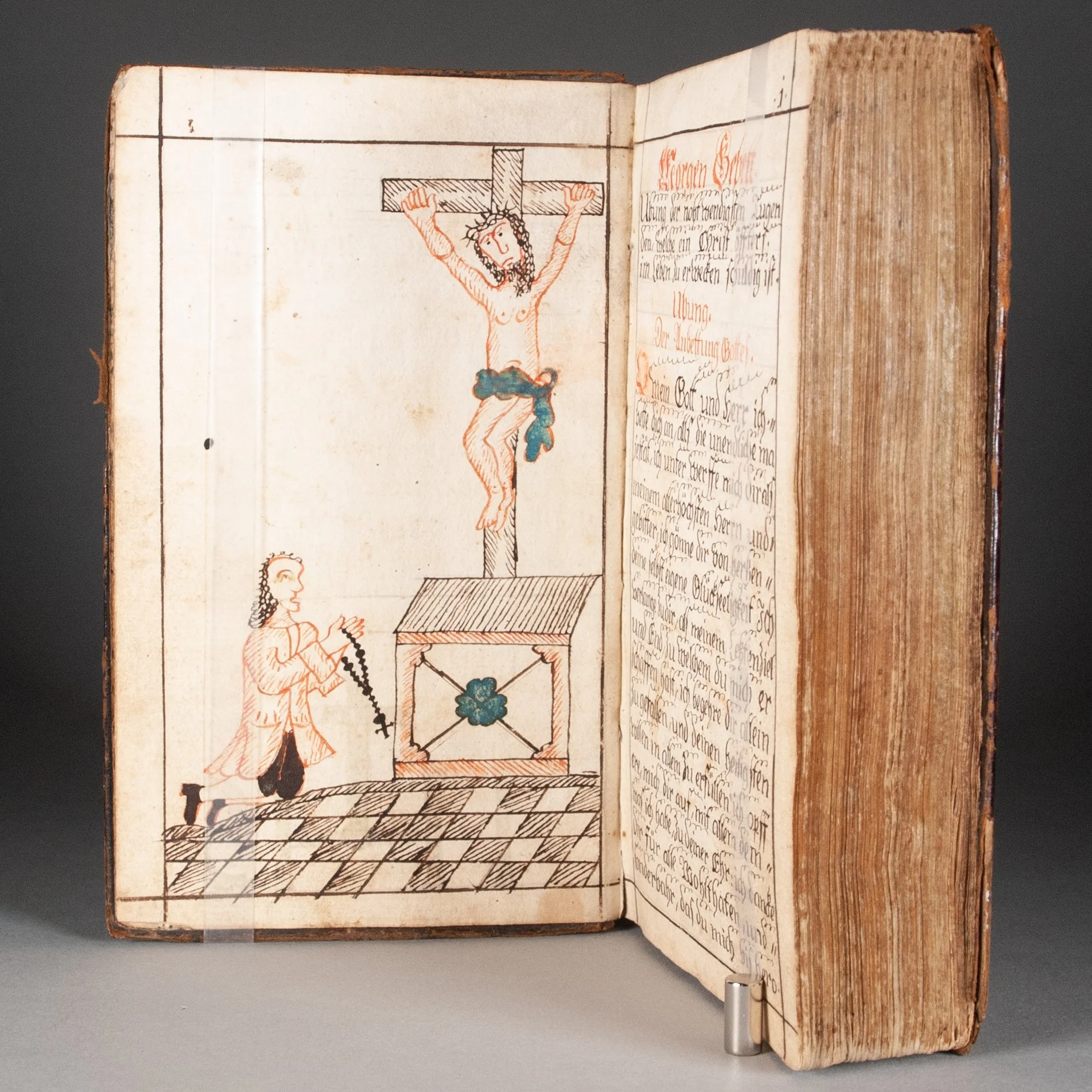 Image 4 of 22
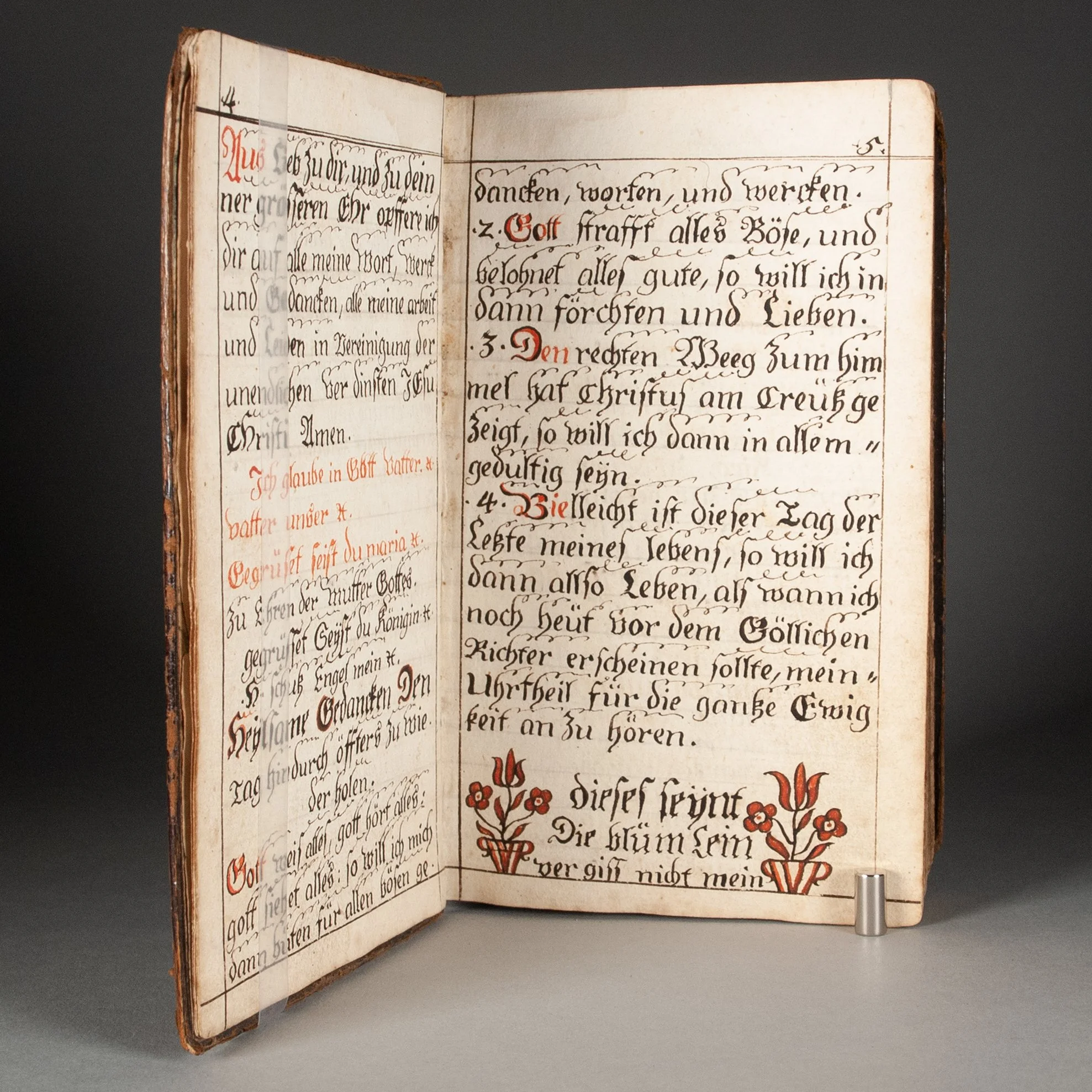 Image 5 of 22
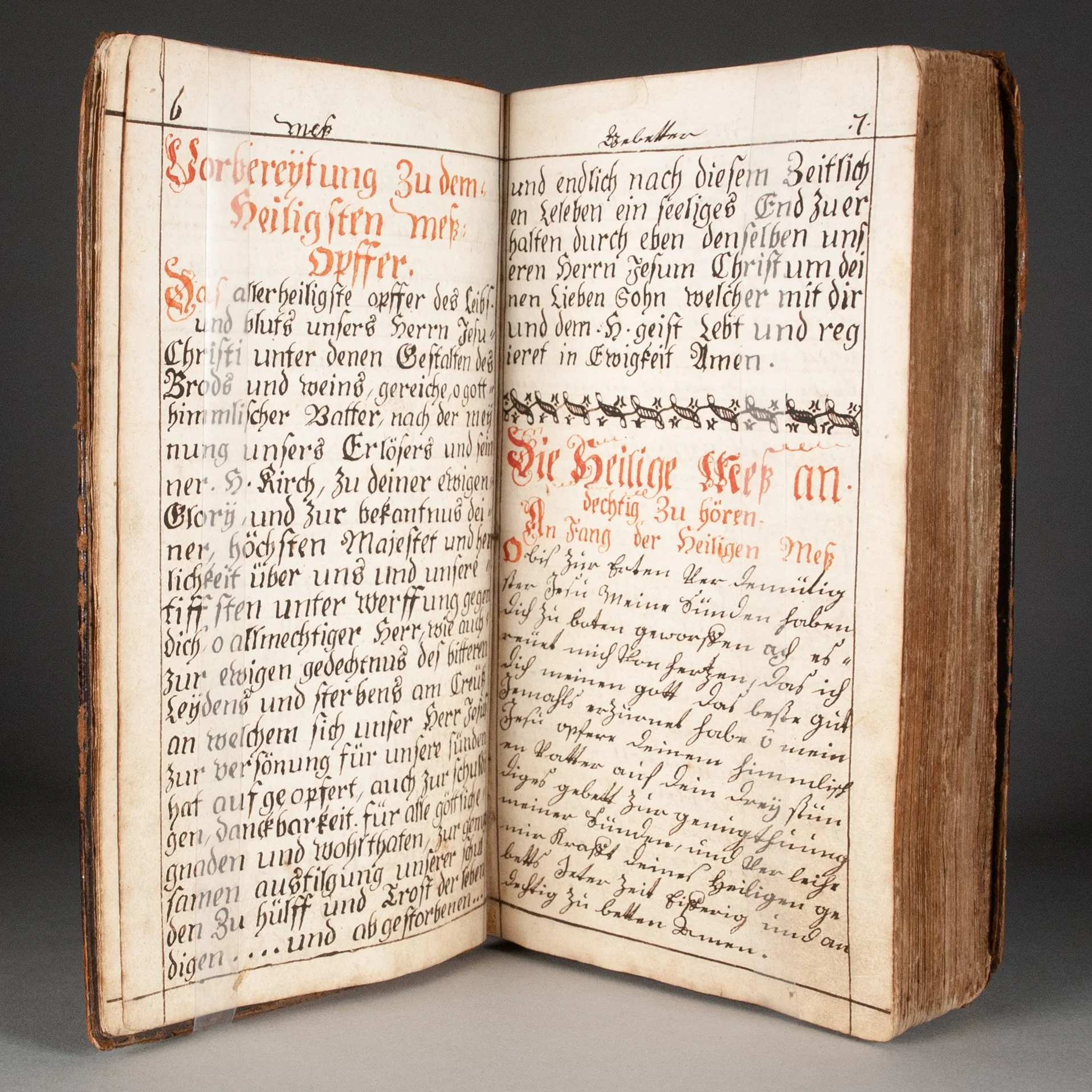 Image 6 of 22
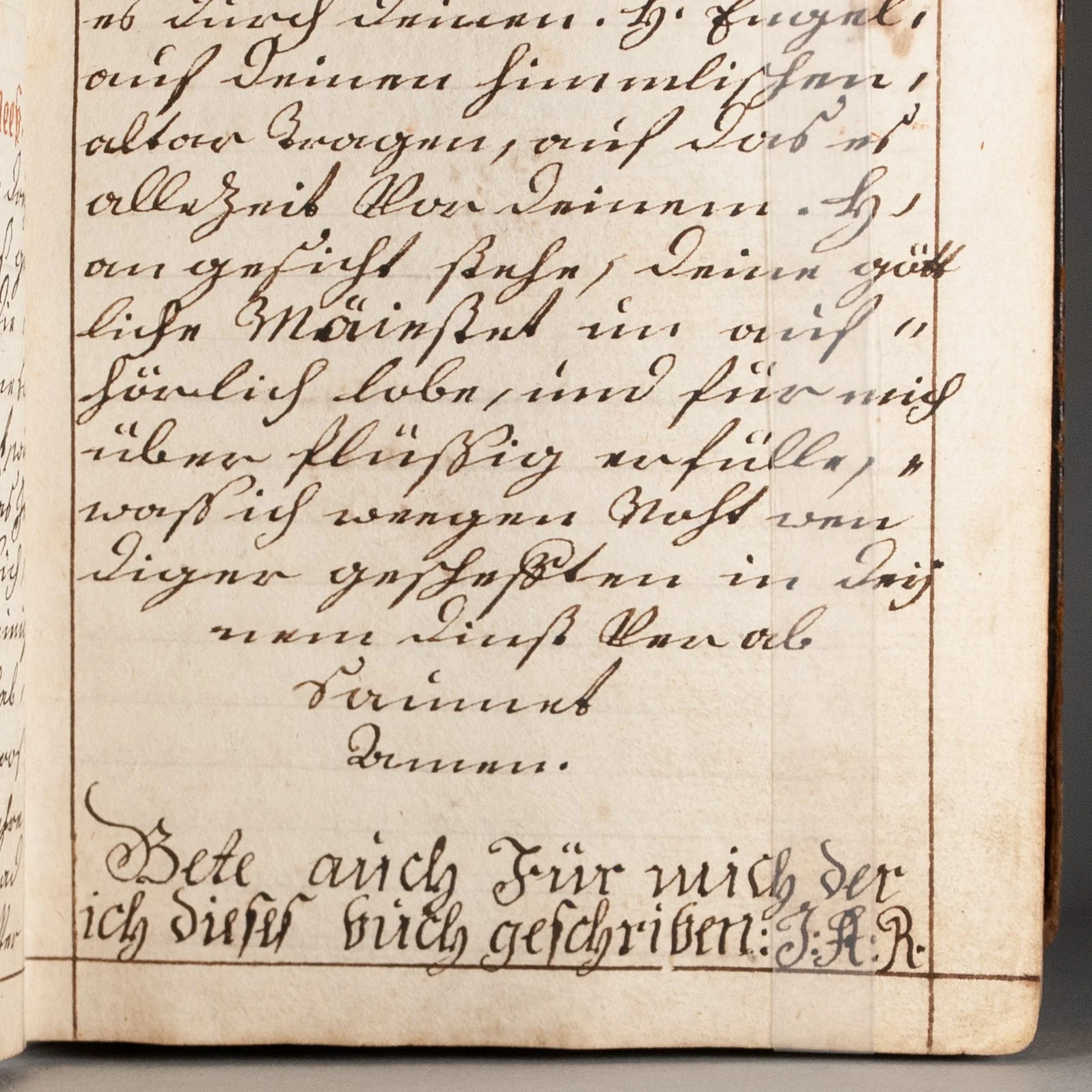 Image 7 of 22
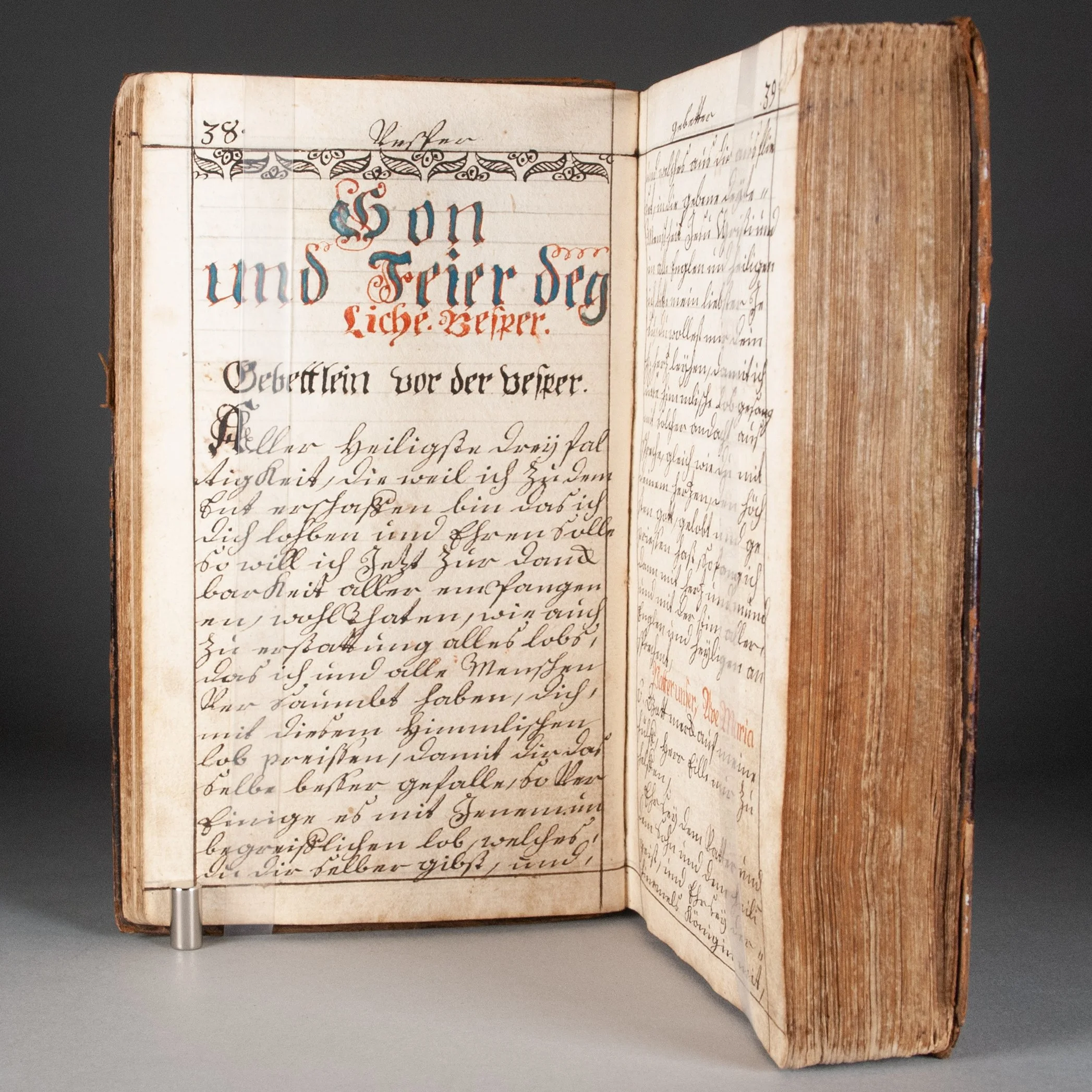 Image 8 of 22
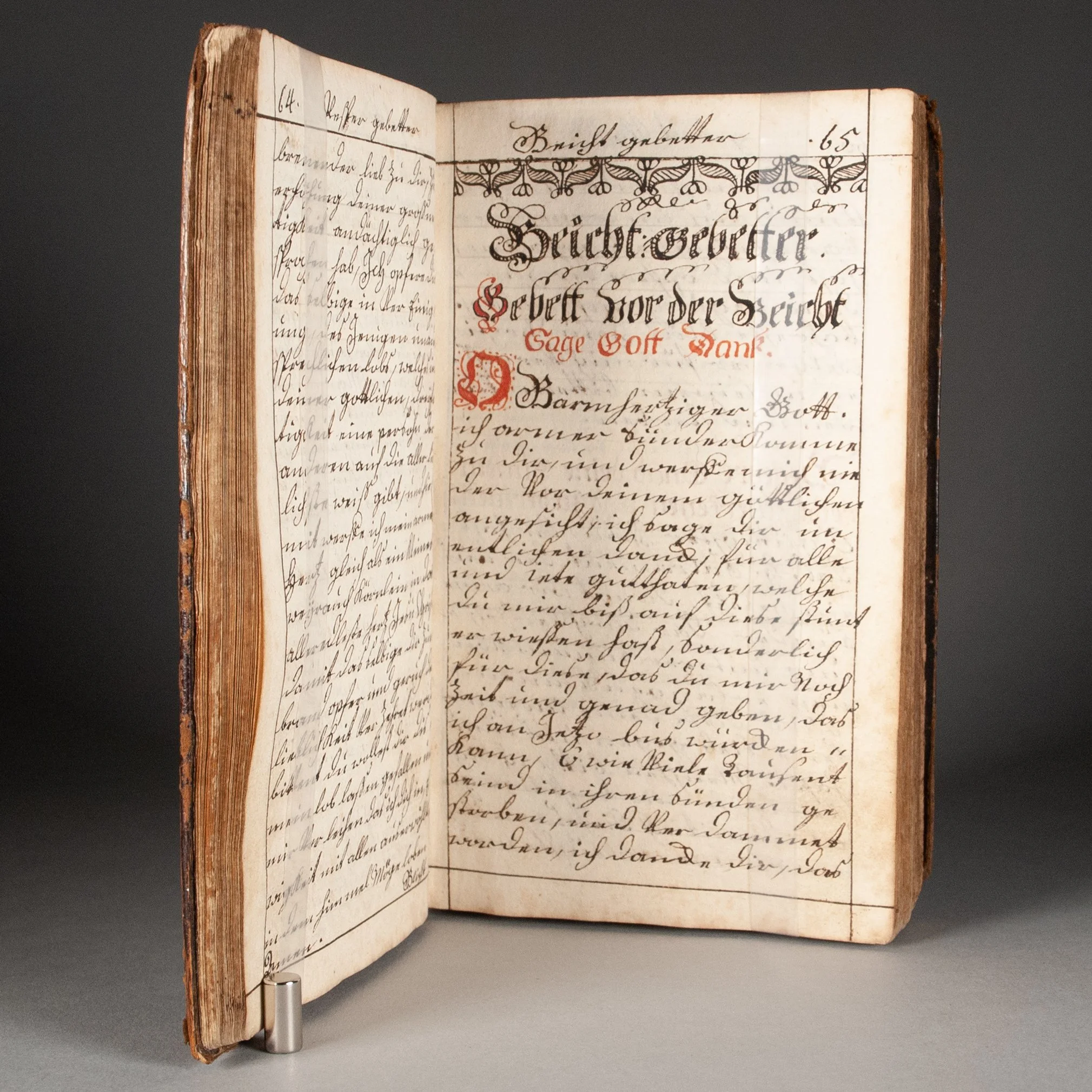 Image 9 of 22
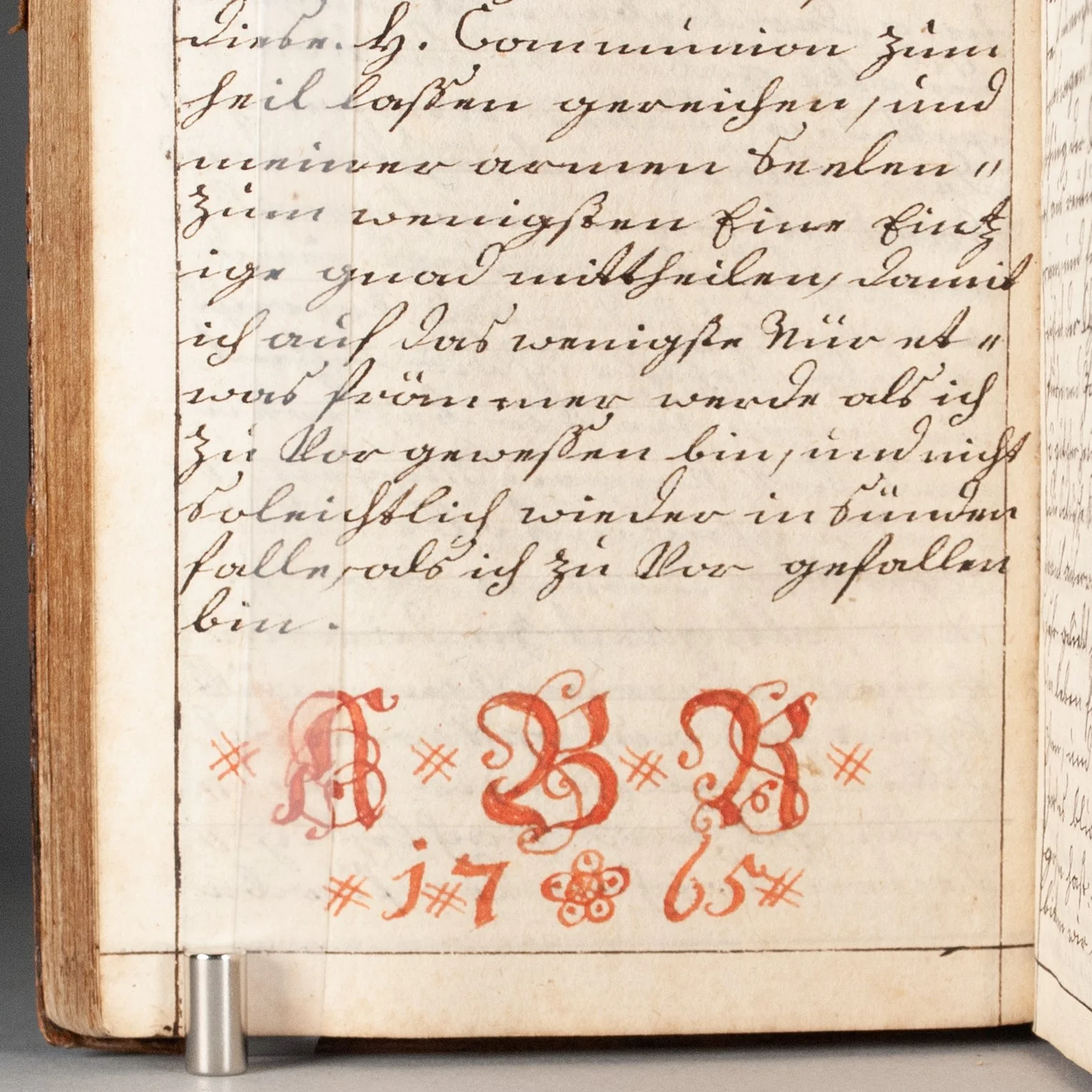 Image 10 of 22
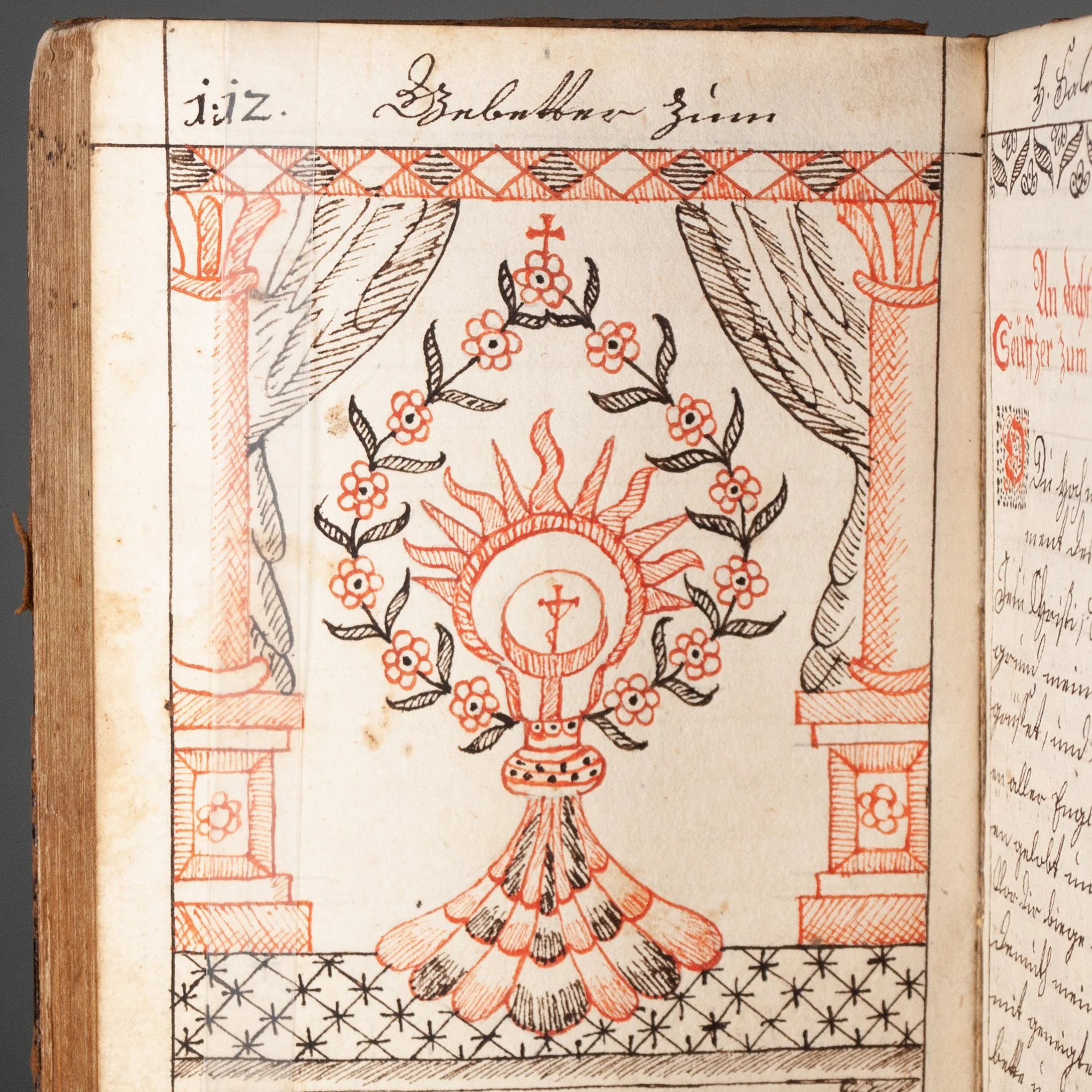 Image 11 of 22
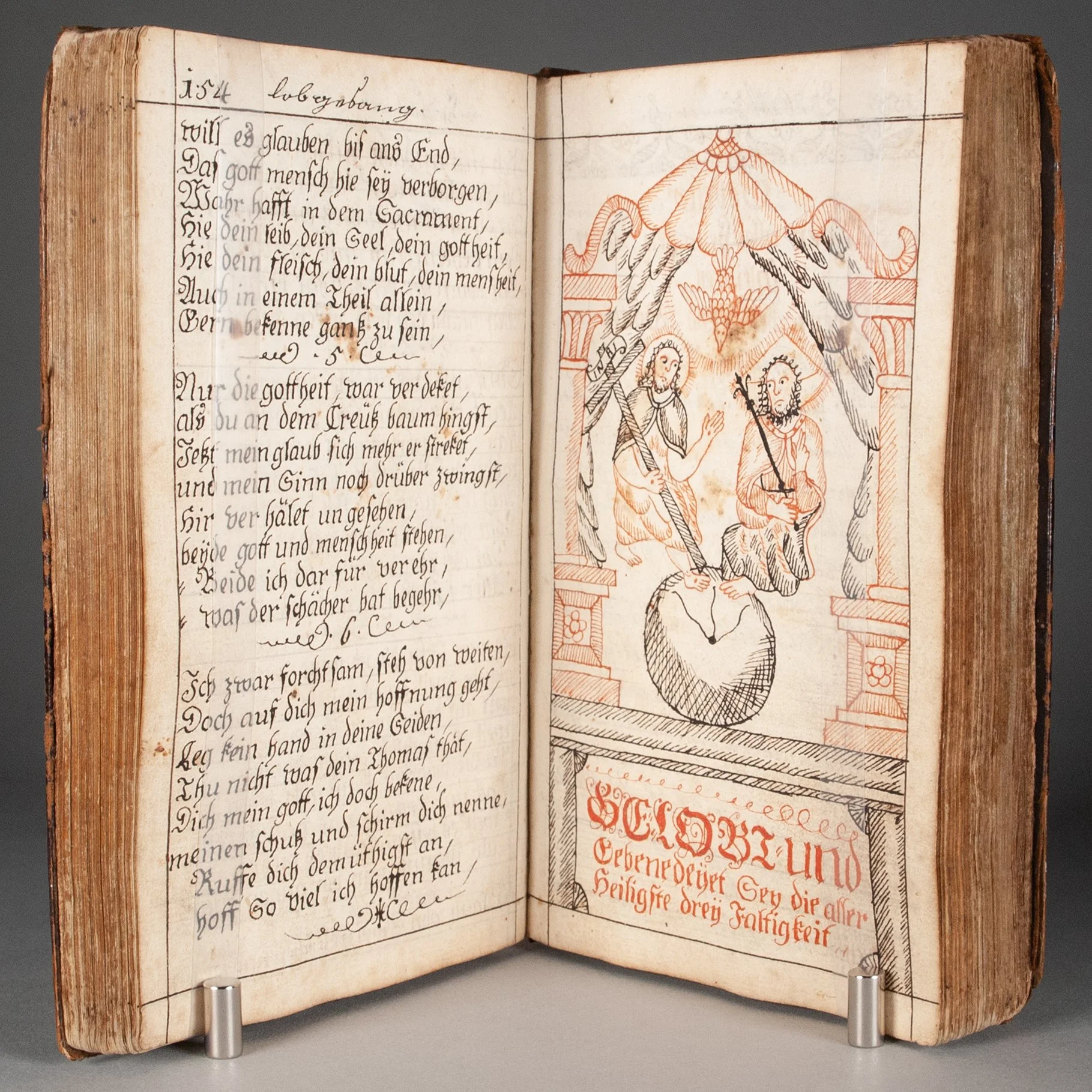 Image 12 of 22
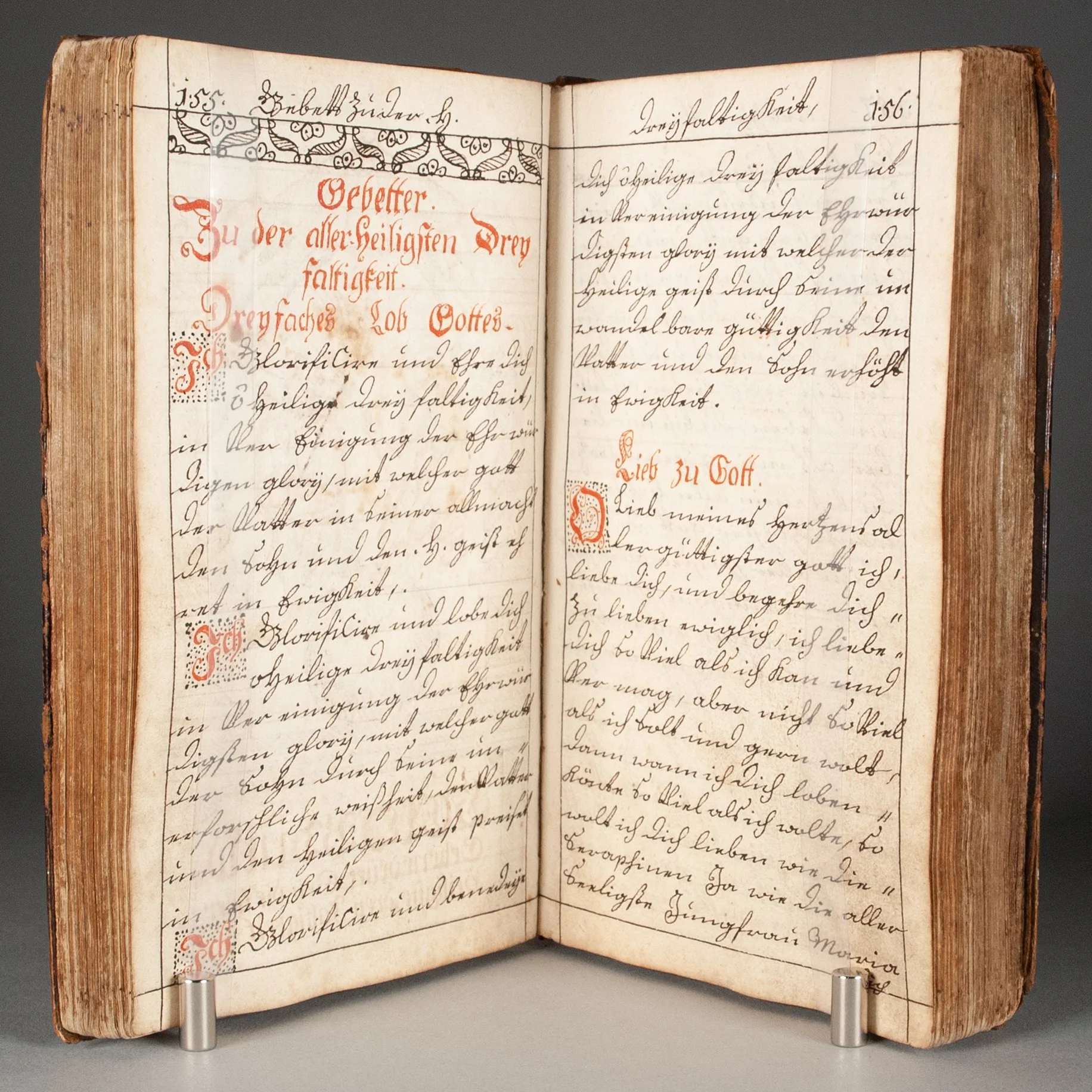 Image 13 of 22
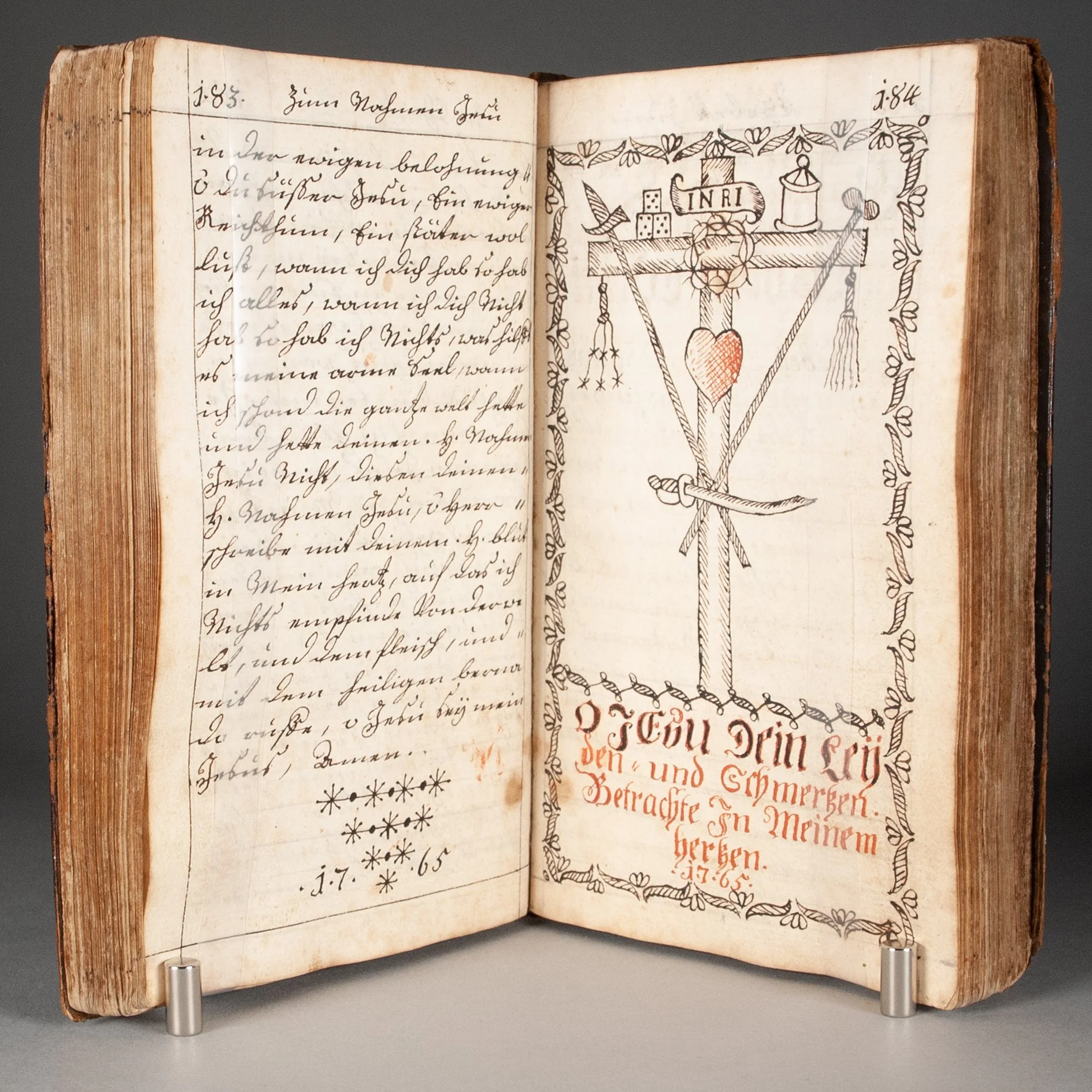 Image 14 of 22
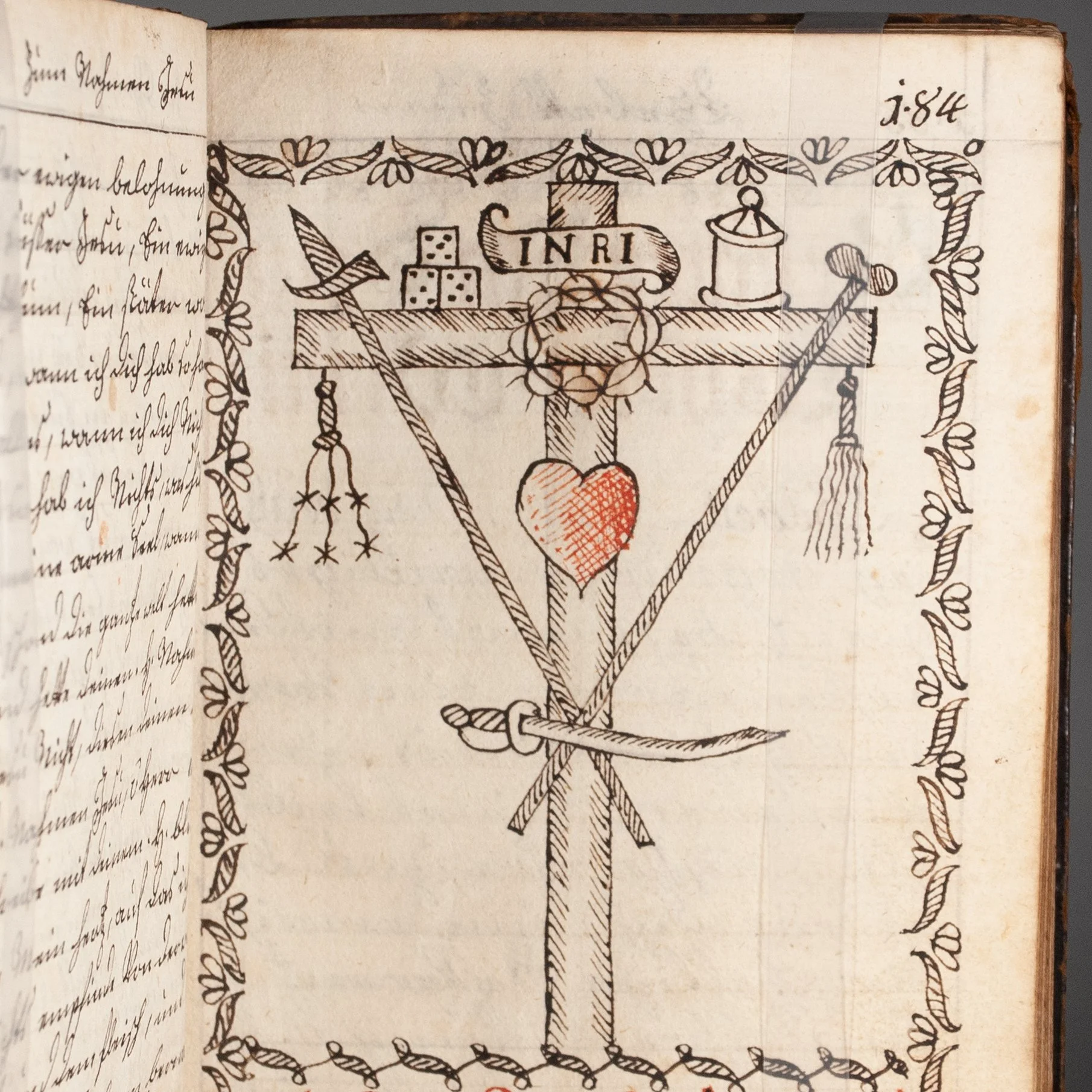 Image 15 of 22
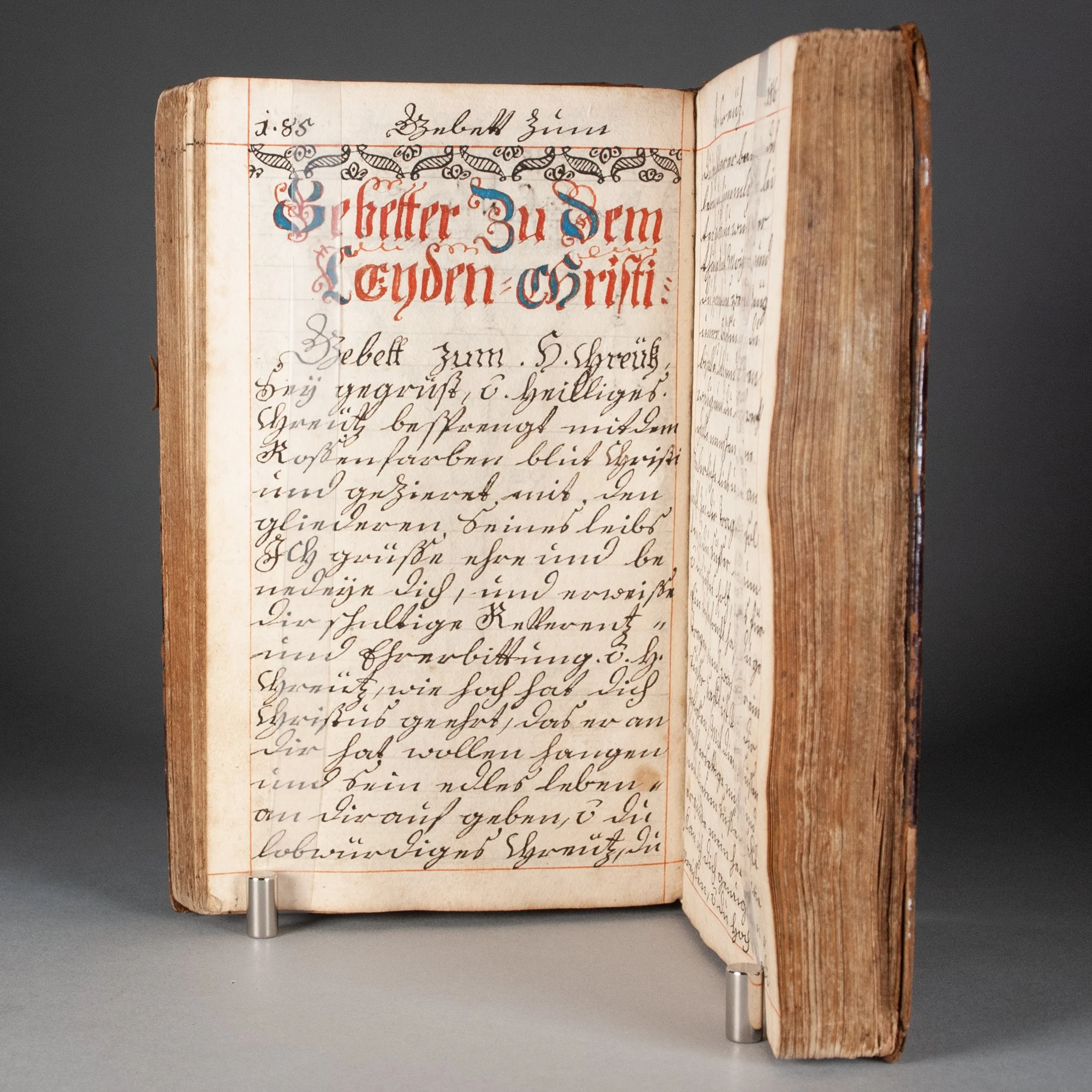 Image 16 of 22
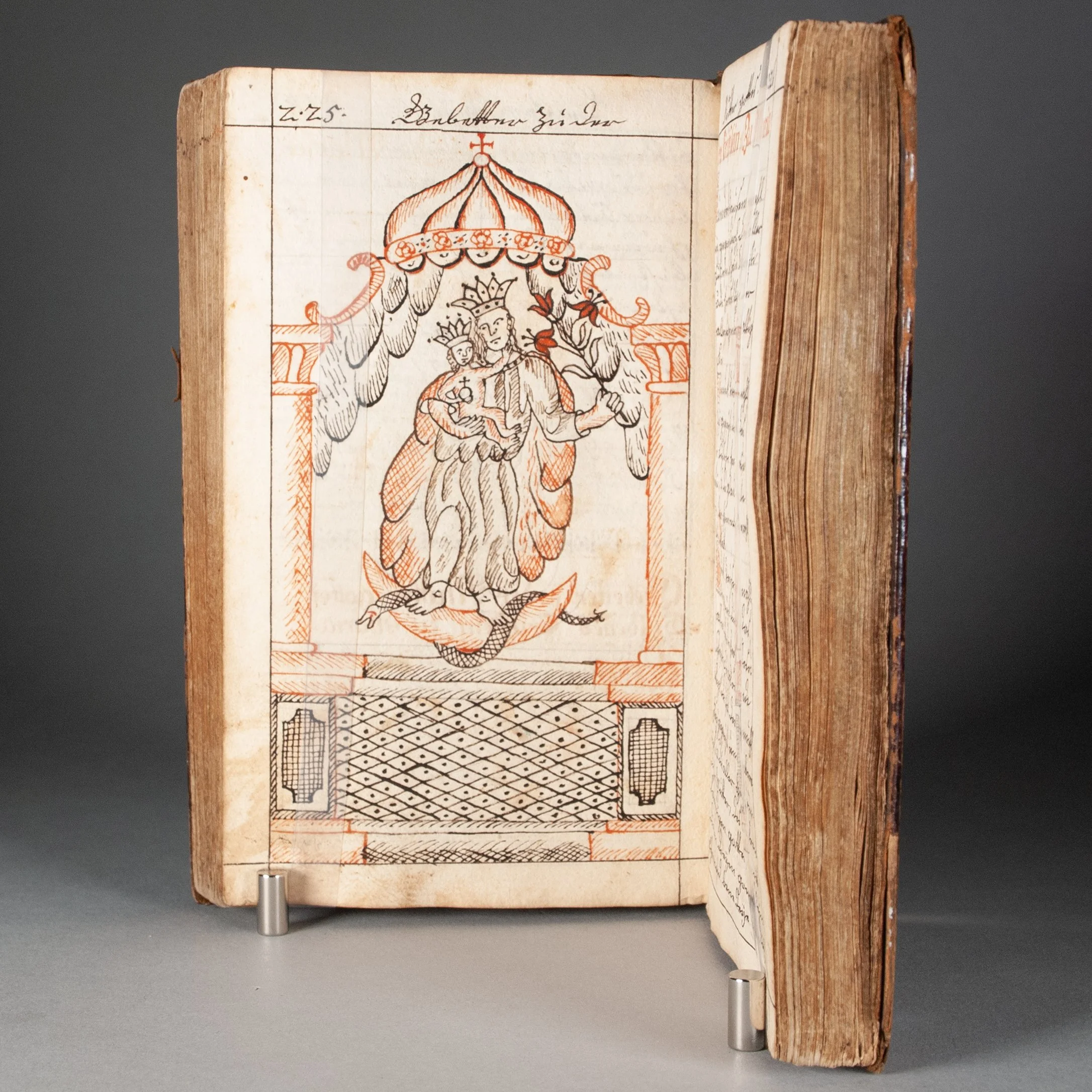 Image 17 of 22
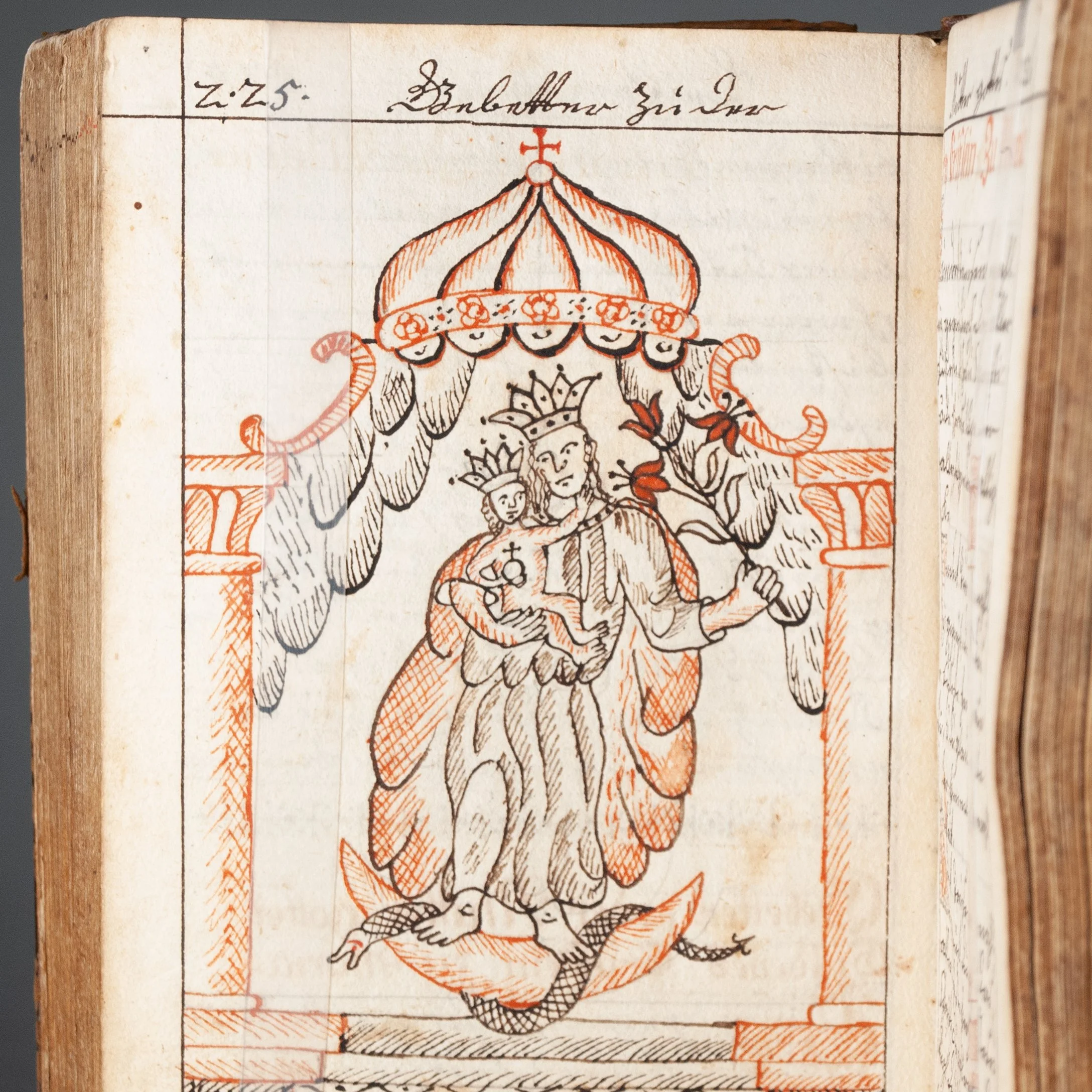 Image 18 of 22
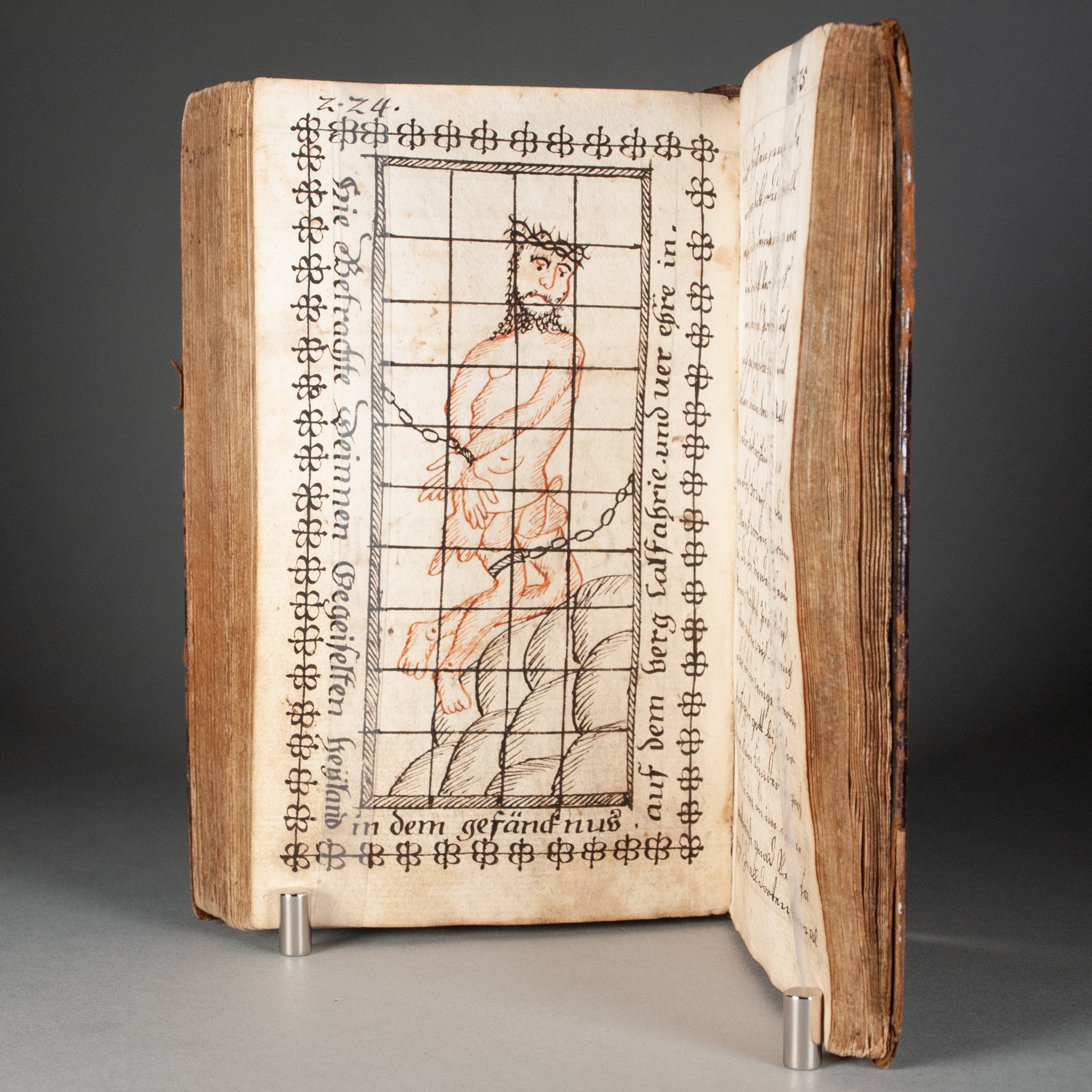 Image 19 of 22
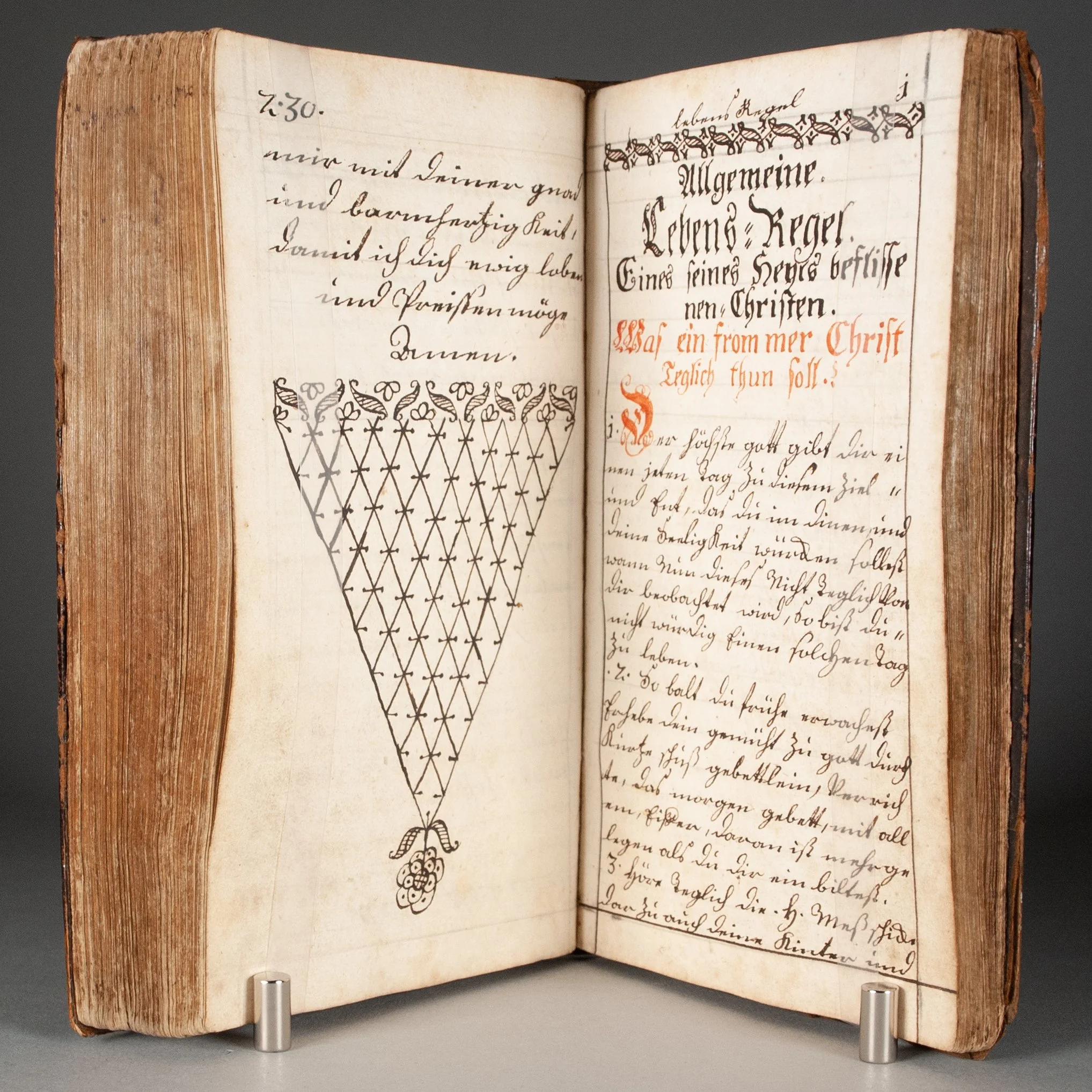 Image 20 of 22
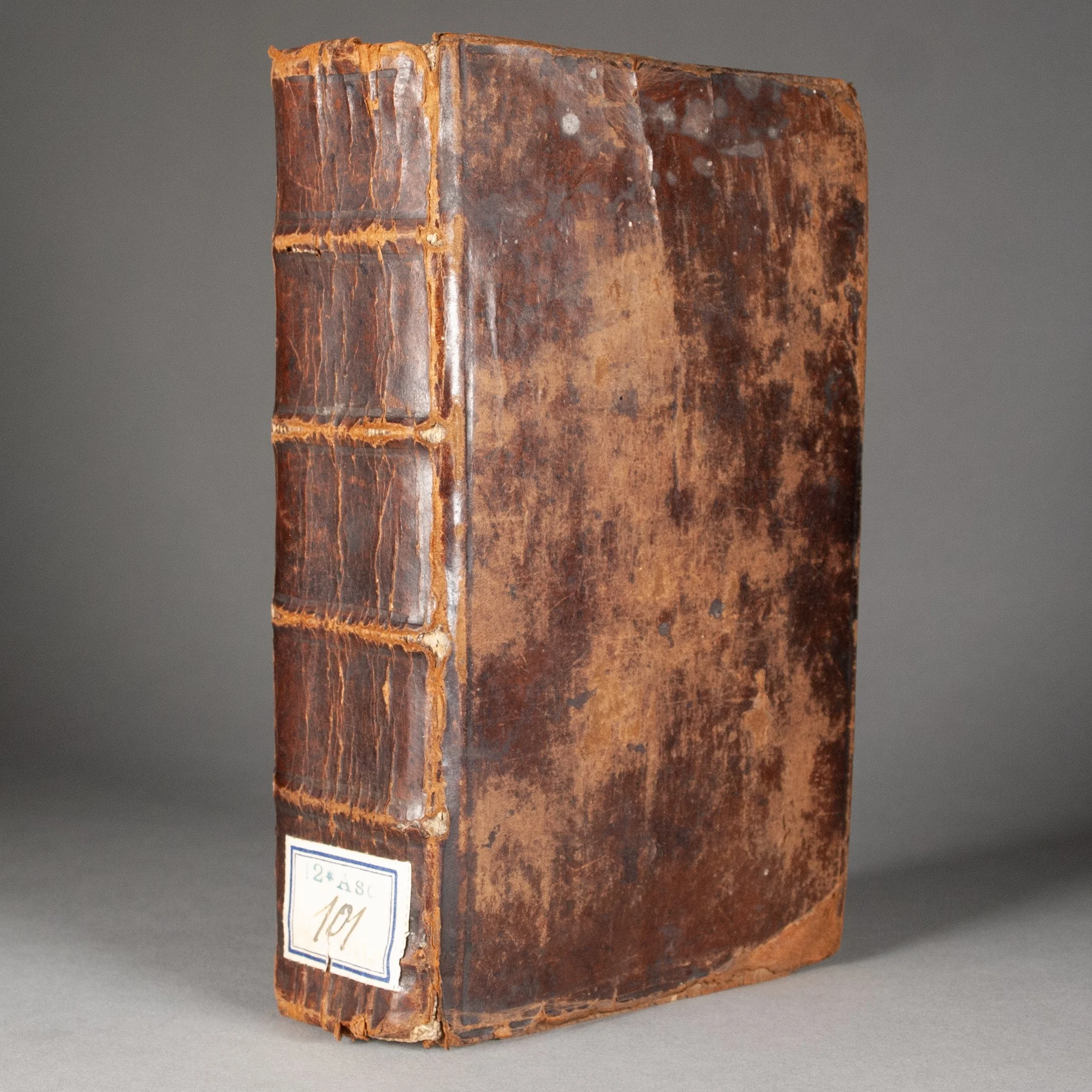 Image 21 of 22
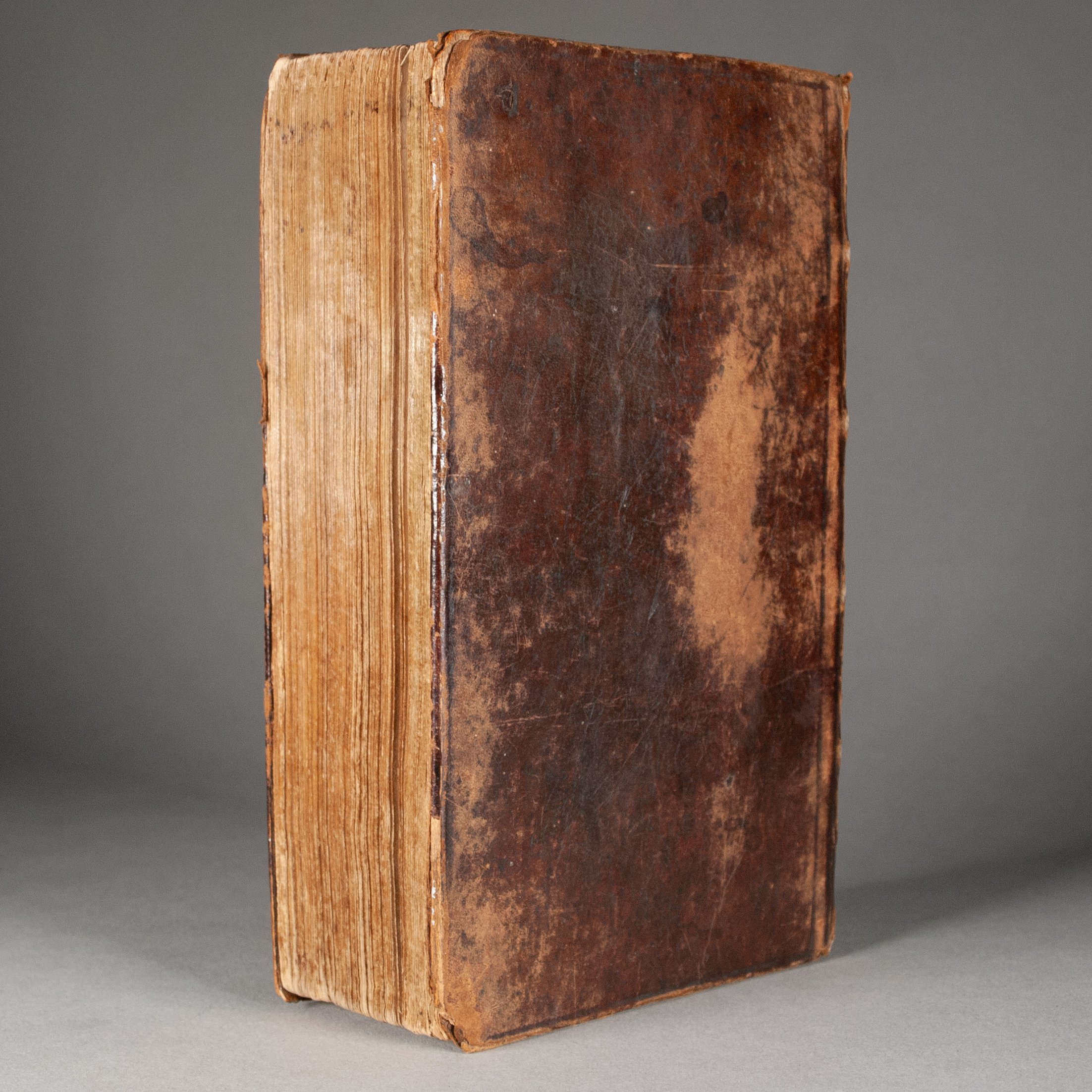 Image 22 of 22