
 Image 1 of 4
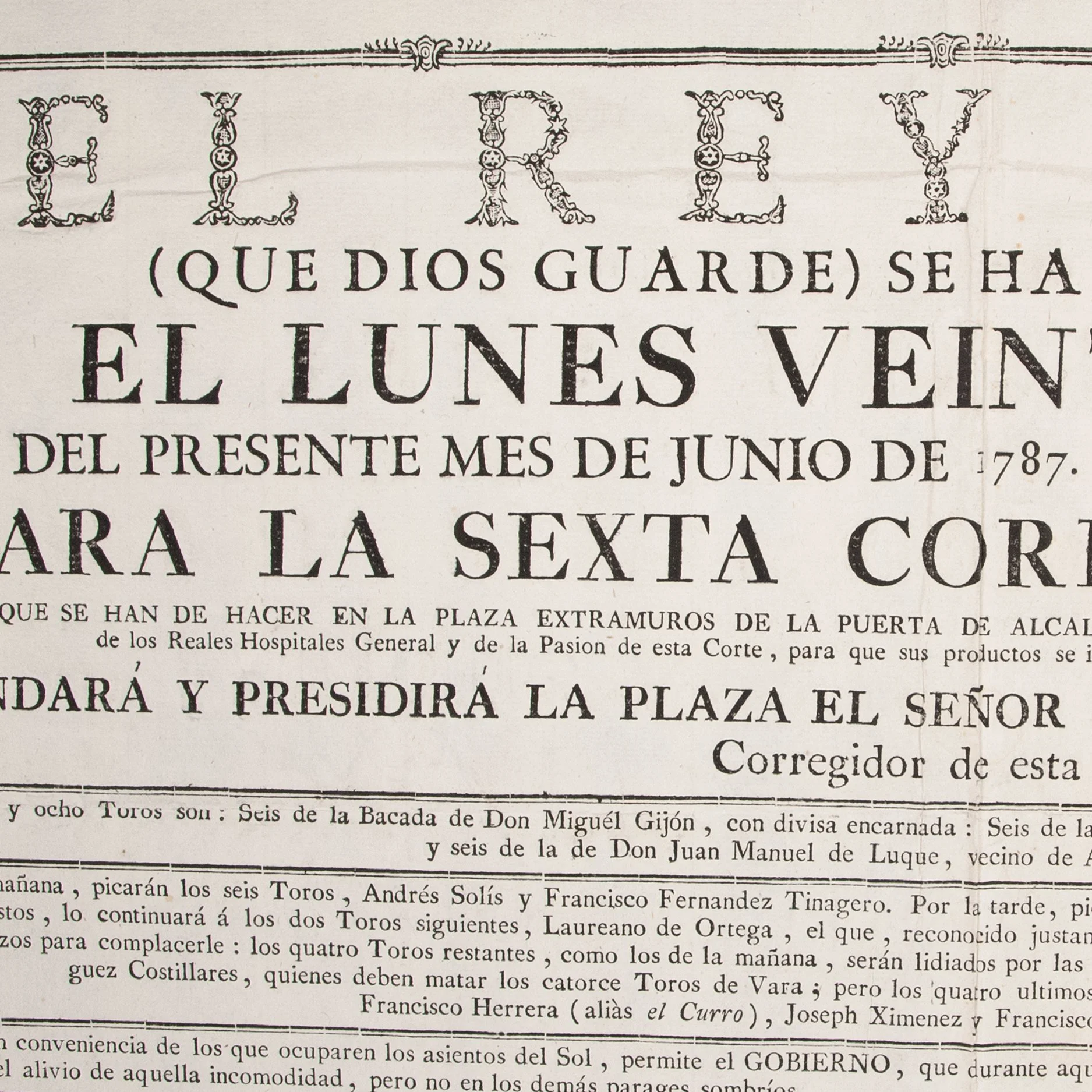 Image 2 of 4
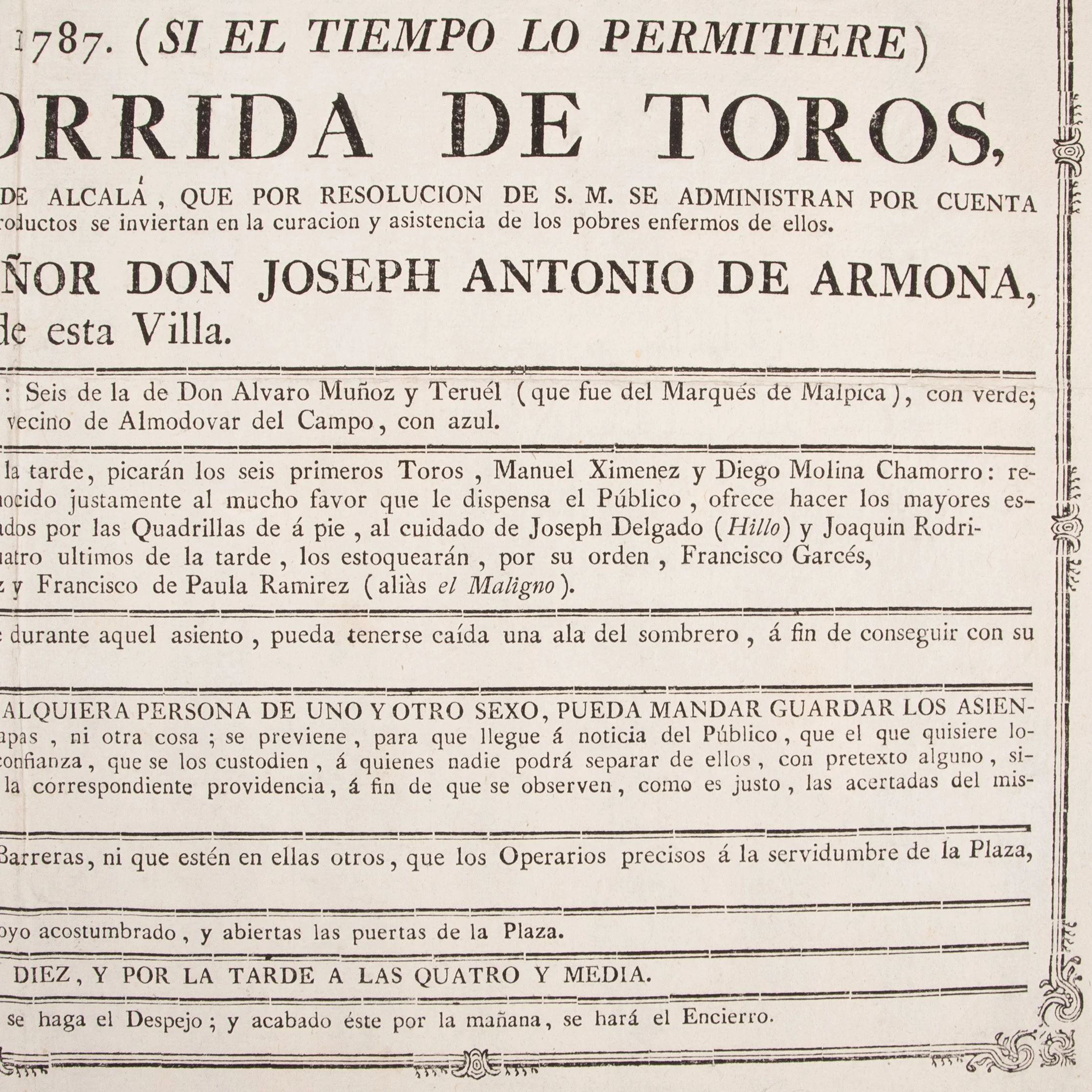 Image 3 of 4
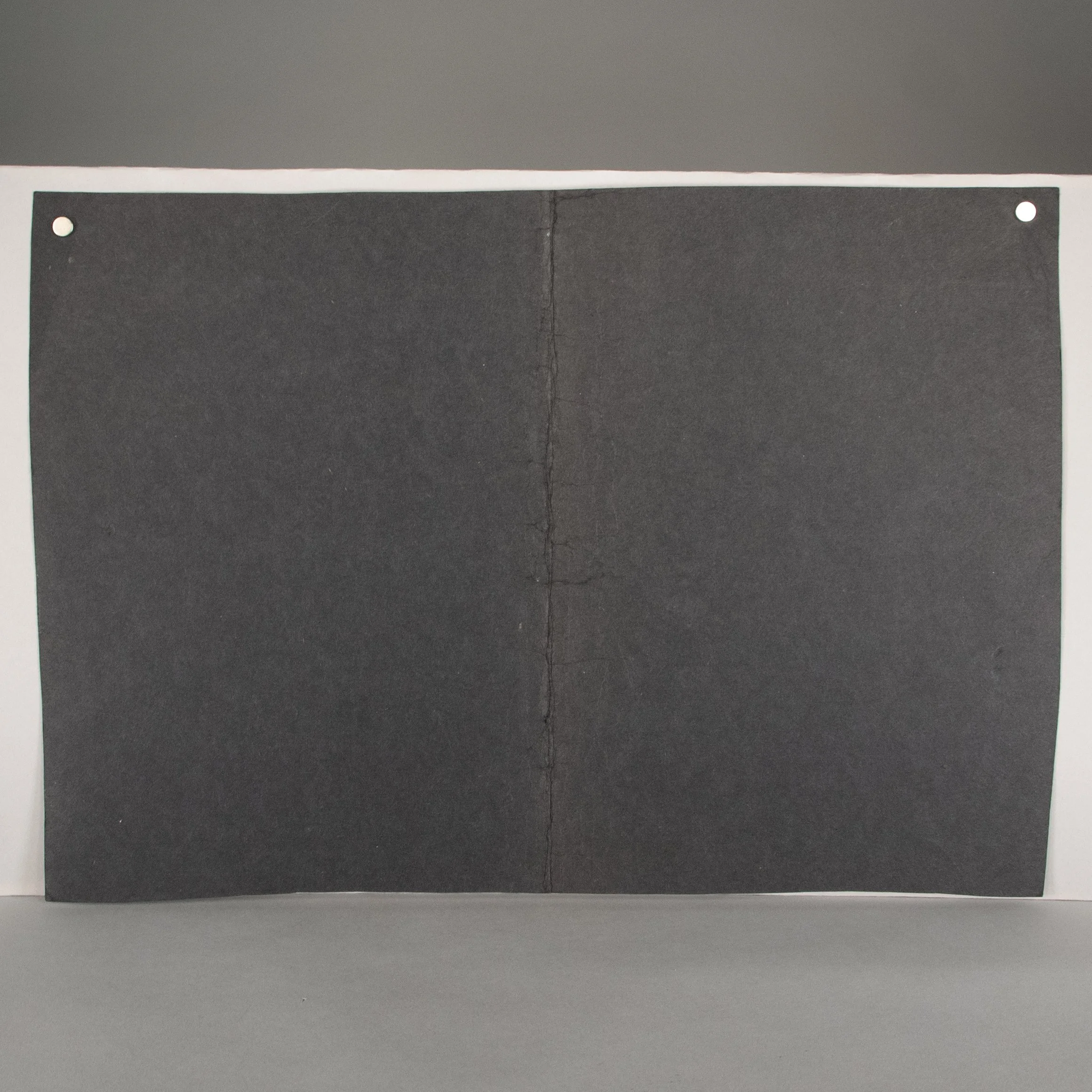 Image 4 of 4
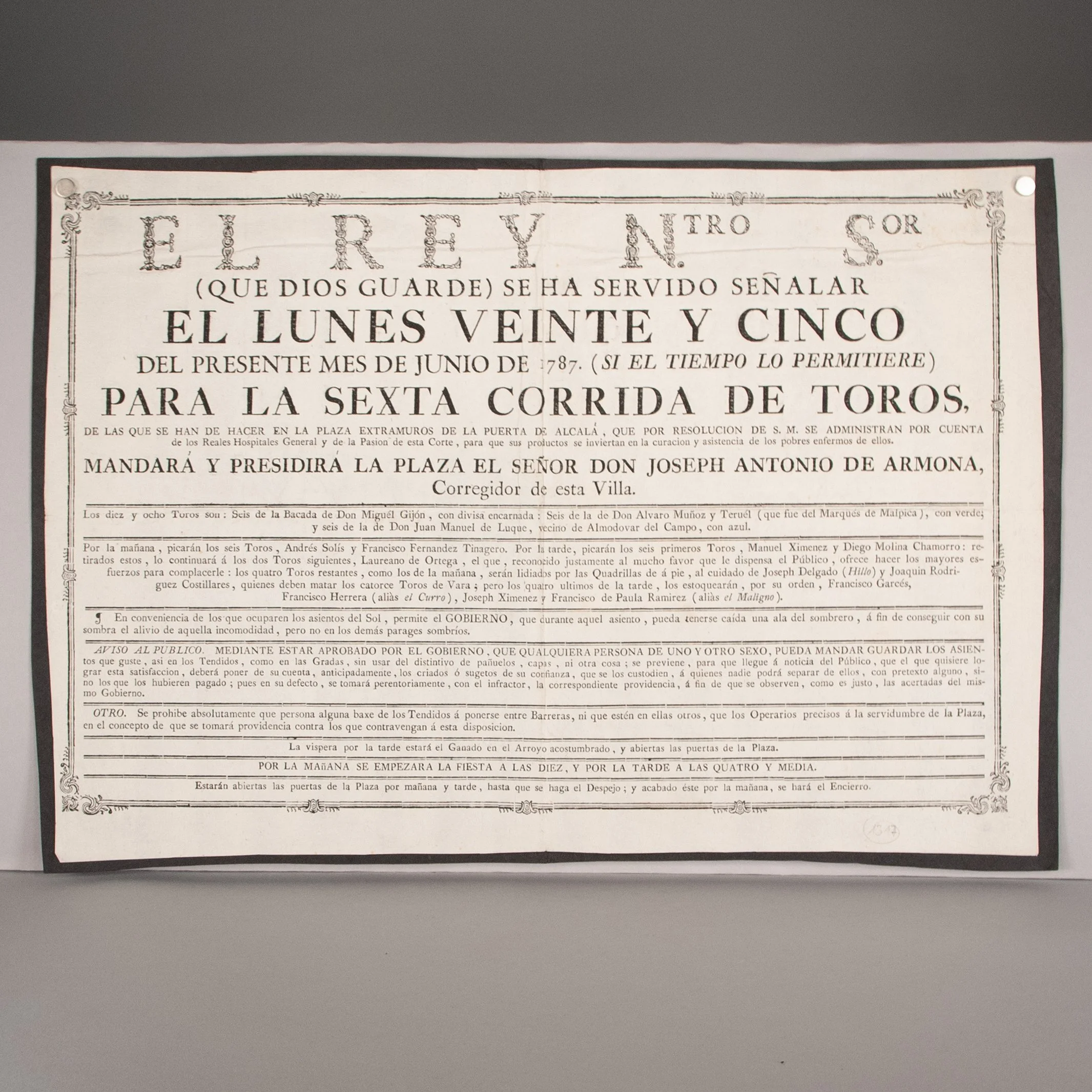
El rey ntro. sor. (que Dios guarde) se ha servido señalar el lunes veinte y cinco del presente mes de junio de 1787 (si el tiempo lo permitiere) para la sexta corrida de toros, de las que se han de hacer en la plaza extramuros de la Puerta de Alcalà... [Cartel de toros \ Cartel taurino]
[Madrid, 1787]
1 broadside | Full-sheet | 280 x 408 mm
A broadside announcing the sixth Madrid bullfight of the season, to be held 25 June 1787 at the Puerta de Alcalà, weather permitting. If you'll be sitting in the sun—and only if you're sitting in the sun—the government hereby permits you to use the brim of your sombrero for shade. And if you'd like to reserve your seat, by all means, hire someone to guard it for you. Fine print indicates the bullfight will benefit the impoverished sick (los pobres enfermos). In 1754, Ferdinand VI gave the bullring to the city's hospitals expressly for this purpose, five years following its construction in 1749. ¶ The broadside notes where and when the action will take place, how many bulls will be participating (18!), who bred them, and who will perform as picadors and matadors—among them Joaquín Rodríguez (aka Costillares) and José Delgado (aka Pepe Hillo). The latter was "one of the most popular and daring bullfighters of the late eighteenth century," whose tragic death by goring Francisco Goya depicted in his Tauromaquia (Schulz). Costillares, too—another of Goya's subjects—was "one of the most famous" matadors at the time and descended from a long line of butchers (Fournier and Saumade). ¶ "Modern bullfighting arose from the confluence of elite culture and popular culture. Its precise beginnings are unclear, but it developed very rapidly in the first half of the eighteenth century" (Shubert and Martínez). A broadside like this, commonly known as a cartel de toros or cartel taurino, would have been posted publicly like any promotional poster today. Of course that exposure did little to ensure their survival. We trace no other copies of our example, and most others survive in a single copy (typically with fiesta de toros rather than corrida de toros in title). We find in WorldCat no 18th-century bullfighting broadsides in North America, and none in auction records.
CONDITION: Printed on the recto only of a full sheet of laid paper, the text within a decorative border assembled from type ornaments. The upper edge—roughly the top inch and a half—mounted to a sheet of heavy, modern black paper. ¶ With a hard crease across each dimension, and another along the glue line at top; the black paper likewise creased across the short dimension.
REFERENCES: Andrew Schulz, "Moors and the Bullfight: History and National Identity in Goya's 'Tauromaquia'," The Art Bulletin 90.2 (June 2008), p. 196 (cited above); Dominique Fournier and Frédéric Saumade, "L'artiste, le boucher et le sacrificateur," Études rurales 113/114 (Jan-Jun 1989), p. 218 (cited above); Adrian Shubert and Marina Sanchis Martínez, "En la vanguardia del ocio mercantilizado de masas: la corrida de toros en España, siglos xviii y xix," Historia social 41 (2001), p. 120 (cited above; "In 1749, Madrid had a bullring, and five years later, King Ferdinand VI gave it to the city's hospitals as a source of income")
Item #823
El rey ntro. sor. (que Dios guarde) se ha servido señalar el lunes veinte y cinco del presente mes de junio de 1787 (si el tiempo lo permitiere) para la sexta corrida de toros, de las que se han de hacer en la plaza extramuros de la Puerta de Alcalà... [Cartel de toros \ Cartel taurino]
[Madrid, 1787]
1 broadside | Full-sheet | 280 x 408 mm
A broadside announcing the sixth Madrid bullfight of the season, to be held 25 June 1787 at the Puerta de Alcalà, weather permitting. If you'll be sitting in the sun—and only if you're sitting in the sun—the government hereby permits you to use the brim of your sombrero for shade. And if you'd like to reserve your seat, by all means, hire someone to guard it for you. Fine print indicates the bullfight will benefit the impoverished sick (los pobres enfermos). In 1754, Ferdinand VI gave the bullring to the city's hospitals expressly for this purpose, five years following its construction in 1749. ¶ The broadside notes where and when the action will take place, how many bulls will be participating (18!), who bred them, and who will perform as picadors and matadors—among them Joaquín Rodríguez (aka Costillares) and José Delgado (aka Pepe Hillo). The latter was "one of the most popular and daring bullfighters of the late eighteenth century," whose tragic death by goring Francisco Goya depicted in his Tauromaquia (Schulz). Costillares, too—another of Goya's subjects—was "one of the most famous" matadors at the time and descended from a long line of butchers (Fournier and Saumade). ¶ "Modern bullfighting arose from the confluence of elite culture and popular culture. Its precise beginnings are unclear, but it developed very rapidly in the first half of the eighteenth century" (Shubert and Martínez). A broadside like this, commonly known as a cartel de toros or cartel taurino, would have been posted publicly like any promotional poster today. Of course that exposure did little to ensure their survival. We trace no other copies of our example, and most others survive in a single copy (typically with fiesta de toros rather than corrida de toros in title). We find in WorldCat no 18th-century bullfighting broadsides in North America, and none in auction records.
CONDITION: Printed on the recto only of a full sheet of laid paper, the text within a decorative border assembled from type ornaments. The upper edge—roughly the top inch and a half—mounted to a sheet of heavy, modern black paper. ¶ With a hard crease across each dimension, and another along the glue line at top; the black paper likewise creased across the short dimension.
REFERENCES: Andrew Schulz, "Moors and the Bullfight: History and National Identity in Goya's 'Tauromaquia'," The Art Bulletin 90.2 (June 2008), p. 196 (cited above); Dominique Fournier and Frédéric Saumade, "L'artiste, le boucher et le sacrificateur," Études rurales 113/114 (Jan-Jun 1989), p. 218 (cited above); Adrian Shubert and Marina Sanchis Martínez, "En la vanguardia del ocio mercantilizado de masas: la corrida de toros en España, siglos xviii y xix," Historia social 41 (2001), p. 120 (cited above; "In 1749, Madrid had a bullring, and five years later, King Ferdinand VI gave it to the city's hospitals as a source of income")
Item #823